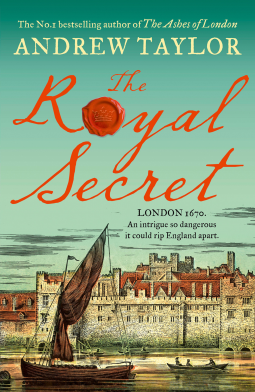
The Royal Secret by Andrew Taylor

This is the fifth book in Andrew Taylor’s Marwood and Lovett series and one of my favourites so far. Set in England during the reign of Charles II, each book in the series works as a separate mystery novel, but if it’s possible for you to read them in order (starting with The Ashes of London) you will have the pleasure of getting to know James Marwood and Cat Lovett from the beginning and watching their relationship develop.

The Royal Secret opens in 1670 with two young women plotting a murder by witchcraft. Soon afterwards, their target, Mr Abbott, meets his death under unusual circumstances. The dead man had been a clerk working in the office of Lord Arlington, Secretary of State, and James Marwood, also a government clerk, is asked to investigate. Beginning with a visit to Abbott’s lodgings to look for some confidential files the man had taken home from Arlington’s office, Marwood is soon on the trail of the mysterious Dutch merchant Henryk Van Riebeeck – a trail which will lead him first to the notorious Blue Bush Tavern and then to the home of Mr Fanshawe, owner of a captive Barbary lion called Caliban.

Meanwhile, Cat Hakesby, formerly Lovett, has taken over her late husband’s architect firm and has been given a commission by the king himself to design a poultry house for his sister Minette. Another of Cat’s clients is Mr Fanshawe and through him she meets Van Riebeeck, a man to whom she finds herself drawn romantically. Although she is unaware of it at first, Cat quickly becomes entangled in the same mystery that Marwood is trying to investigate, but with a very different perspective on what is happening.

Those of you who have read the previous books in the series will be familiar with Cat and Marwood’s uneasy relationship and their obvious attraction to each other which they seem unable to acknowledge even to themselves. That continues in this one and is becoming frustrating, but I’m grateful that Andrew Taylor didn’t just give us an instant romance that was resolved by the end of the first book. It’s another reason to keep reading the series!

As usual with Taylor’s books, the story unfolds against a backdrop of real historical events. In fact, they are often more than just a backdrop and become a significant part of the plot. In this particular novel, there is a focus on the political intrigue between England, France and the Dutch Republic, as well as on the tensions in the marriage between Charles II’s sister Minette (Henrietta Anne) and the Duke of Orléans, the king of France’s brother. These storylines take our characters to Paris where Minette has summoned Cat to discuss the designs for the poultry house and to Dover where secret negotiations are underway. With so much going on, as well as the mystery to be solved, this was a difficult book to put down and I was sorry to come to the end. I hope there’s going to be a sixth adventure for Marwood and Lovett!

Thanks to HarperCollins UK for providing a copy of this book for review via NetGalley.
Book 22/50 read for the 2021 Historical Fiction Reading Challenge.
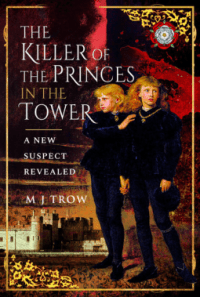
The Killer of the Princes in the Tower by MJ Trow

The fate of the Princes in the Tower – Edward V and his younger brother Richard, Duke of York – remains one of the greatest unsolved mysteries of all time. Reportedly last seen in the grounds of the Tower of London in the summer of 1483, the disappearance of the two boys has divided historians ever since. Their uncle, Richard III, is the man most often accused of being responsible for their deaths, while the names of Henry VII and Henry Stafford, Duke of Buckingham have also been suggested as possible culprits. In all three cases there is a logical political motive: to remove rival claimants to the throne. But what if the murder (assuming that it was actually murder) was not politically motivated at all? What if the princes were killed for an entirely different reason, by someone completely unexpected?

MJ Trow’s new book, The Killer of the Princes in the Tower, is subtitled A New Suspect Revealed, and I have to admit, when I first started reading, I was very sceptical about this. The Wars of the Roses and Richard III’s reign in particular is a period of history I’m very interested in and I’ve read a lot of books over the years, both fiction and non-fiction, that deal with the subject of the Princes in the Tower. Could Trow really come up with a ‘new suspect’? Well, yes he does – or at least, one that I can’t remember being suggested in any of the other books I’ve read.

If you have any prior knowledge of the period and the controversy surrounding the princes, it will probably be helpful, but if not Trow does provide plenty of background information, describing the whole sequence of events following the death of the boys’ father, Edward IV, and explaining how Richard III came to take the throne before the young Edward V could be crowned. He spends some time discussing the idea that the princes could have been secretly released from the Tower and not murdered at all – a theory some people believe is supported by the appearance a few years later of a ‘pretender’, Perkin Warbeck, claiming to be the younger of the princes, Richard of York – but (sensibly, in my opinion), he doesn’t consider this as a serious possibility. He then looks at all of the potential suspects one by one, presenting the evidence for each one being the murderer and then dismissing it, until only one name is left…

Trow approaches the mystery like a modern day police investigation, believing that no stone should be left unturned and looking for motive, means and opportunity. Beginning with the three most obvious suspects, he moves on to consider their supporters, servants and family members; even Richard III’s wife, Anne Neville, and the princes’ own mother, Elizabeth Woodville, are discussed – because, as Trow says, they would certainly have been interviewed by the police if the boys had disappeared today. He also examines the reliability of the various sources and what we can learn from them.

The revelation of the new suspect did take me by surprise because it’s not someone who would ever have occurred to me. It’s true that this person certainly had the means and the opportunity, but I wasn’t at all convinced about the motive, even though Trow devotes a whole chapter to drawing comparisons with other people throughout history who have killed for similar reasons. Although what Trow suggests is not impossible, I don’t think it’s very likely either and as far as I’m concerned the mystery remains unsolved! Still, it’s good to read a theory that is neither pro-Ricardian nor anti-Ricardian and that looks at the whole subject from a very different angle. I found this book almost as gripping as fiction, so despite not agreeing with the conclusion I still really enjoyed reading it.

Thanks to Pen & Sword for providing a copy of this book for review via NetGalley.

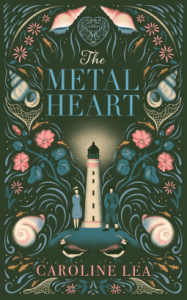
The Metal Heart by Caroline Lea

I enjoyed Caroline Lea’s previous book, The Glass Woman, but even if I hadn’t already known that I liked her writing I would have been drawn to The Metal Heart anyway by that beautiful cover! Books don’t always live up to their covers, of course, but I think this one almost does.

Set during World War II, the novel takes as its inspiration the building of a chapel in the Orkney Islands by Italian prisoners of war. Around this, Caroline Lea has created a fictional story involving two identical twin sisters, Dorothy and Constance – known as Dot and Con. The sisters have very different personalities but are devoted to each other, so when Con suffers a traumatic experience which leaves her afraid to be around other people, the two of them leave their home in Kirkwall on mainland Orkney and take refuge on the small, uninhabited island of Selkie Holm. Needless to say, Con is not at all happy when hundreds of Italian prisoners arrive on the island, along with their guards, and when a romance begins to blossom between Dot and Cesare, one of the Italians, the sisters’ bond becomes strained.

The novel is written from several different perspectives, giving Con, Dot and Cesare each a chance to tell their own side of the story. Despite their identical appearance, the twins have opposite outlooks on life – Dot is warm, friendly and trusting, while Con, understandably, is withdrawn, cautious and slow to trust. There is a romantic element to the novel, of course, but although the love story between Dot and Cesare is important, its real significance is in the impact it has on the relationship between the sisters. When we first meet Dot, she has sacrificed her own freedom and happiness for Con’s sake, but over the course of the novel, through her romance with Cesare – and also her work in the prisoners’ hospital on the island – she must find a way to lead her own life while helping Con to lead hers.

Although the author has changed some of the historical and geographical details, such as names and dates, we know that there really was a prisoner of war camp in Orkney and that the Italian prisoners really did create a chapel from metal and concrete, which can still be seen on the island of Lamb Holm today. Through the story of Cesare and the other prisoners, we see what conditions were like in the camp and the treatment they received from the guards, as well as their reaction to being ordered to build barriers to prevent further attacks on the harbour at Scapa Flow (these would become known as the Churchill Barriers). At the end of the book, Caroline Lea explains which parts of the novel are based on fact and which are fictional, but while I could understand why she adjusted the timeline to give the story more urgency, I couldn’t see why it was necessary to create a fictional island, Selkie Holm, when we know that the name of the island where the camp was located was Lamb Holm.

Anyway, this is a beautifully written novel (apart from the fact that it is written in the present tense, which is never going to be my favourite style). The descriptions of the Orkney Islands – the landscape, the sea, the people and the Orcadian folklore – are atmospheric and vivid; I have never been, but I’m sure it must be a fascinating place to visit. Of the two Caroline Lea books I’ve read, I preferred this one, although I did love the Icelandic setting of The Glass Woman too and will look forward to seeing where her next book will be set!

Thanks to Penguin Michael Joseph UK for providing a copy of this book for review via NetGalley. The book will be published on 29th April 2021.

Book 21/50 read for the 2021 Historical Fiction Reading Challenge.
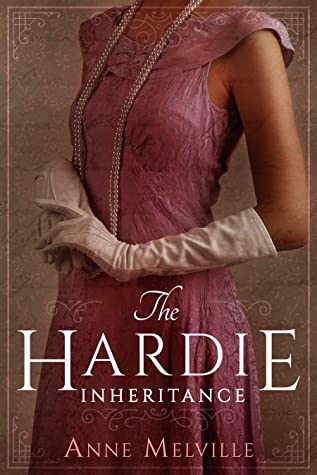
The Hardie Inheritance by Anne Melville

The Hardie Inheritance, first published in 1990 and recently reissued, is the last in a trilogy of novels following a family of English wine merchants from the late nineteenth to mid-twentieth century. The first two books are The House of Hardie and The Daughter of Hardie, but if you haven’t read them it shouldn’t be a problem as the author provides enough of the backstory for new readers to be able to pick up the threads, without completely spoiling the plots of the other two books.

While the previous novel covered the period of World War I and its aftermath, The Hardie Inheritance takes us forward to 1932. There are now only three Hardies – Grace, Philip and their mother, Lucy – still living at Greystones, the family estate in Oxfordshire, and they have settled into a quiet, uneventful life together. Grace, now in her late thirties and expecting to remain a spinster, keeps herself busy with her sculpting, while her brother Philip, who returned from the war suffering from shell shock and weak lungs, fills his days looking after the gardens. Then, one sunny day in July, four unexpected visitors arrive at Greystones and set Grace’s life on a different course.

First, there’s Ellis Faraday and his six-year-old daughter, Trish. Ellis, a photographer, is the son of the architect who designed Greystones and he is keen to take pictures of the interior. At first, Grace is reluctant, aware that due to lack of money she has not been able to maintain the building properly, but she agrees to let him see the house and soon he and Trish have become part of her life – although not quite in the way you might expect. Also that same day, they are visited by Rupert, a cousin who has just discovered his connection with the Hardie branch of the family. And finally, Andy Frith, the gardener’s son who had once been Grace’s beloved childhood friend, returns from France to see his dying father.

The novel follows the stories of all of these people and more, but with a particular focus on Grace as she comes to terms with the changes in her household and faces some important decisions to secure the future of Greystones, and on Trish as she grows into a woman and begins her own search for happiness. Meanwhile, the outbreak of World War II poses new challenges for the Hardies and their friends. The whole novel takes place within a domestic setting and we don’t actually see any of the fighting, but we do see the impact it has on the lives of those left at home. One of my favourite storylines involves Trish being sent to Oxford to collect a family of evacuees from London who, it seems, would rather not be evacuated at all. And although there would obviously have been many people who suffered much more greatly, I still had sympathy for Rupert whose beautiful home, Castlemere, is requisitioned for use as a boarding school!

I think The Hardie Inheritance is my favourite of the three books in the trilogy. There were a lot of new characters introduced early in the book, but I had no problem keeping track of them all and I became very fond of some of them, particularly Trish. Some parts of the book were quite predictable, but others took me by surprise, particularly the ending which I hadn’t expected but which, when I thought about it, was the perfect way to bring the saga of Greystones to a close.

Anne Melville (a pseudonym of Margaret Potter) was a very prolific author who wrote in several different genres using different names – I have read her mystery novel, Murder to Music, which was published under the name Margaret Newman, but most of her other books are out of print so I hope more of them will eventually be made available again.

Book 20/50 read for the 2021 Historical Fiction Reading Challenge.

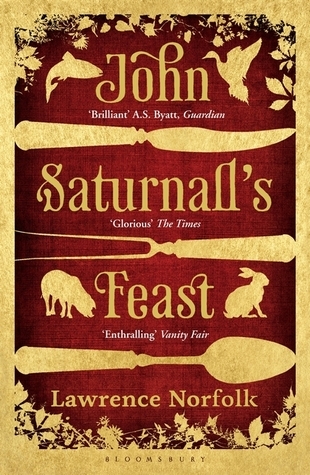
John Saturnall’s Feast by Lawrence Norfolk

This book has been on my TBR since it was published in 2012; I couldn’t get into it at the time, so put it aside to try again later, not really intending ‘later’ to be nearly ten years later! Anyway, although I had one or two problems with it I’m pleased to have read it at last and am now interested in reading more of Lawrence Norfolk’s novels, all of which sound intriguing.

John Saturnall’s Feast begins in a place called Buckland, a small village where John Sandall lives with his mother, a herbalist and midwife. It’s the early 17th century, a time when women with skills like these risk being accused of witchcraft – and this is what happens to John’s mother. Finding themselves the target of their Puritan neighbours and the fanatical preacher Marpot, they flee to the safety of nearby Buccla’s Wood. Here, John continues to receive an education from his mother, who teaches him to read from a book of ancient recipes and reveals to him the secrets of a traditional Feast which have been passed down through the generations.

When John’s mother dies, leaving him an orphan, he is taken into the kitchens of Buckland Manor, where he impresses the other cooks with his knowledge of food. At the Manor, we meet Lady Lucretia, the young daughter of Sir William Fremantle. A marriage has been arranged for Lucretia, in order for her to inherit the estate, but she has chosen to defy her father by refusing to eat. Can John Sandall – now known as John Saturnall, Master Cook – create a dish that will tempt her from her fast?

This is an unusual and complex novel; I have simplified the plot in the paragraphs above, but there is a lot more to it than that and I would probably need to read the book again to fully appreciate all the different layers of the story. I don’t think I quite understood the significance of the ritual of the Feast, for example – was it intended as a myth, an allegory or something real? I felt that important plot points and details were sometimes getting lost beneath the overwhelming descriptions of ingredients, smells, tastes and colours that filled almost every page. I also struggled to keep track of the characters; there are so many of them, particularly working in the kitchens, and none of them are very strongly drawn, so I found it difficult to distinguish one from another.

I did really enjoy the first half of the book, which describes John’s childhood in Buckland and the events that lead to his arrival at the Manor. The portrayal of his life in the kitchens – the huge, subterranean network of rooms, the heat, the smells, the sounds, and the complex social hierarchy that exists between the cooks and the humble kitchen hands – is vivid and fascinating. I was reminded very strongly of Abiatha Swelter’s kitchens in Mervyn Peake’s Gormenghast books! In the second half of the novel, though, there’s a change of scene and pace as civil war breaks out in England and John and his friends exchange the kitchen for the battlefield. There seemed to be very little build up to this and I felt that the war chapters didn’t really add much to the overall story.

Although not every aspect of this book was a success with me, the wonderful atmosphere and the imaginative plot still kept me turning the pages. I would like to try one of Lawrence Norfolk’s other three books, so if you have read any of them please let me know what you thought!

Book 19/50 read for the 2021 Historical Fiction Reading Challenge.
Classics Club Spin #26: The Result

The result of the latest Classics Club Spin has been revealed today.

The idea of the Spin was to list twenty books from my Classics Club list, number them 1 to 20, and the number announced by the Classics Club represents the book I have to read before 31st May. The number that has been selected is…

11

And this means the book I need to read is…

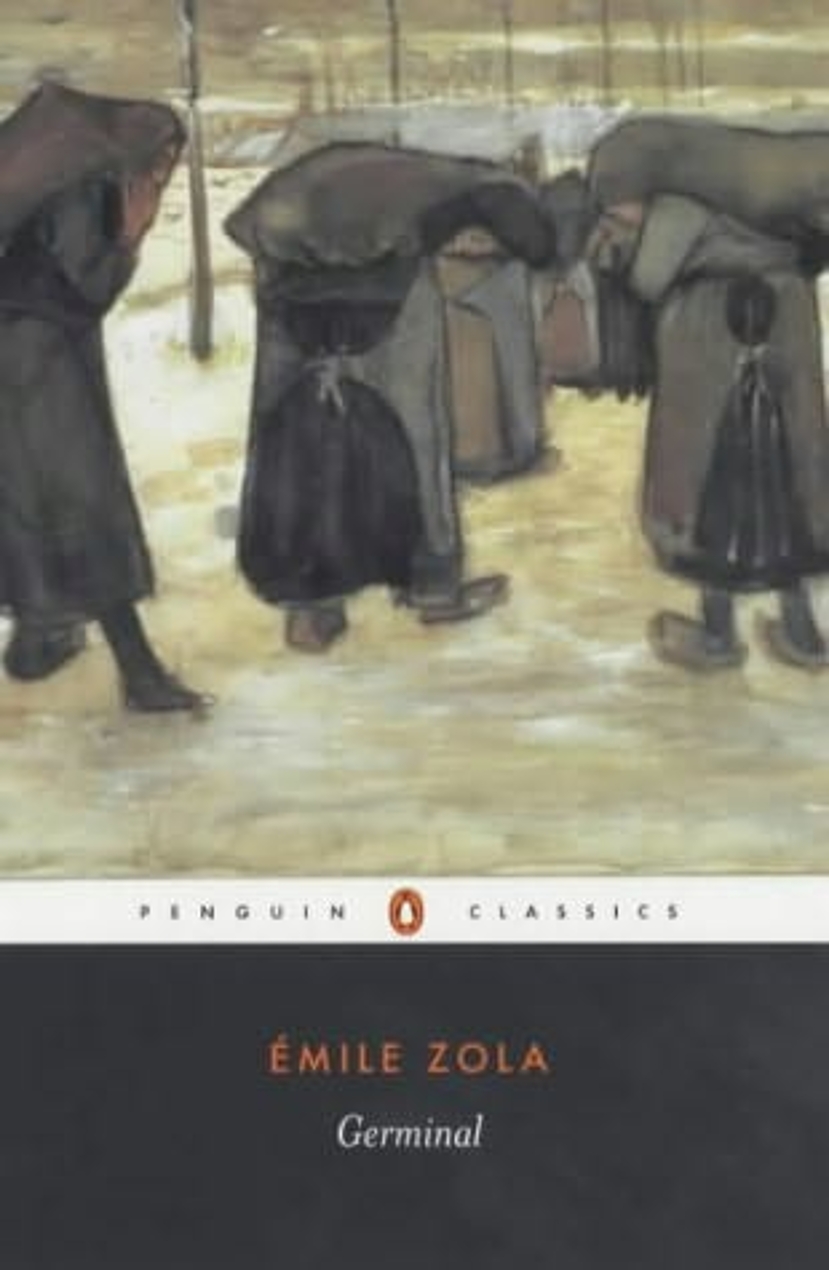
Germinal by Émile Zola

The thirteenth novel in Émile Zola’s great Rougon-Macquart sequence, Germinal expresses outrage at the exploitation of the many by the few, but also shows humanity’s capacity for compassion and hope.

Etienne Lantier, an unemployed railway worker, is a clever but uneducated young man with a dangerous temper. Forced to take a back-breaking job at Le Voreux mine when he cannot get other work, he discovers that his fellow miners are ill, hungry, in debt, and unable to feed and clothe their families. When conditions in the mining community deteriorate even further, Lantier finds himself leading a strike that could mean starvation or salvation for all.

~

I’m happy with this result as I’ve been wanting to read Germinal for such a long time. I enjoyed the other two books I’ve read by Zola (The Ladies’ Paradise and Thérèse Raquin) and I know this one is usually considered to be his best, so I’m really looking forward to it.

If you took part in the spin too, I hope you got a good result!

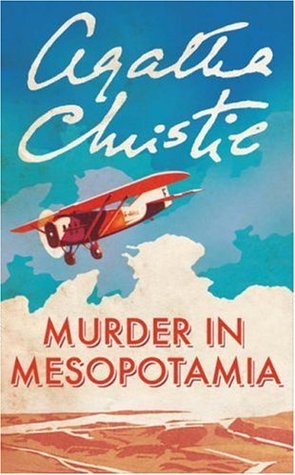
Murder in Mesopotamia by Agatha Christie – #1936Club

This is the second book I’ve read for the 1936 Club (hosted by Karen and Simon) and an obvious one for me as I’m also taking part in Read Christie 2021 this year. The monthly prompt for Read Christie is ‘a story set before WWII’, which makes Murder in Mesopotamia, published in 1936, the perfect choice!

Murder in Mesopotamia is a Poirot mystery and one of several to feature a first person narrator – usually Captain Hastings, but in this case Nurse Amy Leatheran. At the beginning of the novel she agrees to travel to the site of an archaeological dig near Hassanieh in Iraq to nurse the wife of the expedition leader, Dr Leidner. Louise Leidner is being blamed by some of the other archaeologists for causing tension on this year’s dig, but when Nurse Leatheran arrives at the site what she finds is a nervous, frightened woman who claims to be receiving threatening letters from a former husband. A few days later, Louise is found dead in her bedroom, having been hit on the head by a blunt object. It seems impossible that a stranger could have entered the site without being seen, therefore the murderer must be someone on the dig…but who?

When I first began to read, I couldn’t help making comparisons with They Came to Baghdad, one of my favourite Christie novels, which features lots of colourful descriptions of Iraq. The sense of place in this one isn’t quite as strong – and in fact, we see very little of Iraq beyond the confines of the dig site – but there’s still plenty of atmosphere. The descriptions we do get of the dig and the various roles of the members of the expedition are fascinating and feel authentic, which is to be expected as Christie herself was married to an archaeologist, Max Mallowan, and often accompanied him on digs. Not only could she draw on her own personal knowledge and experience in the writing of this novel, she also apparently based some of the characters on people she knew.

Nurse Leatheran is a very opinionated narrator who doesn’t hold back on her views of ‘Foreigners’ (including Poirot), but apart from that I quite enjoyed her narration. We get to know the other participants in the dig through her eyes and, because she is an outsider, meeting all of these people for the first time, we can never be completely sure whether or not she is giving us an accurate impression of them. Poirot himself appears halfway through the novel, conveniently passing through Hassanieh after working on a case in Syria – and we are told that a week later, after solving this mystery, he will go on to investigate the Murder on the Orient Express.

As usual, I didn’t manage to solve the mystery myself. I came up with a few theories, but none of them were correct, which isn’t surprising as the final solution is so far-fetched I don’t think I would ever have thought of it! The method by which the murder is carried out seems unlikely, if not impossible, but the motive relies on us accepting something which I found impossible to believe. Still, this was an entertaining read and another great 1936 book.