Buckeye by Patrick Ryan

In May 1945, Margaret Salt walks into a hardware store in the small town of Bonhomie, Ohio and asks if they have a radio. Cal Jenkins is working there that day and he accompanies Margaret into the office where they listen to President Truman informing the nation that Germany has surrendered to the Allies. Neither of them knows it, but this brief interaction will go on to have consequences that change both of their lives forever.

In Buckeye, Patrick Ryan explores the stories of Cal and his wife, Becky, and Margaret and her husband, Felix – two couples whose paths cross many times over a period of four decades. We learn more about Cal’s background and the disability that has kept him out of the war and we get to know Becky, who has a gift for communicating with the dead. We also hear about Margaret’s childhood, abandoned as a baby and raised in an orphanage, and we follow Felix as he suffers some traumatic experiences during the war. Later, the focus widens to include their children as we move forward into the 1960s and 70s and another war – Vietnam.

Almost as soon as I started to read I was reminded of Ann Patchett and I’m not suprised to see that other reviewers have made the same comparison. I think if you enjoyed Tom Lake or The Dutch House, there’s a good chance that you’ll enjoy this book as well – but even if you didn’t, give this one a try anyway as despite the similar feel, Patrick Ryan has his own style and a real talent for creating strong, engaging characters. I was particularly fond of Cal’s father, Everett; when we first meet him at the start of the book, he’s a lonely, bitter alcoholic, writing angry letters to the President and still grieving for his wife and daughter who died years earlier, but a crisis sets his life on a different course and Becky takes him under her wing.

I wasn’t sure at first how I would feel about Becky’s work as a spiritualist – I thought a paranormal element wouldn’t fit the tone of the book – but it actually works very well. It provides a source of conflict with Cal, who is not a believer, but Becky isn’t a fraud in any way: she truly wants to give peace and comfort to those who need it and she does seem to have a genuine ability to contact the dead. Margaret Salt is a complex character and her actions are not always very admirable, but learning more about her early life helped me to understand her. I liked Felix, though, and found several parts of his story very moving.

Buckeye is a long book, but family sagas usually are, and although the pace moves slowly at times it’s hard to know what could have been left out. As well as needing time to fully develop the characters, there are also several decades of American history to get through, with major events sometimes happening in the background but in other cases directly impacting the lives of the Jenkins and Salt families. I certainly don’t regret the length of time it took to read it – it’s definitely going to be one of my books of the year.

Thanks to Bloomsbury Publishing Plc (UK & ANZ) for providing a copy of this book for review via NetGalley.

The Odd Flamingo by Nina Bawden

Nina Bawden is someone I’ve always thought of as a children’s author; I know I’ve read a few of her books, athough Carrie’s War and The Finding are the only ones I can remember anything about. I’ve never tried any of her adult novels, but was drawn to this one by the unusual title. It was originally published in 1954 and has been reissued by British Library as part of their Crime Classics series earlier this year. Bawden isn’t really an author I would have expected them to publish – I had no idea she wrote crime.

The Odd Flamingo is the name of a seedy London nightclub frequented by many of the characters in the novel. One of these is Rose Blacker, a young woman of eighteen who appears to have fallen in with the wrong friends. When Rose tells Celia Stone that she is pregnant – and that the father is Celia’s husband, Humphrey – Celia calls on her lawyer friend, Will Hunt, for help. She doesn’t believe Rose’s claims, but she’s concerned about Humphrey’s reputation and how a scandal could affect his job as a school headmaster.

Will has known Humphrey for years and has always liked and admired him, but when he meets Rose for himself and she produces letters written by Humphrey, his confidence in his friend is shaken. Rose seems so sweet and innocent; surely she must be telling the truth? When a woman’s body is found floating in the canal with Rose’s bag nearby, Humphrey is the obvious suspect. Will agrees to do what he can to clear his name but is worried about what he might discover. As he begins to investigate, he finds that everything keeps leading back to the dark, sordid world of The Odd Flamingo and the miserable lives of the people who go there.

As you can probably tell, this is not exactly the most cheerful and uplifting of books! It’s full of people who are lonely, desperate and troubled or have become mixed up with drugs, theft or blackmail. I found it quite depressing, but also realistic – places like The Odd Flamingo have always existed and probably always will. I can’t really say that I liked any of the characters, but again, most of them feel believable and real. Only Piers, Humphrey’s grotesque, slimy half-brother, veers close to being a stereotype.

The book is narrated by Will and I found him an interesting character; he’s very idealistic and almost hero worships Humphrey, so feels disappointed and let down by Rose’s claims – but then he does the same thing with Rose herself, putting her on a pedestal because she’s young and beautiful. Whether Rose really is as innocent as she seems is a question not answered until the end of the book, but it’s obvious that Will is going to be hurt again if it turns out that she’s not.

The Odd Flamingo, although there are certainly some mysteries to be solved, is not really a conventional mystery novel and not a typical British Library Crime Classic. If your tastes tend towards the darker, grittier end of crime fiction, though, or you’re interested in trying one of Nina Bawden’s adult books, I can happily recommend this one.

Nonfiction November: Week 2 – Choosing Nonfiction

This week’s prompt for Nonfiction November is hosted by Frances of Volatile Rune – and here it is:

There are many topics to choose from when looking for a nonfiction book. For example: Biography, Autobiography, Memoir, Travel, Health, Politics, History, Religion and Spirituality, Science, Art, Medicine, Gardening, Food, Business, Education, Music. Maybe use this week to challenge yourself to pick a genre you wouldn’t normally read? Or stick to what you usually like is also fine. If you are a nonfiction genre newbie, did your choice encourage you to read more?

I’m not very adventurous when it comes to nonfiction and tend to stick to the same few topics most of the time:

History e.g. The Brothers York by Thomas Penn; Powers and Thrones by Dan Jones

Memoir e.g. The Oaken Heart by Margery Allingham; A Chelsea Concerto by Frances Faviell

Biography e.g. Samuel Pepys: The Unequalled Self by Claire Tomalin; The Real Enid Blyton by Nadia Cohen

True crime e.g. The Wicked Boy by Kate Summerscale; Murder by the Book by Claire Harman

I don’t often read any nonfiction that falls outside of these categories, but I’m always open to trying new things and I think participating in Nonfiction November is a good way to find books on other topics that I might enjoy.

So what have I decided to read during Nonfiction November this year? First, I’m trying to finish The Eagle and the Hart by Helen Castor, a very long book that I’ve been reading for a few months but keep putting aside to read other things. It’s about the relationship between Richard II and Henry IV…so yes, another history book! I’ve also just started reading 100 Books to Live By by Joseph Piercy, which I have from NetGalley. I don’t seem to read much nonfiction about books and literature and I have no idea why!

~

How do you choose which nonfiction books to read? Do you stick to the same topics or do you like to challenge yourself to read something different?

Top Ten Tuesday: Ten random books waiting to be read!

This week’s topic for Top Ten Tuesday (hosted by That Artsy Reader Girl) is “The First 10 Books I Randomly Grabbed from My Shelf”. I’ve modified this slightly and have listed ten books from my Goodreads ‘to-read’ shelf. This includes books that I already own as well as books that are on my wish list. I used a random number generator to select ten random titles.

1. Down and Out in Paris and London by George Orwell – Non-fiction about poverty in the two capital cities.

2. The Norman Pretender by Valerie Anand – A sequel to Gildenford, about the Norman Conquest of 1066.

3. The Hired Man by Aminatta Forna – A novel about a woman renovating a farmhouse in Croatia.

4. Appointment in Paris by Jane Thynne – A spy thriller set in the 1940s.

5. The Book of Madness and Cures by Regina O’Melveny – Historical fiction set in the 16th century.

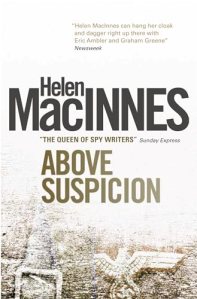
6. Above Suspicion by Helen MacInnes – Another spy novel by an author I still haven’t tried.

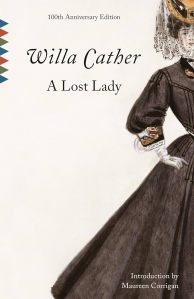
7. A Lost Lady by Willa Cather – One of several books by Cather I would like to read.

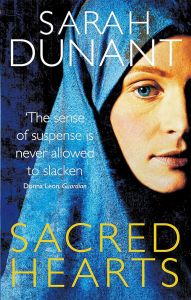
8. Sacred Hearts by Sarah Dunant – Historical fiction set in an Italian convent.

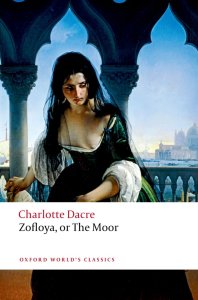
9. Zofloya, or The Moor by Charlotte Dacre – A 19th century Gothic novel

10. Transcription by Kate Atkinson – Yet another wartime espionage story!

~

Have you read any of these? If so, let me know what you thought.

My Year in Novellas – #NovNov25

Novellas in November 2025 (hosted by Cathy of 746 Books and Rebecca of Bookish Beck) officially started yesterday and we’re invited to begin by posting a “My Year in Novellas” retrospective looking at any novellas we have read since last year’s NovNov. When I looked back over the year, I was surprised to see how few novellas I’d actually read in the past twelve months – only seven. I’ve listed them below with links to my reviews.

For the purposes of this event, anything under 200 pages can be classed as a novella.

Fire by John Boyne (163 pages) – This is the third novel in Boyne’s Elements Quartet and is narrated by a surgeon who works with burn victims. I’m hoping to read the final book, Air, this month.

Mischief by Charlotte Armstrong (144 pages) – A tense and suspenseful noir thriller about a psychopathic babysitter.

The Ghost of Madison Avenue by Nancy Bilyeau (120 pages) – Perfect for Christmas, this is a ghost story set in and around the Morgan Library on New York’s Madison Avenue.

Woman in Blue by Douglas Bruton (144 pages) – I loved this book about a man who finds himself drawn to Vermeer’s Woman in Blue Reading a Letter and the story of the 17th century woman depicted in the painting.

Ice by Anna Kavan (194 pages) – A strange and fascinating dystopian story in which the narrator pursues a pale, white-haired girl around a world rapidly becoming engulfed by ice.

Clear by Carys Davies (160 pages) – A beautifully written novella set in Scotland during the Highland Clearances.

The Stepdaughter by Caroline Blackwood (128 pages) – A dark psychological thriller about a woman who develops an obsessive hatred for her young stepdaughter.

~

Do you like reading novellas? Have you read any good ones during the last year?

Six Degrees of Separation: From We Have Always Lived in the Castle to The Confessions of Frannie Langton

It’s the first Saturday of the month which means it’s time for another Six Degrees of Separation, hosted by Kate of Books are my Favourite and Best. The idea is that Kate chooses a book to use as a starting point and then we have to link it to six other books of our choice to form a chain. A book doesn’t have to be connected to all of the others on the list – only to the one next to it in the chain.

This month we’re starting with We Have Always Lived in the Castle by Shirley Jackson. For once, this is a book that I’ve actually read – and also one that I enjoyed. Here’s my synopsis of the plot, taken from my review posted in 2011:

The book is narrated by eighteen-year-old Mary Katherine Blackwood, or ‘Merricat’, who lives with her sister Constance, their Uncle Julian, and Jonas the cat in a big house on the edge of town. Near the beginning of the story we see Merricat walking home with some shopping, being taunted and chanted at by everyone she passes. It seems the Blackwoods are very unpopular, but at first we don’t know why.

When Merricat returns home, it becomes even more apparent that something is wrong. Merricat herself does not seem like a normal eighteen-year-old – she likes to bury things in the grounds of the Blackwood house and believes that using magic words and rituals will protect her home and family. Constance is agoraphobic and afraid to walk any further than the garden. Uncle Julian, confined to a wheelchair, is obsessed with the book he’s writing about a tragedy that occurred six years earlier. And what exactly has happened to the rest of the Blackwood family?

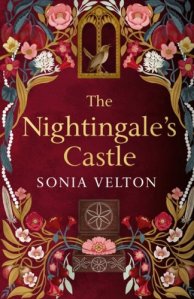
We Have Always Lived in the Castle is a dark, unsettling novel. My first link is to another dark novel with the word ‘castle’ in the title: The Nightingale’s Castle by Sonia Velton (1). This is a reimagining of the story of Countess Erzsébet Báthory (often anglicised to Elizabeth Bathory), thought to be a possible inspiration behind Bram Stoker’s Dracula. Bathory and her servants were accused of murdering hundreds of Hungarian peasant girls, making her one of the most notorious serial killers in history.

The Angel Makers by Patti McCracken (2) is a nonfiction book about another Hungarian serial killer. Zsuzsanna Fazekas, known in the book as Auntie Suzy, was a midwife and the ringleader of a circle of women responsible for the deaths of over one hundred men between 1914 and 1929. Suzy was the one who sold bottles of arsenic to the other women in her village and, in the absence of a village doctor, the one who dictated the causes of death to be put on the death certificates.

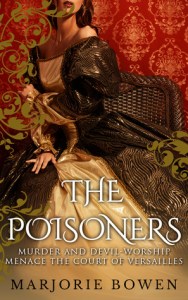
Poisoning also plays a big part in Marjorie Bowen’s The Poisoners (3), originally published in 1936. The book is set in 17th century Paris during the reign of the Sun King, Louis XIV, and revolves around a famous murder scandal known as L’affaire des poisons. I described it in my review as a story featuring “fortune tellers and spies, counterfeiters and apothecaries, an empty house which hides sinister secrets, mysterious letters marked with the sign of a pink carnation, and a society thought to be involved in black magic.”

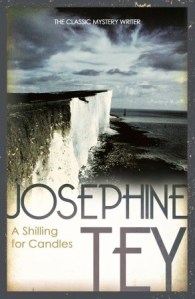
I don’t want a whole chain full of serial killers, so I’ll try to send things in a slightly different direction now. Another book published in 1936 is A Shilling for Candles by Josephine Tey (4). This is one of Tey’s Alan Grant mysteries (of which I’m sorry to say I’ve still only read two) and was adapted for film by Alfred Hitchcock under the title Young and Innocent.

A shilling is a coin, so that leads me to Sugar Money by Jane Harris (5). This novel is set in the Caribbean in the year 1765. Our narrator, teenage Lucien, and his older brother Emile are slaves working on a sugar plantation in French-ruled Martinique. It’s a fascinating book exploring some aspects of slavery I had never read about before – and it’s also partly based on a true story.

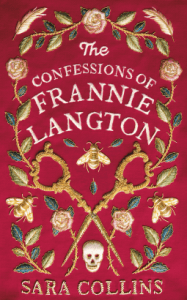
The final book in my chain is The Confessions of Frannie Langton by Sara Collins (6). The book begins with Frannie, a former slave, awaiting trial in London for the murder of her employers (sorry, it seems I couldn’t get away from murderers this month after all). However, the crime element is only one small part of the story – a large part of the novel is devoted to Frannie remembering her childhood on a sugar plantation in Jamaica and her experiences on arriving in England.

~

And that’s my chain for November! My links have included: The word ‘castle’, Hungary, female poisoners, 1936, money and sugar plantations.

In December we’ll be starting with Seascraper by Benjamin Wood.

My Commonplace Book: October 2025

A selection of quotes and pictures to represent October’s reading:

commonplace book
noun
a book into which notable extracts from other works are copied for personal use.

~

Very old vampires are anachronisms: they are living history, bringing the past right into the present, with all the traumas of the past. Every one of us who has written about a vampire knows our own vampire very well, because each reflects something of what we thought of humanity at the time we wrote them.

White Teeth, Red Blood: Selected Vampiric Verses by various authors (2025)

~

And so they strolled on over the sand, happy in each other’s company but with their minds full of things they should have said, but didn’t.

A Ghost Hunter’s Guide to Solving a Murder by F.H. Petford (2025)

~

The Cat-sith, a creature from Celtic mythology.

So, give me the unknown any day. Forget what other people learned, discover something new, something no one else knows, that’s when you make a name for yourself. That’s when the big people come looking for you.

Monstrous Tales by various authors (2025)
(Quote from Boneless by Janice Hallett)

~

‘Nor I!’ Granmere laughed again. ‘Thou wouldst never set out to do the impossible?’

Simon reflected. ‘Nay, I think not, sir. Yet I believe that there is very little that is impossible. There is always a way.’

Simon the Coldheart by Georgette Heyer (1925)

~

I was captivated. Each wasp knows its function and performs it: no doubts, no mistakes, no misunderstandings. The beautiful logic of insect lives. A million miles from the messy irrationality of human beings.

Rainforest by Michelle Paver (2025)

~

“It’s sometimes a mistake to remember too much,” said Mitchell Dane. “Half the people in the world make their own troubles by forgetting what they ought to remember, and then they keep ’em alive by remembering what they ought to forget.”

The Black Cabinet by Patricia Wentworth (1925)

~

St Mark’s Square, Venice

But then, I told myself, trying to make sense of it, is that not the case with all of the places, things, and people we dream of, that they seem mundanely familiar and at the same time inexpressibly strange?

Venetian Vespers by John Banville (2025)

~

I thought of it, afterwards, with astonished guilt. I told myself that it is impossible to dissect your friends and separate the good from the bad, that you accept them as they are, imperfect as they are.

The Odd Flamingo by Nina Bawden (1954)

~

But the brightest lights shine only against the darkest of backgrounds…

Murder Most Haunted by Emma Mason (2025)

~

Favourite books read this month:

The Black Cabinet and Monstrous Tales

Authors read for the first time this month:

F.H. Petford, Emma Mason, Sunyi Dean, Jenn Ashworth, Abir Mukherjee – and too many poets to list them all here!

Places visited in my October reading:

England, France, Germany, Scotland, Wales, Italy, Mexico

~

Reading notes: My October reading has been devoted mainly to books for 1925 Club and also the RIP XX challenge, so lots of dark, atmospheric or ghostly reads this month! November is always a busy month in the book blogging calendar (I wrote about my plans here) and I’m looking forward to joining in with Nonfiction November, Novellas in November and, if I have time, Margaret Atwood Reading Month and German Literature Month.

What did you read in October? Do you have any plans for November?