My Commonplace Book: April 2020

A selection of words and pictures to represent April’s reading:
commonplace book
noun
a book into which notable extracts from other works are copied for personal use.

~

If he complains to me again, I will ask him this: is Oenone less of a hero than Menelaus? He loses his wife so he stirs up an army to bring her back to him, costing countless lives and creating countless widows, orphans and slaves. Oenone loses her husband and she raises their son. Which of those is the more heroic act?

A Thousand Ships by Natalie Haynes (2019)

~

‘Those darling byegone times, Mr Carker,’ said Cleopatra, ‘with their delicious fortresses, and their dear old dungeons, and their delightful places of torture, and their romantic vengeances, and their picturesque assaults and sieges, and everything that makes life truly charming! How dreadfully we have degenerated!’

‘Yes, we have fallen off deplorably,” said Mr Carker.

Dombey and Son by Charles Dickens (1848)

~
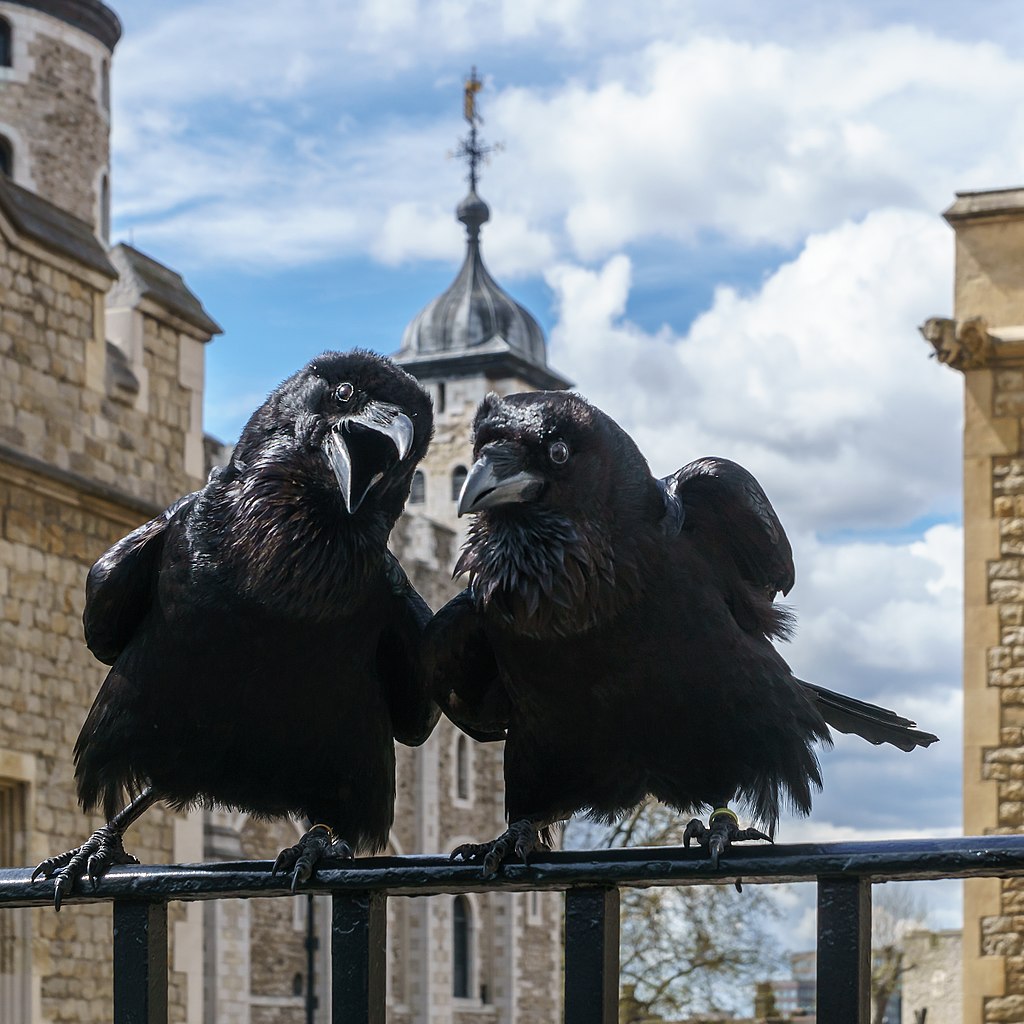
Ravens at the Tower of London

Nevertheless I felt a strange affinity with these charismatic birds. I was beginning to believe we were fellow misfits in a world where all other minds were fixed on an opposing course.

The Lady of the Ravens by Joanna Hickson (2020)

~

There is no wound of which human soul is capable which time cannot heal, given courage at the outset. If that were not so, life could not be lived. Time buries all that time has brought. Some things it may not bury as deeply as others. But at least it puts them out of constant sight, and so brings surcease of painful recollection.

The Minion by Rafael Sabatini (1930)

~
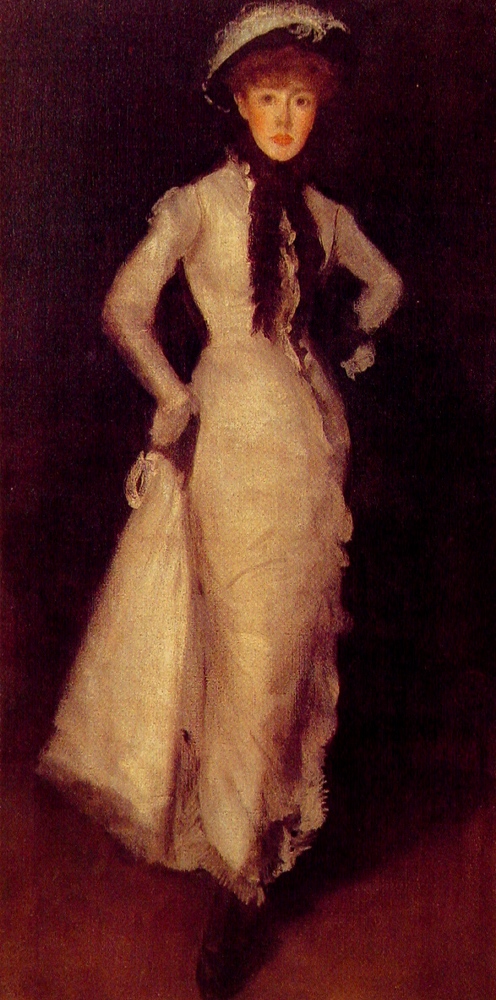
Maud Franklin – Arrangement in White and Black, James McNeill Whistler, 1876

Pulling away, he gave his spirits a restorative shake, like a dog fresh from a river. The blue yachting jacket was straightened, the boater angled just so atop the black curls, the eyeglass slotted in. Then he tried out a couple of his favourites from the lines he’d prepared.

‘As music is the poetry of sound,’ he said, ‘so painting is the poetry of sight.’

The meaning here seemed a touch obscure. The poetry of sight? Maud wrinkled her nose; she gave him an ambiguous nod.

‘Art should be independent of all claptrap.’

Mrs Whistler by Matthew Plampin (2018)

~

‘Experience is the word’ he said quietly. ‘I hadn’t expected anything like this. There doesn’t seem to be much relationship between music and the ordinary world, does there?’

‘That’s a question which requires several days to answer,’ Delia laughed, ‘and I’ve only got about two minutes to get to the box office and back.’

Murder to Music by Margaret Newman (1959)

~

They say that only fools struggle against fate. But I don’t think it’s foolish at all. After all, you don’t know how things will come out afterward until they have, so why settle for them ahead of time?

A Vision of Light by Judith Merkle Riley (1988)

~

With regard to religion, finally, it may be briefly said that she believed in God in much the same way as she believed in Australia. For she had no doubts whatever as to the existence of either; and she went to church on Sunday in much the same spirit as she would look at a kangaroo in the zoological gardens; for kangaroos came from Australia.

Queen Lucia by EF Benson (1920)

~
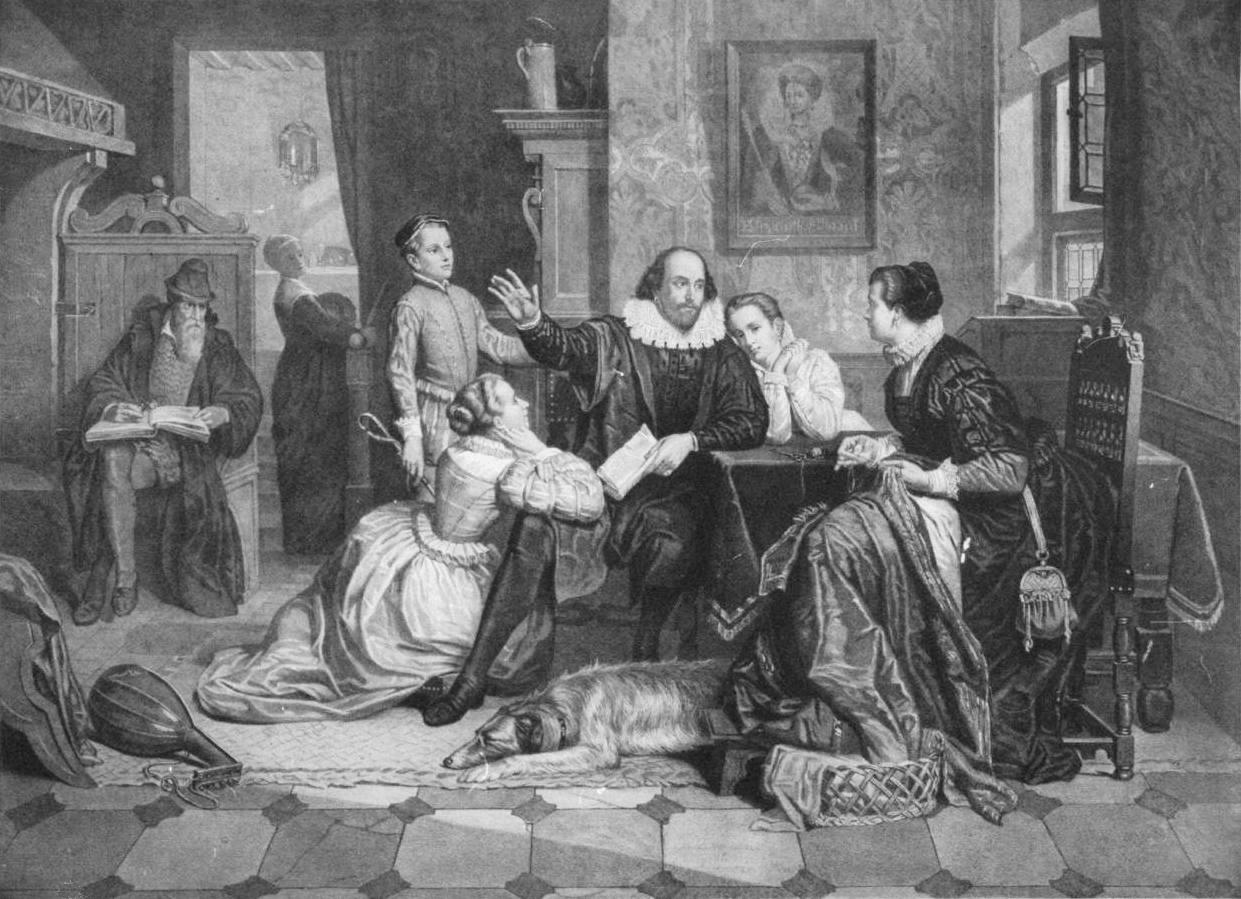
A 19th-century engraving imagining Shakespeare’s family life.

Every life has its kernel, its hub, its epicentre, from which everything flows out, to which everything returns.

Hamnet by Maggie O’Farrell (2020)

~

‘Not in the slightest,’ Hakesby said. ‘It is perfectly natural to wish to – to remember those places where we have been happy. Old buildings contain the history of those who used to live in them.’

The Last Protector by Andrew Taylor (2020)

~

What hardships does one undertake when one loves? thought Bianca. Love demands equal parts of joy and sorrow. Love is a balance between the two, but sometimes one weighs more than the other.

The Lost Boys of London by Mary Lawrence (2020)

~

Favourite book read in April:

A Vision of Light, Murder to Music and The Last Protector

New authors read in April:

Matthew Plampin, Natalie Haynes, EF Benson, Margaret Newman, Maggie O’Farrell

Countries visited in my April reading:

England, Scotland, Italy, Ancient Greece

~

Have you read any of these books? Which books did you enjoy reading in April?
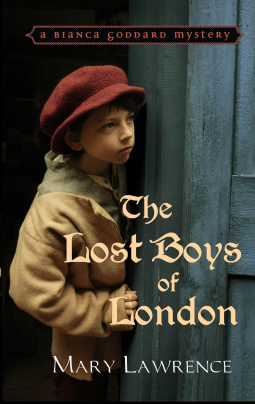
The Lost Boys of London by Mary Lawrence

This is the fifth book in a series of historical mysteries set in the Tudor period and featuring the character of alchemist’s daughter Bianca Goddard. I don’t think it’s essential to read all of the books in the series in order; I started with the fourth one, The Alchemist of Lost Souls, and had no problems in picking up the threads of the story and following the plot.

As The Lost Boys of London opens, Bianca’s husband John is away fighting in Scotland for Henry VIII, leaving Bianca in London, devoting her time to preparing herbal remedies in her ‘room of Medicinals and Physickes’. In the past, Bianca’s skills as a herbalist have led to her assisting Constable Patch with his investigations, and having played a part in solving several previous mysteries, her help is required again when a young boy is found hanging from the exterior wall of a church.

Finding a rosary wrapped around the boy’s neck marked with a set of initials, it seems there could be a religious motive for the murder, and this appears to be confirmed when a second boy is found under similar circumstances at another church. Bianca is determined to do whatever she can to find the murderer before he or she kills again – and she has a personal reason for wanting to do so as quickly as possible. Her own young friend, Fisk, who is about the same age as the other boys, has gone missing and Bianca is afraid that he could become the next victim.

I enjoyed this book more than The Alchemist of Lost Souls. I thought the mystery was stronger and more interesting, with its exploration of topics such as religious conflict, the rivalries between the clergy of various churches, and child poverty in Tudor London. Also, although the previous book included some magical realism elements, which didn’t entirely work for me, there didn’t seem to be anything like that in this one and I thought that was a good decision as the plot was strong enough without it. As well as following Bianca’s investigations in London, there are some chapters describing John’s adventures as a reluctant soldier in the Scottish borders during the war known as the ‘Rough Wooing’ and this added some variety to the novel, taking us away from London now and then to see what was going on elsewhere.

Sometimes the language used is not right for the setting (English houses don’t have ‘stoops’, for example) and I found that a bit distracting, but otherwise the atmosphere is convincing enough and it’s always interesting to read about the lives of ordinary, working-class people in the Tudor period as a change from all of the books dealing with the royal court. Oh, and I love Bianca’s cat, Hobs!

This is apparently the final book in the Bianca Goddard series. I received a copy for review via NetGalley.

Murder to Music by Margaret Newman

The latest addition to Agora Books’ Uncrowned Queens of Crime series is a book by an author I thought was new to me, but it turns out I’ve read a few of her books under another of her pseudonyms, Anne Melville. This one, Murder to Music, was her first novel and was originally published in 1959 under the name Margaret Newman. It’s an excellent murder mystery and could have been the start of a great series had the author not moved on to other genres (such as the Anne Melville family sagas).

Delia Jones is on the managing committee of the Metropolitan Choir, who are preparing to give a performance of a new mass composed by their conductor, Evan Tredegar. At the beginning of the novel, we meet the other members of the committee, whom we quickly discover are not the happiest group of people. Below the surface, there are tensions, secrets and resentments, some of which we won’t be aware of or fully understand until later in the story. The assistant conductor, Owen Burr, is particularly unpopular with the rest of the choir, so when he is shot dead just as the performance draws to a close there is no shortage of suspects.

Detective Superintendent Simon Hudson is watching from the audience and is able to begin an immediate investigation. However, things are going to be slightly difficult for Simon…because Delia Jones happens to be his girlfriend. Can she be ruled out as a suspect? Then, just as Simon thinks he has uncovered the motive and is about to identify the murderer, a second death takes place and he is forced to reassess everything he thinks he knows so far.

I thoroughly enjoyed this book. The characters are strong, with some of them given interesting back stories, and the reasons behind the complex relationships and long-standing feuds between the members of the choir feel believable. I also liked the setting, which made a change from the country house or small village settings which are so common in this type of detective novel. I’m not sure whether Margaret Newman had a musical background, but I felt that she seemed to really understand what was involved in the staging of a musical performance and what it was like to be part of a choir.

As a mystery, I thought the plot worked well and I was surprised by some of the developments in the second half of the book, having been led in the wrong direction for most of the first half! I kept changing my mind between one suspect and another, but in the end I was happy just to let Simon Hudson solve the mystery for me. It’s a shame this seems to be the only book featuring Simon and Delia, but I will be reading more by this author, under her various pseudonyms, and have the third book in her Hardie trilogy lined up to read soon.

Thanks to Agora Books for providing a copy of this book for review via NetGalley.

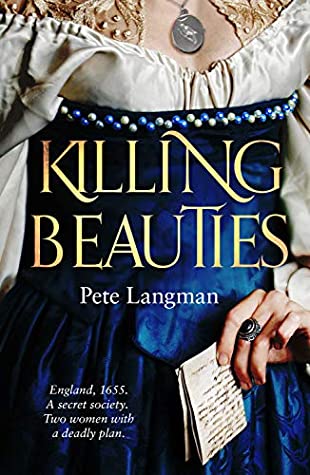
Killing Beauties by Pete Langman

Set in England during the Interregnum, the period between the execution of Charles I in 1649 and the restoration of Charles II in 1660, Pete Langman’s Killing Beauties tells the story of two female spies – or she-intelligencers, as they were known. Female spies played an important role in the intelligence networks of the time and the two women who feature in this novel, Susan Hyde and Diana Jennings, are based on real people.

The story begins in August 1655. With England under the rule of the Lord Protector Oliver Cromwell, the future Charles II – who is in exile awaiting the day when he can return to claim his throne – has entrusted Susan and Diana with a difficult and dangerous mission. Their task is to infiltrate the household of Cromwell’s Secretary of State John Thurloe in the hope of extracting secrets that will help them to undermine the Protectorate. However, Thurloe is also Cromwell’s spymaster, with a large and powerful network of his own. Will the women be able to obtain the information they need before their true identities are revealed?

Killing Beauties is a fascinating novel from the point of view of learning what was involved in the secret services of the 17th century: how they were organised and structured; the disguises, code names and terminology they used; how they gathered their intelligence; and the methods they used to keep their correspondence private – it was particularly interesting to read about the clever and intricate art of letterlocking! It’s such a shame that the contributions of the women who worked for these secret societies have been largely ignored and forgotten. The real Susan Hyde was completely overshadowed by her own brother Edward, the Earl of Clarendon, whose book, The History of the Rebellion, doesn’t even mention her.

Pete Langman has stated that the inspiration for his novel was Nadine Akkerman’s Invisible Agents: Women and Espionage in Seventeenth-Century Britain, which refers to both Susan and Diana, but as there is a limit to how much is actually known about them, particularly Diana, he has had to use some imagination to fill in the gaps. According to Akkerman’s book, Susan Hyde was postmistress for the secret royalist society of the Sealed Knot, and she carries out this role in Langman’s novel as well as trying to gain the trust of John Thurloe in order to obtain intelligence. Susan is portrayed as a sensible, practical person who takes her work very seriously, fully aware of the danger she is in – and I admired her, but I have to admit I found her a little bit bland. Diana, in contrast, is lively, daring and much more fun to read about, even if her loyalties are sometimes in question…

Diana had her fingers crossed as she spoke. It was something she did a lot, crossing her fingers as she spoke. Sometimes even Diana was unsure when she was lying, and at such times she had long ago decided that it was best to assume that she was.

For various reasons Diana virtually disappears from the story in the middle of the book and we don’t see as much of her as I would have liked. However, there’s a large cast of other characters to get to know, some of whom I’m assuming are fictional but others who definitely really existed: for example, Isaac Dorislaus, the Dutch scholar recruited to examine the correspondence passing through Cromwell’s ‘Black Chamber’, and Samuel Morland, one of Thurloe’s spies, who was also a mathematician and inventor.

I can’t really say that I loved this book; I found the plot unnecessarily complex and on occasions a bit difficult to follow, which admittedly could have been because I wasn’t paying enough attention, although I don’t think so. I also thought the book felt longer than it really needed to be, which meant the pace seemed to drag at times. Still, it was good to get some insights into the fascinating world of 17th century espionage and to have the vital contributions of female spies highlighted. At the end, it seemed as though things were being set up for a sequel, so despite having one or two problems with this book I would be happy to read another by Pete Langman.

Classics Club Spin #23: The result

The result of the latest Classics Club Spin has been revealed today.

The idea of the Spin was to list twenty books from my Classics Club list, number them 1 to 20, and the number announced by the Classics Club represents the book I have to read before 1st June 2020. The number that has been selected is…

6

And this means the book I need to read is…

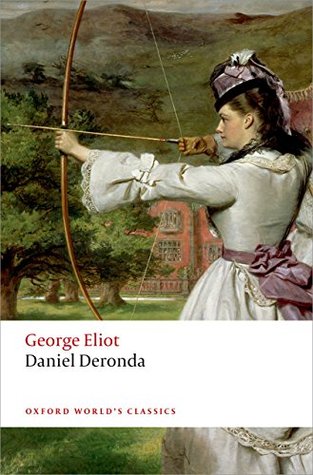
Daniel Deronda by George Eliot

Gwendolen Harleth gambles her happiness when she marries a sadistic aristocrat for his money. Beautiful, neurotic, and self-centred, Gwendolen is trapped in an increasingly destructive relationship, and only her chance encounter with the idealistic Deronda seems to offer the hope of a brighter future. Deronda is searching for a vocation, and in embracing the Jewish cause he finds one that is both visionary and life-changing. Damaged by their pasts, and alienated from the society around them, they must both discover the values that will give their lives meaning.

I have to admit, this was not one of the books on my list that I was particularly wishing for; I had hoped for something shorter and lighter. Still, I’ve enjoyed everything else I’ve read by George Eliot so I’m not too unhappy with this result. If you’ve read it, let me know what you thought!

Queen Lucia by E.F. Benson – #1920Club

I wasn’t sure whether I would manage to read and review anything in time for this week’s 1920 Club (hosted by Karen and Simon) but when I picked up E.F. Benson’s 1920 novel Queen Lucia I found it so entertaining and easy to read that I finished most of it in one day! Although I can’t quite say that I loved it, it was just the sort of thing I was in the mood for at the moment – something that would take my mind off the current situation for a while and whisk me away to another time and place.

That place is Riseholme, a quiet English village described by a newcomer as a “delicious, hole-in-the-corner, lazy backwater sort of place, where nothing ever happens, and nobody ever does anything,” but which, to the people who live there, is the centre of the universe. Life in Riseholme consists mainly of arranging dinner parties and musical evenings, while gossiping about the neighbours – and presiding over all of this is Emmeline Lucas, better known as Lucia (pronounced the Italian way, of course). Along with her husband Philip (‘Peppino’) and her loyal ‘gentleman-in-waiting’ Georgie Pillson, Lucia has put herself at the heart of Riseholme society and is the self-proclaimed queen – so imagine her frustration when her rival, Daisy Quantock, begins to pose a threat to her crown. When Mrs Quantock produces an Indian Guru and offers his services as yoga teacher to the villagers, the jealous Lucia manages to ‘steal’ him for herself, so when Daisy moves on to a new fad she vows not to make the same mistake again…

Lucia is such an unpleasant character! From her irritating habit of speaking baby talk with Georgie and her insistence on dropping Italian phrases into conversation, despite only knowing a few words of the language, to the way she pushes others aside to make herself the centre of attention, there is really not much to like about her at all. And yet that didn’t really matter; as this is a satire and Lucia, and the others, are clearly supposed to be comedy characters, the more unlikeable the better!

This is the first in Benson’s six-novel Mapp and Lucia series and also the first one I’ve read. They had never really appealed to me before, although I know a lot of people love them, so I was pleased to find that I enjoyed this book much more than I thought I would. I don’t feel an immediate compulsion to pick up the next one, but I’m sure I will at some point and am looking forward to meeting Miss Mapp.

~

Usually I’m able to post a list of other books I’ve reviewed on my blog from the relevant club year, but for 1920 I can find only one:

The Great Impersonation by E. Phillips Oppenheim

It’s a great book and one I would highly recommend.

Classics Club Spin #23: My list

It’s always a nice surprise to see that the Classics Club have announced another Classics Spin! I don’t feel that I’ve made much progress with my Classics Club reading recently, so I’m looking forward to taking part in this, the twenty-third Spin!

If you’re not sure what a Classics Spin is, here’s a reminder:

The rules for Spin #23:

* List any twenty books you have left to read from your Classics Club list.
* Number them from 1 to 20.
* On Sunday 19th April the Classics Club will announce a number.
* This is the book you need to read by 1st June 2020.

And here is my list:

1. Germinal by Émile Zola
2. Jane and Prudence by Barbara Pym
3. The White Guard by Mikhail Bulgakov
4. The Chrysalids by John Wyndham
5. High Rising by Angela Thirkell
6. Daniel Deronda by George Eliot
7. Castle Dor by Daphne du Maurier
8. Claudius the God by Robert Graves
9. The Black Arrow by Robert Louis Stevenson
10. The Duke’s Children by Anthony Trollope
11. The Long Ships by Frans G Bengtsson
12. Moonfleet by John Meade Falkner
13. The Cloister and the Hearth by Charles Reade
14. Nicholas Nickleby by Charles Dickens
15. Sandokan: The Tigers of Mompracem by Emilio Salgari
16. La Reine Margot by Alexandre Dumas
17. I Will Repay by Baroness Emmuska Orczy
18. Fire from Heaven by Mary Renault
19. The Brothers Karamazov by Fyodor Dostoevsky
20. Goodbye Mr Chips by James Hilton

~

Castle Dor would come at the perfect time for Ali’s Daphne du Maurier Reading Week in May, but as I have plenty of time to read at the moment I would be happy to get one of the longer books on my list too.

Which of these do you think I should be hoping for?