Killing Beauties by Pete Langman

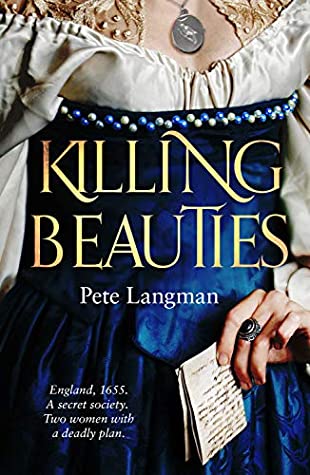
Set in England during the Interregnum, the period between the execution of Charles I in 1649 and the restoration of Charles II in 1660, Pete Langman’s Killing Beauties tells the story of two female spies – or she-intelligencers, as they were known. Female spies played an important role in the intelligence networks of the time and the two women who feature in this novel, Susan Hyde and Diana Jennings, are based on real people.

The story begins in August 1655. With England under the rule of the Lord Protector Oliver Cromwell, the future Charles II – who is in exile awaiting the day when he can return to claim his throne – has entrusted Susan and Diana with a difficult and dangerous mission. Their task is to infiltrate the household of Cromwell’s Secretary of State John Thurloe in the hope of extracting secrets that will help them to undermine the Protectorate. However, Thurloe is also Cromwell’s spymaster, with a large and powerful network of his own. Will the women be able to obtain the information they need before their true identities are revealed?

Killing Beauties is a fascinating novel from the point of view of learning what was involved in the secret services of the 17th century: how they were organised and structured; the disguises, code names and terminology they used; how they gathered their intelligence; and the methods they used to keep their correspondence private – it was particularly interesting to read about the clever and intricate art of letterlocking! It’s such a shame that the contributions of the women who worked for these secret societies have been largely ignored and forgotten. The real Susan Hyde was completely overshadowed by her own brother Edward, the Earl of Clarendon, whose book, The History of the Rebellion, doesn’t even mention her.

Pete Langman has stated that the inspiration for his novel was Nadine Akkerman’s Invisible Agents: Women and Espionage in Seventeenth-Century Britain, which refers to both Susan and Diana, but as there is a limit to how much is actually known about them, particularly Diana, he has had to use some imagination to fill in the gaps. According to Akkerman’s book, Susan Hyde was postmistress for the secret royalist society of the Sealed Knot, and she carries out this role in Langman’s novel as well as trying to gain the trust of John Thurloe in order to obtain intelligence. Susan is portrayed as a sensible, practical person who takes her work very seriously, fully aware of the danger she is in – and I admired her, but I have to admit I found her a little bit bland. Diana, in contrast, is lively, daring and much more fun to read about, even if her loyalties are sometimes in question…

Diana had her fingers crossed as she spoke. It was something she did a lot, crossing her fingers as she spoke. Sometimes even Diana was unsure when she was lying, and at such times she had long ago decided that it was best to assume that she was.

For various reasons Diana virtually disappears from the story in the middle of the book and we don’t see as much of her as I would have liked. However, there’s a large cast of other characters to get to know, some of whom I’m assuming are fictional but others who definitely really existed: for example, Isaac Dorislaus, the Dutch scholar recruited to examine the correspondence passing through Cromwell’s ‘Black Chamber’, and Samuel Morland, one of Thurloe’s spies, who was also a mathematician and inventor.

I can’t really say that I loved this book; I found the plot unnecessarily complex and on occasions a bit difficult to follow, which admittedly could have been because I wasn’t paying enough attention, although I don’t think so. I also thought the book felt longer than it really needed to be, which meant the pace seemed to drag at times. Still, it was good to get some insights into the fascinating world of 17th century espionage and to have the vital contributions of female spies highlighted. At the end, it seemed as though things were being set up for a sequel, so despite having one or two problems with this book I would be happy to read another by Pete Langman.
Classics Club Spin #23: The result

The result of the latest Classics Club Spin has been revealed today.

The idea of the Spin was to list twenty books from my Classics Club list, number them 1 to 20, and the number announced by the Classics Club represents the book I have to read before 1st June 2020. The number that has been selected is…

6

And this means the book I need to read is…

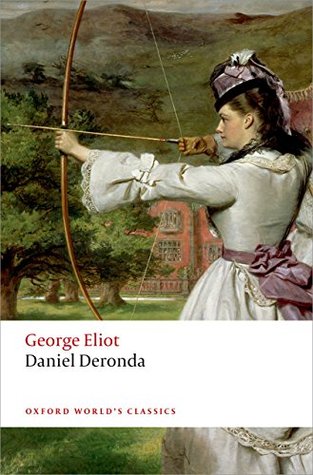
Daniel Deronda by George Eliot

Gwendolen Harleth gambles her happiness when she marries a sadistic aristocrat for his money. Beautiful, neurotic, and self-centred, Gwendolen is trapped in an increasingly destructive relationship, and only her chance encounter with the idealistic Deronda seems to offer the hope of a brighter future. Deronda is searching for a vocation, and in embracing the Jewish cause he finds one that is both visionary and life-changing. Damaged by their pasts, and alienated from the society around them, they must both discover the values that will give their lives meaning.

I have to admit, this was not one of the books on my list that I was particularly wishing for; I had hoped for something shorter and lighter. Still, I’ve enjoyed everything else I’ve read by George Eliot so I’m not too unhappy with this result. If you’ve read it, let me know what you thought!

Queen Lucia by E.F. Benson – #1920Club

I wasn’t sure whether I would manage to read and review anything in time for this week’s 1920 Club (hosted by Karen and Simon) but when I picked up E.F. Benson’s 1920 novel Queen Lucia I found it so entertaining and easy to read that I finished most of it in one day! Although I can’t quite say that I loved it, it was just the sort of thing I was in the mood for at the moment – something that would take my mind off the current situation for a while and whisk me away to another time and place.

That place is Riseholme, a quiet English village described by a newcomer as a “delicious, hole-in-the-corner, lazy backwater sort of place, where nothing ever happens, and nobody ever does anything,” but which, to the people who live there, is the centre of the universe. Life in Riseholme consists mainly of arranging dinner parties and musical evenings, while gossiping about the neighbours – and presiding over all of this is Emmeline Lucas, better known as Lucia (pronounced the Italian way, of course). Along with her husband Philip (‘Peppino’) and her loyal ‘gentleman-in-waiting’ Georgie Pillson, Lucia has put herself at the heart of Riseholme society and is the self-proclaimed queen – so imagine her frustration when her rival, Daisy Quantock, begins to pose a threat to her crown. When Mrs Quantock produces an Indian Guru and offers his services as yoga teacher to the villagers, the jealous Lucia manages to ‘steal’ him for herself, so when Daisy moves on to a new fad she vows not to make the same mistake again…

Lucia is such an unpleasant character! From her irritating habit of speaking baby talk with Georgie and her insistence on dropping Italian phrases into conversation, despite only knowing a few words of the language, to the way she pushes others aside to make herself the centre of attention, there is really not much to like about her at all. And yet that didn’t really matter; as this is a satire and Lucia, and the others, are clearly supposed to be comedy characters, the more unlikeable the better!

This is the first in Benson’s six-novel Mapp and Lucia series and also the first one I’ve read. They had never really appealed to me before, although I know a lot of people love them, so I was pleased to find that I enjoyed this book much more than I thought I would. I don’t feel an immediate compulsion to pick up the next one, but I’m sure I will at some point and am looking forward to meeting Miss Mapp.

~

Usually I’m able to post a list of other books I’ve reviewed on my blog from the relevant club year, but for 1920 I can find only one:

The Great Impersonation by E. Phillips Oppenheim

It’s a great book and one I would highly recommend.

Classics Club Spin #23: My list

It’s always a nice surprise to see that the Classics Club have announced another Classics Spin! I don’t feel that I’ve made much progress with my Classics Club reading recently, so I’m looking forward to taking part in this, the twenty-third Spin!

If you’re not sure what a Classics Spin is, here’s a reminder:

The rules for Spin #23:

* List any twenty books you have left to read from your Classics Club list.
* Number them from 1 to 20.
* On Sunday 19th April the Classics Club will announce a number.
* This is the book you need to read by 1st June 2020.

And here is my list:

1. Germinal by Émile Zola
2. Jane and Prudence by Barbara Pym
3. The White Guard by Mikhail Bulgakov
4. The Chrysalids by John Wyndham
5. High Rising by Angela Thirkell
6. Daniel Deronda by George Eliot
7. Castle Dor by Daphne du Maurier
8. Claudius the God by Robert Graves
9. The Black Arrow by Robert Louis Stevenson
10. The Duke’s Children by Anthony Trollope
11. The Long Ships by Frans G Bengtsson
12. Moonfleet by John Meade Falkner
13. The Cloister and the Hearth by Charles Reade
14. Nicholas Nickleby by Charles Dickens
15. Sandokan: The Tigers of Mompracem by Emilio Salgari
16. La Reine Margot by Alexandre Dumas
17. I Will Repay by Baroness Emmuska Orczy
18. Fire from Heaven by Mary Renault
19. The Brothers Karamazov by Fyodor Dostoevsky
20. Goodbye Mr Chips by James Hilton

~

Castle Dor would come at the perfect time for Ali’s Daphne du Maurier Reading Week in May, but as I have plenty of time to read at the moment I would be happy to get one of the longer books on my list too.

Which of these do you think I should be hoping for?

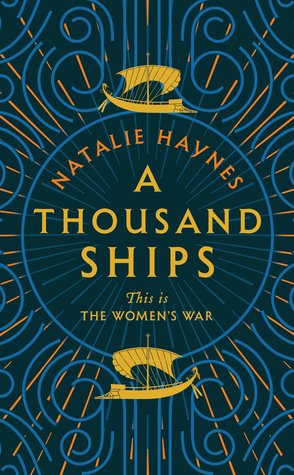
A Thousand Ships by Natalie Haynes

“Just as I promised him: this was never the story of one woman, or two. It was the story of all of them. A war does not ignore half the people whose lives it touches. So why do we?”

This is the book I had expected Pat Barker’s The Silence of the Girls to be. A retelling of the events surrounding the Trojan War written from the perspective of not just one or two but many of the women who had a role to play in the war and its aftermath – and going beyond the Iliad, the Aeneid and the Oresteia to tell the stories the men didn’t tell.

From Penthesilea, the Amazon queen, to Cassandra the prophet; from Thetis, the sea nymph and mother of Achilles, to Gaia, the personification of Mother Earth; from Iphigenia, cruelly sacrificed on what should have been her wedding day, to Creusa, who wakes in the night to find the city of Troy in flames – just think of a woman from Greek mythology and she is probably here, in this book!

The stories of some of the women are told quite briefly, while others are given more time and attention; some appear only once but others recur again and again throughout the novel. Interspersed between these stories are a series of letters from Penelope to her absent husband, Odysseus, the tone growing increasingly hurt and frustrated as tales of his heroic escapades begin to reach her while the man himself appears to be in no hurry to return home to his wife. And holding all the other threads of the novel together are short sections of commentary by Calliope, the muse of epic poetry, who is providing guidance to a blind poet who wants to tell the story of Troy:

Men’s deaths are epic, women’s deaths are tragic: is that it? He has misunderstood the very nature of conflict. Epic is countless tragedies, woven together. Heroes don’t become heroes without carnage, and carnage has both causes and consequences. And those don’t begin and end on a battlefield.

This is an ambitious novel but, for me, it mostly works. I say mostly because there were times when I found the structure confusing – the stories are not presented in chronological order and jump around in time so that a chapter set after the fall of Troy is followed by a chapter set at the beginning of the war – but I’m happy to admit that I am in no way an expert on Greek mythology and readers with more knowledge probably wouldn’t have a problem. I’m not really sure of the reason for the non-linear structure, though – obviously the stories must have been carefully arranged in a certain order but to me they felt very random. Also, because there are so many different narrators, many of whom made their voices heard only for a few pages before disappearing from the novel completely, it was difficult to form any kind of emotional connection with them. Still, there are some I found more memorable than others: Cassandra, doomed to constantly ‘watch the shock on people’s faces, when precisely what she had predicted – and they had ignored – came true’; Hera, Athene and Aphrodite fighting over the golden apple inscribed with the words ‘For the most beautiful’; and the sad story of Laodamia, devoted to a bronze statue of her lost husband.

Although A Thousand Ships felt more like a collection of short stories than a novel, I enjoyed reading it and am now wondering whether I should try Natalie Haynes’ previous Greek retelling, The Children of Jocasta.

Thanks to Mantle for providing a copy of this book for review via NetGalley.

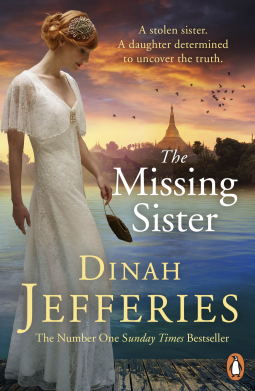
The Missing Sister by Dinah Jefferies

So far, the novels of Dinah Jefferies have taken me to India, Malaya, Ceylon and French Indochina. Now, with The Missing Sister, I have had the opportunity to visit Burma. Known as Myanmar today, the novel is set in 1936 when Burma is still a British colony – although unrest is growing and there are signs that independence might not be far away. It is to Burma that Belle Hatton has come in search of answers to a mystery that has haunted her family for more than twenty years.

Taking a job as a singer in a luxury hotel in the capital city of Rangoon, Belle uses her spare time to hunt for clues that may explain the disappearance of her parents’ baby daughter, Elvira, in January 1911. Belle herself has grown up in England, unaware that her elder sister ever existed, but now that both of her parents are dead, she has discovered a newspaper clipping describing the day Elvira, only three weeks old, vanished from the Hattons’ garden in Rangoon. Although it was all so long ago, Belle is determined to find out what really happened and whether Elvira could possibly still be alive.

As with all of Dinah Jefferies’ novels, the location is beautifully described and although I’ve never been to Burma/Myanmar it was easy to picture the lively, bustling streets of Rangoon (now Yangon), the opulent temples and pagodas, and the scenery Belle sees when, later in the book, she travels upriver to Mandalay. Another common feature of Jefferies’ books tends to be a portrayal of different cultures existing, often uneasily, side by side in the final years of the British Empire (or in the case of The Silk Merchant’s Daughter, the French Empire). This book contains a vivid description of a violent riot between the Burmese and the Burmese Indians, but otherwise I was a bit disappointed that Belle has little involvement with the local people and their struggles, sticking mainly to the British community and focusing on her search for Elvira.

The mystery element of the novel is slightly predictable and although I didn’t guess exactly what had happened to Belle’s sister, I wasn’t at all surprised by the ending of the book. Along the way, Belle is offered help from two very different men – Edward, a British government official, and Oliver, an American journalist – but when she starts to receive anonymous warnings, she is unsure which, if either of them, she can trust. This time, I did guess correctly – but I did have a few doubts as it wasn’t completely obvious.

There was one other aspect of the book that interested me: a storyline set several years earlier and following the story of Belle’s mother, Diana, and how she copes with the tragic disappearance of Elvira. When suspicion falls on Diana herself, she and her husband leave Burma and return to England where, sadly, their marriage starts to break down under the stress of their ordeal. Diana doesn’t receive the support she deserves and decisions are made that will affect not only her own future but also her youngest daughter Belle’s. Diana’s story is told in the form of short chapters interspersed with Belle’s, which means we don’t spend a lot of time with her, but the little glimpses we are given of her life and the way she is treated by her husband are very sad.

This isn’t one of my favourite Dinah Jefferies novels, but I’m looking forward to her next one The Tuscan Contessa, which is out later this year and will be the first she has written not to be set in Asia.

Historical Musings #59: What are you reading?

Welcome to my monthly post on all things historical fiction. I hope everyone is having a good Easter – or as good as it can be under the circumstances. I’m pleased to report that, after struggling to concentrate on anything for the last few weeks, I seem to be out of the reading slump I was in and am starting to write reviews again as well, but I still haven’t been in the right frame of mind to put a long post together in time for today’s Historical Musings. Therefore, I’m keeping things simple this month and asking you to share your current and upcoming historical reads.

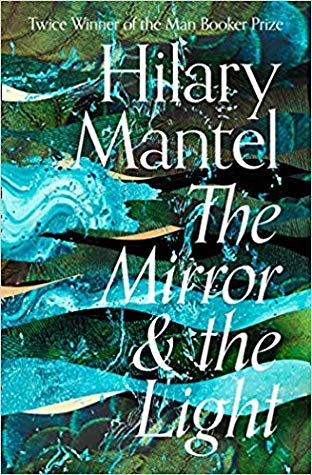
I am currently in the middle of two very different historical novels. First, I am still working through Hilary Mantel’s third and final Thomas Cromwell novel, The Mirror and the Light. I bought my copy in the first week of its publication but didn’t start reading it immediately because I wanted to wait until I felt slightly less stressed and distracted and would be able to give it the attention it deserved. I am now completely absorbed in it, but it will still be a while before I’m finished.

My other current read is A Vision of Light by Judith Merkle Riley, a reissue of her 1988 novel which was the first in the Margaret of Ashbury trilogy, set in medieval England. Despite some very dark topics, it’s an easy, entertaining read and I’m enjoying it so far.

The next two historical fiction novels I have lined up are The Last Protector by Andrew Taylor and Royal Flush by Margaret Irwin, both from NetGalley and both authors I have enjoyed before, so I’m looking forward to reading them.

Are you reading any historical fiction at the moment? If not, do you have any coming up soon on your TBR? I’d love to hear about your historical reading, particularly if you have something good to recommend!