My Commonplace Book: February 2020

A selection of words and pictures to represent February’s reading:
commonplace book
noun
a book into which notable extracts from other works are copied for personal use.

~

There were no houses across the way from Miss Beulah’s, only a wall of pines. It was a dark, romantic view, and somehow sad. It made her think of the poor little match girl who froze to death, and the other little girl whose cruel stepmother dressed her in newspapers and sent her out in the storm to find strawberries. Snow always made Miss Beulah think of things like that, pretty, childish things with death and tears in the background. Miss Beulah had the imagination of her century and she had read too many books when she was young.

Blood Upon the Snow by Hilda Lawrence (1944)

~
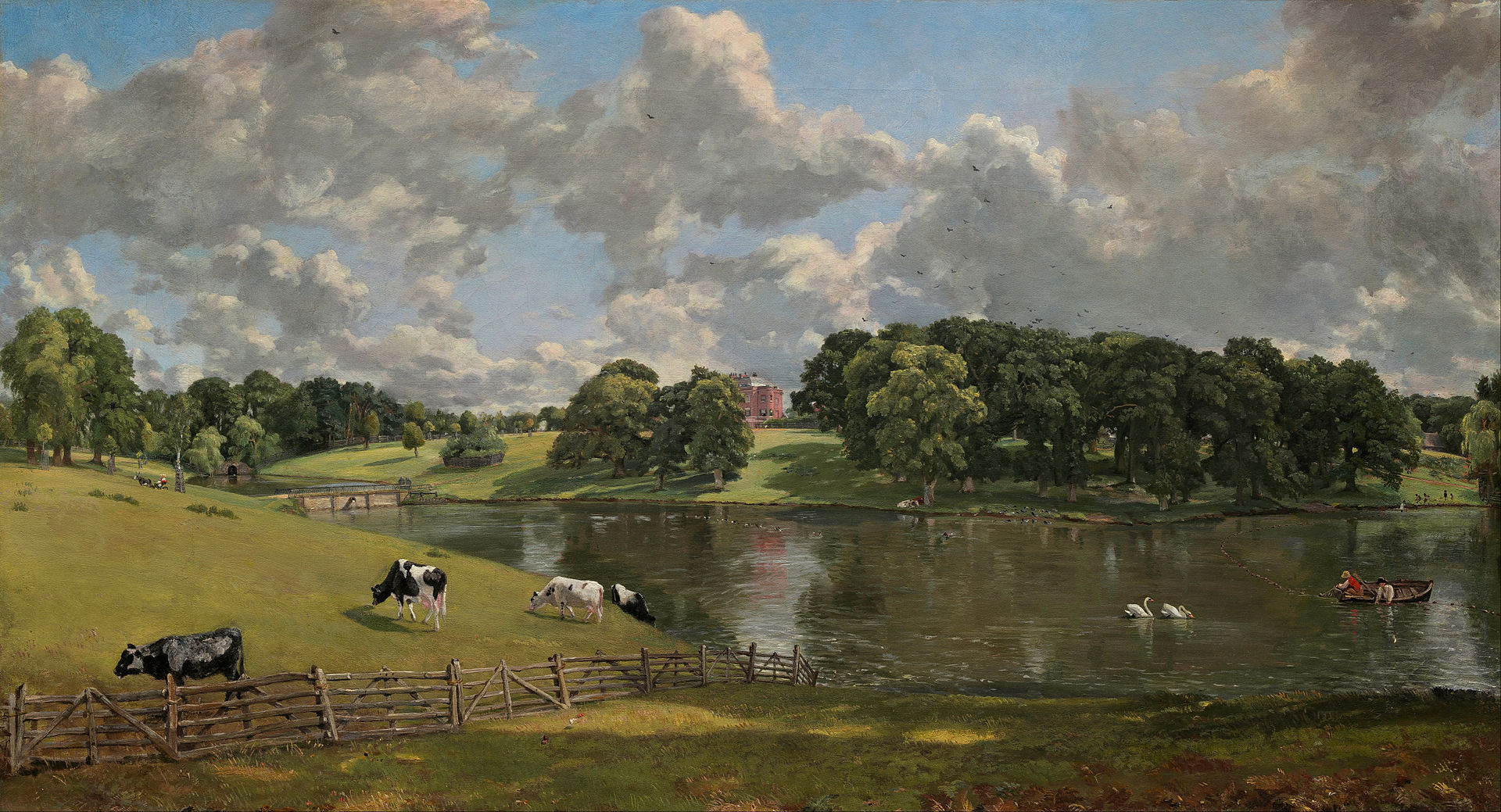
Wivenhoe Park by John Constable, 1816

Now his brother looked up. ‘Is the suggestion disagreeable to you?’

John thought for a moment before he replied. ‘What is not necessary is not always agreeable.’

The Year Without Summer by Guinevere Glasfurd (2020)

~

This position was first recorded in the 1340s and by 1471 the description of the role of master of the henchmen was

…to learn them to ride cleanly and surely, to draw them also to jousts, to learn them wear their harness (armour), to have all courtesy in words, deeds, and degrees…to teach them sundry languages and other learnings virtuous, to harping, to pipe, sing, dance, and with other honest and temperate behaving and patience…to have his respects unto their demeaning, how mannerly they eat and drink, and to their communication.

Sir Francis Bryan: Henry VIII’s Most Notorious Ambassador by Sarah-Beth Watkins (2020)

~

‘You did not see the need for change because the world you lived in suited you best. And we are all blinded by dogmatics and have become too afraid to trust our own thoughts. We have all been manipulated by the acceptance of tradition, our minds already tainted by the time we learn to speak. It is not our parents’ fault, nor our grandparents’; who as a babe has the knowledge and strength to take on every human that existed before them?’

Requiem for a Knave by Laura Carlin (2020)

~
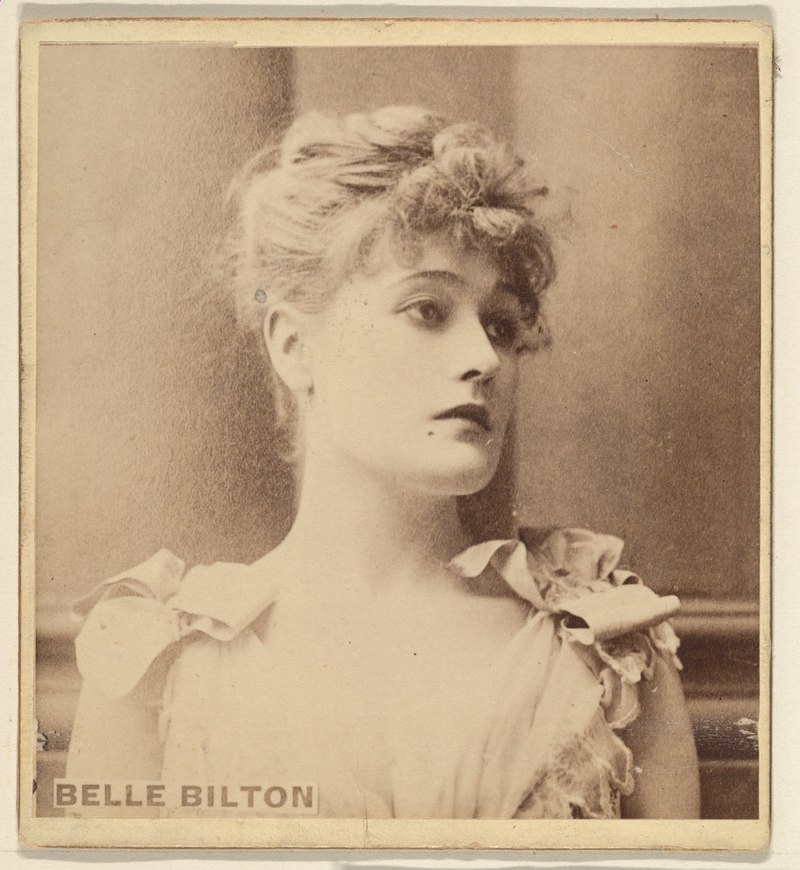
Belle Bilton, Countess of Clancarty

“Do you love to read, Flo, as I do?” he said. “I cannot get your sister to lift a book.” He waved his hand in the direction of the Corinthian’s library, the quietest room in the club.

“Oh, Isabel is not for literary pursuits, Mr Weston. She prefers to live her story.”

Weston laughed. “What a superb notion! And so superbly put.”

Becoming Belle by Nuala O’Connor (2018)

~

The storm comes in like a finger snap. That’s how they’ll speak in the months and years after, when it stops being only an ache behind their eyes and a crushing at the base of their throats. When it finally fits into stories. Even then, it doesn’t tell how it actually was. There are ways words fall down: they give shape too easily, carelessly. And there was no grace, no ease to what Maren saw.

The Mercies by Kiran Millwood Hargrave (2020)

~

‘I’m at the Club. I can be with you in about a quarter of an hour, if that suits you.’

‘Very well indeed, sir. Come along.’

Johnny rang off, and Sally asked, ‘What on earth do you suppose he wants?’

‘I can’t imagine. If this were a detective story, he’d be bumped off before he could tell us. It’s a classic situation’.

Answer in the Negative by Henrietta Hamilton (1959)

~
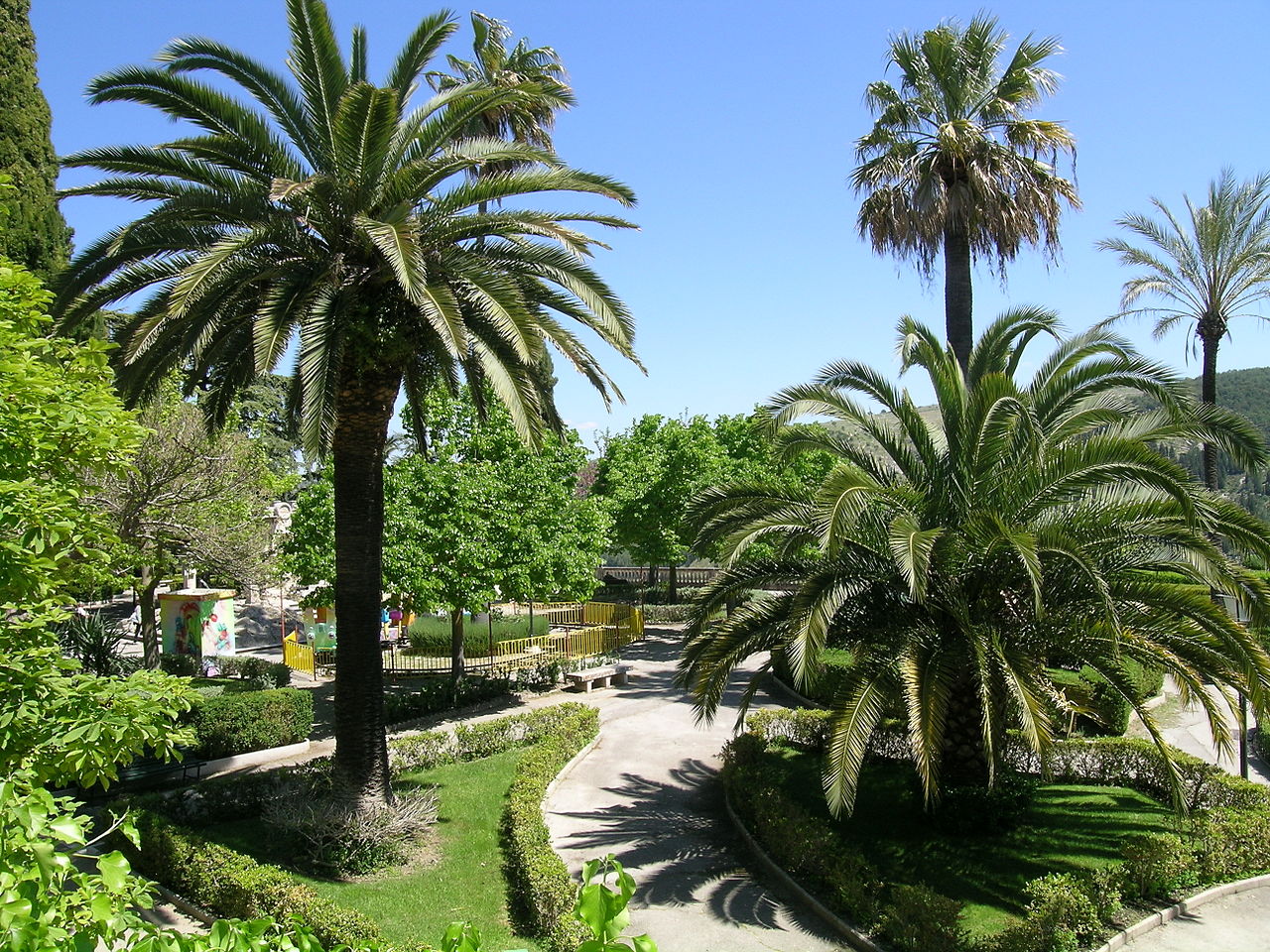
Giardini Iblei, Ragusa

We climbed to the top of the city, where the formal gardens, the Giardini Iblei, were laid out: green, shady and quiet. We entered through an avenue of huge old palm trees throwing deep shade across the hot, bright path. Starlings sang in the trees; cats stretched in patches of sunlight. The gardens were flanked by churches; one even stood inside its boundary – an arched door painted green and a saint standing up high beside its tower, one hand raised in benediction, baking in the glare.

The House by the Sea by Louise Douglas (2020)

~

“I see the past as it actually was,” Maeve said. She was looking at the trees.

“But we overlay the present onto the past. We look back through the lens of what we know now, so we’re not seeing it as the people we were, we’re seeing it as the people we are, and that means the past has been radically altered.”

The Dutch House by Ann Patchett (2019)

~

“In case this turns out to be a high-powered mystery, which I don’t suppose for a moment that it will, remember that an elderly unmarried woman who knits and gardens is streets ahead of any detective sergeant. She can tell you what might have happened and what ought to have happened and even what actually did happen! And she can tell you why it happened!”

A Murder is Announced by Agatha Christie (1950)

~

We make decisions based on what’s best for the realm, not to appease our feelings. The same is true for us. You want to speak of love for eighteen years, but it has never been about love, only promise and property, power and position, and after eighteen years the promise has been unfulfilled, the property has not been possessed, our power is less than it should be, and our position is fragile without an heir.

Thus, do not speak to me of love. I am a king.

The Great Matter Monologues by Thomas Crockett (2020)

~
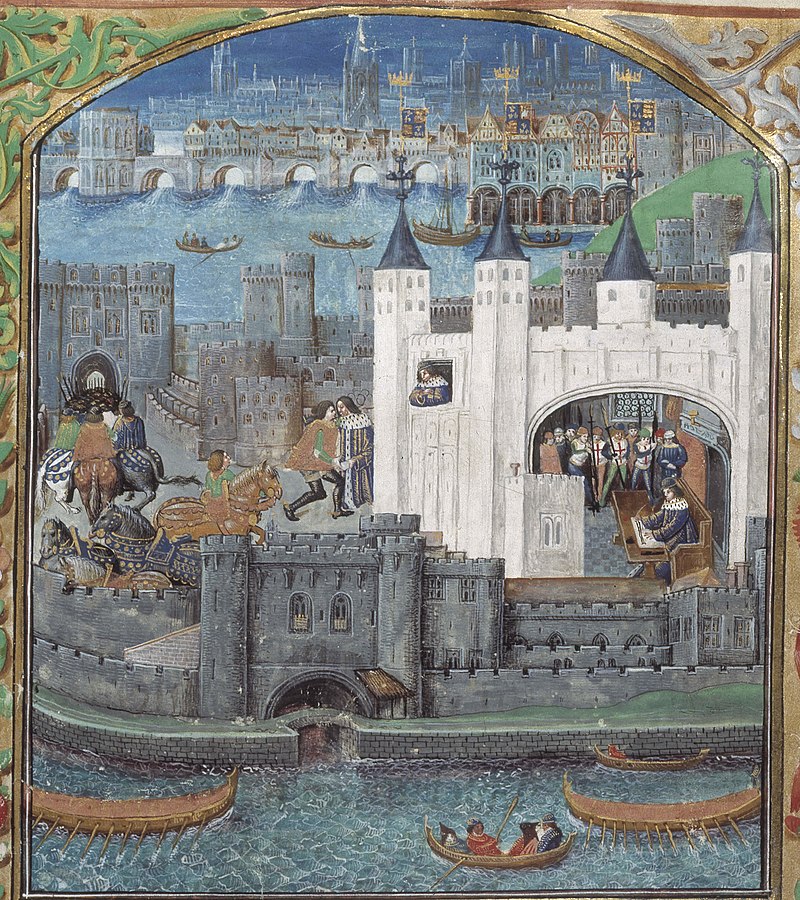
Imprisonment of Charles of Orleans in the Tower of London

My mother sought and found solace in reading what wise men and poets had written to direct us to a path in the impenetrable forest which life is. It is an image which was familiar to me when I was a child. My mother said once: Life is a long awaiting of God’s peace. And I know that my father considered himself to be one who had irretrievably lost his way in the forest of long awaiting. We too seek a path in the wilderness, ma mie. Perhaps we shall wander inaccessible to each other, each in a different place. But shouldn’t we try to find each other? Trust and sharing of views, these could bring us together.’

In a Dark Wood Wandering by Hella S Haasse (1949)

~

‘I understand better than you know, sister,’ said Diana, turning her grip into a hug as Molly’s tears began again. ‘We are women. We lose all that we love. We give everything, we give life, and all around us it is being taken away. I know. It was ever thus. It will ever be thus.’

Killing Beauties by Pete Langman (2020)

~

Favourite books read in February:

A Murder is Announced, In a Dark Wood Wandering and The Dutch House.

New authors read in February:

Sarah-Beth Watkins, Kiran Millwood Hargrave, Henrietta Hamilton, Nuala O’Connor, Thomas Crockett, Pete Langman, Hella S Haasse and Ann Patchett.

Countries visited in my February reading:

USA, England, Indonesia, Switzerland, Norway, Italy and France.

~

Have you read any of these books? Which books did you enjoy reading in February?

The Mercies by Kiran Millwood Hargrave

I am always drawn to books with pretty covers like this one, even though I know that the story inside doesn’t always live up to the promise of the cover. This one, set in 17th century Norway, did sound fascinating, though, so I hoped that in this case it would be as good as it looked!

The novel opens in December 1617 in the remote island town of Vardø, in the far northeast of Norway. It is Christmas Eve but the men of the island have gone out to sea as usual in search of the fish on which their livelihood depends. Twenty-year-old Maren Magnusdatter watches from her window as she sits by the fire with her mother and sister-in-law mending torn sails. Suddenly there’s a flash of lightning and Maren and her mother run to the window…

And then maybe both of them are screaming but there is no sound save the sea and the sky and all the boat lights swallowed and the boats flashing and the boats spinning, the boats flying, turning, gone.

The effects of that Christmas Eve storm are disastrous both for Maren, who loses her father and brother, and for the town of Vardø as a whole. Where the male population of the town used to be fifty-three, now only thirteen remain – and those thirteen consist of babies, young boys and elderly men. Now the women of Vardø have two choices: abandon the island and start a new life somewhere else – or stay and do the work of the men themselves, so that their community can survive.

Meanwhile, far away in Bergen, a young woman called Ursa is marrying a man chosen for her by her father. The man’s name is Absalom Cornet and he has been summoned from Scotland to take up a position as Commissioner of Vardø. When they arrive in Vardø, Ursa is struck by the strength and independence of the women she meets there and the resilience they have shown in coping with such a terrible tragedy. Commissioner Cornet, though, views the women differently – and when Ursa discovers the true nature of the work her husband has carried out in Scotland and why he has been brought to Norway, she becomes afraid for her new friends.

The Mercies is based on real historical events – the 1617 storm which almost wiped out all the men of Vardø really happened, and so did some of the things that take place later in the novel. I loved the descriptions of the island and the portrayal of a small, superstitious society where outsiders and anyone deemed to be different – such as Maren’s sister-in-law, an indigenous Sámi woman – are regarded with suspicion. It was particularly interesting to see things from two such different perspectives: Maren, who has lived in Vardø all her life, and Ursa, to whom everything is strange and unfamiliar. However, despite the drama and tragedy of Maren’s storyline, she never really came to life for me and I couldn’t quite warm to her; I found Ursa more sympathetic as she struggled to fit into her new community and to come to terms with her knowledge of the sort of man she had married.

This is the first book I’ve read by Kiran Millwood Hargrave (she has previously written YA novels and this is her first one aimed at adults) and I thought her writing was beautiful at times, but I really wish authors would stop writing in present tense; I find it so distracting and distancing! Still, there’s a lot of atmosphere – I think books set in countries like Norway and Iceland do tend to have a certain atmosphere – but apart from those vivid opening scenes describing the storm and its aftermath, I felt that the rest of the story was one I’d read several times before. As soon as I found out who and what Absalom Cornet was, I could predict what was going to happen and I was right.

If you read The Mercies and enjoy it, I would recommend reading The Glass Woman by Caroline Lea too; I thought the two books had a very similar feel and if you like one you will probably like the other.

Thanks to Picador for providing a copy of this book for review via NetGalley.

A Murder is Announced by Agatha Christie

February’s book of the month for the Read Christie 2020 Challenge is A Murder is Announced, a Miss Marple novel from 1950. This month’s theme for the challenge is ‘a story Christie loved’ and apparently this is one that she mentioned in a 1972 letter to a fan as being a current favourite. Now that I’ve read it, I can see why she liked it so much.

A Murder is Announced is set in the quiet little village of Chipping Cleghorn where, as the novel opens, the residents are waking up to an unusual notice in their local newspaper:

A murder is announced and will take place on Friday, October 29th, at Little Paddocks at 6.30 p.m. Friends please accept this, the only intimation.

The villagers are intrigued and, believing it must be an invitation to a party game of some sort, they all make their way to Little Paddocks, the home of Miss Letitia Blacklock, at the stated time. Miss Blacklock herself denies having anything to do with the announcement – as do the other members of her household – but she makes her neighbours welcome anyway. They are all gathered together inside when the clock strikes 6.30, the lights go out and shots are fired. When the lights are turned back on, a man is found dead on the floor. It seems it wasn’t a game after all…

Of all the Christie novels I’ve read, this has one of the best openings: first an introduction to each character in turn as we jump from house to house as newspapers are opened and the announcement is read; then the murder scene itself – a wonderful set piece with all of the suspects together in one place. We are given many of the clues we need in that scene and the rest in the chapters that follow, so that the reader has at least a chance of solving the mystery before the truth is revealed. I managed to work out parts of it, but not the whole thing and the eventual solution came as a surprise to me.

What really makes this book stand out, though, is the excellent characterisation, with characters drawn from a range of different social backgrounds. There’s Bunny – Miss Bunner – an old school friend of Miss Blacklock’s who has fallen on hard times and has been invited to stay at Little Paddocks; there are Miss Hinchcliffe and Miss Murgatroyd, two unmarried women who live together and whose relationship is portrayed with warmth and affection; Phillipa Haymes, a young mother left to raise her son alone in the aftermath of the Second World War; Colonel Easterbrook, who thinks he knows all there is to know about India; and the Reverend Julian Harmon and his cheerful, tactless wife ‘Bunch’, who happens to be the goddaughter of Jane Marple.

It is through her connection with Bunch that Miss Marple comes into the story (surprisingly late – the murder has been committed and an investigation by the police is well under way before she makes her first appearance). Miss Marple solves the mystery both through the usual methods of observing, deducting and asking questions, and through her knowledge of small villages like Chipping Cleghorn and how they have changed since the war. ‘Fifteen years ago, one knew who everybody was,’ she says, ‘but now the big houses have been sold, and the cottages have been converted and changed. And people just come – and all you know about them is what they say of themselves.’

The one aspect of this book that I didn’t like was the portrayal of Mitzi, the cook at Little Paddocks who is a refugee from an unspecified Central European country. We are told that Mitzi has had some traumatic experiences during the war, yet the other characters seem to treat her with an unusual level of unkindness and insensitivity, ridiculing her for her screaming and crying and fear of the police. That was the only thing that slightly spoiled my enjoyment of what was otherwise a perfect murder mystery.

This year’s Read Christie challenge is only two months old and already I’ve read two great books that I’ve loved – this one and Murder on the Orient Express. I’m looking forward to next month’s selection!

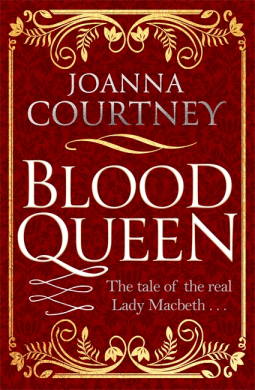
Blood Queen by Joanna Courtney

The fictional story of Macbeth, complete with witches, ghosts and prophecies, is well known thanks to Shakespeare’s play, but how many of us know the story of the real historical figure – King of Alba (Scotland) from 1040 until 1057 – on whom the play was based? I have read one version, Dorothy Dunnett’s wonderful King Hereafter, but it’s always interesting to see how different authors approach the same subject so when I came across Blood Queen, Joanna Courtney’s recent novel about ‘the real Lady Macbeth’, I decided to give it a try.

I remember reading one of Courtney’s previous books, The Chosen Queen, several years ago and my impression at that time was that she was a good storyteller but spoiled things by replacing the names of her historical characters with modern equivalents. She does the same in this book and again I found it annoying and unnecessary. She explains in her author’s note that some of the historical names sound unnatural to ‘the modern ear’, so Gruoch and Suthen become Cora and Sibyll, Lulach becomes Lachlan and Gillacomghain becomes Gillespie. I don’t really understand that decision at all; it’s a story set in the 11th century and readers will understand that, so why not just leave the names as they are?

Anyway, we first meet the sixteen-year-old Cora MacDuff on the eve of her wedding to Macbeth, son of the Mormaer of Moray. Cora fled to Moray several months earlier following an attack on her home in Fife by the men of King Malcolm, her father’s cousin. She swears to ‘make of myself a sword to avenge the wrong done to my father by his own blood’ and she is driven by this desire for the rest of her life. Cora believes that if she marries Macbeth, part of the royal bloodline of Aed, their heir would be able to challenge King Malcolm, or at least his son, Prince Duncan. Before the wedding can take place, however, Cora is abducted during a raid and forced into marriage with another man – Macbeth’s rival, Gillespie, who also believes he has a claim to the throne.

Cora’s story alternates with the story of Sibyll, the Danish-born wife of Prince Duncan. Sibyll, sister of Ward (or Siward), the Earl of Northumbria, is also no stranger to violence, having lost both parents when their small fishing community in Denmark was attacked by the Wend tribe. Her marriage to Duncan, which takes place early in the novel, means that their son, if they have one, will be king one day…but not if Cora’s son gets to the throne first.

In this novel, Joanna Courtney has chosen to focus on the parallel lives of Cora and Sibyll, showing how, although circumstances make them rivals, both women have the same hopes and ambitions, both just wanting the best for their children. A lot of care seems to have gone into the writing of the book; there are maps of Alba, descriptions of the system of alternate inheritance used in Alba at that time, genealogy charts showing the royal lines of Aed and Constantin, and a very extensive set of notes at the end. This is why I was surprised to come across a description in the third chapter of Gillespie as a ‘wide, cumbersome young man with a belly that already hung ponderously over his kilt’. Kilts in the 11th century? I don’t think so, though I’m happy to be corrected.

Blood Queen is the first book in a Shakespeare-inspired trilogy; the second, Fire Queen, is about Ophelia from Hamlet and the third, the upcoming Iron Queen, will be about Cordelia from King Lear. After trying two Joanna Courtney books I probably won’t read any more, but I have to admit that I know absolutely nothing about the inspiration for Ophelia or Cordelia and would have been interested to find out more.

Thanks to Piatkus for providing a copy of this book for review via NetGalley.

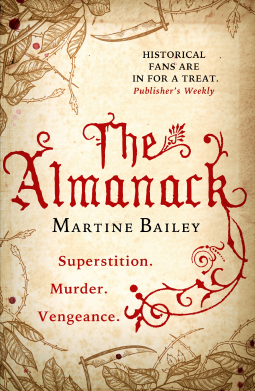
The Almanack by Martine Bailey

As someone who loves puzzles and word games of all kinds, I was captivated by Martine Bailey’s latest novel, The Almanack. Each chapter opens with a riddle, the answers to which are listed at the end of the book but are also carefully hidden somewhere within the relevant chapter. If, for example, the solution to a riddle is ‘cherry’, in the pages that follow you will see a character eating cherries. Sometimes the allusion is so brief you could easily miss it but in other cases it will form the theme for the whole chapter.

The story itself is a murder mystery set in Georgian England. It begins in 1752 with Tabitha Hart’s reluctant return from London to the village of Netherlea in Cheshire in answer to an urgent summons from her mother. Unfortunately she arrives too late; her mother has died under suspicious circumstances, the only clues to her fate being some cryptic notes scribbled in the margins of her almanack, in which she describes her terror of someone referred to only as ‘D’.

As Tabitha sets out to identify the mysterious D, she comes up against the hostility of the other villagers, who disapprove of the life she has been leading in London. However, she receives help in her search from an unlikely source: a troubled young writer called Nat Starling, a newcomer to Netherlea who may be hiding secrets of his own.

This is the first book I’ve read by Martine Bailey and I was very impressed by her recreation of 18th century village life. With her descriptions of ancient superstitions and beliefs, a community ruled by the seasons and the weather, and the conflict between the old ways of life and the new, I was often reminded of Thomas Hardy. The reluctance of the villagers to move forward and embrace change is illustrated particularly well when they discover that Britain is to switch from the Julian calendar to the Gregorian, jumping forward by eleven days in September. They are confused and angry about the ‘stolen days’, with some of them believing their lifespan has somehow been shortened.

Time and calendars are important themes in this novel. First, there is the almanack in the story, which Tabitha’s mother had been using to plan her days and which holds some of the keys to the mystery. Then there’s the way in which the book itself is structured like an almanack, with each chapter headed by the date, some astrological information and a prophecy relating to something that will happen that day. Riddles, prophecies and predictions are woven throughout the text of the novel too, with the unknown villain using them to taunt and tease Tabitha and Nat.

I really enjoyed this book and its many layers. There were times, though, when all of the extra little features started to distract me from the story; I became too caught up in looking for clues to the riddles and for prophecies coming true and found myself losing track of the central mystery. Still, this was an unusual and entertaining read and I will now have to try Martine Bailey’s other two books, An Appetite for Violets and The Penny Heart, both of which sound intriguing too.

Thanks to Black Thorn for providing a copy of this book for review via NetGalley.

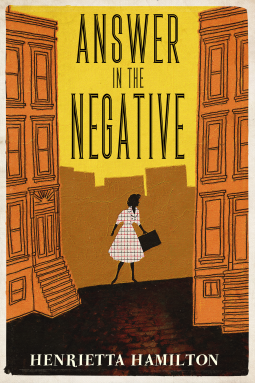
Answer in the Negative by Henrietta Hamilton

It’s good to see so many forgotten authors of crime fiction being brought back into print by various publishers recently. Henrietta Hamilton is another one I had never heard of until I came across Answer in the Negative, originally published in 1959 and now available as part of Agora Books’ Uncrowned Queens of Crime series.

Set in the world of 1950s journalism, the novel follows husband and wife detective team Johnny and Sally Heldar, who are called in by their friend, Toby Lorn, to investigate a case of poison pen letters and practical jokes. Toby runs a newspaper cuttings agency in London’s Fleet Street, providing archived photographs to writers and publishers, and it is one of his assistants, Frank Morningside, who is the target of the nasty letters. Johnny and Sally quickly discover that there is no shortage of suspects as Morningside is disliked by so many of the other archive workers, but before they have time to identify the culprit, Morningside is found dead in the doorway of his office, having been hit on the head by a box of heavy glass negatives. Suddenly the Heldars find themselves investigating a murder case, but can they stop the murderer before he or she kills again?

Answer in the Negative is a short book and kept me entertained for a day or two, but it’s not one of the better ‘forgotten crime novels’ I’ve been reading lately. It got off to a promising start, but quickly became bogged down with repetitive discussions of alibis and lists of who was where at what time. I know other readers enjoy that sort of mystery more than I do, so it’s really just a matter of personal taste. The characterisation didn’t seem very strong either, which is a problem in a book where so many characters are introduced in a short space of time. Johnny and Sally themselves are likeable enough but they are no Tommy and Tuppence and I found the dialogue between them quite wooden. Their partnership is not a very equal one and it’s quite clear that Johnny is regarded as the detective and Sally as just his helper, but I was pleased to see that she does occasionally go off and have adventures of her own – even if Johnny isn’t very happy about it!

I did find the setting interesting and enjoyed the little insights we are given into 1950s life; it was particularly fascinating to see what was involved in archiving and the use of photographs in books and newspapers in an era before computers and digital images made everything available at our fingertips. For some reason, though, the constant references to ‘pix’ and ‘negs’ really irritated me! I know it’s realistic that the characters would have used that terminology for pictures and negatives, but it was so grating. Again, not something that will bother everyone, of course.

I don’t think Henrietta Hamilton is an author I would want to read again, but other reviews of this book are more positive than mine so I hope Agora will continue to publish her other titles for those who are enjoying them.

Historical Musings #58: From the TBR…

Welcome to my monthly post on all things historical fiction!

I haven’t had much time to put a post together this month, so I thought I would just take a quick look at some of the books I have waiting on my TBR. On Friday I reviewed The Brothers York by Thomas Penn, a non-fiction account of the Wars of the Roses, which is one of my favourite periods of history. I have already read a lot of books, both fiction and non-fiction, set in that period and have listed them here, but there are a few others I’ve acquired over the last few years and haven’t had a chance to read yet. Here are some of them (with descriptions taken from Goodreads):

~

The Seventh Son by Reay Tannahill (2001)

Reay Tannahill’s enthralling novel is a family saga in the grand tradition, a tale of brother against brother, cousin against cousin, of love, hate and intrigue, of women inescapably entangled in the fates of their men, and of a mystery that has exercised people’s minds for more than five hundred years. At the heart of it all is the complex human being known to history as Richard III, a king whose reign is darkened by the murder of the young Princes in the Tower, but who also found a touching love with the woman he married, and possessed immense courage. Here, brought vividly to life in this most moving novel, is a man who inspired loyalty and hatred in almost equal measure, until at last the implacable enmity of one woman brought about his downfall.

The Black Arrow by Robert Louis Stevenson (1883)

Originally serialized in a periodical of boys’ adventure fiction, The Black Arrow is a swashbuckling portrait of a young man’s journey to discover the heroism within himself. Young Dick Shelton, caught in the midst of England’s War of the Roses, finds his loyalties torn between the guardian who will ultimately betray him and the leader of a secret fellowship, The Black Arrow. As Shelton is drawn deeper into this conspiracy, he must distinguish friend from foe and confront war, shipwreck, revenge, murder, and forbidden love, as England’s crown threatens to topple around him.

The King’s Grey Mare by Rosemary Hawley Jarman (1973)

The King’s grey mare was Elizabeth Woodville, Queen and wife of Edward IV. Beautiful beyond belief, with unique silver-grey hair, she had once known joy of a marriage based on love—only to see it snatched away on the battlefield. Hardened and changed by grief, Elizabeth became the tool of her evil ambitious mother—the witch, Jaquetta of Bedford—who was determined that her daughter should sit on the throne of England. By trickery, deception, and witchcraft, Jaquetta’s wish was fulfilled. But even a witch could not have known the tragedy which lay in store for the King’s grey mare.

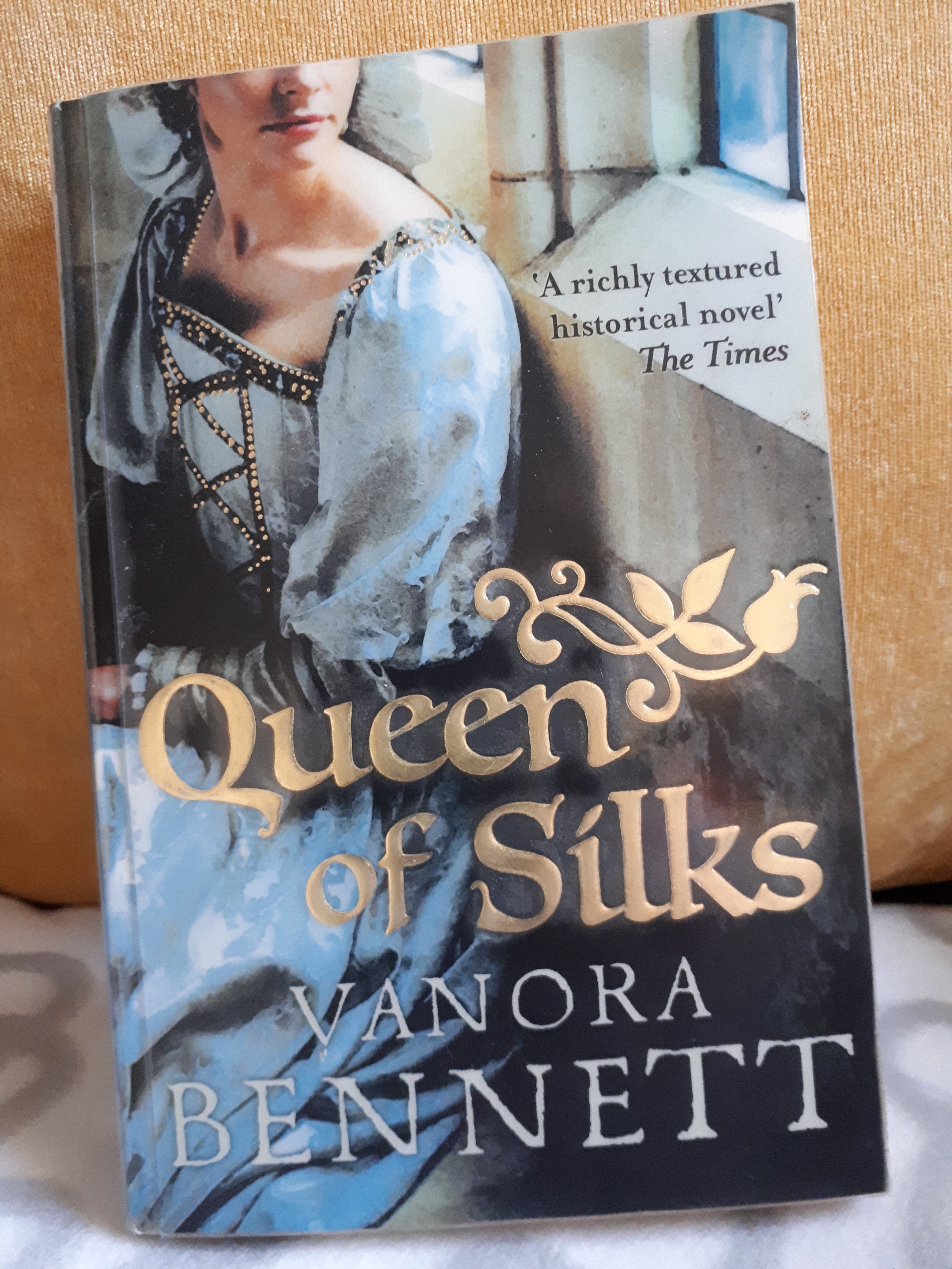
Queen of Silks by Vanora Bennett (2008)

This novel brings together the silk business of fifteenth-century London and the personality of King Richard III, suspected throughout history of having murdered his two nephews, the Princes in the Tower. The story begins with silk merchant John Lambert’s decision to marry off his two beautiful daughters at the end of the Wars of the Roses. Elder daughter Jane starts a notorious liaison with King Edward IV – Richard’s older brother – while her sister, Isabel, as the new silkworker to the court, becomes privy to its most intimate secrets. Could the sisters hold the keys to power at this time of uncertainty?

The Lodestar by Pamela Belle (1987)

For Christie Heron, ruthless ambition is the lodestar of his destiny. Determined to break free from his humble origins in the border country of Northumbria, he enlists in the household of Richard of Gloucester, rising with his lord to the dangerous pinnacles of power. Tangled in Richard’s web of treason and tragedy, Christie learns the full price that his destiny demands, Meg his beloved sister and only friend, rejects him. Julian, daughter of a knight of Oxfordshire, bears him undying enmity. And the long shadow of the Welsh adventurer Henry Tudor falls dark over Bosworth Field….

The King’s Bed by Margaret Campbell Barnes (1961)

For seventeen-year-old Tansy Marsh, life centres upon her father’s inn, The White Boar, in Leicester. Richard III sits upon the throne of England, and all seems well. But the threat of the would-be usurper, Henry Tudor, looms like a gathering storm and soon the eye of that storm is uncomfortably close to Tansy, disrupting her reassuringly ordinary life. Once King Richard is defeated, that life becomes even less ordinary for Tansy has met Dickon Broome, the man who will change her existence forever. And while life goes on under the Tudors, Dickon has particular reason to bear a grudge.

Non-Fiction

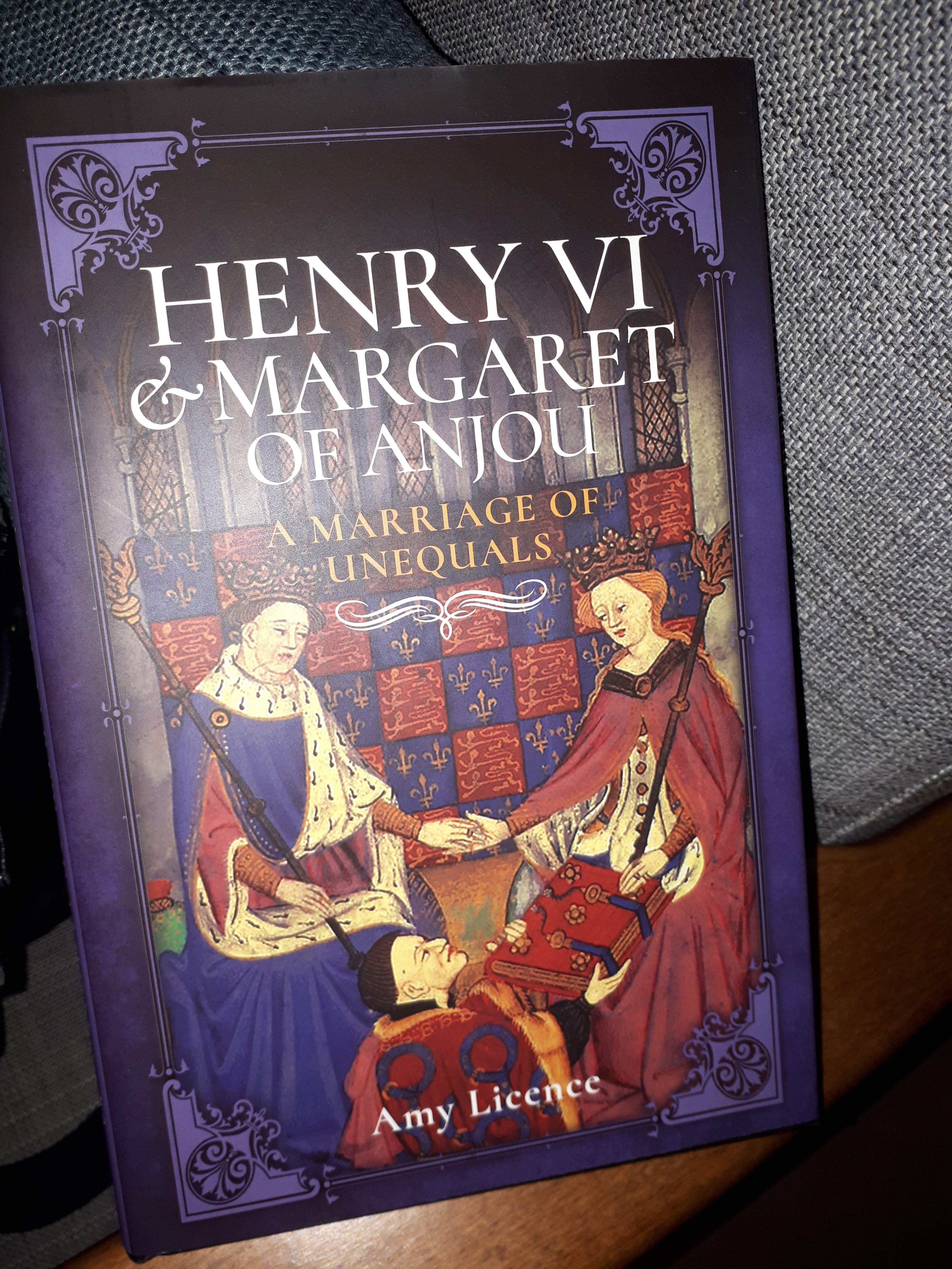
Henry VI and Margaret of Anjou by Amy Licence (2018)

He became king before his first birthday, inheriting a vast empire from his military hero father; she was the daughter of a king without power, who made an unexpected marriage at the age of fifteen. Almost completely opposite in character, together they formed an unlikely but complimentary partnership. Henry VI and Margaret of Anjou have become famous as the Lancastrian king and queen who were deposed during the Wars of the Roses but there is so much more to their story. The political narrative of their years together is a tale of twists and turns, encompassing incredible highs, when they came close to fulfilling their desires, and terrible, heart-breaking lows.

Blood and Roses by Helen Castor (2004)

The Wars of the Roses turned England upside down. Between 1455 and 1485 four kings, including Richard III, lost their thrones, more than forty noblemen lost their lives on the battlefield or their heads on the block, and thousands of the men who followed them met violent deaths. As they made their way in a disintegrating world, the Paston family in Norfolk family were writing letters – about politics, about business, about shopping, about love and about each other, including the first valentine. Using these letters – the oldest surviving family correspondence in English – Helen Castor traces the extraordinary history of the Paston family across three generations. Blood & Roses tells the dramatic, moving and intensely human story of how one family survived one of the most tempestuous periods in English history.

~

If you’ve read any of these books, let me know what you thought. Which ones do you think are worth reading and which aren’t? What are your favourite books set in this period?