The Art of Dying by Ambrose Parry

This is the second book in a new series of historical mysteries written by Ambrose Parry, a pseudonym used by husband and wife team Chris Brookmyre and Marisa Haetzman. The books are set in 19th century Edinburgh, where great advances are taking place in the world of medicine, and with Brookmyre being an experienced crime writer and Haetzman a consultant anaesthetist, they each bring different strengths to their collaborations.

The Art of Dying opens with a brief and dramatic section set in Berlin in 1849, before the action switches back to Edinburgh, where Will Raven has just returned from studying medicine in Europe to take up a position as assistant to the renowned obstetrician Dr James Simpson. Will had previously served as Simpson’s apprentice (as described in the previous novel, The Way of All Flesh), but he is now a qualified doctor himself and is eager to start building his own career and reputation.

Working with Simpson again brings Will back into contact with Sarah Fisher, Simpson’s former housemaid who is now assisting him at his clinic, having displayed a passion and aptitude for medicine. Sarah is deeply frustrated by the lack of equality for women, as she is sure she has the ability to become a doctor herself if only she could be given the same opportunities as men. This had been a source of conflict between Will and Sarah when we met them in the first book, but he has still been looking forward to seeing her again and is disappointed to find that during his absence she has married another man. When one of Dr Simpson’s patients dies under suspicious circumstances, however, and his rivals start to point the finger of blame, Will and Sarah must work together to try to clear Simpson’s name.

The crime element of the novel comes in the form of a number of unusual, unexplained deaths taking place around the city. At first Will is excited, thinking he has discovered a new disease to which he’ll be able to give his name, but Sarah is convinced that something more sinister is happening. My main criticism of The Way of All Flesh was the weakness of the murder mystery, but I found this one much stronger. It was easy enough to guess who or what was causing the deaths, because we are given plenty of hints right from the start, but what I didn’t know was why or exactly how it was being done and I enjoyed watching Will and Sarah (mainly Sarah at first) putting the clues together to find the culprit.

As with the first book, though, it was the medical aspect of the story that I found most interesting. In The Way of All Flesh, we learned that James Simpson had been carrying out experiments into the use of chloroform to ease the pain of childbirth. This book continues to explore the development of anaesthetics, showing not only the potential benefits for surgery and obstetrics, but also the dangers of administering too much of a substance which was still not fully understood.

I enjoyed this book more than the first one and I think it does work as a standalone, but I would still recommend starting with The Way of All Flesh so you will understand the background to Will and Sarah’s relationship. Both characters have changed and grown since the beginning of the series and I’m sure there’s lots of scope for more development ahead; I’m hoping we won’t have to wait too long to find out!

Top Ten Tuesday: My Winter TBR

This week’s Top Ten Tuesday, hosted by Jana at That Artsy Reader Girl, asks us to list ten books on our Winter TBR. As usual, I have a lot more than ten books that I’m hoping to read in the next few months, but I have chosen a selection of them to list below.

~

1. The Pale Horse by Agatha Christie – This is December’s book for the Read Christie 2019 Challenge and one that I was planning to read anyway as there’s a new BBC adaptation coming in 2020. I’ve enjoyed taking part in the challenge this year and was pleased to discover that it’s happening again next year!

2. The Ten Thousand Doors of January by Alix E. Harrow – I picked this up to start reading a month or two ago, but decided the time wasn’t right. I do still want to read it as I’ve heard so many positive things about it, so it is going to be a winter read now instead of an autumn one.

3. Big Sky by Kate Atkinson – In November I finally managed to catch up with the fourth book in the Jackson Brodie series, Started Early, Took My Dog, and now I have the fifth book, Big Sky, from the library so will need to read it soon.

4. The Wheel of Fortune by Susan Howatch – I don’t do nearly enough re-reading these days, but Susan Howatch’s Penmarric was a re-read for me in 2018 and Cashelmara in 2019, so it makes sense to pull this one off my shelf for a re-read in 2020!

5. The Sun Sister by Lucinda Riley – This is the sixth book in the Seven Sisters series and is set partly in Kenya. I’ve been putting off starting this one because of the length, but I’ll have some time off work over Christmas so will probably read it then.

6. The Dutch House by Ann Patchett – This will be my first Ann Patchett book so I don’t know what to expect, but it does sound good!

7. Greenwitch by Susan Cooper – After enjoying Over Sea, Under Stone and The Dark is Rising earlier this year, I’m looking forward to moving on to Greenwitch, the third book in the sequence.

8. The Brothers York by Thomas Penn – Most of my reading tends to be fiction, but I wanted to include at least one non-fiction book on my Winter TBR too. This book is about one of my favourite periods of history, the Wars of the Roses, so I’m looking forward to reading it.

9. The Hardie Inheritance by Anne Melville – This is the final book in a trilogy and as I loved the first two, both of which I’ve read this year, I’m hoping this will be another enjoyable read.

10. My Classics Club Spin book! I’ll find out on Sunday which book I’m going to be reading from the Spin list I posted two days ago.

~

Have you read any of these? What did you think? And what is on your own winter TBR?

Classics Club Spin #22: My list

I don’t seem to have read as many classics as usual this year, so I was pleased to see the Classics Club announce another of their Spins today. I really enjoyed my last Spin book (Two on a Tower by Thomas Hardy) so I’m hoping for another good result this time.

If you’re not sure what a Classics Spin is, here’s a reminder:

The rules for Spin #22:

* List any twenty books you have left to read from your Classics Club list.
* Number them from 1 to 20.
* On Sunday 22nd December the Classics Club will announce a number.
* This is the book you need to read by 31st January 2020.

And here is my list:

1. Daniel Deronda by George Eliot
2. Moonfleet by John Meade Falkner
3. Castle Dor by Daphne du Maurier
4. The Cloister and the Hearth by Charles Reade
5. The Grapes of Wrath by John Steinbeck
6. Claudius the God by Robert Graves
7. Fire from Heaven by Mary Renault
8. Jane and Prudence by Barbara Pym
9. A Passage to India by E.M. Forster
10. I Will Repay by Baroness Emmuska Orczy
11. Sandokan: The Tigers of Mompracem by Emilio Salgari
12. The Black Arrow by Robert Louis Stevenson
13. In a Dark Wood Wandering by Hella S Haasse
14. The Brothers Karamazov by Fyodor Dostoevsky
15. La Reine Margot by Alexandre Dumas
16. The Chrysalids by John Wyndham
17. Germinal by Emile Zola
18. High Rising by Angela Thirkell
19. The White Guard by Mikhail Bulgakov
20. The Duke’s Children by Anthony Trollope

Which of these do you think I should be hoping for?

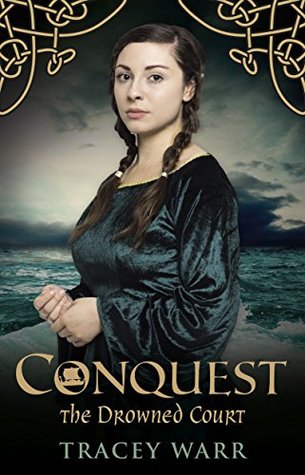
The Drowned Court by Tracey Warr

This is the second of a trilogy of novels telling the story of the Welsh princess Nest ferch Rhys. I read the first book, Daughter of the Last King, in 2017 and enjoyed learning about this little-known historical figure, so a few weeks ago I decided it was time I picked up the next volume and continued Nest’s story.

In Daughter of the Last King, Nest’s father – the king of Deheubarth – is killed in battle and the twelve-year-old Nest is taken captive. The novel goes on to describe her years of captivity in the household of the powerful Montgommery family and the eventual downfall of that family, her time as mistress to King Henry I and her marriage to Gerald Fitzwalter, the Norman castellan of Pembroke Castle.

Book two, The Drowned Court, begins in the year 1107 and we see that Nest has been settling into married life with Gerald. Although he is not the husband she would have chosen, Nest is growing fond of Gerald and the couple already have several half-Norman/half-Welsh children. However, Nest still can’t stop thinking about Owain ap Cadwgan, the Welsh prince of Powys to whom she had once been betrothed. It seems that Owain has not forgotten her either, but the time for him to come to her rescue has long passed; if he enters her life again now it can only cause trouble for Nest and her family. Meanwhile, her brother Gruffudd ap Rhys, is gathering support in an attempt to reclaim his kingdom, putting further strain on Nest’s loyalties as she becomes torn between her Welsh past and her Norman present.

As in the first book, Nest’s story alternates with the story of Sister Benedicta, a nun at Almenêches in Normandy whose brother, the Flemish knight Haith, is in the service of Nest and Gerald. Benedicta is a fictitious character and played a fairly minor role in the previous book; she is much more prominent in this one as her skills as a scribe earn her a place in a network of spies run by Henry I’s sister, Adela of Blois. Writing part of the novel from Benedicta’s point of view allows Tracey Warr to explore some of the political developments taking place in Europe which would have been out of the range of Nest’s own experience, but I have to admit that I never felt fully engaged with these sections of the book and was always glad to get back to Nest’s more personal story.

I knew nothing at all about Nest ferch Rhys before reading these books and I have resisted looking up the details of her life, so I never had any idea what was going to happen next and could just enjoy watching her story unfold and knowing that I was learning something new along the way. However, this also means that I can’t really comment on the historical accuracy. All I can say is that the book does feel as though it has been well researched, but as very little is known about Nest anyway, a lot of imagination has obviously had to be used to fill in the gaps between the historical facts.

The final book in the trilogy is not available yet but it will be called The Anarchy. I’m looking forward to reading it and seeing how Nest’s story concludes.

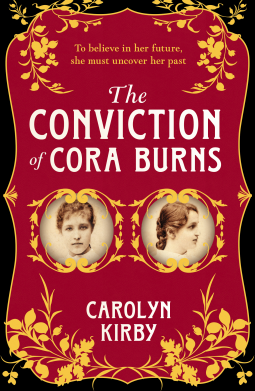
The Conviction of Cora Burns by Carolyn Kirby

The question of nature versus nurture lies at the heart of Carolyn Kirby’s dark and fascinating debut novel, The Conviction of Cora Burns. Are people born good or bad or is it their upbringing that determines their behaviour? Is it inevitable that some people will commit acts of evil or does this depend on their early influences and the way they have experienced the world? These ideas are explored through the fictional story of Cora Burns.

Born in a prison cell, Cora is raised in Birmingham’s Union Workhouse before going on to work as a laundry maid in the Borough Lunatic Asylum. It’s not the best of starts in life and by the time Cora is twenty she has served a prison sentence herself. At the beginning of the novel, in 1885, she has just been released and is about to take up a new position as ‘between maid’ in the household of the scientist Thomas Jerwood – not her ideal job, but she quickly finds that other opportunities for women in her circumstances are very limited.

A fragment of a bronze medal engraved with the words ‘Imaginem Salt’ – a reminder of her childhood friend, Alice Salt – and vague memories of a crime so terrible she has blotted out the details from her mind are all she has left of her earlier life and she is determined to make a fresh start. As she settles into her new home, Cora begins to befriend Violet, a young girl who appears to be the subject of Mr Jerwood’s experiments. But is Cora being experimented on herself – and if so, what will be discovered? Meanwhile, she decides to track down Alice Salt, the friend she hasn’t seen for years but who she believes holds the key to that terrible incident in her past.

As well as the nature or nuture debate that I’ve already mentioned, the novel incorporates many other interesting issues and themes, such as the effects of poverty, the treatment of prisoners and the mentally ill in Victorian Britain, and advances in science, psychology and technology (particularly photography). All of these things have an impact on Cora’s story, which is told in non-linear form, moving backwards and forwards between her present situation in Thomas Jerwood’s household and her childhood in the workhouse. Interspersed with these narratives are Jerwood’s reports to a scientific journal describing his latest research and theories and occasional updates from another doctor whose work may also shed some light on Cora’s past.

This is not an ‘easy’ read – you do need to concentrate to keep the various strands of the plot straight and you also need some patience as it takes a while for the different pieces of the story to fall into place, but it’s definitely worth it in the end. I should also warn you that the crime in which Cora was involved is a particularly chilling one and is described in detail, but I think this was necessary in order to illustrate the worst of Cora’s nature. Despite this, though, I could also see that Cora had plenty of good qualities and I hoped that she would eventually be able to move on from her past and find some happiness. Whether this does happen or not I will leave you to find out for yourself.

Finally, I loved the decision to set the story in Victorian Birmingham! It made a nice change from the many books set in Victorian London. This was an impressive first novel and I will be looking out for more from Carolyn Kirby.

Thanks to No Exit Press for providing a copy of this book for review via NetGalley.

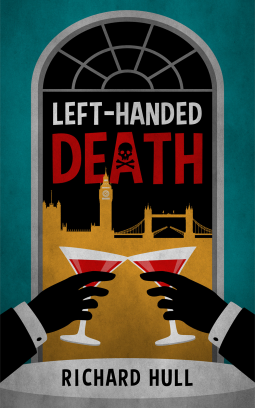
Left-Handed Death by Richard Hull

I loved Richard Hull’s The Murder of My Aunt – it was one of the best books I read last year – but when I tried another of his classic crime novels, And Death Came Too, I was disappointed to find that it was a much more conventional murder mystery without the humour and originality I had expected based on my first experience. Left-Handed Death is my third Hull novel and I’m pleased to report that it’s another good one – not in the same class as The Murder of My Aunt, but much better than And Death Came Too.

This book was published in 1946, but is set slightly earlier, just before the end of World War II. It begins with Guy Reeves, one of the two directors of the Shergold Engineering Company, returning to his office after lunch and making a shocking confession to his co-director, Arthur Shergold: he has just murdered Barry Foster, a civil servant who has been investigating the company’s finances. Foster may have been on the point of revealing corruption within the company, something which matters to the Ministry he works for because the Shergold Company have been supplying government contracts throughout the war.

Reeves describes his actions of the afternoon to his partner, finishing with a detailed account of how he carried out the murder, then he heads to Scotland Yard where he repeats his confession to the police. Inspector Hardwick doesn’t believe him – why would somebody voluntarily admit to murder? – but he sends his men to Foster’s home where they discover that Foster is indeed dead and that it’s entirely possible that the murder could have taken place exactly as Reeves has described it. There seems little reason to investigate further, but Hardwick still has his doubts and sets out to prove that Reeves is innocent.

All of this happens in the first chapter of the book and I was immediately intrigued. Why would Reeves confess to a murder that he hadn’t committed? On the other hand, why would he confess to a murder that he had committed? And if he didn’t kill Foster, then who did? As Inspector Hardwick himself points out:

“I like my murders to start at the beginning with the corpse and go on to the end with the conviction. But when you start in the middle with the confession – well, all I can say is that it’s all wrong!”

As I continued to read, I started to form my own theory about what was happening and I was able to predict the solution before it was revealed, but I still enjoyed watching Hardwick and his fellow detectives sorting through the clues, looking for alibis, speaking to witnesses and gathering medical evidence. I thought the ending did let the rest of the book down slightly, though – surely there was room for one or two more twists!

As well as being an entertaining murder mystery, I found this book interesting because of the time period in which it is set. The story takes place right at the end of the war and that has an impact on the lives of the characters and on just about everything that happens in the novel. Guy Reeves’ description of the lavish meal he and Foster ate on the day of the murder, for example, provokes disapproval at a time when rationing is in place; the war makes it difficult to get hold of a doctor to examine the murdered man; Cynthia Trent, who works as a secretary at the Shergold Company, takes a walk in the countryside past an Italian prisoner-of-war camp; and Reeves himself has suffered an injury while serving in the army which has implications for the way in which the murder is carried out.

I will continue to read Richard Hull’s books in the hope that the others will be at least as good as this one, if not as good as The Murder of My Aunt. I suspect I probably started with his best book, but that doesn’t mean the others aren’t worth reading!

Thanks to Agora Books for providing a copy of this book for review via NetGalley.

Walter Scott Prize shortlist of ‘favourite historical novels of all time’ revealed!

The Walter Scott Prize for Historical Fiction have revealed their shortlist of ten ‘favourite historical novels of all time’ as nominated by readers throughout the month of November. I’m pleased that one of my nominations (The Game of Kings) has made it onto the list, along with a lot of other books I’ve read, although I’m surprised by some of the titles as they are not necessarily books I would have expected to see shortlisted. Have a look at the list below and see what you think.

You can vote for the winner here on the Walter Scott Prize website. The poll closes on the 16th December and the winner will be announced in January.

Checkmate by Dorothy Dunnett
The Crimson Petal and the White by Michel Faber
Days Without End by Sebastian Barry
The Eagle of the Ninth by Rosemary Sutcliff
The Game of Kings by Dorothy Dunnett
The Luminaries by Eleanor Catton
A Place of Greater Safety by Hilary Mantel
Tipping the Velvet by Sarah Waters
Waverley by Walter Scott
Wolf Hall by Hilary Mantel

~

Have you read any of these? Which do you think should win? What is your favourite historical novel of all time?