Top Ten Tuesday: My Autumn TBR

This week’s Top Ten Tuesday, hosted by Jana at That Artsy Reader Girl, asks us to list ten books on our Autumn TBR. As usual, I have a lot more than ten books that I’m hoping to read in the next few months, but I have chosen a selection of them to list below.

Two books I’m hoping to get to soon for the R.I.P. XIV event:

1. The Dark is Rising by Susan Cooper

2. Tombland by CJ Sansom

A book left over from my 20 Books of Summer List:

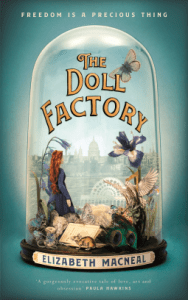
3. The Doll Factory by Elizabeth Macneal

My Classics Club Spin result, announced yesterday:

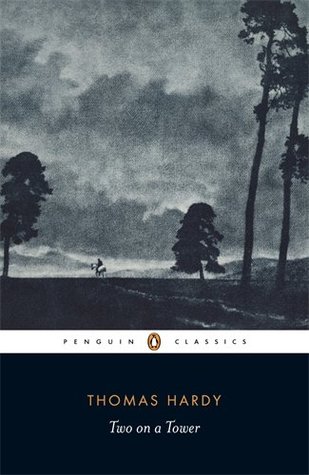
4. Two on a Tower by Thomas Hardy

Some review copies I haven’t read yet:

5. To Calais, in Ordinary Time by James Meek

6. A Single Thread by Tracy Chevalier

For the Read Christie 2019 Challenge:

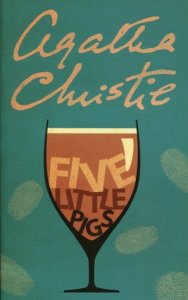
7. Five Little Pigs by Agatha Christie

Next in a series started earlier this year:

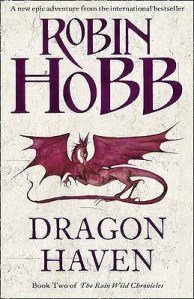
8. Dragon Haven by Robin Hobb

Non-fiction, because I don’t read enough of it:

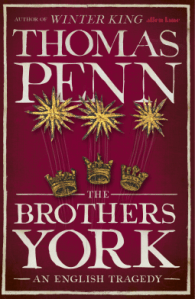
9. The Brothers York by Thomas Penn

10. Following in the Footsteps of Henry Tudor by Phil Carradice

~

Have you read or will you be reading any of these? Which books are on your autumn/fall TBR?

Classics Club Spin #21: The Result

The result of the latest Classics Club Spin has been revealed today!

The idea of the Spin was to list twenty books from my Classics Club list, number them 1 to 20, and the number announced today (Monday) represents the book I have to read before 31st October 2019. The number that has been selected is…

5

And this means the book I need to read is…

Two on a Tower by Thomas Hardy

Lady Constantine, breaks all the rules of decorum when she falls in love with beautiful youth Swithin St Cleeve, her social inferior and ten years her junior. Together, in an ancient monument converted into an astronomical observation tower, they create their own private universe – until the pressures of the outside world threaten to destroy it.

This is not one of the books I was particularly hoping for but I’m still quite happy with this result as I love Thomas Hardy and it’s been a while since I last read anything by him.

Have you read this book? What did you think of it?

September Quiz – The Answers!

Thanks to everyone who took part in my historical fiction first lines quiz last weekend. As promised, here are the answers:

1. I was down in Surrey, on business for Lord Cromwell’s office, when the summons came.
Dissolution by CJ Sansom

2. It wasn’t a very likely place for disappearances, at least at first glance.
Outlander/Cross Stitch by Diana Gabaldon

3. His children are falling from the sky.
Bring Up the Bodies by Hilary Mantel

4. Ashton Hilary Akbar Pelham-Martyn was born in a camp near the crest of a pass in the Himalayas, and subsequently christened in a patent canvas bucket.
The Far Pavilions by MM Kaye

5. He was born with a gift of laughter and a sense that the world was mad.
Scaramouche by Rafael Sabatini

6. When the east wind blows up Helford river the shining waters become troubled and disturbed and the little waves beat angrily upon the sandy shores.
Frenchman’s Creek by Daphne du Maurier

7. On the step of her new husband’s home, Nella Oortman lifts and drops the dolphin knocker, embarrassed by the thud.
The Miniaturist by Jessie Burton

8. Richard did not become frightened until darkness began to settle over the woods.
The Sunne in Splendour by Sharon Penman

9. On the first Monday of the month of April, 1625, the market town of Meung, in which the author of Romance of the Rose was born, appeared to be in as perfect a state of revolution as if the Huguenots had just made a second La Rochelle of it.
The Three Musketeers by Alexandre Dumas

10. The method of laying out a corpse in Missouri sure took the proverbial cake.
Days Without End by Sebastian Barry

11. My father is Sir Richard Woodville, Baron Rivers, an English nobleman, a landholder, and a supporter of the true Kings of England, the Lancastrian line.
The White Queen by Philippa Gregory

12. When the year one thousand came, Thorkel Amundason was five years old, and hardly noticed how frightened everyone was.
King Hereafter by Dorothy Dunnett

13. In that pleasant district of merry England which is watered by the river Don, there extended in ancient times a large forest, covering the greater part of the beautiful hills and valleys which lie between Sheffield and the pleasant town of Doncaster.
Ivanhoe by Sir Walter Scott

14. In the tender green time of April, Katherine set forth at last upon her journey with the two nuns and the royal messenger.
Katherine by Anya Seton

15. At half past six on the twenty-first of June 1922, when Count Alexander Ilyich Rostov was escorted through the gates of the Kremlin onto Red Square, it was glorious and cool.
A Gentleman in Moscow by Amor Towles

~

I hope you all had fun with the quiz. I think every book apart from The Three Musketeers and Days Without End was correctly guessed by at least one person. Well done everyone!

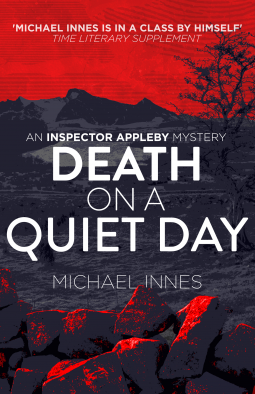
Death on a Quiet Day by Michael Innes

So far most of the books I’ve read in Michael Innes’ Inspector Appleby series have been very different from each other. Some, like Hamlet Revenge! and There Came Both Mist and Snow, are fairly conventional murder mysteries; the brilliant Lament for a Maker has the feel of a Victorian sensation novel; and The Daffodil Affair and Appleby’s End are so strange and surreal as to defy classification (and are my least favourites of his books). This one, originally published in 1956 as Appleby Plays Chicken, is best described as a thriller with a chase element, making it similar to The Secret Vanguard in that respect.

The novel opens with student David Henchman and a small group of friends from university attending a reading party in the Dartmoor countryside:

A group of young men facing their final examinations within a year; a tutor, ambitious for his charges or merely amiable, prepared to spend part of his vacation in their company; comfortable quarters in some quiet country place, with hills that can be climbed or antiquities that can be inspected in the course of a long afternoon.

Early one morning, David decides to get away from the others for a while and go for a walk in the spring sunshine. Daydreaming as he walks, David fails to pay attention to his map and finds himself approaching the great hill known as Knack Tor. Seeing a column of smoke rising from the top of the hill, he begins climbing up to investigate, but is unprepared for what he finds there – the body of a dead man with a hole in his forehead and a revolver in his hand. As David wonders what to do next, he becomes aware that he is not alone…someone else is up on that hill with him and that someone will stop at nothing to ensure David keeps quiet about what he has seen.

The first half of the book is devoted to one long episode in which David is chased through the countryside on foot, by car and by horse as his pursuers seem to multiply and appear out of nowhere. It’s fun to read and reminded me of John Buchan’s The Thirty-Nine Steps – but unlike the chase scene in The Thirty-Nine Steps, this one comes to an end before it has time to become tedious. Inspector Appleby then appears on the scene and the whole tone of the novel changes. As Appleby begins to investigate the murder, the other students and their tutor are brought into the story, and with the viewpoint moving away from David Henchman we can begin to piece together what is going on.

The murder mystery aspect of the novel is nothing special, to be honest. There are only a few suspects and the solution is not particularly clever or surprising. This is definitely a book that, if you read it, you will remember not for the mystery but for that long, desperate race across the moors.

Thanks to Agora Books for providing a copy of this book for review via NetGalley.

This is book #1 read for this year’s R.I.P. XIV event.

Classics Club Spin #21: My List

I was just thinking that it had been a long time since the last Classics Club Spin and then one was announced yesterday! I feel that I’ve read very few classics so far this year (apart from classic crime), so I’m hoping that this spin will motivate me to start making some progress with my Classics Club list again.

If you’re not sure what a Classics Spin is, here’s a reminder:

The rules for Spin #21:

* List any twenty books you have left to read from your Classics Club list.
* Number them from 1 to 20.
* On Monday 23rd September the Classics Club will announce a number.
* This is the book you need to read by 31st October.

And here is my list:

1. Daniel Deronda by George Eliot
2. La Reine Margot by Alexandre Dumas
3. Castle Dor by Daphne du Maurier
4. Moonfleet by John Meade Falkner
5. Two on a Tower by Thomas Hardy
6. I Will Repay by Baroness Emmuska Orczy
7. Jane and Prudence by Barbara Pym
8. Fire from Heaven by Mary Renault
9. Sandokan: The Tigers of Mompracem by Emilio Salgari
10. The Black Arrow by Robert Louis Stevenson
11. The Chrysalids by John Wyndham
12. The Cloister and the Hearth by Charles Reade
13. In a Dark Wood Wandering by Hella S Haasse
14. Claudius the God by Robert Graves
15. The White Guard by Mikhail Bulgakov
16. Germinal by Emile Zola
17. The Long Ships by Frans G Bengtsson
18. The Black Sheep by Honoré de Balzac
19. The Brothers Karamazov by Fyodor Dostoevsky
20. Goodbye Mr Chips by James Hilton

Which of these do you think I should be hoping for on Monday?

Historical Musings #53: A quiz for September

Welcome to my monthly post on all things historical fiction.

This month I thought I would do something slightly different and put together a little quiz for you. I’ve listed below the opening lines from fifteen historical fiction novels, ranging from classics to recent bestsellers to some of my personal favourites. If you think you can identify any of them, leave a comment with your guesses and I’ll post the answers next week.

Have fun!

~

1. I was down in Surrey, on business for Lord Cromwell’s office, when the summons came.

2. It wasn’t a very likely place for disappearances, at least at first glance.

3. His children are falling from the sky.

4. Ashton Hilary Akbar Pelham-Martyn was born in a camp near the crest of a pass in the Himalayas, and subsequently christened in a patent canvas bucket.

5. He was born with a gift of laughter and a sense that the world was mad.

6. When the east wind blows up Helford river the shining waters become troubled and disturbed and the little waves beat angrily upon the sandy shores.

7. On the step of her new husband’s home, Nella Oortman lifts and drops the dolphin knocker, embarrassed by the thud.

8. Richard did not become frightened until darkness began to settle over the woods.

9. On the first Monday of the month of April, 1625, the market town of Meung, in which the author of Romance of the Rose was born, appeared to be in as perfect a state of revolution as if the Huguenots had just made a second La Rochelle of it.

10. The method of laying out a corpse in Missouri sure took the proverbial cake.

11. My father is Sir Richard Woodville, Baron Rivers, an English nobleman, a landholder, and a supporter of the true Kings of England, the Lancastrian line.

12. When the year one thousand came, Thorkel Amundason was five years old, and hardly noticed how frightened everyone was.

13. In that pleasant district of merry England which is watered by the river Don, there extended in ancient times a large forest, covering the greater part of the beautiful hills and valleys which lie between Sheffield and the pleasant town of Doncaster.

14. In the tender green time of April, Katherine set forth at last upon her journey with the two nuns and the royal messenger.

15. At half past six on the twenty-first of June 1922, when Count Alexander Ilyich Rostov was escorted through the gates of the Kremlin onto Red Square, it was glorious and cool.

~

How many of these do you know?

A Tapestry of Treason by Anne O’Brien

One of the things I like about Anne O’Brien’s books is that they tend to be about women who are not usually the subjects of historical fiction. I have read five of her previous novels, all set in the 14th and 15th centuries, which told the stories of Katherine of Valois, Elizabeth of Lancaster, Joanna of Navarre, Joan of Kent and Elizabeth Mortimer. Now, in her latest novel, A Tapestry of Treason, she brings another medieval woman out of obscurity and gives her a voice. She is Constance, Lady Despenser, daughter of Edmund of Langley, Duke of York, the fourth surviving son of King Edward III of England.

The novel opens in 1399. Constance’s cousin, Richard II, has reigned for over twenty years but another cousin, Henry of Lancaster, now has his eye on the throne. The York branch of the family – Constance, her father, her brothers Edward and Dickon, and her husband Thomas Despenser – must decide with whom their loyalties lie, knowing that if they give their support to the wrong man they could lose everything, including their lives. History tells us that Henry would be successful, taking the throne as Henry IV when Richard abdicates, but of course Constance and her family don’t know how things will play out and this leaves them with some difficult choices to make.

Cold, ambitious and determined, Constance is not an easy character to like, but the fact that the story is told from her point of view allows us to have a certain amount of sympathy for her. She makes some terrible mistakes and, despite having grown up in a world of shifting politics and court intrigue, she judges the situation wrongly on several occasions and pays the price for it. It’s frustrating to see her at the heart of one plot or conspiracy after another and she never seems to learn from her mistakes, but as we get to know Constance better we understand that she is only trying to look after her family’s interests and help them to advance in any way they can. In this respect she reminded me of Elizabeth Mortimer, heroine of Queen of the North, who is actually involved in some of the same conspiracies.

Constance’s hard and emotionless exterior can probably be explained by the lack of love she has experienced throughout her life. Her parents have shown her very little affection – and although her husband, Thomas Despenser, is not a cruel man, their marriage took place at a very early age and was definitely a political match rather than one based on love. There is a chance of romance for Constance later in the novel, but she makes mistakes here too and risks having her heart broken.

There are two other relationships in this book which interested me more than the romantic one. The first is Constance’s relationship with her elder brother, Edward of York, a man who is as ambitious and ruthless as Constance herself, but unlike his sister, thinks only of himself. He shows no real loyalty to anyone and is ready to betray his family and friends if it means saving his own skin, yet Constance always gives him the benefit of the doubt and it is never quite clear whether he cares for her even a little bit or not at all. The other is the relationship between Constance and her young stepmother, Joan Holland. At first they make no secret of the fact that they dislike each other but as the story progresses they settle into an uneasy friendship.

A Tapestry of Treason is not my favourite Anne O’Brien book; although this is a fascinating period of history, I felt that for a long time Constance was plotting and scheming in the background, watching events unfold from afar rather than taking an active part in her own story. Not the author’s fault, but an indication of the limitations and constraints placed on women at that time. It’s only from the middle of the novel onwards that Constance begins to play a bigger role and becomes more directly involved in carrying out her treasonous plots.

I did still enjoy the book, though, and it was interesting to read about the origins of the conflict between the houses of Lancaster and York which would later intensify and lead to the Wars of the Roses. Now I’m wondering if there are any other fictional portrayals of Constance of York; if you know of any please let me know!

Thanks to the publisher HQ for providing a copy of this book for review via NetGalley.