Historical Musings #49: Exploring China

Welcome to my monthly post on all things historical fiction!

I have recently read Guy Gavriel Kay’s Under Heaven, which is set in an alternate version of eighth century China, during the Tang Dynasty. Although I enjoyed the book, the historical period it was based on was completely unfamiliar to me, and this made me think about how little I actually know about China and its history.

Most of the novels I have read set in China are by Lisa See. The most memorable of these was probably Snow Flower and the Secret Fan, from which I learned a lot about Chinese customs such as foot-binding, ‘laotong’ relationships and the secret women’s language known as Nü Shu. I also enjoyed Shanghai Girls, about two sisters who grow up in Shanghai before being sold into arranged marriages and forced to leave China behind for Los Angeles. In the sequel, Dreams of Joy, the daughter of one of the sisters returns to China and lives through the horrors of Chairman Mao’s Cultural Revolution and Great Leap Forward. Lisa See also wrote China Dolls, which is not actually set in China, but follows the stories of three girls – two Chinese and one Japanese – who work as dancers at a San Francisco nightclub in the 1930s. I haven’t read the rest of her books yet, but have The Island of Sea Women on my NetGalley shelf.

There are two books by Jamie Ford that I’ve read which feature Chinese-American characters living in Seattle in the 1930s and 40s. These are Hotel on the Corner of Bitter and Sweet and Songs of Willow Frost. I enjoyed both and gained some interesting insights into life in Seattle’s Chinese communities.

Amitav Ghosh’s Ibis Trilogy, which I really enjoyed reading a few years ago, is set partly in China and partly in India before and during the First Opium War. You will need to start with the first book, Sea of Poppies, but the second two – River of Smoke and Flood of Fire – are where the action switches largely to China (mainly Canton and Hong Kong).

I loved The Painted Veil by Somerset Maugham which is set in 1920s Hong Kong during a cholera epidemic, but that book was contemporary (published in 1925) rather than historical. There’s also the wonderful Wild Swans by Jung Chang, which is non-fiction – an autobiographical book telling the story of Chang and her mother and grandmother – but every bit as readable, dramatic and emotional as fiction. Otherwise I’m struggling to think of anything else I’ve read about China. One of my current reads, The Night Tiger by Yangsze Choo, has some Chinese folklore in it but is set in 1930s Malaya – and I do remember, years ago, enjoying a book called Cloud Mountain by Aimee Liu but all the details of the plot have faded from my mind apart from the fact that it was about an American woman who marries a Chinese man in the early 20th century.

I’m sure some of you will have read much more about China than I have, so I would love to hear your recommendations. I would be particularly interested in books set in earlier periods – such as the Tang Dynasty I mentioned at the start of this post – but any suggestions are welcome!

The Return of Mr Campion by Margery Allingham

This collection of thirteen short stories by Margery Allingham was originally published in 1989 and has been reissued by Agora Books this month. The title is maybe slightly misleading as Allingham’s famous detective Albert Campion only appears in half of the stories, but I actually found that some of the non-Campion stories were amongst my favourites from the collection.

Of the stories featuring Campion, I thought the best were The Black Tent, in which Albert catches a girl stealing a package from a desk during a party and The Case is Altered, where he stumbles upon a case of espionage while spending Christmas with friends. I was less impressed with the other Campion stories in the book, but I thought these two were just the right length, were well plotted and had satisfying conclusions. There’s also an essay, My Friend Mr Campion, where Allingham describes how she created the character of Albert Campion (or rather, how he created himself) and later in the book, in What to Do with an Ageing Detective, she imagines herself coming face to face with an elderly Campion and his servant Magersfontein Lugg. I found the first of these pieces interesting, but I think the second is really just for true Campion fans – which I can’t say that I am yet, having so far only read one full-length novel (Mystery Mile) and a few short stories.

The rest of the stories – the ones which don’t involve Campion and are not necessarily mysteries either – cover a mixture of subjects and genres. I loved Sweet and Low, in which two women who have nothing in common apart from a love of horse riding compete for the attentions of the same man. The horse called ‘Sweet and Low’ has a personality of his own and is the real star of the show in this one! The Wind Glass, about a young girl who rejects a marriage proposal from a Japanese man and receives a rather sinister gift in return, is another one that stood out due to the genuinely eerie atmosphere Allingham creates, although it was difficult to ignore the overt racism which did unfortunately spoil that particular story for me. On a more light-hearted note, I think The Kernel of Truth also deserves a mention. A man prepares a recipe for punch and adds one very special ingredient – but his wife won’t be very pleased if she finds out what it is. This is an entertaining little story that you won’t fully appreciate until you read the final paragraph!

Considering that I’m not usually a lover of the short story format, I enjoyed almost all of the tales in this collection, with only one or two exceptions. I’ll have to try more of the full-length Albert Campion mysteries soon!

Thanks to Agora Books for providing a copy of this book for review via NetGalley.

The Confessions of Frannie Langton by Sara Collins

In the author’s note that opens The Confessions of Frannie Langton, Sara Collins remembers reading books like Wuthering Heights and Jane Eyre on the small Caribbean island where she grew up and asking the questions: “Why couldn’t a Jamaican former slave be the star of her own gothic romance? Why couldn’t she be complicated, ambiguous, complex? Why had no one like that ever had a love story like those?’ Frannie Langton is Collins’ attempt to redress the balance and give that Jamaican former slave her very own story in which to star.

The novel opens in 1826 with Frannie – or the ‘Mulatta Murderess’, as she has become known – awaiting trial at London’s Old Bailey for the murders of her employers, George and Marguerite Benham. Frannie, who had been a maid in the Benham household, had been found lying in bed, covered in blood, beside Marguerite’s dead body. She has no idea how she came to be there and is sure she couldn’t possibly have killed her beloved mistress, yet all the evidence suggests that she is guilty. While she waits for her fate to be decided, Frannie looks back on her life and recalls the sequence of events that have led her to this point.

Frannie remembers her childhood, growing up on the Langtons’ sugar plantation in Jamaica (ironically called ‘Paradise’) and describes the circumstances that meant she received an education that would usually be denied to a slave. Later, when Mr Langton returns to England, he takes Frannie with him and she looks forward to new experiences and new opportunities. On their arrival in London, however, she is handed over to the Benhams to become a servant in their home and finds that life is not much better here than it was on the plantation. The one bright spot in her life is her relationship with ‘Madame’ (Mrs Benham), but as we already know from the opening chapter of the book, that relationship will end in tragedy.

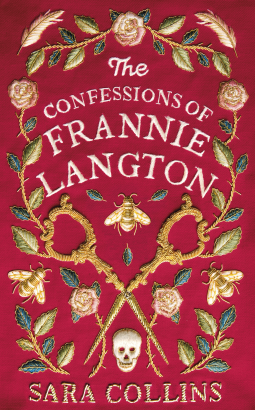
The Confessions of Frannie Langton is Sara Collins’ first novel and I’m sure it’s going to be a big success for her. It has been given a beautiful front cover, which stands out even amongst the many other beautiful covers that are around at the moment and the book has already been getting lots of very positive reviews since its publication last week. I didn’t love it as much as most other people seem to have done, but that’s probably because it wasn’t really what I’d expected. I thought the crime element would have been a more important part of the story, but the murder and the trial are confined mainly to the final few chapters, and I’m not sure I would agree with the description of the book as a gothic novel either, although I suppose it would depend on what you consider gothic to mean.

I did find Frannie an interesting and engaging heroine with a strong narrative voice and although there were some parts of her story that I felt I’d read many times before (bearing in mind that I do read a lot of historical novels set in the 19th century), Frannie’s background and unusual circumstances mean that we are seeing things from a slightly different angle. Having one white parent and one black, Frannie never really fits in with the other slaves on the plantation – especially when she is given an education and an enviable position as house slave – but she knows she will never be accepted by most white people either. As you can imagine, she experiences a lot of cruelty and prejudice in her life and this is quite a sad story at times – and also quite disturbing, particularly the descriptions of the ‘scientific experiments’ and research carried out by Frannie’s two masters, Langton and Benham.

Sara Collins writes beautifully and I was struck by sentences like “A man writes to separate himself from the common history. A woman writes to try to join it…” and “A good scientist merely searches for the answer to the question posed, but the one whose name history will record reaches for the questions no one has even thought to ask”. And of course, as a fellow book lover, I appreciated Frannie’s love of literature and her determination to read all the books she could get her hands on. But was Frannie really responsible for the deaths of George and Marguerite Benham? You will need to read her confessions to find out…

Thanks to Penguin/Viking Books for providing a review copy of The Confessions of Frannie Langton and for inviting me to take part in their blog tour.

The Great Impersonation by E. Phillips Oppenheim

I don’t usually pay much attention to the recommendations that pop up on sites like Goodreads and Amazon (“as you liked that book, you might like this one”) but there have been one or two occasions where a particular recommendation has caught my attention, I’ve tried the book and enjoyed it – and that was what happened with The Great Impersonation! This novel by E. Phillips Oppenheim was apparently hugely successful on its publication in 1920, has been adapted for film three times and was included on The Guardian’s list of 1000 Novels Everyone Must Read, yet until now I had never come across the book and didn’t know anything about the author. It seems Oppenheim wrote a very impressive number of books – over 100, mostly thrillers, between 1887 and 1943. I’m not sure whether I’ll look for more of them, but I’m glad I read this one.

The Great Impersonation opens in East Africa in 1913, just before the start of the First World War, and begins with an unexpected encounter between two men who once attended school and university together. One of them is thirty-six-year-old Everard Dominey, who fled England several years earlier following a scandal which arose when he was believed to have killed a man in a fight over his (Everard’s) wife, Rosamund. Since then, Everard has become a dissolute, disreputable drunk, wandering aimlessly from country to country with no direction or purpose in life. The other is Leopold von Ragastein, a German nobleman who has also been banished for duelling with and killing the husband of his lover, the Princess Eiderstrom.

Everard and Leopold have always looked remarkably alike and still do, although the resemblance is not as strong as it used to be because of the very different lifestyles they have been leading. After a night spent drinking and confiding in each other the secrets of their pasts, we see Leopold hatching a plot to dispose of Everard in the desert so that he can steal his identity and undertake a spying mission for the German government.

A few months later, Everard Dominey returns to England, much to the surprise of his friends and family. Rosamund, who has still not recovered from the tragic circumstances of his departure, is shocked by the change in her husband, insisting that he is not the Everard she remembers. Obviously, thinks the reader, that’s because he’s really Leopold von Ragastein! But is he? We didn’t actually witness Everard’s death, after all…

The Great Impersonation is very cleverly written so that, however much we may think we know the truth, we can never be quite certain. Everard/Leopold is always referred to as Everard, even in scenes where he is discussing his spying activities with his German contacts, who have no doubt that he is Leopold. The two men’s lovers, Rosamund and Princess Eiderstrom, cause even more confusion with Rosamund accusing Everard of not being Everard and the Princess claiming that he is Leopold, before changing her mind again! If they cannot identify the man they love, what chance does the reader have? Of course, I am not going to tell you what is revealed in the end, except that I guessed correctly (I had a 50% chance of that, I suppose).

Bearing in mind that the book was published in 1920, I should mention that there is some racist language in the opening chapters set in Africa, but there is much less of this once the action moves back to Europe. I can also tell you that although this is described as a spy novel, there’s not a huge amount of spying in it, so if you’re not very interested in that sort of thing, there’s still some romance, the mistaken/stolen identity storyline, and also some gothic elements (mainly involving a possible ghost or demon that haunts the Black Wood near the Dominey estate).

If anyone else has read this book, please let me know what you thought of it – and whether you can recommend any more of Oppenheim’s many novels.

Six Degrees of Separation: From How to be Both to Bitter Greens

It’s the first Saturday of the month which means it’s time for another Six Degrees of Separation, hosted by Kate of Books are my Favourite and Best. The idea is that Kate chooses a book to use as a starting point and then we have to link it to six other books of our choice to form a chain. A book doesn’t have to be connected to all of the others on the list – only to the one next to it in the chain.

This month the chain begins with How to be Both by Ali Smith, which is a book I’ve never read or considered reading. It does sound interesting – a novel written from two perspectives, one a contemporary teenager and the other a Renaissance artist, where the two narratives are printed in a different order depending on which version you buy. I suspect it wouldn’t be my sort of book, though I could be wrong.

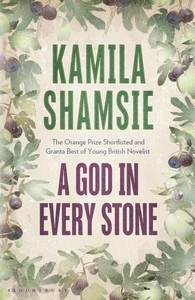
How to be Both won the Women’s Prize for Fiction in 2015. I don’t make a point of deliberately reading the winners of this prize, but I appear to have read quite a few of them over the years anyway. However, I haven’t yet read last year’s winner, Home Fire by Kamila Shamsie – although I have read another of her books, A God in Every Stone.

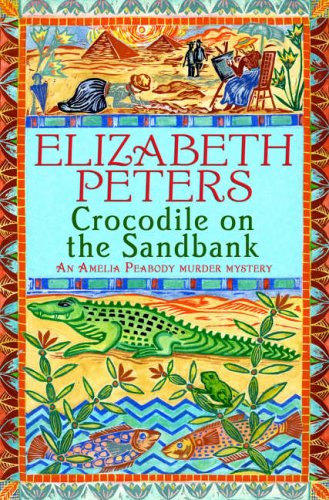
A God in Every Stone is set mainly in Peshawar during and after the First World War and two of the main characters – Vivian and Najeeb – are archaeologists. Another book I’ve read about archaeologists is Crocodile on the Sandbank by Elizabeth Peters, the first in a series of mysteries featuring Amelia Peabody, a Victorian Egyptologist.

I have still only read the first two books in the Amelia Peabody series, although I really enjoyed them and have no idea why it is taking me so long to get round to reading the third. Another historical mystery series that I started a few years ago but have still only read the first two books is Laurie R. King’s Mary Russell and Sherlock Holmes series, which begins with The Beekeeper’s Apprentice.

The word apprentice in the title leads me quite naturally to Assassin’s Apprentice by Robin Hobb – a very different sort of apprenticeship from beekeeping, but I suppose they could be equally dangerous! Assassin’s Apprentice is the first book in the wonderful Farseer Trilogy, which I highly recommend.

I don’t read a lot of fantasy, but I do always enjoy Robin Hobb’s books. Another fantasy author I’ve enjoyed reading recently is Katherine Arden. Her Winternight trilogy begins with The Bear and the Nightingale and is inspired by Russian myths and fairy tales. I loved the setting and the characters and thought each book in the trilogy was better than the one before.

Another book I loved that was inspired by a fairy tale was Bitter Greens by Kate Forsyth, which combines a retelling of Rapunzel with the story of Charlotte-Rose de Caumont de La Force, the 17th century woman who wrote the original tale on which it was based.

So those are my links for this month: Prize-winners, archaeology, unfinished series, apprentices, fantasy and fairy tales. Have you read any of the books in my chain?

Next month we will be starting with The Dry by Jane Harper.

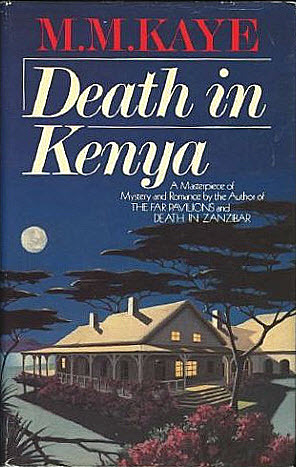
Death in Kenya by M.M. Kaye

This is the fourth in M.M. Kaye’s Death In… mystery series, although the books can be read in any order as they each stand entirely on their own. Like the other novels in the series, this one, Death in Kenya (originally published in 1958 as Later Than You Think), is set in one of the many locations in which Kaye herself lived for a while with her husband, an officer in the British army. In the 1950s, Kenya was still a British colony but the Mau Mau Uprising had been causing unrest across the country throughout the decade and this forms the backdrop for Kaye’s story.

The mystery takes place in and around Flamingo, an estate in Kenya’s Rift Valley which belongs to Lady Emily DeBrett, an eccentric elderly woman who has lived there for many years. When some mysterious, inexplicable events begin to occur at Flamingo – and rumours of a ghost begin to circulate – Lady Em acknowledges that she needs help and sends for her niece in England, Victoria Caryll, to come and join her as companion and secretary. Victoria is tempted by the invitation: Kenya is where she grew up and she longs to return to the country she loves so much, but she knows that Em’s grandson, Eden DeBrett also lives at Flamingo with his wife, Alice – and Eden is the man Victoria was once engaged to, before he ended their relationship with no explanation and broke her heart.

Torn between going and staying, the pull of the Rift Valley eventually wins and Victoria finds herself boarding a plane for Kenya. But when she arrives, she discovers that she has much more than an old lover and a jealous wife to worry about. A murder has been committed and the estate is in turmoil. Will the murderer be found before he or she kills again? Do the people of Flamingo face danger from the Mau Mau leader known as General Africa? And what is the significance of the haunting piece of music called the Rift Valley Concerto?

The mystery aspect of the book is quite enjoyable. I didn’t guess who the murderer was so I was surprised when the truth was revealed, although looking back I feel as though I should have guessed – we were given enough clues to be able to work it out, I think. The descriptions of Kenya are wonderful too, of course; it helps that Kaye lived there herself so could draw on her own experiences and memories when writing the book. I’ve read about the Mau Mau Uprising before, in Leopard at the Door by Jennifer McVeigh, so I already had some basic background knowledge, but that is a recent historical novel whereas Death in Kenya was a contemporary one, so the authors are looking at the same events from different perspectives and from different points in time. Kaye’s sympathies here seem to be more with the white European settlers, which is interesting because that’s not always the case in her novels – as anyone who has read The Far Pavilions or Shadow of the Moon will know, she usually takes a much more balanced view when writing about colonialism. However, she does state in her author’s note that “the opinions voiced by my characters were taken from life and at first hand.”

Although Death in Kenya has the same elements as the previous three books – an interesting, atmospheric setting, a courageous young heroine, a murder mystery to solve and a touch of romance – I found this one slightly different. While the others followed a similar formula (with the heroine actually being on the scene at the time of the murder and falling under suspicion herself), in this book Victoria Caryll doesn’t enter the story until some of the key events have already been played out. This makes Victoria feel somewhat like an outsider and no more or less important to the story than any of the other characters. That lack of one strong, central character to really focus on and connect with probably explains why I felt less engaged with this novel than I did with some of the others, particularly Death in Kashmir and Death in Cyprus.

I still have the last two books in the series – Death in Zanzibar and Death in the Andamans to read – and as they are set in two places I know nothing at all about, I’m looking forward to reading them and learning more!

The Walter Scott Prize 2019 Shortlist

Following last month’s announcement of the 2019 longlist for the Walter Scott Prize for Historical Fiction, the shortlist was revealed yesterday. As you probably know by now, I am currently working my way through all of the shortlisted titles for this prize since it began in 2010 (you can see my progress here). There are six books on this year’s list and here they are:

~

A Long Way From Home by Peter Carey

Irene Bobs loves fast driving. Her husband is the best car salesman in rural south eastern Australia. Together with Willie, their lanky navigator, they embark upon the Redex Trial, a brutal race around the continent, over roads no car will ever quite survive.

A Long Way from Home is Peter Carey’s late style masterpiece; a thrilling high speed story that starts in one way, then takes you to another place altogether. Set in the 1950s in the embers of the British Empire, painting a picture of Queen and subject, black, white and those in-between, this brilliantly vivid novel illustrates how the possession of an ancient culture spirals through history – and the love made and hurt caused along the way.

~

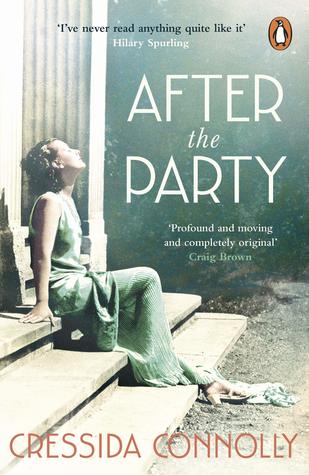
After The Party by Cressida Connolly

It is the summer of 1938 and Phyllis Forrester has returned to England after years abroad. Moving into her sister’s grand country house, she soon finds herself entangled in a new world of idealistic beliefs and seemingly innocent friendships. Fevered talk of another war infiltrates their small, privileged circle, giving way to a thrilling solution: a great and charismatic leader, who will restore England to its former glory.

At a party hosted by her new friends, Phyllis lets down her guard for a single moment, with devastating consequences. Years later, Phyllis, alone and embittered, recounts the dramatic events which led to her imprisonment and changed the course of her life forever.

~

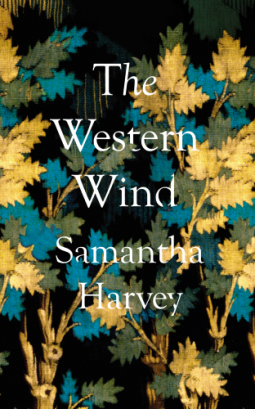
The Western Wind by Samantha Harvey (See my review here)

15th century Oakham, in Somerset; a tiny village cut off by a big river with no bridge. When a man is swept away by the river in the early hours of Shrove Saturday, an explanation has to be found: accident, suicide or murder? The village priest, John Reve, is privy to many secrets in his role as confessor. But will he be able to unravel what happened to the victim, Thomas Newman, the wealthiest, most capable and industrious man in the village? And what will happen if he can’t?

Moving back in time towards the moment of Thomas Newman’s death, the story is related by Reve – an extraordinary creation, a patient shepherd to his wayward flock, and a man with secrets of his own to keep. Through his eyes, and his indelible voice, Harvey creates a medieval world entirely tangible in its immediacy.

~

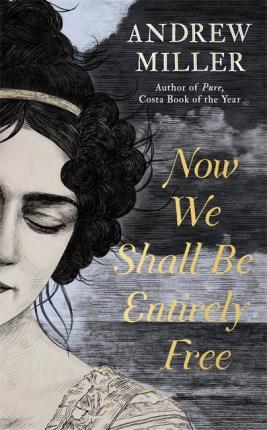
Now We Shall Be Entirely Free by Andrew Miller (See my review here)

One rain-swept February night in 1809, an unconscious man is carried into a house in Somerset. He is Captain John Lacroix, home from Britain’s disastrous campaign against Napoleon’s forces in Spain.

Gradually Lacroix recovers his health, but not his peace of mind – he cannot talk about the war or face the memory of what happened in a village on the gruelling retreat to Corunna. After the command comes to return to his regiment, he sets out instead for the Hebrides, with the vague intent of reviving his musical interests and collecting local folksongs. Lacroix sails north incognito, unaware that he has far worse to fear than being dragged back to the army: a vicious English corporal and a Spanish officer are on his trail, with orders to kill. The haven he finds on a remote island with a family of free-thinkers and the sister he falls for are not safe, at all.

~

Warlight by Michael Ondaatje

In a narrative as mysterious as memory itself – at once both shadowed and luminous – Warlight is a vivid, thrilling novel of violence and love, intrigue and desire. It is 1945, and London is still reeling from the Blitz and years of war. 14-year-old Nathaniel and his sister, Rachel, are apparently abandoned by their parents, left in the care of an enigmatic figure named The Moth. They suspect he might be a criminal, and grow both more convinced and less concerned as they get to know his eccentric crew of friends: men and women with a shared history, all of whom seem determined now to protect, and educate (in rather unusual ways) Rachel and Nathaniel. But are they really what and who they claim to be? A dozen years later, Nathaniel begins to uncover all he didn’t know or understand in that time, and it is this journey – through reality, recollection, and imagination – that is told in this magnificent novel.

~

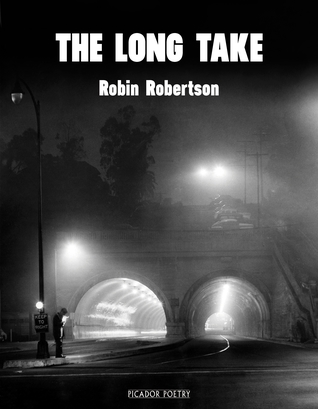
The Long Take by Robin Robertson

Walker, a young Canadian recently demobilised after war and his active service in the Normandy landings and subsequent European operations. Suffering from post-traumatic stress disorder, and unable to face a return to his family home in rural Nova Scotia, he goes in search of freedom, change, anonymity and repair. We follow Walker through a sequence of poems as he moves through post-war American cities of New York, Los Angles and San Francisco.

~~~

What do you think?

I’m pleased I’ve already read two of the books from this year’s shortlist – it gives me a chance of actually reading the other four before the winner is announced in June. I enjoyed the Andrew Miller and would be happy to see it win and although The Western Wind wasn’t really my sort of book I think it will be a strong contender too. I’m looking forward to reading Warlight but I’m not sure about the other three, especially The Long Take which is written in verse. I’m a bit nervous about reading that one!

Have you read any of these books? Which one do you think deserves to win the prize?