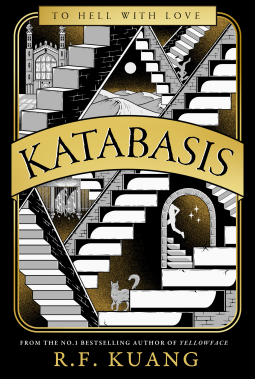
Strange Houses by Uketsu

“I can’t tell you how many people have told me their scary house stories.

But none of them can compare to the houses in this story. These strange, strange houses.”

I loved Uketsu’s Strange Pictures when I read it earlier this year, so I was excited to see another of his books, Strange Houses, available on NetGalley. Like the first book, this one has been translated into English from the original Japanese by translator Jim Rion. Also like the first book, it contains a number of illustrations and diagrams that form an important part of the story.

The novel begins with our narrator, a freelance writer, being approached by his friend Yanaoka, who is searching for a suitable house in which he and his wife can raise their first child. Having viewed a house in a quiet residential area of Tokyo, Yanaoka and his wife have both fallen in love with it but are confused by the floor plan which shows a ‘dead space’ – in other words, a tiny hidden room with no doors. The narrator has another friend, Kurihara, who is an architect, so he decides to ask his opinion.

When Kurihara studies the floor plans, he picks up on several other unusual features of the house. These, together with the hidden room, lead him to form a bizarre but terrifyingly logical explanation for the design of the building. Yanaoka chooses not to buy it, but the narrator is intrigued and continues digging into the house’s history, uncovering connections with some other equally strange houses!

I really enjoyed the first half of this book, almost as much as Strange Pictures. It has a similarly interactive feel, where we are encouraged to look at the illustrations and identify the clues in them along with the narrator. Although Kurihara’s theory about the design of the Tokyo house seems ridiculously far-fetched, it does also make sense when you consider the layout of the rooms, the positions of doors and windows and the location of the house itself. I would never have imagined that floor plans could be creepy, but the ones in this book certainly are!

A difference between this book and Strange Pictures is that the other book is made up of several separate but interconnected stories, while this one consists of just one plot and one set of characters. The change in format means this book feels less varied and innovative, but it also allows us to follow the story of one family – the family who built the houses – through to the end. In the second half of the book, the focus moves away slightly from the plans and layouts and concentrates more on the history of the family. Things become quite convoluted, with complex relationships between the family members, rivalries between different branches and tales of curses and traditions going back several generations. I was reminded of Seishi Yokomizo’s mystery novels and I wonder if these, as well as Yukito Ayatsuji’s Bizarre House series, have influenced Uketsu.

In an interview, translator Jim Rion has talked about how Uketsu wants his writing to be easy to read and accessible to all readers and I think Rion has done a great job of keeping that same clarity in his translations. I’ve also discovered that a third book, Strange Buildings, is coming soon. Something to look forward to!

Thanks to Pushkin Vertigo for providing a copy of this book for review via NetGalley.

Book 6/20 for 20 Books of Summer 2025.

20 Books of Summer 2025: June Recap

Now that the first month of this year’s 20 Books of Summer challenge is over, one of our hosts – Emma of Words and Peace – has compiled a list of five questions to help us recap our June reading. I had fun answering these, although I’m afraid some of my answers aren’t quite as creative as the questions!

I read nine books for the challenge in June and have only reviewed five of them so far. The other four reviews will be coming soon, I promise!

1. If your #20BooksofSummer25 TBR were a beach, what’s the most surprising thing you’ve unearthed so far – a hidden gem, a total shipwreck, or something unexpectedly delightful?
This question gets at whether you’ve discovered a new favorite, encountered a book you didn’t enjoy, or found something pleasantly surprising.

Of the books I’ve read for 20 Books of Summer so far, two were by authors who were new to me – The Rush by Beth Lewis and The Stepdaughter by Caroline Blackwood – and both were surprisingly good! I’m sure I’ll be reading more by both of those authors. Agatha Christie’s 1964 Miss Marple novel, A Caribbean Mystery, is another book I enjoyed more than I was anticipating – it hadn’t appealed to me much as it’s not a setting I associate with Miss Marple.

There were no total shipwrecks on my beach as the other books I read in June were by authors already familiar to me, so I knew what to expect!

2. Imagine your reading progress as a summer road trip. Which book has been the scenic route, which has been the highway, and is there a rest stop book you’re looking forward to?
This question explores reading pace and anticipation. A scenic route book might be slower-paced and atmospheric, while a highway book is a fast-paced read. The rest stop book is one you’re looking forward to for a break or change of pace.

The scenic route would be A Schooling in Murder by Andrew Taylor, a slow-paced historical mystery novel set in and around a girls’ school in the 1940s. Caroline Blackwood’s The Stepdaughter would be the highway book – it’s a novella that I finished in one day.

The rest stop book I’m looking forward to is this month’s Read Christie 2025 selection, Come, Tell Me How You Live? It will be the first non-fiction book I’ve read for 20 Books of Summer, so should be a nice change from all the fiction I’ve been reading.

3. If one of the books you’ve read this month was turned into an ice cream flavor, what ingredients would it have, and what would it be called?
This question encourages your creative thinking and helps you express the essence of a book in a fun, summery way.

My Gold Rush Crunch ice cream, inspired by The Rush, includes a scoop of vanilla to represent the snowy mountains of the White Pass Trail and chunks of honeycomb to represent gold nuggets. As the book is set in Canada, it can be served with optional maple syrup!

4. If you could swap places with a character from one of the books you’ve read this month, purely for the summer, who would it be and what items would you absolutely take with you?
This question taps into escapism and personal connection. It also allows you to highlight a character or book you particularly enjoyed.

It’s actually easier for me to say which ones I wouldn’t want to swap places with! I certainly wouldn’t want to be Helen Capel from Ethel Lina White’s The Spiral Staircase and have to spend the whole summer locked in a creepy house with a murderer on the loose, nor would I want to live in any of the equally unsettling buildings described in Uketsu’s Strange Houses. Turning into a cat like Peter in Paul Gallico’s Jennie doesn’t appeal either, although it might be fun for a little while – and much as I enjoyed The Rush, the Klondike in the 19th century sounds like a harsh and dangerous place for a woman. I wouldn’t like to be a ghost like Annabel in A Schooling in Murder either, or part of the miserable household in The Stepdaughter. If I chose Love & Other Poisons by Lesley McDowell I would have to be either a murderer or a murder victim and These Wicked Devices by Matthew Plampin would give me the options of a nun, a slave or a scheming noblewoman.

Having ruled everybody else out, I’m left with Miss Marple, so it looks like I’m off to the Caribbean for the summer – with my knitting, of course. Maybe I’ll be able to solve a mystery or two while I’m there!

5. “Plot twist!”: If your summer reading challenge were a book, what unexpected event just happened to shake things up? Or did life get in the way of your reading plans?
This question acknowledges the unpredictable nature of life and reading, and allows you to share any challenges or unexpected joys you’ve encountered.

June was a surprisingly uneventful month for me, with nothing in particular that got in the way of my reading. Of course, that could change over the next two months of the challenge – only in a good way, I hope!

~

Are you taking part in 20 Books of Summer? How did your June reading go?

The Rush by Beth Lewis

I loved this! I’ve never read anything by Beth Lewis before, or even come across her, but this is one of my favourite books of the year so far. It’s set in Canada during the Gold Rush and follows the stories of three very different women whose paths cross in Dawson City in the Klondike.

The Rush begins with the arrival of Kate Kelly in Skaguay (now Skagway), Alaska, in 1898. Kate is there to meet up with the guide who is going to take her along the White Pass Trail, the route to Yukon and the Klondike goldfields. She needs to get there as quickly as possible because she has received a desperate plea for help from her sister, Charlotte, in Dawson City: This may be my last letter. He has finally found me and there is nowhere left to run.

In the little Klondike settlement of Boulder Creek, Ellen Rhodes spends her days alone in her cabin, cooking, cleaning and washing, while her husband, Charlie, goes down to the river and digs for gold that never appears. Ellen is sure they’re wasting their time and money, but Charlie refuses to give up on his dream. Finally, we meet Martha, owner of the Dawson Hotel, which doubles as the town’s brothel. Martha is fiercely proud of the business she has built up and is determined to keep it out of the hands of the ruthless Bill Mathers, who seems to be buying up the entire town.

The three women take turns to narrate the story, with the viewpoints rotating throughout the book. They are leading very separate lives at first, but are drawn together when one of Martha’s girls is found murdered. They’re also connected by a mysterious fortune teller who encounters all three of them and seems to have an uncanny ability to truly predict the future. There’s a mystery element to the novel as the women try to find out who the murder victim really is, who has killed her and why, but although this was intriguing and cleverly plotted, what I really loved was the setting and learning what it was like to be a woman in that fascinating but harsh environment where there were any number of natural and man-made disasters – an avalanche, a fire, an outbreak of typhoid – that could change everything in an instant.

I seem to read very few historical novels set in Canada, so I was pleased to have come across one with such a strong sense of place. The vivid descriptions made it easy for me to imagine the cabin by the river where Ellen and Charlie’s marriage falls apart, a victim to the obsessive fever that grabs hold of some human beings when gold is mentioned, and the streets of Dawson City where enterprising men and women like Martha have discovered that the real fortune is to be made not from mining but from the miners. But I particularly enjoyed following Kate’s journey from Alaska into Canada’s Yukon territory, a journey which includes a dramatic, exhilarating adventure crossing the dangerous White Horse Rapids.

I had assumed that the characters were entirely fictional, so I was surprised to read the author’s note at the end of the book and discover that many of them, including Kate, Ellen and Martha, are actually based loosely on real historical figures. This really is a fascinating book, in so many different ways, and I can’t recommend it highly enough.

Thanks to Viper for providing a copy of this book for review via NetGalley.
Book 5/20 for 20 Books of Summer 2025.

My Commonplace Book: June 2025

A selection of quotes and pictures to represent June’s reading:

commonplace book
noun
a book into which notable extracts from other works are copied for personal use.

~

He’d be better off reading detective stories than going to Miss Covey’s English Grammar class. After all, there are worse places to find an education than crime fiction.

A Schooling in Murder by Andrew Taylor (2025)

~

“Yes, I learned to hate, Peter, and that is worse than being sick, or starved, or thirsty, or in pain.”

Jennie by Paul Gallico (1950)

~

Hand-coloured photo of Dawson City c. 1899 at the end of the gold rush (University Library Washington)

I was a child of the outdoors, a wild thing, made more of mud and scrapes than manners and poise. My father did not try to change that. He knew, because he was the same, that trying to make me something I was not would be like trying to alter the flow of a river by standing in the water and shouting.

The Rush by Beth Lewis (2025)

~

“The amount of time you spent together probably matters, but less time doesn’t mean less love. Whether it’s a day or year, human or cat, and even if we may never see them again, there are those who are irreplaceable in our lives.”

We’ll Prescribe you a Cat by Syou Ishida (2023)

~

If you feel that you have been humiliated, you have got to learn to dare to yell and scream that you feel that way. Women have become paralysed. It’s the culture. It’s the culture that has made us all lose the courage to be ourselves when we are hurt – to really yell and scream.

The Stepdaughter by Caroline Blackwood (1976)

~

‘The world?‘ Cassandra gave a small laugh, as if at the follies of youth. ‘I regret to inform you that the world does not think of any of us as much as we all like to think.’ It was at least true that at her own time of life, it did not give a jot. ‘As for the minuscule circles in which we both live…It may be true that you have created a minor diversion. But for what do we live but to create sport for our neighbours?’

The Elopement by Gill Hornby (2025)

~

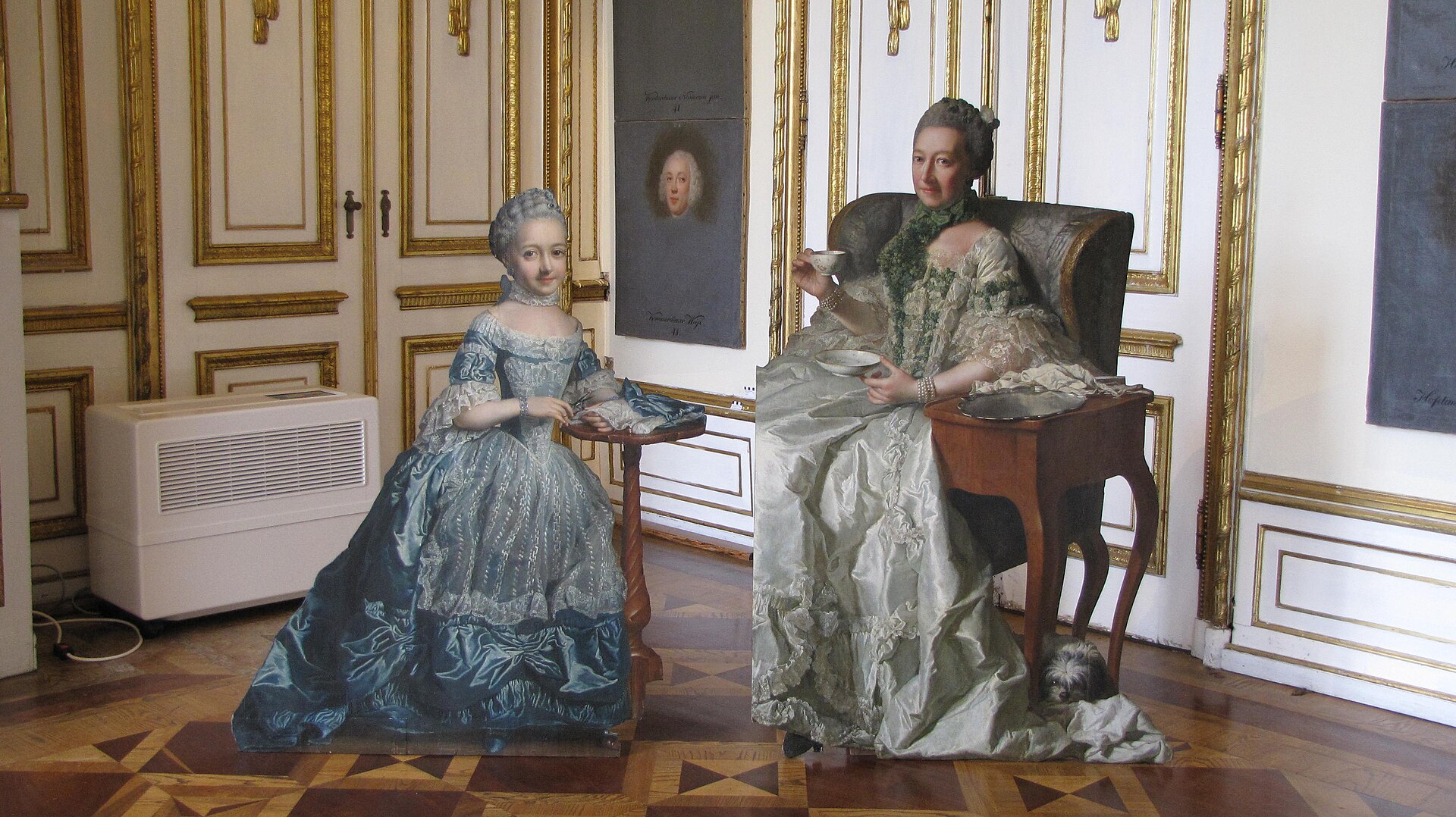
Olimpia Maidalchini, Contemporary portrait by Diego Velázquez

He knows very well that this is what it is to be an artist. Success is built upon the backs of many failures. You must turn the page; you must try again.

These Wicked Devices by Matthew Plampin (2025)

~

“Do you think a murderer ought to be a happy man?”

Miss Marple coughed. “Well, they usually have been in my experience.”

“I don’t suppose your experience has gone very far,” said Mr Rafiel.

In this assumption, as Miss Marple could have told him, he was wrong. But she forebore to contest his statement. Gentlemen, she knew, did not like to be put right in their facts.

A Caribbean Mystery by Agatha Christie (1964)

~

His living room, about eight tatami mats in size, was littered with books, as usual. While many were architecture-related, the vast majority were mystery novels. More than seemed reasonable, actually.

AUTHOR: So many books. As always.

KURIHARA: That does seem to be where most of my money goes.

Strange Houses by Uketsu (2021)

~

Maggie Dickson’s pub, Edinburgh

It is a world of confidence, even amongst those who lack the good looks or wisdom or godliness to have earned it. It is not a world I am comfortable in, but I have had to find a way through. Theirs is a black-and-white world of certainties: of good and bad, and right and wrong. To them, I am wicked. So they strung me up in front of a baying crowd. But none of them had ever been in my shoes.

The Mourning Necklace by Kate Foster (2025)

~

‘But I think that everyone should do all the things they shouldn’t do – and then, they won’t.’

Dr. Parry laughed as he rose reluctantly from the old creaking basket-chair. ‘It takes a doctor to disentangle that,’ he said. ‘But I imagine you refer to moral inoculation.’

‘Yes,’ nodded Helen. ‘Like being vaccinated against small-pox.’

The Spiral Staircase by Ethel Lina White (1933)

~

His words were meant to chill me, and they did. But I wouldn’t tell him what ghosts there were waiting in the night for me, sometimes even in the day. ‘Which of us isn’t haunted by our past?’ I said, at last. ‘We each have one, after all. You can’t live and not have a past.’

Love and Other Poisons by Lesley McDowell (2025)

~

Favourite books read in June:

The Rush, The Mourning Necklace and The Spiral Staircase

Authors read for the first time this month:

Beth Lewis, Syou Ishida, Caroline Blackwood

Places visited in my June reading:

England, Scotland, Wales, USA, Japan, Canada, Italy, a fictional Caribbean island

~

Reading notes: June was another good month of reading for me, helped by having a week off work at the beginning of the month, and my 20 Books of Summer also got off to a great start. I’ve read nine books from my list so far, which gives me hope that I’ll be able to complete the challenge this year! I’m also pleased that I was able to contribute two cat-related posts to Mallika’s Reading the Meow event.

In July, I will be continuing with 20 Books of Summer and I have a book lined up for the Read Christie 2025 challenge as well. I’m also hoping I can catch up with posting my outstanding reviews!

What did you read in June? Do you have any plans for July?

The Hounding by Xenobe Purvis

A lot of novels have been published recently dealing with the subject of witchcraft and witch trials, but The Hounding – Xenobe Purvis’ debut – is something different. Set in 18th century Oxfordshire, after the fervour for witch hunting has largely died down, it explores the dangers of being different in a small community where superstition is rife.

The five Mansfield sisters, who live with their blind grandfather on his farm, have become the subject of gossip in the village of Little Nettlebed. Their grandmother has recently died and the sisters are in mourning, but it seems that people have little sympathy for them. The Mansfields have always been seen as odd by the other villagers and since their grandmother’s death, a rumour has begun to spread that the girls have the power to turn themselves into dogs.

It’s Pete Darling, the drunken, misogynistic ferryman who starts the rumour after one of the girls refuses to speak to him, causing him to feel disrespected. As a summer heatwave descends on the village and the river begins to dry up, Pete’s trade is affected, giving him less to occupy his days and more time to drink. When he sees what he believes are the Mansfield sisters undergoing a strange transformation, it’s not quite clear what has actually happened. Has Pete had some kind of hallucination brought on by heat and alcohol? Is his own dislike of the girls causing him to see what he wants to see and conveniently giving him a way to punish them? Or are the sisters really turning into dogs in front of his eyes? Sadly, the girls are not popular in the village and other people are easily convinced that Pete’s story is true.

From calm, serious Anne, the eldest, down to little Mary, a solemn six-year-old – and in between pretty Elizabeth, shy, timid Grace and tomboyish Hester – the girls share a close bond and keep themselves to themselves, which leads to them being viewed as arrogant and unwelcoming. To Farmer Mansfield, however, they are his beloved granddaughters and he just wants them to be happy and safe. Other characters in the book also have their own views of the girls and these include newcomer Thomas Mildmay, who has been hired to help with the haymaking on the farm; the innkeeper’s wife, Temperance Shirly; and two local boys, Robin and Richard Wildgoose. The perspective we never really get is that of the sisters themselves, but seeing them through the eyes of others helps us to build up a picture of who the sisters really are and what they are like.

I found this a very atmospheric book; Purvis successfully creates a tense, almost claustrophobic feel through her descriptions of the relentless hot, dry weather and the small-mindedness of the villagers. A mixture of superstition, prejudice and fear of things they don’t understand makes the people of Little Nettlebed ready to think the worst of the Mansfield sisters and the girls don’t really do much to dispel these misconceptions because they do behave increasingly oddly when other people are around – almost as if becoming a dog is a safer option than being seen as different. I really enjoyed this fascinating and unusual novel!

Thanks to Hutchinson Heinemann for providing a copy of this book for review via NetGalley.
A Caribbean Mystery by Agatha Christie

This month for the Read Christie 2025 challenge, the theme is ‘amateurs’ and although I’ve read the suggested title, Crooked House, quite recently, there were some alternatives that I haven’t already read – including this one, A Caribbean Mystery. Published in 1964, it’s one of the later entries in the Miss Marple series and not one that had really appealed to me; Miss Marple belongs in St Mary Mead and it seemed incongruous to put her in a Caribbean setting! Now that I’ve read it, though, I can say that although it’s maybe not one of my absolute favourite Christie novels, I did really enjoy it.

You may be wondering why Miss Marple is in the Caribbean. Well, it seems she has been ill and her nephew Raymond has paid for her to spend some time recuperating in the sun on the island of St Honoré. Miss Marple is grateful, of course, and is enjoying the warmth and the scenery, but she’s also beginning to feel bored – every day is the same as the one before and nothing ever really seems to happen! This all changes when she falls into conversation with Major Palgrave, an elderly man staying at her hotel, who tells her a story about a man who got away with murder several times. He asks her if she wants to see a picture of a murderer but as he begins to dig out the snapshot, he suddenly stops abruptly and changes the subject as other people approach.

The next day, Major Palgrave is found dead in his room. High blood pressure is blamed, but Miss Marple is convinced he’s been murdered and that there’s some connection with the photo he was about to show her. To add to her suspicions, the photo now seems to have disappeared from the Major’s belongings. It seems likely that the murderer is one of the other guests, but which one? The most likely suspects seem to be the Dysons, Greg and Lucky, and their friends Edward and Evelyn Hillingdon, two nature loving couples who often travel together and who had been walking up the beach towards Major Palgrave as he told Miss Marple his story. But there are others who can’t be ruled out, including the Kendals, who own the hotel; Canon Prescott and his sister; and Mr Rafiel, an old man confined to a wheelchair, visiting the island with his masseur and his secretary.

I found this a very enjoyable mystery; it’s not one of Christie’s more complex plots but there’s some clever misdirection to send the reader along the wrong track. The first murder takes place early in the novel and the story continues to unfold at a steady pace after that, so it held my interest from beginning to end. Miss Marple also plays a big role, in contrast to some of the other books where we see very little of her. This time, she’s present for the entire novel, interacting with the suspects and victims and sharing her thoughts and deductions with the people she believes she can trust. As usual, people underestimate Miss Marple, dismissing her as a ‘fluffy old lady’, but in time some of them come to see that there’s far more to her than meets the eye!

Some of the characters in this book reappear or are referred to again in the later novel Nemesis, published in 1971. I read that one a few years ago, so it was nice to see how those characters were originally introduced and how Miss Marple gained her nickname ‘Nemesis’. I should probably have read the two books in the correct order as it also meant that I could quickly discount those two recurring characters as serious suspects, but it didn’t really matter. Now I’m looking forward to reading Christie’s memoir Come, Tell Me How You Live for Read Christie in July!

Book 4/20 for 20 Books of Summer 2025.

Top Ten Tuesday: Most anticipated books releasing in the second half of 2025

This week’s topic for Top Ten Tuesday (hosted by That Artsy Reader Girl) is “Most Anticipated Books Releasing in the Second Half of 2025”.

These are not technically my ‘most anticipated’ books, as I already listed some of those in my recent Historical Musings post just a few weeks ago. However, I only included historical fiction in that post. The ten books listed below are some more books I’m hoping to read and are from a range of genres.

1. The Killer Question by Janice Hallett – I’ve enjoyed all of Janice Hallett’s books, although I know her unusual style isn’t for everyone. This new one sounds great!

2. Rainforest by Michelle Paver – I was unaware that Michelle Paver had a new book coming out until I saw this one on NetGalley. I enjoyed her last one, Wakenhyrst.

3. The Shapeshifter’s Daughter by Sally Magnusson – I’ve read all of Magnusson’s previous adult novels but this one, based on the Norse myth of Hel of the underworld, sounds completely different.

4. The Token by Sharon Bolton – I don’t read a lot of contemporary crime but a new Sharon Bolton book is always something I look forward to!

5. Miss Winter in the Library with a Knife by Martin Edwards – I’m hoping this murder mystery will be as entertaining as it sounds.

6. No Friend to This House by Natalie Haynes – Yes, it’s another Greek retelling, but Natalie Haynes is an author I’ve particularly enjoyed in the past, so I’m sure this reimagining of the Jason and Medea story will be a good one!

7. The Clock House Murders by Yukito Ayatsuji – I loved one of this author’s books (The Labyrinth House Murders) and disliked another (The Decagon House Murders) so I’m curious to see what this one will be like!

8. Queens at War by Alison Weir – I haven’t read all of the earlier books in Weir’s non-fiction series about medieval queens of England, but this one covers some of my favourite periods – the Hundred Years’ War and the Wars of the Roses.

9. Murder at the Black Cat Cafe by Seishi Yokomizo – The latest book in the Kosuke Kindaichi series to be translated into English. I’ve enjoyed all of the others but this one sounds a bit different.

10. The Twelve Days of Christmas by Susan Stokes-Chapman – I’ve only read a short story by Stokes-Chapman but would like to try one of her novels.

~

Are you interested in any of these? Which other books being published in the second half of the year are you planning to read?