My Commonplace Book: September 2018

A selection of words and pictures to represent September’s reading:

commonplace book
noun
a book into which notable extracts from other works are copied for personal use.

~

Sometimes, he wondered at the choices a man made in his life: what a chaotic road had been laid behind him of carefully made plans and rushed decisions, rapid shifts and backtracks. Where might that road have led him if any one of them had been different? Sometimes, the thought left him light-headed, as if he were looking out over an abyss, no road laid before him, all the choices yet to make and the weight of those already made pushing at his back.

Court of Wolves by Robyn Young (2018)

~

“These old corners with layers of history attached to them. They seem to exist in more dimensions than most places do.”
“What do you mean?”
“I’m not quite sure I know. I suppose I mean it exists in time as well as space. So there’s always more to it than there seems. Only you don’t quite know what.”

Bleeding Heart Square by Andrew Taylor (2008)

~
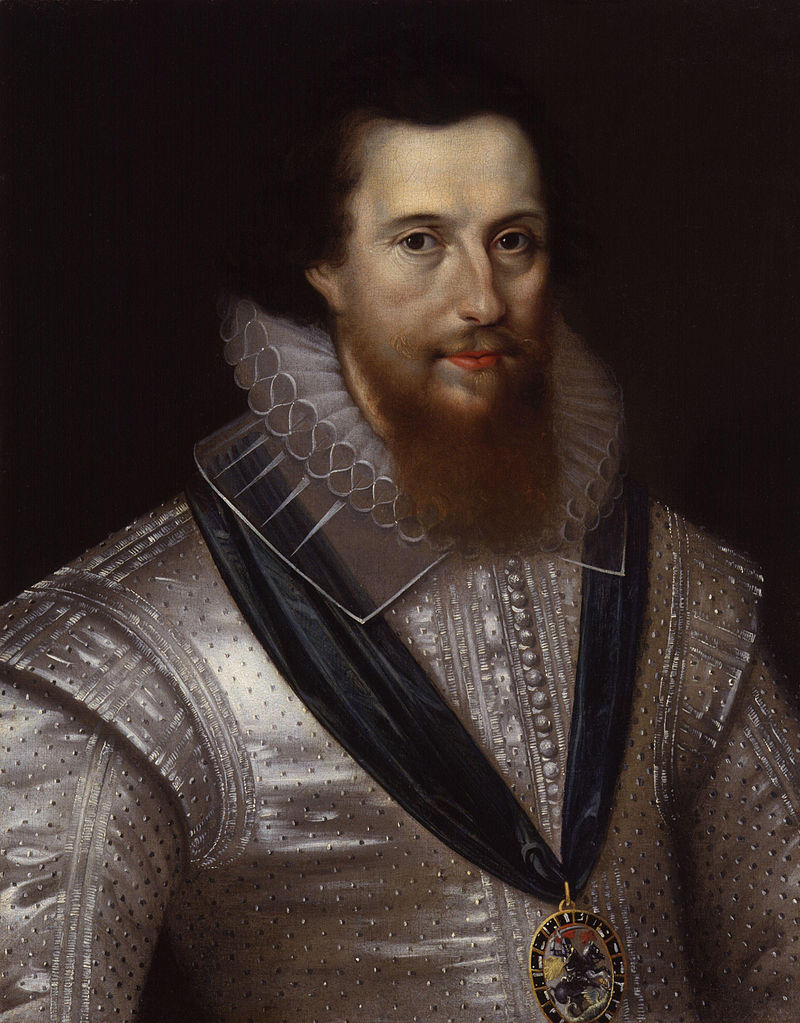
Robert Devereux, 2nd Earl of Essex

If the advice was not heeded – and Francis was well aware that there was little likelihood of persuading the Earl of any course of action that he did not sincerely believe had been instigated by himself – it was because confrontation then, now, and always, is not only between the commander in the field and the enemy he seeks to subdue, but also between the men of action on the ground and the politicians back at home.

Golden Lads by Daphne du Maurier (1975)

~

‘History is a good story, in my humble opinion,’ he said at last. ‘And at best it’s a matter of interpretation of selected facts, which may not even be genuine facts. Few historians have the chance to interview their subjects first-hand. Don’t knock it, Ruth. Listen. Write. Work out what it is you’ve written later.’

The Ghost Tree by Barbara Erskine (2018)

~

What was it like to trust no one? Was it wise? Or was there a small file, like a watchmaker’s file, that rasped away at the heart until, one day, in the crossing of a street, the middle of a sentence, you ceased to be human at all?

Now We Shall Be Entirely Free by Andrew Miller (2018)

~

‘Do please, Bella, think hard of what you are planning. You have no idea, I am sure, of what life can be like for a woman.’
‘For one who fails,’ said Cristabel. ‘I don’t mean to fail. I mean to have the world at my feet. Because I am me, not because I’m Sarum’s unwanted daughter. Just give me my chance.’

First Night by Jane Aiken Hodge (1989)

~

The deeds of Theseus on an Attic red-figured kylix (British Museum)

Before, when I have tried to understand my enemies, it has been to ‘plan’ against them. Why try now when it is finished, why not be content to curse? But while man is man he must look and think; if not forward, back. We are born asking why, and so we end. So the gods made us.

The Bull from the Sea by Mary Renault (1962)

~

Tad once told me that there is only one true queen on a chessboard. I remember asking him which one it was, and he asked me what I thought in return. I hazarded that she was always the one that won the game, and he shook his head slowly.
“No, child,” he said. “A queen may lose the game at hand, but ever is she a queen.”

Perdita by Hilary Scharper (2013)

~

The storm-centre had moved to some distance now, but the sky was still low and dark, and in the intermittent electric flicker the mountain shapes showed a curious light olive-green, lighter than the indigo clouds beyond them. The lower meadows and slopes shone paler still, stretching ghostly and frostlike where the shower had left its evanescent hoary glimmer. Dark sky, pale mountains, phantom-grey meadows…it was like looking at the negative of the normal daylight picture, a magically inverted landscape through whose pale foreground drove the sharp ink-black furrow of the Petit Gave.

Thunder on the Right by Mary Stewart (1957)

~

Nell was not impressed by his revelation. The highborn were always up to no good, but what of it? No matter who sat on the throne at Westminster, she’d still be fretting about that leak in the roof and her daughter’s need for new shoes.

Cruel as the Grave by Sharon Penman (1998)

~
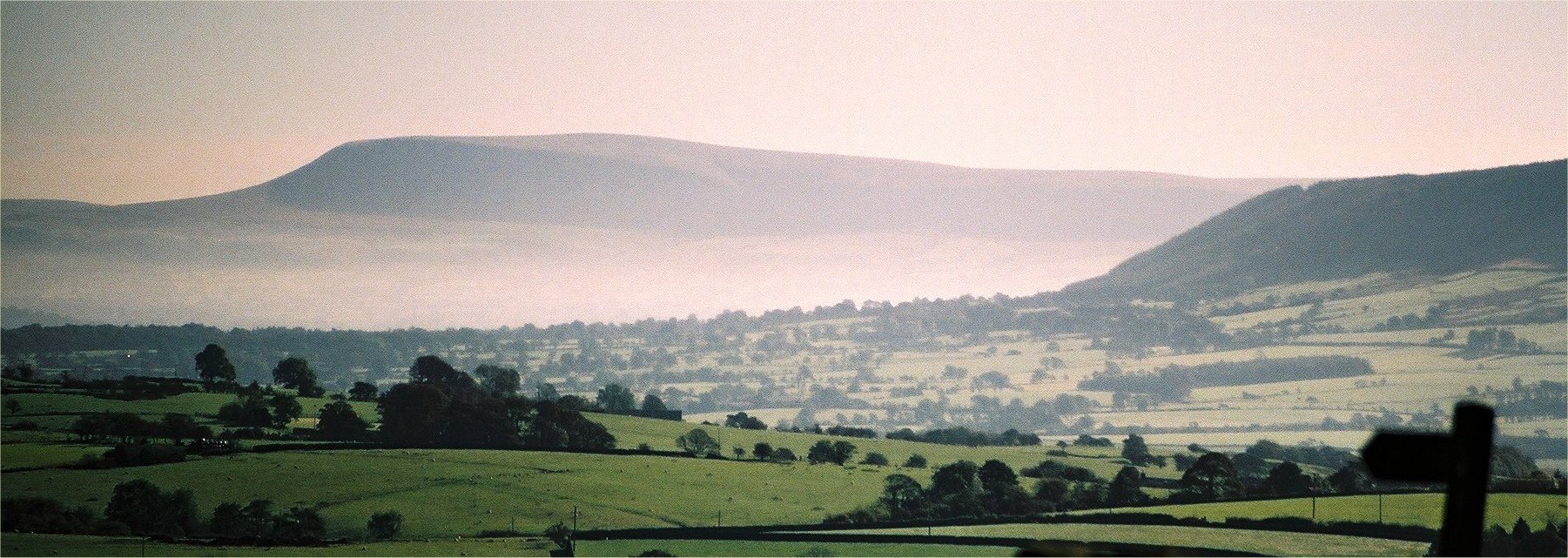
Pendle Hill, Lancashire

‘People think in pictures,’ I said. ‘Sometimes if you jog their memories with one picture, it helps to release others. People remember more than they think, but their memories are stored deep and you need to find a way to bring them to the surface.’

The Craftsman by Sharon Bolton (2018)

~

‘No? She wanted advice, just like you. I told her to go home and cook her husband’s dinner. Instead she went to Spain where she was murdered. People don’t want advice. They want to be told that what they want to do is right.’

Dark Summer in Bordeaux by Allan Massie (2012)

~

The extraordinary pleasantness of the last days of a holiday does not make a determined man want to be on holiday forever; he enjoys each second with peculiar gusto just because he is prepared to leave at an appointed time.

Harriet by Elizabeth Jenkins (1934)

~

Favourite books read in September:

The Craftsman, Bleeding Heart Square and Harriet

Where did my reading take me in September?

England, France, Ancient Greece, Spain, Italy, Scotland, Canada

Authors read for the first time in September:

Hilary Scharper and Elizabeth Jenkins

~

Have you read any of these books? Which books did you enjoy in September?
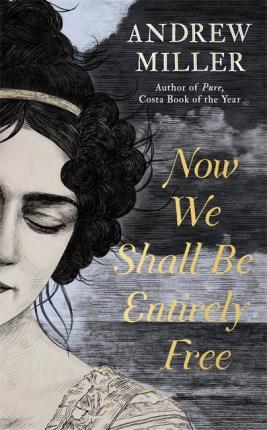
Now We Shall Be Entirely Free by Andrew Miller

It’s 1809 and a wounded man is being carried into his home in Somerset. His name is Captain John Lacroix and he has just returned from Spain, where he has been fighting in the Peninsular War. Injured, exhausted and haunted by his experiences, he seems close to death, but with the help of his housekeeper, Nell, he slowly regains his strength. Unable to contemplate returning to the war, he sets off for Scotland instead – first to Glasgow, then to the Hebrides, in search of some peace and redemption.

Meanwhile, in Spain, a British soldier called Calley is providing evidence to a military inquiry regarding atrocities carried out in the Spanish village of Los Morales during the retreat of the British army. He says he can identify the man responsible for this war crime, the man who was in command of the troops as they raped and murdered. To satisfy the Spanish that justice has been done, Calley is sent to hunt down and punish the perpetrator of the crime, accompanied by a Spanish officer, Medina, who will act as a witness.

Due to the alternating of the two narratives, it very quickly becomes obvious to the reader that the man accused by Calley is John Lacroix…but can it be true? Can the quiet, decent, sensitive man we have been getting to know on his journey to Scotland really have carried out these appalling deeds? Either there is more to the story than meets the eye or we don’t know John Lacroix as well as we think we do. There’s plenty of suspense as we wonder when we will find out exactly what happened that day in Los Morales and what sort of man John Lacroix really is.

As we wait to see whether Calley and Medina will catch up with their target, Lacroix arrives on a remote Hebridean island where he meets Emily Frend and her siblings, Jane and Cornelius. Together with their absent leader, the mysterious Thorpe, they are the last remaining members of a small community who have made the island their home. Intrigued by their lifestyle, Lacroix compliments Emily on her freedom, only for her to explain to him that she does not consider herself to be free at all: “Is it because I take off my stockings to paddle in the sea?” she asks. “That I have let you see me do it? Is that my freedom?”

Now We Shall Be Entirely Free is a beautifully written novel and although there were one or two aspects of the plot that I found unconvincing and although I was disappointed in the Hebridean setting, which I would have expected to have a much stronger sense of place, I could overlook these things because there was so much else that I liked. Andrew Miller has a lot to say about so many things: guilt and blame, the atrocities of war, independence, redemption and love. This is only the second book of his that I’ve read – the first was Pure, a dark and fascinating novel about the destruction of a cemetery in Paris. I enjoyed both but preferred this one because the characters are stronger and because it left me with more to think about at the end. I’m sure I’ll be reading more of his books; I like the sound of Ingenious Pain, so maybe I’ll try that one next.

Thanks to Hodder & Stoughton for providing a copy of this book for review via NetGalley.

Harriet by Elizabeth Jenkins: A book for the Persephone Readathon

Jessie at Dwell in Possibility is hosting another of her Persephone Readathons this week and as I am also taking part in this year’s R.I.P. Challenge, I decided to read a book that would count towards both. Harriet, first published in 1934, is based on a real life crime which took place in 1877 and is a much darker story than you would usually find between the dove-grey covers of a Persephone book.

Harriet Woodhouse, the thirty-three-year-old title character, is referred to in the novel as ‘a natural’ – someone whom, today, we would probably describe as having learning difficulties. Her use of language – both written and spoken – is sometimes not quite right, she can appear to be insensitive and she is often slow to understand what people really mean. Mrs Ogilvy, her mother, is very loving and protective towards her daughter and although Harriet still lives at home, she encourages her to be as independent as possible and to visit family and friends now and then. It is while visiting her cousins, the Hoppners, that Harriet is introduced to Lewis Oman. Lewis is the brother of Elizabeth Hoppner’s husband, Patrick, and it is through this family connection that Lewis has heard that Harriet is in possession of a small fortune and due to inherit more on the death of an aunt.

When Lewis asks Harriet to marry him, his motives are very obvious to the reader: he is only interested in her money and feels nothing for Harriet herself. Mrs Ogilvy is horrified, but as her daughter is an adult she finds that there is nothing she can do to prevent the marriage, especially as Harriet thinks Lewis is charming and wonderful and believes everything he tells her. The wedding goes ahead and, having achieved his goal, Lewis quickly tires of his new wife, sending her to live in the country with Elizabeth and Patrick.

From this point, the story becomes very disturbing with Harriet completely isolated and cut off from the people who love her and care about her. Her treatment at the hands of Lewis and Patrick, and Elizabeth and her younger sister Alice, is quite painful to read about, particularly as their acts of cruelty are rarely described explicitly – instead, we are left to draw our own conclusions from the hints we are given. It is not quite clear whether the Omans and Hoppners had set out to treat Harriet so horribly or whether they just see her as an inconvenience, not worth paying any attention to, and so the neglect happens almost by accident. Either way, it’s cruel and inhumane and the complete lack of compassion displayed by these four people is shocking.

Something that struck me while I was reading was that we never really get into Harriet’s head and never know what she is thinking or feeling. We see her only through the eyes of other people, as a nuisance to be ignored and kept out of the way, or in the case of Mrs Ogilvy, a beloved and vulnerable daughter whom she is powerless to help. The one person who could possibly have done something to help is Clara, the young maid who works for Elizabeth and Patrick – she knows something is not right, she knows Harriet is in danger, and yet still she does nothing. I found this very frustrating and I had to keep reminding myself that Clara was only a teenager, probably afraid of losing her job, and that Elizabeth Jenkins was constrained by the historical facts of the case – if somebody had intervened when I wanted them to, it could have changed the whole outcome of the story.

It was interesting after finishing the book to look up the details of the real Harriet and what happened to her – it seems that Elizabeth Jenkins has kept the same first names of the characters, but changed the surnames, while most of the other basic facts are correct. It doesn’t feel right to say that I enjoyed this book, but I did find it a fascinating and gripping read, as well as a very sad and harrowing one. Knowing that it is based on a true story makes it even more poignant.

This is my third book read for the R.I.P. XIII Challenge (category: suspense/thriller)

Are you taking part in the Persephone Readathon? What have you been reading?

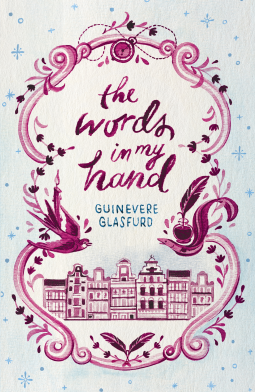
The Words in My Hand by Guinevere Glasfurd

The French philosopher and mathematician René Descartes is well known, but how many people have heard of Helena Jans van der Strom? Helena was in a relationship with Descartes for over a decade and played an important role in his life, yet she has been given little attention by historians and the information we have about her is very limited. In The Words in My Hand, Guinevere Glasfurd attempts to redress the balance and gives Helena a voice, building a fictional story around the known facts.

At the beginning of the novel, Helena, a young Dutch woman, is working as a maid in the Amsterdam home of Mr Sergeant, an English bookseller. There are not many options open to girls of Helena’s class in the 17th century, which is why she has entered service, but, possessing a natural intelligence and curiosity, she is teaching herself to read and write, spelling out the words on the palm of her hand in the absence of paper:

Mr Sergeant had paper, but if I was caught with any of that I would be dismissed. I could not take it without asking. And if I asked, he’d want to know why, what I wanted it for. What would I say?

“I want to write, Mr Sergeant – I know you decided I couldn’t, but I’ve decided I can.”

Some excitement comes into Helena’s life one day in 1634 when Mr Sergeant takes in a new lodger – René Descartes, whom Helena thinks of only as the Monsieur. Getting to know the Monsieur is not easy as he is fiercely guarded by his valet, the Limousin (who takes his name from his place of birth), but eventually he and Helena become friends – and then something more than friends.

The Words in My Hand explores the relationship between Helena and Descartes, suggesting possible answers to the many questions that arise. What qualities did Helena have that made her attractive to Descartes? What did they teach other and learn from each other? What was the significance of the role she played in his life and he in hers? It is often a difficult relationship and not a very equal one either – it can’t be, because of their very different positions in society. It’s obvious that Descartes cares about Helena, but he is reluctant to give her the sort of conventional family life she would like, so she accepts what he is prepared to offer instead. She refers to him throughout the entire novel as the Monsieur and never as René, which says a lot about the barriers between them which are never quite broken down. It’s not a particularly romantic love affair and Helena deserves something better, but it feels realistic for the time period.

Other characters are pulled into Helena’s story too including Betje, a fellow maid whom she befriends and tries to introduce to the joys of reading and writing. I was particularly intrigued by the uneasy interactions between Helena and the Limousin, Descartes’ valet. And of course, I should mention the setting – I often seem to be drawn to historical fiction set in the Netherlands and I thought Guinevere Glasfurd captured the atmosphere of the time and place very well. I really enjoyed this book (despite feeling annoyed with Descartes at times); it was published in 2016 and is Guinevere Glasfurd’s only novel so far, but I hope she is going to write more.

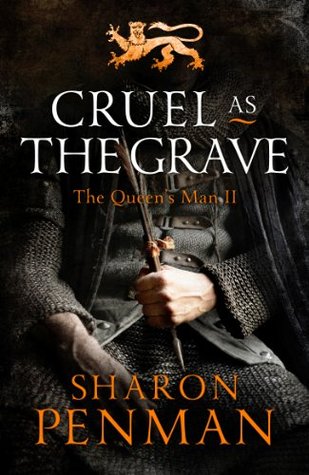
Cruel as the Grave by Sharon Penman

This is the second book in Sharon Penman’s Justin de Quincy mystery series set in medieval England. I liked but didn’t love the first one, The Queen’s Man, which is why it has taken me a while to get round to continuing, but I’m pleased to report that I found Cruel as the Grave a stronger and more enjoyable book. You could start with this one if you wanted to – there are some recurring characters but it works perfectly well as a standalone mystery.

In this book, set in 1193, Justin de Quincy, illegitimate son of the Bishop of Chester, is investigating the murder of Melangell, a young Welsh girl found dead in a London churchyard. The main suspects are the two sons of a wealthy merchant – the handsome, favoured eldest son, Geoffrey Aston, and his bitter, envious, younger brother Daniel. The Aston family are expecting Justin to clear the boys’ names, but as he delves deeper into the circumstances surrounding Melangell’s death, he is not sure he will be able to do that. The more he learns about the girl, a poor pedlar’s daughter, the more he begins to feel an affinity with her and he becomes determined to bring her killer to justice no matter what.

Meanwhile, two other brothers are also causing problems for Justin. The King of England, Richard I – the Lionheart – has been captured by the Duke of Austria and handed over as a prisoner to the Holy Roman Emperor. His mother, Eleanor of Aquitaine, is looking for a way to free him from captivity. In Richard’s absence, his younger brother John is plotting to take the crown for himself and has seized control of Windsor Castle. As Justin has assisted Eleanor in the past, she turns to him again for help.

Justin’s two missions are quite separate – one having implications for the whole country and the other much more intimate, affecting only a small number of people – but there are some parallels, such as the relationship between Geoffrey and Daniel resembling the one between Richard and John. The two storylines alternate throughout the book, but plenty of time is devoted to each one and I found them both interesting. As a murder mystery it is more tightly plotted than the first book in the series and although the culprit turned out to be the person I had suspected almost from the beginning, I still enjoyed watching the truth unfold.

Penman is better known for her long, sweeping historical novels such as Here Be Dragons and The Sunne in Splendour. Her mystery novels are much shorter, quicker reads but they still immerse the reader in the medieval period, giving us enough information to set the story in its historical context without going into a huge amount of detail. Justin himself, although perfectly likeable, continues to be slightly bland and forgettable, but the characters around him are strong and vibrant; his relationship with the queen’s lady, Claudine, is particularly intriguing and develops further in this book. I also loved Penman’s portrayal of the future King John – charismatic, complex and unpredictable:

Unlike Durand, John was not hostile. He seemed curious, almost friendly, as if welcoming a distraction midst the monotony of the siege. The Prince of Darkness. Justin wondered suddenly if John knew about Claudine’s private jest. He suspected that John would have been flattered, not offended. He must not let down his guard with this man. John could as easily doom him with a smile as with a curse.

I’ll think about reading the other two books in the series next time I’m in the mood for a medieval murder mystery, but first I really need to read The Reckoning, the final book in her Welsh Princes Trilogy, which I’ve had on my shelf since finishing the previous one, Falls the Shadow!

I am counting this book towards the R.I.P XIII Challenge (category: mystery).

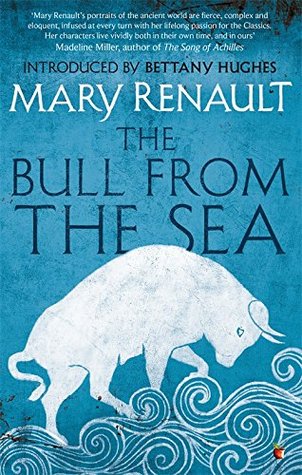
The Bull from the Sea by Mary Renault

Published in 1962, this is the second of Mary Renault’s two novels telling the story of Theseus. It’s been a few years since I read the first book, The King Must Die, and I was worried that I’d waited too long to read this one, but actually, although it does pick up where the first book left off, it wasn’t necessary to remember every little detail because The Bull from the Sea also works as a complete novel in its own right.

It begins with Theseus and his fellow bull-dancers returning to Athens from Crete, having defeated the Minotaur. Mistakenly believing Theseus to be dead, his father Aegeus has committed suicide, leaving Theseus to become the new king of Athens in his place. After his eventful time in Crete, Theseus finds it difficult to settle back into daily life, even with his new duties as king to occupy him. His restlessness soon leads him into a series of adventures with his friend Pirithoos, the pirate king of the Lapiths, and one of these journeys ends in a meeting with Hippolyta, the Amazon queen.

Theseus falls in love with Hippolyta and after challenging her to single combat and winning, he takes her back with him to Athens. A close and loving relationship develops between them, but Hippolyta can never become his wife – his people would not accept her as their queen, but in any case he is already promised in marriage to Phaedra, a princess of Crete. The fates of Hippolyta, Phaedra and the sons they bear Theseus are played out over the remainder of the novel.

Unlike The King Must Die which focused on only a few years in Theseus’ life, The Bull from the Sea covers a much longer period and as it’s not a particularly thick book, this means that several of the episodes in Theseus’ story are not explored in as much detail. His role in taming the bull of Marathon, for example, is dealt with relatively quickly without going into a lot of depth. Much more time is spent on his relationships with Hippolyta and Phaedra and their sons Hippolytos and Akamas, which was good because this was the part of the novel I found the most interesting. Having recently read For the Immortal by Emily Hauser which tells Hippolyta’s story from a feminine perspective, Mary Renault’s portrayal of her relationship with Theseus couldn’t be more different!

It’s the fact that different authors can take such different approaches to the same myths and legends that makes Ancient Greece so fascinating to read about. There is never just one version that everyone agrees on; so much is left open to interpretation. Mary Renault gives logical, realistic explanations for the various aspects of the myths rather than fantastical ones. I was intrigued by her representation of the Kentaurs (centaurs), for example, not as the half human/half horse creatures we would normally think of, but as a sort of ancient and primitive community of people who live in the wild and form close bonds with their horses.

It seems that most people prefer The King Must Die to this book, but I think I actually enjoyed this one more. This is probably because when I read the first novel in 2013 I had previously read very little about Ancient Greece and didn’t find the subject particularly appealing. Since then I’ve been dipping into the period more and more often and becoming more familiar with some of the myths, which could be why I found this book easier to get into and follow. I will be reading more by Mary Renault and am looking forward to starting her Alexander trilogy soon. I already have the first two books, Fire From Heaven and The Persian Boy, ready and waiting on my shelf.

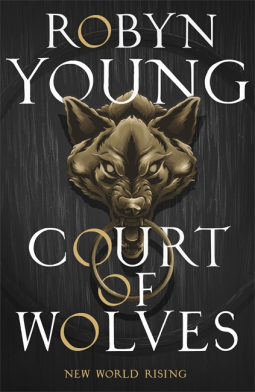
Court of Wolves by Robyn Young

Robyn Young’s New World Rising series got off to a promising start in 2016 with Sons of the Blood and now it continues with the second novel, Court of Wolves. I would recommend beginning with the first book if you can as the story is very complex and I’m not sure how easy it would be to follow if you were to jump straight into this one. For the rest of this review, I will assume that you have either already read Sons of the Blood or don’t mind coming across one or two spoilers here.

Court of Wolves begins in 1486 with Jack Wynter arriving in Florence where he plans to seek an audience with Lorenzo de’ Medici. He has reason to believe that Lorenzo will be able to answer some of his questions regarding his father, Sir Thomas Vaughan, who was executed during the recent Wars of the Roses in England. He is also hoping for help in locating his old friend, the priest Amaury de la Croix, who has been taken captive and may be hidden somewhere in the city. As ruler of Florence, however, Lorenzo already has enough worries of his own with his power coming under threat from a secret society known as the Court of Wolves. If Jack can infiltrate the society and report back to Lorenzo, then maybe Lorenzo will help him.

Before he died, Sir Thomas Vaughan had entrusted Jack with a map hinting at undiscovered lands and new sea routes. This map has been stolen by Jack’s half-brother, Harry Vaughan, and is now in the possession of the newly crowned Henry VII. If these lands really exist, then Henry wants England to benefit from discovering them – but with the sailor Christopher Columbus seeking funding from Queen Isabella of Spain to finance his own voyage of exploration, Henry fears that the Spanish could get there first. He sends Harry Vaughan to Isabella’s court to find out what is happening and to ensure that Columbus never sets sail, but once there, Harry becomes drawn into Queen Isabella and King Ferdinand’s war in Granada.

Court of Wolves is set during a fascinating period in Europe’s history and the chapters alternate between Jack in Florence and Harry in Spain. There’s a sense that the world is changing and looking towards the future, with England, Spain, the Italian city states and others all searching for new opportunities to grow, expand and trade. Jack’s sections of the book were my favourites, partly because Jack is our hero while Harry is more of a villain, but also because I loved the descriptions of Florence and the Medici court – always a wonderful setting! I wasn’t very keen on the secret society storyline, but it was only one aspect of the novel and there were plenty of other things to enjoy.

The Harry chapters were interesting too, especially as I haven’t read about Isabella and Ferdinand’s Granada War in as much detail as this before. The war was a series of campaigns by the Spanish monarchs aimed at taking control of Granada, the last remaining Islamic stronghold in Spain, and Harry is at the heart of the action, present at the bombardment of Loja and the siege of Malaga. I can’t say that I liked Harry any more than I did in the first book, but I did care about what happened to him; even in another country, hundreds of miles from England, he seems to be very much under the control of Henry VII and is starting to face the consequences of his earlier actions during the reign of Richard III as well.

Although Jack and Harry are having separate adventures in this novel, there are still some links between them and no doubt their paths will cross again in the future. I haven’t seen any news on a third book yet, but I’m sure there will be one as the final chapter sets everything up perfectly for a continuation of the story.

Thanks to Hodder & Stoughton for providing a copy of this book for review via NetGalley.