Top Ten Tuesday: Books on my autumn TBR

This week’s Top Ten Tuesday, hosted by That Artsy Reader Girl, asks for ten books on our fall/autumn TBR. I’ve already mentioned some of the books I’m hoping to read for the R.I.P. challenge this month and next, so I’ve chosen a different ten to list here.

~

1. Zennor in Darkness by Helen Dunmore

“Spring, 1917, and war haunts the Cornish coastal village of Zennor: ships are being sunk by U-boats, strangers are treated with suspicion, and newspapers are full of spy stories.

Into this turmoil come D. H Lawrence and his German wife, Frieda hoping to escape the war-fever that grips London. They befriend Clare Coyne, a young artist struggling to console her beloved cousin, John William, who is on leave from the trenches and suffering from shell-shock.

Yet the dark tide of gossip and innuendo means that Zennor is neither a place of recovery nor of escape…”

~
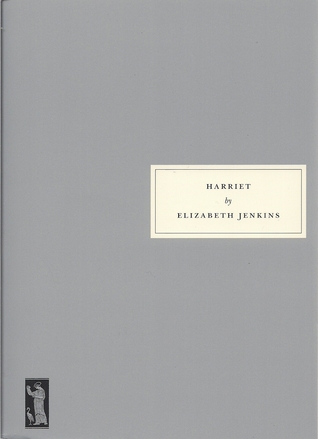
2. Harriet by Elizabeth Jenkins

“When a handsome, unscrupulous fortune hunter approaches Harriet, a young woman of means whom most people would call half-witted, no good can result. Elizabeth Jenkins’s artistry, however, transforms the bare facts of this case from the annals of Victorian England’s Old Bailey into an absolutely spine-chilling exploration of the depths of human depravity.”

~
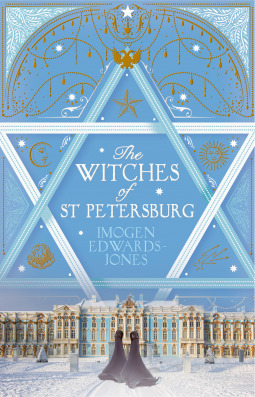
3. The Witches of St Petersburg by Imogen Edwards-Jones

“Two Montenegrin princesses, Militza and Stana, are married into the Russian aristocracy of the last Tsar by their father. Initially shunned by society and, in Stana’s case, married to a man she detests, life isn’t easy.

Fascinated by the occult, the sisters soon become close to the Tsarina Alexandra who is willing to try anything to precipitate the birth of the son and heir the country longs for. If she puts her faith in them, Militza and Stana promise they can help the Tsarina produce a boy.

The girls hold seances, experiment with a variety of rituals and bring various men to the Tsarina who they feel have spiritual power. Their closeness to the Empress and power in court is undisputed: until, that is, Grigori Rasputin arrives. Militza and Stana, along with most of female Russian society, are intoxicated, but by bringing Rasputin into their lives, have they taken a fatal step too far?”

~
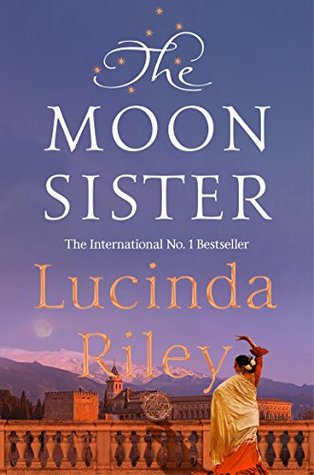
4. The Moon Sister by Lucinda Riley

“After the death of her father – Pa Salt, an elusive billionaire who adopted his six daughters from around the globe – Tiggy D’Aplièse, trusting her instincts, moves to the remote wilds of Scotland. There she takes a job doing what she loves; caring for animals on the vast and isolated Kinnaird estate, employed by the enigmatic and troubled Laird, Charlie Kinnaird.

Her decision alters her future irrevocably when Chilly, an ancient gipsy who has lived for years on the estate, tells her that not only does she possess a sixth sense, passed down from her ancestors, but it was foretold long ago that he would be the one to send her back home to Granada in Spain …

In the shadow of the magnificent Alhambra, Tiggy discovers her connection to the fabled gypsy community of Sacromonte, who were forced to flee their homes during the civil war, and to ‘La Candela’ the greatest flamenco dancer of her generation. From the Scottish Highlands and Spain, to South America and New York, Tiggy follows the trail back to her own exotic but complex past. And under the watchful eye of a gifted gypsy bruja she begins to embrace her own talent for healing. But when fate takes a hand, Tiggy must decide whether to stay with her new-found family or return to Kinnaird, and Charlie…”

~
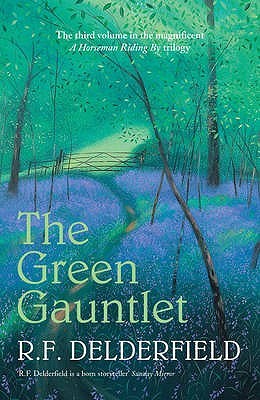
5. The Green Gauntlet by RF Delderfield

“World War II is over. But for Craddock and his family there are new battles to be fought and won. The new property laws enable speculators to reap huge profits from agricultural lands, and Paul’s livelihood is threatened. With the help of his children and children’s children, Paul struggles to preserve the happiness and peace he has built up over the years. In doing so, he comes to discover deeper, richer ties with those around him. Ties which hold a ripe promise for the future…”

~
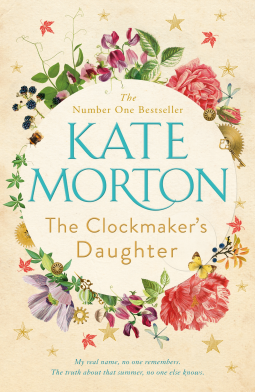
6. The Clockmaker’s Daughter by Kate Morton

“In the summer of 1862, a group of young artists led by the passionate and talented Edward Radcliffe descends upon Birchwood Manor on the banks of the Upper Thames. Their plan: to spend a secluded summer month in a haze of inspiration and creativity. But by the time their stay is over, one woman has been shot dead while another has disappeared; a priceless heirloom is missing; and Edward Radcliffe’s life is in ruins.

Over one hundred and fifty years later, Elodie Winslow, a young archivist in London, uncovers a leather satchel containing two seemingly unrelated items: a sepia photograph of an arresting-looking woman in Victorian clothing, and an artist’s sketchbook containing the drawing of a twin-gabled house on the bend of a river.

Why does Birchwood Manor feel so familiar to Elodie? And who is the beautiful woman in the photograph? Will she ever give up her secrets?”

~
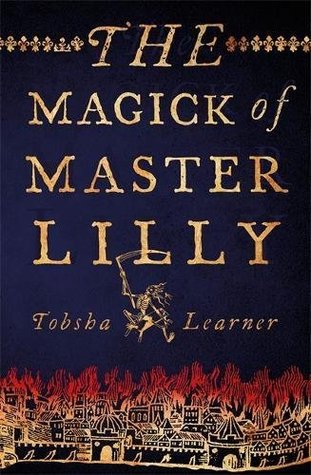
7. The Magick of Master Lilly by Tobsha Learner

“In 1641, the country of England stands divided. London has become a wasps’ nest of spies, and under the eyes of the Roundheads those who practice magic are routinely sent to hang.

Living in exile in the Surrey countryside is the Master Astrologer and learned magician William Lilly. Since rumours of occult practice lost him the favour of Parliament, he has not returned to the city. But his talents are well-known, and soon he is called up to London once more, to read the fate of His Majesty the King.

Only Lilly and a circle of learned astrologers – Cunning Folk – know that London is destined to suffer plague and fire before the decade is through, and must summon angel and demon to sway the political powers from the war the country is heading toward. In doing so, Lilly will influence far greater destinies than his own and encounter great danger. But there will be worse to come…”

~

8. Transcription by Kate Atkinson

“In 1940, eighteen-year old Juliet Armstrong is reluctantly recruited into the world of espionage. Sent to an obscure department of MI5 tasked with monitoring the comings and goings of British Fascist sympathisers, she discovers the work to be by turns both tedious and terrifying. But after the war has ended, she presumes the events of those years have been relegated to the past for ever.

Ten years later, now a producer at the BBC, Juliet is unexpectedly confronted by figures from her past. A different war is being fought now, on a different battleground, but Juliet finds herself once more under threat. A bill of reckoning is due, and she finally begins to realize that there is no action without consequence.”

~
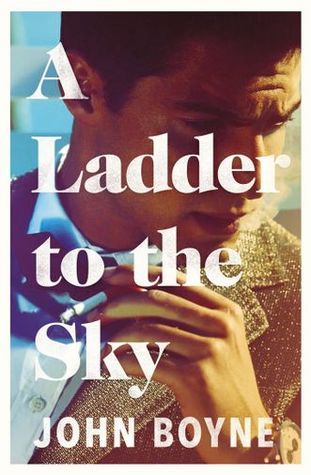
9. A Ladder to the Sky by John Boyne

“If you look hard enough, you can find stories pretty much anywhere. They don’t even have to be your own. Or so would-be writer Maurice Swift decides very early on in his career. A chance encounter in a Berlin hotel with celebrated novelist Erich Ackermann gives him an opportunity to ingratiate himself with someone more powerful than him. For Erich is lonely, and he has a story to tell. Whether or not he should do so is another matter entirely.

Once Maurice has made his name, he sets off in pursuit of other people’s stories. He doesn’t care where he finds them – or to whom they belong – as long as they help him rise to the top. Stories will make him famous but they will also make him beg, borrow and steal. They may even make him do worse.”

~

10. Confusion by Elizabeth Jane Howard

“Confusion is the third novel in Elizabeth Jane Howard’s bestselling Cazalet Chronicles.

London and Sussex, 1942. The privileged English family in turmoil…

The long, dark days of struggle provide the poignant background to the third book of the Cazalet Chronicles. As the war enters its fourth year, chaos has become a way of life.

Both in the still peaceful Sussex countryside, and in air-raid-threatened London, the divided Cazalets begin to find the battle for survival echoing the confusion in their own lives.”

~

Have you read any of these books? What do you have coming up on your own TBR?
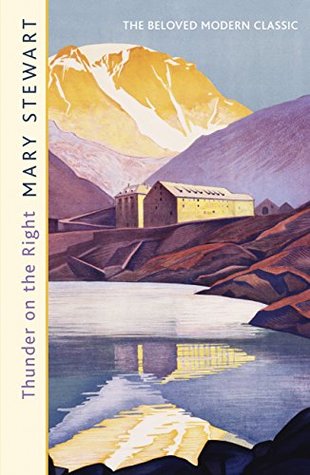
Thunder on the Right by Mary Stewart

Mary Stewart is one of my favourite authors and when I saw that her birthday – today – was going to be celebrated in Jane at Beyond Eden Rock’s Birthday Book of Underappreciated Lady Authors, it seemed a good opportunity to pick up one of the few Stewart novels I still hadn’t read. I decided on Thunder on the Right, one of her earliest novels which was first published in 1957. I had seen a few reviews which suggested this wasn’t one of Mary Stewart’s better books, but I was pleased to find that I enjoyed it. It’s been a while since I read one of her romantic suspense novels, having taken a break from them to concentrate on her Arthurian series instead, and I’d forgotten how much fun they are.

The novel begins with Jennifer Silver, a young woman from England, arriving in the French Pyrenees to visit her cousin, Gillian Lamartine, who has written to her to say that she’s planning to enter a convent there. Waiting at Jennifer’s hotel in Gavarnie is Stephen Masefield, an old friend who may have become more than just a friend if it hadn’t been for the disapproval of Jennifer’s parents. She is unsettled by the unexpected meeting after an absence of two years, but pleased to see him again – especially as she is beginning to think that something terrible must have happened to Gillian.

Visiting the Convent of Notre-Dame-des-Orages the next day, Jennifer’s worst fears are confirmed when she is told that Gillian died after being injured in a car crash several weeks earlier and has been buried at the convent. Jennifer is devastated, but when she begins to ask questions of the nuns who nursed Gillian in her final days, she becomes convinced that something is not quite right. Is her cousin really dead? Jennifer has her doubts and, with Stephen’s help, she sets out to discover the truth.

Although Thunder on the Right hasn’t become a favourite Stewart novel, it’s as entertaining as any of her others and I flew through the pages, desperate to see whether Jennifer would find her cousin and what other secrets were being hidden in the convent. The early chapters, in which she encounters the sinister Spanish nun Doña Francisca and hears the details of Gillian’s alleged death, are wonderfully eerie and the tension builds slowly as Jennifer explores the chapels, courtyards and tunnels of the convent in search of clues. In the second half of the novel, though, things become very melodramatic – almost too fast-paced and too exciting, at the expense of atmosphere and character development.

There are other problems – the main villain is too obviously villainous to be convincing, while the romance between Jennifer and Stephen is less engaging than some of Stewart’s other romances, possibly because they already know each other before the story begins and then spend a relatively small amount of time together over the course of the novel. But the setting is wonderful, of course. A Mary Stewart novel wouldn’t be a Mary Stewart novel without lots of vivid and evocative descriptions and there are plenty of them here, as the search for Gillian is played out high in the mountains while the wind blows and the thunder crashes.

For the reasons I’ve mentioned, I would agree that this isn’t one of Mary Stewart’s very best books but it was still an enjoyable read. If you’re new to her suspense novels, I would recommend starting with Nine Coaches Waiting, Madam, Will You Talk? or This Rough Magic. Those are my favourites, along with the Merlin trilogy which begins with The Crystal Cave.

I am counting this book towards the R.I.P XIII Challenge (category: suspense).

Historical Musings #42: Reading Diana Gabaldon

Welcome to my monthly post on all things historical fiction. This month I am looking at the work of Diana Gabaldon, an author I first read in the 1990s, when only the first four books in her bestselling Outlander series had been published. Since then I have joined other readers in the long wait for each new book – there are now eight of them, with a ninth on the way, as well as some spin-off novels and collections of novellas and short stories. There’s also a successful TV adaptation, which I’m sure some of you will have seen even if you haven’t read the books.

The novels are a mixture of romance (mainly in the first book), adventure, mystery and a small amount of science fiction and take us across the world from Scotland and France to America and the Caribbean. The first book, Outlander (which I originally knew as Cross Stitch – its UK title), introduces us to Claire Randall, a 1940s nurse who is visiting Scotland when she walks through a stone circle in the Highlands and finds herself transported back in time to the 18th century. The first person Claire meets is Black Jack Randall, an army officer who becomes convinced that she is a spy. It seems that the only way she can escape his clutches is to marry Jamie Fraser, a young Scottish outlaw – the problem is, she already has a husband in the 20th century…

The Outlander novels

The series currently consists of the following eight books:

Outlander/Cross Stitch (1991)
Dragonfly in Amber (1992)
Voyager (1993)
Drums of Autumn (1996)
The Fiery Cross (2001)
A Breath of Snow and Ashes (2005)
An Echo in the Bone (2009)
Written in My Own Heart’s Blood (2014)

The ninth book – which will not be the last one, by the way – will be called Go Tell the Bees That I am Gone but no publication date has been announced yet.

I have read the first four books in the series several times each and although I think Gabaldon’s writing has improved over time, those earlier books are still my favourites, particularly Dragonfly in Amber and Voyager. The later books, in my opinion, have become too complex and ambitious, with too many storylines and characters and written from too many different perspectives. An Echo in the Bone and Written in My Own Heart’s Blood also draw in a lot of characters from the Lord John series (more on that below), which I just couldn’t seem to get interested in, and I feel that the focus on Jamie and Claire has been lost. I am still looking forward to the final books, though – I’ve come too far now to not find out how the series ends!

The Lord John series

Gabaldon has also written a series of historical mystery novels which are spin-offs from the main series. These novels focus on Lord John Grey, who had a small part in Dragonfly in Amber before going on to play an increasingly significant role in the other Outlander novels.

Lord John and the Private Matter (2003)
Lord John and the Brotherhood of the Blade (2007)
The Scottish Prisoner (2011)

I have read the first two books, but not the third as by that point I had decided that, although I like Lord John himself, the secondary characters in the series didn’t interest me and I didn’t really want to read any more about them.

There are also several Lord John novellas – and a few featuring other characters from the main series – and some of these were collected together in Seven Stones to Stand or Fall.

~

You can find out more about Gabaldon and her work by visiting her website, DianaGabaldon.com.

I will be looking at more historical fiction authors in future posts, but for now I would like to hear your thoughts on Diana Gabaldon.

Have you read any of her books? Which are your favourites?

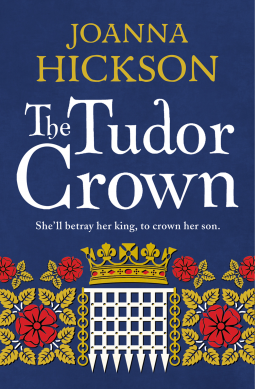
The Tudor Crown by Joanna Hickson

The Wars of the Roses – the 15th century series of conflicts between the House of York and the House of Lancaster – is one of my favourite periods of history to read about, partly because there are so many different ways in which the people and events of the time can be interpreted. Although I’ve read a few Wars of the Roses novels that take a more objective view of the period, authors – and readers – tend to be biased towards one side or the other. My personal preference is for York, but Joanna Hickson’s new novel The Tudor Crown is written from a decidedly Lancastrian perspective and shows both Henry Tudor and his mother, Margaret Beaufort, in a much more positive light than usual.

The Tudor Crown is a sequel to First of the Tudors and picks up where that book left off, but it does stand alone perfectly well so if you haven’t read the previous novel that shouldn’t be a problem. The story begins in 1471, just after the Lancastrians have been defeated at the Battle of Tewkesbury. With both Henry VI and his heir, the Prince of Wales, dead, and the Yorkist king, Edward IV, back on the throne of England, the Lancaster hopes seem to be in ruins. As one of the remaining Lancastrian claimants, young Henry Tudor’s life is now in danger and, accompanied by his Uncle Jasper, the Earl of Pembroke, he flees the country and takes refuge in Brittany. And here he must stay, for almost fourteen years, biding his time and trying to build up the support he will need to one day return to England and take the throne he believes is his.

Meanwhile, Margaret Beaufort, Henry’s mother, has been left widowed following the death of her husband at the recent Battle of Barnet and has married again, this time to Thomas Stanley. She returns to court where she serves the wives of first Edward IV, then Richard III, but she has still not given up hope of Henry becoming king and continues to work tirelessly on his behalf. If only she could persuade Thomas Stanley to help her…but Stanley has been walking a tightrope between York and Lancaster for years and won’t make a final decision until he is sure victory is within reach.

The Tudor Crown is written partly from Henry’s point of view and partly from Margaret’s, with the chapters alternating between the two. I found the Henry chapters the most interesting because I have never read about his time in exile in so much depth before. I was pleased to read in Joanna Hickson’s Author’s Note that most of the people Henry met during this time really existed. She does invent a romance for him with the fictional Catherine de Belleville, but I didn’t mind that as factual information on Henry’s exile is quite limited and if the author hadn’t used her imagination to fill in some of the gaps this wouldn’t have been much of a story. I loved the descriptions of the various places Henry visited and stayed at in Brittany, such as the Château de l’Hermine in Vannes (again a real place, but which sadly no longer exists in its original form). The Margaret chapters held less appeal for me simply because I am much more familiar with the events taking place in England during that period.

Both characters are portrayed with sympathy and understanding; in fact, I think Joanna Hickson might be the first author who has succeeded in actually making me like Henry (or Harri, as she refers to him, using a Welsh version of his name). He feels very human in this book and I almost found myself supporting him in his attempts to become king – although I still couldn’t bring myself to side with him against Richard at the Battle of Bosworth or to accept that Richard was responsible, beyond doubt, for the deaths of the Princes in the Tower. I think there is plenty of doubt, which is why it is still being discussed and debated more than five hundred years later.

This is Joanna Hickson’s third book about the Wars of the Roses, following Red Rose, White Rose and First of the Tudors (her other two novels, The Agincourt Bride and The Tudor Bride are set in the period just prior to this). She mentioned in her Author’s Note that she is planning to write about Margaret Beaufort again in her next novel, so I will look forward to that one.

Thanks to HarperCollins for providing a copy of this book for review via NetGalley.

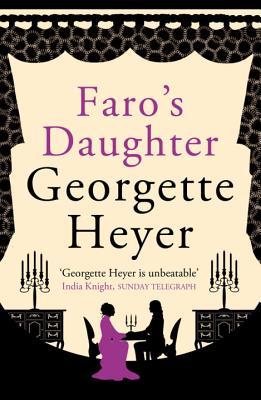
Faro’s Daughter by Georgette Heyer

I am continuing to work, very slowly, through Georgette Heyer’s novels, though not in any particular order – just reading them as I come across them. As I discovered in the comments section of my Historical Musings post on Heyer last month, I seem to have read very few of the books most people name as favourites – books like Cotillion, The Grand Sophy and These Old Shades. I will get to them eventually, but for now I’m posting my thoughts on my latest Heyer read, Faro’s Daughter.

Published in 1941, Faro’s Daughter is one of Heyer’s Georgian novels, set slightly earlier than the Regency period for which she is best known. Our heroine is Deborah Grantham, a young woman who has lived with her aunt, Lady Bellingham, since being orphaned several years earlier. Finding herself struggling financially, Lady Bellingham, who has always enjoyed hosting card parties, has decided to open a gaming house in order to make ends meet. The intelligent and quick-witted Deb presides over the gaming tables and naturally attracts a lot of attention from the men who come to gamble. One of these is Adrian, Lord Mablethorpe, who is five years younger than Deb and convinced that he is in love with her.

Adrian is heir to a fortune and Lady Mablethorpe is horrified at the thought of her son marrying a woman from a gaming house. Luckily, there are still a few months until he comes of age and receives his inheritance, so she enlists the help of her nephew, Max Ravenscar, to ensure that the marriage is prevented. Visiting Lady Bellingham’s establishment to see Deb for himself, Max is surprised to find that she is not at all the common, vulgar woman he had been led to believe. He keeps his promise to his aunt, however, and offers Deb a bribe to stay away from Adrian, but Deb is so offended by this insult that she decides not to inform Max that she never had any intention of marrying Adrian in the first place – it will be much more satisfying to make him suffer for a while!

Like most of Heyer’s novels, this is an entertaining read with a lively plot involving card games, a curricle race, visits to Vauxhall Gardens, and even several kidnappings. It hasn’t become a favourite, though, and that’s because I just never quite managed to like either Max or Deb. Max annoyed me with his constant name-calling and failure to see through any of Deb’s schemes, and while I could appreciate Deb as a clever and resourceful heroine, I couldn’t warm to her either.

Heyer’s romances seem to be divided into a few general types and the ones like this or Regency Buck, to give another example, where the hero and heroine are engaged in a war of words and battle of wits, appear to be the ones I like least. I usually prefer the books where the romance develops from friendship and mutual liking or with a newly married couple learning to love each other. This isn’t necessarily the case when I read books by other authors, but it seems to be true of my experience with Heyer!

This book was a slight disappointment for me, then, although I did still find things to enjoy. Maybe it was just the wrong choice of Heyer at the wrong time, as I couldn’t help comparing it to my last one, The Corinthian, which I found a complete delight to read. I can’t love them all, though, and at least I still have many more unread Heyer novels to look forward to.

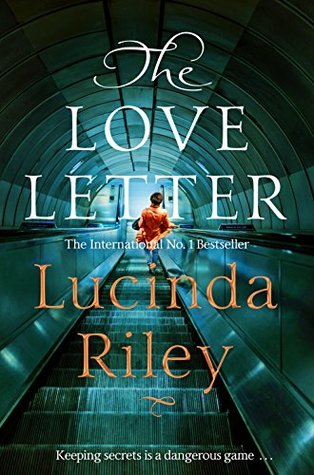
The Love Letter by Lucinda Riley

I have been enjoying following Lucinda Riley’s Seven Sisters series over the last few years and am looking forward to starting the newest book, The Moon Sister, which is due to be published later this year. The Love Letter is not part of that series, though – it’s a reissue of one of her earlier novels, first published in 2000 as Seeing Double under the name of Lucinda Edmonds. As explained in the brief Author’s Note which opens the novel, Seeing Double was not a success on its original release, probably because of poor timing – it wasn’t long since the death of Princess Diana in 1997 and the plot involves a scandal within a fictional British royal family. Lucinda and her publisher obviously feel that enough time has now passed to give the book a second chance and a new look and title.

The Love Letter is set in 1996 and begins with young journalist Joanna Haslam reporting on the funeral of Sir James Harrison, one of the most famous actors of his generation, who has died at the age of ninety-five. The funeral is a star-studded affair, attended by celebrities including Harrison’s granddaughter Zoe, a successful actress in her own right, and his film-producer grandson Marcus. The service has only just begun when Rose, an elderly woman sitting beside Joanna, is suddenly taken ill. Joanna offers to accompany the old lady home in a taxi, unaware that by doing so she is taking the first step in a sequence of events that could destroy the British establishment. Within days Rose is dead, but not before sending Joanna a letter, the contents of which hold clues to a shocking secret that some very powerful people will stop at nothing to keep concealed.

This is a very different sort of book from Lucinda Riley…a combination of spy thriller, mystery and romance. I have to admit, I found the plot a bit far-fetched and not always very plausible, but it’s certainly a page-turner – it was difficult to stop reading until I had found out what the letter meant and what the secret was. I did manage to work some of it out for myself (especially as we are told in the Author’s Note before we even start reading that the story is going to involve members of the royal family), but not all of it, because new pieces of the puzzle are being revealed right up to the end of the novel. For a book with six hundred pages, it’s a quicker read than you might expect and a lot of fun to read too, with some surprising plot twists and characters who aren’t quite what they seem.

Unlike the Seven Sisters novels with their dual timeline stories, The Love Letter is set entirely in the modern day (although events from the past provide the answers to the mystery). Having said that, I suppose 1996 is not exactly the ‘modern day’ anymore and the absence of recent technology from the characters’ lives does set the story firmly in its time period. As for the implications for the royal family, I don’t think people would be too bothered by a novel like this today, but I can see why it might have been controversial on publication eighteen years ago.

I think one of Lucinda Riley’s strengths as a writer is in creating characters the reader can really care about and like – and there are several of those in this novel. I loved Joanna from the beginning; she’s such an ordinary, down-to-earth person with the sort of hopes, ambitions and problems that are easy to identify with. I also liked Zoe, who is embroiled in a secret and possibly dangerous love affair, and I became very fond of her brother Marcus too. The only one of the main characters I didn’t warm to was Simon, Joanna’s best friend, although I did have some sympathy with the internal conflicts he faced in trying to choose between his job and his friendships.

The developments towards the end of the book became a bit too dramatic for me, but I was happy with the final few twists which led to the conclusion I’d been hoping for. I’m looking forward to getting back to the Seven Sisters – I have a copy of The Moon Sister which I’m planning to read soon – but The Love Letter made an interesting change.

Thanks to Pan Macmillan for providing a copy of this book for review.

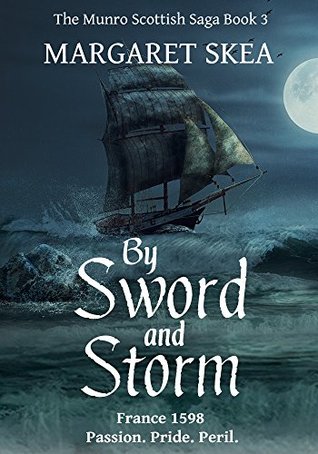
By Sword and Storm by Margaret Skea

This is the third novel in Margaret Skea’s Munro Scottish Saga set in 16th century Scotland and France and based on the history of a clan feud known as the Ayrshire Vendetta. I haven’t read the first two, Turn of the Tide and A House Divided, but that didn’t affect my enjoyment of this third book.

The novel opens in 1598 with Adam Munro, a colonel in the Scots Gardes, living in France with his wife Kate, who has skills as a healer, and their three children, Robbie, Maggie and Ellie. One of the functions of Adam’s regiment is to provide protection to Henri IV of France and when Adam saves the king’s life while risking his own in the process, the Munro family are rewarded with an invitation to come and live at the French court.

In Scotland, meanwhile, the feud between the Cunninghames and Montgomeries is supposedly at an end and the Scottish king, James VI, has banned unauthorised duelling. Most of the family members are trying to keep the peace, but two of them – Hugh Montgomerie and William Cunninghame – are still not prepared to let things rest. The Scottish storyline and the French one alternate throughout the book, eventually coming together as the novel heads towards its conclusion.

By Sword and Storm is a mixture of fact and fiction; many of the characters are real historical figures while others come from the author’s imagination – if you want to know who really existed and who didn’t, there’s a character list at the beginning of the book. Apart from the storylines involving the fictional characters, the novel is grounded in historical fact and has obviously been well researched. I loved the portrayal of life at the court of France, where Kate gets to know the king’s mistress, Gabrielle d’Estrées, and I sympathised with Maggie, who longs to study medicine and despite being given opportunities in France that would not have been open to her in Scotland, still faces obstacles because of her sex.

The political and religious situation in France at that time also plays a part in the story. At the beginning of the novel we see Henri IV issuing the Edict of Nantes, bringing the French Wars of Religion to an end and giving the Huguenots more freedom. However, it is still not safe for people in Paris to worship as they wish, as Kate and Adam’s son, Robbie, discovers when he becomes romantically involved with a Huguenot girl. I think Margaret Skea does a good job of showing the many dangers of 16th century life, not only where religion was concerned, but also for pregnant women before and during childbirth, patients with the sort of illness or injury that could be easily treated today, and anyone who had to travel by ship. It’s a period I love to read about but would not have liked to have lived through!

I really enjoyed By Sword and Storm. I liked the characters and even though I hadn’t been with them from the beginning, I found it easy enough to jump into their story and follow what was happening. Although this was meant to be the third in a trilogy, at the end of the novel I felt that there was still scope for more, so I was pleased to find that Margaret Skea has said she may return to this story again in the future.

Thanks to the publisher Corazon Books for providing a copy of this book for review.