Classics Club Spin #18: The Result

The result of the latest Classics Club Spin has been revealed today!

The idea of the Spin was to list twenty books from my Classics Club list, number them 1 to 20, and the number announced today (Wednesday) represents the book I have to read before 31st August 2018. The number that has been selected is…

9

And this means the book I need to read is…

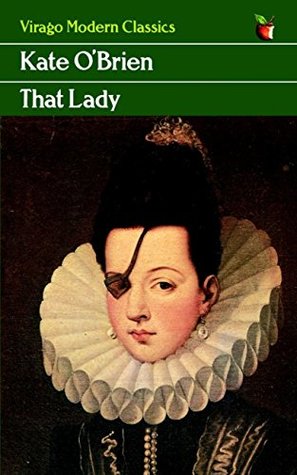
That Lady by Kate O’Brien

From Goodreads: Spain in the years before the Armada, and high passion meets high politics. Ana, Princess of Eboli is a remarkable woman. Married at thirteen and losing an eye in a duel a year later, Ana is also heiress of Spain’s leading family, widow of Philip II’s wisest cousellor and rumoured to be the King’s mistress. Unexpectedly – and unwisely – she falls in love with Don Antonio Perez, dandy, adulterer, skilled politician. With her unusual looks, her aristocratic arrogance and the simplicities of her faith, Ana cannot understand why her private life should become entangled with the affairs of state and, finally, incur the terrible vindictiveness of the King himself…

Kate O’Brien’s understanding and love of Spain enhance the beauty of this passionate and intelligent novel.

~

I included this on my Classics Club list as it was first published in 1946 and is a Virago Modern Classic. I’ve never read anything by Kate O’Brien and I know very little about this particular book except that a few other bloggers whose opinion I trust have enjoyed it. The setting sounds appealing, though, and I think it should be my type of book.

Have you read That Lady? Did you take part in the Classics Spin? What will you be reading?

My Commonplace Book: July 2018

A selection of words and pictures to represent July’s reading:

commonplace book
noun
a book into which notable extracts from other works are copied for personal use.

~

She was sure that only those who had never had freedom understood its true worth, a treasure to be guarded at all times and never to be lost again.

Claudine’s Daughter by Rosalind Laker (1979)

~

If we do not alter with the times, the times yet alter us. We may stand perfectly still, but our surroundings shift round and we are not in the same relationship to them for long; just as a chameleon, matching perfectly the greenness of a leaf, should know that the leaf will one day fade.

A Game of Hide and Seek by Elizabeth Taylor (1951)

~

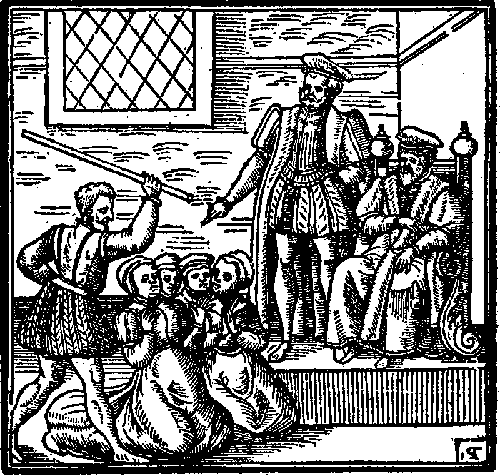
Suspected witches kneeling before King James

‘But the Devil is not so cunning as he believes. He has left certain marks on the bodies of those whom he has claimed as his own. He most commonly shows favour towards a particular type of woman. Sometimes she is poor. Often she is unmarried. She may also be skilled in the art of healing.’

Despite the cool of the old stone church, Frances felt her body prickle with a rising heat.

The King’s Witch by Tracy Borman (2018)

~

‘Now, do listen, Deb! Seven hundred pounds for the bays and a new barouche! Well, I can’t think where the money is to come from. It seems a monstrous price.’

‘We might let the bays go, and hire a pair of job horses,’ suggested Miss Grantham dubiously.

‘I can’t and I won’t live in Squalor!’ declared her aunt tearfully.

Faro’s Daughter by Georgette Heyer (1941)

~

The chief pleasure connected with asking an opinion lies in not adopting it.

Desperate Remedies by Thomas Hardy (1871)

~

Portrait of René Descartes

He ran his hand along a shelf, but was not checking for dust. ‘One book is not enough. Never enough. What one needs is a library. A library is an investment in the future, Helena.’

The Words in My Hand by Guinevere Glasfurd (2016)

~

‘Have you noticed what is left, at the end of the day, as it were, after all these ancient civilizations have been and gone, disappeared into the mists of time?’

Mrs Wilkinson smiled vacantly as she held her wine glass to her lips.

‘I’ll tell you,’ he said, smiling disarmingly. ‘The beautiful things that people have made, and, occasionally, if they are lucky, the things that they have said. That is all that remains. Not fame, nor fortune or notoriety: these things pass…we take very seriously the gift of art and literature, as these are the things that will be left after all our empires are gone.’

My Beautiful Imperial by Rhiannon Lewis (2017)

~

It is a great prophet, is the sea: one need only sit upon the shore for a time to know that the answers to all mysteries are contained within the chanting of the waves. But we have lived apart from the sea for so long that we no longer speak its language. And so we look upon it like deafened men towards a singer, trying to understand what has been lost to us.

Smile of the Wolf by Tim Leach (2018)

~

‘Well now, suppose you got out the Meccano and made a pretty elaborate crane. Then suppose you took it to pieces again and handed just those bits to your boys and told them to make a crane. Each boy would produce something different, and each would have a few bits over, which they’d just have to use up anyhow. We’ve been given just such an assortment of bits – but we don’t even know whether they should make up into a crane or a windmill or a bridge. For instance, why am I here? Why did your precious Chief Constable get me down? What am I supposed to be investigating?’

Appleby’s End by Michael Innes (1945)

~

Whitby Abbey

“You’re the daughters of a prince, Edwin’s closest marriageable kin,” said Breguswid. “Peace-Weavers, they call them. Brides who gather broken threads and weave them together to mend the hurt men cause.”

The Abbess of Whitby by Jill Dalladay (2015)

~

While it was certainly true that country folk could still be a little credulous, being far removed as they were from great seats of learning, Sarah understood that when there was a dearth of knowledge and education, people – no matter their origins – were inclined to believe just about anything communicated to them with sufficient confidence and authority. However, Sarah also knew from personal experience that when all hope was lost, when all else had failed, people were willing to try almost anything to save those that they loved.

The Way of All Flesh by Ambrose Parry (2018)

~

“Every group of people have their own stories that they create to make sense of their world. Therefore, in folk stories, in fairy tales, we see the reflection of humankind: its strengths, flaws, hopes, fears. They tell us what it takes to survive. That, Miss Hart, is why the stories are important, and why they must be protected.”

The Story Keeper by Anna Mazzola (2018)

~

Favourite book read in July:

Desperate Remedies

Where did my reading take me in July?

England, the Netherlands, Wales, Chile, Scotland, Iceland

Authors read for the first time in July:

Elizabeth Taylor, Guinevere Glasfurd, Rhiannon Lewis, Tim Leach, Tracy Borman, Ambrose Parry, Jill Dalladay

~

Have you read any of these books? Which books did you enjoy in July?
My Beautiful Imperial by Rhiannon Lewis

When the Walter Scott Prize Academy published their list of twenty recommended historical fiction novels earlier this year, My Beautiful Imperial was one of the titles that sounded particularly appealing to me, so I was delighted to be offered a copy for review. I love books set in times and places I know nothing about and which are educational as well as entertaining – and this is one of those books.

It begins in 19th century Wales, where young Davy Davies is dreaming of following in his father’s footsteps and becoming a sailor. Beginning navigation classes with the remarkable Sarah Jane Rees brings him closer to achieving his ambition, but it is not until tragedy strikes the Davies family that Davy must leave his home in Cardigan behind and embark on his career at sea. The years go by and Davy eventually becomes captain of the Imperial – and as luck would have it he is sailing up and down the coast of South America just as civil war breaks out in Chile.

President Balmaceda retains control of the Chilean Army but his Navy rebel and side against him and Davy finds that the Imperial is commandeered by the President’s forces, who are desperate for ships. Davy agrees to continue in his role as captain, but soon instead of carrying passengers, cargo and mail, the Imperial is transporting troops, supplies and ammunition. These are dangerous times, but Davy is sustained by his love for Estella, whom he meets while the ship is in harbour in Valparaiso. The only problem is, Estella is already married…

I really enjoyed reading My Beautiful Imperial. I don’t think I’ve ever read a book set in Chile before and I certainly knew nothing about the Chilean Civil War of 1891. Although the main focus of the novel is on Davy’s own involvement in the war, there are also scenes written from the perspectives of several other characters, ranging from President Balmaceda himself to a reporter sent to Chile to cover the story for his newspaper, and in this way we are able to learn about the political situation in Chile, the causes of the conflict and some of the key events that take place before, during and after the war.

I sometimes struggle with books in which large sections of the story are set at sea, but that was not a problem here. The nautical terminology is kept to a level that I could understand and the descriptions of sea chases and manoeuvres are easy enough to follow. There are plenty of land-based sections too, giving us some glimpses of life in Valparaiso and other parts of Chile, as well as the opening chapters depicting Davy’s childhood in Wales. Davy’s path crosses with Estella’s several times throughout the novel, but their romance is only one small element of the story and I thought it was all the more moving because their meetings were few and far between.

I was interested to learn that Rhiannon Lewis had based this novel on the life of her great-great-uncle – he really was a Welsh sailor who became caught up in the Chilean Civil War. You can find pictures and more information on the author’s website. With such a strong personal connection, it must have been a fascinating book to research. It is certainly a fascinating one to read!

Thanks to the author for providing a copy of My Beautiful Imperial for review.

This is book 6/20 for my 20 Books of Summer challenge.

Classics Club Spin #18: My List

The Classics Club

I love taking part in the spins hosted by The Classics Club – this is the eighteenth and although I’ve missed one or two I think I’ve managed to participate in most of them. As I just recently started my second Classics Club list, I have plenty of books to choose from for this spin and I’ll be happy to read any of them.

Here are the rules for Spin #18:

* List any twenty books you have left to read from your Classics Club list.
* Number them from 1 to 20.
* On Wednesday 1st August the Classics Club will announce a number.
* This is the book you need to read by 31st August 2018

And here is my list:

Five 19th century classics

1. Two on a Tower by Thomas Hardy
2. The Cloister and the Hearth by Charles Reade
3. The Duke’s Children by Anthony Trollope
4. Daniel Deronda by George Eliot
5. Nicholas Nickleby by Charles Dickens

Five classic historical fiction novels

6. The Fifth Queen by Ford Madox Ford
7. Claudius the God by Robert Graves
8. The Black Arrow by Robert Louis Stevenson
9. That Lady by Kate O’Brien
10. The Turquoise by Anya Seton

Five classics in translation

11. La Reine Margot by Alexandre Dumas
12. In a Dark Wood Wandering by Hella S Haasse
13. Germinal by Emile Zola
14. The White Guard by Mikhail Bulgakov
15. The Black Sheep by Honoré de Balzac

Five 20th century classics

16. The Grapes of Wrath by John Steinbeck
17. Jane and Prudence by Barbara Pym
18. High Rising by Angela Thirkell
19. The Chrysalids by John Wyndham
20. Goodbye Mr Chips by James Hilton

~

Have you read any of these books? Which numbers do you think I should be hoping for on Wednesday?

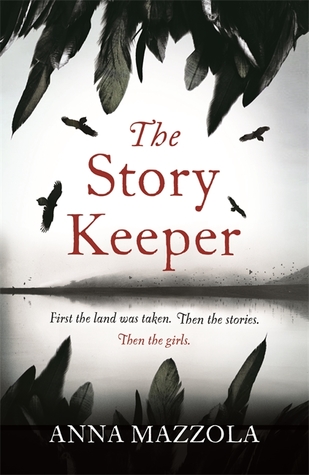
The Story Keeper by Anna Mazzola

This is Anna Mazzola’s second novel, following her debut, The Unseeing, which I read last year. There are some similarities between the two – they are both set in the 19th century and they are both inspired by true crimes – but the stories are very different and, of the two, I found this new one much more enjoyable.

It’s 1857 and Audrey Hart is desperate to get away from London following a traumatic experience at the orphanage where she has been volunteering. Audrey’s mother, who disappeared while out walking many years earlier, had an interest in folklore, so when Audrey sees a job advertised for a collector of folk tales on the Isle of Skye, she applies at once. After arriving on the island and meeting her new employer, Miss Buchanan, she becomes aware that her task is going to be much more difficult than she had expected…

During the recent Highland Clearances, many of the crofters have been forced to leave Skye, taking their stories with them, and those who remain are reluctant to speak to Audrey. Some of this reluctance could simply be due to the fact that Audrey is from England and therefore an outsider, but she senses that there is more to it than that – the islanders seem to be afraid to share their stories and to have them written down. Then Audrey finds the body of a girl washed up on the beach – and when another girl also goes missing, she begins to wonder whether the people of Skye are right to be afraid.

The Story Keeper is a wonderfully atmospheric novel set in a small, remote Scottish community where people’s daily lives are influenced by the old superstitions and traditions in which they still believe. Throughout the novel, as one strange occurrence follows another, we are kept wondering whether there are supernatural forces at work on Skye or whether there is another explanation for what is happening. It all feels quite sinister, and genuinely eerie in places. Some of the superstitions and beliefs Audrey encounters are dark, disturbing and even dangerous. The novel reminded me in that respect of The Good People by Hannah Kent.

As well as the mystery unfolding on the Isle of Skye, there are also hints of other mysteries in Audrey’s past. Why did she leave her home in London without telling her father and stepmother where she was going? What really happened while she was visiting the orphanage? And what was the true story behind her mother’s disappearance, all those years ago? These things are all explained, but the truth only emerges very slowly, meaning that there is plenty of suspense from the beginning of the book until the end.

If I have a criticism, it is that some of the developments towards the end of the book, especially where one particular character is concerned, feel a bit too dramatic and far-fetched. I liked the final twist, though, as it was something I hadn’t worked out for myself. I also enjoyed the fairy tale extracts at the start of some of the chapters and the lines from the poem Kilmeny by James Hogg, which I had to look up and read in its entirety after finishing the book.

Although I couldn’t help thinking The Story Keeper would have been better suited to a cold, dark winter’s night, I still enjoyed reading it during our current summer heatwave and I’m looking forward to whatever Anna Mazzola writes next.

Thanks to Headline for providing a copy of this book for review.

This is book 5/20 of my 20 Books of Summer. I am doing slightly better with this than it seems – I just need to catch up with writing my reviews!

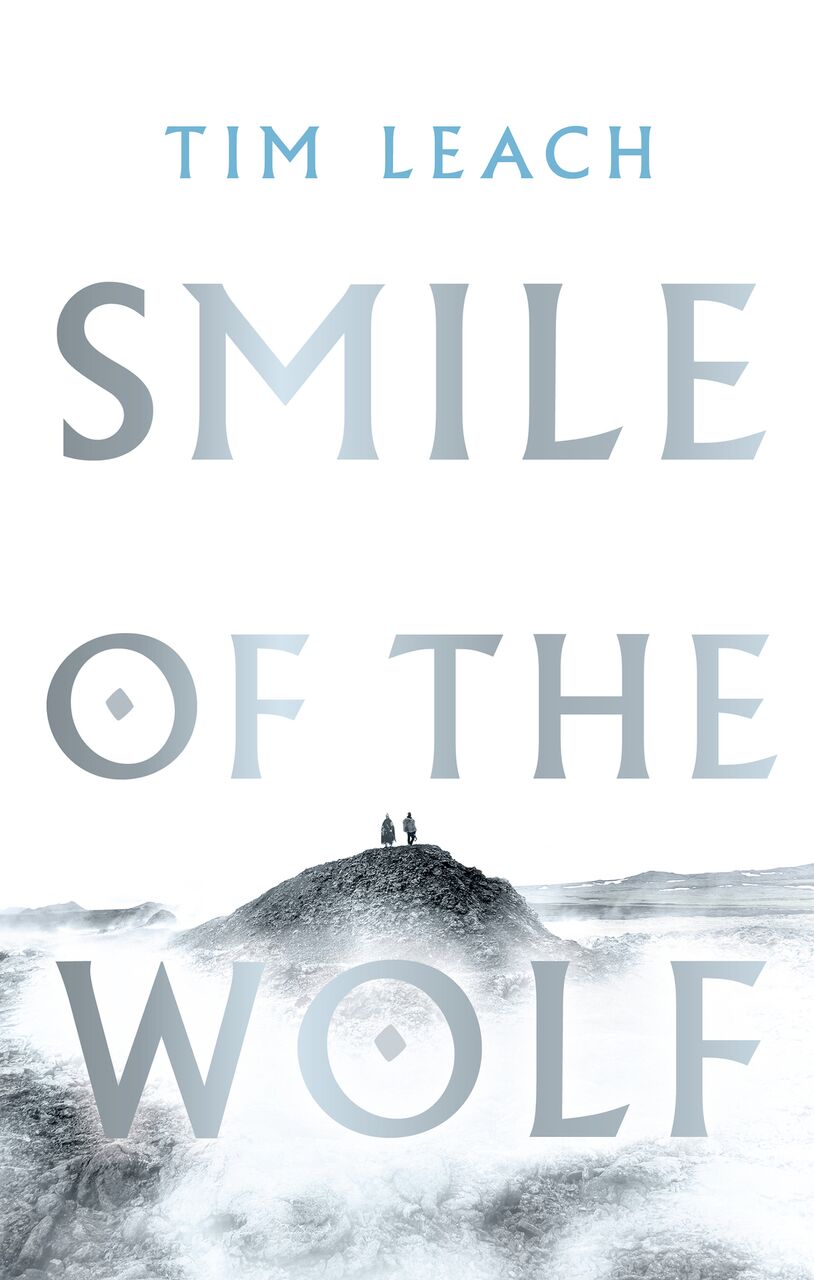
Smile of the Wolf by Tim Leach

This is Tim Leach’s third novel and although I haven’t read his first two, which are both about King Croesus of Lydia, I have heard good things about them. His new book, Smile of the Wolf, has a completely different setting but sounded equally fascinating, so I was pleased to have an opportunity to read it as part of a blog tour arranged by the publisher Head of Zeus.

Smile of the Wolf takes us to 10th century Iceland, where a tale of revenge and betrayal, loyalty and friendship is played out across a cold, harsh, beautiful landscape. At the centre of the tale, which is inspired by the Icelandic Sagas, are Gunnar, a warrior and farmer, and his friend, the travelling poet – or skald – Kjaran. Kjaran has no lands of his own but moves from household to household providing songs and stories in exchange for the hospitality of his hosts. It is while spending the winter with Gunnar and his family that rumours begin to circulate of a ghost that wanders in the night. Gunnar and Kjaran set out to hunt down the ghost – but when a misunderstanding leads to a man being killed, a deadly feud is set in motion.

This is a beautifully written novel, which is very appropriate as our narrator is Kjaran the poet, a man whose livelihood depends on his skill with language. Tim Leach uses just the right words and phrases to transport me to another time and place and to help me understand the people who lived there.

In the long winter, even the wealthiest of Icelanders curses the day that their ancestors came to this land. They forget the dream of the people, that dream of a world without kings, and know only that they live in a dark, lonesome place. But when the sun begins to ride higher in the sky and the snow begins to quicken and thaw, it is an easy land to love. The dream grows strong once more, for we are a stubborn people.

Iceland is a country with a very strong tradition of storytelling and the author has drawn on some of the stories told in the Sagas – stories of ghosts and feuds and friendships which take place in a land of snow and ice. We also learn a lot about Icelandic culture and customs, systems of law and punishment, and the conflict between Christianity and the older beliefs.

The relationship between Kjaran and Gunnar is well drawn, showing their very different personalities and the very different ways in which they react to the same situations. Gunnar prefers to settle disputes with spears and shields, while the more cautious Kjaran takes the time to look for other solutions. Although the two main characters – and most of the characters on the other side of the feud – are men, there are also some women who have a big part to play in the novel. These include Vigdis, whose schemes cause the feud to spiral out of control and last much longer than it needs to, and Sigrid, the woman Kjaran hopes to marry.

The combination of interesting characters, atmospheric setting and poetic writing make this a great read – both moving and gripping. It has left me determined to read The Last King of Lydia and its sequel as soon as I can.

Thank you to Head of Zeus for providing a copy of this novel for review.

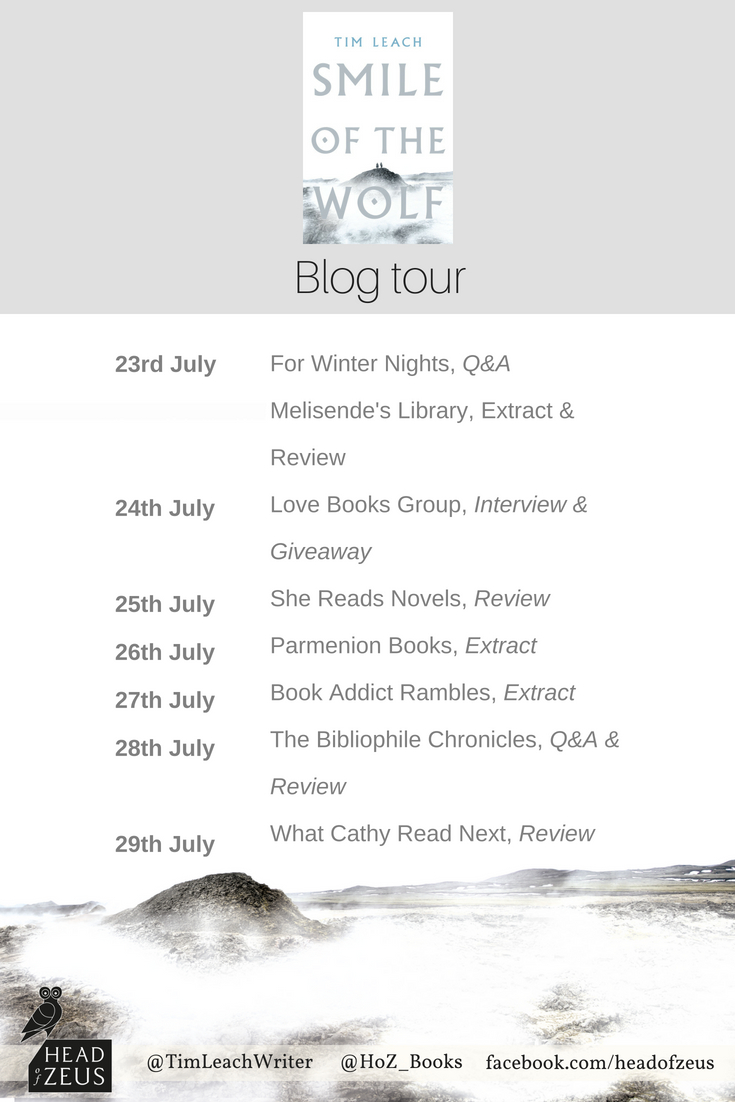
For more stops on the tour, please see the banner below.

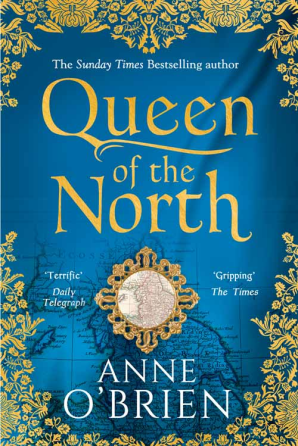
Queen of the North by Anne O’Brien

Having enjoyed some of Anne O’Brien’s previous books, I was excited to learn that her latest novel, Queen of the North, was going to tell the story of Elizabeth Mortimer, wife of the famous Harry Hotspur, heir to the Earl of Northumberland in the late 14th and early 15th centuries. So much English historical fiction concentrates on London and the south, it’s always nice to find something set in my part of the country instead.

The novel opens in 1399; King Richard II is still on the throne, but for how much longer? His power is weakening rapidly and the exiled Henry of Lancaster is preparing to return to England and reclaim his lands. Elizabeth Mortimer’s husband, Harry Percy (known as Hotspur), and his father, the Earl of Northumberland, are among the northern Lords who decide to take Lancaster’s side against the King. This worries Elizabeth, who is convinced that Lancaster’s ultimate goal is the throne of England itself – and soon she is proved right.

Although Lancaster is Elizabeth’s cousin, she is disappointed when the Percy family support him in deposing Richard and claiming the crown. She believes that her young nephew, Edmund Mortimer, has a stronger claim and she is determined to do whatever it takes to help him take his rightful place as King. This will bring Elizabeth into conflict not only with the newly crowned Henry IV but also with her husband and she will have to decide where her loyalties truly lie: with the Mortimers or with the Percys?

Elizabeth’s efforts on Edmund’s behalf eventually lead her to Wales, where Owain Glyn Dŵr is planning a rebellion and looking for support from the Mortimers and Percys. Alliances are formed and broken, friends become enemies then friends again in an instant; it’s a dangerous time, but a fascinating one to read about!

I loved Queen of the North; I think it’s my favourite of the five Anne O’Brien novels I’ve read so far. As I’ve said, I really liked the northern setting, which gave me some glimpses of places I know and have visited, such as the Percy stronghold of Warkworth Castle when it was a living, working building rather than the semi-ruin it is today. The Percys were one of the most powerful and influential families in the north of England at that time; they were wardens of the Marches (the area surrounding the border with Scotland) and virtually ruled the north on behalf of the king, but this did not mean they could not be brought down and replaced if they fell out of royal favour. Anne O’Brien does a great job of showing how precarious their position actually was, when an error of judgement, a wrong decision or an act of betrayal could mean their downfall.

The central two characters in the novel are well drawn, strong and convincing. I liked Elizabeth – although her obsession with putting her nephew on the throne becomes frustrating at times (partly because we already know from history that she wouldn’t succeed), but it’s obvious that it means a lot to her and that she is only doing what she believes is right. With her husband reluctant to help and the old Earl completely in opposition, she takes matters into her own hands and although her actions are not always sensible I did admire her courage and persistence. I also liked Harry, nicknamed Hotspur because of his brave, reckless and impulsive nature. His relationship with Elizabeth is very convincingly portrayed – their personalities clash at times and they don’t always see eye to eye, but their love is strong enough to survive these differences of opinion.

Because we are seeing things through Elizabeth’s eyes, a lot of important events – such as battles, rebellions and some of Hotspur’s meetings with Henry IV – take place ‘off the page’. However, this does not mean that Elizabeth’s personal story is boring; she has plenty of adventures of her own as she tries to navigate her way through the various plots and schemes of the shrewd old Earl of Northumberland, the Welsh hero Owain Glyn Dŵr, and her own Mortimer relatives. There’s never a dull moment and in comparison to Anne O’Brien’s last book, on Joan of Kent, I think this is a much more exciting and compelling novel. Speaking of O’Brien’s other books, there is also some overlap here with The Queen’s Choice, which tells the story of Henry IV’s wife, Joanna of Navarre.

I really enjoyed Queen of the North – and have been reminded that I never did look for the final two books in Carol Wensby-Scott’s Lion trilogy, which was my only other encounter in fiction with Elizabeth and Hotspur. Can anyone recommend any more books set in this time and place?

Thanks to the publisher HQ for providing a copy of this book for review via NetGalley.