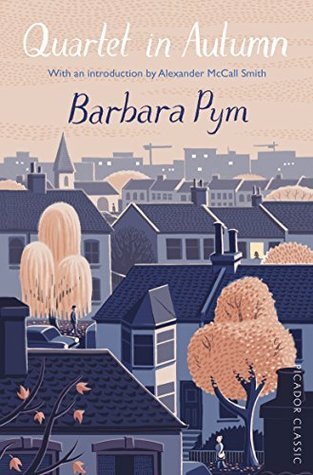
Quartet in Autumn by Barbara Pym #1977Club

This is my second choice for this week’s 1977 Club (hosted by Simon and Karen) and the third book I’ve read by Barbara Pym. Having so far read only Excellent Women and Less Than Angels, I was surprised by how different Quartet in Autumn is. It’s a much darker, sadder, more poignant novel and, although I did like it, I found it a little bit depressing.

The ‘quartet’ are two women and two men – Letty, Marcia, Edwin and Norman – who work together in the same office in 1970s London. They are four very different people with different personalities, but they have two things in common: they are all in their sixties and they all live alone. Although Pym never specifies exactly what their jobs involve, it is implied that the four of them have been sharing an office for several years and have an understanding of each other’s personal circumstances and living arrangements. Despite this, and despite their loneliness, they never do anything together outside of working hours – they eat lunch separately and then go their separate ways again at the end of the day.

We learn very little about Norman, except that people consider him an ‘odd little man’ and that his social life consists solely of dentist appointments and occasional visits to see his brother-in-law, whom he dislikes. Edwin, a widower, is sometimes invited to stay with his married daughter and grandchildren, but otherwise tries to keep himself busy by taking part in as many church activities as possible. The two men seem to play slightly smaller roles in the novel, at least until halfway through when the women retire (not to be replaced) and the quartet is reduced to a duo.

Letty has always planned to move to the countryside with her friend Marjorie after her retirement, but when the unthinkable happens and Marjorie gets engaged, she is left facing a future in an old people’s home instead. But it’s Marcia who is the most tragic character – Marcia who has had surgery for breast cancer and looks forward to her trips to the hospital as ‘holiday treats’, who has developed an obsession with hoarding empty milk bottles in the garden and who attracts the unwelcome attention of a concerned social worker.

A book about four lonely people doing meaningless, unappreciated jobs and looking for ways to fill boring, empty lives does not make the most uplifting of reads, but Pym still manages to sprinkle some humour into the story and to leave us with the sense that there is some hope for our characters after all. Letty, at least, seems to want things to change and to be willing to take the first steps towards bringing about those changes.
Despite the sad, melancholic feel of the book, I think it is my favourite so far by Barbara Pym. Her observations are both witty and sensitive and I found myself really caring about Letty, Norman, Marcia and Edwin. Another good choice for 1977 Club and now I’m looking forward to reading Jane and Prudence, the other Pym novel I have on my shelf.
Circe by Madeline Miller

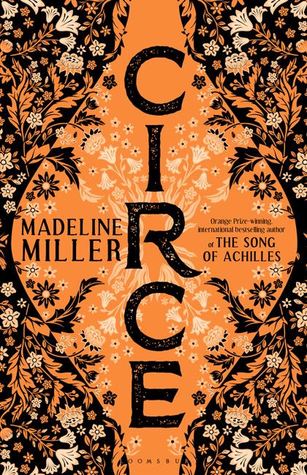
It’s been a long wait for Madeline Miller’s second novel (her first, The Song of Achilles, was published in 2011), and now that I’ve read it I’m pleased to say that I thought it was worth waiting for. I enjoyed The Song of Achilles, though maybe not as much as other people seemed to, but I found Circe an even more interesting read with characters and storylines which I personally found much more appealing.

I will start by admitting that before beginning this novel, I knew nothing about the witch Circe other than what I remembered from her appearance in the Odyssey, when Odysseus lands on the island where she lives alone with her lions and wolves, turning men into pigs. My knowledge of Greek mythology is sadly lacking, so I was curious to find out what else her story would involve and how it would be enough to fill a whole book.

The first thing we learn is that Circe is the daughter of the sun god Helios and the Oceanid nymph Perse. She grows up in the shadow of her seemingly more talented siblings, possessing neither the beauty of her sister Pasiphaë, who goes on to marry King Minos of Crete, nor the magical powers of her brothers Perses and Aeëtes (the future king of Colchis). To make matters worse, she even has the voice of a mortal rather than a goddess. It is only when she is driven by an uncontrollable jealousy to cast a spell on a rival that she discovers she does have a talent for witchcraft after all…but this same action results in her exile to the remote island of Aiaia.

Her new home is lonely but peaceful and Circe occupies herself with taming the wild animals that share her island and learning the properties of the flowers and herbs that grow there. Gradually she becomes aware of the true extent of her abilities as a witch and finds that she is not the failure she has always believed herself to be.

Let me say what sorcery is not: it is not divine power, which comes with a thought and a blink. It must be made and worked, planned and searched out, dug up, dried, chopped and ground, cooked, spoken over and sung. Even after all that, it can fail, as gods do not. If my herbs are not fresh enough, if my attention falters, if my will is weak, the draughts go stale and rancid in my hands.

Although Zeus has forbidden her to leave the island, Circe is not entirely isolated and she receives a number of visitors bringing news from the outside world. I was surprised by how many different myths Madeline Miller pulls into the story – myths even I was familiar with, such as Jason and the Golden Fleece, Daedalus and Icarus, the torture of Prometheus, and the Minotaur in the Labyrinth. I hadn’t expected to find all of these in a book about Circe (and I’m not sure how much involvement, if any, she has in other versions of these myths), but the way in which they were woven into the novel felt quite natural. The only problem is that with Circe trapped on her island, there’s a sense that most of the action is taking place elsewhere and our heroine is left to rely on information brought by Hermes and her other visitors.

It is not until halfway through the book that Odysseus comes to Aiaia and Circe’s story begins to overlap with the events of the Odyssey. This is another turning point in Circe’s life, as the time she spends with Odysseus leaves her with some important choices to make and carries the novel forward towards its conclusion.

I loved Circe; it’s a beautifully written novel and ideal for readers like myself who only have a basic knowledge of the Greek myths. I felt a stronger connection with Circe herself than I did with Patroclus in The Song of Achilles and for that reason this is my favourite of the two books, but I do think if you enjoy one of them you’ll probably enjoy the other.

Thanks to Bloomsbury Publishing for providing a copy of this book for review via NetGalley.

A Morbid Taste For Bones by Ellis Peters #1977club

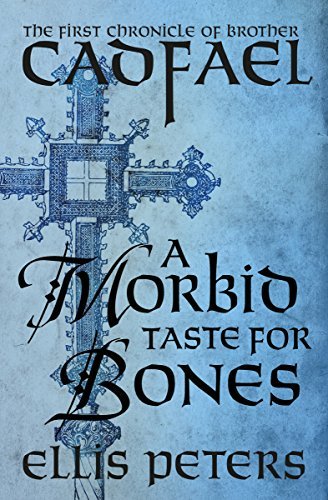
This week, Karen of Kaggsy’s Bookish Ramblings and Simon of Stuck in a Book are hosting another of their clubs where bloggers read and write about books published in one particular year. The chosen year this time is 1977 and although at first I thought I might have problems finding anything I wanted to read from that year, it turned out I had two suitable books already. One of them was A Morbid Taste for Bones, the first book in Ellis Peters’ Cadfael mystery series. I’ve been meaning to read this series for years, so 1977 Club seemed like the perfect opportunity to begin!

A Morbid Taste for Bones is set in the spring of 1137 and we first meet Brother Cadfael in the gardens of Shrewsbury Abbey tending the herbs with the assistance of two younger monks, John and Columbanus. John is a down-to-earth, practical young man, although Cadfael doubts whether he has a true vocation for the religious life, while Columbanus is starting to make a name for himself with his visions and dramatic ‘falling fits’. Returning from a trip to St Winifred’s Well in Gwytherin, North Wales, Columbanus claims that the saint has appeared to him, saying that her bones are being neglected by the people of Gwytherin and that she would like to be moved to Shrewsbury Abbey where more pilgrims will be able to visit her. Cadfael can’t help thinking that this seems very convenient, as Prior Robert has been considering ways to attract pilgrims to the Abbey and obtaining the bones of a saint would be the perfect solution!

As a Welshman, Cadfael is chosen as one of a small party of monks to travel into Wales and bring the saint’s relics back to Shrewsbury. However, when they reach Gwytherin they are met with resistance from the local people who don’t want to lose Winifred, especially not to England. Tensions rise and when a murder takes place in the woods, Cadfael works with the victim’s daughter to try to find the killer before an innocent man is accused.

I enjoyed my first Cadfael novel and part of the reason for that was because I really liked the character of Cadfael himself, with his mixture of warmth and intelligence, tolerance and imagination. Having entered the monastery later in life, he has a sort of worldliness that helps him to understand the feelings and motivations of people in the ‘outside world’. This allows him to have some sympathy for Brother John, who is struggling to reconcile his faith with other temptations, and also for Sioned, the young woman from Gwytherin whose father’s murder forms the mystery aspect of the novel.

I loved the way Peters portrays life in a small Welsh community: the village hierarchy, the farming of the land, what people did for entertainment, and most of all, how they felt about monks from England coming to take away the remains of a Welsh saint against their will. I was interested to learn, after finishing the book, that this was based on historical fact and Winifred’s relics really were taken from Wales to Shrewsbury Abbey where they remained until the dissolution of the monasteries in the reign of Henry VIII.

I don’t want to give the impression that this is a heavy or dry historical novel, though, because it isn’t – I found it entertaining and very readable. I already knew I liked Ellis Peters’ writing because I read one of her Cadfael short stories in a Christmas anthology last year, but I think her style is better suited to a full-length novel than it is to the shorter form and I enjoyed this much more. It’s also a good example of how to write a murder mystery without including an excessive amount of violence or unnecessarily graphic descriptions. A good choice for 1977 Club and a promising start to a new series for me!

~

I should have another 1977 book to tell you about later in the week, but for now here are a few older reviews I have posted of books published in that year:

The Brethren by Robert Merle
The Mauritius Command by Patrick O’Brian
Golden Bats and Pink Pigeons by Gerald Durrell
Gildenford by Valerie Anand

Walter Scott Prize Shortlist 2018

Following last month’s announcement of the 2018 longlist for the Walter Scott Prize for Historical Fiction, the shortlist has been revealed today. As you probably know by now, I am currently working my way through all of the shortlisted titles for this prize since it began in 2010 (you can see my progress here). There are six books on this year’s list and here they are:

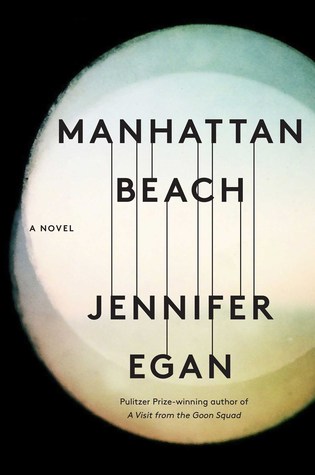
Manhattan Beach by Jennifer Egan

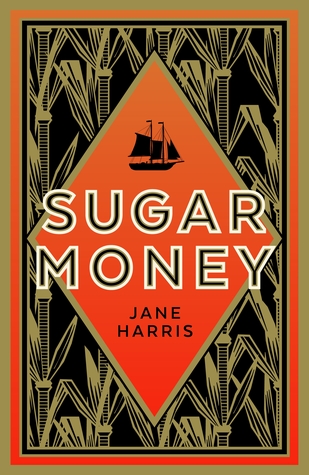
Sugar Money by Jane Harris

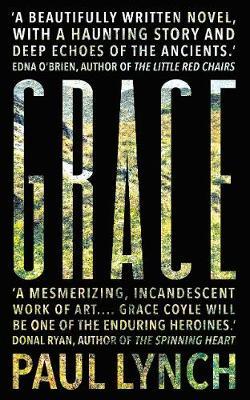
Grace by Paul Lynch

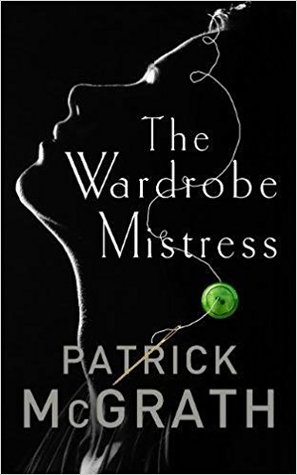
The Wardrobe Mistress by Patrick McGrath

Miss Boston and Miss Hargreaves by Rachel Malik

The Gallows Pole by Benjamin Myers

~

I am currently halfway through Sugar Money, but haven’t read any of the other five books yet. If you’ve read them, please let me know what you thought. I’ll be reading them all eventually anyway, but which would you recommend I read first?

The winner will be announced in June.

Early Warning by Jane Smiley

This is the second in Jane Smiley’s Last Hundred Years trilogy which follows the lives of one American family across a period of a century. The first book, Some Luck, took us from 1920 to the end of 1952, and this one, Early Warning, covers 1953 to 1986.

It had been almost two years since I read Some Luck, so I was worried that I would struggle to remember who the characters were and how they were related to each other. On beginning Early Warning, then, I was relieved to see that Jane Smiley addresses this problem by beginning the novel with a family gathering – the funeral of Walter Langdon, the man who, with his wife Rosanna, had been at the heart of the previous novel. The funeral is attended by all of his adult children – Frank, Joe, Lillian, Henry and Claire – some of whom are now married and have children of their own. As the family sit around a table reminiscing about the past, this gives the reader a chance to get reacquainted with the characters.

So far so good, but once the different branches of the family depart and go back to their own homes, things quickly become much more confusing! In the previous book, the action revolved around the Langdon farm in Iowa, but now that the children have grown up, some of them have moved away and there are now Langdons scattered all over America, in different towns and different states. As the years and decades go by, moving from the 1950s to the 60s, 70s and finally the 80s, the grandchildren grow up too and build lives of their own, bringing even more characters into the story. I was constantly referring to the family tree at the beginning of the book and can’t imagine how I would have coped if I’d been reading it as an ebook!

The novel follows the same structure as the first one, with one chapter devoted to each year. As I mentioned in my Some Luck review, this means that, although it keeps the story moving forward, we are also left with some big gaps. When we leave the characters behind at the end of one chapter, we leap straight into the middle of the following year with the next chapter and haven’t ‘seen’ everything that happened in the meantime. It’s an unusual way to structure a novel and while it’s successful in the sense that it makes the trilogy feel different and memorable, it’s too restrictive and I’m glad not all books are written like this!

There is really very little more that I can say about Early Warning. There are some dramas, of course – births, deaths, marriages, divorces, affairs, house moves and changes of career – but there is no real plot, any more than anybody’s life ‘has a plot’. With so many characters, I couldn’t keep track of everything that was happening, but some of the things that stood out for me in this book were the exploration of Frank’s wife Andy’s mental state and the therapy she undergoes, the rivalry between their twin sons, Michael and Richie, and the pressure Lillian’s husband Arthur find himself under as a result of his job with the CIA. I was also particularly intrigued by the introduction of a new character, Charlie, whom we first meet as a small child and who appears to be unconnected to anyone else in the book. Smiley writes very convincingly from a child’s perspective and I really enjoyed reading these sections and guessing how Charlie would eventually fit into the story.

Some of the major events of the period are featured too, including the Vietnam War and the Cold War, and whereas in Some Luck the family on their Iowa farm were largely sheltered from the outside world, this time, because the geographical scale of the story has broadened, there are family members affected in some way by almost all of the world events touched on in the novel.

I have now started the third book, Golden Age, but with yet another generation of characters to get to know, I’m anticipating an even more confusing read than this one!

The Pharmacist’s Wife by Vanessa Tait

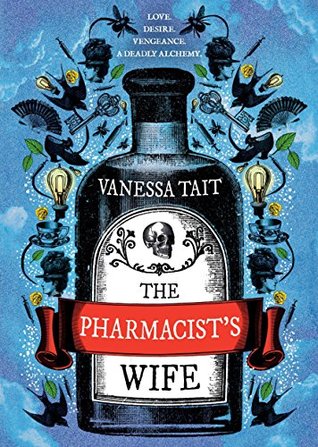
Vanessa Tait is a new author for me, although it seems she has written one previous novel, The Looking Glass House – a book inspired by Alice in Wonderland, which sounds particularly intriguing as Tait is the great-granddaughter of ‘the real Alice’, Alice Liddell. I was drawn to her latest novel, The Pharmacist’s Wife, by the eye-catching cover and then by the promise of “A dark and thrilling tale of Victorian addiction, vengeance and self-discovery, perfect for fans of Sarah Waters, Jessie Burton’s The Miniaturist and Sarah Perry’s The Essex Serpent.”

The Pharmacist’s Wife is set in Victorian Edinburgh, a setting which interested me immediately. There are so many novels set in Victorian London, it always makes a nice change to find one set somewhere else! Although I felt that the sense of place could have been strengthened by the use of more Scottish dialect, I did like the contrasting descriptions of the Old Town and the New Town.

North Bridge, the road linking Old to New, is the location Rebecca Palmer’s husband Alexander has chosen for his new pharmacy, the Grand Opening of which is celebrated with a brass band and a performing monkey. These are exciting times for Rebecca who, as a spinster of twenty-eight, had given up hope of ever marrying anyone, let alone such a clever and distinguished man as Alexander. Almost as soon as they move into their new home, however, Rebecca is forced to question whether her husband really is the man he appears to be. She suspects him of having an affair with Evangeline, a woman from the Old Town, and when she finds a ladies’ red shoe on his desk she’s sure her suspicions have been confirmed.

Alexander doesn’t like a wife who asks questions or has too many ideas of her own and, with this in mind, he has been developing a new medicine in his laboratory above the pharmacy – a medicine which he hopes can be used to control women and which he persuades Rebecca to try by telling her it will make her happy and content. Soon Rebecca is dependent on her medicine, taking it more and more often and relying on her husband to provide it for her. It is, of course, heroin – and it seems that Rebecca is not the only woman on whom Alexander has been testing his new invention…

This is certainly a dark novel but I didn’t find it a particularly thrilling one and it wasn’t until near the end that I started to feel gripped by the story. I suppose I was expecting more from the plot; there are lots of good ideas and plenty of interesting topics are touched on, but it’s only when (without wanting to spoil too much) things begin to go less smoothly for Alexander that it becomes really compelling, in my opinion. What this book does do, very well, is explore the inequalities between men and women in 19th century society. Although Alexander is not a real person and his discovery of heroin is fictitious, he uses the drug to keep his wife quiet and submissive and to take away whatever small amount of independence and freedom she may have had. Rebecca’s situation is oppressive and frightening and as her addiction to the drug deepens it becomes difficult to see how she is going to break out of the cycle in which she has found herself.

I liked Rebecca as a character and was pleased to see that she does develop as a person as the novel progresses, but I thought the villains, Alexander and his friend Mr Badcock, were too obviously ‘villainous’ and could have been given more depth. As well as the drugs, it seems that there’s no type of cruelty or depravity of which they’re not capable! Thankfully, there are two decent male characters to balance things out slightly – Lionel, the apprentice who helps Alexander in the pharmacy, and Gabriel, Rebecca’s first love.

The Pharmacist’s Wife is an interesting novel and, as I’ve said, a very dark one. I couldn’t love it, but I would be happy to read more books by Vanessa Tait. Has anyone read The Looking Glass House? What did you think of it?

Thanks to Atlantic Books for providing a review copy via NetGalley.

The Oaken Heart by Margery Allingham

Having read several of Margery Allingham’s detective novels, I was intrigued to come across The Oaken Heart, an account of life in her small English village during the Second World War. Originally published in 1941, it was apparently based on letters written to some American friends and expanded into a book at the suggestion of her publisher. It’s interesting to think that she was writing this while the war was still taking place and when nobody knew how much longer it would last or what the outcome would be.

Allingham’s village was Tolleshunt D’Arcy in Essex, but she refers to it in the book as ‘Auburn’ after a line from the poem The Deserted Village by Oliver Goldsmith. She is obviously very proud of Auburn and the way the people who live there work together to cope with whatever the war throws at them; it’s true that all towns and villages have their own unique characteristics, but I think it’s also true that the wartime experiences of the residents of Auburn will have been similar to the experiences of people in other parts of Britain.

Like many other villages, Auburn, in 1938 when the book opens, is still suffering from the effects of the previous war which ended just twenty years earlier. There’s a sense that Allingham and her friends are putting all their faith in Neville Chamberlain, not really believing or wanting to believe that war could possibly happen again. Of course, it does happen again – after a year of preparations, gas mask distributions and discussions of who should take in how many evacuees. The subject of evacuees is an important one to the people of Auburn; at first they are excited at the thought of groups of little schoolchildren from London arriving in the village (since the First World War there has been a shortage of young people in Auburn), but the reality is very different – hundreds of young mothers and babies! Allingham’s descriptions of the newcomers, the culture differences and how the villagers dealt with all of this are quite funny to read about.

I have never read anything about Margery Allingham as a person before, so I don’t know what she was supposed to be like or what impression the people who knew her had of her, but based on her own words in The Oaken Heart, she seems very likeable and down-to-earth. She makes a few references to her writing career now and then (she was working on Traitor’s Purse at the time), but there is never any sense of self-importance or superiority over anyone else in the village. Her writing style is warm, conversational and, as you would expect, very readable.

This is a wonderful book, which I would recommend to anyone who enjoys reading about life during the war. The fact that it is a first-hand account written in 1941 rather than a memoir written years later gives it another layer of interest. As we reach the final page, there is still no end to the war in sight and nobody has any idea if or when it’s all going to stop. I was sorry that the book ended when it did, as I would have liked to have continued reading about the people of Auburn and to find out how they fared later in the war.