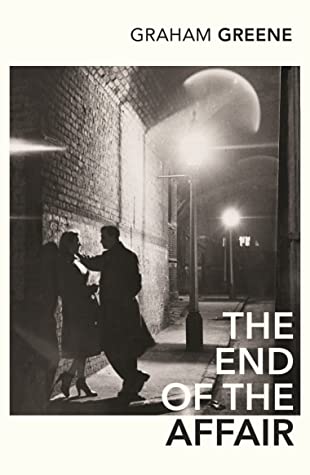
The End of the Affair by Graham Greene

Graham Greene’s 1951 novel, The End of the Affair, was one of the final unread books on my Classics Club list, which I’ve been neglecting recently. As I had left a few empty slots on my 20 Books of Summer list for random reads, I decided this would be a good opportunity to read it.

The End of the Affair is narrated by Maurice Bendrix, a writer living in London. As the title suggests, the novel begins at the end of an affair between Bendrix and neighbour Sarah, the wife of Henry Miles, a civil servant. It was Sarah who ended the relationship, leaving Bendrix confused, hurt and bitter. In January 1946, almost two years after the affair ends, Bendrix meets Henry by chance crossing the Common that separates their two houses. Henry never knew about the affair, but he now confides in Bendrix that he suspects Sarah is seeing another man. This revives Bendrix’s suppressed feelings for Sarah and he decides to hire a private detective to follow her and try to find out who her new lover is.

I really enjoyed the first half of this book. Greene writes so convincingly about Bendrix’s regret for his lost love and the mixture of emotions it provokes in him: disappointment, anger, resentment and – after hearing Henry’s suspicions – jealousy. The private detective he employs, Alfred Parkis, is a wonderful character and I wished he’d played a bigger part in the book. Although he’s not particularly successful in his detecting, he’s so eager to please and to set a good example for his young son, Lance, that I found him very endearing. He also adds a touch of comedy to what is otherwise a very serious story.

In the middle of the novel, the focus switches to Sarah and through some passages from her diary, we see her side of the story and discover her reasons for ending the affair with Bendrix. I found the second half of the book less compelling as discussions of Catholicism, religious conversion and the existence of God begin to dominate. There are lots of interesting ideas being explored, but I felt that it completely changed the direction and the feel of the story I had previously been enjoying. Still, I liked the book overall, loved the quality of the writing and thought the 1940s setting was perfectly evoked.

This is the first book I’ve read by Graham Greene and maybe it wasn’t the best place to start with him, but I do want to read more. Any recommendations are welcome!

Book 14/20 for 20 Books of Summer 2025.

This is also book 47/50 from my second Classics Club list.

Six Degrees of Separation: From The Safekeep to Enlightenment

It’s the first Saturday of the month which means it’s time for another Six Degrees of Separation, hosted by Kate of Books are my Favourite and Best. The idea is that Kate chooses a book to use as a starting point and then we have to link it to six other books of our choice to form a chain. A book doesn’t have to be connected to all of the others on the list – only to the one next to it in the chain.

This month, we’re starting with The Safekeep by Yael van der Wouden. I haven’t read it yet but do have a copy and am hoping to read it soon. Here’s what it’s about:

It is fifteen years after the Second World War, and Isabel has built herself a solitary life of discipline and strict routine in her late mother’s country home, with not a fork or a word out of place. But all is upended when her brother Louis delivers his graceless new girlfriend, Eva, at Isabel’s doorstep – as a guest, there to stay for the season…

In the sweltering heat of summer, Isabel’s desperate need for control reaches boiling point. What happens between the two women leads to a revelation which threatens to unravel all she has ever known.

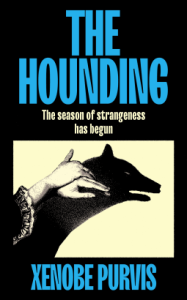
I’ve read a lot of books about the war so it would have been easy to go down that route, but I was drawn to the phrase ‘the sweltering heat of summer’ so decided to use that as my first link instead. The Hounding by Xenobe Purvis (1), about five young women who don’t fit in with their small community in 18th century England, is a book I read recently that is also set during a hot summer. It’s so hot that the river starts to dry up, affecting the trade of Pete Darling, the ferryman, who takes out his frustration on the girls, claiming he has seen them turn into dogs.

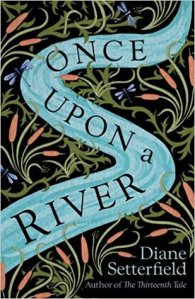
Once Upon a River by Diane Setterfield (2) follows the story of a child rescued from a river on the evening of the winter solstice in 1887. The legend of Quietly, a ghostly ferryman said to guide those in danger on the river to safety, plays an important part in the novel.

The name ‘Quietly’ leads me to The Quiet Gentleman by Georgette Heyer (3). I loved this one – it’s one of Heyer’s Regency novels but has a strong mystery element (involving a series of accidents that befall Gervase Frant, 7th Earl of St Erth) as well as a romance. I wish we saw more of the heroine, though!

The Temporary Gentleman by Sebastian Barry (4) is another book with ‘gentleman’ in the title. Barry’s novels are always beautifully written and this one is no exception. It’s set in 1950s Ghana, where Jack McNulty is writing his memoirs, looking back on his early life in Ireland and his difficult relationship with his wife.

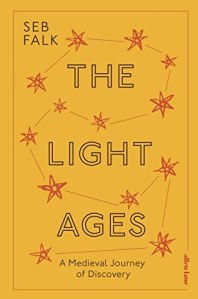
I don’t seem to have reviewed any other books by authors with the name Sebastian, but I did find one by a Seb: The Light Ages by Seb Falk (5). This is a non-fiction book in which Falk looks at some of the advances in science, mathematics and astronomy during the medieval period and tries to dispel the idea that the Dark Ages were a time of little progress.

A similar title and a shared theme of astronomy brings me to the final book in my chain: Enlightenment by Sarah Perry (6). Perry’s novel explores the relationship between two members of a Strict Baptist community in Essex, tied together through the story of a 19th century female astronomer, Maria Vǎduva, whose ghost is said to haunt a local manor.

~

And that’s my chain for August! My links have included: hot summers, ferrymen, the word ‘quiet’, the word ‘gentleman’, Sebs and Sebastians, and astronomy.

Next month we’ll be starting with Ghost Cities by Siang Lu.

My Commonplace Book: July 2025

A selection of quotes and pictures to represent July’s reading:

commonplace book
noun
a book into which notable extracts from other works are copied for personal use.

~

Nobody likes to feel a fool. We believe what we want to believe, which is whatever serves us best.

The Art of a Lie by Laura Shepherd-Robinson (2025)

~

Man’s immortality is not to live forever; for that wish is born of fear. Each moment free from fear makes a man immortal.

Fire From Heaven by Mary Renault (1969)

~

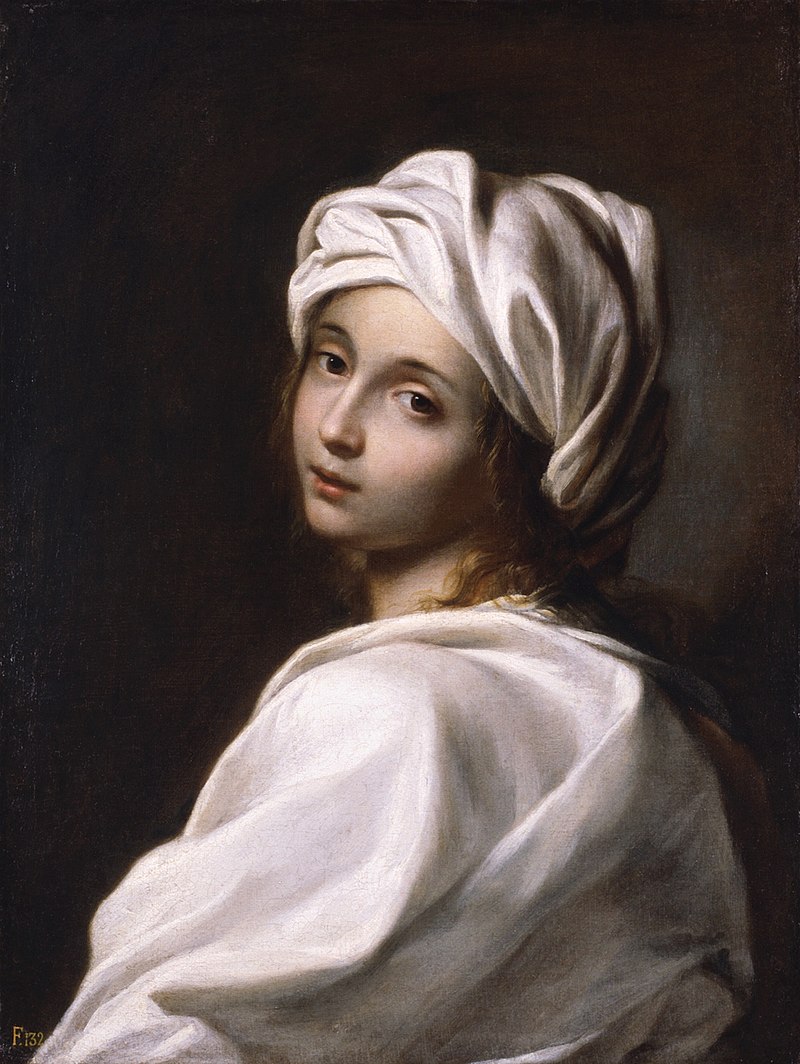
Portrait traditionally identified as Beatrice Cenci, attributed to Ginevra Cantofoli

I learned later that this wasn’t quite the truth. I came eventually to see that what goes on between two people behind closed doors is hard to prove, that there is one law for the rich and another for the poor. There is an age at which one comes to an understanding of hypocrisy, and I hadn’t reached it then.

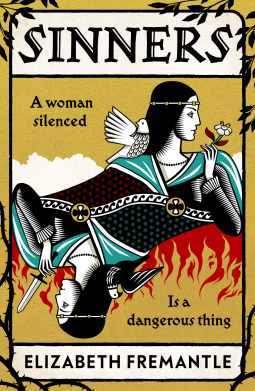
Sinners by Elizabeth Fremantle (2025)

~

Power, without the consent of those over whom it is exercised, is a fraud that cannot long endure, a delicate balance between fear and rebellion, which may suddenly be overset when enough men become aware that they all think alike.

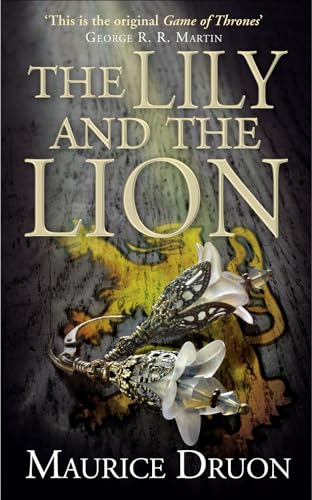
The Lily and the Lion by Maurice Druon (1959)

~

One thing can safely be said about an archaeological packing. It consists mainly of books. What books to take, what books can be taken, what books there are room for, what books can (with agony!) be left behind. I am firmly convinced that all archaeologists pack in the following manner: They decide on the maximum number of suitcases that a long-suffering Wagon Lit Company will permit them to take. They then fill these suitcases to the brim with books. They then, reluctantly, take out a few books, and fill in the space thus obtained with shirt, pyjamas, socks, etc.

Come, Tell Me How You Live by Agatha Christie (1946)

~

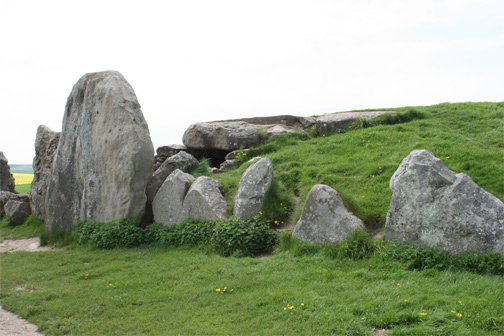
West Kennet Long Barrow, Avebury

A long hump rose from the ground, which Jess knew to be one of numerous barrows that dotted the slopes and heights of these stark uplands. But while she had no fear of the stone circle where she lived, these particular stones formed the entrance to a mysterious long barrow which had a demonic reputation, and although the chamber behind them would provide essential shelter from the approaching storm, the whole structure filled her with deep apprehension.

The House of Seymour by Joanna Hickson (2025)

~

Lydia shook her head to think of it. For far from Love at First Sight, for her, it had been Dislike at First Conversation.

How to Lose a Lord in Ten Days by Sophie Irwin (2025)

~

Not all people were the same. Life was like the river. How you perceived it depended upon you viewpoint. And what you saw, like the automaton wren, was not always the truth, because truth was not always absolute; it had its own nuances.

The Emerald Shawl by Louise Douglas (2025)

~

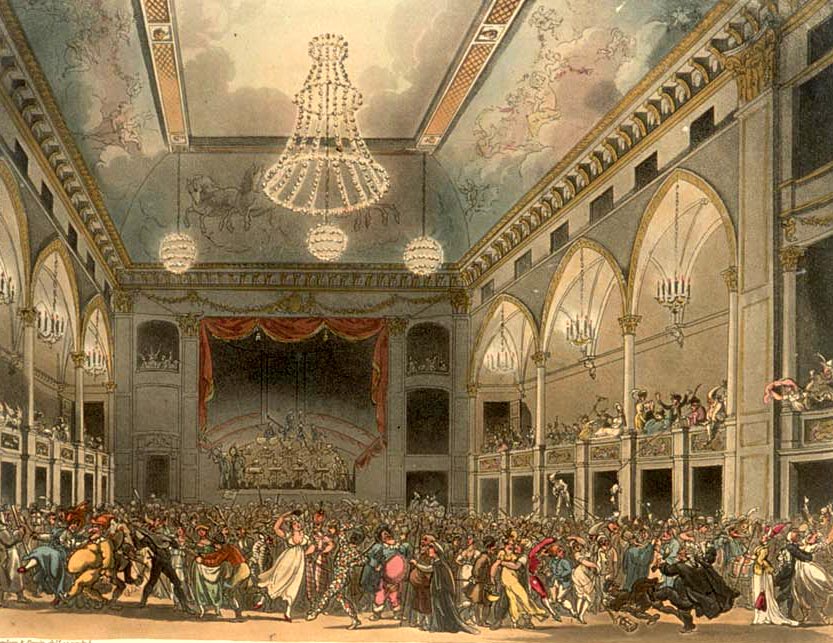
A masquerade in the Pantheon, London, circa 1808.

History is rich and interesting exactly because humans are, and while our modern life loves a binary, especially between good and evil, the reality is we all have the capacity for exciting and mundane, moral and immoral, smart and stupid.

Masquerade Balls in Regency England by Anne Glover (2025)

~

Perhaps all detectives were mildly unsettling. Perhaps they needed to be, to get the job done.

No Life for a Lady by Hannah Dolby (2023)

~

I have never been able to describe even my fictitious characters except by their actions. It has always seemed to me that in a novel the reader should be allowed to imagine a character in any way he chooses: I do not want to supply him with ready-made illustrations.

The End of the Affair by Graham Greene (1951)

~

Favourite books read in July:

Sinners, The Art of a Lie, Come, Tell Me How You Live, The Emerald Shawl, No Life for a Lady (yes, I found it difficult to choose this month!)

Authors read for the first time in July:

Anne Glover, Graham Greene, Hannah Dolby

Places visited in my July reading:

Italy, England, Macedonia, Greece, France, Syria

~

Reading notes: Most of my reading in July was for the 20 Books of Summer challenge. I have now read 17 books for the challenge, which means I only have to read 3 more in August. I just need to find time to catch up with posting my reviews! I was pleased that I also managed to incorporate a French novel (The Lily and the Lion) into my July reading for Emma’s Paris in July event!

I have no plans for August other than finishing 20 Books of Summer. It’s Women in Translation month, which I do usually try to take part in, but I’m not sure if I have anything suitable on the TBR at the moment. I’ll see what happens!

What did you read in July? Do you have any plans for August?

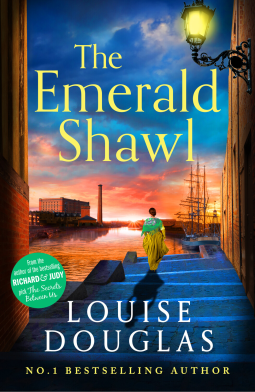
The Emerald Shawl by Louise Douglas

I’d forgotten how much I love reading Louise Douglas! I’ve read four of her books and particularly enjoyed the du Maurier-inspired The Secrets Between Us, but then I seemed to lose track and missed all of her more recent ones. The Emerald Shawl, published this week, turned out to be the perfect choice for my return to her work.

The novel opens in Bristol in 1864, with journalist Nelly Brooks meeting a woman in a green shawl by the docks. Nelly’s ‘journalism’ amounts to writing a women’s column for the Courier, giving advice on cooking, cleaning and decorating, which is all her editor will allow her to do. She hasn’t given up on her dream of becoming a serious news reporter like her male colleagues, however, and when Eliza Morgan, the woman in the shawl, tells her of the murder of the wife and newborn child of an important man, Nelly is sure she’s found the story she’s been hoping for. When Eliza herself is found floating lifeless in the river the next day, Nelly doesn’t believe the verdict that it was an accidental drowning. She’s convinced that Eliza was murdered and that she is the only person who may be able to find out who killed her.

The mystery is the main focus of the book, but Nelly’s personal life is also interesting. Having become pregnant at the age of fifteen, she spent several years in an asylum, sent there by her parents who found it preferable to admitting that she’d had an illegitimate child. Nelly has had no contact with her daughter – or her parents – since the baby was removed from her after the birth, but she has now discovered that twelve-year-old Hannah is attending a school near Nelly’s place of work. As well as investigating Eliza’s death, Nelly also sets out to find a way to bring Hannah back into her life.

The characters in the book range from the very wealthy, such as the politician Sir Edward Fairfield and his wife, for whom Eliza Morgan worked as a seamstress, to the working class Skinners, who are drawn into the mystery when their daughter’s body is stolen from the morgue. Although both families live in Bristol, they may as well be in different worlds and Nelly has to navigate between the two.

I found it interesting to learn after finishing the book that Douglas based Nelly’s character on the American journalist Nellie Bly, who went undercover to report on conditions inside a mental institution. The fictional Nelly’s own experience of mental institutions allows Douglas to explore issues around mental health and how ‘insanity’ could be used as a convenient way of dealing with people seen as problematic. I also loved the Victorian Bristol setting, which made a nice change from the usual Victorian London settings! The building of the Clifton Suspension Bridge is completed during the course of the novel, an important event in Bristol’s history which helps set the story in a wider historical context.

I hope Louise Douglas will return to Nelly Brooks in a future book as I think there’s a lot of scope to do more with the character. If not, I still have plenty of her earlier novels to enjoy!

Thanks to Boldwood Books for providing a copy of this book for review via NetGalley.

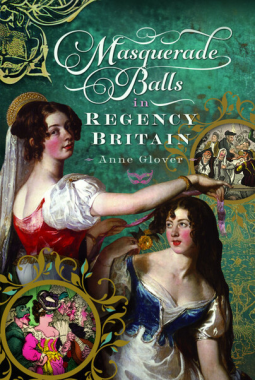
Masquerade Balls in Regency Britain by Anne Glover

Having read a lot of fiction set in the Regency period, the masquerade ball is something I’ve come across often. It tends to be the setting for some of the novels’ pivotal moments, with masked characters free to behave in ways they normally wouldn’t and mistaking each other’s identities, leading to unexpected romances, accidental interactions with the wrong person and other surprises that are only revealed when the masks come off! This new book by Anne Glover looks at the facts behind the fiction, exploring the real history of the masquerade ball.

The book begins with a discussion of the popular venues used for masquerades. Not surprisingly, the focus is overwhelmingly on London, where masquerades were regularly held at the Argyll Rooms and the Pantheon, as well as outdoor events at the Ranelagh Gardens and Vauxhall Gardens. However, Glover does acknowledge the popularity of masquerade balls in seaside resorts like Margate and Brighton, in other large cities around Britain and Ireland and in other countries such as India. She also looks at private masquerades, where a wealthy person would open their own home to family and friends. The balls would all have different characteristics depending on the size and style of the venue, the ticket price and the class of guests they were trying to attract (the Argyll Rooms required a subscription, whereas the Pantheon was open to anyone who could afford a ticket).

Glover then devotes separate chapters to each individual aspect of the masquerade ball. I found the chapter on lighting particularly interesting. She explains that although we may imagine masquerades as dark, dimly-lit affairs, it was actually important for them to be brightly lit – to help guests stay awake as the balls often started at ten or eleven at night and went on until dawn; to make it safer for people wearing masks to move around; and for the host to show that they could afford to light hundreds of lamps. The Pantheon was said to have 10,000 variegated lamps arranged in different designs. The rooms would be decorated with transparencies – pictures painted on paper, silk or linen and illuminated from behind – and artificial flowers, while pictures and designs would be chalked onto the dance floors, again with the practical purpose of stopping dancers from slipping.

The types of dances popular during the Regency are discussed, along with additional entertainments which started to be added as masquerade balls became more ambitious, including fireworks, lotteries and performances by dancers, singers and acrobats. Then of course, there’s the food – the formal ‘supper’, which often took place at one or two o’clock in the morning, versus the idea of a buffet or refreshments available throughout the entire event which became more popular as we moved into the Victorian era. Costumes are the subject of another chapter. People who wore the ‘domino’ (a simple hooded cloak with a mask) were often looked down on by other guests for not making enough effort; character costumes based on figures from history or literature were preferred, and this leads into a discussion of cultural appropriation and symbols of national identity.

Although masquerade balls could be attended by people from various walks of life, they were obviously aimed mainly at the very rich and privileged and as I read, I couldn’t help thinking about all the working class people who were excluded from entertainments like these – and all the money that was spent on something only lasting one night. I suppose at least the balls created plenty of work for costume makers, artists, musicians and performers, cooks and caterers!

I found this book interesting, but I thought the style and structure made it a bit too dry and scholarly for the general reader. I’m sure it would be of great help as a reference book for someone writing a Regency novel, though. Anne Glover has clearly carried out a huge amount of research and gone into an incredible amount of detail in each chapter, but I would have preferred something that was more fun to read. Still, I did learn a lot from it and coincidentally, the very next novel I picked up after finishing it happened to feature a masquerade ball!

Thanks to Pen & Sword History for providing a copy of this book for review via NetGalley.

Sinners by Elizabeth Fremantle

Elizabeth Fremantle is an author I’ve been following since her first book, Queen’s Gambit, was published in 2013. I’ve enjoyed all of her novels, to varying degrees, but I think her latest one, Sinners, is the best so far. It’s the story of the Italian noblewoman, Beatrice Cenci, and is a very dark and powerful read.

The book begins in Rome in 1598 with Beatrice discovering the dead body of her brother Rocco, a victim of one of her father’s long-running feuds. To avoid any further retaliations, the family flee to La Rocca, a hunting lodge in the mountains, but this proves not to be a place of safety for Beatrice as her father, Francesco Cenci, becomes increasingly cruel and unpredictable, abusing her physically, verbally and sexually. Her stepmother, Lucrezia, and younger half-brother, Bernardo, are also targets for his brutal violence and abuse, while her other brother, Giacomo, who is gay, remains estranged from the family, forced to communicate with Beatrice in secret.

As life behind the walls of La Rocca becomes more and more unbearable, Beatrice finds some solace in her growing friendship with Olimpio Calvetti, one of her father’s servants. When she becomes pregnant with Olimpio’s child, Beatrice fears for their lives if her father learns the truth – especially if he also learns that Beatrice has been reporting him to the authorities for his abusive behaviour! And so Beatrice comes up with a plan which, if it works, could set them all free, but if it fails could leave them in even more danger than before.

As you’ll be able to tell, Sinners is not an easy or comfortable book to read. Francesco Cenci is one of the most wicked, depraved characters you’re likely to come across in fiction and the way he treats his wife and children is unimaginably cruel. Knowing that he was a real person and that his family really did suffer at his hands makes it even more horrible to read about. It also makes it easy for the reader to have sympathy for Beatrice when she decides to take action, although Fremantle explains in her author’s note that her intention in writing the book was to portray Beatrice as a complex woman who is both innocent and guilty, saint and sinner, something which I think she achieves.

Fremantle also uses her author’s note to clarify where the book sticks to historical fact and where she uses her imagination to produce a compelling work of fiction. I found it particularly fascinating to read about the famous portrait of Beatrice Cenci, attributed to Guido Reni, which is now thought to be by Ginevra Cantofoli and maybe not even a portrait of Beatrice at all. Fremantle works the painting of the portrait into the plot in an interesting way, showing how it was used to evoke sympathy for Beatrice from the public.

I love the way Fremantle recreates the feel of late-16th century Italy and although it’s set a decade or two earlier, Sinners makes a good companion novel to Disobedient, her book about Artemisia Gentileschi. Artemisia’s story even overlaps with Beatrice’s in the first chapter. I’m looking forward to seeing who and what Fremantle decides to write about next!

Thanks to Michael Joseph for providing a copy of this book for review via NetGalley.

Book 13/20 for 20 Books of Summer 2025.

The Lily and the Lion by Maurice Druon #ParisinJuly2025

Translated by Humphrey Hare

I always seem to forget about Paris in July, but this year I remembered in time and decided it would be the perfect opportunity to get back to Maurice Druon’s Accursed Kings series, which I started years ago and still haven’t finished! The Lily and the Lion (first published in French in 1959) is the sixth of seven books telling the story of Philip IV the Fair of France and the kings who follow him, said to have been cursed “to the thirteenth generation” by the vengeful Grand Master of the Knights Templar as he burned at the stake. Les Rois maudits, to give the series its French title, was very successful in France, being adapted for television twice, and has also been credited by George R.R. Martin as the inspiration for Game of Thrones.

The first book in the series is The Iron King and I would recommend starting there if possible. If you don’t have much knowledge of this period of French history (which I certainly didn’t), reading the books in order makes it easier to gradually understand the historical context and the relationships between the various characters. One character who has been with us since book one is Robert of Artois and his story becomes the main focus of book six.

The Lily and the Lion begins with the death of yet another French king, Charles IV. With no direct heir, his cousin Philippe of Valois is chosen as his successor, thanks largely to the machinations of Robert of Artois. In return for helping Philippe to the throne, Robert has been promised the new king’s support in reclaiming his lands of Artois which he believes have been stolen from him by his Aunt Mahaut. A large part of the book is devoted to the dispute over Artois, which is more exciting than it sounds as Robert is prepared to go to any lengths, including forgery, perjury and murder, to get what he wants – and Mahaut is equally determined to stop him.

In England, meanwhile, Philip the Fair’s daughter Isabella and her lover, Roger Mortimer, are now effectively ruling the country after deposing her husband, Edward II. However, Isabella and Edward’s son, the young Edward III, is almost old enough to take control of the throne himself and is planning to overthrow Mortimer. Thanks to some encouragement from Robert of Artois, who has lost patience with Philippe of Valois, Edward III also sets his sights on the throne of France, believing he has a claim through his mother. The seeds of the Hundred Years’ War have been sown!

For a long time, The Lily and the Lion was the last book in the series, until the publication of The King Without a Kingdom many years later in 1977. It does feel like a final book, as Druon ties up loose ends and brings his various storylines to a conclusion. I had wondered if he would return to the story of Marie de Cressay and Guccio Baglioni’s son, Jean, switched as a baby with John the Posthumous, the young King of France who supposedly died aged four days old – and he does, right at the end of the book in the epilogue. This felt very much like an afterthought, though, and I would have liked to have at least had some glimpses of Jean’s life in the main part of the novel.

Although I preferred the earlier books in the series, I did enjoy reading this one and seeing Robert and Mahaut’s long-running feud finally come to an end. I’ve heard that the final book is very different and not as good, but I’m sure I’ll read it eventually – maybe for next year’s Paris in July!

Book 12/20 for 20 Books of Summer 2025.