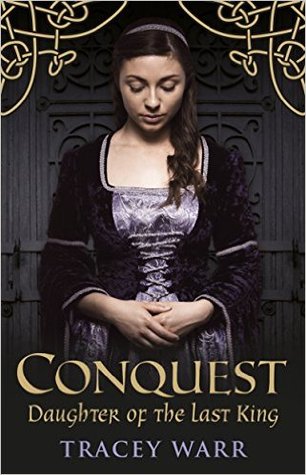
Conquest: Daughter of the Last King by Tracey Warr

One of the things I love about historical fiction is having the opportunity to read about historical figures I previously knew nothing at all about. Nest ferch Rhys, daughter of the last king of Deheubarth in Wales, certainly falls into that category, so when I was offered review copies of the first two books in Tracey Warr’s Conquest trilogy, of course I said yes!

Daughter of the Last King opens in 1093. The twelve-year-old Nest is playing on the beach with her brother when she is captured by Norman invaders who inform her that her father has been killed in battle at Aberhonddu. Taken by her captors to Cardiff Castle, Nest is placed in the household of Sybil de Montgommery, a member of a powerful Norman family who have been granted lands and titles in Wales. Although Nest has every reason to despise the Montgommery family and all they stand for, she quickly finds herself warming towards Sybil, who has been given the job of overseeing her education and training. The plan is that Nest will one day marry Sybil’s brother, Arnulf de Montgommery – but what about her existing betrothal to the Welsh prince, Owain?

Nest’s story takes place during a troubled and eventful time in the histories of England, Wales and Normandy. William the Conqueror has died and his lands have been divided, with his eldest son, Robert Curthose, inheriting Normandy and the throne of England going to a younger son, William Rufus. The two are rivals and the nobility, particularly those with land in both England and Normandy, are forced to choose between them. Sybil’s husband and her Montgommery brothers have each decided where their loyalties lie, but will they have made the right choice?

Although I have read quite a few novels set just before and during the Norman Conquest of 1066, I have read very little about the period following this – the late eleventh and early twelfth centuries. Tracey Warr goes into a lot of detail regarding the politics of the period, the rebellions, the shifting loyalties and betrayals, so that by the time I finished the book I felt that I had learned a lot. There is some overlap with the knowledge I gained from another recent read, Alison Weir’s Queens of the Conquest, but otherwise most of this was new to me. In particular, I found the focus on Welsh history interesting, especially the contrast between the Normans’ relatively quick and successful conquest of England and their attempts to conquer Wales.

Due to my unfamiliarity with so much of the history covered in this novel, I was relieved to see that the author had included some very useful material at the front of the book: genealogies for the Welsh royal families, Anglo-Norman royal family and Montgommerys; maps of eleventh century Wales, England and Normandy; and a plan of Cardiff Castle. I resisted the temptation to look anything up online because, with my complete lack of knowledge of Nest ferch Rhys and her story, I didn’t want to find out too much in advance. There was some suspense involved in waiting to see who – and whether – she would eventually marry, and I didn’t want to spoil the surprise for myself.

The one aspect of the book I’m not sure I liked was the inclusion of journal entries and letters written by a fictitious nun, Sister Benedicta, and her brother, a knight called Haith. These characters do serve a purpose in the novel, providing us with information on events which are unknown to Nest, but personally I found them a bit distracting and would have preferred to focus solely on Nest. She is such an interesting character and, although Tracey Warr points out in her author’s note that there is a limit to how much we know for certain about the real Nest, I did enjoy getting to know her. I’m looking forward to finding out how the story continues in the second part of the trilogy, The Drowned Court.

Thanks to Impress Books for providing a copy of this novel for review.

~

I would like to take this opportunity to wish you all a Merry Christmas! I’ll be back soon with my books of the year, my December Commonplace Book and maybe another review or two before New Year.
Some challenges for 2018: What’s in a Name? and Historical Fiction

It’s that time of year again when bloggers are making plans for next year’s reading and when reading challenges for 2018 are being announced. I don’t take part in many challenges these days, but there are two that I’m interested in for next year.

The first is a challenge which I used to enjoy but haven’t participated in since 2014. This is the What’s In A Name? challenge, hosted by Charlie of The Worm Hole. The challenge involves reading one book from each of six categories during 2018. I like the sound of the categories Charlie has chosen for us for next year, so I thought it would be fun to join in.

I have listed the categories below, followed by one or two possibilities. I don’t really want to be adding more books to my TBR so I’m going to try to choose from books that I already own.

    • The word ‘the’ used twice (The Girl in the Tower by Katherine Arden; The Girl in the Photograph by Kate Riordan)
    • A fruit or vegetable (The Grapes of Wrath by John Steinbeck)
    • A shape (Bleeding Heart Square by Andrew Taylor )
    • A title that begins with Z (Zofloya, or The Moor by Charlotte Dacre)
    • A nationality (The English Girl by Katherine Webb; The Japanese Lover by Isabel Allende, The Scottish Chiefs by Jane Porter)
    • A season (The Winter Prince by Cheryl Sawyer; The Corn King and the Spring Queen by Naomi Mitchison; The Thousand Autumns of Jacob de Zoet by David Mitchell)
  • ~

    The second challenge I’m signing up for is one I like to partipate in every year, even though it’s not exactly a ‘challenge’ for me! The Historical Fiction Reading Challenge is hosted by Passages to the Past and has six different reading levels to choose from:

    20th Century Reader – 2 books
    Victorian Reader – 5 books
    Renaissance Reader – 10 books
    Medieval – 15 books
    Ancient History – 25 books
    Prehistoric – 50+ books

    As historical fiction is my favourite genre, I will be aiming for the Prehistoric level again in 2018.

    I will be keeping track of both of these challenges on this page.

    Will you be taking part in either of these?

Lincoln in the Bardo by George Saunders

It’s February 1862 and an eleven-year-old boy is dying, probably of typhoid fever. After his death, he is interred in a crypt at Oak Hill Cemetery in Georgetown. Unable to accept that he has lost his beloved son, the boy’s father enters the crypt on several occasions to hold the body and grieve. The boy’s name is Willie Lincoln and his father is Abraham, the sixteenth President of the United States.

According to author George Saunders this is a true story, reported in contemporary news accounts at the time, and is what inspired him to write Lincoln in the Bardo, a novel which won the 2017 Man Booker Prize. I don’t always get on well with Booker novels and I wasn’t at all sure whether it was a good idea for me to read this book, but it sounded so unusual and intriguing that when I saw it in the library I couldn’t resist.

The first thing to consider is the meaning of that word in the title – ‘bardo’. In Tibetan Buddhism, bardo is the transitional state between death and rebirth. It is portrayed in Saunders’ novel as a sort of limbo inhabited by the ghosts of people who either aren’t aware that they are dead or won’t admit to it, and for one reason or another have not yet moved on. This is where Willie Lincoln finds himself following his death and is unable to leave because his father is not ready to let go. The other spirits are worried about Willie – they know the bardo is no place for a child to linger – but they also have stories of their own, which slowly begin to unfold as the novel progresses.

The next thing – a very important thing – that I need to mention is the writing style, because Lincoln in the Bardo is not written in conventional prose. Instead, it takes the form of a cacophony of voices, all speaking up, giving their opinions, interrupting each other and completing each other’s sentences. It looks a bit daunting on the page, with short fragments of dialogue accompanied by the speaker’s name, but approaching it as if I were reading a play made it feel easier to follow. I don’t usually listen to audiobooks, but I think this particular novel would be a good one to listen to. Apparently the audio version has 166 narrators!

As well as the conversations taking place in the bardo, there are also some chapters made up of quotations from a selection of primary and secondary sources including letters, memoirs and academic accounts. These provide us with some background information on Abraham Lincoln and the period before and after Willie’s death. The sources looked authentic, but I later discovered that although some of them are real, others are fictional – and there is no easy way to tell which ones are which. This bothered me slightly, but probably won’t bother everyone! What I did like was the way Saunders uses these quotations to illustrate the unreliability of sources and the importance of looking at more than one account of the same event. For example, a chapter describing Lincoln’s appearance gives one source saying that his eyes are “gray-brown”, followed by another stating that they are “bluish-brown” and another simply “blue”.

I would say this was a love it or hate it type of book – except that for me it was a bit of both! There is no doubt that it’s wonderfully creative, imaginative and original, with a lot to admire and enjoy, but my initial feeling that this wasn’t really a book for me proved to be correct. I have never been much of a fan of experimental styles and structures; I find that I get distracted from the story and am unable to become fully absorbed in the way that I prefer. Maybe for that reason, I didn’t find the book as emotional as I would have expected given the subject – although other readers have described it as moving and heartbreaking, so it’s probably just me. I’m glad I read it though, as I would have been curious about it forever otherwise! If you’ve read it too, I would love to hear what you thought.

The Stolen Marriage by Diane Chamberlain

Diane Chamberlain is not an author I have ever thought about reading, but when I unexpectedly received a review copy of her new book, The Stolen Marriage, from the publisher a while ago I was intrigued. The setting and the plot both sounded appealing and I decided that it would be worth at least giving it a try to see what it was like.

Our narrator is Tess DeMello and as the novel opens in 1944 it seems that she has her future all planned out. She is engaged to the man she loves – Vincent Russo, a newly qualified doctor – and she is about to take the final exams that will enable her to become a registered nurse. Things begin to go wrong when Vincent volunteers to help with a polio epidemic in Chicago and stays away for longer than expected. Feeling lonely and neglected, Tess agrees to join her best friend Gina for a weekend trip to Washington, where one thing leads to another and she finds herself pregnant by another man.

Convinced that Vincent will want nothing more to do with her, Tess goes in search of her baby’s father, Henry Kraft, the wealthy owner of a furniture company in Hickory, North Carolina. All she wants from Henry is enough money for somewhere to live and to provide for the child when it is born, so she gets a big surprise when he asks her to marry him. Thinking about the baby’s future, Tess agrees and soon she is part of the Kraft family, living in their luxurious home in Hickory.

Life in Hickory brings new challenges for Tess, however. She quickly discovers that, although Henry is not unkind, her marriage is a loveless one. Worse, she is unable to trust her new husband. Why is he hiding money from her and where does he disappear to in the middle of the night? And worst of all, Tess finds it impossible to fit in with Henry’s family and friends. His mother and sister seem to hate her – and make no secret of their hatred – but Tess isn’t sure why. Is it just that, with her Italian background and her desire to work for a living, they don’t consider her good enough for Henry – or could there be another reason for their resentment?

It took me a few chapters to really get into The Stolen Marriage, but after that the pages flew by. I was kept in suspense wondering what Henry’s secret could possibly be and although there were plenty of clues I still didn’t guess correctly! Tess didn’t understand what was happening either and I had nothing but sympathy for her as she tried to come to terms not just with the destruction of her old life but the awareness that her new one was built around lies and deceit. However, I struggled to understand some of the choices she made and I felt that her actions (and the actions of other characters) were sometimes contrived to move the story forward rather than feeling like the natural way she would have behaved. There were a few unconvincing plot twists and developments near the end of the novel too, but although this was slightly disappointing it didn’t spoil my enjoyment of the novel too much. There were so many other things to love.

I particularly enjoyed the insights into what it may have been like to live in a small town in North Carolina in the 1940s. Having moved from an Italian neighbourhood in Baltimore, Maryland, Tess experiences a culture shock when she arrives in Hickory. Her husband’s family and friends are prejudiced, narrow-minded snobs who make Tess feel very uncomfortable, finding fault with her looks, her clothes, her opinions and her family background. Racial tensions are also high in the town and this aspect is explored through the story of a black family who work as servants in the Kraft household. Of course, there are good and bad people everywhere and in all walks of life, which Tess discovers when the polio epidemic reaches Hickory and the community must pull together to build and staff a new hospital in record time.

The building of the hospital is based on a true historical event (you can find out more by searching online for ‘the Miracle of Hickory’); I had never heard about this before, so I found that section of the novel fascinating! As the story is set in 1944, it was also interesting to read about the impact of World War II on the people of Hickory, with rationing in place and families waiting anxiously for news of sons, husbands and brothers fighting overseas. I loved the glimpse this book gave me into another time and place and although I’m not sure whether this is typical of Diane Chamberlain’s novels, I will certainly be looking for more of her books in the future.

Thanks to Macmillan for providing a copy of this novel for review.

Historical Musings #33: My year in historical fiction – 2017

Last year, for my December Historical Musings post, I put together a summary of my year in historical fiction. This December I’ve decided to do the same, thinking it would be interesting to make comparisons and see if there have been any significant changes in my reading choices since last year.

I know there are still a few weeks of 2017 left, but I don’t expect to finish many more books before the end of the year – not enough to really have any effect on these statistics anyway!

~

Time periods read about in 2017

Books set in the 19th and 20th centuries made up almost half of my historical reading this year, with the 15th-18th centuries also quite popular. As usual, it’s the earlier time periods that are under-represented in my reading; I read two books set in Ancient Greece, two in Ancient Rome and one – The Serpent Sword – in the 7th century.

~

47.3% of the historical fiction authors I read this year were new to me.

Three books I enjoyed by new-to-me historical fiction authors this year:
The Phantom Tree by Nicola Cornick
The Wild Air by Rebecca Mascull
Widdershins by Helen Steadman

~

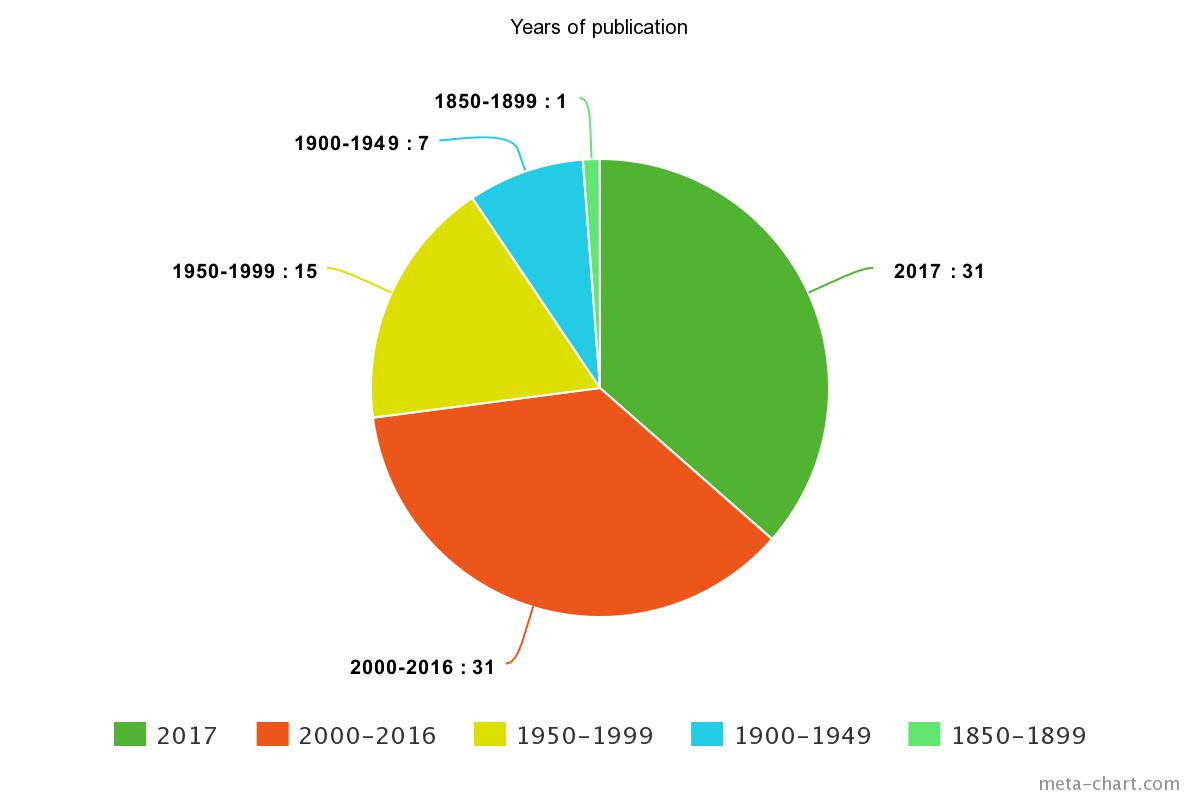
Publication dates of books read in 2017

This category shows a similar pattern to last year, with most of the historical fiction I’ve read being published in the 21st century. However, this year I have only read one historical fiction novel published earlier than 1900 – The Red Sphinx by Alexandre Dumas.

~

9.6% of my historical reads in 2017 were historical mysteries.

Three historical mysteries I’ve enjoyed reading this year:
The Coroner’s Daughter by Andrew Hughes
Heartstone by CJ Sansom
Soot by Andrew Martin

~

I’ve read historical fiction set in 21 different countries this year.

Like last year, nearly half of the historical novels I’ve read have been set in my own country, followed by France and Italy again. However, I have increased the number of different countries I’ve read about from 13 to 21 and hope to continue improving on this in 2018.

Three books I’ve read not set in England:
Salt Creek by Lucy Treloar (Australia)
Beneath a Burning Sky by Jenny Ashcroft (Egypt)
The Gustav Sonata by Rose Tremain (Switzerland)

~

Five historical men I’ve read about this year:

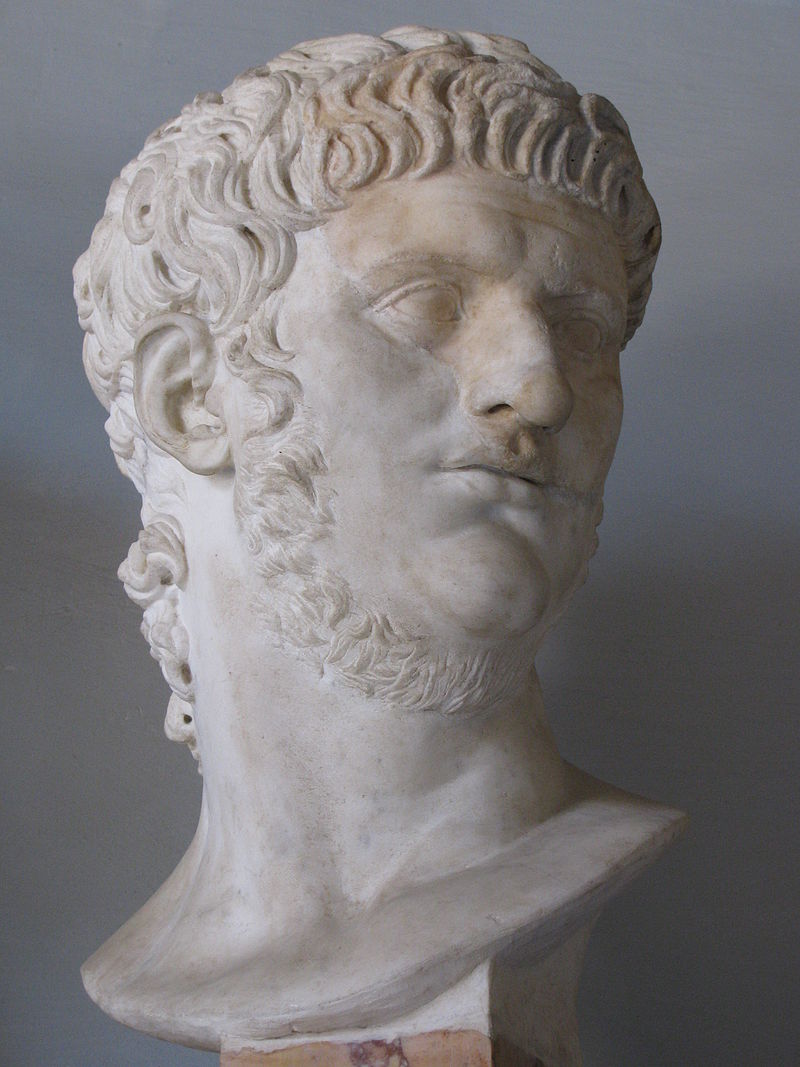
Nero

Jasper Tudor (First of the Tudors by Joanna Hickson)
Nero (The Confessions of Young Nero by Margaret George)
The Marquis de Montespan (The Hurlyburly’s Husband by Jean Teulé)
Somerled (The Winter Isles by Antonia Senior)
Thomas Keith (Blood and Sand by Rosemary Sutcliff)

~

Five historical women I’ve read about this year:

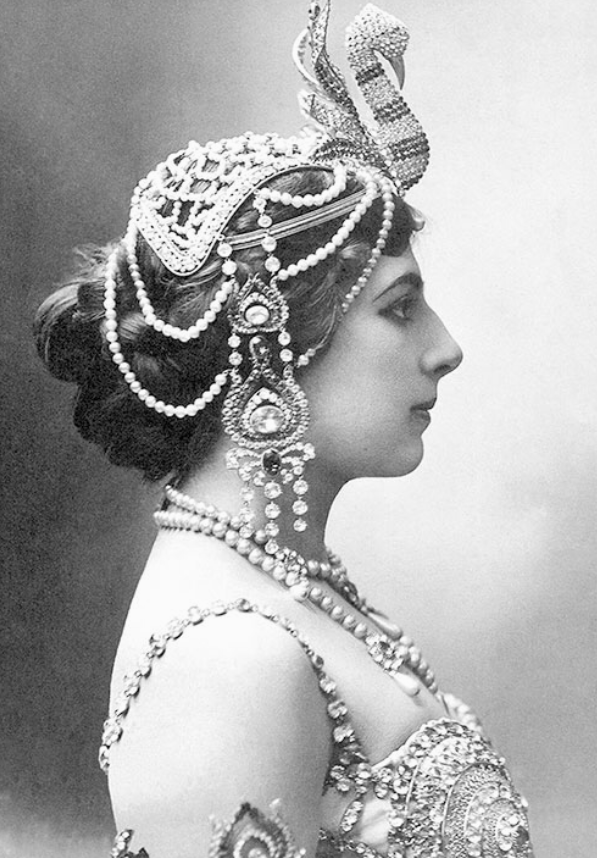
Mata Hari

Marie Antoinette (The Empress of Hearts by E Barrington)
Joan of Kent (The Shadow Queen by Anne O’Brien)
Lucrezia Borgia (The Vatican Princess by CW Gortner)
Mata Hari (Mata Hari by Michelle Moran)
Mary Seton (The Queen’s Mary by Sarah Gristwood)

~

What about you? Have you read any good historical fiction this year? Have you read any of the books or authors I’ve mentioned here?

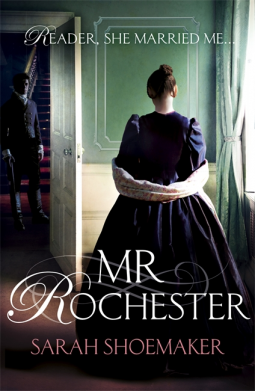
Mr Rochester by Sarah Shoemaker

As I’m not usually a fan of sequels, prequels or retellings of classic novels, I wondered if I was making a mistake in reading Mr Rochester, a book which, as you have probably guessed, is inspired by Charlotte Brontë’s Jane Eyre. However, I’ve always found Mr Rochester an interesting character and the premise of this novel was intriguing enough to tempt me. And I enjoyed it more than I thought I would; the first few sections of the book are excellent – but the last part doesn’t work as well, for reasons I’ll explain shortly.

In Jane Eyre, we meet Edward Fairfax Rochester at his home, Thornfield Hall, where Jane has come to take up a position as governess. We do learn a little bit about his family background and his life before Jane, but is it enough for us to fully understand what made him the man he is? I’ve never thought so and clearly Sarah Shoemaker didn’t either because in Mr Rochester she takes us back to Edward’s childhood to explore the people and events that may have shaped his character and formed the man who will eventually fall in love with Jane Eyre.

At the beginning of Shoemaker’s novel, Edward is a lonely little boy who is largely ignored and neglected by his father and older brother Rowland. At the age of eight he is sent away to be educated, along with two other boys, at the home of his tutor, and although at first he is heartbroken at having to leave his beloved Thornfield Hall the friendships he forms at school will have a big influence on his life. On the rare occasions when he is reunited with his family, he receives no love or affection at all, yet it is clear that his father has not forgotten him and has his future all mapped out. Edward ends up in Jamaica where he takes over the management of the Rochester plantation, Valley View – and is pushed into marriage with the beautiful Bertha Mason, the woman who will become Brontë’s famous ‘madwoman in the attic’.

I really enjoyed the first two thirds of the book, covering the period described in my previous paragraph. This is the part of Rochester’s life Charlotte Brontë didn’t tell us about – at least not in any detail – so Shoemaker is free to use her imagination. I loved reading about Edward’s early childhood, his schooldays and his apprenticeship in a mill; this could have been the basis of an interesting piece of Victorian historical fiction in itself, even without the Jane Eyre connection. The Jamaican chapters are compelling too. There are some similarities with Wide Sargasso Sea by Jean Rhys, but this time our sympathies are intended to be with Mr Rochester as well as with Bertha. Shoemaker’s Rochester does his best for Bertha under difficult circumstances and I found him a more likeable character than both Rhys’s Rochester and Brontë’s…until the point where he returns to Thornfield and meets Jane Eyre.

The rest of the novel – about a third of the book – is a fairly straightforward retelling of Jane Eyre, written from Rochester’s perspective instead of Jane’s. This is where things start to fall apart, in my opinion. Shoemaker puts Brontë’s words directly into the mouths of Rochester and Jane rather than her own – and although she has written in a suitably ‘Victorian’ style throughout the novel, her writing is obviously not the same as Brontë’s, which means the sudden change in the dialogue feels unnatural and uncomfortable. I think I would have preferred her to have simply followed the broad outline of the Jane Eyre plot instead of trying to stick to it rigidly.

The Mr Rochester for whom I’d gained so much sympathy earlier in the book, the quiet, lonely, obedient little boy whose life paralleled Jane’s in so many ways, the insecure man pushed into a career and a marriage not of his own choosing and who longed for nothing more than to go home to Thornfield Hall – that man is gone and I had trouble believing that Shoemaker’s Rochester would behave the way he does in the final section of the book; the whole Blanche Ingram storyline feels out of character, for example.

In other words, if this had just been an original novel inspired by Jane Eyre and set in the Victorian period I would probably have loved it; it was the retelling of the familiar Brontë plot that I didn’t find entirely successful. I didn’t feel that this book really added to or changed my feelings about Jane and Mr Rochester, but there were enough things that I liked about it to make it an enjoyable read anyway.

Thanks to Headline Review for providing a copy of this book for review via NetGalley.

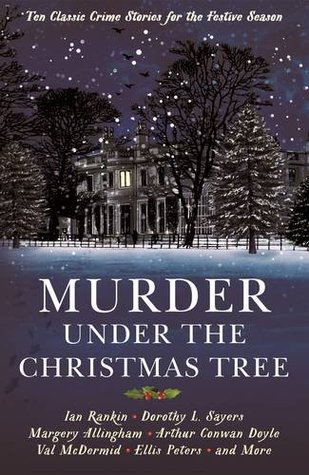
Murder Under the Christmas Tree, edited by Cecily Gayford

Murder Under the Christmas Tree contains ten stories by a variety of crime authors, all with a Christmas theme or set during the festive period. I don’t often choose to read short story collections (although I seem to have read more of them this year than ever before, so maybe that is beginning to change) but I picked this one up in the library a few weeks ago because I was intrigued by the mixture of authors – some modern, some classic, some that I was familiar with and some that I wasn’t.

I’m never sure of the best way to write about books like this, but as there are only ten stories I think I should be able to give all of them a brief mention. The book opens with The Necklace of Pearls, a Lord Peter Wimsey mystery by Dorothy L. Sayers, one of the five authors in the collection I had read before. The story involves a search for a valuable pearl necklace which goes missing as a party of guests gather to celebrate Christmas. I always like Sayers’ writing, but this particular story is not very strong and not a great start to the book, in my opinion. It is followed by The Name on the Window by Edmund Crispin, a locked room mystery set in winter and featuring his detective Gervase Fen. Crispin is another author I have previously read – I highly recommend The Moving Toyshop if you haven’t read it yet – and again, this story is not the best example of his work but it’s still enjoyable and I didn’t guess the solution.

Now we come to one of the authors who were new to me: Val McDermid. Yes, there are some huge gaps in my reading when it comes to more recent crime fiction! A Traditional Christmas is a short and simple murder mystery with a nice twist at the end. I really liked this one, although it felt odd coming straight after Sayers and Crispin – especially as the next story is an even older one: The Adventure of the Blue Carbuncle by Arthur Conan Doyle. This is a classic Sherlock Holmes mystery involving a Christmas goose and a precious jewel. I feel sure I must have read it before, but I couldn’t remember it at all!

The Invisible Man is next: a Father Brown mystery by GK Chesterton. I first encountered Father Brown in a British Library Crime Classics anthology I read earlier this year (Miraculous Mysteries), but I enjoyed this story much more than that one. It made me think about the things we never notice and the things that we do! This is followed by another modern story, Cinders by Ian Rankin. During rehearsals for a performance of Cinderella, the Fairy Godmother is found dead and Rankin’s detective Rebus is called in to investigate. I have never read anything by Ian Rankin before and although there was nothing wrong with this story, I don’t think he’s an author for me.

The next two stories are my favourites. The first, Death on the Air by Ngaio Marsh, is a fascinating story set during the early days of radio. On Christmas morning, ‘Septimus Tonks was found dead beside his wireless set’, presumably having been electrocuted – but was it an accident or was it murder? This is my first introduction to Marsh’s work, but I would love to read more. The next story, Persons or Things Unknown, is by Carter Dickson, a pseudonym of John Dickson Carr. A host entertains his house guests with an atmospheric tale of murder set in the 17th century. I loved it – and again, I will be looking for more by this author.

The penultimate story in the book is Margery Allingham’s The Case is Altered. It’s an Albert Campion mystery and while I had hoped it would be one of the highlights of the book, I found it quite forgettable. The last story, The Price of Light by Ellis Peters, was good but felt out of place in this collection, being a Brother Cadfael mystery set in 1135. I’ve never read anything by Peters before and I liked this enough to want to try one of her full-length Cadfael novels.

This is an uneven collection, then, and I don’t think the mixture of Golden Age, historical and contemporary mysteries really worked. I’m pleased I read it, though, if only because it has given me my first taste of Ngaio Marsh, John Dickson Carr and Ellis Peters. Another book in this series, Murder on Christmas Eve, also edited by Cecily Gayford, has just been published and seems to include many of the same authors.