My favourite books of 2017

With only two days left of 2017, I think it should be safe to post my books of the year list now. I always enjoy putting this post together, looking back over my reading year and picking out favourites. As usual, the list I’ve come up with is a long one, though not as long as some from previous years! I’ve also given a special mention to some books which didn’t quite win a place on the list – and re-reads have their own separate section this year too.

Here they are, in the order that I read them:

~
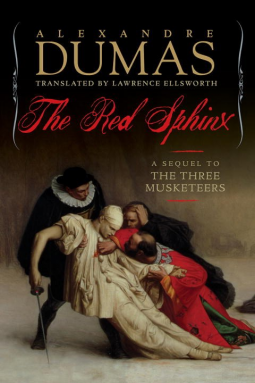
The Red Sphinx by Alexandre Dumas (1865)

From my review: “Well, it may be only January but I think I already know one book which will be appearing on my books of the year list this December! Bearing in mind that this is a later Dumas novel, written towards the end of his career on the urging of his publishers, I was pleased to find, almost as soon as I started reading, that it was living up to my expectations!”

The Red House Mystery by AA Milne (1922)

From my review: “I had always thought of A.A. Milne solely as the author of the Winnie the Pooh stories and it had never occurred to me to wonder what else he had written. It turns out that The Red House Mystery, originally published in 1922, was his first and only detective novel – which is a shame, because it’s excellent.”

His Bloody Project by Graeme Macrae Burnet (2015)

From my review: “I loved His Bloody Project; although it’s not a traditional crime novel and there’s never any mystery surrounding the identity of the murderer, it’s the sort of book that leaves you with more questions at the end than you had at the beginning.”

Lost Horizon by James Hilton (1933)

From my review: “I’m very happy with the way my reading is going so far this year. I’ve read some great books already and this is another one…It’s a fascinating story and very absorbing – I started it on a Saturday and was finished by Sunday; at just over 200 pages it’s a quick read but also the sort of book that leaves the reader with a lot to think about after the final page is turned.”
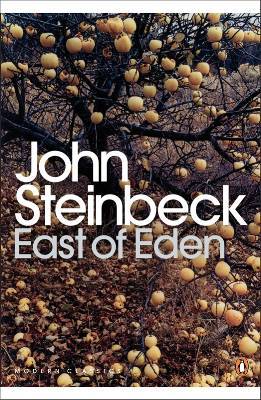
East of Eden by John Steinbeck (1952)

From my review: “I found East of Eden a surprisingly compelling read; I honestly hadn’t expected to love it as much as I did or to find myself wanting to turn the pages so quickly. I now feel much more enthusiastic about reading more Steinbeck…”

Golden Hill by Francis Spufford (2016)

From my review: “I would like to tell you more about the plot of Golden Hill, but I’m limited as to how much I can say without spoiling things for future readers. I think it’s enough to say that it’s a hugely entertaining story involving duels, card games, imprisonments and a chase across the rooftops of New York…There’s so much to love about this unusual, imaginative novel.”
Wintercombe by Pamela Belle (1988)

From my review: “Although I was looking forward to reading it, I have to admit that after being so captivated by the adventures of the Heron family, I doubted whether I could possibly enjoy this book as much. Of course, I was wrong. What I found was another beautifully depicted setting, another moving story to become absorbed in and another set of characters to fall in love with (or to hate, as the case may be).”

I also loved the second book in the Wintercombe series, Herald of Joy.
They Came to Baghdad by Agatha Christie (1951)

From my review: “This book is not one of Christie’s Poirot or Miss Marple mysteries – it’s a standalone and actually much more of a spy novel or thriller than a mystery. With an exciting plot involving kidnappings, conspiracies, impersonations, disguises and secret messages, I found it a lot of fun to read – one of those books I genuinely didn’t want to have to put down until I was finished!”
The Wild Air by Rebecca Mascull (2017)

From my review: “This wonderful story of a young woman with a passion for aviation is the first book I’ve read by Rebecca Mascull, but I enjoyed it so much I will certainly be going back to read her previous two novels. Set in the Lincolnshire town of Cleethorpes in the first two decades of the 20th century, The Wild Air is both fascinating and inspirational, with a heroine I loved and connected with immediately.”
Towers in the Mist by Elizabeth Goudge (1937)

From my review: “Not all of Goudge’s novels are historical, but it’s the historical ones that I’ve been drawn to first. Towers in the Mist is set in Oxford in the Elizabethan period and, like the other two I’ve read, it’s a truly beautiful novel.”

Song of the Sea Maid by Rebecca Mascull (2015)

From my review: “Song of the Sea Maid is a wonderful exploration of what it was like to be a woman trying to forge a career in science in a period when it was not considered normal or socially acceptable to do so…There’s really nothing negative I can say about Song of the Sea Maid; even the use of first person present tense, which I often dislike, didn’t bother me – in fact, I barely noticed it because I found Dawnay’s voice so strong and real.”
The Liveship Traders trilogy by Robin Hobb (Ship of Magic; The Mad Ship; Ship of Destiny)

From my review: “Having become quite attached to the characters and swept away by the story over the course of the three novels, I’m sorry to have come to the end..I loved the world Robin Hobb created here and I was impressed by her ability to handle multiple storylines and keep track of who knows what! Also, as someone who doesn’t read a lot of fantasy, I found the dragon element fascinating.”

The Wonder by Emma Donoghue (2016)

From my review: “This is a fascinating exploration of the harm that can be done, often unintentionally, by superstition and a lack of understanding and the basic knowledge we take for granted today. I thought The Wonder was…well, wonderful. Highly recommended!”
Long Summer Day by RF Delderfield (1966)

From my review: “Long Summer Day is one of my books of the year so far, without a doubt. It’s written in the sort of warm, comforting, old-fashioned style that I love, and despite its length I felt that the pages were going by very quickly because I was so absorbed in the lives of Paul and his friends – it’s one of those books where you truly feel as though you’ve escaped into another world for a little while!”

Soot by Andrew Martin (2017)

From my review: “You know when you can tell as soon as you start reading that you’re going to enjoy a book? That’s how I felt about Soot, Andrew Martin’s new historical mystery set in 18th century York. The plot, the characters, the atmosphere, the writing style…I loved them all!”
Shadow of the Moon by M.M. Kaye (1957)

From my review: “Whether or not the romance captures your imagination, though, I think there should be something in this novel to interest most readers…the fascinating historical background, the colourful portrait of another time and place or maybe the adventure (plenty of daring escapes, disguises, ambushes and secret meetings by moonlight). I loved it.”

~

Three of my reads this year were re-reads…and I loved all three:

Wuthering Heights by Emily Brontë (1847)
Rebecca by Daphne du Maurier (1938)
The Count of Monte Cristo by Alexandre Dumas (1844)

~

And these books deserve a special mention too:

The Bear and the Nightingale by Katherine Arden (2017)
A Gentleman in Moscow by Amor Towles (2016)
Under the Hog by Patrick Carleton (1937)
Conclave by Robert Harris (2016)
The Essex Serpent by Sarah Perry (2016)
Dead Woman Walking by Sharon Bolton (2017)
Chocky by John Wyndham (1968)
Lament for a Maker by Michael Innes (1938)
Voice of the Falconer by David Blixt (2010)

~

Have you read any of these books? Which books have you enjoyed reading in 2017?
Voice of the Falconer by David Blixt

This is the second volume in David Blixt’s Star Cross’d series, combining the history and politics of 14th century Italy with characters and storylines inspired by Shakespeare. I read the first novel, The Master of Verona, in 2012 and it won a place on my ‘books of the year’ list that year, which gives you an idea of how much I loved it. I really hadn’t meant to let so much time go by before continuing the series, and I worried that I might have trouble picking up the threads of the story again, but as soon as I started to read Voice of the Falconer things fell back into place and I felt as if only five days had passed since reading the first book rather than five years!

Voice of the Falconer opens in 1325, eight years after the events described in The Master of Verona. Pietro Alaghieri, son of the late poet Dante, has been living in exile in Ravenna, entrusted with the guardianship of the illegitimate heir of Cangrande della Scala, the ruler of Verona. The child, Cesco, has already been the target of several assassination attempts so it has been decided that he should be raised in secret, with as few people as possible aware of his location. When news of Cangrande’s death begins to circulate, however, Pietro must hurry back to Verona to ensure that the eleven-year-old Cesco receives his rightful inheritance – but as other members of the della Scala family also have their eyes on the throne of Verona, this won’t be an easy task. And now that Cesco’s existence has been revealed, his life could be in danger again…

Cesco, who was only a baby in the previous novel, has developed into a wonderful character – even if you do need to suspend disbelief to accept that a boy of his age could be so intellectually advanced, quick-witted and talented in every way! I loved the little circle of friends and protectors who surround him, too: Morsicato the doctor, Antonia the nun, Tharwat the Moor and, of course, Pietro himself. The characters in the novel are a mixture of those who are fictitious and those who are based on real historical figures, such as Cangrande and the rest of the Scaligeri family. If you don’t know the history, I would recommend not looking things up until you’ve finished the book; if you just let the story carry you along, there will be one or two surprises in store for you as there were for me.

I won’t say too much more about the plot, then, but I do need to mention another very important aspect of the book…the Shakespearean connection. In The Master of Verona we witnessed the beginnings of a feud between Pietro’s two friends, Mariotto Montecchio and Antonio Capulletto. In this book, we meet Mariotto’s young son Romeo and Antonio’s baby daughter Giulietta (Juliet), as well as Giulietta’s cousin Thibault (Tybalt); obviously there is still a long way to go before the tragedy of the star-cross’d lovers is played out, but the foundations of the story have now been laid. I also had fun spotting other characters from Shakespeare’s plays such as Shalakh (Shylock) from The Merchant of Venice and Petruchio and Kate from The Taming of the Shrew, but if you have no knowledge of Shakespeare I don’t think it would be a problem at all – it’s just another of the novel’s many layers.

In case you can’t tell, I enjoyed this book as much as the first one! I am looking forward to visiting Renaissance Italy again soon with the third in the series, Fortune’s Fool…and certainly won’t be waiting five years this time.

Death Comes for the Archbishop by Willa Cather

This is the first book I’ve read from my new Classics Club list and my third by Willa Cather. I’m grateful to the recent Classics Spin for choosing it for me because although I do like Cather’s writing I seem to need something to push me into picking up her books. This one could have lingered on my list for a long time otherwise, which would have been a shame as once I started reading it I loved it. It’s certainly my favourite of the three I’ve read so far (the others are The Professor’s House and My Ántonia).

Death Comes for the Archbishop is set in the nineteenth century and follows the stories of Bishop Jean Marie Latour and his friend Father Joseph Vaillant, two French missionaries who have been sent into the newly formed diocese of New Mexico – territory which has recently been acquired by America. As they begin their work of spreading their faith to the people of New Mexico, they face a number of challenges. The landscape, although beautiful, is harsh and often inhospitable; the railroad has not yet arrived so travel must be by mule over difficult terrain. When they do eventually reach other settlements, they are disappointed to find that the Catholic priests already established in these communities are, in most cases, not suitable for the job. They are either corrupt, greedy, too powerful, too weak or insufficiently devoted to their religion.

It is the task of Father Latour, with the help of Father Vaillant, to decide how to tackle these problems, while also learning to love his new home and getting to know the people who have lived there for generations. These include not only Americans and Mexicans, but also the Hopi, Navajo and other Native American people, whom Cather writes about with sensitivity and sympathy. Each group have their own customs, traditions, stories, histories and superstitions and as all of these things are new to the Bishop and his friend, the reader is able to learn along with them.

I have never been to New Mexico so as I read I found myself turning to Google for images of the deserts and hills, mesas and pueblos, plants and trees that are mentioned in the novel. After Latour visits the pueblo of Acoma and hears about the legend of the Enchanted Mesa, for example, I wanted to see what it would be like to live in such a harsh and isolated location. Cather writes beautifully about the New Mexico landscape; her use of colour is wonderful, helping to bring her descriptions to life. Here is the moment when Latour arrives at Santa Fé for the first time:

As the wagons went forward and the sun sank lower, a sweep of red carnelian-coloured hills lying at the foot of the mountains came into view; they curved like two arms about a depression in the plain; and in that depression was Santa Fé, at last! A thin, wavering adobe town…a green plaza…at one end a church with two earthen towers that rose high above the flatness. The long main street began at the church, the town seemed to flow from it like a stream from a spring. The church towers, and all the low adobe houses, were rose colour in that light,–a little darker in tone than the amphitheatre of red hills behind; and periodically the plumes of poplars flashed like gracious accent marks,–inclining and recovering themselves in the wind.

My favourite aspect of the novel is the relationship between Bishop Latour and Father Vaillant. The two men have known each other since they were students together at the seminary in France and I found the depiction of their friendship very moving, particularly later in the book when Father Vaillant has the chance to take up a new mission far away; the Bishop, who can’t bear to lose his companionship, must decide whether to keep his friend with him for selfish reasons or to let him go and give him the chance to develop his own career elsewhere and carry out the work which will make him happy. The characters are based on real historical figures – Jean-Baptiste Lamy and Joseph Projectus Machebeuf – but I like the names Cather has chosen for them. Vaillant, meaning ‘valiant’, is perfect for Joseph, who is brave and energetic, warm and friendly, while Latour (‘the tower’) is quieter and more reserved, finding it more difficult to open up and make friends. Their different qualities, different strengths and weaknesses are what make them such a successful partnership.

Death Comes for the Archbishop has no real plot, being more a series of little stories and vignettes spread across a number of years and describing the various experiences Latour and Vaillant have as they travel around the New Mexico diocese. I do prefer novels that strike a balance between the plot-driven and the character-driven, but I still thoroughly enjoyed this book – it got my new Classics Club journey off to a great start! I’m looking forward to reading more Willa Cather and I think the next one I pick up will be either Shadows on the Rock or A Lost Lady.

~

Book 1/50 from my second Classics Club List

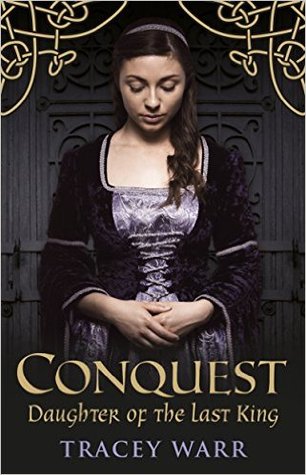
Conquest: Daughter of the Last King by Tracey Warr

One of the things I love about historical fiction is having the opportunity to read about historical figures I previously knew nothing at all about. Nest ferch Rhys, daughter of the last king of Deheubarth in Wales, certainly falls into that category, so when I was offered review copies of the first two books in Tracey Warr’s Conquest trilogy, of course I said yes!

Daughter of the Last King opens in 1093. The twelve-year-old Nest is playing on the beach with her brother when she is captured by Norman invaders who inform her that her father has been killed in battle at Aberhonddu. Taken by her captors to Cardiff Castle, Nest is placed in the household of Sybil de Montgommery, a member of a powerful Norman family who have been granted lands and titles in Wales. Although Nest has every reason to despise the Montgommery family and all they stand for, she quickly finds herself warming towards Sybil, who has been given the job of overseeing her education and training. The plan is that Nest will one day marry Sybil’s brother, Arnulf de Montgommery – but what about her existing betrothal to the Welsh prince, Owain?

Nest’s story takes place during a troubled and eventful time in the histories of England, Wales and Normandy. William the Conqueror has died and his lands have been divided, with his eldest son, Robert Curthose, inheriting Normandy and the throne of England going to a younger son, William Rufus. The two are rivals and the nobility, particularly those with land in both England and Normandy, are forced to choose between them. Sybil’s husband and her Montgommery brothers have each decided where their loyalties lie, but will they have made the right choice?

Although I have read quite a few novels set just before and during the Norman Conquest of 1066, I have read very little about the period following this – the late eleventh and early twelfth centuries. Tracey Warr goes into a lot of detail regarding the politics of the period, the rebellions, the shifting loyalties and betrayals, so that by the time I finished the book I felt that I had learned a lot. There is some overlap with the knowledge I gained from another recent read, Alison Weir’s Queens of the Conquest, but otherwise most of this was new to me. In particular, I found the focus on Welsh history interesting, especially the contrast between the Normans’ relatively quick and successful conquest of England and their attempts to conquer Wales.

Due to my unfamiliarity with so much of the history covered in this novel, I was relieved to see that the author had included some very useful material at the front of the book: genealogies for the Welsh royal families, Anglo-Norman royal family and Montgommerys; maps of eleventh century Wales, England and Normandy; and a plan of Cardiff Castle. I resisted the temptation to look anything up online because, with my complete lack of knowledge of Nest ferch Rhys and her story, I didn’t want to find out too much in advance. There was some suspense involved in waiting to see who – and whether – she would eventually marry, and I didn’t want to spoil the surprise for myself.

The one aspect of the book I’m not sure I liked was the inclusion of journal entries and letters written by a fictitious nun, Sister Benedicta, and her brother, a knight called Haith. These characters do serve a purpose in the novel, providing us with information on events which are unknown to Nest, but personally I found them a bit distracting and would have preferred to focus solely on Nest. She is such an interesting character and, although Tracey Warr points out in her author’s note that there is a limit to how much we know for certain about the real Nest, I did enjoy getting to know her. I’m looking forward to finding out how the story continues in the second part of the trilogy, The Drowned Court.

Thanks to Impress Books for providing a copy of this novel for review.

~

I would like to take this opportunity to wish you all a Merry Christmas! I’ll be back soon with my books of the year, my December Commonplace Book and maybe another review or two before New Year.

Some challenges for 2018: What’s in a Name? and Historical Fiction

It’s that time of year again when bloggers are making plans for next year’s reading and when reading challenges for 2018 are being announced. I don’t take part in many challenges these days, but there are two that I’m interested in for next year.

The first is a challenge which I used to enjoy but haven’t participated in since 2014. This is the What’s In A Name? challenge, hosted by Charlie of The Worm Hole. The challenge involves reading one book from each of six categories during 2018. I like the sound of the categories Charlie has chosen for us for next year, so I thought it would be fun to join in.

I have listed the categories below, followed by one or two possibilities. I don’t really want to be adding more books to my TBR so I’m going to try to choose from books that I already own.

    • The word ‘the’ used twice (The Girl in the Tower by Katherine Arden; The Girl in the Photograph by Kate Riordan)
    • A fruit or vegetable (The Grapes of Wrath by John Steinbeck)
    • A shape (Bleeding Heart Square by Andrew Taylor )
    • A title that begins with Z (Zofloya, or The Moor by Charlotte Dacre)
    • A nationality (The English Girl by Katherine Webb; The Japanese Lover by Isabel Allende, The Scottish Chiefs by Jane Porter)
    • A season (The Winter Prince by Cheryl Sawyer; The Corn King and the Spring Queen by Naomi Mitchison; The Thousand Autumns of Jacob de Zoet by David Mitchell)
  • ~

    The second challenge I’m signing up for is one I like to partipate in every year, even though it’s not exactly a ‘challenge’ for me! The Historical Fiction Reading Challenge is hosted by Passages to the Past and has six different reading levels to choose from:

    20th Century Reader – 2 books
    Victorian Reader – 5 books
    Renaissance Reader – 10 books
    Medieval – 15 books
    Ancient History – 25 books
    Prehistoric – 50+ books

    As historical fiction is my favourite genre, I will be aiming for the Prehistoric level again in 2018.

    I will be keeping track of both of these challenges on this page.

    Will you be taking part in either of these?

Lincoln in the Bardo by George Saunders

It’s February 1862 and an eleven-year-old boy is dying, probably of typhoid fever. After his death, he is interred in a crypt at Oak Hill Cemetery in Georgetown. Unable to accept that he has lost his beloved son, the boy’s father enters the crypt on several occasions to hold the body and grieve. The boy’s name is Willie Lincoln and his father is Abraham, the sixteenth President of the United States.

According to author George Saunders this is a true story, reported in contemporary news accounts at the time, and is what inspired him to write Lincoln in the Bardo, a novel which won the 2017 Man Booker Prize. I don’t always get on well with Booker novels and I wasn’t at all sure whether it was a good idea for me to read this book, but it sounded so unusual and intriguing that when I saw it in the library I couldn’t resist.

The first thing to consider is the meaning of that word in the title – ‘bardo’. In Tibetan Buddhism, bardo is the transitional state between death and rebirth. It is portrayed in Saunders’ novel as a sort of limbo inhabited by the ghosts of people who either aren’t aware that they are dead or won’t admit to it, and for one reason or another have not yet moved on. This is where Willie Lincoln finds himself following his death and is unable to leave because his father is not ready to let go. The other spirits are worried about Willie – they know the bardo is no place for a child to linger – but they also have stories of their own, which slowly begin to unfold as the novel progresses.

The next thing – a very important thing – that I need to mention is the writing style, because Lincoln in the Bardo is not written in conventional prose. Instead, it takes the form of a cacophony of voices, all speaking up, giving their opinions, interrupting each other and completing each other’s sentences. It looks a bit daunting on the page, with short fragments of dialogue accompanied by the speaker’s name, but approaching it as if I were reading a play made it feel easier to follow. I don’t usually listen to audiobooks, but I think this particular novel would be a good one to listen to. Apparently the audio version has 166 narrators!

As well as the conversations taking place in the bardo, there are also some chapters made up of quotations from a selection of primary and secondary sources including letters, memoirs and academic accounts. These provide us with some background information on Abraham Lincoln and the period before and after Willie’s death. The sources looked authentic, but I later discovered that although some of them are real, others are fictional – and there is no easy way to tell which ones are which. This bothered me slightly, but probably won’t bother everyone! What I did like was the way Saunders uses these quotations to illustrate the unreliability of sources and the importance of looking at more than one account of the same event. For example, a chapter describing Lincoln’s appearance gives one source saying that his eyes are “gray-brown”, followed by another stating that they are “bluish-brown” and another simply “blue”.

I would say this was a love it or hate it type of book – except that for me it was a bit of both! There is no doubt that it’s wonderfully creative, imaginative and original, with a lot to admire and enjoy, but my initial feeling that this wasn’t really a book for me proved to be correct. I have never been much of a fan of experimental styles and structures; I find that I get distracted from the story and am unable to become fully absorbed in the way that I prefer. Maybe for that reason, I didn’t find the book as emotional as I would have expected given the subject – although other readers have described it as moving and heartbreaking, so it’s probably just me. I’m glad I read it though, as I would have been curious about it forever otherwise! If you’ve read it too, I would love to hear what you thought.

The Stolen Marriage by Diane Chamberlain

Diane Chamberlain is not an author I have ever thought about reading, but when I unexpectedly received a review copy of her new book, The Stolen Marriage, from the publisher a while ago I was intrigued. The setting and the plot both sounded appealing and I decided that it would be worth at least giving it a try to see what it was like.

Our narrator is Tess DeMello and as the novel opens in 1944 it seems that she has her future all planned out. She is engaged to the man she loves – Vincent Russo, a newly qualified doctor – and she is about to take the final exams that will enable her to become a registered nurse. Things begin to go wrong when Vincent volunteers to help with a polio epidemic in Chicago and stays away for longer than expected. Feeling lonely and neglected, Tess agrees to join her best friend Gina for a weekend trip to Washington, where one thing leads to another and she finds herself pregnant by another man.

Convinced that Vincent will want nothing more to do with her, Tess goes in search of her baby’s father, Henry Kraft, the wealthy owner of a furniture company in Hickory, North Carolina. All she wants from Henry is enough money for somewhere to live and to provide for the child when it is born, so she gets a big surprise when he asks her to marry him. Thinking about the baby’s future, Tess agrees and soon she is part of the Kraft family, living in their luxurious home in Hickory.

Life in Hickory brings new challenges for Tess, however. She quickly discovers that, although Henry is not unkind, her marriage is a loveless one. Worse, she is unable to trust her new husband. Why is he hiding money from her and where does he disappear to in the middle of the night? And worst of all, Tess finds it impossible to fit in with Henry’s family and friends. His mother and sister seem to hate her – and make no secret of their hatred – but Tess isn’t sure why. Is it just that, with her Italian background and her desire to work for a living, they don’t consider her good enough for Henry – or could there be another reason for their resentment?

It took me a few chapters to really get into The Stolen Marriage, but after that the pages flew by. I was kept in suspense wondering what Henry’s secret could possibly be and although there were plenty of clues I still didn’t guess correctly! Tess didn’t understand what was happening either and I had nothing but sympathy for her as she tried to come to terms not just with the destruction of her old life but the awareness that her new one was built around lies and deceit. However, I struggled to understand some of the choices she made and I felt that her actions (and the actions of other characters) were sometimes contrived to move the story forward rather than feeling like the natural way she would have behaved. There were a few unconvincing plot twists and developments near the end of the novel too, but although this was slightly disappointing it didn’t spoil my enjoyment of the novel too much. There were so many other things to love.

I particularly enjoyed the insights into what it may have been like to live in a small town in North Carolina in the 1940s. Having moved from an Italian neighbourhood in Baltimore, Maryland, Tess experiences a culture shock when she arrives in Hickory. Her husband’s family and friends are prejudiced, narrow-minded snobs who make Tess feel very uncomfortable, finding fault with her looks, her clothes, her opinions and her family background. Racial tensions are also high in the town and this aspect is explored through the story of a black family who work as servants in the Kraft household. Of course, there are good and bad people everywhere and in all walks of life, which Tess discovers when the polio epidemic reaches Hickory and the community must pull together to build and staff a new hospital in record time.

The building of the hospital is based on a true historical event (you can find out more by searching online for ‘the Miracle of Hickory’); I had never heard about this before, so I found that section of the novel fascinating! As the story is set in 1944, it was also interesting to read about the impact of World War II on the people of Hickory, with rationing in place and families waiting anxiously for news of sons, husbands and brothers fighting overseas. I loved the glimpse this book gave me into another time and place and although I’m not sure whether this is typical of Diane Chamberlain’s novels, I will certainly be looking for more of her books in the future.

Thanks to Macmillan for providing a copy of this novel for review.