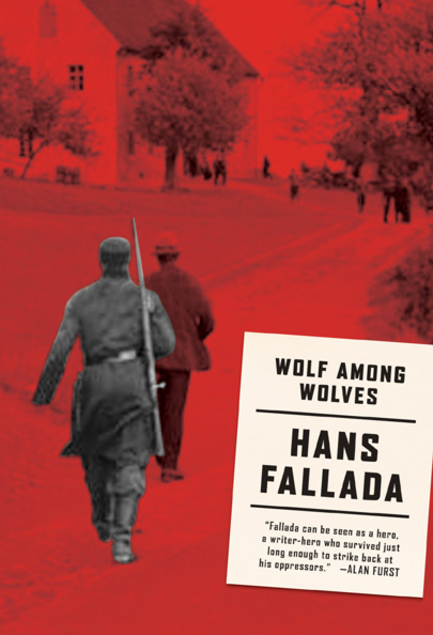
Wolf Among Wolves by Hans Fallada

This month Caroline of Beauty is a Sleeping Cat and Lizzy of Lizzy’s Literary Life are hosting their annual German Literature Month. I thought this would be a good opportunity to read a German novel which has been on my TBR for years: Wolf Among Wolves by Hans Fallada. So far my experiences with Fallada’s work have been mixed: I was disappointed with A Small Circus, but loved Little Man, What Now? and Alone in Berlin. I had been putting off reading this book because of the length (800 pages), but now that I’ve finally read it, I’m pleased to say that I enjoyed it much more than A Small Circus, although not as much as the other two.

Wolf Among Wolves is set in Germany in 1923. With the country’s economy still suffering in the aftermath of the recent world war, hyperinflation means that prices are spiralling out of control and the currency is rapidly becoming worthless. As the novel opens we are told that there are currently 414,000 German marks to the dollar; within months this figure has increased into the billions, causing misery and desperation for the German people.

“So many people are running away from their jobs,” went on Studmann. “To work, to do anything at all, has suddenly become idiotic. As long as people received a fixed tangible value at the end of the week or the month, even the most boring office job had some reason. But the fall of the mark has opened their eyes. Why do we live? they suddenly ask. Why are we doing anything? Anything at all? They don’t see why they should work merely to be paid in a few worthless scraps of paper.”

Wolfgang Pagel, our hero (if you can call him that), has never been good at managing money. He is a gambler and at the beginning of the novel we see him lose at roulette, meaning he has to postpone his wedding to his girlfriend, Petra Ledig. When Petra finds herself in trouble with the police after he takes her clothes to be pawned, leaving her on the streets with only an old coat to wear, she decides that this time she’s had enough. Wolf needs to change, and until he does she will refuse to see him or speak to him. And so they separate, Petra remaining in Berlin while Wolf heads out into the countryside to work on a friend’s farm.

I have only mentioned two of the novel’s characters so far, but there are many, many more and they all have fully developed storylines of their own. There’s Joachim von Prackwitz, still referred to by his military title of Rittmeister, who is leasing the country estate of Neulohe from his father-in-law and struggling to cope with his return to civilian life. There’s the Rittmeister’s teenage daughter Violet, whose lover is planning a putsch – a coup – against the Weimar government. There’s the estate bailiff, known as Black Meier, who loses his job and spends the rest of the novel thinking of ways to cause trouble for everyone at Neulohe. And there’s Etzel von Studmann, a hotel reception manager, who agrees to come and work for the Rittmeister following an embarrassing incident with a guest. These, and others, become Wolfgang Pagel’s new companions as he tries to build a new life for himself away from the temptations of the city, only to find that even the idyllic countryside is not free from corruption.

Fallada moves from character to character as he paints a portrait of life in the Weimar Republic and explores the impact of the First World War and the struggling economy on the fortunes of ordinary people. Over the course of the 800 pages we get to know them all very well; however, some are more interesting and more appealing than others, which makes this quite an uneven read. I was sorry that, after the opening chapters, we see very little of Petra – her relationship with Wolf and the question of whether they will be reunited was my favourite of the novel’s many storylines. Of the characters living at Neulohe, von Studmann was the only one I had any sympathy for; I found the others a selfish and unpleasant bunch. To be fair, though, I should have been prepared for that: Fallada warns us at the beginning of the book that his story “deals with sinful, weak, sensual, erring unstable men, the children of an age disjointed, mad and sick. All in all, it is a book for those who are, in every sense, adult.”

Wolf Among Wolves was first published in German in 1937 under the title Wolf unter Wölfen. I read an English translation from 1938 by Philip Owens, ‘with additional translations by Thorsten Carstensen and Nicholas Jacobs’. I found both the translation and the novel itself very readable. It’s probably not the best place to start with Fallada – Alone in Berlin (also published as Every Man Dies Alone) and Little Man, What Now? are my recommendations – but it’s definitely worth reading for the insights into 1920s Germany.
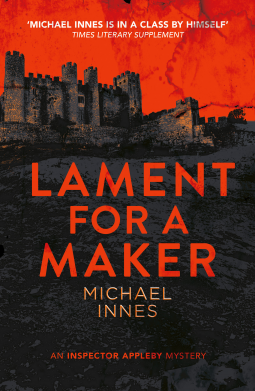
Lament for a Maker by Michael Innes

After reading Hamlet, Revenge! recently, I have been wanting to read more by Michael Innes, so I was pleased to find his next Inspector Appleby mystery, Lament for a Maker, available through NetGalley. Having read the previous book in the series I thought I knew what to expect from this one, but I was wrong – this book has a very different feel and structure and despite being published in 1938, it’s not a typical Golden Age mystery novel at all.

The title is taken from a 16th century Scottish poem by William Dunbar (the word maker, also spelled makar, means a poet or court poet). The Latin refrain Timor mortis conturbat me – fear of death disturbs me – is repeated throughout the poem and sets the tone for Innes’ novel.

This is such a complex, convoluted mystery it’s difficult to know where to begin, but the best place to start is probably with the crime itself – assuming that a crime has actually been committed, of course! Ranald Guthrie, the miserly laird of Erchany Castle has been killed falling from the ramparts of his own tower on a cold winter night, but was he pushed, was it an accident or could it have been a suicide attempt? If it was murder, then the culprit seems obvious: Neil Lindsay, the young man who wants to marry Ranald’s niece and whose family have been feuding with the Guthries for generations. There is much more to the situation than meets the eye, however, and as the story unfolds more suspects and possible scenarios begin to emerge.

The novel is written from the perspectives of five different characters who each take it in turns to narrate their part of the story. My favourite was the first, Ewan Bell, a shoemaker who lives in Kinkeig in Scotland. It is Ewan who sets the scene, introduces us to the other main characters in the novel and describes the events leading up to Guthrie’s death – all in his own distinctive voice, complete with plenty of Scots dialect!

“If an unco silence had fallen upon nature with the snow those weeks there were plenty of human tongues in Kinkeig to make good the deficiency. The less work always the more gossip, and there must have been even more claiking than usual about the meikle house.”

The second narrator is Noel Gylby, a young Englishman who appeared in Hamlet, Revenge! He is visiting Erchany Castle with his American girlfriend and immediately his narration (which takes the form of letters) has a very different feel from Ewan Bell’s:

“Diana darling: Leaves – as Queen Victoria said – from the Journal of my Life in the Highlands. Or possibly of my Death in the Lowlands. For I don’t at all know if I’m going to survive and I don’t know – I’m kind of guessing, as my girl-friend here says – where I am.”

And there are several more! Lots of authors have written books with multiple narrators but I haven’t come across many (apart from Wilkie Collins) who actually succeed in giving each narrator a unique voice of their own. This is one of the best attempts I’ve read for a while. It’s not just the style and structure which make this such an enjoyable novel, though; the mystery itself is also a good one, with twist following upon twist as the end of the book approaches.

As for Inspector Appleby himself, he doesn’t appear until two thirds of the way through the book when the mystery is already half solved and theories have been suggested. Although the novel is clearly set in the 1930s, there are times when both the story and the book itself feel as though they belong to a much earlier period (it reminded me very strongly of The Master of Ballantrae by Robert Louis Stevenson and it seems I’m not the only one to make that connection). This makes me wonder whether Innes may really have wanted to write a historical mystery but couldn’t as he needed to make it part of the Appleby series. That would explain why Appleby makes such a late appearance, almost as an afterthought.

Anyway, I loved this one. Thanks to Ipso Books for the review copy.

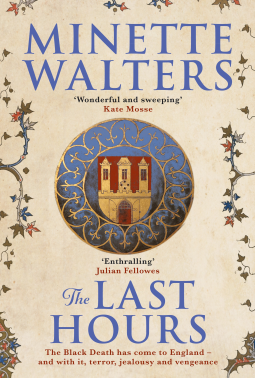
The Last Hours by Minette Walters

Yes, this is the same Minette Walters who is best known for her crime novels which include The Ice House and The Dark Room. I’ve never read any of those (at least I don’t think so – I did used to read a lot more crime than I do now so it’s possible I may have read one of her books and forgotten about it) but when I saw that her new book, The Last Hours, marked a change of direction from crime to historical fiction I was immediately interested!

The Last Hours is set in 1348 on the estate of Develish in Dorsetshire. Those of you who know your 14th century history will know that the Black Death, which had been sweeping its way across Europe, reached England in 1348 – and this forms the heart of Walters’ novel. Sir Richard of Develish falls victim to the plague early in the book, leaving his wife, Lady Anne, responsible for the demesne, the household and the serfs who work the land. Lady Anne gathers everyone inside the boundaries of the moated manor, believing that cutting off contact with the outside world will be the best way to avoid the pestilence.

With so many people forced to live together in a confined space, it is inevitable that problems will arise, old rivalries will resurface and tempers will be lost. The cause of most of the trouble at Develish is Sir Richard’s daughter, Lady Eleanor, a cruel and selfish fourteen-year-old who resents having to live with the serfs. In particular, her hatred is directed at Thaddeus Thurkell, a serf who has just been promoted to the position of Lady Anne’s steward, a move which Eleanor sees as evidence of her mother’s favouritism and unnatural affection for Thaddeus. When supplies at the manor begin to run low, it is Thaddeus who volunteers to venture out into the countryside to find food – but what is the real reason for his departure?

The Last Hours was an interesting read for me as I’ve always found the Black Death a fascinating topic (sorry if that sounds morbid). Walters explores so many different aspects of the disease: the beliefs and superstitions surrounding it; the physical effects it has on the body; the theories people had as to what was causing it; and the limited methods of preventing its spread. However, I knew as soon as I started reading that at some point our protagonists would make the connection with rats and fleas and recognise the importance of hygiene and cleanliness – and I was right. It would have been so much more convincing from a historical point of view if they had continued to think the plague was a punishment from God or that it was caused by breathing bad air.

I did like both Lady Anne and Thaddeus, even if they don’t always feel like believable 14th century people, and they (along with a young maid, Isabella) were certainly the characters I had most sympathy for. Lady Eleanor is the most unpleasant, unlikeable character I’ve come across for some time. She is horrible from her first appearance and remains horrible throughout the entire book – although we do eventually learn a little bit more about her and what possibly made her the way she is, so maybe we’ll see a different side of her in the sequel.

And yes, there is going to be a sequel. I had no idea this was the first in a series until I reached the words ‘to be continued’, so be aware that if you do choose to read this book it doesn’t have a proper conclusion and we are left with lots of loose ends. At the moment I’m not sure whether I will be looking for the second book; I found this one quite slow and unevenly paced – I enjoyed the chapters set in and around Develish, but struggled to stay interested in the adventures of Thaddeus and his companions as they wandered the countryside looking for supplies. I will probably be tempted, though, as I do have lots of questions that haven’t been answered!

Thanks to Atlantic Books for providing a copy of this book for review via NetGalley

The Classics Spin Number is…

4!

The result of the latest Classics Spin has been revealed today – and I’m happy with the book I’ll be reading!

The idea of the Spin was to list twenty books from my Classics Club list, number them 1 to 20, and the number announced by the club today (Friday) represents the book I have to read before 31st December 2017. The number that has been selected is 4, which means the book I need to read is…

Death Comes for the Archbishop by Willa Cather

I’m pleased with this as I’ve only read two books by Willa Cather so far and have been wanting to read more.

~

Did you take part in the Classics Spin? What will you be reading?

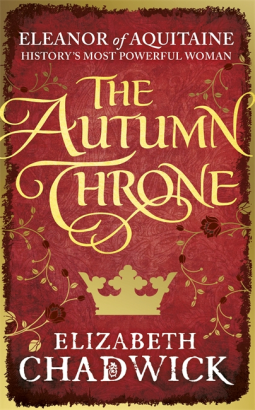
The Autumn Throne by Elizabeth Chadwick

This is the third part of Elizabeth Chadwick’s trilogy telling the story of Eleanor of Aquitaine in fictional form. I love Chadwick’s portrayal of Eleanor (or Alienor, as her name is spelled throughout the trilogy) and having enjoyed both The Summer Queen and The Winter Crown, I was hoping that The Autumn Throne would be just as good. As the title suggests, she is entering the ‘autumn’ of her life in this final novel but remains close to the throne in one way or another.

As well as being Duchess of Aquitaine in her own right, Alienor was also Queen of France through her first marriage to Louis VII and then Queen of England as the wife of Henry II. Following Henry’s death, she would also be mother to two more kings of England: Richard I (the Lionheart) and John. The Autumn Throne, though, begins while Henry is still very much alive and has had Alienor imprisoned at Sarum in Wiltshire as punishment for supporting their sons in a rebellion against him. It’s 1176 and Alienor will remain in captivity for another thirteen years.

I was surprised to find that during the long years of her imprisonment, Alienor actually spends quite a lot of time visiting various castles and palaces, being brought out of confinement whenever it suits Henry to have her present at court celebrations and rituals. She also manages to have some contact with her sons and daughters and with her good friend, Isabel de Warenne, who is married to Henry’s half-brother Hamelin. This means that Alienor is not as cut off from the world as you might imagine and that, as the years go by, she (and through her, the reader) is kept informed of her children’s marriages, Henry’s plans for his kingdom, and important events taking place in Europe and beyond.

Alienor’s feelings towards Henry are portrayed in a way that feels plausible and realistic. There are times when she hates him for what he has done to her and the way he is treating their sons, but also times when she feels sorrow for the husband she once loved and regret that things have turned out this way. Still, it’s hard not to be relieved for Alienor’s sake when Henry finally dies and she is set free at last. After this, Alienor’s relationships with her two surviving sons, Richard and John, come to the forefront of the novel. I have to say, as far as kings of England go, Richard I has never been one of my favourites, partly due to the fact that he spent very little time actually in England. Alienor, though, makes no secret of the fact that he is the son she loves most. She is shown here to have at least some influence over his decision-making and to be trusted with playing a role in the running of the country while Richard is away taking part in the Third Crusade.

The most interesting character in the novel, apart from Alienor herself, is probably John. I have read several fictional portrayals of John, some which cast him as a villain and others which give a more balanced view – this one falls into the second category. He begins the book as an ambitious, calculating boy who does as he pleases without thinking of the consequences; he is much the same as he grows into a man, but his relationships with Alienor and his illegitimate son Richard show he is more complex than that and has enough good qualities to make people care about him.

I have had a lot of sympathy for Alienor throughout this series, but more than ever in this final book as she suffers the loss of one adult son or daughter after another. Of the eight children Alienor has with Henry, only two are still alive by the time of her death. Alienor herself lives into her eighties and it’s sad that she doesn’t have much time to relax in her old age. She is in her seventies when John sends her on the long journey to Castile to select one of his nieces as a bride for the King of France’s heir – and just two or three years before her death, she is being besieged in her castle of Mirebeau by one of her own grandsons!

With this novel covering the last thirty years of Alienor’s life, ending with her death at Fontevraud in April 1204, it does feel very long and drawn out at times. I kept wondering whether there were things that could have been left out to make it a bit shorter, though it’s hard to say which scenes could be omitted without disturbing the course of Alienor’s story. I did enjoy this book just as much as the first two in the trilogy, but I’m glad it’s been a while since I read the last one – I think if I’d read the three books one after the other it would have been too much for me!

In Elizabeth Chadwick’s next book, Templar Silks, she is returning to the story of William Marshal, hero of The Greatest Knight. William made a few appearances in The Autumn Throne where his story overlapped with Alienor’s and I’m looking forward to meeting him again. Templar Silks will be published in 2018, but I also have some of Chadwick’s earlier novels still unread on my TBR.

Thanks to the publisher for providing a copy of this book for review via NetGalley.

Classics Club List #2 – and another Classics Spin!

I mentioned last week that I had finished my current Classics Club list and would probably be posting a second one…and here it is! I have decided to list 50 books this time rather than 100 as that will give me more flexibility and more time to read other books as well. We have five years to complete our lists, so as I’m starting from today that means my finish date will be 14th November 2022 – how far away that seems! I’ve included a mixture of books that I’m hoping will be fun to read, books that sound much more challenging and books that I know very little about but are by authors I’ve wanted to try for a while.

~

1. The Black Sheep by Honoré de Balzac
2. The Long Ships by Frans G Bengtsson
3. The White Guard by Mikhail Bulgakov
4. Death Comes for the Archbishop by Willa Cather
5. Jezebel’s Daughter by Wilkie Collins
6. Dombey and Son by Charles Dickens
7. Nicholas Nickleby by Charles Dickens
8. The Brothers Karamazov by Fyodor Dostoevsky
9. La Reine Margot by Alexandre Dumas
10. Chicot the Jester by Alexandre Dumas
11. Castle Dor by Daphne du Maurier
12. Don’t Look Now and Other Stories by Daphne du Maurier
13. Daniel Deronda by George Eliot
14. Moonfleet by John Meade Falkner
15. The Brontes Went to Woolworths by Rachel Ferguson
16. The Fifth Queen by Ford Madox Ford
17. A Passage to India by E.M. Forster
18. Black Narcissus by Rumer Godden
19. Claudius the God by Robert Graves
20. Desperate Remedies by Thomas Hardy
21. Two on a Tower by Thomas Hardy
22. In a Dark Wood Wandering by Hella S Haasse
23. The Crowded Street by Winifred Holtby
24. Goodbye Mr Chips by James Hilton
25. The Galliard by Margaret Irwin
26. The Europeans by Henry James
27. How Green Was My Valley by Richard Llewellyn
28. The Betrothed by Alessandro Manzoni
29. Of Human Bondage by W Somerset Maugham
30. The Corn King and the Spring Queen by Naomi Mitchison
31. That Lady by Kate O’Brien
32. The World is Not Enough by Zoe Oldenbourg
33. I Will Repay by Baroness Emmuska Orczy
34. The Scottish Chiefs by Jane Porter
35. Jane and Prudence by Barbara Pym
36. The Cloister and the Hearth by Charles Reade
37. Fire from Heaven by Mary Renault
38. Bardelys the Magnificent by Rafael Sabatini
39. Sandokan: The Tigers of Mompracem by Emilio Salgari
40. The Pirate by Sir Walter Scott
41. The Turquoise by Anya Seton
42. The Grapes of Wrath by John Steinbeck
43. The Black Arrow by Robert Louis Stevenson
44. A Game of Hide and Seek by Elizabeth Taylor
45. High Rising by Angela Thirkell
46. The Prime Minister by Anthony Trollope
47. The Duke’s Children by Anthony Trollope
48. The Fountain Overflows by Rebecca West
49. The Chrysalids by John Wyndham
50. Germinal by Emile Zola

What do you think? Have you read any of these?

~

I am just in time to take part in the latest Classics Club Spin! The idea of the spin is to choose twenty unread books from your Classics Club list and number them from 1-20. On Friday 17th November, the Classics Club will choose a number and that is the book you need to read before the end of the year.

As I haven’t read any of the books on my new list yet, I’m just going to use the first twenty books above as my Spin list. If I get #10 I will probably read #9 instead as they are part of a series, but otherwise I don’t mind which number comes up. Now I just need to wait until Friday to find out what I’ll be reading!

Historical Musings #32: Exploring South America

While I was reading The Bedlam Stacks by Natasha Pulley a few weeks ago, it occurred to me that I have read very few books set in South America, historical or otherwise. The Bedlam Stacks involves a mission to 1860s Peru in search of quinine and is the only book about Peru I can remember reading. And it’s not just Peru, because Ecuador, Venezuela, Chile, Argentina, Bolivia and all the other countries that make up South America have also featured rarely or not at all in my reading.

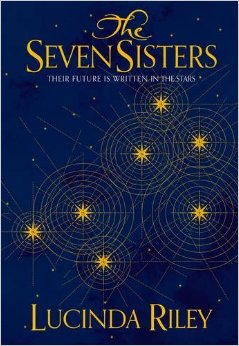
A quick search of the historical fiction reviews on my blog brings up only one result: The Seven Sisters by Lucinda Riley, which tells the story of a young woman who lived in Rio de Janeiro during the 1920s and played a part in the creation of the statue of Christ the Redeemer. Expanding the search to include reviews of any genre, I also found Little Black Lies, a crime novel by Sharon Bolton set in the Falkland Islands, and Three Singles to Adventure, Gerald Durrell’s account of an animal-collecting expedition to Guyana. And that’s all. I can’t think of many examples from my pre-blogging days either, so clearly there’s a big gap in my reading that needs to be filled!

Do you have any good books to recommend that are set in South America? For the purposes of this post I would particularly like to hear about historical fiction or non-fiction – anything that will help me to understand the histories of these countries – but contemporary suggestions are welcome too.

~

Added to my historical fiction shelves since last month’s post:

* The Queen’s Mary by Sarah Gristwood
* Shadows and Strongholds by Elizabeth Chadwick
* The Marsh King’s Daughter by Elizabeth Chadwick
* Voice of the Falconer by David Blixt
* The Beacon at Alexandria by Gillian Bradshaw
* Lincoln in the Bardo by George Saunders
* Seven Stones to Stand or Fall by Diana Gabaldon
* The Tower is Full of Ghosts Today by Alison Weir

Have you added any new historical fiction to your TBR recently?