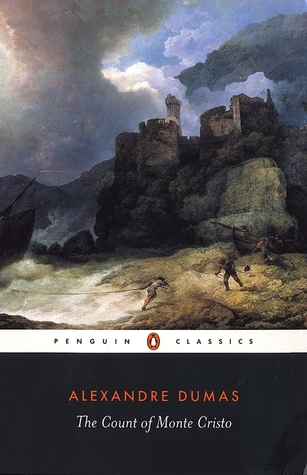
The Count of Monte Cristo by Alexandre Dumas (re-read)

When I joined the Classics Club in 2012 and put together the list of books I wanted to read, I decided that, whichever order I read the others in, I would save my re-read of The Count of Monte Cristo until last. It’s one of my favourite books (I had already read it twice) and I thought it would be something to look forward to, even if some of the other classics on my list turned out to be disappointing.

Picking it up to start reading for the third time, I did have a few doubts – there’s always a chance that a book you once loved might have lost its magic – but of course I needn’t have worried. The opening line (“On the 24th of February 1815, the lookout at Notre-Dame de la Garde signalled the arrival of the three-master Pharaon, coming from Smyrna, Trieste and Naples”) is hardly the most scintillating or memorable in literature but reading it, knowing what is to come, gives me the same feeling as when I re-read the first line of other favourite books, such as Rebecca (“Last night I dreamt I went to Manderley again”), Jane Eyre (“There was no possibility of taking a walk that day”) or Watership Down (“The primroses were over”).
Anyway, back to The Count of Monte Cristo! Our hero, or anti-hero (he can be considered to be both), is Edmond Dantès, a young sailor who, at the beginning of the novel, feels that he is the luckiest man in the world. Not only is his marriage to the beautiful Mercédès approaching, but following the death of his captain, he is also about to be given a ship to command. Things couldn’t be better…until the day of his wedding, when he is arrested on suspicion of conspiring against the king with the exiled Napoleon Bonaparte. Of course, Edmond has done nothing of the sort – it is all part of a plot by his jealous shipmate, Danglars, and his rival for Mercédès’ love, Fernand Mondego.

A third man, Villefort, has reasons of his own for wanting Dantès imprisoned and safely out of the way, so with these three enemies ranged against him, Edmond is thrown into a dungeon in the Château d’If where he remains for the next fourteen years. Although he does eventually find a way to escape, his life has been ruined: all of his hopes and dreams have been destroyed, Mercédès is lost to him and he can never get back the years of his youth that have been stolen from him. Vowing to punish his enemies for what they have done, Edmond transforms himself into the Count of Monte Cristo and launches an intricate and carefully planned system of revenge.

The events I have described above take up only a relatively small section of the novel; most of the book is devoted to following the Count as he sets his plans into action. It takes a long time before he begins to see results, but if there is one thing he has learned in prison it is how to be patient – and so he is prepared to spend years devising the perfect methods of revenge. This means the reader is faced with a series of seemingly unrelated subplots and a huge cast of characters; it can be quite overwhelming on a first read, but when you’re reading for the second or third time you can appreciate how things that appear to be irrelevant actually have great significance. This time round, without the same urgency to turn the pages to ‘see what happens next’, I was able to read at a slower pace and enjoy some of the episodes I had previously seen as unnecessarily long digressions, such as Franz and Albert’s adventures in Rome, La Carconte and the diamond ring, and the story of the bandit Luigi Vampa.

Does the Count achieve his aims – and is he happy with the final outcome? I’m not going to tell you (and if you haven’t read the book I’m sure you don’t want me to) but I will say that he does have some doubts along the way, particularly when he discovers that innocent people he never intended to hurt have also become caught up in his web of revenge. “What a fool I was,” said he, “not to tear my heart out on the day I resolved to avenge myself”. I always find it sad to see how he has changed as a result of his imprisonment – when we first meet him again after his escape from the Château d’If, the lively, optimistic young man has disappeared, to be replaced by someone much more cynical and bitter – but towards the end of the book there are signs that the old Edmond is still there, beneath the surface. Most people think of this as a revenge novel, which it certainly is, but we should remember that the Count also takes care to help and reward the friends who stayed loyal to him throughout everything.
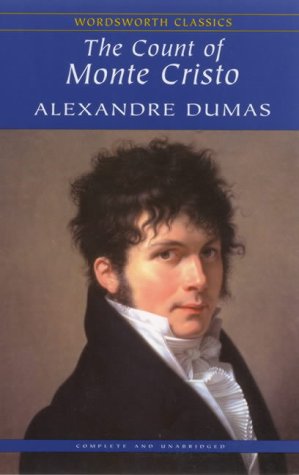
Although The Count of Monte Cristo was published around the same time as Dumas’ d’Artagnan series, I think this is a much more mature novel, dealing with serious issues and raising some thought-provoking questions. There are moments of reflection and philosophy like this:

“The friends that we have lost do not repose in the bosom of the earth, but are buried deep in our hearts, and it has been thus ordained that we may always be accompanied by them.”

And this:

“It is the way of weakened minds to see everything through a black cloud. The soul forms its own horizons; your soul is darkened, and consequently the sky of the future appears stormy and unpromising.”

And this:

“Joy to hearts which have suffered long is like the dew on the ground after a long drought; both the heart and the ground absorb that beneficent moisture falling on them, and nothing is outwardly apparent.”

The novel takes the reader through a range of emotions, from anger to pity to frustration to sadness (some of Edmond’s scenes with a certain other character always bring tears to my eyes, thinking of everything he has lost and can never regain). As always with Dumas, though, you can expect an exciting and entertaining read, so there are also murders, poisonings, court cases and duels, thefts, anonymous letters, illegitimate children and searches for buried treasure. Not everything that happens feels entirely realistic and you do need to suspend disbelief now and then, but I don’t mind that when a book is so enjoyable to read.

I haven’t said very much about the other characters in the book (and apart from Edmond Dantès himself, whom I have always found fascinating and complex), I have to admit that most of them don’t have a lot of depth. There are two, however, that I do particularly love. The first is the Abbé Faria, a fellow prisoner of Edmond’s in the Château d’If, an extraordinary man who acts as inspiration, adviser and teacher to Edmond and without whom he would have lost the will to live. The other is Monsieur Noirtier, an elderly man who has been left unable to walk and talk, but who devises an unusual form of communication and forms a special bond with his granddaughter, Valentine.

There is so much more I would like to say about this wonderful book, but I would have to give spoiler warnings, and I think this post is long enough now anyway! I will leave you to read The Count of Monte Cristo for yourself, if you haven’t already. I know the length of the book can seem off-putting, but I wouldn’t recommend reading an abridged edition as the story is so complex I think you would be missing out on a lot.
This is book 100/100 read for the Classics Club, which means I have now completed my list! I’ll be posting a summary of my Classics Club experience soon.

Top Ten Tuesday: Unique book titles

This week’s Top Ten Tuesday (hosted by The Broke and the Bookish) asks for our ‘top ten unique book titles’. I have interpreted this as meaning titles that I find unusual, intriguing or interesting in some way – and this is the list I’ve come up with:

~

1. The Weed that Strings the Hangman’s Bag by Alan Bradley

Alan Bradley’s Flavia de Luce novels were the first that came to mind when I saw this week’s topic. This one comes from Walter Raleigh’s To His Son (“The wood is that which makes the gallow tree; The weed is that which strings the hangman’s bag”), but others such as Thrice the Brinded Cat Hath Mew’d and As Chimney Sweepers Come to Dust are taken from Shakespeare and I am Half-Sick of Shadows is a line from Tennyson’s The Lady of Shalott.

~

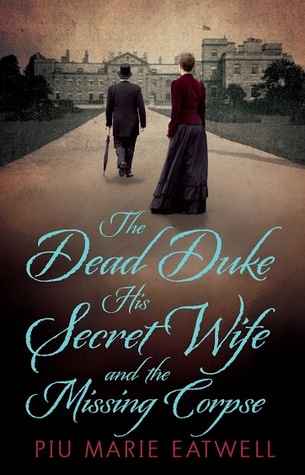
2. The Dead Duke, His Secret Wife and the Missing Corpse by Piu Marie Eatwell

This non-fiction book is exactly what the title suggests: the story of a dead duke, his secret wife – and possibly a missing corpse as well. I won’t go into any more detail here as I’ve already said it all in my review, but I found it as fascinating to read as you would expect from the title!

~

3. Why Didn’t They Ask Evans? by Agatha Christie

Many of Agatha Christie’s books have interesting titles, but I found this one particularly intriguing. “Why didn’t they ask Evans?” are the dying words spoken by a murder victim at the beginning of the novel, but – unless you are better at solving mysteries than I am – you won’t understand their meaning until you reach the end!

~

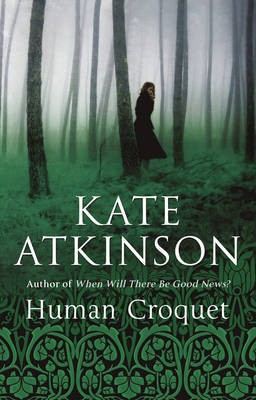
4. Human Croquet by Kate Atkinson

This isn’t one of my favourite Atkinson novels but I did enjoy it. The title is intriguing – what is human croquet and how do you play it? – and I didn’t really understand its significance until the end of the book when the roles of some of the characters became clearer.

~

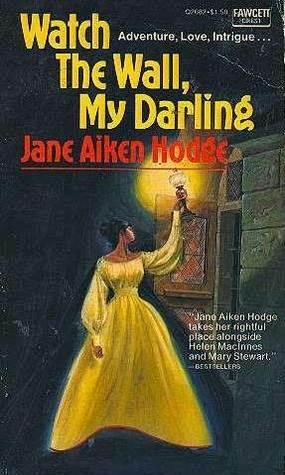
5. Watch the Wall, My Darling by Jane Aiken Hodge

This gothic suspense novel set in 19th century England features smuggling as a major element of the plot, so it is appropriate that the title comes from Rudyard Kipling’s A Smuggler’s Song:
“If you wake at midnight, and hear a horse’s feet,
Don’t go drawing back the blind, or looking in the street,
Them that ask no questions isn’t told a lie.
Watch the wall, my darling, while the Gentlemen go by.”

~

6. The Guernsey Literary and Potato Peel Pie Society by Mary Ann Shaffer

This was Mary Ann Shaffer’s only novel, published posthumously in 2008. The unusual title refers to a fictional society formed during the German occupation of Guernsey during World War II.

~

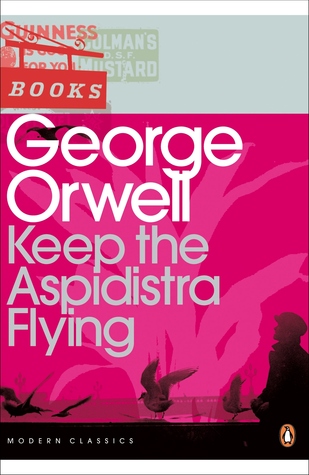
7. Keep the Aspidistra Flying by George Orwell

This 1930s novel by George Orwell is the story of a man who leaves a well-paid job to concentrate on his poetry and escape what he thinks of as ‘worship of the Money God’. The aspidistra of the title refers to the popular house plant he sees as symbolic of the middle-class lifestyle he has rejected.

~

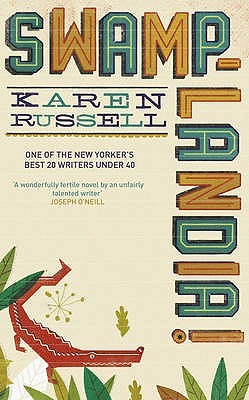
8. Swamplandia! by Karen Russell

Swamplandia! is the name of a fictional theme park in the Everglades. With its alligator-themed attractions, it does sound unusual – and so is the novel itself!

~

9. Baba Yaga Laid an Egg by Dubravka Ugresic

This is an imaginative retelling of the Baba Yaga story, relating aspects of the Slavic myth to the lives of modern women. It’s another strange title, but the reference to eggs will have more significance once you’ve read the book.

~

10. Madam, Will You Talk? by Mary Stewart

Mary Stewart is another author who sometimes drew on songs, poems and plays for her titles (This Rough Magic and Nine Coaches Waiting are other examples). Madam, Will You Talk? is taken from a folk song possibly called The Keys of Heaven which contains the line “Madam, will you walk and talk with me?”

~

Have you read any of these books? Which other books with interesting titles can you think of?

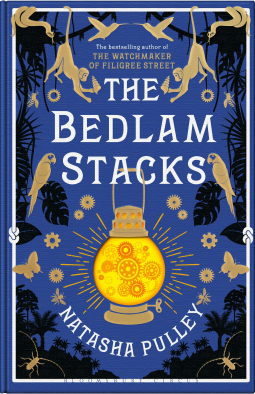
The Bedlam Stacks by Natasha Pulley

This is Natasha Pulley’s second novel. I remember seeing lots of very positive reviews of her first, The Watchmaker of Filigree Street, a year or two ago and thinking it sounded interesting. I never got round to reading that book, but when I heard about her new one, The Bedlam Stacks – which sounded just as intriguing – I decided to give it a try.

Set mainly in Peru in 1860, The Bedlam Stacks is narrated by Merrick Tremayne, a former opium smuggler and an expert in botany. Confined to his family estate in Cornwall due to a leg injury, Merrick is trying to come to terms with the fact that he will now have to put his adventuring days behind him and find something else to do with his life. Just as he is beginning to lose hope, his old friend Clem Markham arrives with a request from Merrick’s former employers, the East India Company. To tackle the problem of treating malaria in India, a supply of quinine is urgently needed – and Merrick’s expertise with plants makes him the ideal person to travel with Clem to Peru to take cuttings of the quinine-rich cinchona tree.

At first Merrick is reluctant to agree, knowing that his disability will make it difficult for him to travel through dangerous terrain – not to mention the fact that the Peruvians have a monopoly on the trees and are not about to let anyone else steal them. The alternative, though, is to stay at home and follow his brother’s suggestion of becoming a parson, so it doesn’t take him long to reach a decision! Venturing into the uncharted depths of Peru, Merrick and Clem finally arrive in the holy town of Bedlam, a place where the boundaries between magic and reality begin to merge.

The magical realism elements in The Bedlam Stacks are much more dominant than I had expected. There are moving statues, exploding trees and several other surprises which I will leave you to discover for yourself! This wasn’t really to my taste – I think I would have found it just as enjoyable to read a novel about an expedition to Peru that was based entirely on fact, without the touches of fantasy – but it was certainly imaginative and original. I did love the concept of the Markayuq statues, which apparently really exist and are still found in the countryside in Peru, originally thought to be guarding the villages. Natasha Pulley finds a clever and fascinating way to incorporate these into the story, but again I don’t want to say too much.

The sense of place is very strong – there are some wonderful descriptions of the Peruvian landscape as well as vivid accounts of more practical considerations such as the altitude sickness experienced during the journey – but I was slightly disappointed that there wasn’t a stronger sense of the time period. Neither Merrick’s narrative voice nor the dialogue between the characters felt convincingly Victorian to me; the choice of words and phrases, the grammar and the structure of sentences just weren’t right for the 19th century. I’m aware, though, that I can be a bit pedantic about anachronistic language used in historical novels and I know it’s not something that bothers everyone!

I did find a lot to enjoy in The Bedlam Stacks, although I’m sorry that I couldn’t quite manage to love it. Maybe I’m just not the right reader for Natasha Pulley’s books, but I’m still glad I’ve tried this one – even if not everything worked for me, I can understand the appeal!

Thanks to Bloomsbury Publishing for providing a copy of this book for review via NetGalley.

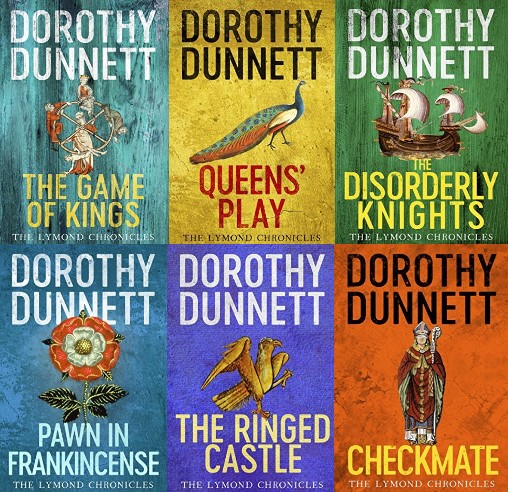
Lymond is back!

Today sees the reissue in the UK and Europe, South Africa, Australia and New Zealand of The Lymond Chronicles, Dorothy Dunnett’s wonderful six-volume series following the 16th century adventures of Francis Crawford of Lymond. As Dunnett is one of my favourite authors, I couldn’t let this day pass unmarked on my blog!

Originally published in 1961, The Game of Kings is the first of the Lymond novels, and little did I know, when I picked it up for the first time in 2012 and read that opening line “Lymond is back”, that I was about to embark on the most enjoyable – and emotional – reading experience of my life.

What do you think of the new Penguin covers?

Dunnett’s standalone novel set in 11th century Orkney and Scotland, King Hereafter, has also been reissued today, although we will have to wait until 2018 for her other series, The House of Niccolò, to be given the same treatment.

You can find more information on the reissues here and you may also find the Dorothy Dunnett Society website of interest. There’s an article about Lymond in today’s Guardian too.

Finally, if you prefer your books in ebook format, Amazon UK currently have the Kindle version of The Game of Kings available for £0.99.

Happy reading!

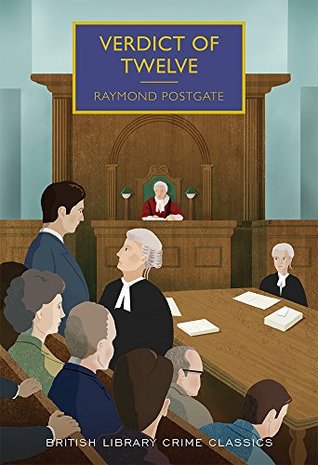
Verdict of Twelve by Raymond Postgate

A woman is on trial for murder and a jury is being sworn in to decide her fate. A jury of twelve men and women selected at random from all walks of life, each of whom has an interesting story of his or her own. Verdict of Twelve (1940), one of the British Library Crime Classics series, is as much about the jury as it is about the crime, which makes it an unusual and fascinating novel.

The book is divided into three main sections. In the first, we are introduced to each member of the jury as they step forward one by one to take their oaths. With an academic, a religious fanatic, a servant, a Greek restaurant owner and an encyclopedia salesman among them, many areas of society are represented and these twelve very different people must find a way to work together to reach what they believe to be the correct verdict.

The second part of the novel (which begins about a third of the way into the book) describes the crime itself. We are given some background information on the accused woman and then an account of the events which led up to the murder. I don’t think I can go into any detail without spoiling things, so I will just say that it is an intriguing mystery, very dark at times but with some humour at others. Although there are only a few suspects it is difficult to decide from the available evidence (which is largely circumstantial) exactly what happened and whether the jurors’ verdict should be guilty or not guilty.

Next, we watch the trial take place, listen to the witnesses and then join the jurors as they discuss the case and try to reach agreement. Finally a short epilogue lets us know whether we – and the jury – came to the right conclusion. It’s an interesting structure and one which I thought worked very well. Knowing the personal background of each juror before the trial begins helps us to see how their individual prejudices and experiences affects their reasoning when it comes to considering the evidence and making a decision. Some find that they have sympathy for the accused and some for the victim; as the reader, I felt that I was almost in the position of a thirteenth juror – and as I disliked one of the characters so much I found that I was also reacting emotionally rather than objectively.

My only slight criticism is that the first section of the book, in which the jury is introduced, is quite uneven. A few of the characters, particularly Victoria Atkins and Arthur Popesgrove, are fully fleshed out in what are almost self-contained short stories, while some of the others have only one or two pages devoted to them. As each juror has one twelfth of the input into the final decision, I’m not sure why we needed to know so much more about some of their backgrounds than others. Apart from this, I really enjoyed Verdict of Twelve – highly recommended for all lovers of classic crime!

Thanks to Poisoned Pen Press for providing a copy of this book for review via NetGalley.

This is book #6 for the R.I.P XII challenge.

Heartstone by CJ Sansom

As part of my Reading the Walter Scott Prize project, I knew that I would, at some point, need to read CJ Sansom’s Heartstone, which was shortlisted for the prize in 2011. Knowing that it was the fifth book in a series, though, and not having read any of the previous ones, I decided to start at the beginning with Dissolution and take my time working through them all. This was a good decision as I have thoroughly enjoyed the whole series – and now that I’ve finally read Heartstone, I won’t be stopping here but will be going on to read the sixth book, Lamentation, as well.

Like the earlier novels, this one is set in Tudor England and narrated by the hunchbacked lawyer Matthew Shardlake. It’s 1545 and with news of a huge French fleet about to cross the Channel, England is preparing for invasion. On Henry VIII’s orders, an army is being raised and warships including the Great Harry and the Mary Rose are getting ready for action in the harbour of Portsmouth. Meanwhile, Shardlake is also heading for the south coast on his latest mission for Catherine Parr, the Queen.

It has been claimed that “monstrous wrongs” have been committed against a young ward of court, Hugh Curteys, by his guardian Sir Nicholas Hobbey, and the Queen wants Shardlake to investigate. Accompanied, as always, by his assistant and clerk Jack Barak, Shardlake sets off on the journey from London to Hampshire, falling in with a company of soldiers on the way. On arriving at the Hobbey estate, it is obvious that there is something not quite right – but with Hugh insisting that he is not badly treated, how will Shardlake ever find out what is going on?

As if this wasn’t enough, Shardlake also has a second mystery to look into. In the previous novel, Revelation, he met Ellen Fettiplace, a woman who has been confined to the Bedlam for many years. With his work for the Queen taking him close to the village where Ellen grew up, he decides to do some investigating of his own in the hope of finding out what happened to her all those years ago and how she ended up in the asylum.

Poor Matthew; things just don’t run smoothly for him in this book and he is forced to acknowledge that he has been too “full of righteousness” – not a bad thing for a lawyer to be, you might think, but it does seem that he spends a lot of time trying to help people who really don’t want to be helped. Like Barak (who is desperate to get home in time to see the birth of his child), I found him quite frustrating with his refusal to leave things alone and take note of the warnings he is given, but of course that is what makes him feel so real and so human.

As I said, I’ve enjoyed all of the books in this series and this one is no exception. It isn’t my favourite, though, mainly because I felt that it was much longer than it really needed to be and that there was too much padding while Shardlake and Barak moved backwards and forwards between one location and another without anything happening to advance the plot. It didn’t help that I guessed the solution to one of the mysteries early in the book (probably because I have read a few other books recently with similar twists, and not because it was made particularly easy to guess) and had to wait a very long time for Shardlake to work it out for himself!

One thing I always love about the Shardlake novels is Sansom’s wonderful, vivid depiction of life in Tudor England. In this book, we are dropped right into a country making preparations for war (an unpopular and expensive war), and we learn a lot about the weapons and armour that are used, how men are recruited into the army and the training they undergo, as well as being treated to a long, dramatic description of the sinking of the Mary Rose at the Battle of the Solent. At the end of the novel, Sansom provides a detailed historical note in which he gives more information on the background to the story and separates fact from fiction.

Although I didn’t love Heartstone as much as some of the other books in the series, it was still a great read and I’m looking forward to joining Matthew Shardlake again soon in Lamentation.

This is book #5 for the R.I.P XII challenge.

Snowdrift and Other Stories by Georgette Heyer

I always love spending time in Georgette Heyer’s world; with duels, masked balls, elopements, high-stakes card games and lively period slang, her novels provide perfect escapism – and based on this collection, so do her short stories. Originally published as Pistols for Two in 1960, Snowdrift and Other Stories contains eleven of Heyer’s tales of Regency romance and adventure plus three additional stories not included in the earlier book.

I found these stories so enjoyable and so much fun, it was tempting to read them all at once, but instead I decided to just dip in and out, reading one or two at a time over the course of a few weeks. This was probably a good idea as many of the stories in the book are very similar, so better in smaller doses, I think! In particular, there are several that deal with young couples eloping with various family members in pursuit and a series of misunderstandings ensuing along the way – and also several involving duels, fought with either pistols or swords, and never quite going according to plan. Most of the stories have a twist or two, which are usually easy for the reader to predict, but come as a complete surprise to the characters!

I don’t want to discuss all fourteen stories here, but I can honestly say that I liked all of them – some more than others, of course. Some of my favourites included Bath Miss, in which a gentleman agrees to escort the daughter of a family friend home from school in Bath, but finds that the girl is not quite what he’d expected; The Duel, which follows a young lady who goes in search of the disreputable Lord Rotherfield to beg him not to shoot her brother; and Hazard, where a nobleman ‘wins’ a friend’s sister in a drunken game of dice and is horrified when he wakes up the next day and finds himself on the way to Gretna Green. Another which stood out, although it wasn’t one I particularly loved, was Night at the Inn. Unlike the others, which are all romances of various types, this one is more of a suspense story in which three guests arrive at a lonely inn one dark, foggy night.

As for the three extra stories – Pursuit, Runaway Match and Incident on the Bath Road (all from the 1930s, I think) – they are very entertaining too, although they suffered slightly from being placed at the end. Speaking as someone who is not usually a fan of short stories, I did really enjoy this book. I prefer her full length novels but, as I’ve said, if you just want a small dose of Heyer – or maybe if you’ve never read her before and don’t want to commit to anything longer – I would recommend giving Snowdrift a try.

Thanks to Sourcebooks for providing a copy of this book for review via NetGalley.