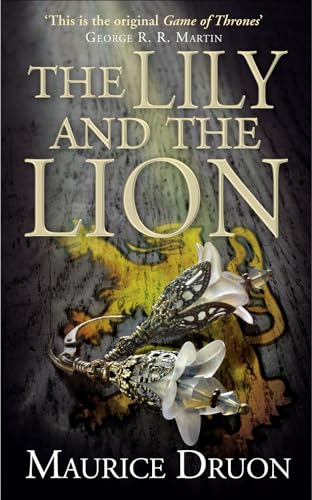
The Lily and the Lion by Maurice Druon #ParisinJuly2025

Translated by Humphrey Hare

I always seem to forget about Paris in July, but this year I remembered in time and decided it would be the perfect opportunity to get back to Maurice Druon’s Accursed Kings series, which I started years ago and still haven’t finished! The Lily and the Lion (first published in French in 1959) is the sixth of seven books telling the story of Philip IV the Fair of France and the kings who follow him, said to have been cursed “to the thirteenth generation” by the vengeful Grand Master of the Knights Templar as he burned at the stake. Les Rois maudits, to give the series its French title, was very successful in France, being adapted for television twice, and has also been credited by George R.R. Martin as the inspiration for Game of Thrones.

The first book in the series is The Iron King and I would recommend starting there if possible. If you don’t have much knowledge of this period of French history (which I certainly didn’t), reading the books in order makes it easier to gradually understand the historical context and the relationships between the various characters. One character who has been with us since book one is Robert of Artois and his story becomes the main focus of book six.

The Lily and the Lion begins with the death of yet another French king, Charles IV. With no direct heir, his cousin Philippe of Valois is chosen as his successor, thanks largely to the machinations of Robert of Artois. In return for helping Philippe to the throne, Robert has been promised the new king’s support in reclaiming his lands of Artois which he believes have been stolen from him by his Aunt Mahaut. A large part of the book is devoted to the dispute over Artois, which is more exciting than it sounds as Robert is prepared to go to any lengths, including forgery, perjury and murder, to get what he wants – and Mahaut is equally determined to stop him.

In England, meanwhile, Philip the Fair’s daughter Isabella and her lover, Roger Mortimer, are now effectively ruling the country after deposing her husband, Edward II. However, Isabella and Edward’s son, the young Edward III, is almost old enough to take control of the throne himself and is planning to overthrow Mortimer. Thanks to some encouragement from Robert of Artois, who has lost patience with Philippe of Valois, Edward III also sets his sights on the throne of France, believing he has a claim through his mother. The seeds of the Hundred Years’ War have been sown!

For a long time, The Lily and the Lion was the last book in the series, until the publication of The King Without a Kingdom many years later in 1977. It does feel like a final book, as Druon ties up loose ends and brings his various storylines to a conclusion. I had wondered if he would return to the story of Marie de Cressay and Guccio Baglioni’s son, Jean, switched as a baby with John the Posthumous, the young King of France who supposedly died aged four days old – and he does, right at the end of the book in the epilogue. This felt very much like an afterthought, though, and I would have liked to have at least had some glimpses of Jean’s life in the main part of the novel.

Although I preferred the earlier books in the series, I did enjoy reading this one and seeing Robert and Mahaut’s long-running feud finally come to an end. I’ve heard that the final book is very different and not as good, but I’m sure I’ll read it eventually – maybe for next year’s Paris in July!
Book 12/20 for 20 Books of Summer 2025.

Top Ten Tuesday: Classics Set in Italy

This week’s topic for Top Ten Tuesday (hosted by That Artsy Reader Girl) is “Books Set in/Take Place During X”. We can choose the time or place.

I have chosen ten books set in Italy and to narrow things down, they are all books that a) were published at least 60 years ago and b) have been reviewed on my blog.

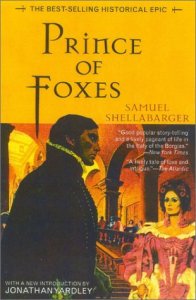
1. Prince of Foxes by Samuel Shellabarger

From my review: “Andrea and Belli have a number of adventures involving battles, duels, clever disguises, last-minute escapes, sieges, miracles and all sorts of trickery and deception.”

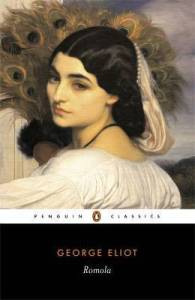
2. Romola by George Eliot

From my review: “I was gripped by the plot, fascinated by the characters and loved the portrayal of Florence, its buildings, its art and culture and its people.”

3. The Enchanted April by Elizabeth von Arnim

From my review: “The images of Italy in the spring were beautifully described, with the sun shining and the flowers bursting into bloom. I defy anybody to read this story and not want to immediately book a trip to Italy this April!”

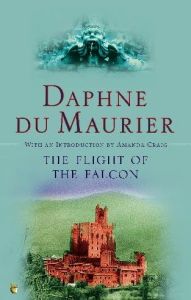
4. Flight of the Falcon by Daphne du Maurier

From my review: “In The Flight of the Falcon she succeeds in making Ruffano, with its medieval streets, historic churches and ducal palace, seem beautiful and picturesque but claustrophobic and forbidding at the same time.”

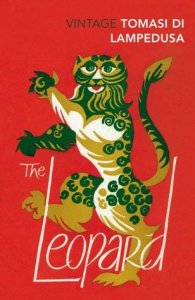
5. The Leopard by Giuseppe Tomasi di Lampedusa

From my review: “…a beautifully written book and although it’s surprisingly short, there’s so much packed into its pages I think a re-read would be necessary to be able to fully appreciate it.”

6. Bellarion by Rafael Sabatini

From my review: “…a world of warring city states, tyrannical dukes and beautiful princesses, of powerful condottieri and bands of mercenary soldiers, of sieges and battles, poisonings and conspiracies.”

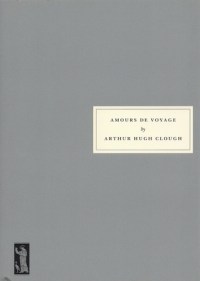
7. Amours de Voyage by Arthur Hugh Clough

From my review: “Amours de Voyage follows a group of people who are visiting Italy during the political turmoil surrounding the fall of the short-lived Roman Republic in 1849. Their story is told in the form of letters written in hexameter verse and divided into five cantos.”

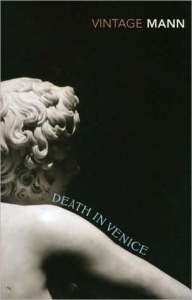
8. Death in Venice by Thomas Mann

From my review: “Mann’s descriptions of Venice are beautifully written, even though at the time of Gustav von Aschenbach’s arrival the weather is dark, gloomy and oppressive, matching the overall mood of the story.”

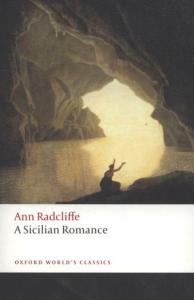
9. A Sicilian Romance by Ann Radcliffe

From my review: “…everything you would expect from a gothic novel: An old castle with crumbling staircases and dark, dusty chambers, locked doors, family secrets, lonely monasteries, bandits, shipwrecks, dungeons and underground tunnels, thunder and lightning, and almost anything else you can think of.”

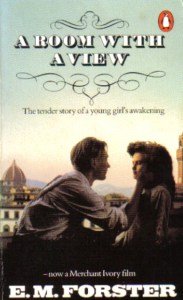
10. A Room with a View by E.M. Forster

From my review: “The beginning of the book with the portrayal of the English in Italy made me think of The Enchanted April by Elizabeth von Arnim and as for the descriptions of Italy itself, they were beautiful and vivid.”

~

Have you read any of these? Are there any other classic novels set in Italy you can recommend?

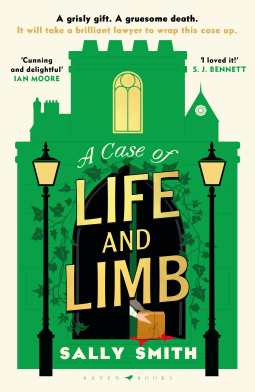
A Case of Life and Limb by Sally Smith

If, like me, you enjoyed meeting Sir Gabriel Ward KC in last year’s A Case of Mice and Murder, you’ll be pleased to hear that he’s back again with another mystery to solve in A Case of Life and Limb! The book is again set in 1901 in and around London’s Inner Temple, one of the four Inns of Court, where Sir Gabriel lives and carries out his work as a barrister. It’s not necessary to have read the first book before this one, but I would highly recommend reading both anyway!

Early in the novel, Gabriel is approached by Topsy Tillotson, the latest young star of the London theatrical scene, who is determined to sue a tabloid newspaper for libel. Reluctant to accept the case at first, Gabriel ends up agreeing to represent her, feeling that Topsy doesn’t deserve to have her reputation tarnished by unscrupulous journalists. However, Gabriel soon finds that he’ll have to divide his time between this and another, more sinister, case…one which really is ‘a case of life and limb’.

Sir William Waring, Master Treasurer of the Inner Temple, has received a very unpleasant gift on Christmas Eve: a severed hand, presented in a box with a card asking Can I give you a hand? Gabriel happens to be visiting the Treasurer when the box is opened and, due to his previous success at mystery solving, Waring asks him to investigate. As the Temple is outside the jurisdiction of the City of London, Waring hopes the crime can be solved internally without involving the police, but when more body parts start arriving, Gabriel enlists the help of his friend, Constable Wright.

These two separate cases unfold in parallel, largely separate but intersecting now and then, and I enjoyed following both. The mystery surrounding the body parts gives Gabriel a chance to further develop his skills as a detective and the reader a chance to learn more about the residents of the Inner Temple, some of whom we met in the first novel and others who are newly arrived. I particularly loved getting to know Delphinium, the Temple cat! The Topsy Tillotson storyline, like the one involving Millie the Mouse in the previous book, takes Gabriel into the wider world outside the confines of the Temple and allows Smith to explore some of the social issues of the time – in this case, the double standards and prejudices affecting women working in certain professions and the ethical responsibilities of journalism.

I think, though, that it’s Gabriel himself who makes these books such a delight to read. He’s a genuinely nice person who is very easy to like, but he also has some eccentricities and signs of obsessive-compulsive behaviour which have restricted his social opportunities. In the first book there were some hints that he was starting to gain confidence and live a less isolated life; this continues in this second book as his friendship with Constable Wright grows stronger and he spends more time with people of other classes and backgrounds such as Topsy and her colleagues. It’s always good to see a character develop as a series progresses. I can’t wait for a third book as I’m sure it will be just as much fun as the first two!

Thanks to Raven Books for providing a copy of this book for review via NetGalley.

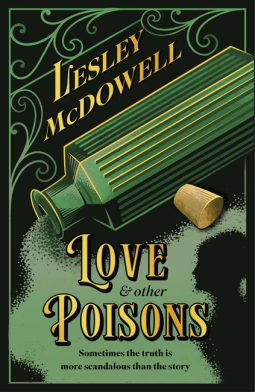
Love and Other Poisons by Lesley McDowell

I wasn’t sure whether to read this new novel by Lesley McDowell as I didn’t get on very well with her last one, Clairmont. Although I liked her writing, I struggled with the structure, the way it would jump from one timeline to another and the lack of context to explain characters’ backgrounds and relationships. I like to give authors a second chance, though, and this book, based on a true crime, did sound intriguing…

In 1857, Madeleine Smith is put on trial in Glasgow for the murder of her lover, Emile L’Angelier. After listening to witnesses and examining the evidence, the jury, still unable to decide whether she is guilty, give a verdict of ‘Not Proven’ and Madeleine is set free. Seventy years later, Harry Townsend, an aspiring filmmaker, believes he has tracked down the woman who used to be Madeleine Smith, now living in New York as a respectable elderly widow, Mrs Sheehy. Harry wants to interview her about Emile’s murder, but when Mrs Sheehy refuses to cooperate, Harry is forced to question whether he has got the right person after all.

We move back and forth between 1857 and 1927 throughout the book, but I found it much easier to follow the plot and understand what was going on than I did with Clairmont, which was a relief! The first few sections were interesting as they set the scene and introduced the characters, but then we settled into the 1857 period and the story of Madeleine’s relationship with Emile and my attention began to waver. There’s a lot of focus on their sexual encounters, some of which are described quite explicitly (I understood why later on), and I started to get impatient waiting for the murder to happen. It does happen eventually, of course, and I was glad I stuck with the book as I found the aftermath of the murder and Madeleine’s trial much more compelling to read about.

Although I did have some sympathy for Madeleine’s position – Emile had become very manipulative and controlling, threatening her with blackmail – I never really warmed to her as a character and I felt that she could have handled the situation differently. I also didn’t like the way she implicated not just the maid Christina, who arranged meetings and passed letters between Madeleine and Emile, but also her own twelve-year-old sister, Janet. None of the other characters in the book were very likeable either; the way Harry Townsend treated the older Madeleine was horrible and I hoped he would never get to make his film! There’s a twist in that particular storyline which I hadn’t guessed, but which seems to fit well with the historical facts.

I’ve never read about the Madeleine Smith case before, although it seems to be well documented, and I wonder whether my perception of this book would have been different if I already knew some of the details before I started to read. Anyway, it was all new to me and I was fascinated by the author’s note at the end of the book where she explained the origins of the novel – the idea was suggested to her by fellow author Emma Tennant who had wanted to work on it as a joint project before her death – and how she chose to interpret some of the historical evidence. She discusses her theory regarding the murder method and weapon (this is where the strong sexual content earlier in the novel suddenly made sense), and how she tried to piece together the clues we have regarding Madeleine’s later life after the trial.

I enjoyed this book more than I thought I would, having seen a lot of very mixed early reviews – but at the same time, I do understand some of the criticisms. Still, I found it interesting to learn about a true crime I was previously unaware of and which has inspired a large number of other novels, plays and adaptations.

Thanks to Headline/Wildfire for providing a copy of this book for review via NetGalley.

Book 11/20 for 20 Books of Summer 2025.
Come, Tell Me How You Live by Agatha Christie

This was surprisingly good! Not being a big non-fiction reader or having a particular interest in reading about archaeological digs, I wasn’t sure what to expect from this book and only picked it up because it’s this month’s selection for the Read Christie 2025 challenge. However, I needn’t have worried – I found it a funny, light-hearted and vibrant account of Christie’s time in the Middle East, with no long, dry descriptions of digs, and just as enjoyable to read as some of her detective novels.

Come, Tell Me How You Live was first published in 1946 under the name Agatha Christie Mallowan (her married name). The title is a play on words as a ‘Tell’ is an archaeological term for an artificial mound created by debris from generations of human occupation – therefore indicating the site of an abandoned town or city. The book describes Christie’s experiences of visiting Syria, a country rich in ancient Tells, in the 1930s with her archaeologist husband, Max Mallowan.

From the opening pages, where Christie writes about the difficulties of acquiring suitable clothing for a trip to Syria during the British winter – and the indignities of being informed that she’s O.S. (outsized) – her sense of humour shines through and continues to do so for the rest of the book. She’s prepared to poke fun at herself and Max but also brings the other people in the book to life with witty observations and amusing little anecdotes. Michel, their driver, who is obsessed with being ‘economical’, allows their truck to run out of fuel in the desert because he was curious to see how far it would last without filling up and almost buys two hundred rotten oranges at a market just because he’s negotiated a good price for them. Then there’s Mac, the solemn, silent young architect who accompanies them on the trip, who never seems to show any emotion, no matter what the occasion. I also loved the Postmaster, who constantly tries to get the Mallowans to accept any letter addressed to a random European, and the ‘professional cat’ who comes to the rescue during their stay in Amuda in a house infested by rodents and insects.

There may be some passages and attitudes that aren’t entirely acceptable to a modern reader, but Christie was writing for a 1940s audience and I think she was generally respectful of the Syrian people and their culture. With this book, she provides a lot of insight into what it was like to be an Englishwoman so far from home, in a world so different from her own. What she doesn’t provide is any detailed information on archaeology or their finds. Her focus is always on everyday life and her general impressions of the landscape, the people she meets and their customs. Even her writing is barely mentioned, although we know that she was working on novels such as Murder on the Orient Express during her time in Syria.

I thoroughly enjoyed this book and am grateful to the Read Christie challenge for highlighting it this month. I’ll be taking part again in August with the Poirot mystery One, Two, Buckle My Shoe.

Book 10/20 for 20 Books of Summer 2025.
Top Ten Tuesday: Books with Mrs in the title

This week’s topic for Top Ten Tuesday (hosted by That Artsy Reader Girl) is Books with Honorifics in the Title (“…an honorific is a form of address conveying esteem, courtesy or respect. These can be titles prefixing a person’s name, e.g.: Mr., Mrs., Miss, Ms., Mx., Sir, Dame, Dr., Cllr, Lady, or Lord, or other titles or positions that can appear as a form of address without the person’s name, as in Mr. President, General, Captain, Father, Doctor, or Earl.”) (Submitted by Joanne @ Portobello Book Blog)

I noticed that I’ve reviewed exactly ten books with the word Mrs in the title, so decided to just stick to those for this week’s post. They are listed below:

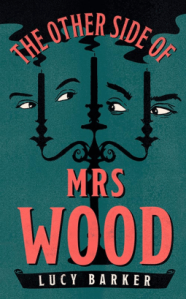
1. The Other Side of Mrs Wood by Lucy Barker – The story of a successful medium in 19th century London who gets more than she bargained for when she takes on a new apprentice!

2. The Autobiography of Mrs Tom Thumb by Melanie Benjamin – A fictional memoir of the American circus performer Lavinia Warren.

3. Mrs Poe by Lynn Cullen – This novel explores the relationship between Edgar Allan Poe and the poet Frances Sargent Osgood.

4. The Mermaid and Mrs Hancock by Imogen Hermes Gowar – Set in Georgian England, this book begins with a captain selling his ship in exchange for a mermaid!

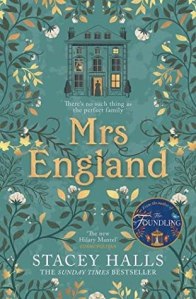
5. Mrs England by Stacey Halls – A children’s nurse takes a new position with a family in Yorkshire and quickly sense that something is not quite right.

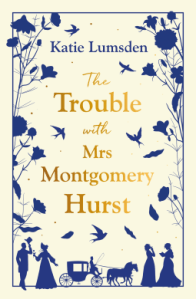
6. The Trouble with Mrs Montgomery Hurst by Katie Lumsden – A small, quiet community in 1840s England is shaken up by the arrival of Mr Montgomery Hurst’s new wife.

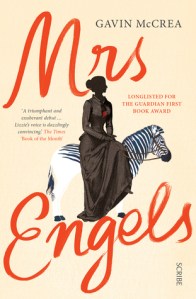
7. Mrs Engels by Gavin McCrea – A fictional look at the life of Lizzie Burns, common law wife of the German philosopher Friedrich Engels.

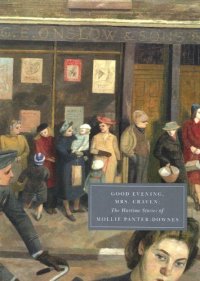
8. Good Evening, Mrs Craven by Mollie Panter-Downes – A collection of short stories written between 1939 and 1944 and giving some insights into Britain during the Second World War.

9. Dear Mrs Bird by AJ Pearce – The first in the Emmy Lake series, about a young woman who becomes an advice columnist in wartime London.

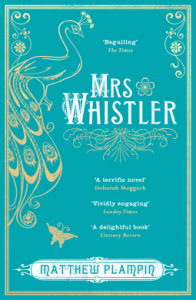
10. Mrs Whistler by Matthew Plampin – A fictional account of the life of Maud Franklin, the model and muse of the artist James McNeill Whistler

~

Have you read any of these? Which other books with ‘Mrs’ in the title have you read?

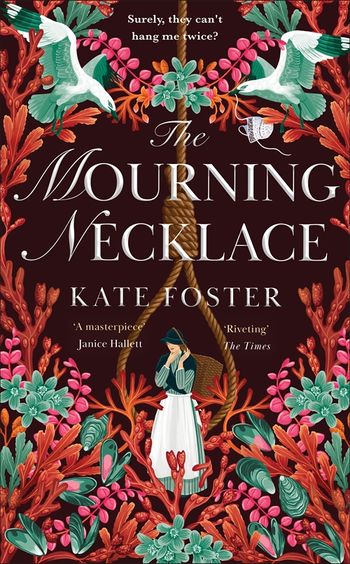
The Mourning Necklace by Kate Foster

Some people become famous for their remarkable lives and others for their remarkable deaths. Maggie Dickson is one of the latter – although technically, it wasn’t really a death at all! Known as ‘Half-Hangit Maggie’, Maggie Dickson was sentenced to death in 1724 and hanged in Edinburgh’s Grassmarket. As her family gather in a nearby tavern, they are shocked to look up and see Maggie herself standing at the door. Other than a rope burn around her neck, she seems unharmed by her ordeal and determined to make the most of the second chance she’s been given. But while everyone has questions for her – how did she survive and how did it feel to be so close to death? – there’s only one question that matters now to Maggie: will they try to hang her again?

Maggie Dickson was a real person and the story of her survival is a true one, still remembered three hundred years later; Maggie Dickson’s Pub in Edinburgh is named after her and she is often featured in Edinburgh walking tours. In The Mourning Necklace, Kate Foster builds a fictional story around this amazing woman and her near-death experience, using her imagination to fill in the gaps around the historical facts.

The year before she receives her death sentence, Maggie is living with her parents and younger sister, Joan, in Fisherrow, a small fishing community in Musselburgh, Scotland. The Dickson family have made their living from fish for generations, but Maggie doesn’t see a future for herself as a fishwife and wants something different out of life. Her marriage to Patrick Spencer, a perfume trader, seems to offer the opportunities she’s looking for, but when things don’t go according to plan, she takes control of her own fate and sets out alone for London. However, she gets no further than Kelso in the Scottish Borders before she is forced to make a series of decisions that will lead her back to Edinburgh and the gallows.

I enjoyed Kate Foster’s last novel, The King’s Witches, but I thought this one was much better and I connected with Maggie Dickson in a way that I didn’t with the women in the other book. There’s also a strong cast of supporting characters, including Joan, whose actions as a sister disappoint Maggie over and over again; Mrs Rose, who betrays Maggie for reasons of her own but at the same time is one of the few people to offer her friendship; and the wicked Dr McTavish, one of the book’s villains. All of these people have key parts to play in Maggie’s story, which is divided into three sections: the events leading up to her arrest, the hanging itself, and the path her life follows after she escapes death.

Maggie’s crime is something that will surprise a lot of modern readers as, although she unknowingly broke the laws of the time, today we wouldn’t really consider her to have committed a crime at all (at least not if Kate Foster’s interpretation is close to the truth). At first I assumed that as the death sentence was usually given as ‘hanged by the neck until dead’, it would be decided that Maggie had not served the sentence and would be hanged again. However, it wasn’t as straightforward as that because it seems that the sentence at that time was simply ‘hanged by the neck’ and the additional words were added later to avoid ambiguity in cases like hers.

This is a fascinating novel, with some great descriptions of 18th century Musselburgh, Edinburgh and Kelso. We also learn a little bit about the tea smuggling which was widespread down the east coast of Scotland and England due to high taxes on imported tea. I loved it and must find time to go back and read Kate Foster’s first book, The Maiden.

Thanks to Pan Macmillan/Mantle for providing a copy of this book for review via NetGalley.