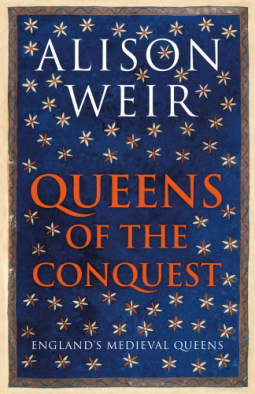
 In Alison Weir’s new non-fiction book, Queens of the Conquest, she explores the lives of the five queens of England who followed the Norman Conquest of 1066. These five, in the order they appear in the book, are Matilda of Flanders (wife of William the Conqueror), Matilda of Scotland and Adeliza of Louvain (the two wives of Henry I), Matilda of Boulogne (wife of King Stephen), and the Empress Maud, Henry I’s daughter, who was never actually crowned but called herself Lady of the English. Lots of Matildas, then – Maud is also referred to in many sources as Matilda – but with each queen discussed chronologically (apart from where their stories overlap), things aren’t as confusing as you might imagine!
Apart from Maud, whom I have read about several times in fiction, I knew very little about the other queens whose stories are covered in this book. Considering the general lack of information available to us today – we don’t even have a clear idea of what these women looked like due to the absence of contemporary portraits – I think Weir still does a good job of providing as full and comprehensive an account of each queen’s life as she possibly could. There is inevitably a lot of padding – facts about medieval life, descriptions of castles and long passages quoted from letters – but if you don’t know a lot about the period, most of this should still be of interest.
I can’t really comment on the historical accuracy of this book as my own knowledge is very limited, but Weir does provide references to back up most of what she says. In fact, the additional material which includes the references, sources, maps etc takes up about a quarter of the book! There are still times, though, when she is forced to speculate and make assumptions about how one of the queens may have felt or behaved, and resorts to using words like ‘probably’ or ‘possibly’. Usually I prefer more certainty when I’m reading non-fiction, but in this case, I do understand that with the primary sources being so sparse, some guesswork was necessary to round out the characters of the queens and to make this into an entertaining read rather than a dry textbook.

15th century depiction of the Empress Matilda/Maud
Maud certainly didn’t seem to have made herself very popular, having a reputation for being proud, haughty and arrogant, but I have always assumed that this was probably due to the prejudice of the male chroniclers of the time against a female ruler who didn’t behave the way they expected a woman to behave. Weir points out that Matilda of Boulogne often acted in a similar way but her actions were seen as acceptable because she was taking them on behalf of her husband, King Stephen, rather than for herself, but she also suggests that Maud’s overbearing attitude and poor decision-making may have been due to mood swings caused by early menopause or a long-term illness she suffered following childbirth. This was the one place where I thought there may have been some bias creeping in, as Weir clearly seems to like Matilda of Boulogne much more than the Empress – and I couldn’t help wondering what caused the aggression and lack of judgement of some of the kings mentioned in the book!
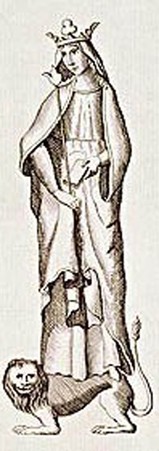
18th-century impression of Matilda of Flanders
Although I sometimes felt that too much time was devoted to the general history of the period when I would have preferred more analysis of the specific lives and characters of the five queens, I did find Queens of the Conquest a fascinating read. Apparently this is just the first of four volumes which will take us through the rest of the medieval queens to the end of the Wars of the Roses. I will be looking out for the next one.
Thanks to the publisher for providing a copy of this book for review via NetGalley.












 She Reads Novels