Dead Woman Walking by Sharon Bolton

I don’t read a lot of contemporary crime fiction, but I do love Sharon Bolton’s books! Her latest, Dead Woman Walking, is another great one featuring the usual combination of mystery, suspense, atmospheric settings, stunning plot twists and even humour that I have come to expect from her work.

It begins with a group of people enjoying an early morning flight over the Northumberland National Park in a hot air balloon. Among them are Jessica Lane and her sister Isabel. Now a nun known as Sister Maria Magdalena, Isabel is celebrating her fortieth birthday and Jessica has booked the trip as a special treat. As they drift across the peaceful countryside, Jessica spots a man on the ground below attacking a young woman. He looks up to see her watching him just as she picks up her phone to take a photograph. With all of the other passengers now aware of what is happening, the man is left with no choice other than to bring down the balloon and ensure that everyone in it dies.

When the emergency services arrive on the scene, they begin the unpleasant task of locating and identifying the bodies. It’s not long before the pilot and eleven of his twelve passengers are accounted for, but one woman is missing. Has she managed to escape alive? If so, where is she? And who will find her first – the police or the killer?

This is a wonderful book – one of Sharon Bolton’s best, I think – but now that I’ve started to write about it, I’ve found that there is actually very little I can say that won’t be a spoiler! Part of the fun of reading this book (or anything else by this author) is in being surprised by the many clever plot twists which come one after another throughout the second half of the novel and I would hate to take away any of that enjoyment, even inadvertently, for anyone else. You could guess the twists anyway, of course – I think Sharon Bolton is very fair with her readers and the clues are there from the start, if you’re able to put them together – but I did not and as each one was revealed, I found myself turning back to reread earlier passages in the hope of spotting things that I’d missed the first time.

I mentioned the humour, and I’m aware that from what I’ve said so far this probably doesn’t sound like a very amusing story at all – but although some of the themes at the heart of the novel are undoubtedly very dark, there is also a lot of lightness mixed in with the darkness. Believe it or not, most of the touches of comedy are provided by the nuns of Wynding Priory who are following the balloon story with interest, keen to use some of the mystery-solving skills they’ve picked up from watching repeats of old crime dramas on the convent television.

I loved this book and am already looking forward to her next one, The Craftsman, which it seems we can expect in 2018. In the meantime, I still need to read Blood Harvest, the only one of Sharon Bolton’s novels I haven’t read yet.

This is book 10/20 for my 20 Books of Summer challenge.

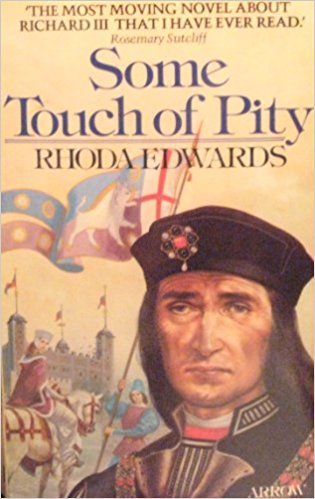
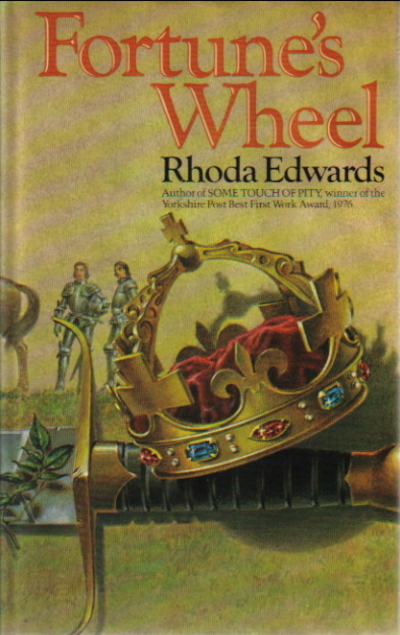
Rhoda Edwards: Some Touch of Pity and Fortune’s Wheel

These two novels from the 1970s had been on my wishlist for a while, since I first developed an interest in reading about the Wars of the Roses, and I’m pleased to have finally had an opportunity to read them. Some Touch of Pity, in particular, is an excellent book; although, chronologically, it is set after Fortune’s Wheel, it was published first (in 1976) and is the first one I’m going to write about here.

Some Touch of Pity (US title is The Broken Sword) covers a relatively short period of history, beginning in 1483 just before the death of King Edward IV and ending with Richard III’s defeat by Henry Tudor at the Battle of Bosworth in 1485. In between, all the major events of Richard III’s ill-fated reign are covered – if you know the period you won’t need a summary from me and if you don’t then I won’t spoil the story for you other than to say that it was a time marked by rebellion, betrayal, rumour and several tragic deaths.

The book is divided into several sections, each one written from the perspective of a different narrator and offering different insights into Richard as a man or as a king. There are even one or chapters narrated by Richard himself – interestingly, of all the novels I’ve read about Richard III, I think this is the first one that allows us to hear his story, even a small part of it, from his own point of view. Other narrators include Richard’s close friend Francis Lovell, his niece Elizabeth of York and court physician William Hobbes, but my favourite is Anne Neville, Richard’s beloved wife and queen. I found Anne’s sections of the book particularly moving and poignant, painting an intimate picture of Richard as a husband and father, whereas some of the others are more concerned with how he deals with the political and military challenges he faces as king.

The novel is perfectly paced, spending just the right amount of time with each narrator before moving on to the next. As it heads towards its inevitable conclusion there’s a sense of dread, but even knowing what’s ultimately going to happen, it’s difficult not to find yourself hoping that this time there will be a different outcome. The section describing the Battle of Bosworth is powerfully written, brilliantly showing Richard’s state of mind before and during the battle as well as the crucial role of Lord Stanley and his brother in deciding the result. However, I wished the book had ended here as the final chapter, giving an account of the aftermath of the battle and the abuse inflicted on Richard’s body was so harrowing and graphic I could hardly bear to read it!

The only thing left to mention is the mystery of the Princes in the Tower. Rhoda Edwards gives a plausible explanation for their disappearance (although it’s not one I’ve ever found very convincing), but as we don’t actually see the princes after they enter the Tower, we have to rely on the word of several of the other characters – and who knows whether they’re telling the truth. It’s all quite ambiguous!

Fortune’s Wheel was published two years later, in 1978, but is actually a prequel to Some Touch of Pity. It covers an earlier period in Richard’s life, starting in 1468 when, as the young Duke of Gloucester, Richard is caught up in the conflict between his elder brother, Edward IV, and the Earl of Warwick, the man known as the Kingmaker. The novel takes us through Warwick’s rebellion, the betrayal of George, Duke of Clarence, and ends in 1472 with Richard’s marriage to Anne Neville.

The style of this novel is different from the previous one; rather than being a collection of first person accounts, it is a straightforward third person narrative. This means that Fortune’s Wheel lacks the intimacy of Some Touch of Pity but at the same time it does have a broader scope – this is not just the story of Richard, but also of Edward, George, Warwick, Anne and many other characters. It’s not a very long novel but still manages to give a fair and balanced view of this period of history, bringing each character to life as a real human being with a mixture of good points and bad points.

Although Some Touch of Pity is my favourite of the two books, I enjoyed them both. They could be a good choice for readers new to the period, but in that case I would recommend reading them in chronological rather than publication order to make the timeline easier to follow. Rhoda Edwards also wrote a book on Elizabeth I, None But Elizabeth, which is now on my TBR!

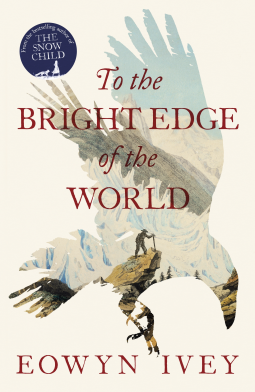
To the Bright Edge of the World by Eowyn Ivey

The Snow Child was always going to be a hard act to follow and I think my fear that Eowyn Ivey’s second novel would be a disappointment could explain why I’ve been putting off reading it since it was published last year. Including it on my list for the 20 Books of Summer challenge gave me the push that I needed to pick it up and start reading – and I’m pleased to say that, although The Snow Child is still my favourite, there was very little disappointment here!

To the Bright Edge of the World, like Ivey’s first novel, is set in Alaska – but other than that, it’s a very different type of book. It tells the story of Colonel Allen Forrester who, in 1885, is commissioned to lead an expedition with the aim of navigating Alaska’s Wolverine River and charting previously unmapped territory. Through a series of journal entries we are able to join Allen and his small group of companions on their journey and are with them every step of the way as they struggle over difficult terrain, face harsh weather and encounter native tribes. It all feels so authentic that you could easily believe Allen Forrester was a real person and these were his real diaries – actually, he is a fictional character but it seems that Eowyn Ivey based him on a real-life explorer, Lieutenant Henry T. Allen, who led an expedition in that same year up the Copper River (reimagined as the ‘Wolverine River’ in the novel).

Although this book does not have the fairy tale feel of The Snow Child and is much more grounded in reality, myth and folklore still play an important part in the story. As they make their way up the Wolverine River, Allen and his men are followed by an Old Man who is said to be able to fly and are joined by a woman called Nat’aaggi who believes that her husband was an otter.

– They believe it is a thin line separates animal and man, Samuelson said. – They hold that some can walk back & forth over that line, here a man, there a beast.

This is not just Allen’s story, however. It is also the story of Sophie, his wife, who had hoped to join her husband on his adventures but had to settle for being left behind at Vancouver Barracks. Desperately awaiting news, with no way of knowing if Allen is even alive or dead, it’s going to be difficult for Sophie to get through the months ahead. Looking for something to fill her days, she decides to take up photography and develops a passion for her new hobby, going to ever greater lengths to capture photographs of the wildlife and birds she sees around the barracks.

Sophie also keeps a journal, recording her thoughts and feelings so that she can share them with her husband when he returns, and these two journals – Sophie’s and Allen’s – form the bulk of the novel, one set of entries alternating with the other. I was interested in both and although Allen’s may sound much more exciting, I had no preference for one over the other. There were some passages from each journal that I found slightly tedious or where I felt that things were being dragged out for too long, but a few pages later I would be pulled back into the story again. I liked both characters, so that helped!

The 19th century stories of Allen and Sophie are interspersed with contemporary letters exchanged between Walter Forrester, their great-nephew, and Josh Sloan, the curator of a museum in Alaska. Walter has decided to make a gift of the Forrester journals and the other artefacts from the expedition to the museum – and we are given the opportunity to see some of these artefacts, which include photographs, illustrations, newspaper reports and fragments of documents. These are not always presented in chronological order, which is sometimes confusing, but it gives the overall effect of looking through a scrapbook or somebody’s private collection of memorabilia. It was also nice to watch a friendship developing between Walt and Josh, two men of different generations and backgrounds, living many miles apart.

Not knowing very much about Alaska and its history, I feel that I’ve learned a lot from this novel, as well as being entertained by a fascinating story.

This is book 9/20 for my 20 Books of Summer challenge.

Rebecca by Daphne du Maurier (re-read)

Sometimes re-reading a favourite book can be a disappointment; perhaps you’ve changed too much as a person since the last time you read it and the story and characters no longer have the appeal they used to have – or maybe it just loses some of its magic because you’ve read other books in the meantime that are similar and better. Luckily, I experienced none of that disappointment when I picked up Rebecca for a re-read recently. I fell in love with it all over again!

For those of you who have not yet read Rebecca, I’ll give a brief summary of the plot – and the first thing I should probably say is that we never actually meet Rebecca herself. She dies a year before the novel opens, although with her bright and vibrant personality she is a very strong presence throughout. Our narrator, in contrast, is a shy and awkward young woman who remains nameless from beginning to end; our only clue is that she has a ‘lovely and unusual’ name and one which is difficult to spell. It is while working as a companion to the overbearing Mrs Van Hopper in Monte Carlo that the narrator meets and falls in love with Rebecca’s widowed husband, Maxim de Winter, who is thought still to be grieving for his wife. The last thing she expects, then, is to receive a proposal of marriage from Maxim and to be whisked off back to England to his house in Cornwall.

Although the narrator is captivated by the magnificence of her new home, Manderley, and its beautiful surroundings, she also feels intimidated and out of place. She knows that Rebecca lived here with Maxim for years and that Rebecca was so much better at everything than she will ever be – something the housekeeper, Mrs Danvers, won’t let her forget. It’s not long before the narrator begins to tell herself that her marriage is a mistake…she’s convinced that Maxim still loves Rebecca, but is there more to this situation than meets the eye?

I’m not sure whether this is the third or the fourth time I have read Rebecca, but I do know that it must be at least ten years since I read it last – long enough that I can remember the outline of the plot but not every little detail. Reading it again was a wonderful experience, right from the famous opening line, “Last night I dreamt I went to Manderley again”. As I’ve said before, du Maurier is one of the most atmospheric writers I’ve ever come across; she makes it so easy to picture every scene in vivid detail. All of her novels are beautifully written, but this one particularly so.

I know a lot of readers find the second Mrs de Winter frustrating, but I have never had a problem with her, probably because when I first read this book as a teenager I was also a shy, sensitive person so I found it easy to understand and sympathise with her. It’s worth remembering that she is only twenty-one, completely alone in the world (to the point where, when she sits down at her new writing desk at Manderley, she can think of no one to write to but Mrs Van Hopper) and has never been taught to manage servants, host a party or do any of the other things that are suddenly required of her. Not everyone can be as confident as Rebecca, after all, and it is the narrator’s sense of inferiority whenever Rebecca is mentioned which drives the plot forward and adds to the feeling of tension and claustrophobia.

I didn’t care for Maxim this time round, though. I know his distant, brooding nature is as important to the plot as his wife’s uncertainty and paranoia – and if they had been different people the story would not have worked – but I thought he could have been much more supportive of her, particularly after (trying not to spoil too much here) the white dress scene. It’s sad that she seems so much more comfortable and at ease with Maxim’s friend, Frank Crawley, than she does with her own husband. On the other hand, I felt slightly more sympathetic towards Mrs Danvers this time; I can see that she’s much more complex than I’d thought on my earlier reads.

Finally, I want to say that this is one of the few cases where I think the film (the 1940 one with Joan Fontaine and Laurence Olivier) is as good as the book. What do you think?

This re-read means that I’m coming to the end of a little project I have been working on over the last few years. In 2009, having previously only read Rebecca and Jamaica Inn, I decided I wanted to read the rest of du Maurier’s novels and I have now read all of them, with the exception of Castle Dor which I’m hoping to read soon (after I’ve read that one I’ll do a round-up post and pick out some of my favourites). I do still have some of her short story collections and most of her non-fiction books to look forward to, though!

This is book 8/20 of my 20 Books of Summer – and also book 99/100 from my Classics Club list.

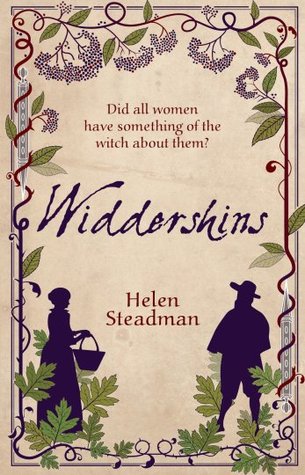
Widdershins by Helen Steadman

I like to browse the ebook section of my library’s website from time to time, and I was delighted when, a few weeks ago, I found a newly published historical fiction novel set in the North East of England, which is where I am from. It’s not often I come across anything at all set in this part of the country, so of course I had to read it!

Widdershins, Helen Steadman’s debut novel, is inspired by a real historical event: the witch trials held in Newcastle upon Tyne in 1650 which resulted in either fifteen or sixteen people (including one man) being executed on the city’s Town Moor – the largest number of people in England’s history to be executed for witchcraft in a single day. Steadman takes this as a starting point to create fictional stories for two of the people involved in the trials – one is the Scottish witchfinder responsible for proving whether the witches are guilty or innocent and the other is one of the accused women. Their narratives alternate throughout the book, giving two very different sides of the same story.

The first thread of the novel follows John Sharpe as he grows up in Scotland believing that he was the cause of his mother’s death in childbirth. Dora, the midwife who delivered John into the world, had been unable to save his mother, and listening to his father vent his anger at both Dora and John himself, the boy has been instilled with a deep-rooted resentment and dislike of midwives, healers and women in general. Spending several years under the guardianship of his Uncle James, a pastor, only increases these feelings further and by the time John is an adult, his purpose in life seems clear: to hunt out, denounce and punish any woman he believes to be a witch.

Meanwhile, Jane Chandler is a young woman living in a rural village near Shotley Bridge, several miles away from Newcastle. From her mother Annie and the local ‘green woman’ Meg Wetherby, Jane is learning the healing properties of the herbs and plants which grow in the countryside and how to use them to prepare remedies and treatments to help the people of her village. In the seventeeth century, of course, activities such as these are misunderstood and viewed with suspicion – and when John Sharpe is summoned from Scotland with his special ‘witch-pricking’ device, Jane could find herself in terrible danger.

Both of the main characters in Widdershins have interesting stories to tell and although they seem quite separate at first, they do soon begin to converge. There is a certain sense of inevitability – with one character being a witchfinder and the other engaged in pursuits which could easily be construed as witchcraft, the outcome may seem obvious – but actually, unless you have read up on the trials beforehand, there are a few surprises in store!

John is a truly despicable person and any warmth I may have felt for him as a small frightened child at the beginning of the book quickly disappeared; his sections of the novel are often uncomfortable to read and although I would have preferred a more multi-faceted villain rather than one who was just purely evil, I admired the author’s attempts to get into the head of such an unpleasant individual and provide motivations to explain his actions. Jane, on the other hand, is much easier to like and to sympathise with as she faces one tragedy after another. She is also involved in a subplot following her romance with childhood friend and neighbour Tom Verger and this adds something extra to the story on top of the witchcraft aspect.

Helen Steadman scatters a small amount of dialect throughout both the Scotland and Newcastle chapters of the book, but not enough to cause readers any problems, and actually I would have liked more of it, to give more distinction between the novel’s two settings. I was disappointed that, even bearing in mind how different the landscape of the North East would have been in 1650, Steadman’s descriptions never really brought the area to life in a way that I felt I could recognise. A lot of the action takes place in and around Jane’s village in the Derwent Valley, but it could have been anywhere, and even when her adventures took her into Newcastle or Durham the sense of place wasn’t as strong as I would have expected.

I did enjoy this book, though; it made a nice complement to The Witchfinder’s Sister by Beth Underdown which I read earlier this year. We should be able to look forward to more books from Helen Steadman; according to her website, she is working on a sequel to Widdershins, as well as two novels about the swordmakers of Shotley Bridge and lighthouse keeper’s daughter Grace Darling, a 19th century heroine.

My Commonplace Book: July 2017

A selection of words and pictures to represent July’s reading

My Commonplace Book

commonplace book
Definition:
noun
a notebook in which quotations, poems, remarks, etc, that catch the owner’s attention are entered

Collins English Dictionary

~

“That’s the only way we ever will go. You can’t sit on the bank and think about it. You have to plunge. That’s the way I’ve always done, and it’s the right way for people like you and me. There’s nothing so dangerous as sitting still. You’ve only got one life, one youth, and you can let it slip through your fingers if you want to; nothing easier. Most people do that.”

Hemmed In edited by MR Nelson (2017) (Quotation from The Bohemian Girl by Willa Cather, 1912)

~
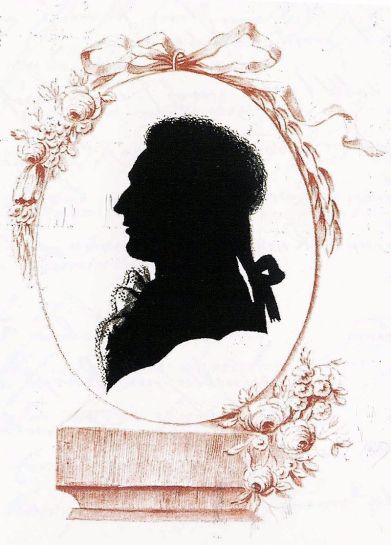
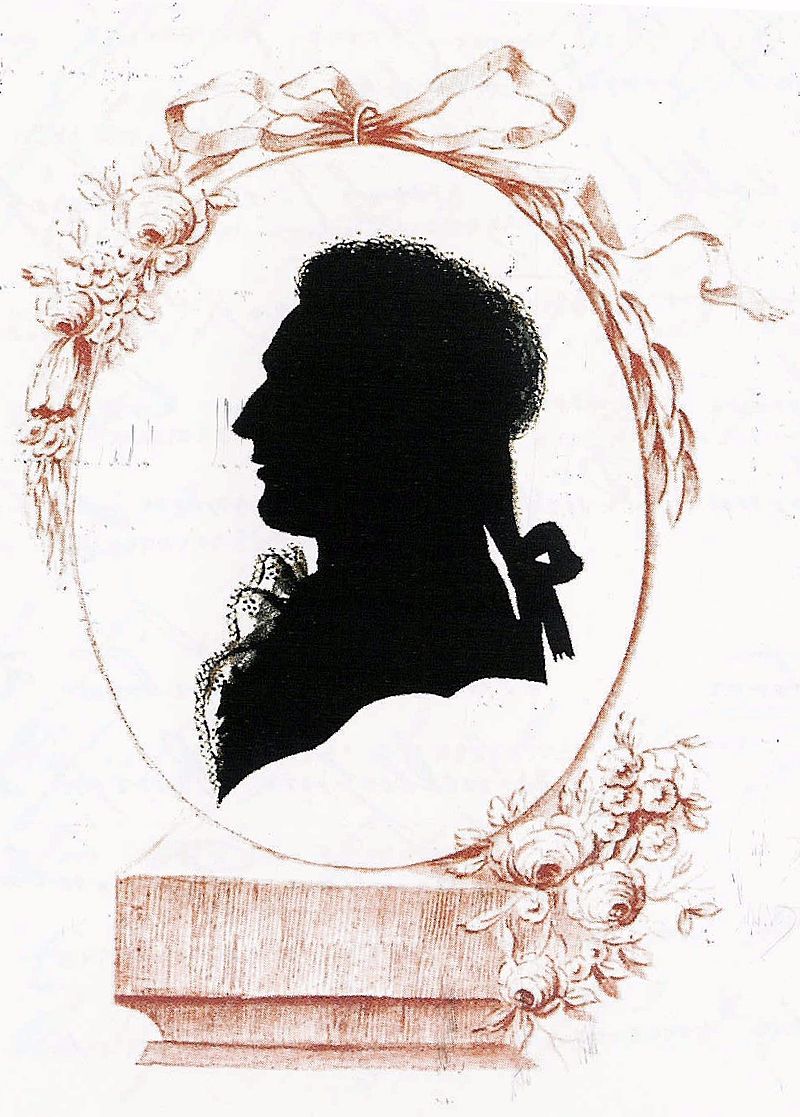
A traditional silhouette portrait of the late 18th century

The walls were hung with shades, exemplars of the dead man’s trade. These were mostly plain black on a white background, but some had embellishments of gold or silver around the edge of the figure, creating a kind of halo. The subjects were usually single individuals, but there was one family group, sitting on delicately made iron chairs – the very same chairs, I now saw, as those partly covered in sacking by the window. There was something salutary about this society of shadows. The meaning appeared to be that everyone’s life was occluded – a notion I could very easily credit.

Soot by Andrew Martin (2017)

~

“This violence of landscape, this cruelty of climate, this continual tension in everything, and even these monuments of the past, magnificent yet incomprehensible because not built by us and yet standing round us like lovely mute ghosts; all those rulers who landed by main force from every direction who were at once obeyed, soon detested, and always misunderstood, their only expressions works of art we couldn’t understand and taxes which we understood only too well and which they spent elsewhere: all these things have formed our character, which is thus conditioned by events outside our control as well as by a terrifying insularity of mind.”

The Leopard by Giuseppe Tomasi de Lampedusa (1958)

~

“Well, lad, the Bible teaches us that if Satan can disguise himself as an angel of light, then his servants will almost certainly follow suit. People and things are not always what they seem. You must treat everyone and everything with suspicion. It is the only way to root out evil.”

Widdershins by Helen Steadman (2017)

~

Atalanta and Hippomenes by Willem van Herp (circa 1650)

“Don’t you see?” Iris asks, and in spite of herself, she leans forward a little on her seat, her breath coming rather fast. “It means that it’s not about Fate, or forcing the mortals to do our will, as we thought. It is about the choices mortals make – a world of freedom, where our destiny is our own, and not determined for us.”

For the Winner by Emily Hauser (2017)

~

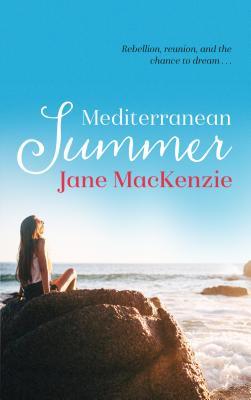
That’s me, thought Laure, a mad intellectual! They had all been mad for a few weeks in Paris. Never again would she feel that intense sense of freedom, empowerment and fellowship. What were they fighting for? Sometimes they had all wondered themselves, but they knew they were fighting against something – against the suffocating old University and its lack of freedoms, against the brutality of the police and the authorities, against the old regime that was leaving France a century behind the world.

Mediterranean Summer by Jane MacKenzie (2017)

~

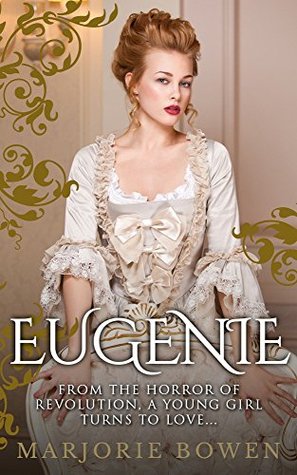
M. de Sarcey was fascinated by this spirit so akin to his own. For the first time in his life he felt a pang of wonder as to whether he had not missed something by the assured magnificence of his position, a sudden glimpse of how splendid it might have been to have been free even from the chains of luxury and custom.

Eugenie by Marjorie Bowen (1917)

~

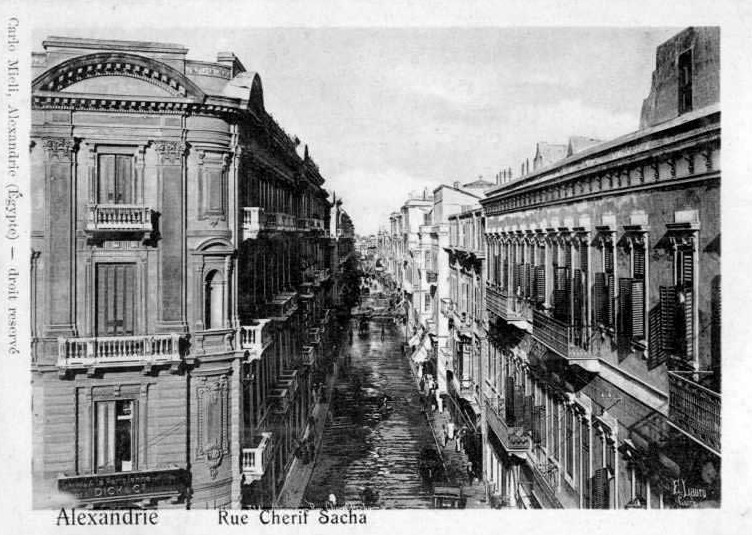
Rue Cherif Pacha, Alexandria, Egypt in early twentieth century

They left the carriage in Alex’s centre square, the palm-fringed Place Mohammed Ali, and set off to Draycott’s on foot. It was as they joined the crowds coursing down the main shopping thoroughfare, the elegant Rue Cherif Pasha, that Olivia felt the straining atmosphere of the day dip and darken. She looked to the heavens to see if a storm was coming, but the sky was pure blue.

Beneath a Burning Sky by Jenny Ashcroft (2017)

~

I believe there is a theory that men and women emerge finer and stronger after suffering, and that to advance in this or any world we must endure ordeal by fire. This we have done in full measure, ironic though it seems. We have both known fear, and loneliness, and very great distress. I suppose sooner or later in the life of everyone comes a moment of trial. We all of us have our particular devil who rides us and torments us, and we must give battle in the end. We have conquered ours, or so we believe.

Rebecca by Daphne du Maurier (1938)

~

Craddock stood looking up at it for several minutes, watching the west windows turn ruby in the sun and as he stared, eyes half closed against the sun, the silent building began to stir with life, so that he saw it as an ageing and once beautiful woman, awaiting the return of sons who had marched away centuries since and been swallowed up in a forgotten war. There was patience here, patience and a kind of desperate dignity, as though all hope of their return had never been abandoned, and that one day all the windows would glow with candles.

Long Summer Day by RF Delderfield (1966)

~

Hot air balloon in flight

The balloon hung in the air like an inverted Christmas bauble, its voluptuous, candy-striped sphere reflected perfectly in the lake. In the early light, the water glowed with the colours of a ripe peach, pale gold towards its edges, a deeper, richer pink at its heart. There was no wind. No sound. The trees along the shoreline had ceased their pre-dawn rustling and none of the balloon’s thirteen passengers was either moving or speaking. The world seemed to be holding its breath.

Dead Woman Walking by Sharon Bolton (2017)

~

“How will you know what is true,” Adam asked, “if they are conflicting accounts? Who is telling the truth? You see, it’s not just you. We all have to face this. People have different versions of what happens. Everyone is sure that theirs is the right one.”

A Week in Paris by Rachel Hore (2014)

~

Favourite books read in July: Soot, Long Summer Day, Dead Woman Walking – and my re-read of Rebecca.

A French Trio: Mediterranean Summer; Eugenie; A Week in Paris

Coincidentally, three of my recent reads have been set in France, so I thought I would combine my thoughts on them into one French-themed post. It’s a good way for me to get through my review backlog too!

Mediterranean Summer by Jane MacKenzie was a nice surprise; a book I knew nothing about, by an author I’d never come across before, but one that I ended up really enjoying. It tells the story of Laure, a young art student who finds herself caught up in the excitement of the 1968 student demonstrations at her university in Paris. When the rebellion is over, with her future as an artist in doubt due to her involvement in the protests, Laure returns home for the summer to her parents’ house in the Mediterranean village of Vermeilla. Here, in the small Catalan community of her childhood, she is reacquainted with old friends as well as making new ones – and with the help of Robert, a lawyer, she begins to search for a way to rescue her career.

This is a lovely summer read; the descriptions of the fictional Vermeilla and the surrounding area are so beautiful I wished I could go and spend the rest of the summer there myself! There’s an interesting selection of characters to get to know too, mostly very likeable, but with one or two who could be considered villains. As for the historical background, I knew almost nothing about the Paris student protests in the 1960s, so I learned something new there, and I was also interested to read about the Nobel dynamite factory in Paulilles and the shocking lack of regard for the health and safety of the employees. I loved Mediterranean Summer and would be happy to try Jane MacKenzie’s previous novels.

The next book I want to talk about takes us further back in time, to the French Revolution. Published in 1917 (originally titled The Third Estate), Eugenie by Marjorie Bowen introduces us to two sisters, Eugenie and Pélagie Haultpenne. Pélagie, the eldest, is heiress to a fortune and, at the beginning of the book, is engaged to a handsome young nobleman, the Marquis de Sarcey. As soon as the Marquis sees her beautiful sister Eugenie, however, Pélagie is forgotten. Can he find a way to be with Eugenie without giving up his claim to the Haultpenne fortune?

I have read a few of Marjorie Bowen’s other historical novels and have found them to vary widely in style and quality. This is not one of the better ones, but despite the off-putting cover, it’s still an entertaining read. The historical aspect of the story is interesting; it focuses less on the Revolution itself than on the factors leading to it, such as the Estates General and the role of the Comte de Mirabeau. This is a novel that you would read more for the plot than because you wanted to learn some history, though. It reminded me slightly of Louisa May Alcott’s A Long Fatal Love Chase; it’s fun, as long as you don’t mind lots of melodrama, swooning heroines and an anti-hero who is “a creature expert in every vice, used to every dishonour, useless, arrogant, a parasite on the labour of others!”

Finally, I read A Week in Paris by Rachel Hore, a dual timeline novel. One thread of the story is set in 1961 and follows music student Fay Knox who is in Paris for a week with her orchestra. Fay has grown up knowing very little about her early childhood as her mother refuses to talk about it or to tell her what happened to her father, other than that he was killed during the war. However, when memories start coming back to her, she has reason to believe that the first years of her life may have been spent in France. Over the course of her week in Paris, Fay decides to find out the truth about her past – and is shocked by what she discovers. Meanwhile, she is reacquainted with an old friend, Adam, but could he also be hiding secrets?

The other storyline is written from the perspective of Fay’s mother, Kitty, who falls in love with Gene, an American doctor, during World War II. The two end up trapped in occupied Paris – and their actions during this period will have consequences that live on into the next generation.

I found this an enjoyable novel, after a slow start, though not as good as similar books by other authors such as Lucinda Riley or Susanna Kearsley. The 1940s storyline is much more engaging than the 1960s one, not just because of the drama of the war itself, but also because the romance between Kitty and Gene is more convincing than the one between Fay and Adam (and less reliant on coincidence and chance meetings). I really cared about what happened to the wartime characters and was gripped by the details of life in a city under Nazi occupation, but I wouldn’t have minded if the framing story involving Fay had been left out altogether.

Three very different books, but I found different things to like about all of them!

Thanks to Jane MacKenzie for the copy of Mediterranean Summer; the other two were both taken from the outstanding titles on my NetGalley shelf.