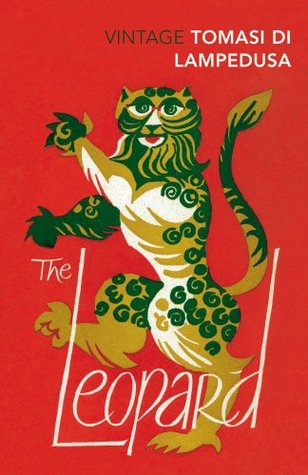
The Leopard by Giuseppe Tomasi di Lampedusa

This novel by Italian author Giuseppe Tomasi di Lampedusa, published posthumously in 1958, is one I had been interested in reading for a few years, having seen lots of very positive reviews, but it was including it on my 20 Books of Summer list that pushed me into picking it up towards the end of June. I have to confess, when I first started reading it I wasn’t at all sure whether I was going to like it, but I think that was mainly because I had no understanding of the historical context. Google came to the rescue and after I’d familiarised myself with the background to the novel I found it much easier to follow what was happening.

The Leopard is set in 19th century Sicily during the Risorgimento (the movement for the unification of Italy). We explore this period of Italian history through the eyes of a Sicilian nobleman, Don Fabrizio Corbera, Prince of Salina, who is forced to watch as the world around him changes beyond his control. Beginning in 1860, the year Garibaldi lands on the coast of Sicily, we see the gradual decline of the Prince’s family and the nobility as a whole.

While Don Fabrizio regrets the loss of values he once held dear and hopes that somehow, once Italy has been united, the class system will be able to survive, his nephew Tancredi has a very different outlook, explaining that “everything needs to change, so that everything can stay the same”. The relationship which develops between Tancredi and the beautiful Angelica, daughter of a wealthy businessman, is only possible because of the breakdown in the class structure; characters like Angelica represent the future, whereas those like Don Fabrizio are becoming part of history.

Although the novel is set in the past – and does immerse the reader in another time and place, with some elegant and vivid descriptive writing – the author occasionally reminds us that he is viewing events from a point many years in the future. For example, he lets us know that the palace he is describing with painted gods on the ceiling will be destroyed by a bomb in 1943. It all adds to the poignancy and to the atmosphere of decay and decline.

If you’re wondering about the title, it refers to the symbol of the Salina dynasty and, I think, the power and grace of the aristocracy. As the Prince himself muses, “We were the Leopards, the Lions; those who’ll take our place will be little jackals, hyenas…” The whole novel is rich in symbolism: a stone leopard above the door has the legs broken off in a sign of things to come, while the initals engraved on Don Fabrizio’s wine glass are fading away and even the fate of his dog Bendico is another reminder that everything must come to an end.

The Leopard is a beautifully written book and although it’s surprisingly short, there’s so much packed into its pages I think a re-read would be necessary to be able to fully appreciate it. After an uncertain start, I was very impressed with this book and can see why it is considered a classic Italian novel.

This is Book 4/20 for my 20 Books of Summer challenge.

Six in Six – the 2017 edition!

It’s July, which means it’s time for the return of the Six in Six meme, hosted by Jo of The Book Jotter! I think this is the perfect way to reflect on our reading over the first six months of the year. The idea of Six in Six is to choose six categories (Jo has provided a list to choose from or you can come up with new topics of your own if you prefer) and under each heading list six of the books or authors you’ve read so far this year.

6

I’ve used four of these categories before, but the first and last ones are new to me this year. I had fun putting this post together, but it’s not as easy as it looks; some titles could have been placed in more than one category and, as I’ve read more than thirty-six books this year, I wasn’t able to include everything.

***

Six books with a colour in the title:

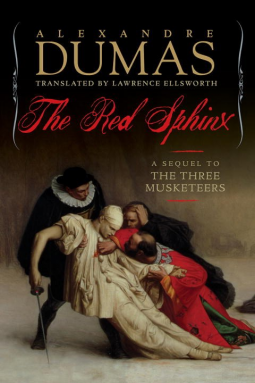
The Red Sphinx by Alexandre Dumas
Midnight Blue by Simone van der Vlugt
The Red House Mystery by AA Milne
Golden Hill by Francis Spufford
The Silver Swan by Elena Delbanco
Golden Bats and Pink Pigeons by Gerald Durrell

***

Six books set in different countries:

The Tea Planter’s Wife by Dinah Jefferies (Sri Lanka)
Archangel by Robert Harris (Russia)
The Shadow Land by Elizabeth Kostova (Bulgaria)
The Gustav Sonata by Rose Tremain (Switzerland)
A Dictionary of Mutual Understanding by Jackie Copleton (Japan)
The Valentine House by Emma Henderson (France)

***

Six books with a touch of mystery

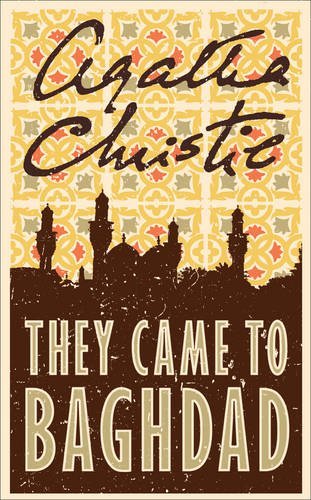
They Came To Baghdad by Agatha Christie
The Unseeing by Anna Mazzola
Duplicate Death by Georgette Heyer
Prague Nights by Benjamin Black
Miraculous Mysteries edited by Martin Edwards
The Coroner’s Daughter by Andrew Hughes

***

Six classic novels

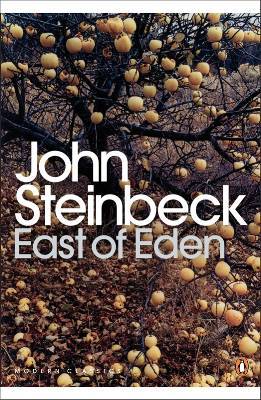
East of Eden by John Steinbeck
Lost Horizon by James Hilton
I, Claudius by Robert Graves
Frenchman’s Creek by Daphne du Maurier
The Day of the Triffids by John Wyndham
Crime and Punishment by Fyodor Dostoevsky

***

Six books about a real historical figure

Mata Hari by Michelle Moran (Mata Hari)
The Winter Isles by Antonia Senior (Somerled)
The Empress of Hearts by E Barrington (Marie Antoinette)
The Vatican Princess by CW Gortner (Lucrezia Borgia)
The Shadow Queen by Anne O’Brien (Joan of Kent)
First of the Tudors by Joanna Hickson (Jasper Tudor)

***

Six books with covers I loved!

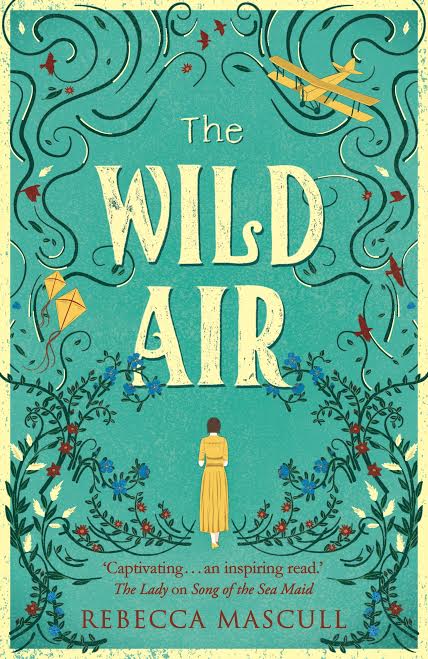
The Wild Air by Rebecca Mascull

The Wonder by Emma Donoghue

The Essex Serpent by Sarah Perry

The Bear and the Nightingale by Katherine Arden

The Witchfinder’s Sister by Beth Underdown

The Muse by Jessie Burton

***

Are you taking part in Six in Six? How is your reading going this year?

Mata Hari by Michelle Moran

So far my feelings about Michelle Moran’s novels have been very mixed. Cleopatra’s Daughter was interesting, but felt too light and insubstantial, The Second Empress was much better, but I had one or two problems again with Rebel Queen. I had hoped Mata Hari (also published as Mata Hari’s Last Dance) would be another good one, but unfortunately it turned out to be my least favourite of the four that I’ve read.

Before I read this book, all I knew about Mata Hari was that she was an exotic dancer who was accused of spying during the First World War. I felt sure that she must have been a fascinating woman and I was looking forward to learning more about her. And I did learn a lot from this novel. Mata Hari narrates her story (fictional, but based on fact) in her own words and tells us all about her dancing career, her experiences of life in European cities such as Paris and Berlin, and her many romantic relationships, including several with military personnel which led to her being accused of passing secrets to Germany.

However, I wanted to get to know the woman behind the newspaper headlines and the seductive costumes – Margaretha Zelle, or M’greet as she is called in the novel – and although she does confide in us now and then about her childhood in the Netherlands (she did not come from an Indian background, as she tried to claim), her time in Java during her unhappy marriage to Rudolf MacLeod and her heartbreak at the loss of her children, I never felt very close to Mata Hari and didn’t gain a very good understanding of the person she really was.

The one aspect of Mata Hari’s life that Moran does successfully capture is her loneliness; I didn’t like her and had very little sympathy for her as she seemed so immature and selfish, but I could see that she was not a happy person and that her character had been shaped by her earlier experiences. The descriptions of Mata Hari’s various dances are also well done, particularly one that she performs with a live snake while dressed as Cleopatra. The novel is strangely lacking in period detail, though, and apart from the obvious references to the war and to other famous people of the time – her rival dancer, Isadora Duncan, for example – I didn’t feel that there was much sense of time or place at all.

The book is also disappointingly short, with under 300 pages in the edition I read. If you just want a basic overview of Mata Hari’s life and career, it’s perfectly adequate, but for something deeper you will need to look elsewhere. The section of the novel covering her spying activities is very brief and feels almost like an afterthought, which is a shame as this is the part of the story which should have been the most interesting. Even on finishing the book, I’m not completely clear on what we are supposed to assume; was Mata Hari really a spy or was she just someone who had made some poor decisions and been carried along by events outside her control? To be honest, long before we reached this point I had lost interest anyway and had already decided that I would need to look for another book on Mata Hari one day. Has anyone read The Spy by Paulo Coelho?

My Commonplace Book: June 2017

A selection of words and pictures to represent June’s reading

My Commonplace Book

commonplace book
Definition:
noun
a notebook in which quotations, poems, remarks, etc, that catch the owner’s attention are entered

Collins English Dictionary

~

“Wintrow,” he chided softly. “Refuse the anxiety. When you borrow trouble against what might be, you neglect the moment you have now to enjoy. The man who worries about what will next be happening to him loses this moment in dread of the next, and poisons the next with pre-judgement.”

Ship of Magic by Robin Hobb (1998)

~

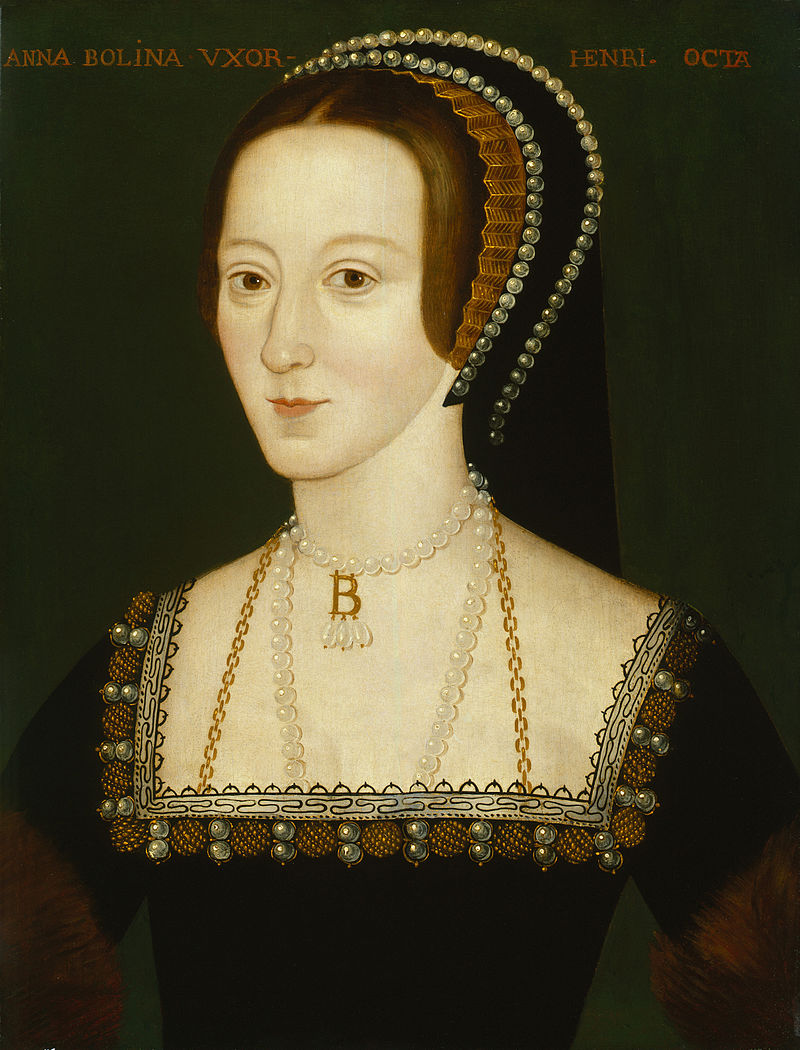
Anne Boleyn

“But that’s dreadful!” Anne cried. “If she is not mad, then she should be restored to her throne. Surely her own father would not treat her so terribly.”

“When kingdoms are at stake, Mistress Anne, human feelings count for nothing,” Sir John observed.

Anne Boleyn: A King’s Obsession by Alison Weir (2017)

~

How could the child bear not just the hunger, but the boredom? The rest of humankind used meals to divide the day, Lib realised – as reward, as entertainment, the chiming of an inner clock. For Anna, during this watch, each day had to pass like one endless moment.

The Wonder by Emma Donoghue (2016)

~

Unconsciously, she had always clung to dignity as her sole possession. She had asked for no pity, made no lamentation, and had endured each moment as it came, waiting patiently for release, because she believed that in all circumstances there must be some right way in which to think and act, which can lift them into a kind of beauty.

Lucy Carmichael by Margaret Kennedy (1951)

~

Prague Castle

It was the heart of winter, and a crescent moon hung crookedly over the bulk of Hradčany Castle, looming above the narrow laneway where the body lay. Such stars there were! – like a hoard of jewels strewn across a dome of taut black silk. Since a boy I had been fascinated by the mystery of the heavens and sought to know their secret harmonies.

Prague Nights by Benjamin Black (2017)

~

“Modern society is the greatest criminal of all. Distribution of wealth notoriously unjust. So-called “justice” a mockery. Organised society makes criminals by the hundred, and then revenges itself upon them – if they’re poor. Big thieves get off and get honours. All wrong. Prevention of crime is the great thing – not punishment.”

Miraculous Mysteries edited by Martin Edwards (2017)

~

History wasn’t made without taking risks, that much he knew. So maybe sometimes you had to take risks to write it, too.

Archangel by Robert Harris (1998)

~

It was easy to wander into the heart of the ancient streets, laced together by alleys aromatic with the smell of ginger and charcoal. She watched women traders shouting out their wares in shrill voices, their socks, shawls and cotton reels displayed on trolleys covered with straw and tarpaulin, while the men sat crosslegged on low stools, rolling dice on the pavement. Canaries sang in bamboo cages hanging from canopies outside narrow shops and the sun lit up particles of dust, making the air shimmer.

The Silk Merchant’s Daughter by Dinah Jefferies (2016)

~

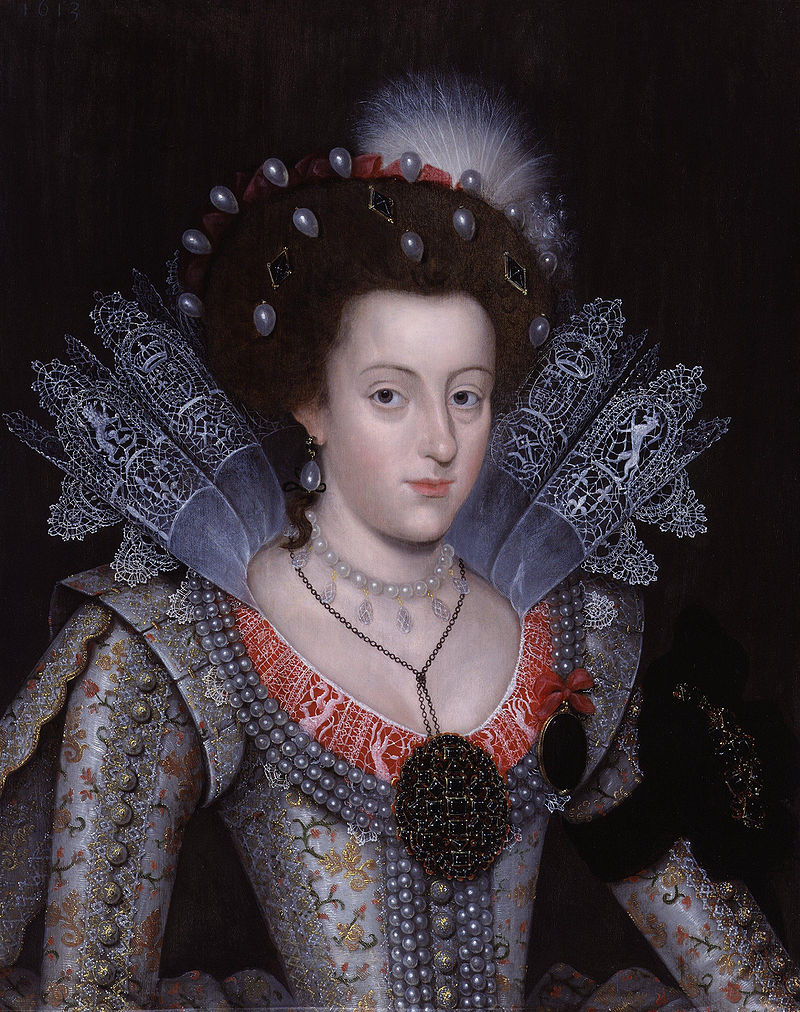
Elizabeth Stuart, Queen of Bohemia

Elizabeth could not imagine being dismissed with a shrug and a careless sentence. That was not the lot of princesses. If they were not beautiful men pretended that they were. If they were fortunate enough to possess beauty, charm and wit then poets wrote sonnets to them and artists had no need to flatter them in portraits.

House of Shadows by Nicola Cornick (2015)

~

“You are right, Mother: long before I was born, you tied my fate to the Palmisanos. I can’t break away from that. Even if I hated them with all my might I couldn’t get away. If I chose not to take sides, I would still be shackled to them. But am I condemned to death by this curse? Aren’t I a free man? Don’t I control my actions? Can’t I rebel and fight against destiny?”

The Last Son’s Secret by Rafel Nadal Farreras (2017)

~

But tomorrow there will be another theory, and another; one will be discredited and the other praised; they’ll fall from fashion and be resurrected a decade later with added footnotes and a new edition. Everything is changing, Mrs. Seaborne, and much of it for the better: but what use is it to try and stand on quicksand? We will stumble and fall, and in falling become prey to folly and darkness – these rumours of monsters are nothing more than evidence that we have let go of the rope that tethers us to everything that’s good and certain.

The Essex Serpent by Sarah Perry (2016)

~

Favourite books read in June: The Wonder, Ship of Magic and The Essex Serpent

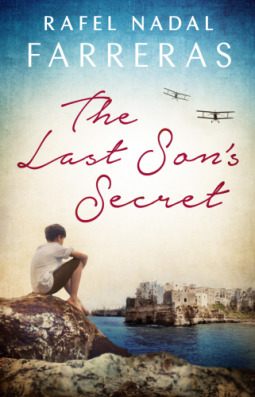
The Last Son’s Secret by Rafel Nadal Farreras

This novel by Catalan author Rafel Nadal Farreras apparently enjoyed a lot of success when published in its original language in 2015 and is now available for the first time in an English translation by Mara Faye Lethem.

The story is set in the Puglia region of Italy where, in the small town of Bellorotondo, the names of twenty-one members of the Palmisano family are engraved on a memorial to the First World War. Vito Oronzo, the last Palmisano man to die in the war, leaves behind a pregnant wife, Donata. When the child – a boy whom she names Vitantonio – is born, Donata is so afraid that her son will succumb to the curse of the Palmisanos that she takes desperate measures to secure his safety.

The Last Son’s Secret follows little Vitantonio through his idyllic childhood in rural Italy, growing up alongside Giovanna Convertini, the daughter of his father’s best friend who was also killed on the same day in 1918.

They took dips in the stone laundry trough, caught crickets in the garden, ran through the fields as the farmers cleared the dead leaves from the olive trees, and they ate dinner together at the kitchen table. In the evenings everyone gathered on the threshing floor and sat in the cool air: the grown-ups sang and told stories and the children played hide-and-seek until they were so worn out they fell asleep on their aunt’s lap.

Elsewhere in Puglia, however, life is not so pleasant. A neighbour’s six-year-old son is sold into child labour, while in the nearby cave houses of Matera families live in extreme poverty. Further afield, Mussolini is rising to power and Europe is on the brink of war once more. Eventually, Vitantonio, Giovanna and their friends will be forced to take sides. Will the Palmisano curse strike again or has Donata done enough to protect her son from his father’s fate?

I enjoyed The Last Son’s Secret; despite it being set during the two world wars, it’s not as depressing as it might sound – the likeable main character and the messages of hope and optimism are enough to counteract the darker aspects of the plot. The depiction of life in Italy between the wars is beautiful and I could easily imagine I was there in Bellorotondo, harvesting olives, picking cherries and planting flowers in the garden of the Convertini palazzo. I particularly liked the descriptions of Matera, where Vitantonio hides out for a while at the beginning of the war.

The Second World War chapters are also interesting to read, and I couldn’t help thinking how rarely I have read anything that looks at the war from an Italian perspective. This is certainly the first time I have read a fictional portrayal of the chemical disaster caused by the release of mustard gas during the sinking of the American ship John Harvey in the port of Bari.

The Last Son’s Secret is a surprisingly quick read, but it did take me a few chapters to really get into the story. This is probably because it begins with a long chronicle of the deaths of the Palmisano men, which I expect was intended to be a quirky and unusual opening to the novel but didn’t quite work for me. Also, while Vitantonio’s story was moving at times, I don’t really think I would describe it as the sweeping, heartbreaking epic promised by the blurb. Maybe some of the emotion was lost in translation – although in general I did think the translation flowed well and I had no real complaints about it. If any other books by Rafel Nadal Farreras become available in English I would be happy to read them.

This is Book 3/20 for my 20 Books of Summer Challenge.

Thanks to the publisher for providing a copy for review via NetGalley.

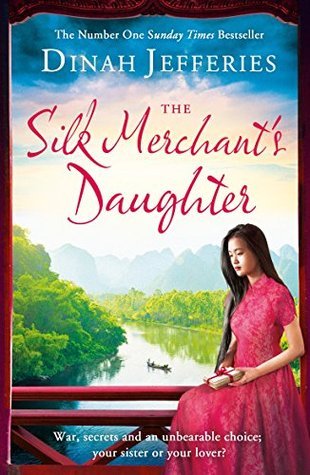
The Silk Merchant’s Daughter by Dinah Jefferies

After reading and loving Dinah Jefferies’ The Tea Planter’s Wife last month, I immediately added another of her books, The Silk Merchant’s Daughter, to my 20 Books of Summer list, hoping for another great read.

The Silk Merchant’s Daughter is set in French Indochina, the name formerly given to the group of French colonial territories which included Vietnam, Cambodia and Laos. The title character – and our heroine – is Nicole Duval, the eighteen-year-old daughter of a French silk merchant based in Hanoi, the capital city. The period during which the story takes place is a turbulent time in the history of the region and Jefferies provides a useful timeline at the front of the book for those of us who need some help in understanding the sequence of events.

As the novel opens in 1952, Nicole learns that her father is planning to hand over the running of the entire silk business to her older sister, Sylvie, leaving Nicole with only one small, neglected silk shop in the Vietnamese quarter of the city. Nicole is disappointed and resentful; her relationship with Sylvie has been difficult from childhood and yet again, Nicole has been made to feel inferior. To make matters worse, the man she loves – Mark, an American trader who is in Hanoi on mysterious government business – has previously been in a relationship with her sister, and Nicole is not at all sure that he and Sylvie no longer have feelings for each other.

Determined to make the best of things, Nicole opens up the little silk shop and it is here, living and working among the Vietnamese people, that she begins to understand their discontent with French rule. With the help of Tran, a militant with the revolutionary group the Viet Minh, Nicole’s mind is opened to new ideas and views. Being half Vietnamese herself – she has inherited her looks from her late Vietnamese mother, whereas Sylvie resembles their French father – Nicole has a certain amount of sympathy for Tran and his friends. But Mark and the Duvals will be on the opposite site of the coming conflict, so Nicole needs to decide where and with whom her loyalties lie.

The Silk Merchant’s Daughter is another enjoyable and engaging novel from Dinah Jefferies, bringing to life the history of a place about which I previously knew very little. Having learned about the Malayan Emergency in The Separation and 1920s Ceylon in The Tea Planter’s Wife, it was good to have the opportunity this time to add to my knowledge of Vietnam. I haven’t read much about the Vietnam War and nothing at all – until now – about the years immediately preceding it, encompassing the rise of the Viet Minh and the First Indochina War. It was also interesting to read about French colonialism, which made a change from reading about British colonialism!

Writing the novel from the perspective of Nicole was a good decision by Jefferies, as she is in the unusual position of being both French and Vietnamese. However, I never really felt that she was truly torn between the two and it seemed fairly obvious to me which side, and which man, she would eventually choose, and that took some of the tension and emotion out of the story. There are some wonderful descriptions of Vietnam, from the sights, sounds and smells of the streets of Hanoi to the colours and textures of Nicole’s silks, but on the whole I found this book slightly disappointing after the very high standards set by The Tea Planter’s Wife.

Although this is not my favourite Dinah Jefferies book, I am still looking forward to reading Before the Rains, her new novel set in India.

This is book 2/20 for my 20 Books of Summer challenge.
Top Ten Tuesday: Best books read in 2017 so far

Unbelievably, we’re now halfway through the year – and for this week’s Top Ten Tuesday (hosted by The Broke and Bookish), we are asked to list our top ten books read in 2017 so far.

I found this list surprisingly easy to put together, although there were a few other books I would have liked to include but couldn’t as I was limited to ten. Maybe some of them will make it onto my end-of-year list in December, when I won’t be restricted by numbers! For now, here is my list of ten, not in any particular order:

~

1. Golden Hill by Francis Spufford

2. East of Eden by John Steinbeck

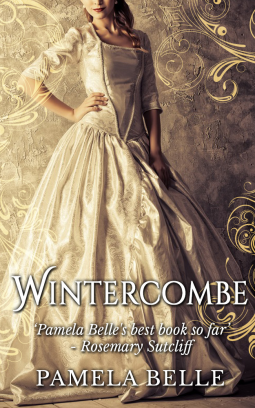
3. Wintercombe by Pamela Belle

4. The Wonder by Emma Donoghue

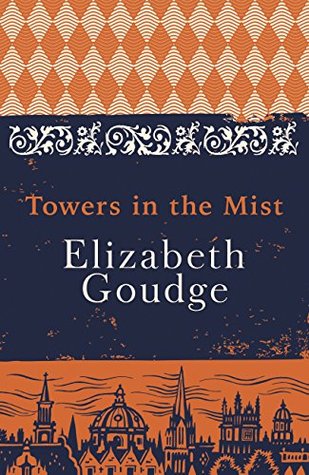
5. Towers in the Mist by Elizabeth Goudge

6. The Red House Mystery by A.A. Milne

7. His Bloody Project by Graeme Macrae Burnet

8. They Came to Baghdad by Agatha Christie

9. Lost Horizon by James Hilton

10. The Red Sphinx by Alexandre Dumas

~

Have you read any of these? What are the best books you’ve read in the first six months of the year?