The No. 1 Ladies’ Detective Agency by Alexander McCall Smith

Alexander McCall Smith’s No. 1 Ladies’ Detective Agency books seem to have been around forever, but I have never really felt tempted to try one. It didn’t help that whenever I noticed some on the library shelf, they tended to be the later books in the series and my personal preference is always to start at the beginning if possible…so when I had the chance, earlier this year, to read the first book in the series via NetGalley, I thought it would be a good opportunity to finally see what it was like.

The No. 1 Ladies’ Detective Agency is set in Botswana and features thirty-four-year-old Mma Precious Ramotswe. When her father dies, leaving his herd of cattle to Precious, she sells them and uses the money to buy herself a house and an office which becomes the headquarters of her very own detective agency. She hangs a sign above the door, employs a secretary, then sits back and waits for clients. They do come, eventually, and Mma Ramotswe finds herself with an intriguing selection of cases to investigate.

This is not a straightforward detective novel with one central mystery to be solved; instead, there are lots of separate little mysteries, with only a few pages devoted to some of them, although a few are longer. They are not particularly complex – I often managed to solve them myself, which is unusual for me – and deal mainly with cheating husbands, rebellious teenagers and cases of insurance fraud, for example, rather than more serious crimes. Mma Ramotswe takes a practical approach to her detective work, based around common sense and logic, and following the guidance of The Principles of Private Detection by Clovis Andersen. Sometimes she makes mistakes, but more often than not she is successful and proves that those who tell her women can’t be detectives are most definitely wrong!

As well as the mysteries, there are also chapters relating earlier episodes in Mma Ramotswe’s life, descriptions of Botswana – its scenery, its wildlife and its people – and some insights into African culture. The novel is disjointed and messy and, apart from one slightly more involved case to which we return several times throughout the book, there is no overarching plot. And yet, somehow, it does work! I really enjoyed getting to know Mma Ramotswe and picking up a little bit of knowledge of a country I previously knew nothing about.

I haven’t been left wanting to rush out and buy all the other books in the series, but I would be happy to try another one at some point. Maybe those of you who are familiar with Alexander McCall Smith’s work can tell me if it’s necessary to read this series in order or if you can just dip in and out. Are they all as episodic as this one? And are there any of his other books or series that you would recommend?

Historical Musings #26: Judging a book by its cover…

There was a recent Top Ten Tuesday topic on book covers which I would have liked to have participated in but already had another post scheduled for the same day. Better late than never, though, so for this month’s Historical Musings post I thought it would be fun to look at some of the various types of covers which tend to be used for historical fiction novels. There are only seven on my list rather than ten, but you will probably be able to think of more.

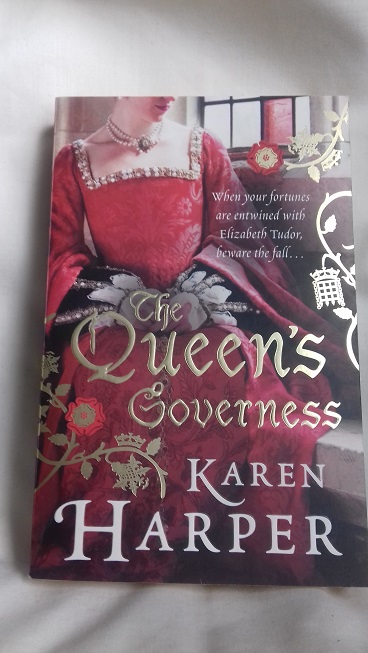
The ‘faceless woman in a pretty dress’ cover

Example: The Queen’s Governess by Karen Harper

I didn’t have to look very hard to find some of these covers on my shelves! This design has become very popular in recent years and although there are some variations – sometimes we can see part of the face and sometimes we can see only the back of the head – the overall effect is the same. I have read that a lot of publishers like to use these covers because obscuring the woman’s face creates mystery and avoids the problem of readers complaining that her appearance doesn’t correspond to the author’s descriptions. However, this type of cover is usually associated with light, romance-focused historical fiction and, depending on reading tastes, might put some people off; there are exceptions, of course, so it’s not always fair to judge. As a separate issue, there’s the question of whether the dress is appropriate to the time period – I won’t go into that here, but you may be interested in this list of anachronistic covers on Goodreads.

The ‘swords and shields’ cover

Example: Insurrection by Robyn Young

These have the opposite effect to the previous type of cover, I suppose. When I see a cover with a shield, sword, helmet, flag or something similar, I expect the story to be action-packed with lots of battle scenes, not much romance and probably a male protagonist rather than female. Again, there are exceptions, but in general these novels have a very different feel from the headless women novels and will often appeal to different readers (although there are plenty of examples of both that I’ve enjoyed).

The distant lands cover

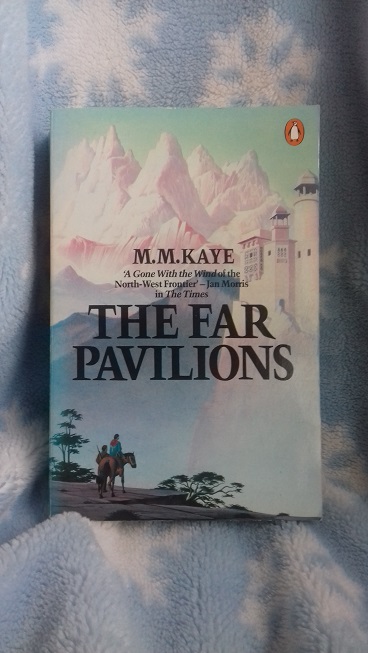
Example: The Far Pavilions by M.M. Kaye

Many historical fiction novels have a strong sense of place as well as of time, and sometimes the publisher will choose to use that as the selling point for the book. One of my favourite historical fiction novels, The Far Pavilions, wouldn’t have worked if it had been set anywhere other than India and Afghanistan, hence the picture and the quote on the cover of my edition – “A Gone With the Wind of the North-West Frontier”.

The tie-in cover

Example: North and South by John Jakes

These are my least favourite types of cover, particularly if I haven’t already watched the adaptation in question. I prefer to form my own visual impression of the characters as I read, rather than have somebody else’s interpretation already in my head before I start, and I like other readers to be given that opportunity too. (I did love both the book and mini-series versions of John Jakes’ North and South trilogy, though, and must read/watch them again one day!) Tie-in covers are not specific to historical fiction, of course, and occur across all genres; although I don’t like them, I can understand the reasons behind their use. Here’s an interesting article from the Guardian.

The illustrated cover

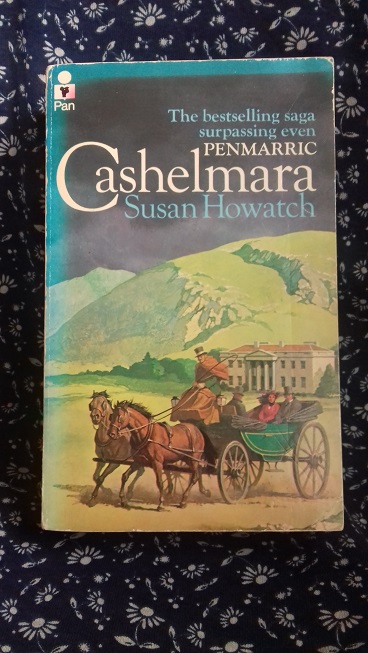
Example: Cashelmara by Susan Howatch

This could overlap with some of the other sorts of cover listed above, but I thought I would still include it (and it gives me a chance to mention another book which is on my must-reread-soon list, along with some of Susan Howatch’s others). Do you prefer books with old-fashioned illustrations on the cover rather than the stock photographs and images that are more popular these days? What about covers with portraits or reproductions of famous paintings (like Girl With a Pearl Earring)?

The ‘what were they thinking?’ cover

Example: Lion of Alnwick by Carol Wensby-Scott

Not too much to say about this one, other than that whoever designs the covers sometimes doesn’t get it quite right. I thought Lion of Alnwick was a good book which deserved a much nicer cover!

The simple but striking cover

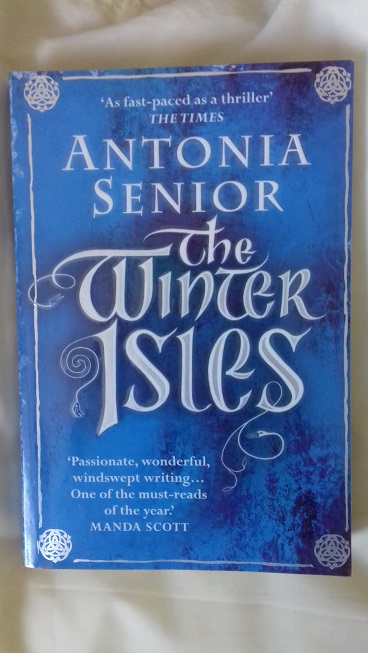
Example: The Winter Isles by Antonia Senior

Sometimes a publisher will avoid all of the above options and go with something basic and neutral. This makes it difficult to judge the book by the cover and to decide at a glance whether it’s something you want to read or not, but the advantage is that it’s not immediately off-putting to readers. (If you’re wondering, I’m reading The Winter Isles now, so haven’t posted my thoughts yet!)

~

What do you think of the covers pictured above? Would they make you more or less likely to pick up the book?

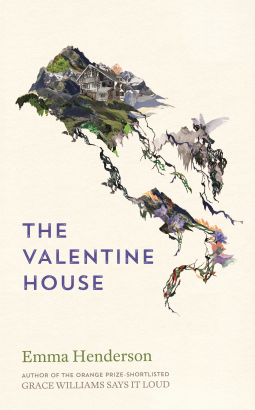
The Valentine House by Emma Henderson

The Valentine House surprised me. Having read Emma Henderson’s first novel, Grace Williams Says It Loud, in 2011, I had expected this new one, her second, to be something similar. Instead, what I found was something completely different. Grace Williams was a moving, thought-provoking story of a young girl in a 1950s mental institution; The Valentine House is probably best described as a family saga set in the French Alps.

The house referred to in the title is Arete, a large chalet in the mountains overlooking the village of Hext. It was built by a British mountaineer, Sir Anthony Valentine, in the 19th century and is used as a summer home by successive generations of his family. Our story begins in 1914 when Mathilde, a teenage girl from a farm in the valley, goes to work for the Valentines. Mathilde is an ‘Ugly’, the term given to the unattractive young women who make up Arete’s workforce, specially chosen by Sir Anthony’s wife, Lady C, as being less likely to catch her husband’s eye. Spending her summers at the house, Mathilde gets to know the Valentine family, particularly Daisy, a girl the same age as herself who becomes gradually wilder and more unstable as the years go by.

Decades later, in the summer of 1976, Sir Anthony’s great-great-grandson George is visiting Arete with several of his cousins. Even though Sir Anthony is long gone, his legacy lives on in the Alpine Club which he created to entertain the younger members of the family, and George and his cousins continue to carry out Club activities such as the outdoor physical challenges known as ‘Paideia’. Mathilde is still there too, an elderly woman now, but as much a part of Arete life as she has ever been.

The Valentine House is a dual time period novel: a chapter set in 1976 and written from George’s perspective is followed by one narrated by Mathilde and set earlier in the century. Eventually the two begin to converge and secrets which have been kept hidden from the reader (and from some of the characters) start to be revealed. What is the truth behind the disappearance of Margaret, Sir Anthony’s daughter, whose visits to Arete came to an abrupt stop many years ago? Mathilde is sure that if she could only find out what happened to Margaret everything else that has puzzled her about the Valentines would begin to make sense. Although some of the plot twists and revelations could probably be predicted, I didn’t even try to guess – I just relaxed and let the story take me in whichever direction it wanted to go, which meant I was kept in suspense until the various Valentine mysteries started to unfold.

I did struggle at times to keep track of all the characters and how they were related to each other. This is probably not surprising, as there are five generations of the family featured in the novel; drawing a simple family tree helped to solve the problem, although I wish I’d had the sense to do it at the beginning of the book instead of when I was already halfway through!

I think what I loved most about The Valentine House was the setting; I haven’t been to the area of France described in the book – the Haute-Savoie – but I would like to as Emma Henderson makes it sound beautiful. And this is a good place for me to mention that Sir Anthony himself has a unique way of describing the Alpine mountains and valleys, which you’ll discover in the opening paragraph of the novel. If you find that the language he uses makes you blush, don’t worry – this does not reflect the style of writing throughout the rest of the book!

Although I found both threads of the story very enjoyable, it usually seems to be inevitable with dual timeline novels that readers will have a preference for one storyline over the other and in my case it was the one narrated by Mathilde. And it was Mathilde whose story lingered on in my mind for days after finishing the book.

Now I’m wondering what Emma Henderson’s third book will be about. I hope there’s going to be one!

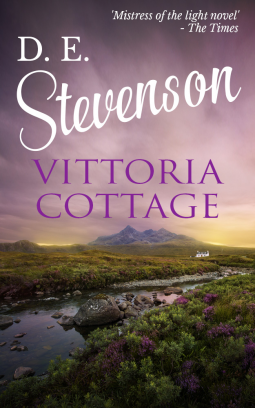
Vittoria Cottage by D E Stevenson

This is only the third book I’ve read by D E Stevenson, but I’m finding that her novels are perfect when I’m in the mood for something gentle and undemanding, but still with convincing characters, some insights into human nature and just enough plot to keep me interested from beginning to end. Having read what other people have to say about her books it seems that they vary in quality, but I think I’ve been lucky with the three I’ve chosen to read so far (Miss Buncle’s Book, Amberwell and now this one).

Vittoria Cottage is the first in a trilogy. The ‘cottage’ of the title is located in the quiet English village of Ashbridge and is home to the Dering family. Arnold Dering died before the novel opens, leaving behind his widow Caroline and their two daughters (there’s also a son who is with the army in Malaya). The younger daughter, Bobbie, doesn’t give Caroline any problems – at least not during the course of this first novel – but the same can’t be said about pretty, selfish Leda. Her engagement to law student Derek causes concern for both families, who can see that the young couple will have no money and are perhaps not very well suited anyway. However, Caroline and Derek’s father resist the temptation to interfere too much and leave Derek and Leda to learn this the hard way.

Meanwhile, Caroline has a romantic interest of her own, although she tries to deny even to herself that she is falling in love. He is a newcomer to the village – Robert Shepperton, a man with a mysterious past. What did he do during the war? What happened to his family? And why has he come to Ashbridge? When Caroline’s sister Harriet, a London actress, arrives for a long stay at Vittoria Cottage, she also finds herself drawn to Robert. But which sister, if either, is Robert interested in?

The main characters in the novel are well drawn and engaging (apart from one or two, such as Bobbie, who remain a bit shadowy) and I liked Caroline immediately. As an older, more mature heroine, she is sensible and practical and if she can sometimes be frustratingly naive and lacking in self-confidence, it only makes her all the more human. I enjoyed watching her relationship with Robert Shepperton slowly develop – a relationship built around friendship and trust. I also liked Caroline’s maid, Comfort Podbury, a young woman who has gained a lot of weight due to a medical condition and is devoted to Caroline because she is one of the few people in Ashbridge who doesn’t judge her by her size.

Vittoria Cottage was published in 1949 and the effects of the war on Caroline and her friends are clear – rationing is still in place, the Derings wonder where Mr Shepperton gets enough coupons to buy so many new clothes, and Caroline is surprised when she finds herself in trouble for attempting to send eggs to Harriet in London. If I’m going to be critical, I could say that this book doesn’t feel very original and I can think of quite a few other novels I’ve read by similar authors which have similar settings and similar types of characters. I don’t think that matters too much, though, because DE Stevenson is very good at writing novels like this and, as I said at the start of this post, sometimes they are just what I’m in the right mood for.

I didn’t enjoy Vittoria Cottage as much as the last Stevenson book I read, Amberwell, but I did like it. The ending seems very abrupt and, without saying too much about it, it’s satisfying in some ways but in others not very satisfying at all! If I want to know what happens next to the Dering family, I’ll have to read the other two in the trilogy, Music in the Hills and Shoulder the Sky.

The Shadow Queen by Anne O’Brien

Anne O’Brien’s new novel, The Shadow Queen, tells the story of Joan of Kent, wife of the Black Prince and mother of the future King Richard II of England. Although Joan wasn’t actually a queen, she was never far from the throne – as cousin to Edward III, she had Plantagenet blood, and through her husband, Edward’s eldest son Edward of Woodstock (the name ‘the Black Prince’ was given to him later), she was both Princess of Wales and Princess of Aquitaine. When Richard acceded to the throne at the age of only ten, in her position as the king’s mother she was able to have some influence on the early years of his reign. In some ways, then, she could be considered to be a sort of ‘shadow queen’, as the title suggests.

Despite all of this, however, Joan is probably best known for her beauty – she would later become known to history as the Fair Maid of Kent – and for the scandals caused by her three marriages. The novel opens in 1340, with twelve-year-old Joan learning that a marriage has been arranged for her with Will Montagu, heir to the Earl of Salisbury. Joan doesn’t dislike Will and under different circumstances this would have been a good match. Unfortunately, though, Joan is not free to marry anyone – she has already undergone a secret marriage with Thomas Holland, a minor knight who departed shortly after the wedding to fight for the king. Forced to admit the truth, Joan is horrified when her mother insists that her marriage to Will must go ahead anyway. She faces a long and difficult battle if she is ever to prove the validity of her first marriage and to win the right to live with the man she considers her true husband.

Around half of the novel is devoted to Joan’s relationships with Thomas and Will and the challenges involved in disentangling Joan’s first two marriages and deciding who should be her rightful husband. This seemed to go on for a very long time, but I appreciated that it was necessary to give the reader an understanding of the gossip and rumour that surrounded Joan in the early part of her life and how important it was that, when she eventually married the King’s heir, Edward of Woodstock (Ned, as he is called in the novel), her reputation should be clear of any taint.

The other half of the novel follows the years of Joan’s marriage to Ned, their time as Prince and Princess of Aquitaine and, when back in England, Joan’s efforts to ensure that their son Richard will be named successor to the throne. I don’t think it’s a spoiler – as it’s a well-known historical fact – to say that Ned’s life is cut short by illness and as he is outlived by his father, he never has the opportunity to become king himself. I couldn’t help thinking how different things might have been if he had lived and Edward III had been succeeded by a grown man rather than a ten-year-old boy; what we know of the Black Prince suggests that although he was a good soldier he wouldn’t necessarily have made a good king, but still the whole course of history could have been changed. I liked the way Anne O’Brien portrayed him and I enjoyed reading about his relationship with Joan. There was a lot of love between them, but it wasn’t love at first sight – more a love that developed slowly between two people who had known each other from childhood – and, at least on Joan’s part, there was also a certain amount of ambition involved.

Joan herself is portrayed as a strong, proud and courageous person who does her best to take control of her own life, though always within the confines of what it is possible for a medieval woman to do. I’m not sure that I particularly liked her, as she does sometimes come across as a little bit self-absorbed and lacking in judgement, but I did find her a convincing and well-drawn character. I was intrigued by her prickly, hostile interactions with Edward III’s much maligned mistress, Alice Perrers – I know Alice was the subject of one of Anne O’Brien’s earlier novels, The King’s Concubine, which I haven’t read yet, and now I’m curious to see how she approaches Alice’s character in that book.

The Shadow Queen is an interesting, enjoyable novel, if a bit too long and drawn-out in places. I couldn’t help comparing it to the only other novel I’ve read on Joan of Kent – A Triple Knot by Emma Campion – and I think this is definitely the better of the two books.

The Gustav Sonata by Rose Tremain

“So you see,” she said, “you have to be like Switzerland. Do you understand me? You have to hold yourself together and be courageous, stay separate and strong. Then, you will have the right kind of life.”

Switzerland is well known for its neutrality during the Second World War but, as we see in Rose Tremain’s The Gustav Sonata, even remaining neutral didn’t mean that Switzerland and its people completely escaped the effects of war. The Gustav Sonata explores some of these effects, as well as looking, on a more personal level, at other meanings of neutrality and of courage, separateness and strength.

The novel is divided into three parts, presumably to resemble the movements of a sonata. The first is set just after the war, in 1947, and introduces us to Gustav Perle, a five-year-old boy who lives in the fictional Swiss town of Matzlingen with his mother, Emilie. Gustav’s best friend at kindergarten is Anton Zwiebel, but when he brings Anton home one day, he is confused by Emilie’s reaction. It’s obvious that she disapproves of Anton, but why? Is it because he is Jewish – and if so, what is her problem with Jews? These questions won’t be answered until later in the book, but in the meantime we continue to follow Gustav and Anton throughout their childhoods and into their teens.

As Gustav spends more and more time with the Zwiebel family, he becomes aware of how different Anton’s life is from his own; he senses that Anton’s parents really seem to care about their son’s future, unlike his own mother who can be so cold and distant. Anton, however, is having trouble of his own – as a talented musician he dreams of a career as a concert pianist, but his ambitions look set to be threatened by his debilitating stage fright.

In the second section of the book, we go back in time to the 1930s and the early days of Emilie’s relationship with Gustav’s father, Erich Perle. At last we can begin to understand Emilie’s behaviour and the reasons for her animosity towards Anton’s family. Finally, for the third part of the novel, we return to the stories of Gustav and Anton, who are now middle-aged men, and we find out what has been happening to them in the intervening years. I don’t always like books which jump around in time like this, as they can sometimes seem disjointed, but Rose Tremain handles the structure very well. My only slight criticism is that I thought the Gustav and Anton we meet in part three feel too similar to the Gustav and Anton from part one – I found both characters convincing as children but not so convincing as adults.

I particularly enjoyed the wartime section in the middle of the book, dealing with the relationship between Emilie and Erich and showing how a decision made by the Swiss government changed both of their lives. As I’ve said, the neutral stance taken by Switzerland during the war is only one type of neutrality examined in this novel – there’s also the neutrality of one person towards another (‘staying separate and strong’) and the question of how far it is possible to remain neutral when faced with a moral dilemma which requires a choice to be made. I’m sure we can all think of times in our own lives when doing nothing was as bad or worse than doing something!

This is the third Rose Tremain novel I’ve read, the others being Restoration and its sequel Merivel. I found the writing style and overall tone of this one very different from the other two, which reflects the very different subject and setting. The Gustav Sonata is one of the shortlisted titles for this year’s Walter Scott Prize for Historical Fiction. Of the books I’ve read from the list so far, this isn’t my favourite, but I did enjoy it and won’t be at all disappointed if it wins.

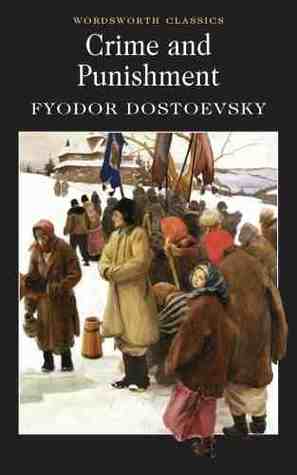
Crime and Punishment by Fyodor Dostoevsky

This is one of my final reads from my Classics Club list and, I have to admit, it wasn’t one that I was looking forward to, having had at least two previous attempts to read it. I did read The Idiot a few years ago (also for the Classics Club) and got on much better with that one, so I was prepared to give Crime and Punishment another chance. I’m glad I did, because I managed to get to the end this time and enjoyed it much more than I thought I would.

Crime and Punishment, Dostoevsky’s 1866 novel, follows the actions and thought processes of Rodion Romanovich Raskolnikov, an impoverished former student living in St Petersburg. In the first chapter we learn that Raskolnikov is planning the murder of an elderly pawnbroker, Alyona Ivanovna, a crime he proceeds to carry out, although it doesn’t go entirely according to plan. At this stage his motives are not completely clear, but it seems that he is simply in need of money: he is struggling to pay the rent, can’t afford to continue with his studies and has discovered that his sister is about to marry a man she doesn’t love for his money.

Nothing in a Dostoevsky novel is simple, however, and other motives soon begin to emerge. At one point Raskolnikov states that the old woman he has killed is just a ‘louse’ and of no use to society. He also explains that he believes in the theory that there are some people who are superior to others and have the right to commit serious crimes such as murder. He considers Napoleon to be one example of such a person and he is keen to test the theory out for himself. Are some men really so great that the law doesn’t apply to them and that they have no need to worry about the consequences of their actions because by committing murder they will have proved their greatness?

Of course, Raskolnikov does not escape the consequences and from the moment he kills the pawnbroker, his emotions are thrown into turmoil. Although he gets away from the scene of the crime presumably undetected, he obsesses over every detail of the murder, becoming feverish and causing his family and friends – who know nothing of what he has done – to worry about him. Despite taking some steps to cover his traces and remove the evidence, there are times when he seems to want to be discovered and goes out of his way to make himself appear suspicious. He becomes more and more tormented as the novel progresses and as Dostoevsky allows us to access Raskolnikov’s innermost thoughts, this is not the most comfortable or pleasant of reads! You wouldn’t really expect a book with the title Crime and Punishment to be comfortable and pleasant, though, would you?

The crime part of the novel is obvious enough, but the punishment takes more than one form. First, there is Raskolnikov’s psychological disarray in the days following the murder, which is a punishment in itself, but there is also the question of whether or not his crime will eventually be found out and he will receive punishment of a different kind. I won’t spoil things by telling you whether he is discovered, betrayed, confesses or escapes justice forever, because once the detective Porfiry Petrovitch gets involved, there is a certain element of suspense which I’m sure you would rather experience for yourself.

Although I don’t think I would describe this book as “one of the most readable novels ever written” as stated on the cover of my edition, once I got into it I found it very compelling and a quicker read than I’d expected it to be. I’m so pleased I gave it another try and that I persevered past Raskolnikov’s nightmare about a horse being thrashed to death, which was where I stopped on my last attempt. And of course, the horse dream, horrible as it may be, is in the story for a reason and its significance starts to become clear later on. I won’t pretend that I fully understood everything that happens in the book, but I can always read it again one day – after I’ve read The Brothers Karamazov, which I think is going to be one of the titles on the second list I put together for the Classics Club.