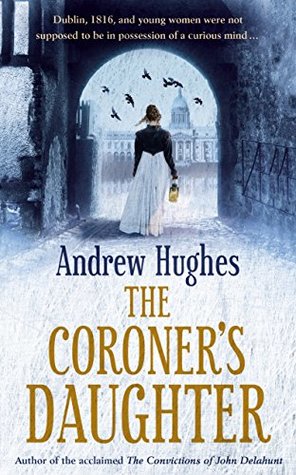
Andrew Hughes: The Coroner’s Daughter

I found so much to love in The Coroner’s Daughter! A strong, resourceful heroine with a passion for science; an interesting historical setting – 19th century Dublin; and a twisting, turning mystery to keep me guessing. Just like Andrew Hughes’ first novel The Convictions of John Delahunt, which I read and loved a few years ago, this is another great book which manages to be both highly entertaining and darkly atmospheric.

The story takes place in 1816, known as the ‘Year Without a Summer’. The city of Dublin is shrouded in fog and when a frosty July is followed by snow in August, people are at a loss to explain what is going on. Eighteen-year-old Abigail Lawless, however, has conducted her own research into the phenomenon, linking the unseasonable weather to a volcanic eruption on the other side of the world. As the coroner’s daughter, Abigail has always possessed a natural curiosity for anything scientific – and is particularly interested in her father’s work, performing autopsies to establish the cause of death.

When a young servant in a neighbouring household is accused of murdering her newborn baby – and is found dead before the inquest can be held – Abigail is sure there is more going on than meets the eye. She easily discovers the identity of the maid’s lover, but this is only the beginning. The strict religious sect known as the Brethren has been increasing in size and power since their influential leader, Mr Darby, arrived in Dublin the previous year. As she continues to investigate, assisted by her father’s young Scottish apprentice, Ewan Weir, Abigail becomes convinced that the Brethren are connected with the death of the maid and her baby. But who else might be involved? And if Abigail becomes too deeply involved herself, could she be putting her own life in danger?

I really enjoyed The Coroner’s Daughter. I think I preferred John Delahunt as the plot seemed more original and unusual, but this book is excellent too. I loved following Abigail around the Dublin of 1816 which, thanks to the gloomy and oppressive weather, is a very atmospheric setting. Our heroine’s investigations take her to a variety of locations from the Lying-In Hospital at the Rotunda to the smart terraced houses of Fitzwilliam Square and a clockmaker’s workshop on Abbey Street – and all of these are vividly described. Although it’s quite a dark story, it’s written with a lot of humour, which was obvious from the very first sentence: For my eighteenth birthday, Father promised me the hand of a handsome young man, which he duly delivered mounted in a glass bell-jar. First sentences can be so important and that one captured my attention immediately!

I found the scientific aspect of the novel particularly interesting. The story takes place at a time when the fanatical religious views of groups such as the Brethren are coming into conflict with the work of scientists such as the astronomer Professor Reeves, a friend of Abigail’s father. As a woman, Abigail faces additional obstacles, as is seen when she is forced to submit one of her reports to a scientific journal under her father’s name in order to get published, and again when she is the only female member of the audience at an astronomy lecture given by Professor Reeves. Mr Lawless does try to encourage his daughter to be more ‘feminine’ but at the same time, not having any sons, there’s the sense that he is only too pleased to have someone to share his knowledge and passion with!

Now I’m hoping Andrew Hughes will write more books about Abigail Lawless. She’s a great character and the way the novel ended makes me think that she could easily be brought back for a sequel. If not, I will look forward to reading whatever he writes next.

Thanks to the publisher for providing a copy of this book for review.

My Commonplace Book: March 2017

Looking back at March’s reading – in words and pictures.

My Commonplace Book

commonplace book
Definition:
noun
a notebook in which quotations, poems, remarks, etc, that catch the owner’s attention are entered

Collins English Dictionary

~

My brother buried his resentment that day. But resentment buried is not gone. It is like burying a seed: for a season it may stay hidden in the dark, but in the end, it will always grow. I did not see it, though we were still close, even at that age. I think now that to be too close to someone can be to underestimate them. Grow too close, and you do not see what they are capable of, or you do not see it in time.

The Witchfinder’s Sister by Beth Underdown (2017)

~

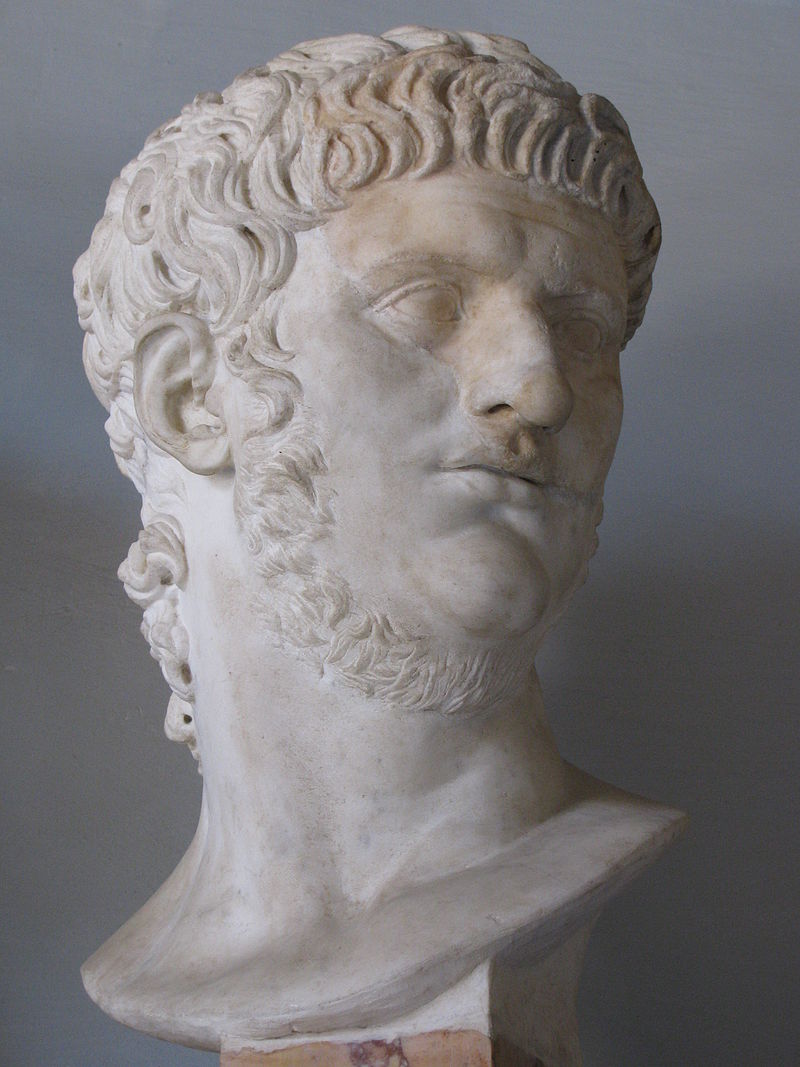
Nero

No one in the training grounds knew who I was. I had taken another name – I called myself Marcus and gave myself a familial name not connected to anyone of importance. No one ever came to watch me, except Anicetus, so people assumed I was an orphan or a ward; in any case, not anyone of importance. I loved the freedom of being nobody. I think all children want this freedom. That does not mean they would be content with it forever.

The Confessions of Young Nero by Margaret George (2017)

~

But extracting the stumps and roots almost killed him each time he hacked and dug and pulled and ground. Prying out a stump reminded him of how deeply a tree clung to the ground, how tenacious a hold it had on a place. Though he was not a sentimental man – he did not cry when his children died, he simply dug the graves and buried them – James was silent each time he killed a tree, thinking of its time spent in that spot.

At the Edge of the Orchard by Tracy Chevalier (2016)

~

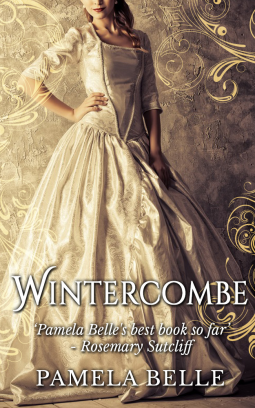
“Autumn-coloured?” said Silence, struck by the aptness of the description. Tabby had a felicity with words which delighted her mother, and often such phrases would emerge casually without, it appeared, much thought, and yet strangely poetic. In her mind’s eye she saw Captain Hellier, his brown and tawny colouring, and smiled. “What a good description – ‘the autumn-coloured man’! Much too good for the likes of him, though, chicken – you’ll have to call him something foul, something more appropriate for him.” She gave Tabitha a sudden, flashing grin, crackling with mischief. “Take your time, and think of a good one.”

Wintercombe by Pamela Belle (1988)

~

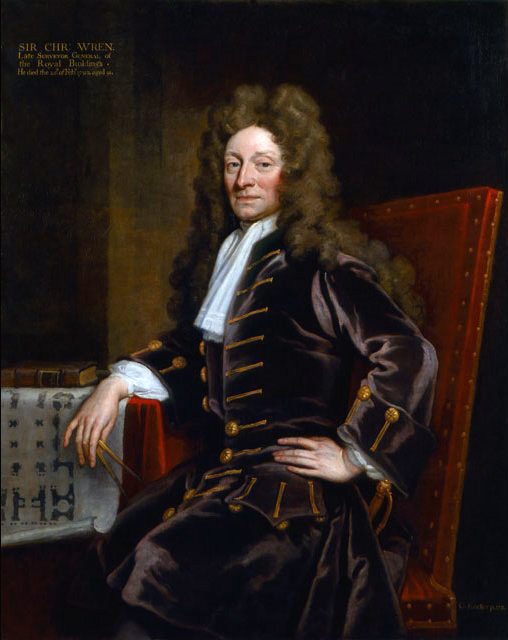
Sir Christopher Wren

There were diagrams of instruments for grinding glass, illustrations of the lenses of telescopes, and other inventions for pneumatic engines, embroidering by machine, a variety of musical instruments and a weather wheel. He told her that some of his inventions had been put to use over the years while others were still only working models.

Circle of Pearls by Rosalind Laker (1990)

~

“Oh yes, there is no official bar on females. It is just a habit they have fallen into. There is even talk of electing Caroline Herschel as an honorary member.”

I thought that unlikely considering the Academy’s history with regard to women. When it was founded, one of its most prominent antiquarians was Charlotte Brooke, who translated Gaelic poetry into English. She fell on hard times, and members of the Academy wondered what they could do to improve her situation. They decided to appoint her housekeeper of the Academy premises.

The Coroner’s Daughter by Andrew Hughes (2017)

~

British Museum

“It’s a wonderful place,” Rhoda was asserting, “and ‘instructive’ very; it makes one realise the depth and extent and thoroughness of one’s own ignorance. Do people reading here never sigh for an easy-chair and a footstool and a collection of comfortable, unreproachful light literature?”

“No, we are all profound students here,” Stephen assured her; “when we want relaxation we come for a walk among the mummies.”

London Roses by Dora Greenwell McChesney (1903)

~

Mr Bridge smiled. “I suspect that timetables are written for people of the opposing disposition to your good self, those who live their lives in a perpetual rush. Obviously they need a two-minute grace period to manage themselves on to a train. We all have our flaws, William.”

Mr Bridge loved to argue a good defence, but William was unsympathetic. “The latest I’ve ever managed to be was on time.”

The Fourteenth Letter by Claire Evans (2017)

~

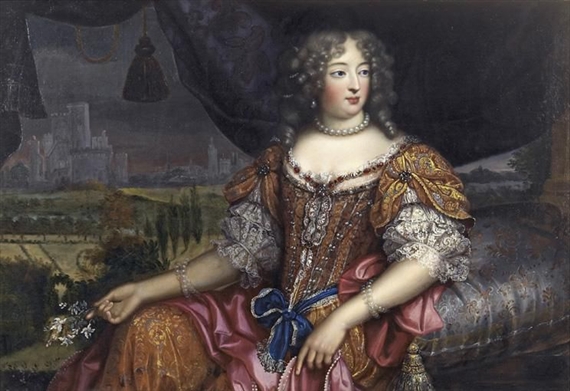
Madame de Montespan

Her firm chin, straight nose, fine wrists, waist and neck; her thick and plentiful blond locks. She had invented a style of coiffure and baptised it the hurluberlu. Her hair had been pulled back from the forehead and was held in place by a hoop on top of her head, leaving her hair to fall on either side in a cascade of curls that framed her face.

The Hurlyburly’s Husband by Jean Teulé (2008)

~

“Nat! You can’t give your grandmother’s name to a parrot!”

“Why not? They have so much in common – both venomous, abusive, malicious and terrifying old birds.”

“You can’t,” said Silence, trying unsuccessfully not to laugh. “You really can’t. I can probably, if I’m extremely lucky, and even more extremely careful, explain away a parrot, even one with Royalist views and a profane vocabulary. I cannot face the servants knowing that it has been christened in memory of my mother-in-law.”

Herald of Joy by Pamela Belle (1989)

~

Simon Forman c. 1611

“Am I then to put myself in his power?” whispered Frances from the shadow of her hood. She knew well enough in what repute witches and warlocks were held; she had been told by her great-uncle that Simon Forman lived within the jurisdiction of the Archbishop that he might better escape the authorities…she had heard, too, that he had once been in prison for trying to raise the dead; she shuddered, half afraid, half excited.

The King’s Favourite by Marjorie Bowen (1937)

~

Even the unexpected has a double image to it as if it had occurred sometime before in the same way and in the same place. There is a pattern to the week: the mail-boat on Saturday; mass on Sunday; the weekly wash on Monday. So the memory shortens itself and goes from day to day; the pattern is lost among the individual threads…

The Sea Road West by Sally Rena (1975)

~

Favourite books read in March: Wintercombe and Herald of Joy.

Pamela Belle: Wintercombe and Herald of Joy

Having read and loved Pamela Belle’s wonderful Heron series, I knew I would also have to try her other series, of which Wintercombe (originally published in 1988) is the first. Although I was looking forward to reading it, I have to admit that after being so captivated by the adventures of the Heron family, I doubted whether I could possibly enjoy this book as much. Of course, I was wrong. What I found was another beautifully depicted setting, another moving story to become absorbed in and another set of characters to fall in love with (or to hate, as the case may be).

Our heroine this time is Silence St. Barbe, whose unusual first name was bestowed on her by her strict Puritan father as it represented one of the qualities he valued in a woman. When we meet Silence at the beginning of the novel, she has been married for several years to another Puritan – George St. Barbe, a man much older than Silence and with little love or compassion for his young wife. With the outbreak of England’s Civil War, George has gone off to fight with the Roundheads, while Silence stays safely behind at Wintercombe, the family’s country estate in Somerset, with her three children and two step-children.

When a troop of Cavaliers descend upon Wintercombe, however, it seems that it is not such a safe haven after all and soon the house is full of noisy, drunken soldiers under the command of the vicious and ruthless Lieutenant-Colonel Ridgeley. As she struggles to keep her family and servants safe and her lovely home intact, Silence is grateful for the help of Captain Nick Hellier who is able to provide some protection from the worst of his Colonel’s cruelty and violence. But much as Silence comes to value Nick’s friendship, she still isn’t sure whether she can trust him…he is one of the enemy, after all.

I have read a lot of novels set during the Civil War but one of the things I liked about Wintercombe (and also The Moon in the Water and The Chains of Fate) is that, although the progress of the war is followed and battles and significant political events are mentioned, the focus is on the lives of ordinary people, showing how, in one way or another, the effects of war eventually touch even those who have stayed at home and aren’t directly involved. A Parliamentarian house being garrisoned by the Royalist army is an aspect of the war that I haven’t read about in fiction before and I really felt for Silence and her family as they tried to prevent their beloved house and gardens from being destroyed. According to the author’s note, the model for Wintercombe is Great Chalfield in Wiltshire. I have never been there but it looks beautiful and is now on my list of places to visit if I’m in that area of the country.

There is also a romantic thread to the story, although I won’t say too much about it other than that I loved both hero and heroine and enjoyed watching their relationship slowly develop, giving them time to get to know each other – and the reader time to get to know both characters. But there are also other relationships which I found it interesting to follow, particularly the ones Silence has with her two teenage stepchildren, the difficult, troubled Rachael and the gentle, loyal Nat.

After finishing Wintercombe I couldn’t wait to continue with the story, so I moved straight on to the second book in the series, Herald of Joy. *Spoiler warning – you may wish to avoid reading the next few paragraphs until you’ve read Wintercombe.*

Herald of Joy takes up the story about six years after Wintercombe ended. Death is approaching for George St. Barbe, Silence’s husband, but it seems that his eldest daughter, Rachael, is the only person at Wintercombe who will truly grieve for him. Silence’s marriage to George has never been a happy one and even in death he manages to cause more problems for her. She and her stepson Nat are dismayed by the contents of his will, which leaves Silence reliant on Nat’s goodwill and Rachael faced with marrying a man who, as the rest of the family can see, is completely unsuitable. To complicate things further, Silence’s younger sister, the inappropriately named Patience, has recently been involved in a plot to restore Charles II to the throne and has been packed off to Wintercombe by their brother, where he hopes she will be kept out of trouble.

For Silence, George’s death means she is now free to be with her lover, Nick Hellier, after six years of separation – but Nick is fighting in Charles’ army at Worcester and is unaware of events at Wintercombe. When the battle ends in defeat for the Royalists, Nick is forced to go on the run. Will he and Silence be reunited at last?

Following Wintercombe’s emotional final chapter, I was hopeful that this novel would have a happier ending. But although some of our characters do find happiness by the end of the book (I’m not saying any more than that, of course) they have to endure more drama, betrayal, heartache and danger before they get to that point! While the story of Silence and Nick is at the heart of the novel again, I also enjoyed catching up with the rest of the St. Barbe family, their servants and friends, and seeing how they had developed and changed during the intervening years. The new characters are great too, particularly the lively, irrepressible Patience, the aristocratic Mervyn Touchet, who bears a striking resemblance to the King, and, best of all, the children’s ‘profane and Royalist’ parrot.

*End of spoilers*

I loved both of these books and will definitely read the other two in the series, A Falling Star and Treason’s Gift. However, I’m aware that they deal with the next generations of the St. Barbe family so I will wait a little while before reading them as at the moment I would probably just want more of Silence and Nick!

2017 Walter Scott Prize Shortlist

Following last month’s revelation of the 2017 longlist for the Walter Scott Prize for Historical Fiction, the shortlist has been announced today. As you probably know by now, I am currently working my way through all of the shortlisted titles for this prize since it began in 2010 (you can see my progress here). There are seven books on this year’s list and for once I’m off to a good start as I’ve already read three of them!

Here are the seven:

A Country Road, A Tree by Jo Baker

Days Without End by Sebastian Barry

The Vanishing Futurist by Charlotte Hobson

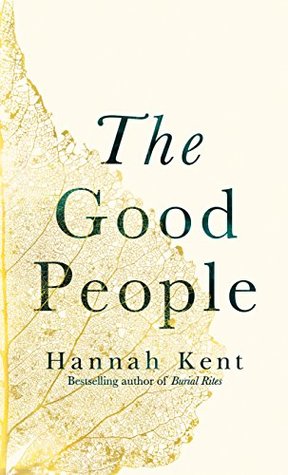
The Good People by Hannah Kent

Golden Hill by Francis Spufford

Mothering Sunday by Graham Swift

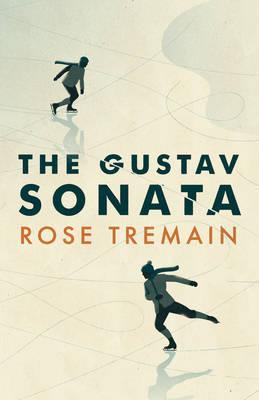
The Gustav Sonata by Rose Tremain

***

Of the three books that I’ve read, I loved Golden Hill and The Good People, and although I wasn’t a fan of Days Without End, Sebastian Barry’s writing is beautiful and I would say it has a good chance of winning. Of the four that I haven’t read, I already have a copy of The Gustav Sonata which I’m hoping to read soon, but I don’t know anything about the others. Have you read any of them? What do you think of this year’s shortlist?

The winner will be announced in June!

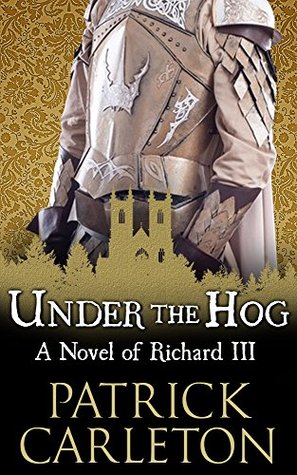
Under the Hog by Patrick Carleton

I had been looking forward to reading this book since I first became interested in the Wars of the Roses and decided I wanted to read as much as I could on the subject. First published in 1937, Under the Hog gets good reviews and appears on several lists of recommendations of novels set in this period, so when I settled down to read it I expected something special – and luckily, I wasn’t disappointed.

Under the Hog is a fictional account of the life of Richard III, but along the way we also enter the minds of the other notable men and women of the period, get amongst the action on the battlefield, witness private conferences and murders carried out in secret, and are offered a surprising solution to the mystery of the Princes in the Tower. I don’t think it’s necessary for me to give a synopsis of the plot here, as it does follow the course of real history very closely – and I’ve already written about this period many times before in previous reviews – so instead I’ll just make some general observations about the novel itself.

The approach Patrick Carleton takes is quite unusual. Rather than writing from the perspective of one character or even a few, he writes from many different viewpoints, switching from character to character as the story requires. These include Thomas Wrangwysh, the Mayor of York; the diplomat Philippe Commynes; the scholar Dr Warkworth; Richard III’s close friend Francis Lovell; Margaret of Burgundy, sister of Richard and Edward IV; and Ralph Miller, a young soldier at the Battle of Barnet. So many different voices and personalities, each one coming forward to tell their own part of the story, however big or small, before retreating into the background, in some cases never to be heard from again.

Richard himself is seen mainly through the eyes of other people. It’s only really his wife, Anne Neville, who sees the warm, sensitive man behind the rather grim and austere exterior. Carleton’s portrayal of Richard is largely sympathetic – not a saint, but a human being who sometimes makes mistakes like the rest of us, ruthless when necessary but not needlessly cruel. I appreciated the fact that Carleton takes the time to show us some of the good things Richard achieved during his reign, which are often overlooked, such as his reforms to law and justice. The only thing I didn’t like was his persistence in drawing attention to Richard’s height – or lack of it. When Richard’s skeleton was discovered in Leicester in 2012, it was found that he suffered from scoliosis which would probably have affected his height, but Carleton’s constant descriptions of him as being unusually tiny still seemed a bit strange. He also has Richard continually biting his lip and playing with the rings on his fingers – presumably inspired by the way he has been pictured in his portraits – but again, it was a bit distracting!

The other characters, including the minor ones, are generally very well written. I particularly loved the portrayal of the spiteful, petulant but strangely tragic George of Clarence (I liked the way Carleton tackles the legend of George being drowned in a butt of malmsey) – and of Anthony Woodville, brother of Edward IV’s queen, quietly scheming to keep control of the power his family wield in England. It’s Anthony who, in one of the most memorable scenes in the book, comes up with the idea of murdering the deposed Henry VI in the Tower of London, which I think might be the first time I’ve seen him blamed for that particular incident.

I loved this book, but I don’t think I would necessarily recommend it as a first introduction to Richard III and the Wars of the Roses. The reader is very much dropped straight into the action and it is assumed that you will have at least some background knowledge; names are given their less familiar old-fashioned spellings – Tydder and Wydvylle for Tudor and Woodville – and there are passages of untranslated French. This is probably one to enjoy after you’ve already gained a bit of familiarity with the period.

If I hadn’t known that this was a book from the 1930s I would probably have assumed it was a lot more recent than that, as it has aged very well. It is witty, unromantic and written with a mixture of darkness and lightness. Although it unfortunately seems to be out of print at the moment, if you share my interest in this fascinating period of history, you could do a lot worse than to find yourself a copy of Under the Hog.

The Muse by Jessie Burton

This is Jessie Burton’s second novel, following her very successful debut, The Miniaturist. I had one or two problems with The Miniaturist and didn’t fall in love with it the way so many other people seemed to, but I did like it enough to be interested in reading more of her work.

The Muse is split between two different time periods. In 1967, we meet Odelle Bastien, a twenty-six-year-old woman from Trinidad who is looking for work in London. As she settles into her new job as a typist at the Skelton Institute, a prestigious art gallery, Odelle strikes up an unusual friendship with her employer, the glamorous and secretive Marjorie Quick, who encourages her to follow her ambition of becoming a writer. At a party one night Odelle is introduced to Lawrie Scott, who shows her a painting he has inherited from his mother. A few days later he brings it to the Skelton where it causes a great deal of excitement; it seems that Lawrie’s painting could be a lost masterpiece.

To discover the origins of the painting, we have to go back to Spain in 1936 where Austrian art dealer Harold Schloss and his English wife, Sarah, are living in a rented finca – a country house – in a village near Malaga. The couple’s daughter, nineteen-year-old Olive, has ambitions of her own but is keeping her talents hidden knowing that they wouldn’t be appreciated by her father. When local painter and political activist Isaac Robles and his sister Teresa come into her life, Olive has some big decisions to make; this could finally be her chance to follow her dreams.

What is the truth behind the painting once owned by Lawrie Scott’s mother? What really happened to the artist Isaac Robles, whose final fate is unknown? And is Marjorie Quick really who she claims to be? Like The Miniaturist, The Muse has an element of mystery, but unlike the previous book, it is grounded entirely in reality with no hints of the supernatural. I thought the writing style felt quite different too, especially as this one is written in the past tense instead of the present tense of The Miniaturist. In fact, I would almost go so far as to say that they could have been written by two different authors, which is not necessarily a bad thing as it’s good to see authors trying something new.

I found both threads of the novel interesting to read. In the 1960s, Odelle gives us some insights into what it’s like to be an immigrant from the Caribbean living in Britain and what it’s like to be black in a predominantly white community. However, I couldn’t help thinking that Odelle herself feels almost superfluous to the story; it’s Lawrie who owns the painting and Marjorie Quick who is connected in some way with the events of 1930s Spain. Usually in this type of novel, the modern day (or relatively modern, in the case of this book) narrator has some kind of personal link with the historical characters, but Odelle doesn’t, which seemed a bit strange to me.

The 1930s storyline is where most of the real action takes place. With Spain on the brink of civil war at that time, Spanish politics form a large part of the story – not just as a backdrop, but with a real significance to the lives of the Schloss and Robles families. A lot of care has obviously gone into creating the Spanish setting – the descriptions feel detailed and vivid – but again, my problem was with the characters. None of them came fully to life for me and I struggled to understand their motives and the decisions they made.

Although there were some aspects of the novel I liked – such as the mystery surrounding Marjorie Quick and the exploration of the struggles faced by women in the worlds of art and literature in years gone by – I think of Jessie Burton’s two novels I probably preferred The Miniaturist.

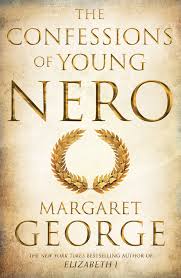
The Confessions of Young Nero by Margaret George

It’s been a few years since I read Margaret George’s Elizabeth I – still the only one of her novels I’ve read – but I’ve always intended to read more and the publication of The Confessions of Young Nero, the first of two volumes on the life of the Roman Emperor, seemed a good opportunity. Until recently, this particular book wouldn’t have appealed to me (Ancient Rome has never been a favourite historical period of mine) but tastes changes and, having read the wonderful Cicero trilogy by Robert Harris, I now feel more enthusiastic about the subject.

The Confessions of Young Nero is a fictional account of the early years of Nero – or Lucius Domitius Ahenobarbus, to give him the name by which he was known as a child. Narrated in his own words, Nero begins by taking us through the events of his childhood, starting with one of his earliest memories: the time his uncle, the Emperor Caligula, tried to drown him. This is the young Nero’s first experience of the ruthless plotting and scheming which surrounds those close to the imperial family; it is never far from his thoughts as he grows older and, following the deaths of first Caligula and then his successor Claudius, becomes emperor himself.

Although, as I’ve mentioned, most of the story is narrated by Nero, there are several much shorter sections scattered throughout the book narrated by two other characters: Locusta, a poisoner whose skills are very much in demand, and Acte, the former slave who becomes Nero’s lover. This was one of the least successful aspects of the book, in my opinion. I really don’t think those sections added anything to the story and I’m not sure why those two characters in particular were chosen, as there were plenty of others who had just as much significance in Nero’s life.

Nero himself is portrayed much more sympathetically than I’d expected. Admittedly I don’t know a huge amount about him, but from the little I had previously read I had formed a very different impression of Nero than the one given by this novel. I can see from Margaret George’s author’s note that she has deliberately taken a revisionist approach to Nero’s story, believing that he has been unfairly treated by history and that some of the accounts we rely on for information about him were written to discredit him. I can accept this (it reminds me of the way Tudor propaganda was intended to discredit Richard III) but I personally found this version of Nero far too nice! Nothing was ever really his fault and on occasions where he did commit a wicked act, it was because he had been driven to it and left with no choice. I think a more complex, morally ambiguous character would have been of more appeal to me.

I did like the characterisation of the main female characters in the novel, particularly Messalina, Agrippina and Poppaea, three ambitious women each of whom wields power in her own way. Something which comes across very strongly throughout the novel – and especially when one of these women is involved – is the continuous sense of danger and the way in which anyone of importance in the Roman Empire had to be constantly on their guard against an attempt on their life.

Having such limited knowledge of Ancient Rome, I found the complicated family relationships difficult to follow at first, but I think Margaret George does an excellent job of clarifying them for readers like myself and by the time I was a few chapters into the book I was starting to get Nero’s family tree clear in my mind. As this is quite a long novel and only tells the first half of Nero’s story, it allows plenty of time to explore the major personal and political incidents which take place during this stage of Nero’s life; some of this was familiar to me, but much of it was new and I found it all fascinating. While important events such as Boudicca’s revolt are described in detail, Margaret George also devotes many pages to discussing Nero’s love of music, poetry and sport. I can appreciate how much research must have gone into the writing of this novel!

I’m pleased that I’ve read this book as I think I’ve learned a lot from it – and despite having some negative feelings about it as well as positive ones, I do want to read the rest of the story and will be looking out for the sequel. Meanwhile, I’ve been reminded that I have Margaret George’s novel on Mary, Queen of Scots on my TBR – I’m looking forward to it as that’s a period of history I’m much more comfortable with!

Thanks to Pan Macmillan for providing a copy of this book for review via NetGalley.