The Shadow Land by Elizabeth Kostova

Years ago now, certainly before I started blogging, I read The Historian, Elizabeth Kostova’s novel based on the legend of Dracula. It had sounded like the sort of book I would enjoy, but I remember being disappointed, although I can’t recall the reasons why. I didn’t read her next novel, The Swan Thieves, but when I heard about this latest one, The Shadow Land, I decided it was time to give Kostova another try. That was a good decision, because I found this to be a moving, powerful and beautifully written novel and I liked it much more than The Historian.

The Shadow Land is set in Bulgaria, beginning in 2008 when a young American woman, Alexandra Boyd, arrives in the country’s capital city of Sofia, where she will be starting a new job as a teacher at the Central English Institute. Discovering that she has arrived at the wrong hotel, she stands outside to wait for a taxi and here she falls into conversation with a family consisting of an elderly couple and another younger man who are also leaving the hotel. It’s not until Alexandra is sitting in her taxi, on her way to her destination, that she discovers she has picked up a bag belonging to the elderly people. Looking inside, she is horrified to find that she is now in possession of an urn engraved with the name Stoyan Lazarov and containing somebody’s ashes.

Instructing her taxi driver, Bobby, to take her to the nearest police station, Alexandra hopes this will be the end of the matter, but when the police prove to be less helpful than she’d expected, she decides to find the family and return the urn to them herself. She knows what it’s like to grieve for a loved one – her brother Jack disappeared on a hike in the Blue Ridge Mountains several years earlier – and she wants to make her apologies in person. However, the family of Stoyan Lazarov appear to have disappeared almost without trace…and it seems that somebody else is also searching for the urn.

With Bobby’s help, Alexandra travels around Bulgaria from town to town, trying to pick up the trail of Stoyan’s family and in each place she visits she learns a little bit more about the man whose ashes she is carrying. I have to admit, I found this quite unconvincing as I’m sure most of us would just have handed the urn in to the hotel reception or insisted on leaving it with the police – and even if we had decided to track the people down ourselves, it’s unlikely that a taxi driver we’d only just met would agree to come with us! The implausibility of this central plot point, however, didn’t really bother me because I was already enjoying the story so much.

Having the action moving from one location to another also gives Kostova an opportunity to describe the feel and appearance of various Bulgarian towns and villages and to capture the beauty of the countryside. Because we’re seeing all of this through Alexandra’s eyes, we can appreciate what it’s like to be exploring a new country for the first time, unable to speak the language and with no knowledge of local customs and traditions. As for Bobby, I loved him and, unlikely as it might have seemed, I was glad that he decided to abandon his usual routine and join Alexandra on her mission.

The Shadow Land really is a fascinating novel. It begins with a simple idea – a person accidentally taking something which doesn’t belong to them and then trying to return it – and slowly expands into an examination of Bulgaria’s history, of war, communism and political unrest, and of one man’s courage in the face of unimaginable horrors. I wish I could go into more detail, but I would rather let you read about Stoyan Lazarov’s experiences for yourself. It’s a very dark novel in places, particularly later in the book as Stoyan’s story begins to unfold, but it’s an important story and, despite the darkness, I think it’s one that needs to be told.

Thanks to the publisher for providing a copy of this book for review via NetGalley.
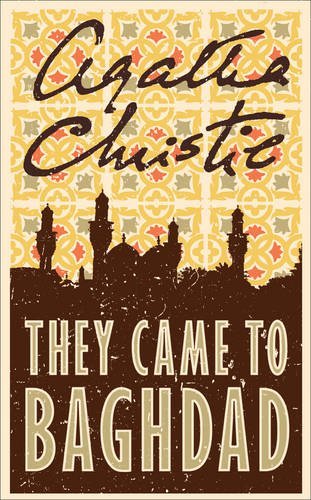
They Came to Baghdad by Agatha Christie – #1951club

After reading Duplicate Death by Georgette Heyer, the second novel I decided to read for Karen and Simon’s 1951 Club this week was another crime one – by Agatha Christie this time. It seems that whichever year is chosen for the club (so far, anyway) there’s always at least one Christie novel published in that year, and as soon as I saw that 1951 marked the publication of They Came to Baghdad, I knew that I wanted to read it. The title had me intrigued immediately: who came to Baghdad and why? I couldn’t wait to find out!

This book is not one of Christie’s Poirot or Miss Marple mysteries – it’s a standalone and actually much more of a spy novel or thriller than a mystery. With an exciting plot involving kidnappings, conspiracies, impersonations, disguises and secret messages, I found it a lot of fun to read – one of those books I genuinely didn’t want to have to put down until I was finished!

So, who came to Baghdad? Well, first of all there’s our heroine, Victoria Jones, a young woman with a vivid imagination and a gift for coming up with creative yet convincing lies. Having just lost her job as a typist, Victoria takes a walk in a London park where she meets Edward, a charming, handsome young man with whom she falls in love at first sight. When, to her disappointment, Edward tells her that he’ll be leaving the next day to go and work in Baghdad, Victoria decides that she must follow him there…the only problem is, she has no money to pay for the flight. As luck would have it, she then discovers that an American lady, Mrs Hamilton-Clipp, will be flying to Baghdad three days later and requires a companion for the journey. It seems that Victoria’s problem is solved.

Meanwhile, an interesting assortment of other people are beginning to converge upon Baghdad, including the flamboyant explorer Sir Rupert Crofton-Lee; the eccentric archaeologist Dr Pauncefoot Jones (no relation of Victoria’s, although she’s quite willing to pretend that he is); Anna Scheele, a clever and elusive young woman; and the mysterious Carmichael, whom we first meet in the British Consulate wearing Arab dress and trying to convey an important message to a fellow visitor. And why have all of these people come to Baghdad? It will spoil the story if I go into too much detail, but it’s probably enough to say that an international plot is brewing and Victoria Jones is about to become caught up in it.

What a great book this is! The story is a bit far-fetched and silly at times, but it was so entertaining I didn’t mind at all. Although, as I’ve said, it’s not really a mystery novel, there are still puzzles to be solved (I particularly loved the way one of my favourite Dickens novels provides Victoria with a vital clue) and there are plenty of plot twists too – I had my suspicions about some of them, but others took me by surprise. The setting is wonderful as well, with lots of colourful descriptions of Baghdad capturing a time and place that has changed forever. While it was easy enough for Victoria to travel to Baghdad (once she’d found a way to pay for it), for most of us Iraq is sadly no longer a place that we will have the opportunity to visit, apart from through fiction.

Much as I enjoy Agatha Christie’s detective novels, Victoria Jones is such an engaging heroine that it didn’t bother me that there’s no Poirot or Marple in this one. If you’re looking for something slightly different from Christie, I would definitely recommend trying They Came to Baghdad!

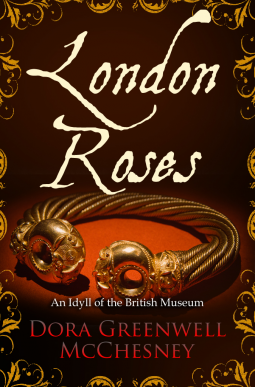
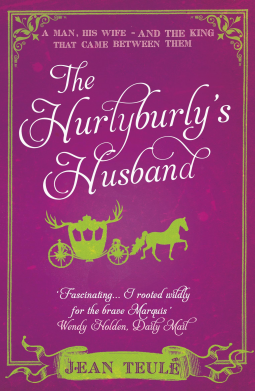
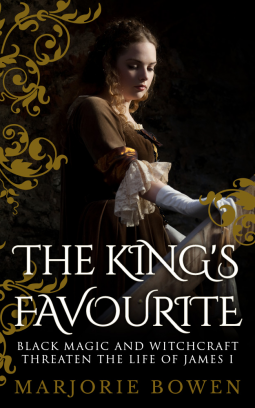
A trio of books: London Roses; The Hurlyburly’s Husband; The King’s Favourite

I’ve been struggling to keep up to date with my reviews recently – I seem to go into each new month with at least four or five books still to write about from the month before – so I thought I would try putting together the occasional multi-book post with slightly shorter reviews than normal.

London Roses by Dora Greenwell McChesney, first published in 1903, follows the stories of a group of people who meet in the Manuscript Room at the British Museum. Rhoda Comstock is a young American woman who has come to London to stay with her English cousin, Una Thorpe, and the two strike up a friendship one day with journalist Stephen Fulford and his brother Thomas, getting together to discuss their research and to engage in lighthearted debate about the differences between life in Britain and America. When Stephen makes the sudden decision to go to South Africa to report on the Boer War, he leaves behind a scandal which puts Thomas in a difficult position and poses a threat not only to the bond between the two brothers but also to their newly formed relationships with Rhoda and Una.

London Roses is packed with interesting ideas and themes – loyalty and friendship; the importance of trust; adjusting to life in a different country – although none of these things are explored in as much depth as they could have been. The characters also had the potential to be a lot more complex and well-developed than they actually were. None of the main four ever came fully to life and I was much more intrigued by the character of Anthony Pettigrew, an old man Rhoda nicknames the Moth, who has spent thirty years coming to the British Museum to research books that he’s never written.

Far too much of the novel is spent discussing the English Civil War, which is apparently a passion of several of the characters (and also of the author – as I know, having read her historical novels Rupert, by the Grace of God and Cornet Strong of Ireton’s Horse), but which felt a bit strange as it had very little to do with the rest of the plot. On a more positive note, there are some nice descriptions of London and the Museum, but overall I was disappointed by this book and was thankful that it was such a short one!

The Hurlyburly’s Husband is an English translation by Alison Anderson of Jean Teulé’s 2008 French novel. Set in 17th century France, it tells the story of the often forgotten husband of Madame de Montespan (mistress of the Sun King, Louis XIV). Louis-Henri, Marquis de Montespan, marries Athénaïs, as she becomes known, after her fiancé flees following a duel. He loves his new wife and believes that she loves him, but it’s not long before Athénaïs goes to court as a lady-in-waiting and takes the place of Louise de la Valliere in the king’s affections. Unlike many cuckolded husbands of the period, Montespan is not interested in using his wife’s position to gain money and titles at court; instead, when it becomes obvious that Athénaïs is lost to him, he chooses to defy the king and take revenge in any small way he can.

A lot has been written about Madame de Montespan, her relationship with the king and her involvement in the Affair of the Poisons, but her husband is usually ignored. It was good to have the chance to read his side of the story and to see how he may have felt about all of this. As Athénaïs is absent from her husband’s life for most of the novel, the focus is always on Montespan himself: his attempts at winning glory on the battlefield, his relationships with his children, and his acts of defiance against the king (adding horns to his coat of arms, for example).

This is an entertaining little novel, as lively, colourful and scandalous as the French court it describes. There are even some illustrations, which are always a nice addition to any book. And in case you’re wondering, the hurlyburly of the title refers to the hairstyle popular in the 17th century known as the hurluberlu.

The final book I want to talk about here is The King’s Favourite by Marjorie Bowen (originally published in 1938 under the pseudonym George R Preedy). The King of the title is King James I of England and VI of Scotland – and the Favourite is Robin Carr, a young man who catches the King’s eye when he falls and breaks his leg in the tilt yard. Henry Howard, Earl of Northampton, sees his chance to gain influence at court by pushing his pretty, seventeen-year-old great-niece Frances into an affair with Robin. But Howard is not the only one who is plotting and scheming; Robin’s friend, Tom Overbury, is also keen to encourage the romance between Robin and Frances in the hope of gaining more power for himself.

Nobody expected the two to actually fall in love, but that is what happens. With his plans thrown into disarray, Overbury finds himself caught in the middle of another plot – but this one is directed at himself. The King’s Favourite is based on real events from history, but I was unfamiliar with the details of this particular story. My lack of knowledge meant I had no idea what was going to happen and could enjoy this as a suspenseful true crime novel before looking up the facts after I’d finished and comparing them with Marjorie Bowen’s version.

While the plot (after a slow start) is an exciting, dramatic one, the characters are not particularly strong and not at all sympathetic either! I can’t say that I liked any of them – although I was interested to see that the astrologer and physician Simon Forman plays a prominent part in the story. I remember being intrigued by his appearances in Sally O’Reilly’s Dark Aemilia, so it was good to learn more about him here.

I see that there have been several other novels written over the years that also deal with the Overbury case, including one by Rafael Sabatini (The Minion) which I’m now very interested in reading. The TBR continues to grow!

Duplicate Death by Georgette Heyer – #1951club

Karen of Kaggsy’s Bookish Ramblings and Simon of Stuck in a Book are hosting another of their book clubs this week. This time it’s the 1951 Club and the idea is that we all read and write about books published in the same year. 1951 seems to have been a particularly good year for publishing – I have linked to some of my previous reviews at the bottom of this post – but when choosing what to read this week it was the crime novels from that year which appealed to me the most. The first one I picked up was Georgette Heyer’s Duplicate Death. Heyer is better known for her Regency romances, but she also wrote mysteries and, having read two of them (Envious Casca and Footsteps in the Dark), I’ve been looking forward to reading more.

Duplicate Death brings back characters who first appeared in They Found Him Dead, which I haven’t read yet but will eventually. Although a few references are made to things which I assume happened in the earlier novel, I don’t feel that reading this one first was a problem. At the beginning of the novel, Jim Kane receives a letter from his mother telling him of her concerns about his half-brother, Timothy, who has just become engaged to Beulah Birtley, a secretary in the household of the wealthy Mrs Haddington. Jim’s mother is unhappy because she has been able to discover nothing at all about Beulah’s family or background – surely the girl must be an Adventuress! Reluctantly, Jim agrees to visit Timothy to see if he can shed any light on the matter.

Meanwhile, Mrs Haddington is hosting a bridge party at her home in London. When one of the guests is found strangled after leaving the room to answer the telephone, suspicion falls on several of the people present at the party, including the mysterious Beulah Birtley. Chief Inspector Hemingway of Scotland Yard is called in to investigate, but before he’s had time to solve one murder, another takes place. The second murder appears to be identical to the first – but is it? Have both crimes been committed by the same person? And what is Beulah’s secret?

I enjoyed this book, after a slow start, but not as much as the other Heyer mysteries I’ve read. I felt that the story took too long to really get started; I appreciate that some time needs to be spent on setting the scene, but the characters just didn’t interest me enough to hold my attention throughout the build-up. With the exception of Timothy, they’re an unpleasant bunch of people – and although there are still examples of the witty dialogue Heyer is so good at, I think she does it much better in the Regencies than the mysteries. Once the first murder was committed and Hemingway arrived on the scene, though, the story became a lot more compelling.

I said in my Envious Casca review that, as far as literary detectives go, Hemingway is not a very interesting one. This time I found that I liked him more than I did before. I liked his brisk, no-nonsense attitude and the fact that he doesn’t have any little quirks or eccentricities; instead of bringing too much of his own personality to the investigations, he just gets on with the job, which is actually quite refreshing. His relationship with his assistant, Inspector Grant, works well, although I’m not sure that having Grant returning from his trip home to Scotland speaking Gaelic was really as funny as it was obviously intended to be!

I’m now reading a second book from 1951 – They Came to Baghdad by Agatha Christie – and hope to post my thoughts on that one before the end of the club.

~

More 1951 books previously read and reviewed on this blog:

The Daughter of Time by Josephine Tey
My Cousin Rachel by Daphne du Maurier
The Quiet Gentleman by Georgette Heyer
The Day of the Triffids by John Wyndham

Historical Musings #25: Ancient Greece

Historical Musings As discussed in a previous Historical Musings post, despite my love of historical fiction I have never really felt drawn to novels set in the ancient world. I’m not sure why this should be, but I have certainly read very few books set in Ancient Rome, Greece, Egypt or other ancient cultures, and feel much more comfortable with settings from the medieval period onwards. Since that previous post, when I specifically asked for suggestions of Roman novels to try, I have read Robert Harris’ Cicero trilogy (which I loved and can’t recommend highly enough), Margaret George’s The Confessions of Young Nero, and my current read, I, Claudius by Robert Graves, so I think I’m over my aversion to Ancient Rome! Now I need some help with Ancient Greece…

Thinking about books I’ve already read that are set in Ancient Greece, there are some but not many. I have read Homer’s Odyssey (in a translation by TE Lawrence), though not the Iliad yet – it’s debatable whether you would consider those to be historical fiction, I suppose, but they’re obviously a good starting point for exploring Greek history and myth.

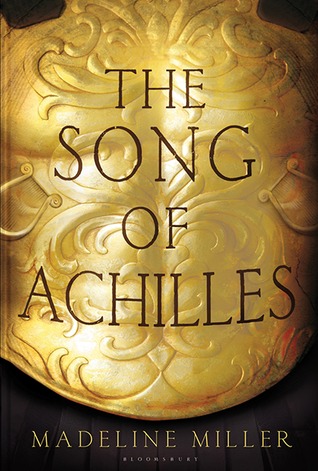
Based, like the Iliad, on the Trojan War, there’s The Song of Achilles by Madeline Miller, which tells the story from the perspective of Patroclus, and Hand of Fire by Judith Starkston, this time retelling events through the eyes of Briseis. Briseis is also one of the main characters – the other is Chryseis – in Emily Hauser’s For the Most Beautiful, which I read last year and enjoyed. I’ve recently received a review copy of the next book in the series, For the Winner, a book about Jason and the Argonauts and the Golden Fleece.

The books I’ve mentioned so far are all inspired by Greek mythology, some of them including appearances by gods or other mythological beings. Burning Sappho by Martha Rofheart is a bit different, concentrating on the life of Sappho, the Greek lyric poet from the island of Lesbos.

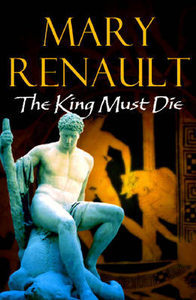
Finally, I must mention Mary Renault, a beloved author of many readers when it comes to historical novels set in Ancient Greece. So far I have only read The King Must Die, the first of her two novels telling the story of Theseus in a way which gives plausible explanations for elements of the Theseus myth. I enjoyed it, but didn’t fall in love with it the way I’d hoped to, and still need to read the sequel, The Bull from the Sea.

What are your favourite books set in Ancient Greece? Have you read any that I’ve mentioned here?

The Fourteenth Letter by Claire Evans

With its eye-catching cover, Victorian setting and promise of “a labyrinth of unfolding secrets”, Claire Evans’ debut novel The Fourteenth Letter sounded like a book I really needed to read!

The novel opens in June 1881 with the murder of Phoebe Stanbury at a party to celebrate her engagement to Benjamin Raycraft, son of the wealthy Sir Jasper. The killer, a naked man covered in mud with a strange design tattooed on his chest, disappears after committing the crime and it seems that nobody is able to shed any light on his identity or why he may have wanted to kill an innocent young woman. Detective Harry Treadway is given the job of investigating the murder, but the deeper he delves into the mystery, the more bizarre and complex it becomes.

Meanwhile, William Lamb, an inexperienced, timid young lawyer, goes to visit an eccentric client in his partner’s absence – and ends up in possession of a casket of old papers written in Latin and a cryptic message which means nothing to him. His visit is witnessed by Savannah Shelton, an American woman who has been paid to watch the house, but who is employing her and what do they want? At another house in London, Mildred is applying for a position as governess, then changes her mind when the interview doesn’t go as planned. How are all of these events connected? There are no obvious links at first, but slowly the truth is revealed as the story begins to unfold.

When I first started to read The Fourteenth Letter, I was fascinated. There were so many intriguing characters and so many strange things happening all at once. However, the constant switching from one storyline to another made it difficult for me to settle into the story and after a few chapters I began to wish we could spend a little bit longer with one character before moving on to the next. As I’ve said, the various strands of the plot do start to come together eventually but I would have liked it to have happened more quickly.

Being set in the 1880s, the story takes place during an exciting time in history, a time of great advances in science and technology. Sir Jasper Raycraft’s house, Ridgeside, is described as a famous residence with all the latest scientific developments such as electric light. I immediately recognised this as a description of Cragside in Northumberland, a National Trust property I have visited several times, and I was pleased to have this confirmed when I reached the author’s note!

However, for a novel set in Victorian London, I thought there was very little sense of time and place. Although there are references to historical and political events of the period, I never felt fully immersed in the world Claire Evans had created and it didn’t help that I couldn’t quite manage to believe in Savannah Shelton as a convincing character. William Lamb, though, is a great character – not a typical hero at all – and it was interesting to watch him develop and grow as a person over the course of the story.

Although this is certainly a very unusual and imaginative novel, I didn’t like it as much as I’d hoped to. Maybe I was just not the right reader for this particular book; that happens sometimes and it doesn’t necessarily mean that it isn’t a good book. I’ve seen some very positive reviews so clearly other readers are finding a lot to enjoy in The Fourteenth Letter!

Thanks to the publisher for providing a copy of this book via NetGalley for review.

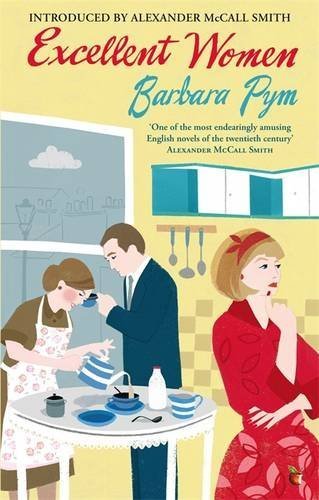
Excellent Women by Barbara Pym

It’s been a few years since I read my first Barbara Pym novel, Less Than Angels, and I really thought I would have read another one before now. For some reason, though, it has just never felt like the right time and poor Excellent Women has lingered on my Classics Club list until almost the end. I wish I’d managed to read it sooner as I did enjoy it, although I think I preferred Less Than Angels, which is surprising as this is certainly Barbara Pym’s best known book and seems to be many people’s favourite as well.

Mildred Lathbury is one of the excellent women of the title and is also our narrator. An unmarried woman in her early thirties, she lives alone in a flat in 1950s London and works part-time at a society for impoverished gentlewomen. Although her parents are both dead, Mildred’s father had been a clergyman and the church is still a big part of her life. She devotes her spare time to helping out at her local parish church, St Mary’s, where she has become good friends with the vicar, Julian Malory, and his sister Winifred.

As the novel opens, Mildred discovers she has new neighbours moving in below – they are Helena Napier, an anthropologist, and her husband Rockingham (Rocky), who has just come home from the Navy. After being apart for so long, the Napiers are struggling to settle down into married life; Helena is preoccupied with her work and spending a lot of time with another anthropologist, Everard Bone, leaving Rocky to turn to Mildred for companionship and support. Soon Mildred finds herself more deeply involved in the problems of Helena, Rocky and Everard than she had intended to be – and a further complication arrives in the form of Allegra Grey, an attractive widow who takes the spare room at the vicarage and quickly begins to cause trouble for the vicar and his sister.

Excellent Women is definitely the sort of book in which characters are more important than plot, and I’m happy with that when the characters are as real and as convincing as these. I liked Mildred from the beginning – partly because, as a single woman myself, I could understand and sympathise with her in a lot of ways, but also because she seems a genuinely nice person. Her friends and neighbours expect Mildred to always have time for them and their problems, to listen, to give advice and to provide cups of tea – all the things that make an ‘excellent woman’ – but there’s also a sense that she is often taken for granted and misunderstood. She likes living on her own and values her independence and, while she hasn’t completely ruled out the prospect of marrying one day, it isn’t a priority for her either.

I enjoyed getting to know Mildred and spending some time in her world, but I didn’t love this novel as wholeheartedly as I hoped I would and as I know most other readers have. Although the writing is quite witty in places, I remember finding Less Than Angels a much more humorous book and I think that could be why I liked that one more. Or maybe I just like to be different! Still, I’m looking forward to reading more of Barbara Pym’s work – and will try not to wait so long before picking up another one.