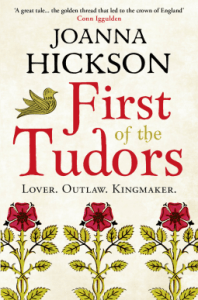
 Yes, I’ve been reading yet another Wars of the Roses novel! One of the things I’m enjoying about reading so many books set in the same time period is seeing the variety of ways in which different authors choose to approach the same subject as they search for a new angle and some fresh insights. In First of the Tudors, Joanna Hickson takes us right back to the early days of the conflict and the beginnings, more or less, of the Tudor dynasty to tell the story of Jasper Tudor, uncle of the future Henry VII.
As the sons of Welshman Owen Tudor and Henry V’s widow, Catherine of Valois, Jasper and Edmund Tudor are half-brothers to Henry VI, who is King of England as the novel opens in 1451. Being closely related to royalty but with no real claim to the throne for themselves, Edmund and Jasper are welcomed to court by Henry who rewards them with lands and titles, making Edmund Earl of Richmond and Jasper Earl of Pembroke. Edmund also wins the hand in marriage of Margaret Beaufort, which is seen as a great accomplishment as Margaret, despite being little more than a child, has royal blood and is one of England’s richest heiresses.
When Edmund dies at Carmarthen Castle in 1456, possibly of bubonic plague, he leaves Margaret pregnant with his child. The baby, when it is born, is named Henry and is taken into Jasper’s care (before later being placed in the custody of the Yorkist William Herbert). As the years go by and Henry grows into a man, Jasper is occupied with looking after his estates, trying to keep the peace in Wales and supporting his brother the king as unrest grows and the country heads towards civil war. Based closely on historical fact, we see all of this through Jasper’s eyes, as he narrates his own story in his own words.
But there’s also a fictional story, built around the idea that Jasper had a cousin, Sian (or Jane) Hywel, who became his mistress. There is no historical basis for this, but it is known that Jasper did have illegitimate children, so I have no problem with Joanna Hickson inventing the character of Jane, especially as she makes clear in her author’s note which parts of the novel were factual and which weren’t. However, I felt that too much time was devoted to Jane – she narrates around half of the book – and I would have preferred to concentrate more on Jasper and the other historical figures. This is just my personal opinion, though, and I’m sure other readers will like the domestic scenes and the love story more than I did.
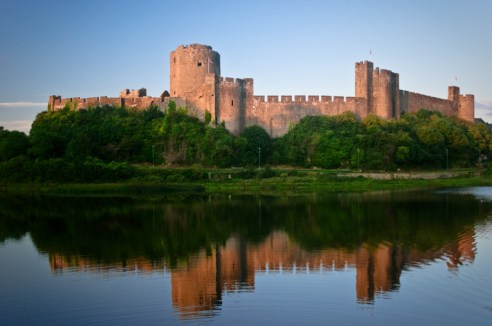
I’ve always found Jasper Tudor intriguing, maybe partly because he tends to be overshadowed in historical fiction by other, more well-known characters. I had been looking forward to seeing him take centre stage for once, but I didn’t really find his portrayal in this novel entirely convincing. I can’t quite explain why, other than to say that his narrative voice was almost identical to Jane’s and that I could never fully believe in him as a 15th century man. I did like the portrayal of Margaret Beaufort, however, which made her seem slightly more endearing than in other fictional portrayals I’ve read! I also enjoyed the focus on Wales, the descriptions of the Welsh castles and the Welsh people who played a part in this fascinating period of history – one secondary character whom I found particularly interesting was the poet Lewys Glyn Cothi.
First of the Tudors ends abruptly, leaving the feeling that there is much more of this story still to come, and the author’s note confirmed what I had already expected: there will be a sequel and Henry Tudor will take more of a central role in that one. If you’ve never read Joanna Hickson before you may also be interested in The Agincourt Bride and The Tudor Bride, which tell the story of Catherine of Valois, or Red Rose, White Rose, the Wars of the Roses from Cicely Neville’s perspective.
Thanks to the publisher HarperCollins for providing a review copy via NetGalley.
 I was drawn to this book first by the cover – and then by the mention of Russian fairy tales and folklore. It seemed a little bit different from the usual books I read and I hoped it would prove to be an enchanting, magical read, perfect for the winter months.


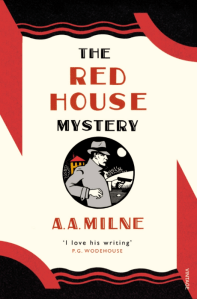 I don’t think I would have ever read The Red House Mystery if it hadn’t been for seeing other bloggers reading and reviewing it. I had always thought of A.A. Milne solely as the author of the Winnie the Pooh stories and it had never occurred to me to wonder what else he had written. It turns out that The Red House Mystery, originally published in 1922, was his first and only detective novel – which is a shame, because it’s excellent.
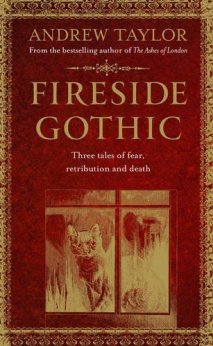 Having read and enjoyed some of Andrew Taylor’s historical crime novels, I was immediately intrigued when I heard about Fireside Gothic, a hardback collection of three novellas which had originally been published separately in ebook form as ‘Kindle Singles’. The stories are all quite different but, as Taylor says in his author’s note, they do share some common themes.
 My first introduction to Margery Sharp’s work came this time last year when I read
 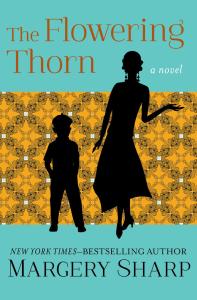 The Flowering Thorn introduces us to Lesley Frewen, a twenty-eight-year-old socialite living in London. Lesley’s days and nights are a whirl of bridge parties, lunch engagements, shopping trips, hair appointments and visits to matinees and art exhibitions. Despite all of this, there’s still something missing from her life: love. Having discovered that the one man she really wants appears to be the one man she can’t have, Lesley is still in low spirits when she joins her aunt for afternoon tea the next day. This could explain why, when her aunt introduces her to Patrick, the orphaned child of a servant who has recently died, Lesley finds herself volunteering to adopt the boy.
 She Reads Novels