The Shadow Sister by Lucinda Riley

the-shadow-sister-lucinda-rileyThis is the third book in Lucinda Riley’s Seven Sisters series based loosely on the mythology of the Pleiades (or ‘seven sisters’) star cluster. There will eventually be seven novels each telling the story of one of the adopted daughters of an enigmatic millionaire known as Pa Salt. The girls, who are all from very different backgrounds and who grew up together in Switzerland on Pa Salt’s Lake Geneva estate, are named after the stars in the cluster – Maia, Alycone (Ally), Asterope (Star), Celaeno (CeCe), Taygete (Tiggy) and Electra. There should have been a seventh sister, whose name would have been Merope, but for some reason which has not yet been revealed only six girls were adopted rather than seven.

The first book in the series, The Seven Sisters, tells Maia’s story, while the second, The Storm Sister, tells Ally’s. In The Shadow Sister, we get to know more about the third sister, Star. This novel works as a standalone, but it also follows a similar pattern to the first two, beginning just after the sisters learn of Pa Salt’s death and each receive a set of clues which he has left behind to help them discover the secrets of their origins. Star’s clues include a black panther figurine and the address of a bookshop in London. As fate would have it, she is about to move into a new London apartment with her sister CeCe, who is due to begin an art course at college. Star, who is a shy, quiet person, would prefer to live a simple life in the countryside, but she and CeCe have always done everything together – which usually means doing whatever CeCe wants.

In London, it’s not long before Star’s curiosity gets the better of her and she finds herself pushing open the door to Arthur Morston Books ready to take the first step towards uncovering the truth about her past. As Star begins to investigate, she learns of a possible connection with Flora MacNichol who grew up at Esthwaite Hall in England’s Lake District in the early 20th century and became a friend of the children’s author Beatrix Potter. With the help of Orlando Forbes, the eccentric owner of Arthur Morston Books, and his brother, the intriguingly named Mouse, Star attempts to piece Flora’s story together and in the process finds the courage to step out of CeCe’s shadow and take control of her own destiny.

I have enjoyed all three books in this series so far, but I think this one is my favourite. How could I not love a book that’s set (at least partly) in a bookshop? The characters Star meets on her journey of discovery are wonderful too – they are all so well drawn, from the melodramatic Orlando and the troubled Mouse to their artist cousin Marguerite and her little boy, Rory, who loves Superman and making chocolate brownies. I couldn’t work out, at first, exactly how Star could be linked to these people, but I wanted, desperately, for her to find a place within this family – and the relationships do all become clear eventually, with a few surprises along the way!

Flora’s story is a fascinating one too, filled with love, betrayal and deception and encompassing some of the most prominent figures in Edwardian society, including King Edward VII himself, and his mistress, Alice Keppel. I was as engrossed in Flora’s storyline as I was in Star’s; usually when a novel is set in more than one time period I find that I prefer one over the other, but with this book I enjoyed reading about both periods equally.

I was sorry that we saw nothing of Maia, Tiggy or Electra in The Shadow Sister, but it was nice to see a few appearances from Ally, the heroine of the previous novel, and to briefly pick up some of the threads from her story again. The title of book four will be The Pearl Sister and it will focus on CeCe. I was intrigued by CeCe’s character in this book – while I initially found her bossy and controlling, I can see now that there’s a lot more to her than meets the eye and I’m looking forward to getting to know her.

Thanks to the publisher for providing a copy of this book for review.

Alathea by Pamela Belle

alathea A few years ago, I read the first two books in Pamela Belle’s Heron series, The Moon in the Water and The Chains of Fate. I loved them but because I didn’t have a copy of the third novel ready to start immediately, I never moved on with the series. The books have recently been reissued by Endeavour Press and I’m pleased to have finally had an opportunity to read the next Heron novel, Alathea (originally published in 1985).

Alathea is the eldest daughter of Francis and Thomazine Heron, whose stories are told in the previous two novels. Although Francis and Thomazine do appear in this book, the focus is firmly on Alathea, which means it wouldn’t be absolutely necessary to have read the first two books before this one. I would still recommend starting at the beginning, though; I think you will get more out of the story if you understand Alathea’s family background and the relationships between the characters.

The novel opens in 1660. Charles II has just been restored to the throne and thousands of Royalists exiled after the recent Civil War are on their way back to England – amongst them Simon Heron, whose return means that Alathea and her family must move out of the Herons’ Suffolk estate of Goldhayes and go back to Ashcott in Oxfordshire. It is there that Alathea meets a boy called John Wilmot for the first time – but it will be several years before their paths cross again.

At the age of eleven, Alathea’s talent for drawing is becoming apparent, and she already has dreams of building a successful career for herself as an artist. Her dreams move a step closer to reality when her parents send Alathea to live with her Aunt Lucy in London in the hope of separating her from her jealous half-brother, Kit. Here Alathea has the opportunity to study with the famous female artist, Mary Beale, and as the years go by she begins to establish herself as a portrait painter.

It is through her painting that Alathea is brought back into contact with John Wilmot, better known as the notorious Earl of Rochester. An attraction quickly forms between the two of them, but Rochester is not the only man interested in our heroine; Jasper, the son of Thomazine’s dearest friend, has decided Alathea is the woman he wants to marry, while Kit is also growing increasingly obsessed with his beautiful half-sister. Will any of them succeed? With Alathea reluctant to sacrifice her independence, she will need to find a way to reconcile her personal life with the career for which she has worked so hard.

I’m actually glad that I waited a while before reading Alathea; I think if I’d read it straight after The Chains of Fate, I would have been disappointed that there wasn’t more of Thomazine and Francis, but allowing some time to pass meant that I was able to enjoy Alathea’s story in its own right. And it is an enjoyable story. Although there are some sad moments and some dramatic ones, there’s also plenty of humour (in particular, I’m thinking of a certain scene involving a dinner party and Rochester’s pet monkey). I’m sure Rochester must have been a fascinating character to write about; I’ve read about him once or twice before, but never in as much detail and never in a way that made him feel so human.

There are some beautiful descriptions of the countryside surrounding Ashcott and Goldhayes, as well as of life in Restoration London – the section set during the Great Fire stood out for me as being particularly vivid. I also loved the way some of Rochester’s poetry is incorporated into the story, and the painting of his famous portrait, complete with monkey. What I found most interesting, though, was the portrayal of a young woman trying to make her own way in a male-dominated world, at a time when it was not at all common or very socially acceptable for a woman to earn a living as an artist.

I didn’t like this book quite as much as The Moon in the Water and The Chains of Fate which I think was simply because I loved following the ups and downs of the romance between Thomazine and Francis, so was more emotionally invested in their story than I was in Alathea’s. I still thought Alathea was a great book and I’m hoping to read Pamela Belle’s other series, Wintercombe, this year too.

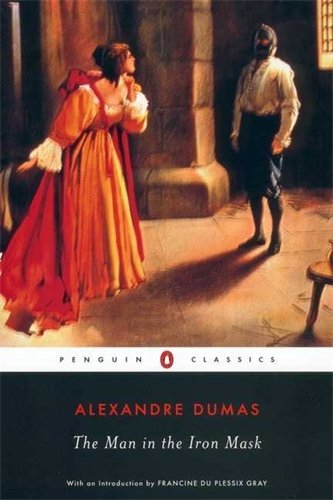
The Man in the Iron Mask by Alexandre Dumas

the-man-in-the-iron-mask I had considered starting 2017 by posting some reading plans and resolutions but, to be honest, after failing to keep most of last year’s, I don’t want to make any for this year. I do have one goal for 2017, though: I would like every book I read to be a potential book of the year. That’s unrealistic, I know, but it’s something to keep in mind when I’m choosing which books to read and when I’m deciding whether or not it’s worth continuing with a book I’m not enjoying. And I’m already off to a great start with my first January read – The Red Sphinx by Alexandre Dumas! I’m looking forward to telling you about that one after I’ve finished reading it, but in the meantime here are my thoughts on another Dumas novel I read just before Christmas.

The Man in the Iron Mask is the last book in the d’Artagnan series which began with The Three Musketeers and continued with Twenty Years After, The Vicomte de Bragelonne and Louise de la Vallière. The final three in the series were originally published as one novel, which must have been enormous; it’s easy to see why most publishers now split it into separate volumes! I think most people probably just go straight from The Three Musketeers to The Man in the Iron Mask – after all, they are the two best known and the most often filmed of the d’Artagnan stories – but I don’t regret having taken the time to read the ones in between. I did enjoy them all, particularly Twenty Years After, and it meant that I went into this, the final book, with the background knowledge I needed to be able to get straight into the story.

Unlike The Vicomte and Louise, which deal mainly with the political and romantic intrigues of various members of the 17th century French court, in The Man in the Iron Mask, the focus returns to d’Artagnan and his three friends, Athos, Porthos and Aramis. The first half of the novel revolves around Aramis and a plot involving a man imprisoned in the Bastille who bears a striking resemblance to the King of France. I won’t say too much about this as I wouldn’t want to spoil the story for future readers, but suffice it to say that things don’t go exactly as according to plan and both Aramis and Porthos (who, as usual, has become implicated in the schemes of others while blissfully unaware of what is really going on) find themselves in trouble.

We then catch up with Raoul, the young Vicomte de Bragelonne, who is trying to come to terms with the discovery that his beloved Louise de la Vallière is now the mistress of Louis XIV. Devastated by the loss of Louise, Raoul agrees to accompany the Duc de Beaufort on an expedition to Africa. How will his father, Athos, cope in his absence? D’Artagnan, meanwhile, has remained loyal to the king and for much of this novel he is caught up in the final power struggle between the two rival finance ministers, Fouquet and Colbert. When his duties bring him into conflict with Aramis and Porthos, however, d’Artagnan must find a way to serve his king without betraying his friends.

This is a much more exciting, action-packed book than the two preceding ones. The actual ‘man in the iron mask’ has a relatively small role to play but the plot has serious consequences which are explored throughout the remainder of the novel as we follow our old friends, the musketeers, to the end of their careers. I was pleased to see so much more of d’Artagnan and his friends than we did in the last two books, but I was disappointed by the lack of scenes with all four together (it was the relationship between the four of them, in my opinion, that made the first Musketeers novel such a joy to read) and that Athos’ storyline seemed to barely intersect with the others. Athos was my favourite character in the original Musketeers book and I really dislike the direction Dumas took him in throughout the later books in the series, particularly after Raoul became more prominent in the story. It’s funny that Aramis, my least favourite, ended up being the character I found the most interesting!

Towards the end, The Man in the Iron Mask also becomes a very sad book; after spending so much time with these characters – literally thousands of pages over the last few years – I didn’t want to have to say goodbye to any of them. Dumas ties things up very neatly in the final chapters…a bit too neatly for me; I would have preferred a happier ending with more left to the imagination! Still, I did enjoy this book and was delighted to discover that Dumas had written yet another, often forgotten, sequel to The Three Musketeers. It’s called The Red Sphinx and is being made available in a new English translation this month. I’m reading it now and am pleased to say that so far it’s definitely living up to my expectations!

My Commonplace Book: December 2016

It’s time for my last Commonplace Book post of 2016. I now have twelve lovely collections of quotations and images to look back on from my year’s reading, so I think I’ll be doing this again – or something very similar – in 2017!

A summary of this month’s reading, in words and pictures.

commonplace book
Definition:
noun
a notebook in which quotations, poems, remarks, etc, that catch the owner’s attention are entered

Collins English Dictionary

~

Looking back on the past six months, Margaret realised the chaotic nature of our daily life, and its difference from the orderly sequence that has been fabricated by historians. Actual life is full of false clues and sign-posts that lead nowhere. With infinite effort we nerve ourselves for a crisis that never comes. The most successful career must show a waste of strength that might have removed mountains, and the most unsuccessful is not that of the man who is taken unprepared, but of him who has prepared and is never taken.

Howards End by E.M. Forster (1910)

~

Time is the tricksiest of all tricksters, and I should know. I was a jester by profession, but I never had the skills of Mistress Time. She can stretch herself into a shadow that reaches so far you think it’ll never come to an end or she can shrink to the shortest of mouse-tails.

The Plague Charmer by Karen Maitland (2016)

~

john-wilmot

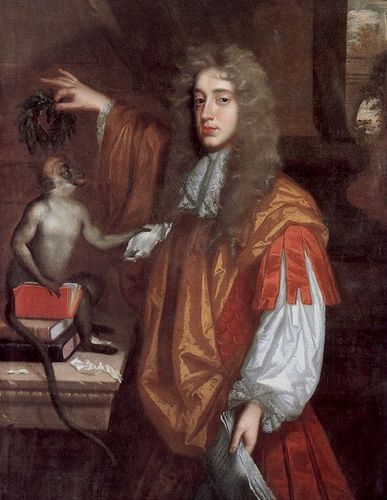
Talk, inevitably, turned to the projected portrait, and he was able to describe what he wanted. “I have it all quite plain in my mind’s eye: I stand by a table, so, and I’m holding out a laurel wreath over Strephon’s head, while turning to look out of the picture, and Strephon sits on a pile of books on a table, preferably eating them.”

“All highly symbolic. Are you sure you don’t want, say, a dwarf or a blind fiddler or any other accessory? Just yourself, and the monkey?”

Alathea by Pamela Belle (1985)

~

Angel thought: What is this errand I am going on? Perhaps all this girl has told me is false; how do I know? Perhaps all I have heard of her is a lie, too. What is it that I have in common with her? Why do I like and trust her? For the same reason as I was hurt by the death of the manatee – we’re all females, slaves, helpless.

Night’s Dark Secrets by Marjorie Bowen (1936)

~

henry-vii

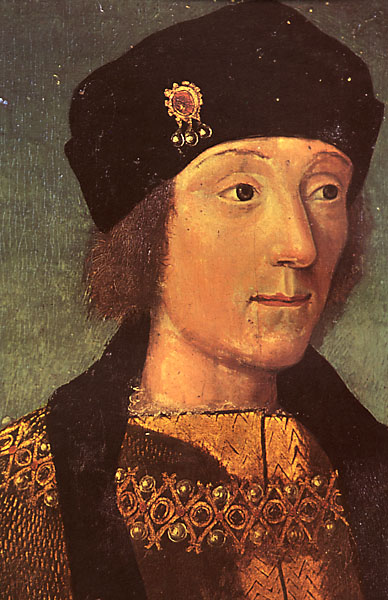
Somehow, he’d thought that as he got older he would achieve a measure of free will. When he was a man, he had often told himself after being chastised or set some complicated task of learning that no one would tell him what to do. Now he lay on his back in the dense forest, aware of the mist rising from the damp earth, the murmuring of men settling in for the night, and knew he was part of a story that had started long before he was born and would continue long after his death.

Accession by Livi Michael (2016)

~

“Nice!” Stella’s anger overflowed suddenly. “And this is a nice bus, and what a lot of nice people we are, this nice morning.”

Marian managed a laugh. “You’re quite right. It’s a terrible word. I used it in an essay once, and my tutor made me read Northanger Abbey before I wrote another one.”

“Oh God, Jane Austen,” said Stella.

Strangers in Company by Jane Aiken Hodge (1973)

~

There are misfortunes in life that no one will accept; people would rather believe in the supernatural and the impossible.

The Man in the Iron Mask by Alexandre Dumas (1850)

~

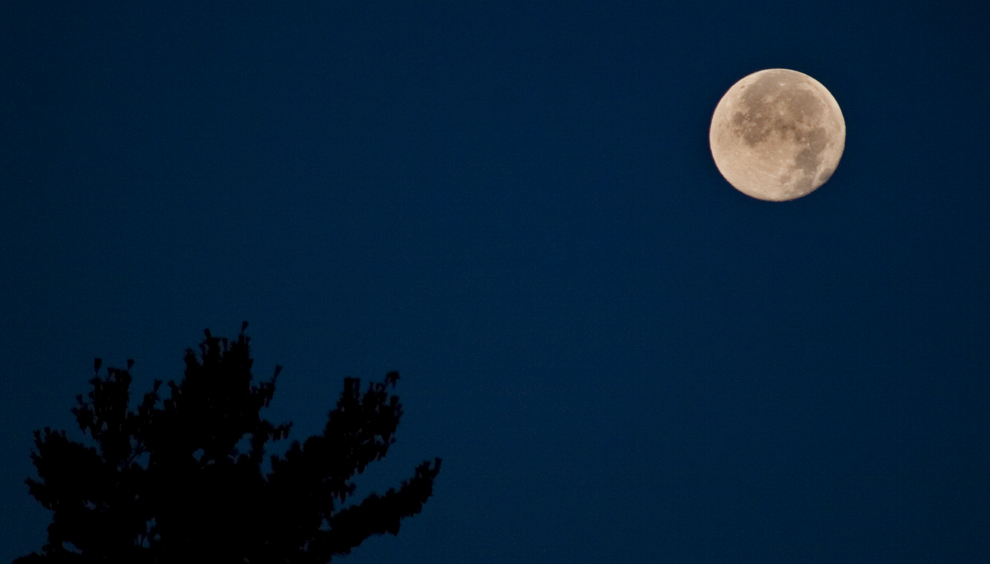
full-moon

The moon was full and, urged by a restless excitement, she had been unable to remain in her room. She walked without conscious direction through a grove of oleanders and came out on the shore, pale gold sands silvered by the moonlight, a line of slowly curling surf white as ivory, and a sea of violet blue. Above her the Southern moon seemed huge and very near and she felt as if she could catch it in her hand.

Forget Me Not by Marjorie Bowen (1932)

~

“First his secretary, seated in his master’s chair, was shot,” he said slowly. “Then his butler, who was apparently after his master’s Scotch, got poisoned. Then his chauffeur met with a very mysterious accident, and finally a man walking with him down the street got a coping stone on his head.” He sat back and regarded his companion almost triumphantly. “What do you say to that?” he demanded.

“Shocking,” said the young man. “Very bad taste on someone’s part. Rotten marksmanship, too,” he added, after some consideration. “I suppose he’s travelling for health now, like me?”

Mystery Mile by Margery Allingham (1930)

~

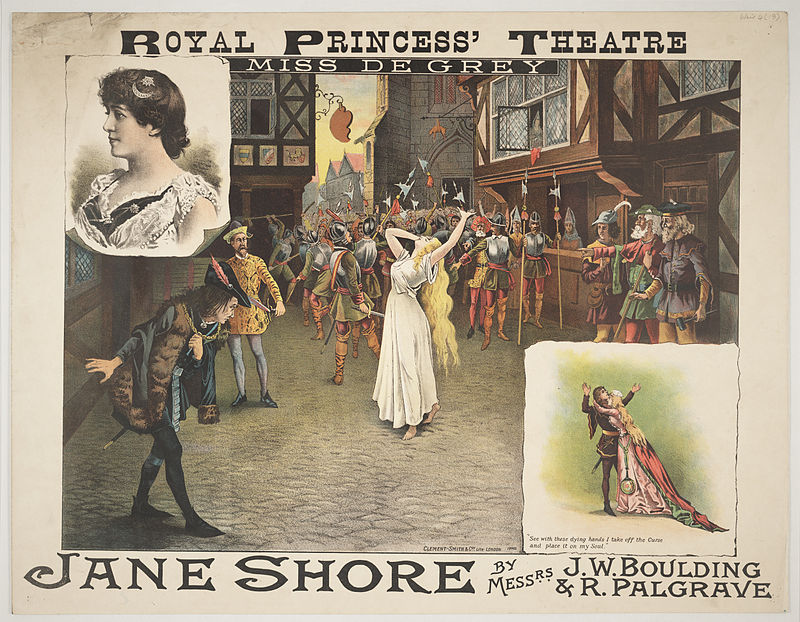
jane_shore_-_weir_collection

She raised her eyes – they lighted on the masquer. The pressure of the people had forced him so close to her that their hands touched. Shore lent forward to speak to his father. The mysterious personage seized the occasion, pressed that gloved hand with ardour, and whispered in her ear.

“You have done unwisely – you might have been the beloved of a king.”

Jane Shore by Mary Bennett (1869)

~

“There are many forms of love, Violet. One can love a parent in one way, a sibling in another, a lover, a friend, an animal…each in different ways.”

Flora watched Violet’s face as everything it contained seemed to soften and a veil fell from her eyes.

“Yes, yes! But Flora, how can we possibly choose whom we love when society dictates it?”

“Well, even though outwardly we must do as society dictates, the feelings we hold inside us may contradict that completely.”

The Shadow Sister by Lucinda Riley (2016)

~

Favourite books this month: Alathea, The Man in the Iron Mask and The Shadow Sister.

As you can see, I’m very behind with my reviews, which isn’t ideal at the start of a new year. However, I do have most of them written and scheduled to be posted throughout January. For now, I would like to wish you all a Happy New Year!

Historical Fiction Reading Challenge 2017

historical-fiction-challenge-2017 When I first started blogging I could never resist the temptation at this time of year to sign up for as many reading challenges as possible. Recently, though, I have been restricting myself to one or two year-long challenges, preferring to have more freedom in my reading choices and more time to take part in shorter reading events.

The Historical Fiction Reading Challenge hosted by Passages to the Past is one of the few challenges I still like to participate in. It’s perfect for me as I read a lot of historical fiction anyway so don’t need to make any changes to my reading habits, but can still enjoy linking my reviews to the monthly challenge posts, seeing what other participants are reading and discovering new historical fiction novels and bloggers.

The rules are the same as in previous years. The challenge runs from January 1st to December 31st 2017 and there are six different levels to choose from:

20th Century Reader – 2 books
Victorian Reader – 5 books
Renaissance Reader – 10 books
Medieval – 15 books
Ancient History – 25 books
Prehistoric – 50+ books

Any type of historical fiction is accepted including sub-genres such as Historical Romance, Historical Mystery, Historical Fantasy and Young Adult.

In 2016, I successfully completed the challenge at the Prehistoric level (if you’re interested, you can see the list of titles here) so I’ll be aiming for 50+ books again this year.

I’ll be keeping track of my progress on this page.

If you’re interested in joining the challenge too, please see the sign-up post at Passages to the Past!

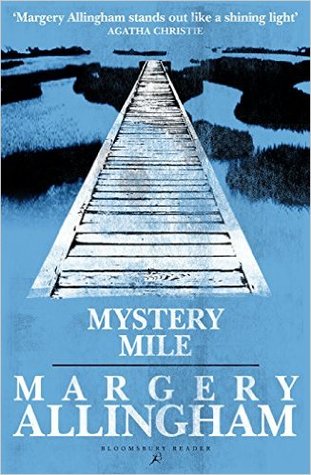
Mystery Mile by Margery Allingham

mystery-mile I often seem to be in the mood for reading mysteries at this time of year and as this one had been on my TBR for months, I found myself reaching for it the week before Christmas. I had read Margery Allingham before – one of her standalones, The White Cottage Mystery, which I enjoyed – and was curious to make the acquaintance of her most famous character, Albert Campion. Mystery Mile is the second in the Campion series, but I had been assured that it wouldn’t matter too much if I didn’t read the books in order.

Mystery Mile opens with an American judge, Crowdy Lobbett, sailing across the Atlantic with his son and daughter, having narrowly escaped several recent attempts on his life. When a further attempt takes place aboard the ship – and is thwarted thanks to a young man with a pet mouse – it is obvious that the gang who want Judge Lobbett dead are still on his trail. On arriving in England, the judge accepts the help of Albert Campion, who brings him to stay with his friends, Biddy and Giles Paget, at their home in Mystery Mile, a small, remote village on the Suffolk coast.

Campion hopes that Judge Lobbett and his children – Marlowe and Isopel – will be safe in the Paget’s house, but when a fortune teller pays a visit and shortly afterwards the village rector is found dead, it becomes clear that they are still not out of danger. Campion and his friends must try to interpret a range of intriguing clues including a red knight from a chess set and a suitcase full of children’s books if they are to solve the mystery and deal with the threat to the judge.

I had mixed feelings about my first Albert Campion novel. I loved the beginning, with the opening scenes on the ship – I thought the way in which Allingham introduced Campion into the story was excellent – and I enjoyed watching the story develop as the group arrived in Mystery Mile and one strange occurrence followed another. The setting is perfect: a mist-shrouded village surrounded by dangerous soft mud which acts like quicksand and a lonely manor house with a garden maze in which it appears that people can disappear without trace. Later, though, when the action moves to London for a while and we meet an assortment of criminals and gang members, the novel loses the quirky country-mystery feel it has at the beginning and I found that the second half of the novel has a very different tone from the first.

As for the character of Albert Campion himself, I couldn’t decide what to think of him! I liked the fact that there is clearly a lot more to him than meets the eye – his relationship with the police is never quite explained, and there are even hints that Albert Campion is not his real name. Although there was something about his constant quips and silly behaviour that I found slightly irritating, I was intrigued because it was obvious that his foolish, flippant public persona is designed to hide his true thoughts and his true intelligence. I can see why he is sometimes compared with Dorothy L. Sayers’ Lord Peter Wimsey, but based on what I’ve read of both so far, I prefer Sayers and Wimsey. Still, I’m looking forward to reading more books in this series and to meeting Albert Campion again!

My favourite books of 2016

I hope you all had a lovely Christmas! I’m back, as promised, with my list of favourite books of the year. This is a slightly shorter list than in recent years, though I’m not sure whether that means I haven’t read as many outstanding books this year or just that I’ve become more discerning and better at narrowing the choices down. Anyway, here are nine of the best, plus a few more which didn’t quite make it onto my final list…

~

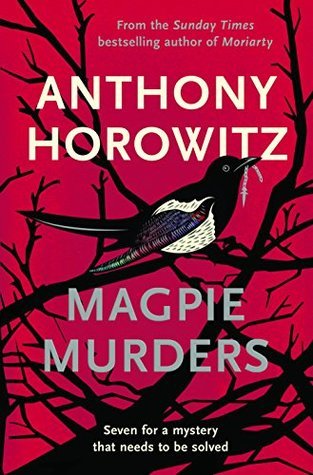
magpie-murders

Magpie Murders by Anthony Horowitz

From my review: “This is one of the most compelling mystery novels I’ve read for a long time. Both the fictional story and the ‘real life’ one had me completely gripped, trying to figure out which clues were important and which were designed to mislead us, who had a valid alibi and who didn’t…needless to say, I failed to solve either of the mysteries and fell into most of the traps that had been set for the reader.”

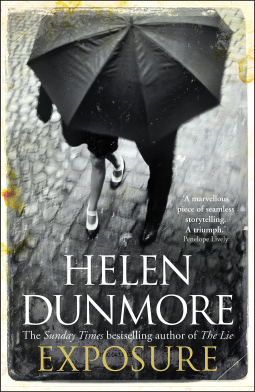
Exposure

Exposure by Helen Dunmore

From my review: “The first thing I need to say is that although Exposure certainly is a Cold War spy novel of sorts, it’s also a compelling story of love and betrayal, secrets and lies, as seen through the eyes of a wonderful cast of strong and complex characters.”

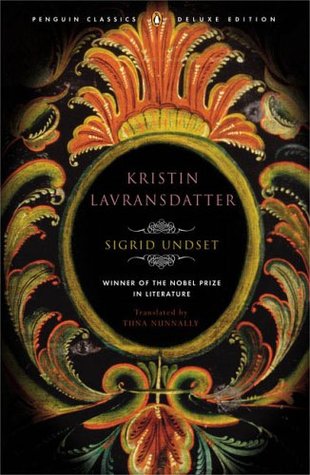
Kristin Lavransdatter

Kristin Lavransdatter by Sigrid Undset

From my review: “I have always loved long books, the sort you can bury yourself in for weeks, becoming immersed in a fully-formed fictional world and getting to know characters who, by the time you reach the final page, feel almost like personal friends. Kristin Lavransdatter, though, is more than just a ‘long’ book – it’s a very long book!”

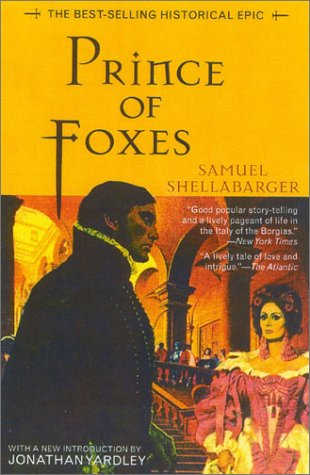
Prince of Foxes

Prince of Foxes by Samuel Shellabarger

From my review: “Not being an expert on the Renaissance (although I always enjoy reading about it and am gradually building up my knowledge) I found that I was learning a lot from Prince of Foxes as well as being entertained by it. It really is a great book!”

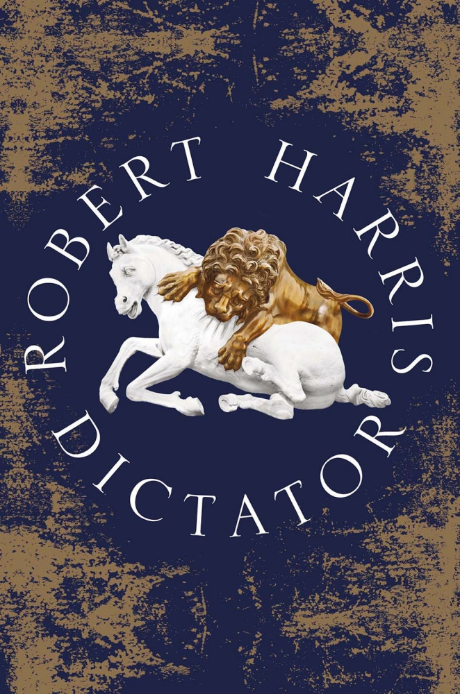
Dictator

Dictator by Robert Harris

From my review: “Until recently, I didn’t have much interest in Ancient Rome and would never have thought that I could find reading about the intricacies of Roman politics so exciting and fascinating. How wrong I was! In fact, the only negative thing I can say about this trilogy is that it has now come to an end.”

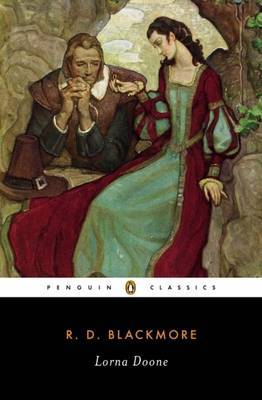
Lorna Doone

Lorna Doone by R.D. Blackmore

From my review: “A clan of murderous outlaws, a dashing highwayman, stolen jewels, family feuds, political intrigue, lots of beautiful scenery and a tender love story: R.D. Blackmore’s 1869 classic, Lorna Doone: A Romance of Exmoor, has all of these things and more.”

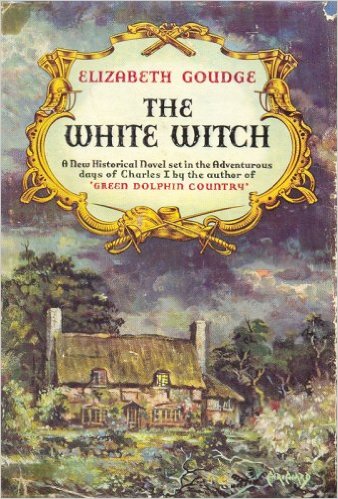
The White Witch

The White Witch by Elizabeth Goudge

From my review: “…but what I loved most about this book were the details of daily village life in the seventeenth century, the beautiful descriptions of the English countryside, and the undercurrents of magic, mystery and mythology which run throughout the story.”

Troy Chimneys

Troy Chimneys by Margaret Kennedy

From my review: “I was so impressed by the writing and by Margaret Kennedy’s grasp of the period (or periods, as there are really two) in which the story takes place. The Victorian letters felt authentic and Miles Lufton’s own narrative style felt so much like the voice of a Regency gentleman that I could easily forget I was reading a book written in the 1950s and by a woman.”

the-woodlanders

The Woodlanders by Thomas Hardy

From my review: “The Woodlanders was apparently one of Hardy’s own favourites; he is quoted as having said, ‘On taking up The Woodlanders and reading it after many years, I like it as a story best of all’. Now that I’ve read more than half of his novels, I have to say that I think I agree with him.”

~

And these books deserve a special mention too:

The Strangler Vine by MJ Carter
The Moving Toyshop by Edmund Crispin
Flush by Virginia Woolf
Revelation by CJ Sansom
Wives and Daughters by Elizabeth Gaskell
The Revelations of Carey Ravine by Debra Daley

~

Have you read any of these books? Which books have you enjoyed most in 2016?