 Margaret Gabrielle Vere Campbell Long (1885-1952) was a British author who wrote many different types of book – ranging from crime and horror to historical fiction and biography – under several different pseudonyms, the most popular being Marjorie Bowen. In December, in an attempt to get up to date with my NetGalley review copies, I read two of her recently reissued books which were originally published under the name Joseph Shearing. Apparently the true identity of Joseph Shearing was unknown for a long time and there was speculation that it might have been another female author, F Tennyson Jesse. The Shearing novels, which it seems were usually inspired by true crimes, do have a different feel from Bowen’s straightforward historical novels (I’ve read a few of those over the last year or so) and I can see why readers at the time might not have made the connection.
 Night’s Dark Secrets (first published in 1936 as The Golden Violet, The Story of a Lady Novelist) was the first of the two books that I read. The novel opens with the marriage of Angel Cowley, an author of romance novels, to Thomas Thicknesse, the owner of a sugar plantation in Jamaica. Angel has been busy preparing her latest novel, The Golden Violet, for serialisation in a magazine, but this has to be postponed when Thomas insists that the newly married couple leave England and return to his plantation, Venables Penn.
As soon as they arrive in Jamaica, Angel discovers her husband’s true nature and begins to wonder whether she has made a terrible mistake. Struggling to adapt to life in an unfamiliar country, with a husband she can’t trust and barely sees, and with trouble brewing in the island’s slave community, Angel turns to her neighbour, John Gordon, for the love and friendship she longs for. But is John really all he appears to be or is he also hiding secrets?
Night’s Dark Secrets could have been a great book. The descriptions of the island are wonderful and the historical setting – around the time slavery was abolished in Jamaica in the early 19th century – is an interesting one. However, the level of racism, even for a book from the 1930s, made me feel quite uncomfortable. I’m aware, of course, that it wasn’t necessarily Marjorie Bowen who was racist, but rather the characters, and that the way Angel and other Europeans reacted to the sight of the black slaves on the island would have been consistent with the reactions of many white women who had never seen or spoken to someone with a different skin colour before. Still, Angel’s sheer nastiness, in addition to her general silliness, made it impossible for me to have any sympathy with her situation.
 Having said all of that, I did still find the story itself compelling and kept reading to the end. And I was happy to go on to try a second Shearing novel, Forget-Me-Not. This novel, published in 1932, also appeared under the title The Strange Case of Lucile Clery, and Bowen claimed it was based on true events which led to the downfall of Louis Philippe I, King of the French, in the revolution of 1848.
The novel is set in France and follows the story of Lucille Debelleyme, a young woman who takes a position as governess in an aristocratic Parisian household. Lucille has never lasted long in any job, but she’s determined that this time things will be different. Unfortunately, although she quickly wins over her new employer, the Duc du Boccage, she is less successful with his wife, Fanny. As the governess and the Duc find themselves falling in love, Fanny’s jealousy intensifies and she makes plans to have Lucille removed from her position. Lucille, though, will not go without a fight. As a Bonapartist who was opposed to the return of the monarchy, she longs to see Louis Philippe toppled from his throne – and the events which occur during Lucille’s stay in the du Boccage household play a part in the eventual revolution.
Forget-Me-Not is an unusual story – part romance, part suspense, part historical fiction and part crime. Again, the main character is not very likeable, but she’s obviously not supposed to be. I found her intriguing as I was never really sure exactly what she wanted or what she was trying to do. I’m not very familiar with the period of French history covered in the novel so I didn’t fully understand how Lucille’s actions affected the monarchy, but that didn’t matter too much as the real focus of the story is on her relationship with Fanny and her husband.
Of these two books, I definitely preferred Forget-Me-Not. I’m not sure whether I would want to read any more of Joseph Shearing’s work, though – if I do read more novels by this author, I think I’ll stick to the ones that were published under the name of Marjorie Bowen or George R Preedy (I loved one of her Preedy books, The Poisoners).
Have you ever found that where an author has used pseudonyms, you’ve liked the books written under one name more than another?
 This is only the second book I’ve read by E.M. Forster – the first one being
 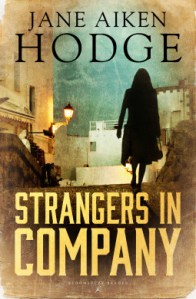 Published in 1973, Strangers in Company reminds me of Mary Stewart’s romantic suspense novels, or maybe M.M. Kaye’s Death In… series. It is set in Greece and follows the story of Marian Frenche, who is looking for a new job after finding herself at a loose end when her children move away to live with her ex-husband. Marian finds work with an agency who arrange for her to accompany a troubled young woman called Stella Marten on a coach tour of the major Greek archaeological sites. She is given very little information about Stella and her background, apart from a warning that she should be left on her own as little as possible, but after only a few hours in Stella’s company, Marian finds her to be rude, angry and irritable. It’s going to be a difficult trip!




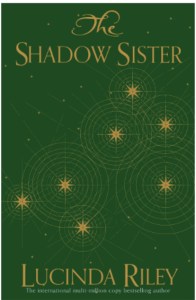 This is the third book in Lucinda Riley’s Seven Sisters series based loosely on the mythology of the Pleiades (or ‘seven sisters’) star cluster. There will eventually be seven novels each telling the story of one of the adopted daughters of an enigmatic millionaire known as Pa Salt. The girls, who are all from very different backgrounds and who grew up together in Switzerland on Pa Salt’s Lake Geneva estate, are named after the stars in the cluster – Maia, Alycone (Ally), Asterope (Star), Celaeno (CeCe), Taygete (Tiggy) and Electra. There should have been a seventh sister, whose name would have been Merope, but for some reason which has not yet been revealed only six girls were adopted rather than seven.
 She Reads Novels