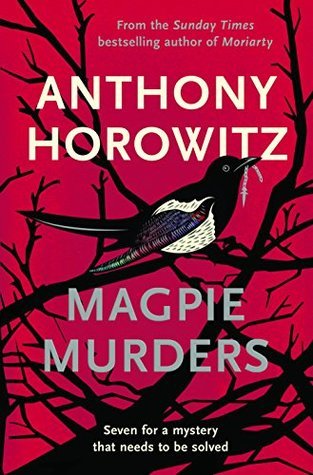
Magpie Murders by Anthony Horowitz

magpie-murders It’s been nearly a week since I finished reading the wonderful Magpie Murders, but it wasn’t until this morning that I felt able to start writing my review. I loved it – it’s one of my books of the year, without a doubt – but I’ve spent a lot of time staring at a blank screen wondering what I could possibly say about it that would explain exactly why I loved it without spoiling things for future readers in the process. The reason I’ve found this such a difficult book to write about is because it’s a mystery novel which contains not just one mystery, but two – and part of the fun was in not only trying to solve each one, but also in discovering the connections between the two.

The novel opens with Susan Ryeland, editor for Cloverleaf Books, a small, independent publisher, settling down to read the latest manuscript from bestselling author, Alan Conway. Conway has achieved enormous success with his series of Golden-Age-style crime novels featuring the detective Atticus Pünd. Susan has never liked the author but she loves his books and has high hopes for his new one, Magpie Murders.

We are then given the privilege of reading the manuscript of Magpie Murders in – almost, but not quite – its entirety. This story-within-a-story is set in the 1950s in the little English village of Saxby-on-Avon. One of the villagers, Mary Blakiston, has been found dead at the bottom of the stairs in Pye Hall, where she worked as a cleaner, and Pünd has been called in to investigate. The story has everything you would expect from a classic whodunnit – plenty of red herrings, some intriguing clues, a long list of suspects all with secrets to hide, an eccentric detective and his hapless sidekick. It’s a real treat for anyone who enjoys reading Agatha Christie!

Eventually the manuscript comes to an end and we return to the present day, where a second mystery, every bit as perplexing as the one we have just been reading, is beginning to take shape. As Susan tries to draw parallels between the fictional world of Saxby-on-Avon and the private life of its creator, Alan Conway, she finds that Magpie Murders really is one of those life-changing books which, until now, she thought were just a cliché.

This is one of the most compelling mystery novels I’ve read for a long time. Both the fictional story and the ‘real life’ one had me completely gripped, trying to figure out which clues were important and which were designed to mislead us, who had a valid alibi and who didn’t…needless to say, I failed to solve either of the mysteries and fell into most of the traps that had been set for the reader. I didn’t mind, though – I was happy just to watch everything unfold as more information came to light and secrets were revealed.

There were so many other things to enjoy…the insights into the publishing world, the little puzzles and word games woven into the plot, even the chapter titles based on the One for Sorrow nursery rhyme. My only disappointment is that the rest of the Atticus Pünd mysteries referred to in the novel don’t really exist. I loved Alan Conway’s Magpie Murders so much I’m now desperate to read Atticus Pünd Investigates, Atticus Pünd Takes the Case, Gin & Cyanide, and all of the others – apart from maybe Night Comes Calling, but I’m not telling you why!

This is the first of Anthony Horowitz’s adult novels I’ve read, although I do remember, as a child, reading one of his Diamond Brothers detective stories. His recent Sherlock Holmes novels The House of Silk and Moriarty didn’t appeal, but now I’m wondering if I should give them a try. Has anyone read them? And have I convinced you to read Magpie Murders? I hope so!

Thanks to Orion for providing a review copy via NetGalley
The 1947 Club: The Labours of Hercules by Agatha Christie

1947-club-pink This week, Karen (of Kaggsy’s Bookish Ramblings) and Simon (of Stuck in a Book) are hosting a 1947 Club. The idea is that we all read and review books which were published in 1947, forming an overview of the literary world in that particular year. Having enjoyed the books I read for the first two clubs – 1924 and 1938 – I’ve been looking forward to taking part in this one.

First, here are some reviews of 1947 novels previously posted on my blog:

The Blank Wall by Elisabeth Sanxay Holding

Alone in Berlin by Hans Fallada

Prince of Foxes by Samuel Shellabarger

I can highly recommend all three of those – and I also enjoyed the book I chose to read for the club: Agatha Christie’s The Labours of Hercules. I love Christie and as it’s been a while since I read one of her books, I was pleased to find that she’d had one published in 1947!

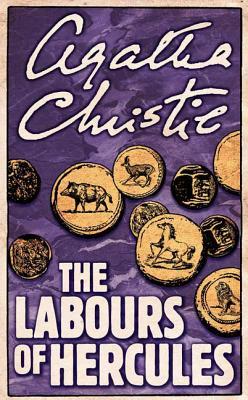
the-labours-of-hercules The Labours of Hercules begins with a foreword in which we learn that Hercule Poirot is planning to retire from crime-solving and devote himself to the growing of marrows. Before giving up detective work for good, he decides to take on twelve more cases, each inspired by one of the twelve Labours of Hercules from Greek mythology. This is in response to a friend who has pointed out that although Poirot may be Herculean by name, he is hardly Herculean by nature!

The foreword is followed by twelve stories, each one a complete mystery in itself. If you’re familiar with the original Labours of Hercules (Poirot himself admits to having no knowledge of the Classics and has to do some research before beginning his mission), you will know that the first one involves the slaying of the Nemean Lion. The ‘lion’ of Poirot’s first Labour is slightly less terrifying – a Pekinese dog stolen during a walk in the park – but it forms the basis of a case which is much more intriguing than it initially appears. The other stories in the book are also loosely related to the Labours but instead of tackling monsters and wild beasts, Poirot finds himself facing an assortment of thieves, drug dealers, kidnappers and murderers.

Until now, I have only read full-length Poirot novels and have avoided the short story collections as I often find short stories disappointing, lacking the depth and complexity I prefer in longer books. However, this particular collection is surprisingly satisfying; fun to read, nicely varied and with at least one clever twist in each story. I’m not going to discuss all of them here, but a few of my favourites were The Stymphalean Birds, in which Poirot attempts to rescue a British politician from the clutches of a pair of blackmailers, and The Cretan Bull, where a young woman seeks Poirot’s help after her fiancé ends their engagement because he fears he’s going insane. I also enjoyed The Erymanthian Boar, set in a hotel on top of a mountain in Switzerland to which Poirot has travelled in the hope of disturbing a rendezvous arranged by a dangerous Parisian gangster.

Poirot is very much alone throughout most of his adventures in this book. We don’t see anything of Captain Hastings, but other recurring characters from the series do make an appearance in some of the stories, including Chief Inspector Japp, Poirot’s valet, Georges, and his secretary, Miss Lemon (I loved her brief but hilarious role in the final story, The Capture of Cerberus, when Poirot asks her what she would do if a friend wanted to meet her in Hell).

Apart from one or two stories towards the end which I found slightly weaker than the others, I really enjoyed reading this collection. I’m sorry that I’m not going to have time to read anything else this week for the 1947 Club, but I’m pleased that the one book I have read proved to be such a good choice!

Top Ten Tuesday: Recommendations

Top Ten Tuesday

For this week’s Top Ten Tuesday (hosted by The Broke and the Bookish) we are asked to list ten books we read because they were recommended to us. Most of my recommendations these days come from reading other bloggers’ reviews and from comments left on my own blog – and while I’m grateful to everyone who has recommended a book I’ve gone on to enjoy, I would find it difficult to single out just a few of them. For the purpose of this Top Ten, then, I’ve chosen ten recommendations I received from other sources – some are recent and some are from years ago, some were successful recommendations and some weren’t.

~

1. Recommended by my mother

gone-with-the-wind

Gone with the Wind by Margaret Mitchell

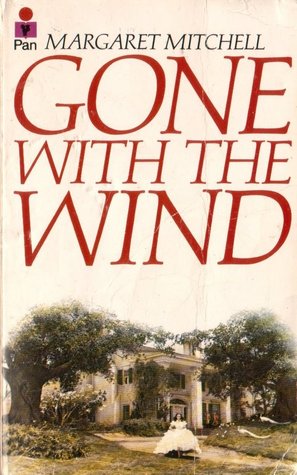
I think I was about sixteen when my mother persuaded me to try Gone with the Wind. I loved it and quickly went on to read more of the family sagas and sweeping historical novels she recommended, including The Thorn Birds, Roots, All the Rivers Run, The Far Pavilions and John Jakes’ North and South Trilogy.

~

2. Recommended by my father

elric-of-melnibone-michael-moorcock

Elric of Melniboné by Michael Moorcock

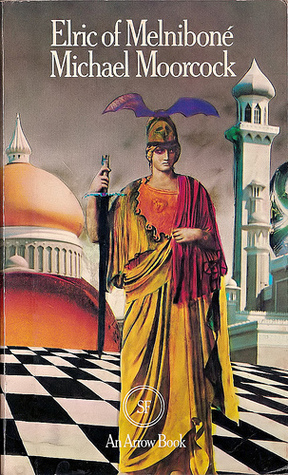
My dad is not a big reader – and his reading tastes are very different from mine anyway – but Michael Moorcock’s fantasy novels were among the few books he did recommend to me and which, as a young teenager, I really enjoyed. His Elric stories were my favourites and I had fun rediscovering them a few years ago.

~

3. Recommended by my English teacher

Mansfield Park

Mansfield Park by Jane Austen

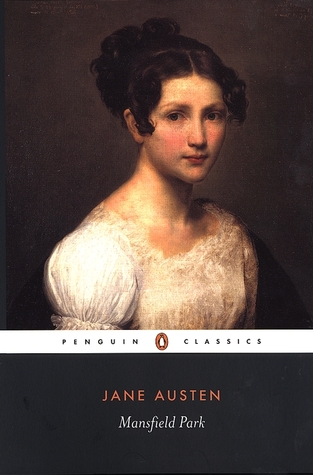
This wasn’t a very successful recommendation. My teacher knew I had enjoyed Pride and Prejudice and recommended Mansfield Park next; unfortunately I found it very difficult to get into and it put me off reading anything else by Austen for years. I loved it on a recent re-read, which I suppose is proof that reading tastes can change over time. The same teacher had been much more successful with his recommendations of To Kill a Mockingbird and Animal Farm, by the way!

~

4. Recommended by Goodreads

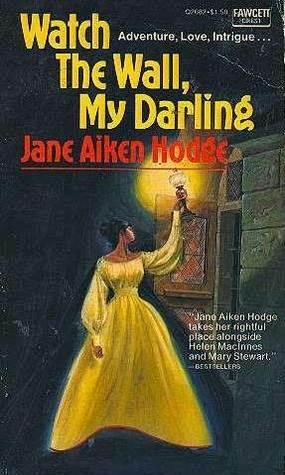
Watch the Wall My Darling - Jane Aiken Hodge

Watch the Wall, My Darling by Jane Aiken Hodge

This was a more recent recommendation; I spotted it in the “Readers Also Enjoyed” section on Goodreads after reading Nine Coaches Waiting by Mary Stewart. It wasn’t as good as the Stewart novel, but still an enjoyable Gothic romance.

~

5. Recommended by my sister

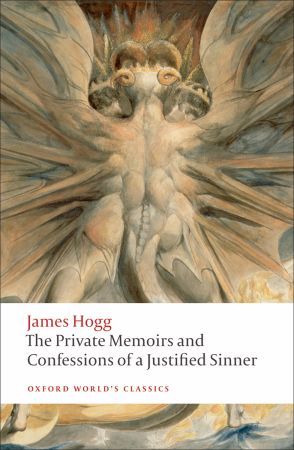
The Private Memoirs and Confessions of a Justified Sinner

The Private Memoirs and Confessions of a Justified Sinner by James Hogg

My sister loves reading as much as I do but we aren’t usually drawn to the same books. This was a book she read for her English Literature degree and she thought I would like it. She was right; it was one of my books of the year in 2013!

~

6. Recommended by Amazon

jonathan-strange-and-mr-norrell

Jonathan Strange and Mr Norrell by Susanna Clarke

I don’t usually pay much attention to Amazon’s recommendations but that’s how I discovered Jonathan Strange and Mr Norrell, shortly after it was first published. I was browsing through the “Customers Who Bought This Item Also Bought” section, clicked on the red cover and was so intrigued by the description that I ordered the book.

~

7. Recommended by my uncle

zen-and-the-art-of-motorcycle-maintenance

Zen and the Art of Motorcycle Maintenance by Robert M. Pirsig

My uncle (another of the book lovers in our family) gave me Sophie’s World by Jostein Gaarder for my fifteenth birthday. When I told him I had loved it, he recommended Zen and the Art of Motorcycle Maintenance, another book on philosophy. I found it an interesting read – although I’m sure I didn’t understand half of it – but I don’t think it’s the type of book I would choose to read today.

~

8. Recommended by a friend

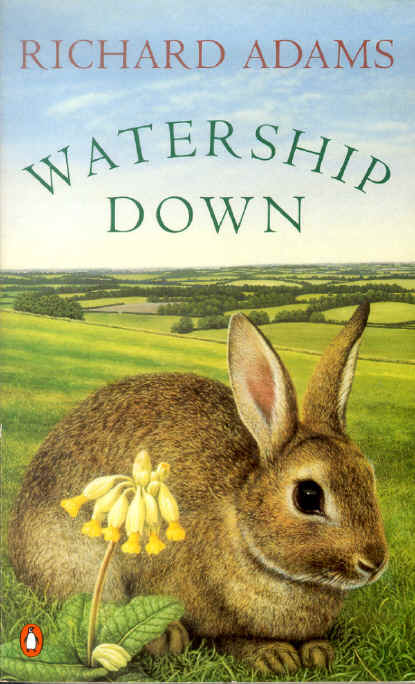
Review: Watership Down by Richard Adams

Watership Down by Richard Adams

This is the earliest recommendation on my list. I think I must have been ten years old when I noticed Watership Down on my best friend’s bookshelf; she told me it was her favourite book and Fiver was her favourite rabbit. It wasn’t long before I read it myself and it immediately became my favourite book too – although Bigwig was my favourite rabbit, not Fiver. I still loved it when I re-read the book as an adult a few years ago.

~

9. Recommended by Jo March

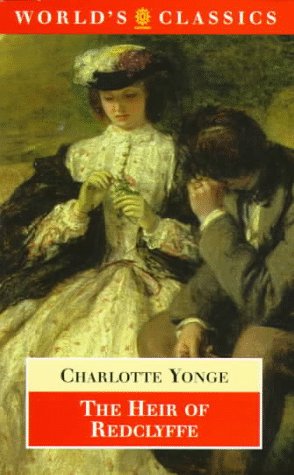
The Heir of Redclyffe

The Heir of Redclyffe by Charlotte M Yonge

Actually, it was Lisa’s review that made me decide to read this book, but Jo March also reads it in Little Women. She is discovered in the attic “eating apples and crying over The Heir of Redclyffe”. After reading the book for myself I could understand why she was crying!

~

10. Recommended by…you?

question-mark

Now it’s over to you. If you could recommend just one book to me, what would it be? Have you read any of the books I’ve mentioned in this post and if so, what did you think of them? What’s the best book you’ve read based purely on someone else’s recommendation?

Historical Musings #19: The Halloween edition

Historical Musings October is here and has brought with it (in my part of the UK at least) a change in the weather, longer, darker nights and a distinctly autumnal feel. With Halloween just a few weeks away, I thought it would be fun to give this month’s Historical Musings post a seasonal theme! I would love to hear about any historical novels you’ve read which deal with any of the following subjects:

  • Witches and witchcraft
  • Magic (black or white)
  • Ghosts and hauntings
  • Vampires/zombies/werewolves/monsters or other supernatural beings of any kind

My suggestions:

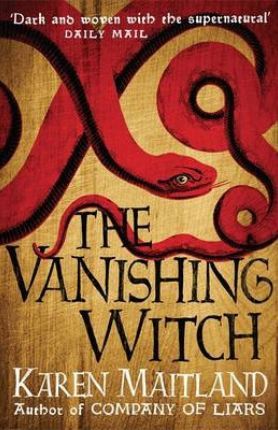
The Vanishing Witch Karen Maitland is one of the first authors to come to mind when I think about this type of historical fiction. The Vanishing Witch is set during the time of the Peasants’ Revolt and features both ghosts and witchcraft; at the beginning of each chapter is a spell, a piece of folklore or a superstition, which I thought was a nice touch! The Raven’s Head, set in the early 13th century, is a darker novel with a strong supernatural element. I haven’t read her other books yet, but am about to start her new one, The Plague Charmer.

Although I didn’t particularly enjoy it, Katherine Howe’s The Physick Book of Deliverance Dane (also published as The Lost Book of Salem) deals with the Salem witch trials. It’s a dual time-frame novel but is set at least partly in the past so I’m including it here.

For those readers who are interested in witches and witchcraft but prefer a gentler read, I can recommend The White Witch by Elizabeth Goudge and Thornyhold by Mary Stewart. The first is set during the English Civil War while the latter is set in the 1940s (but published in 1988, which is why I’m classing it as historical here). There’s also Susan Fletcher’s Corrag (also published as Witch Light), a beautifully written novel about the Glencoe Massacre of 1692; the main character and her mother have both been accused of witchcraft due to their knowledge of herbs and healing.

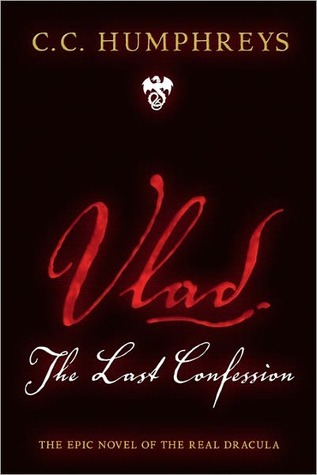
Vlad the Last Confession C.C. Humphreys has written a novel called Vlad: The Last Confession, which tells the story of Vlad the Impaler, the fifteenth century Prince of Wallachia who is thought to have provided at least part of the inspiration for Bram Stoker’s Dracula. This is not actually a vampire novel, but because of the Dracula connection and the dark atmosphere I’m including it here anyway.

There are also two ghostly novels by John Harwood that come to mind: The Séance, a gothic mystery set in Victorian England, and The Ghost Writer, which includes four genuinely chilling short ghost stories supposedly written by a fictitious author in the 1890s.

Finally, there’s Deborah Harkness’s All Souls Trilogy, in which our hero and heroine are a vampire and a witch. The first book, A Discovery of Witches, is set in the present day but in the second, Shadow of Night, we travel back in time to 16th century Europe. I’m not sure about the third book as I haven’t read it yet.

Have you read any of the books I’ve mentioned here? Can you think of any other historical fiction novels with a ghostly/witchy/magical feel?

Two from Georgette Heyer: Regency Buck and Black Sheep

It’s been a while since I read anything by Georgette Heyer and I still have a lot of her books to get through, so I had a nice surprise a few weeks ago when I found two on the library shelf that I hadn’t read yet: Regency Buck and Black Sheep. Neither of these were near the top of my list of Heyer novels to look out for, but I was still pleased to have the opportunity to read them – and I’m even more pleased to say that I enjoyed both.

regency-buck-heyer Published in 1935, Regency Buck was the first of Heyer’s many novels to be set in the Regency period. It follows the adventures of Judith Taverner and her younger brother, Sir Peregrine (Perry), who have recently been orphaned and, under the terms of their father’s will, have been left under the guardianship of his friend, the fourth Earl of Worth. Leaving their home in Yorkshire, the brother and sister set off for London to meet the Earl. It proves to be a more eventful journey than they expected when they have an unpleasant encounter with an arrogant nobleman on the road. Imagine their horror when they discover that this nobleman is none other than Julian St John Audley, who has inherited the title of Earl of Worth from his father and is therefore their new guardian!

Judith is a strong, independent young woman who is used to doing as she pleases; on arriving in London she sets about making a name for herself by refusing to conform to the conventions of society, but Worth has other ideas as to how she should behave. Unable to see eye to eye with her guardian, Judith is grateful for the friendship and support of her cousin Bernard, with whom she has just become acquainted for the first time. Soon, though, Judith has more important things to worry about. It seems that someone is trying to murder Perry – but who can it be?

Although I had my suspicions as to Worth’s true motives, Heyer misleads us so much that we can’t be completely sure whether he is the hero or the villain. I would usually like this type of character, but Worth just never endeared himself to me; I found him unnecessarily patronising and I really felt for Judith and Perry every time they were forced into yet another humiliating conversation with him. I did like Judith – she’s an intelligent, outspoken and rebellious heroine – and I thought Perry was amusing, with all his youthful enthusiasms! As usual, Heyer’s recreation of the Regency period is vivid and immersive and although the main characters are fictional, there are also some real historical figures who make an appearance in the story. I loved the portrayal of the famous dandy Beau Brummell, particularly in the scene where Judith meets him for the first time – a case of mistaken identity!

Regency Buck is set in London and Brighton, which gives it a slightly different feel from the second of the two books I read, Black Sheep, which is set in Bath…

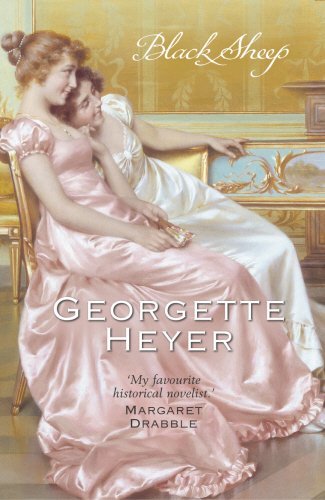
black-sheep At twenty-eight and still single, it is looking unlikely that Abby Wendover will ever marry. Instead, she is concerning herself with the love affairs of her seventeen-year-old niece, Fanny, whose romance with the handsome, dashing Mr Stacy Calverleigh has become the talk of Bath. Although Fanny’s other aunt, Selina, has been taken in by Stacy’s charms, Abby is convinced he is nothing more than a fortune hunter and determines to free Fanny from his clutches. However, when Stacy’s uncle, Miles Calverleigh – the ‘black sheep’ of the family – also arrives in Bath, Abby finds herself drawn into a relationship which is considered even more unsuitable than Fanny’s!

Black Sheep, published in 1966, is a later Heyer novel. It’s one of my favourites so far and that is largely because of its wonderful hero and heroine. I loved both Abby and Miles and found myself looking forward to every scene they were in together. They feel like two people who really would have liked and understood each other, rather than characters who are just being forced together for the sake of the plot – there’s a genuine chemistry between them and the dialogue really sparkles! I liked the fact that Abby is a little bit older than the average Heyer heroine (she reminded me in some ways of Anne Elliot in Persuasion); she’s a sensible, mature woman whose romance with Miles is of a very different nature than Fanny’s with Stacy.

As I said at the start of this post, I enjoyed reading both of these novels. I was particularly relieved to find that I liked Regency Buck as it doesn’t seem to be a very popular book with Heyer fans! I probably wouldn’t recommend that one to readers new to Heyer, though; of these two, I think Black Sheep would be a much better place to start.

Have you read either of these? What are your favourite Heyer novels?

Restoration by Rose Tremain

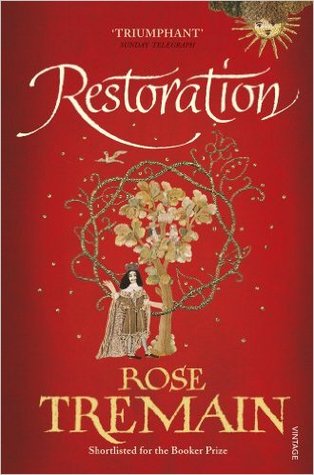
Restoration Rose Tremain is a new author for me, but I’ve been meaning to try one of her books for a long time. Her 1989 novel Restoration seemed like my sort of book and knowing that I need to read the sequel, Merivel: A Man of His Time, for my Walter Scott Prize project gave me the motivation to pick it up and start reading. It also counts towards my Ten from the TBR project, which has been sadly neglected this year!

Restoration is set in 17th century England in the years following the restoration of the monarchy; the title refers not just to the time period but also to the personal restoration of a man’s self-respect and his place in the world. That man is Robert Merivel, a glovemaker’s son and trained physician who, near the beginning of the novel, obtains a position at the court of Charles II as surgeon to the king’s spaniels. Merivel is quickly swept away by the fun and frivolity of the court, making himself popular by playing the fool and entertaining the king.

It’s not long, however, before the king comes to Merivel with a request for help. Charles requires a husband for one of his mistresses, Celia Clemence – someone who will be a husband in name only, giving Celia a form of respectability while the king continues his affair with her. Merivel agrees to marry her and at first is delighted with the country estate in Norfolk which he is given as part of the deal. Everything is going well until Celia comes to join him there and Merivel discovers that he is falling in love with his wife…something he has been strictly forbidden to do.

Restoration is narrated by Robert Merivel himself and I found him both a fascinating and a frustrating character, more anti-hero than hero. Irresponsible and immature, you get the impression he is stumbling through life from one disaster to another, with no clear purpose in sight – and yet, despite his flaws and his failures, you can’t help feeling for him as he falls out of favour with the king. While I can’t say that I actually liked Merivel, he is an engaging narrator and his story is told with such an appealing mixture of humour and sensitivity that I was captivated by him and hoped that he would find a way to restore his fortunes.

Rose Tremain’s lively writing style perfectly suits the time period in which the novel is set. I always enjoy reading about the 1660s and I liked the contrast here between the descriptions of Merivel’s life as a country gentleman, his adventures at court and his time practising medicine in London. Merivel is in London during the Plague and the Great Fire, which are both vividly recreated. However, there is a long section in the middle of the book set in an asylum run by Merivel’s Quaker friend, Pearce, and I found my attention starting to wander during these chapters. I could see the importance of this section to the plot and to Merivel’s personal development, but I struggled to feel any interest in the new characters we meet at the asylum and I thought the whole episode went on for far too long.

Overall, though, I was impressed with this book and with my first experience of Rose Tremain’s writing. I’ll be interested to see how Robert’s story continues in Merivel, which I’m hoping to start soon.

Classics Spin #14: The result

The result of the latest Classics Spin has been revealed today – and I’m very happy with the book I’ll be reading!

The idea of the Spin was to list twenty books from my Classics Club list, number them 1 to 20, and the number announced today (Monday) represents the book I have to read before 1st December 2016. The number that has been selected is…

1

And this means the book I need to read is…

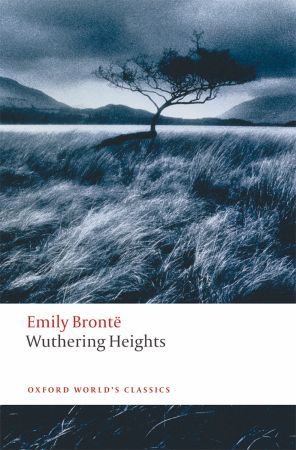
wuthering-heights

Wuthering Heights by Emily Brontë

This will be a re-read of one of my favourite books. It seems that Wuthering Heights is a book people either love or hate; I’ve always loved it and am looking forward to revisiting it for the Classics Club. It’s been a while since I last read it, so I hope I’ll still enjoy it as much as I used to!

~

Did you take part in the Classics Spin? What will you be reading?