Top Ten Tuesday: Recommendations

Top Ten Tuesday

For this week’s Top Ten Tuesday (hosted by The Broke and the Bookish) we are asked to list ten books we read because they were recommended to us. Most of my recommendations these days come from reading other bloggers’ reviews and from comments left on my own blog – and while I’m grateful to everyone who has recommended a book I’ve gone on to enjoy, I would find it difficult to single out just a few of them. For the purpose of this Top Ten, then, I’ve chosen ten recommendations I received from other sources – some are recent and some are from years ago, some were successful recommendations and some weren’t.

~

1. Recommended by my mother
gone-with-the-wind

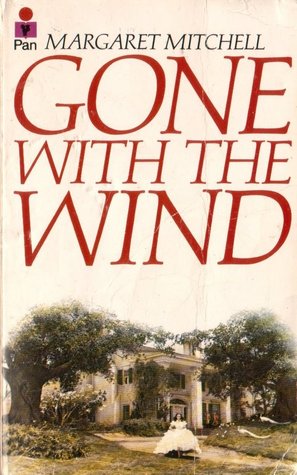
Gone with the Wind by Margaret Mitchell

I think I was about sixteen when my mother persuaded me to try Gone with the Wind. I loved it and quickly went on to read more of the family sagas and sweeping historical novels she recommended, including The Thorn Birds, Roots, All the Rivers Run, The Far Pavilions and John Jakes’ North and South Trilogy.

~

2. Recommended by my father
elric-of-melnibone-michael-moorcock

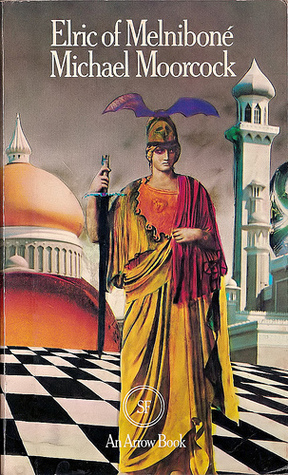
Elric of Melniboné by Michael Moorcock

My dad is not a big reader – and his reading tastes are very different from mine anyway – but Michael Moorcock’s fantasy novels were among the few books he did recommend to me and which, as a young teenager, I really enjoyed. His Elric stories were my favourites and I had fun rediscovering them a few years ago.

~

3. Recommended by my English teacher
Mansfield Park

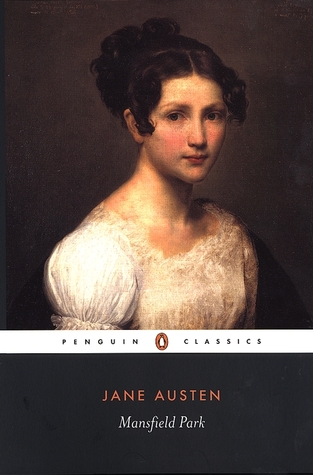
Mansfield Park by Jane Austen

This wasn’t a very successful recommendation. My teacher knew I had enjoyed Pride and Prejudice and recommended Mansfield Park next; unfortunately I found it very difficult to get into and it put me off reading anything else by Austen for years. I loved it on a recent re-read, which I suppose is proof that reading tastes can change over time. The same teacher had been much more successful with his recommendations of To Kill a Mockingbird and Animal Farm, by the way!

~

4. Recommended by Goodreads
Watch the Wall My Darling - Jane Aiken Hodge

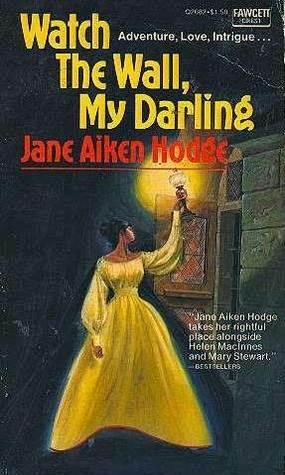
Watch the Wall, My Darling by Jane Aiken Hodge

This was a more recent recommendation; I spotted it in the “Readers Also Enjoyed” section on Goodreads after reading Nine Coaches Waiting by Mary Stewart. It wasn’t as good as the Stewart novel, but still an enjoyable Gothic romance.

~

5. Recommended by my sister
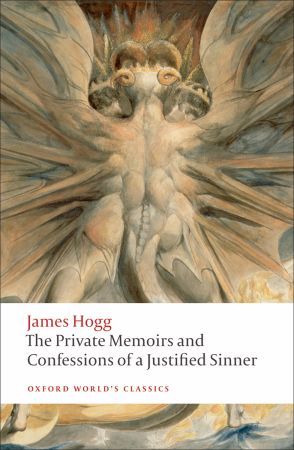
The Private Memoirs and Confessions of a Justified Sinner

The Private Memoirs and Confessions of a Justified Sinner by James Hogg

My sister loves reading as much as I do but we aren’t usually drawn to the same books. This was a book she read for her English Literature degree and she thought I would like it. She was right; it was one of my books of the year in 2013!

~

6. Recommended by Amazon

jonathan-strange-and-mr-norrell

Jonathan Strange and Mr Norrell by Susanna Clarke

I don’t usually pay much attention to Amazon’s recommendations but that’s how I discovered Jonathan Strange and Mr Norrell, shortly after it was first published. I was browsing through the “Customers Who Bought This Item Also Bought” section, clicked on the red cover and was so intrigued by the description that I ordered the book.

~

7. Recommended by my uncle

zen-and-the-art-of-motorcycle-maintenance

Zen and the Art of Motorcycle Maintenance by Robert M. Pirsig

My uncle (another of the book lovers in our family) gave me Sophie’s World by Jostein Gaarder for my fifteenth birthday. When I told him I had loved it, he recommended Zen and the Art of Motorcycle Maintenance, another book on philosophy. I found it an interesting read – although I’m sure I didn’t understand half of it – but I don’t think it’s the type of book I would choose to read today.

~

8. Recommended by a friend
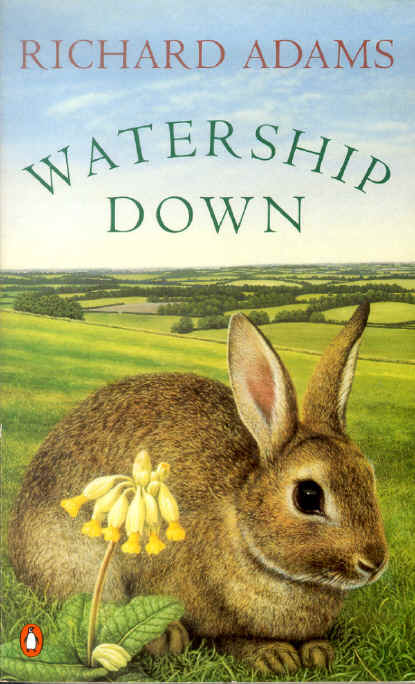
Review: Watership Down by Richard Adams

Watership Down by Richard Adams

This is the earliest recommendation on my list. I think I must have been ten years old when I noticed Watership Down on my best friend’s bookshelf; she told me it was her favourite book and Fiver was her favourite rabbit. It wasn’t long before I read it myself and it immediately became my favourite book too – although Bigwig was my favourite rabbit, not Fiver. I still loved it when I re-read the book as an adult a few years ago.

~

9. Recommended by Jo March
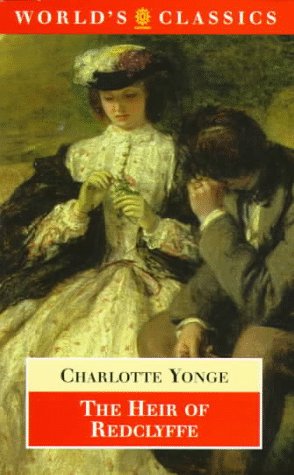
The Heir of Redclyffe

The Heir of Redclyffe by Charlotte M Yonge

Actually, it was Lisa’s review that made me decide to read this book, but Jo March also reads it in Little Women. She is discovered in the attic “eating apples and crying over The Heir of Redclyffe”. After reading the book for myself I could understand why she was crying!

~

10. Recommended by…you?

question-mark

Now it’s over to you. If you could recommend just one book to me, what would it be? Have you read any of the books I’ve mentioned in this post and if so, what did you think of them? What’s the best book you’ve read based purely on someone else’s recommendation?

Historical Musings #19: The Halloween edition

Historical Musings October is here and has brought with it (in my part of the UK at least) a change in the weather, longer, darker nights and a distinctly autumnal feel. With Halloween just a few weeks away, I thought it would be fun to give this month’s Historical Musings post a seasonal theme! I would love to hear about any historical novels you’ve read which deal with any of the following subjects:

  • Witches and witchcraft
  • Magic (black or white)
  • Ghosts and hauntings
  • Vampires/zombies/werewolves/monsters or other supernatural beings of any kind

My suggestions:

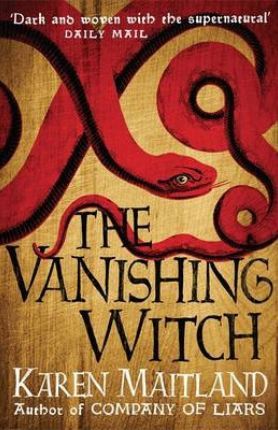
The Vanishing Witch Karen Maitland is one of the first authors to come to mind when I think about this type of historical fiction. The Vanishing Witch is set during the time of the Peasants’ Revolt and features both ghosts and witchcraft; at the beginning of each chapter is a spell, a piece of folklore or a superstition, which I thought was a nice touch! The Raven’s Head, set in the early 13th century, is a darker novel with a strong supernatural element. I haven’t read her other books yet, but am about to start her new one, The Plague Charmer.

Although I didn’t particularly enjoy it, Katherine Howe’s The Physick Book of Deliverance Dane (also published as The Lost Book of Salem) deals with the Salem witch trials. It’s a dual time-frame novel but is set at least partly in the past so I’m including it here.

For those readers who are interested in witches and witchcraft but prefer a gentler read, I can recommend The White Witch by Elizabeth Goudge and Thornyhold by Mary Stewart. The first is set during the English Civil War while the latter is set in the 1940s (but published in 1988, which is why I’m classing it as historical here). There’s also Susan Fletcher’s Corrag (also published as Witch Light), a beautifully written novel about the Glencoe Massacre of 1692; the main character and her mother have both been accused of witchcraft due to their knowledge of herbs and healing.

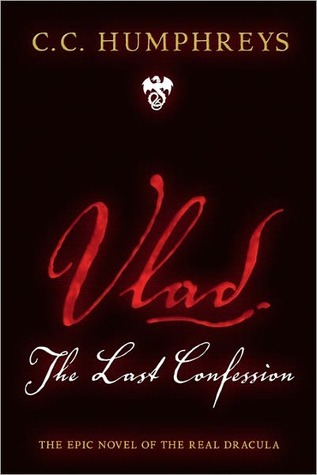
Vlad the Last Confession C.C. Humphreys has written a novel called Vlad: The Last Confession, which tells the story of Vlad the Impaler, the fifteenth century Prince of Wallachia who is thought to have provided at least part of the inspiration for Bram Stoker’s Dracula. This is not actually a vampire novel, but because of the Dracula connection and the dark atmosphere I’m including it here anyway.

There are also two ghostly novels by John Harwood that come to mind: The Séance, a gothic mystery set in Victorian England, and The Ghost Writer, which includes four genuinely chilling short ghost stories supposedly written by a fictitious author in the 1890s.

Finally, there’s Deborah Harkness’s All Souls Trilogy, in which our hero and heroine are a vampire and a witch. The first book, A Discovery of Witches, is set in the present day but in the second, Shadow of Night, we travel back in time to 16th century Europe. I’m not sure about the third book as I haven’t read it yet.

Have you read any of the books I’ve mentioned here? Can you think of any other historical fiction novels with a ghostly/witchy/magical feel?

Two from Georgette Heyer: Regency Buck and Black Sheep

It’s been a while since I read anything by Georgette Heyer and I still have a lot of her books to get through, so I had a nice surprise a few weeks ago when I found two on the library shelf that I hadn’t read yet: Regency Buck and Black Sheep. Neither of these were near the top of my list of Heyer novels to look out for, but I was still pleased to have the opportunity to read them – and I’m even more pleased to say that I enjoyed both.

regency-buck-heyer Published in 1935, Regency Buck was the first of Heyer’s many novels to be set in the Regency period. It follows the adventures of Judith Taverner and her younger brother, Sir Peregrine (Perry), who have recently been orphaned and, under the terms of their father’s will, have been left under the guardianship of his friend, the fourth Earl of Worth. Leaving their home in Yorkshire, the brother and sister set off for London to meet the Earl. It proves to be a more eventful journey than they expected when they have an unpleasant encounter with an arrogant nobleman on the road. Imagine their horror when they discover that this nobleman is none other than Julian St John Audley, who has inherited the title of Earl of Worth from his father and is therefore their new guardian!

Judith is a strong, independent young woman who is used to doing as she pleases; on arriving in London she sets about making a name for herself by refusing to conform to the conventions of society, but Worth has other ideas as to how she should behave. Unable to see eye to eye with her guardian, Judith is grateful for the friendship and support of her cousin Bernard, with whom she has just become acquainted for the first time. Soon, though, Judith has more important things to worry about. It seems that someone is trying to murder Perry – but who can it be?

Although I had my suspicions as to Worth’s true motives, Heyer misleads us so much that we can’t be completely sure whether he is the hero or the villain. I would usually like this type of character, but Worth just never endeared himself to me; I found him unnecessarily patronising and I really felt for Judith and Perry every time they were forced into yet another humiliating conversation with him. I did like Judith – she’s an intelligent, outspoken and rebellious heroine – and I thought Perry was amusing, with all his youthful enthusiasms! As usual, Heyer’s recreation of the Regency period is vivid and immersive and although the main characters are fictional, there are also some real historical figures who make an appearance in the story. I loved the portrayal of the famous dandy Beau Brummell, particularly in the scene where Judith meets him for the first time – a case of mistaken identity!

Regency Buck is set in London and Brighton, which gives it a slightly different feel from the second of the two books I read, Black Sheep, which is set in Bath…

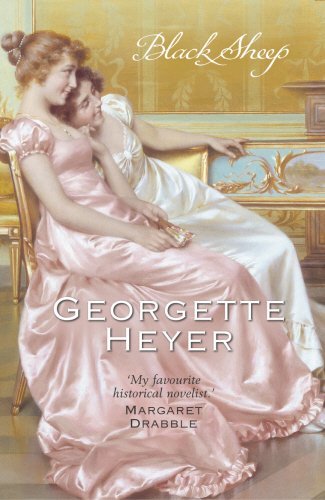
black-sheep At twenty-eight and still single, it is looking unlikely that Abby Wendover will ever marry. Instead, she is concerning herself with the love affairs of her seventeen-year-old niece, Fanny, whose romance with the handsome, dashing Mr Stacy Calverleigh has become the talk of Bath. Although Fanny’s other aunt, Selina, has been taken in by Stacy’s charms, Abby is convinced he is nothing more than a fortune hunter and determines to free Fanny from his clutches. However, when Stacy’s uncle, Miles Calverleigh – the ‘black sheep’ of the family – also arrives in Bath, Abby finds herself drawn into a relationship which is considered even more unsuitable than Fanny’s!

Black Sheep, published in 1966, is a later Heyer novel. It’s one of my favourites so far and that is largely because of its wonderful hero and heroine. I loved both Abby and Miles and found myself looking forward to every scene they were in together. They feel like two people who really would have liked and understood each other, rather than characters who are just being forced together for the sake of the plot – there’s a genuine chemistry between them and the dialogue really sparkles! I liked the fact that Abby is a little bit older than the average Heyer heroine (she reminded me in some ways of Anne Elliot in Persuasion); she’s a sensible, mature woman whose romance with Miles is of a very different nature than Fanny’s with Stacy.

As I said at the start of this post, I enjoyed reading both of these novels. I was particularly relieved to find that I liked Regency Buck as it doesn’t seem to be a very popular book with Heyer fans! I probably wouldn’t recommend that one to readers new to Heyer, though; of these two, I think Black Sheep would be a much better place to start.

Have you read either of these? What are your favourite Heyer novels?

Restoration by Rose Tremain

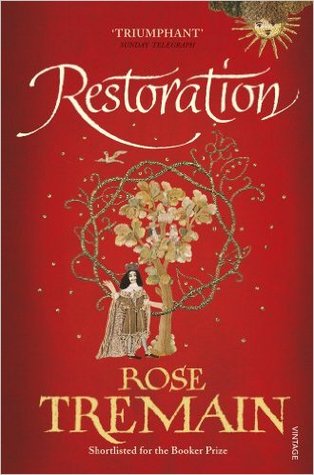
Restoration Rose Tremain is a new author for me, but I’ve been meaning to try one of her books for a long time. Her 1989 novel Restoration seemed like my sort of book and knowing that I need to read the sequel, Merivel: A Man of His Time, for my Walter Scott Prize project gave me the motivation to pick it up and start reading. It also counts towards my Ten from the TBR project, which has been sadly neglected this year!

Restoration is set in 17th century England in the years following the restoration of the monarchy; the title refers not just to the time period but also to the personal restoration of a man’s self-respect and his place in the world. That man is Robert Merivel, a glovemaker’s son and trained physician who, near the beginning of the novel, obtains a position at the court of Charles II as surgeon to the king’s spaniels. Merivel is quickly swept away by the fun and frivolity of the court, making himself popular by playing the fool and entertaining the king.

It’s not long, however, before the king comes to Merivel with a request for help. Charles requires a husband for one of his mistresses, Celia Clemence – someone who will be a husband in name only, giving Celia a form of respectability while the king continues his affair with her. Merivel agrees to marry her and at first is delighted with the country estate in Norfolk which he is given as part of the deal. Everything is going well until Celia comes to join him there and Merivel discovers that he is falling in love with his wife…something he has been strictly forbidden to do.

Restoration is narrated by Robert Merivel himself and I found him both a fascinating and a frustrating character, more anti-hero than hero. Irresponsible and immature, you get the impression he is stumbling through life from one disaster to another, with no clear purpose in sight – and yet, despite his flaws and his failures, you can’t help feeling for him as he falls out of favour with the king. While I can’t say that I actually liked Merivel, he is an engaging narrator and his story is told with such an appealing mixture of humour and sensitivity that I was captivated by him and hoped that he would find a way to restore his fortunes.

Rose Tremain’s lively writing style perfectly suits the time period in which the novel is set. I always enjoy reading about the 1660s and I liked the contrast here between the descriptions of Merivel’s life as a country gentleman, his adventures at court and his time practising medicine in London. Merivel is in London during the Plague and the Great Fire, which are both vividly recreated. However, there is a long section in the middle of the book set in an asylum run by Merivel’s Quaker friend, Pearce, and I found my attention starting to wander during these chapters. I could see the importance of this section to the plot and to Merivel’s personal development, but I struggled to feel any interest in the new characters we meet at the asylum and I thought the whole episode went on for far too long.

Overall, though, I was impressed with this book and with my first experience of Rose Tremain’s writing. I’ll be interested to see how Robert’s story continues in Merivel, which I’m hoping to start soon.

Classics Spin #14: The result

The result of the latest Classics Spin has been revealed today – and I’m very happy with the book I’ll be reading!

The idea of the Spin was to list twenty books from my Classics Club list, number them 1 to 20, and the number announced today (Monday) represents the book I have to read before 1st December 2016. The number that has been selected is…

1

And this means the book I need to read is…

wuthering-heights

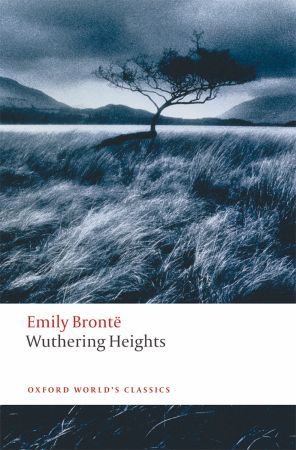
Wuthering Heights by Emily Brontë

This will be a re-read of one of my favourite books. It seems that Wuthering Heights is a book people either love or hate; I’ve always loved it and am looking forward to revisiting it for the Classics Club. It’s been a while since I last read it, so I hope I’ll still enjoy it as much as I used to!

~

Did you take part in the Classics Spin? What will you be reading?

My Commonplace Book: September 2016

A summary of last month’s reading, in words and pictures.

commonplace book
Definition:
noun
a notebook in which quotations, poems, remarks, etc, that catch the owner’s attention are entered

Collins English Dictionary

~

york-minster

Another high wall appeared ahead of us; York seemed a city of walls. Behind it the Minster loomed. Ahead was a large open space crowded with market stalls under brightly striped awnings that flapped in the cool damp breeze. Heavy-skirted goodwives argued with stallholders while artisans in the bright livery of their guilds looked down their noses at the stalls’ contents, and dogs and ragged children dived for scraps. I saw most of the people had patched clothes and worn-looking clogs. Watchmen in livery bearing the city arms stood about, observing the crowds.

Sovereign by CJ Sansom (2006)

~

But whereas the planets are serene in their separateness, knowing any collision with one another likely to destroy them and return them to dust, Fogg remarks that he, along with very many of his race, finds his Separateness the most entirely sad fact of his existence and is every moment hopeful of colliding with someone who will obscure it from his mind.

Restoration by Rose Tremain (1989)

~

elizabeth-of-york

“Do you like history?” he enquired.

“Oh, yes.” She turned eagerly to him, forgetting momentarily the splendour of the pageant. “It is about people, you see. The deeds they performed. The way they thought.”

Elizabeth the Beloved by Maureen Peters (1972)

~

Writing is a kind of magic. One person sits in a room alone and makes marks on a page that represent the images in her mind. Another person looks at those marks, weeks or months or a hundred years later, and similar images appear in that person’s mind. Magic. Plays and choreography hold yet another level of magic and meaning: the marks on the page leap to action in another person’s body, to be seen by thousands of others. The ability to weave that kind of magic paid well in Las Vegas.

The Hawley Book of the Dead by Chrysler Szarlan (2014)

~

He was a good husband. He had comforted her when she’d sobbed violently against his plump chest, then rested dry-eyed against it and tried not to remember all the things she no longer knew about her son. How tall was he now? Had the colour of his hair changed? Did he still wake sometimes in the middle of the night unable to breathe? Did he still like to find beetles in the cracks in a stone wall, or to look for hidden things beneath a rock?
Did he remember her at all?

Rebellion by Livi Michael (2015)

~

king-david

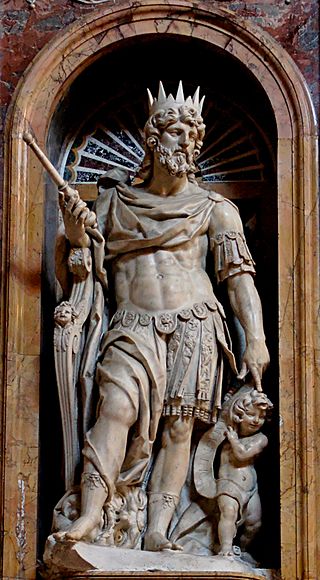
But the stories that grow up around a king are strong vines with a fierce grip. They pull life from whatever surfaces they cling to, while the roots, maybe, wither and rot until you cannot find the place from which the seed of the vine has truly sprung.

The Secret Chord by Geraldine Brooks (2015)

~

Three telephones kept ringing like demented things, and by post, telegram, wireless, and personal appearance the information poured in. Nine-tenths of it quite useless, but all of it requiring a hearing: some of it requiring much investigation before its uselessness became apparent. Grant looked at the massed pile of reports, and his self-control deserted him for a little.

A Shilling for Candles by Josephine Tey (1936)

~

“It is the only thing I know of to his advantage,” Judith said. “I will admit him to be an excellent whip. But for the rest I find him a mere fop, a creature of affectations, tricked out in modish clothes, thinking snuff to be of more moment than events of real importance. He is proud, he can be insolent. There is a reserve, a lack of openness—I must not say any more: I shall put myself in a rage, and that will not do.”

Regency Buck by Georgette Heyer (1935)

~

courbette

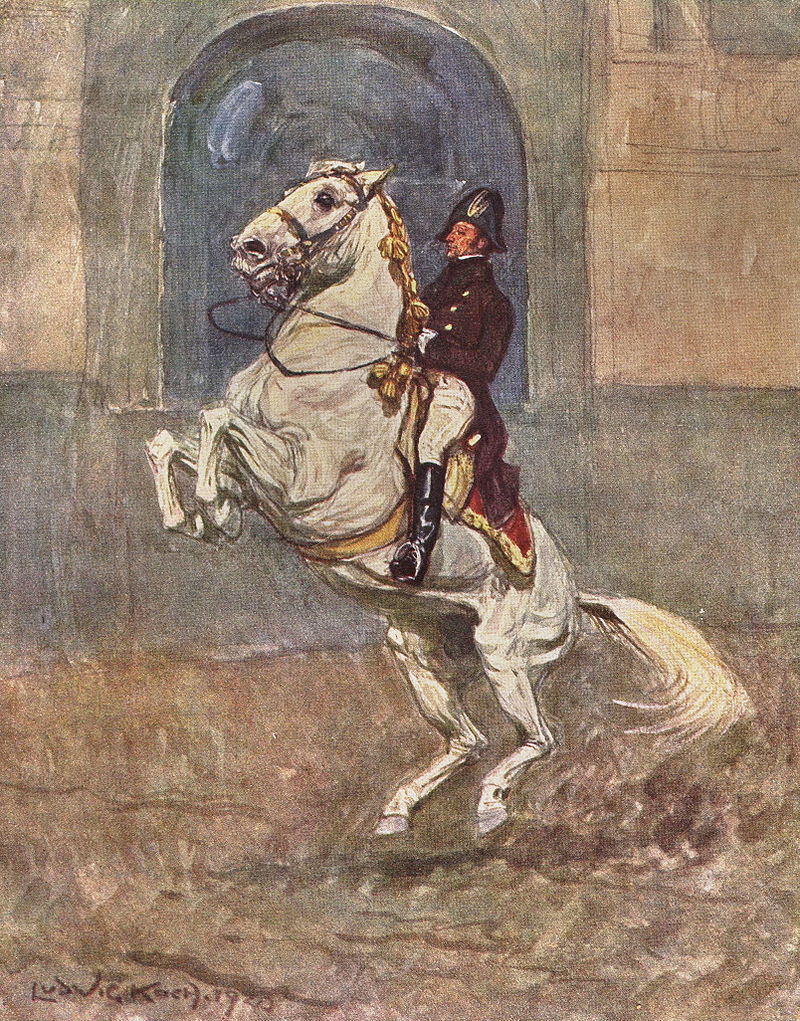
I heard the fanfare and recognised it; it was the entrance of Annalisa and her white stallion. The trumpets cut through the air, silver, clear and commanding. Old Piebald stopped grazing and lifted his head, with his ears cocked as one imagines a war horse might at the smell of battle and the trumpets. Then the music changed, sweet, lilting and golden, as the orchestra stole into the waltz from The Rosenkavalier.

Airs Above the Ground by Mary Stewart (1965)

~

In books there were people who were always agreeable or tender, and delighted to do things that made one happy, and who did not show their kindness by finding fault. The world outside the books was not a happy one, Maggie felt; it seemed to be a world where people behaved the best to those they did not pretend to love, and that did not belong to them.

The Mill on the Floss by George Eliot (1860)

~

“I might be wrong, but I fancy that however much a girl may admire, or envy, the heroine of some romance, who finds herself in the most extraordinary situations; and however much she may picture herself in those situations, she knows it is nothing more than a child’s game of make-believe, and that she would not, in fact, behave at all like her heroine.”

Black Sheep by Georgette Heyer (1966)

~

nondescript

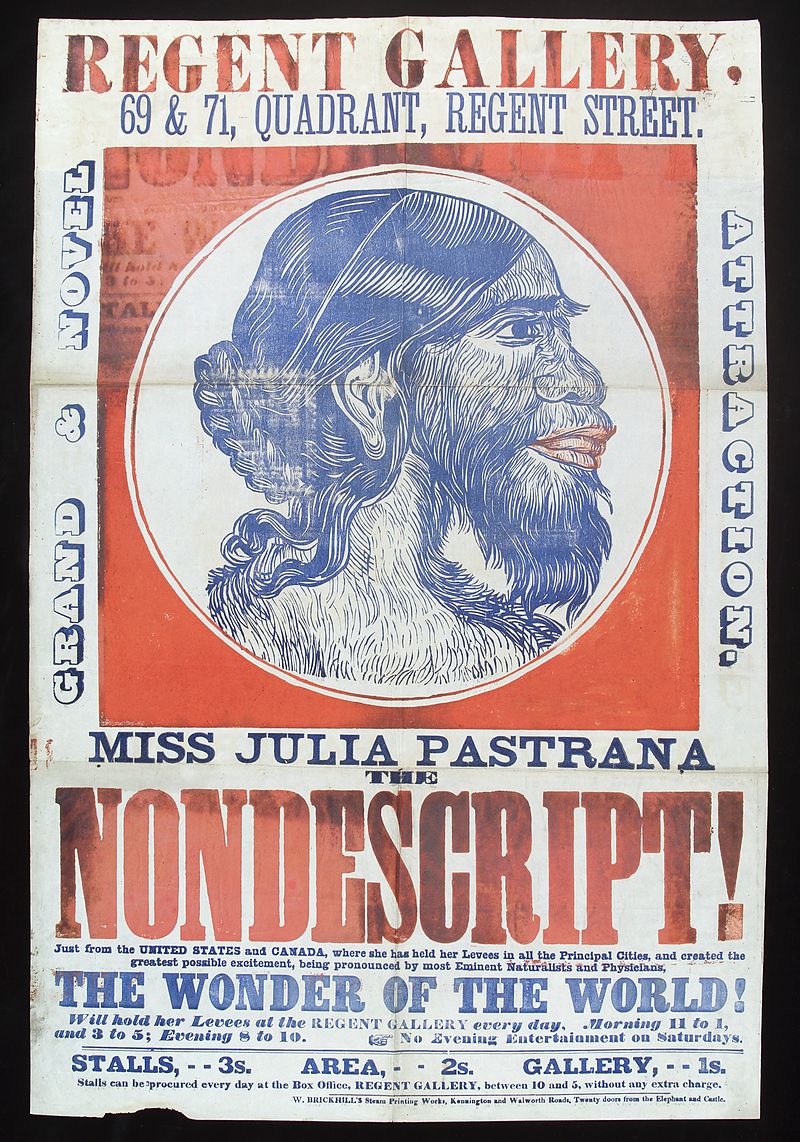
“You’re not shy, Julia,” he said. “It’s what I noticed first about you. How calmly you faced the world with that stupendous, utterly unnatural face of yours, and of course – you know the spirit in which I say that, it’s merely a stated fact – I knew then you were a natural. No no, there’s no doubt in my mind, no doubt at all, but that you’ll thrive.”

Orphans of the Carnival by Carol Birch (2016)

~

It happens this way sometimes, we can discover truths about ourselves in a moment, sometimes in the midst of drama, sometimes quietly. A sunset wind can be blowing off the sea, we might be alone in bed on a winter night, or grieving by a grave among leaves. We are drunk at a tavern, dealing with desperate pain, waiting to confront enemies on a battlefield. We are bearing a child, falling in love, reading by candlelight, watching the sun rise, a star set, we are dying…

But there is something else to all of this, because of how the world is for us, how we are within it. Something can be true of our deepest nature and the running tide of days and years might let it reach the shore, be made real there — or not.

Children of Earth and Sky by Guy Gavriel Kay (2016)

~

Favourite books read in September: Sovereign, Airs Above the Ground and Black Sheep

Classics Spin #14: My list

The Classics Club

I’ve been wondering when there would be another Classics Club Spin – it seems a long time since the last one – so I was pleased to see that Spin #14 has just been announced!

Here are the rules, if you need a reminder:

* List any twenty books you have left to read from your Classics Club list.
* Number them from 1 to 20.
* On Monday the Classics Club will announce a number.
* This is the book you need to read by 1st December 2016

And here is my list:

As I only have 15 books left to read for the Classics Club, I’ve had to list some of them twice. I haven’t included East of Eden (because I’ve already committed to reading that one this autumn) or my re-read of The Count of Monte Cristo (because it’s one of my favourite books and I thought it would be nice to save it until last). Of the others, I really don’t mind which one is chosen for me!

~

1. Wuthering Heights by Emily Brontë (re-read)
2. Crime and Punishment by Fyodor Dostoevsky
3. The Man in the Iron Mask by Alexandre Dumas
4. Rebecca by Daphne du Maurier (re-read)
5. Frenchman’s Creek by Daphne du Maurier
6. Howards End by E.M. Forster
7. I, Claudius by Robert Graves
8. The Woodlanders by Thomas Hardy
9. Lost Horizon by James Hilton
10. The Red House Mystery by A.A. Milne
11. Excellent Women by Barbara Pym
12. The Leopard by Giuseppe Tomasi di Lampedusa
13. The Day of the Triffids by John Wyndham
14. The Man in the Iron Mask by Alexandre Dumas
15. Crime and Punishment by Fyodor Dostoevsky
16. Frenchman’s Creek by Daphne du Maurier
17. I, Claudius by Robert Graves
18. Wuthering Heights by Emily Brontë (re-read)
19. The Leopard by Giuseppe Tomasi di Lampedusa
20. Excellent Women by Barbara Pym

~

Which numbers do you think I should be hoping for? Are you taking part in the Spin this time?