Love, Sex & Frankenstein by Caroline Lea

Love is a light you can see only when you reach for it. You hold it in your hand and, for as long as the flame glows, it warms you.
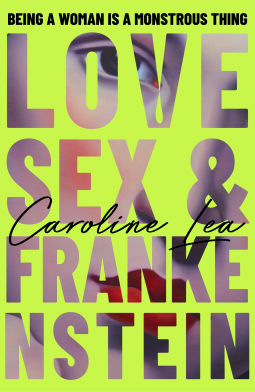
I’ve read three of Caroline Lea’s previous books, all of which I found interesting, so I was looking forward to reading her new novel about the life of Mary Shelley – although I have to admit, if I hadn’t already known I liked Lea’s work, the cover and title of this one would have probably put me off. I’m glad that didn’t happen because I really enjoyed it; it’s probably my favourite of her books so far.

The main focus of the novel is the events of 1816 – known as the Year Without a Summer due to the unusual weather caused by a volcanic eruption the year before. It’s also the year that Mary Godwin and her lover, Percy Shelley, travel to Geneva with their baby son and Mary’s stepsister, Claire Clairmont. Not for the first time, Shelley’s debts have brought the bailiffs to their door and, tired of constantly moving around London to avoid them, Claire has seized the opportunity to persuade Mary and Percy to come to Switzerland with her to visit Lord Byron. Claire is convinced that Byron loves her and claims that he has been begging her to go and spend the summer with him at Lake Geneva but Mary, who is familiar with Byron’s reputation, thinks she’s deluded. However, in their desperation to escape the bailiffs, she and Shelley agree to Claire’s plan.

As they arrive at their hotel in Geneva, the foggy, oppressive weather mirrors Mary’s mood. She and Shelley seem to do nothing but argue and with no sign of Byron, Claire has turned her attentions to Mary’s lover, making no secret of what she is doing. When Byron finally does appear and the party start to spend time with him and his companion, John Polidori, at his rented home, the Villa Diodati, Mary hopes things will improve. However, the dynamics between the four of them only grow more tense and strained and Mary thinks of taking baby Willmouse and running away. Then, during a storm one evening, they gather to read ghost stories and, unimpressed, Byron issues a challenge: they should each write one of their own and see whose is best. Now Mary has something to focus on and during this difficult, emotional time, her famous novel, Frankenstein, begins to take shape.

Despite the title, the writing of Frankenstein forms only a small part of the book; instead Lea concentrates on exploring Mary’s state of mind in the period immediately before and during the creation of the novel. There’s some jumping around between timelines in the first half of the book as Lea tries to fill the reader in on Mary’s background, her childhood and the beginning of her relationship with Shelley, and I found it slightly difficult to keep track of things, but this became less of a problem later in the book when I had settled into the story.

Having read several other novels about the Shelleys and Lord Byron, I was interested to see how Lea’s portrayal of the characters would compare. As our protagonist, Mary is a complex woman but also a contradictory one. She has the strength and determination to repeatedly defy convention to be with the man she loves – the already married Shelley – while at the same time she feels trapped in her relationship with him and unable to escape. Shelley seems to love her in his own way, but is insensitive towards her and expects her just to accept his various infidelities. Mary’s relationship with Claire is equally difficult, continually switching between resentment and affection. As seen through Mary’s eyes, Claire doesn’t come across well at all in this book, flirting openly with Shelley in front of her sister then complaining when Mary later does the same with Byron. (For a more sympathetic view of Claire, try Clairmont by Lesley McDowell.) The portrayal of Byron is also largely very negative – he treats Claire appallingly, although we see a more tender side of him in his interactions with Mary.

This is definitely not a book with likeable characters, then, but the fact that they are all, like Mary, complex and contradictory is what makes them feel human and believable. It’s also beautifully written and I enjoyed reading it, despite not really learning much about Frankenstein!

Thanks to Michael Joseph for providing a copy of this book for review via NetGalley.
The Stepdaughter by Caroline Blackwood

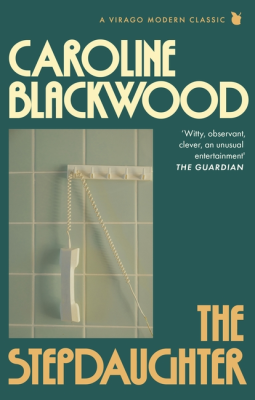
I’ve never read anything by Caroline Blackwood, but decided to try this book as I was intrigued by the comparisons to authors like Shirley Jackson and Patricia Highsmith. Although she wrote several novels, short story collections and works of non-fiction, Blackwood, who was a Guinness heiress, seems to have been better known as a socialite and muse (she inspired the art of Lucian Freud and the poetry of Robert Lowell, two of her three husbands). She really deserves to be known for her own work as well as her influence on other people’s and I’m glad to see that some of her books, including this one, have been reissued recently.

The Stepdaughter was first published in 1976 and is novella length, which is a perfect way to try out a new author without having to commit to something longer. The book is narrated by a woman referred to only as J, and takes the form of letters she is ‘writing’ in her mind to an imaginary friend. J has been deserted by Arnold, her husband, who has gone to live in Paris with his French girlfriend, leaving her behind in an expensive Manhattan apartment with their four-year-old daughter and an au pair, whom she dislikes. There’s also a fourth member of the household – Renata, her husband’s teenage daughter from a previous marriage. It seems clear to J that Arnold will only allow her to go on living in the apartment if she continues to look after Renata. The only problem is, she hates the girl, resents her presence and can’t even bear to look at her.

The narrator’s attitude towards Renata is horrible. It’s obvious to the reader that Renata, who is still just a child, is desperately unhappy and in need of love and affection. However, this doesn’t seem to occur to J (or maybe it does, but she doesn’t care). She sees her stepdaughter as someone to be despised – an awkward, overweight, unattractive girl whose only interests are baking and eating cakes and sitting in her bedroom watching television. J uses her imaginary letters as an outlet to express her feelings about Renata and as the book progresses she becomes more and more fixated on her hatred of the girl, blaming her for everything that’s wrong in her life.

The situation in the apartment sounds unbearable, for J but particularly for poor Renata, so it’s not surprising that eventually things do inevitably reach a turning point. It’s not a happy ending and not what I would have preferred, but at least J manages to redeem herself a tiny bit, gaining a deeper understanding of both herself and Renata and regretting that things have happened the way they have. Although J’s sheer nastiness and cruelty make this book an uncomfortable and unsettling read, it’s also a very compelling one. It wouldn’t feel right to say that I ‘enjoyed’ it, but I was gripped by it and read it in one day. It would be a good choice for Novellas in November, if anyone is planning that far ahead!

Thanks to Virago for providing a copy of this book for review via NetGalley.
Book 2/20 for 20 Books of Summer 2025.

Historical Musings #91: Walter Scott Prize winner…and some more books to look out for in 2025

Welcome to this month’s post on all things historical fiction!

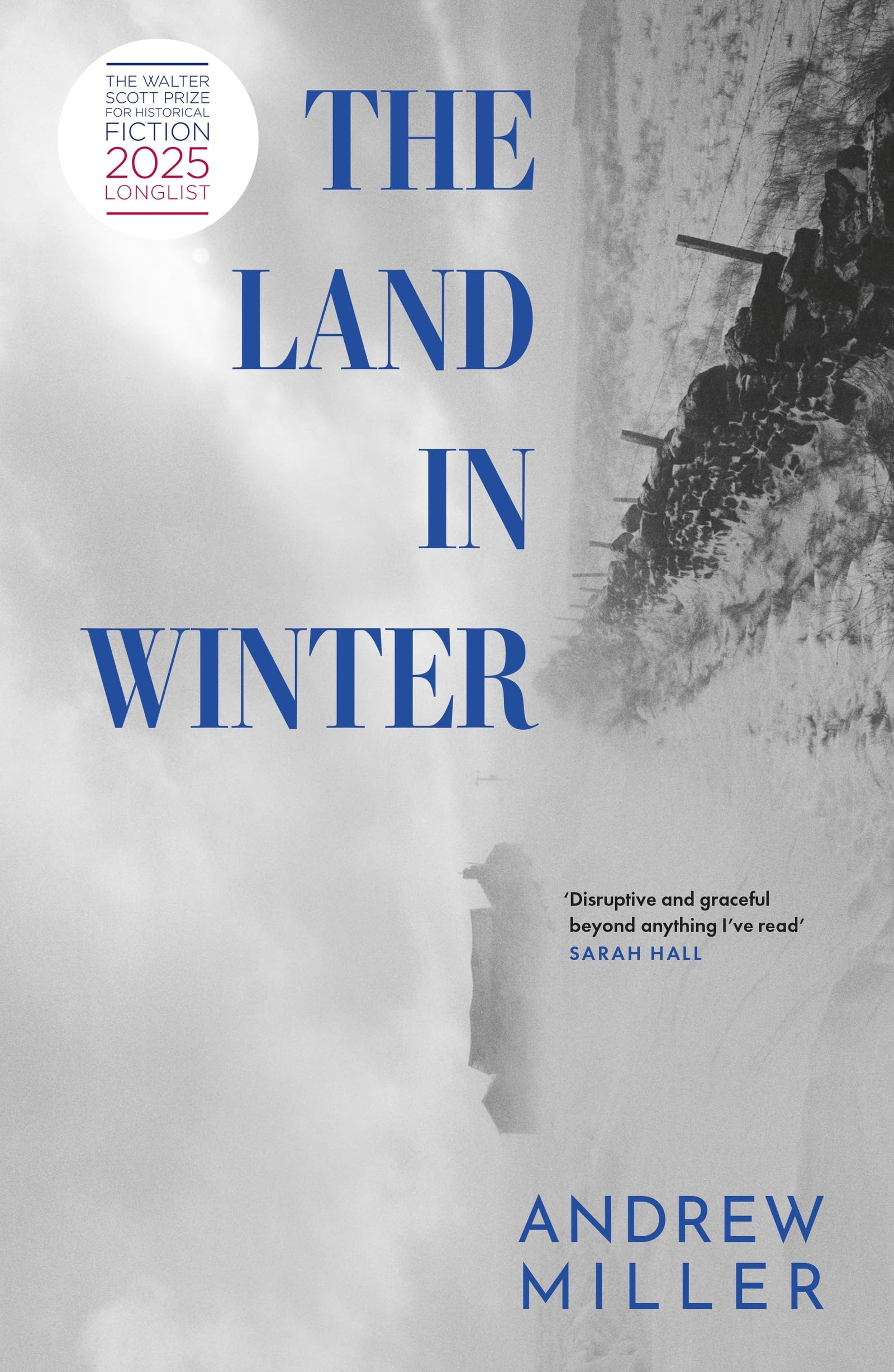
First of all, congratulations to Andrew Miller, the winner of this year’s Walter Scott Prize for Historical Fiction, announced at the Borders Book Festival last week.

The winning novel, The Land in Winter, is one of the shortlisted titles that I haven’t read yet and is about two couples living in an English village during the winter of 1962-63, one of the coldest on record. I’ve enjoyed other books by Miller, so I’m sure it’s a deserving winner – and, to be honest, I’m pleased neither Glorious Exploits by Ferdia Lennon nor The Heart in Winter by Kevin Barry won the prize as they are the only two I’ve managed to read from the shortlist so far and I didn’t love either. I’ll look forward to reading the Miller book and the other three shortlisted titles, probably after I finish the 20 Books of Summer challenge.

Moving on, last December I posted a list of upcoming historical fiction being published in 2025. Now that we’re halfway through the year, more titles have been announced so I thought I would post an updated list below for the rest of the year. This is simply a selection of books that have caught my attention for one reason or another – some are review copies I’ve received, some are new books by authors I’ve previously enjoyed and others just sounded interesting. Most of the July and August ones are already on my 20 Books of Summer list, so you should be hearing more about them here soon!

Dates provided are for the UK and were correct at the time of posting.

July

Sinners by Elizabeth Fremantle (3rd July 2025)

These Wicked Devices by Matthew Plampin (3rd July 2025)

The Art of a Lie by Laura Shepherd-Robinson (10th July 2025)

Love and Other Poisons by Lesley McDowell (17th July 2025)

A Case of Life and Limb by Sally Smith (17th July 2025) – I’ve already read and loved this one!

How to Lose a Lord in Ten Days by Sophie Irwin (31st July 2025)

The Emerald Shawl by Louise Douglas (31st July 2025)

August

The House at Devil’s Neck by Tom Mead (14th August 2025)

Boudicca’s Daughter by Elodie Harper (28th August 2025)

September

Buckeye by Patrick Ryan (2nd September 2025)

The Predicament by William Boyd (4th September 2025)

Circle of Days by Ken Follett (23rd September 2025)

Venetian Vespers by John Banville (25th September 2025)

October

Benbecula by Graeme Macrae Burnet (2nd October 2025)

Boleyn Traitor by Philippa Gregory (7th October 2025)

House of Splinters by Laura Purcell (9th October 2025)

The Witching Hour by various authors (16th October 2025)

~

Are you interested in reading any of these? Which other historical novels should I be looking out for before the year of the year? And what do you think of The Land in Winter winning the Walter Scott Prize?

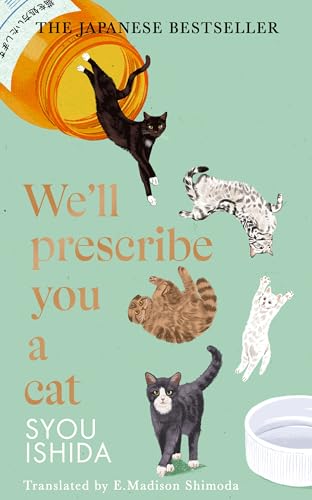
We’ll Prescribe You a Cat by Syou Ishida – #ReadingtheMeow2025

Translated by E. Madison Shimoda

Until now I seem to have avoided the current trend for Japanese novels with cute cat pictures on the cover. It wasn’t a deliberate decision to avoid them – that sort of book just doesn’t usually appeal to me. When I was looking for ideas for cat-related books to read for this year’s Reading the Meow, though, I thought this one sounded intriguing.

We’ll Prescribe You a Cat begins with Shuta Kagawa visiting the Nakagyō Kokoro Clinic for the Soul in Kyoto. Shuta’s unhappiness at work is causing him to suffer from stress and insomnia and he has decided to consult a psychiatrist. However, he quickly discovers that this is no ordinary clinic – first, it proves extremely difficult to find, hidden away down a narrow alleyway; then, instead of prescribing medication, Dr Nikké says something completely unexpected: “We’ll prescribe you a cat”. And with that, Shuta becomes the temporary owner of Bee, an eight-year-old female mixed breed – but will he manage to complete the course of ‘medication’ without any side effects and what will happen when it’s time to give the cat back?

Shuta’s story is the first of five that make up this novel, each one following a similar format with a character entering the Kokoro Clinic and, regardless of their symptoms, being prescribed a cat. The cat is a different one each time, each with his or her own personality and characteristics. Sometimes the cat is compatible with the client; sometimes it seems to cause more trouble and disruption, but in each case, when the prescription comes to an end, the person finds that their life will never be the same again.

Animal-assisted therapy is a legitimate form of therapy used by charities and mental health groups to treat a range of issues, allowing people to spend time with animals in a controlled environment. That’s what I had assumed this book would be about, so I was surprised to see Dr Nikké and his nurse, Chitose, simply handing the clients a cat in a carrier with some food and written instructions – no checks done to make sure the person had a suitable home for the cat, no questions asked about allergies or the needs of other family members. Then, at the end of the week or two week period, the cat is going to be handed back to the clinic and passed on to the next person. It seemed cruel and irresponsible. However, I quickly discovered that the book has a fantasy element – which grows stronger and more bizarre as it progresses – and I was probably taking things too seriously!

You may be wondering what the fantasy element is. Well, to begin with, the clinic itself is very unusual – sometimes it can be found and sometimes it can’t, depending on the person looking for it and how desperately they need to find it. There’s also something strange about Dr Nikké and Chitose, but I’m not going to say any more about that except that each of the five stories adds a little bit to our understanding of what is going on. Still, when I finished the book I felt that a lot of things were left unexplained or only partly answered. There’s a sequel, We’ll Prescribe You Another Cat, which will be available in English in September, but I’m not sure whether it will provide any more clarity or if it’s just another collection of similar stories. I don’t think I liked this one enough to want to read the sequel, but I did find it interesting and I enjoyed taking part in this year’s Reading the Meow with this book and Paul Gallico’s Jennie!

The Surgeon’s House by Jody Cooksley

I haven’t read any of Jody Cooksley’s previous novels, but loved the sound of her new one, The Surgeon’s House, described as a ‘thrilling Gothic historical mystery’. It’s a sequel to The Small Museum, which I wasn’t aware of until after I started reading, but I hoped that wouldn’t be a problem.

The book is set in 1883 and begins with the murder of Rose Parmiter, the cook at Evergreen House, a refuge for women and children run by Rebecca Harris and her husband, George. At first, Rebecca can’t understand why anyone would kill Rose – it seems completely senseless and inexplicable – but when more mysterious incidents follow, she begins to wonder whether the legacy of Evergreen’s former residents, the evil Dr Everley and his sister Grace, is casting a shadow over the house. But Everley is dead and Grace confined to an asylum, so how could they possibly have anything to do with the events of the present day?

Meanwhile, Rebecca is trying to concentrate on providing a safe and happy home for ‘fallen women’ and their illegitimate children, but she faces opposition from Mr Lavell of the Charity Board who insists she is being too lenient. He believes the children belong in an orphanage and the mothers should be made to study the Bible and take in laundry to pay for their bed and board. Rebecca is determined to prove that her method is better, but when more people are found dead at Evergreen House she begins to fear that this will give Mr Lavell an excuse to take control of the refuge for himself.

I found a lot of things to like about The Surgeon’s House, but it took me a long time to get into it because such a large portion of the first half of the book was devoted to filling the reader in on the plot of The Small Museum. It seemed to me that the author was more interested in explaining what happened in the previous novel, what the characters had been doing in the intervening years and how they had coped with their traumatic experiences than she was in moving forward with the plot of this novel. It made me think I should have just read The Small Museum instead. Things did eventually start to move on, though, and by the middle of the book it had become much more compelling.

The setting was interesting as it reminded me a lot of Urania Cottage, the women’s shelter founded by Charles Dickens and Angela Burdett-Coutts which Stacey Halls wrote about in her recent novel, The Household – and I think if you liked that book, there’s a good chance you’ll like this one as well. Rebecca’s conflict with Mr Lavell forms a big part of the story, as she tries to keep her vision for Evergreen House alive despite his insistence that it should be run on the same model as the notorious Magdalene Laundries (which again reminded me of another book I’ve read, Small Things Like These by Claire Keegan).

The mystery element of the book, as I’ve said, was slow to develop at first but became stronger later on. There are some chapters written from the perspective of Grace in her asylum and we also meet Dr Threlfall, a psychiatrist who has a ‘clinic’ in the basement of Evergreen House where he is carrying out research and experiments. It’s an interesting novel, then, with lots of different threads to it, but I felt that these threads didn’t all come together as well as they could have done. It’s possible that I would have enjoyed this book more if I’d already read the first one, so it hasn’t necessarily put me off reading more of Jody Cooksley’s work.

Thanks to Allison & Busby for providing a copy of this book for review via NetGalley.

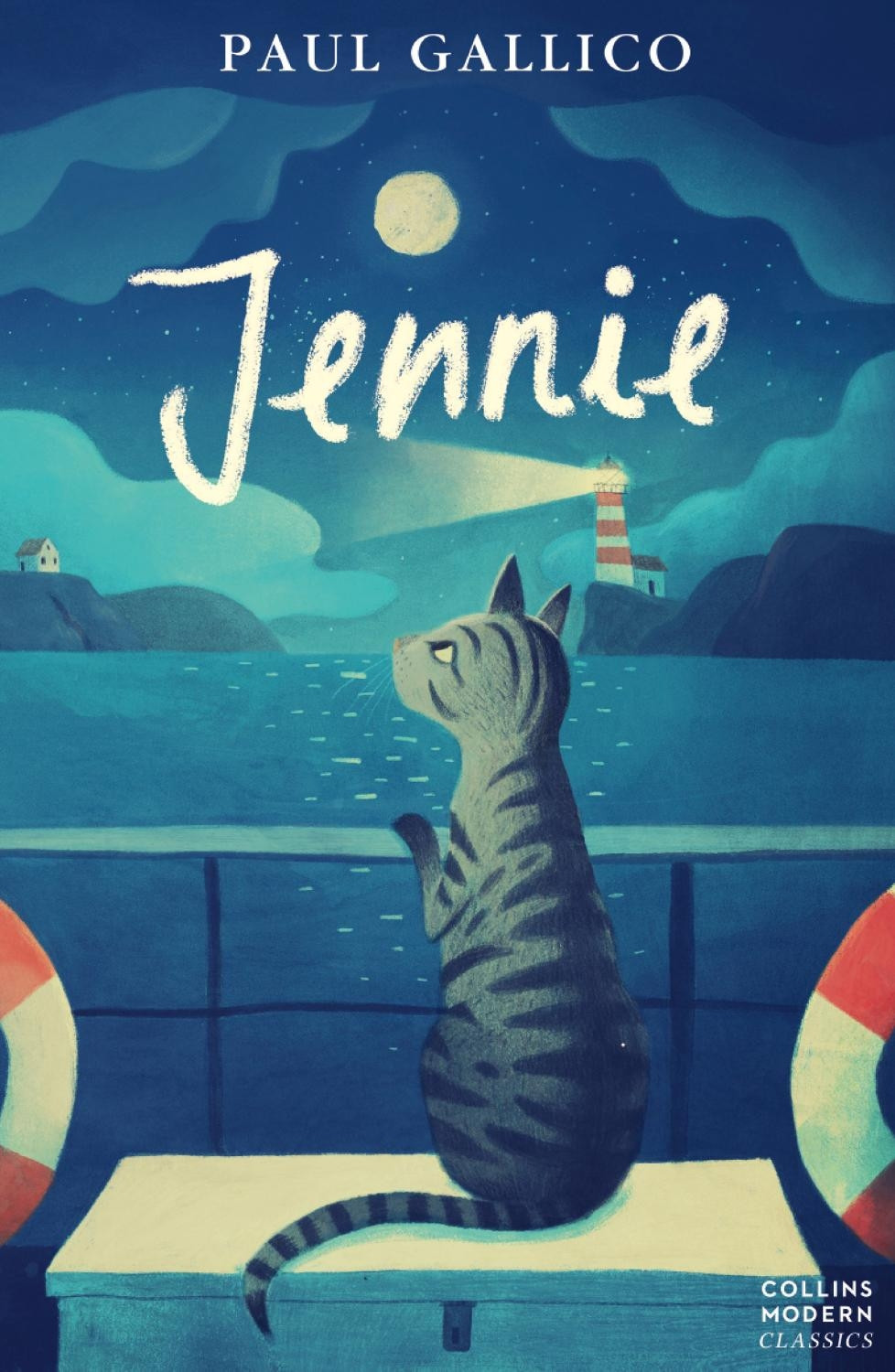
Jennie by Paul Gallico – #ReadingtheMeow2025

This week Mallika of Literary Potpourri is hosting her third annual Reading the Meow event – a celebration of cats in literature. Last year I read and loved Paul Gallico’s Thomasina, so reading one of his other cat books seemed like a good plan for this year’s event. Jennie was originally published in 1950 (and also appeared under the title of The Abandoned in the US) and like Thomasina, it’s a book aimed at children that can also be enjoyed by readers of all ages.

Peter Smith is a lonely eight-year-old boy whose father, an Army officer, is often away from home and whose mother is too busy going out with her friends to have any time for her son. Peter has always wanted a cat of his own to provide the companionship he longs for but isn’t allowed one as his nanny is afraid of them. Everything changes for Peter when he is knocked down and injured running across the road after a striped kitten. When he awakens, he finds that he has been transformed into a white cat – and is immediately thrown out of the house by Nanny.

Alone on the streets of London with the body of a cat and the mind of a boy, he encounters an aggressive yellow tomcat, Dempsey, who decides to defend his territory and leaves Peter unconscious. He is rescued by Jennie, a small kind-hearted tabby who believes Peter’s story and offers to teach him how to behave like a real cat. And so Peter finds himself having lessons on washing, lapping milk, catching mice and the important of pausing in doorways to survey his surroundings! Meanwhile, Jennie tells him her own story of how she was left behind when her owners moved away and began to live the life of a stray. She convinces him to travel to Glasgow with her – because she was born there – and this is the start of many adventures the two have together.

I’m so disappointed that I didn’t read this book as a child as I’m sure I would have loved it. I did still enjoy it as an adult but I don’t think it had the same emotional impact on me that it would have had if I’d been in the target age group. It’s a lovely story and Peter and Jennie are both very likeable, but I felt that this book didn’t have the depth and layers that Thomasina had. Having said that, there were still some moments where I felt a tear in my eye, particularly towards the end!

I loved the relationship between Peter and Jennie and the way they help each other to learn and grow. Peter is completely unprepared for life as a cat and relies on Jennie to teach him even the most basic things, but at the same time, his knowledge of how people behave and think and his ability to read and understand human speech proves very useful to Jennie. Like all good friends, Jennie and Peter have their disagreements – such as whether to accept a kind old man’s offer of a home – and on another occasion, Peter has his head turned by a pretty Siamese called Lulu, but I was sure their friendship would be strong enough to survive! The book was a little bit predictable and I guessed what would happen at the end, but maybe a younger reader wouldn’t.

This was a good choice for Reading the Meow – and also my first book for this year’s 20 Books of Summer! I’m now reading another cat-themed book which I hope to have time to review before the end of the week.

Book 1/20 for 20 Books of Summer 2025.

Six Degrees of Separation: From All Fours to A God in Every Stone

It’s the first Saturday of the month which means it’s time for another Six Degrees of Separation, hosted by Kate of Books are my Favourite and Best. The idea is that Kate chooses a book to use as a starting point and then we have to link it to six other books of our choice to form a chain. A book doesn’t have to be connected to all of the others on the list – only to the one next to it in the chain.

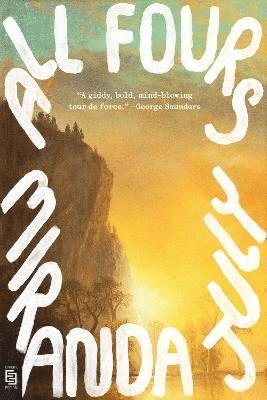
This month we’re starting with All Fours by Miranda July. I haven’t read it and probably won’t as it doesn’t really appeal to me, but here’s what it’s about:

A semi-famous artist announces her plan to drive cross-country from LA to NY. Thirty minutes after leaving her husband and child at home, she spontaneously exits the freeway, beds down in a nondescript motel and immerses herself in a temporary reinvention that turns out to be the start of an entirely different journey.

Miranda July’s second novel confirms the brilliance of her unique approach to fiction. With July’s wry voice, perfect comic timing, unabashed curiosity about human intimacy and palpable delight in pushing boundaries, All Fours tells the story of one woman’s quest for a new kind of freedom. Part absurd entertainment, part tender reinvention of the sexual, romantic and domestic life of a 45-year-old female artist, All Fours transcends expectations while excavating our beliefs about life lived as a woman. Once again, July hijacks the familiar and turns it into something new and thrillingly, profoundly alive.

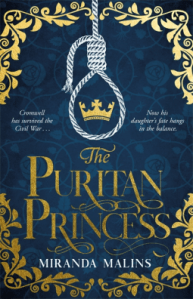
I had no idea how to get started with this month’s chain – I couldn’t think of anything similar I’ve read and nothing in the blurb inspired me. Eventually, I decided to go with another book written by a Miranda: in this case Miranda Malins, author of two historical novels about the family of Oliver Cromwell. Set in the years of Cromwell’s Protectorate following the English Civil War, The Puritan Princess (1) tells the story of his youngest daughter, Frances.

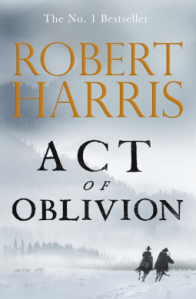
Act of Oblivion by Robert Harris (2) is the story of a manhunt involving two former soldiers who fought in Oliver Cromwell’s New Model Army and signed the death warrant that led to the execution of King Charles I. When the monarchy is restored several years later, the two men flee to New England to go into hiding in the new Puritan colonies of Connecticut, Massachusetts Bay and New Haven.

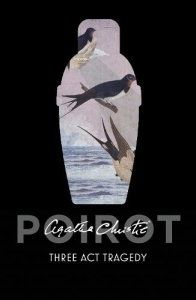
Another book with the word ‘act’ in the title is Three Act Tragedy by Agatha Christie (3). This is a Poirot novel which also features one of her other recurring characters, Mr Satterthwaite. The two investigate the death of a guest who drops dead at a party hosted by an actor. The book was originally published in 1934.

Also published in 1934 was A Pin to See the Peepshow by F. Tennyson Jesse (4), now available as part of the British Library’s Women Writers series. Part of the novel is based on a true crime known as the Thompson-Bywaters case which took place in 1922. However, the crime element of the story was not as strong as I’d expected and I found it more of a character study of the main character, Julia Almond.

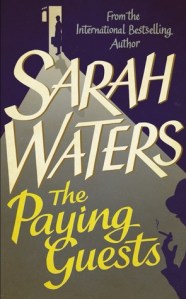
The Paying Guests by Sarah Waters (5) is set in London in 1922 and is also inspired by the Thompson-Bywaters case. The ‘paying guests’ of the title are Leonard and Lilian Barber, a married couple who become lodgers in the home of Frances Wray and her mother. What seems at first to be a quiet domestic novel slowly becomes something much more dramatic.

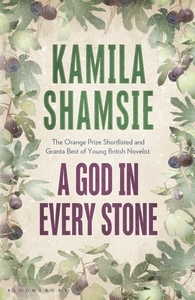
The Paying Guests appeared on the longlist for the 2015 Walter Scott Prize for Historical Fiction but didn’t make the shortlist. A book that did get shortlisted that year was A God in Every Stone by Kamila Shamsie (6). Set in the early 20th century, it follows three characters – a British archaeologist, a Pashtun soldier and a twelve-year-old-boy – who are linked by a search for the legendary Circlet of Scylax.

~

And that’s my chain for this month! My links have included: the name Miranda, Oliver Cromwell, the word ‘act’, books published in 1934, the Thompson-Bywaters case and the 2015 Walter Scott Prize.

In July we’ll be starting with Michelle de Kretser’s Theory & Practice.