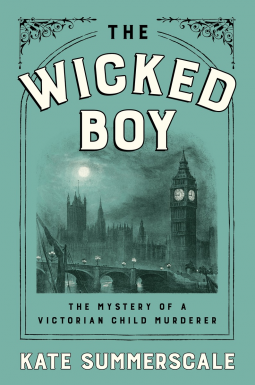
The Wicked Boy by Kate Summerscale

The Wicked Boy It’s July 1895 and Robert and Nattie Coombes could be any two young boys enjoying the hot summer weather. They go to see a cricket match, they play in the park, they take a trip to the seaside and they go fishing. Their father, a ship’s steward, is at sea and the boys tell anyone who asks that their mother is visiting her sister in Liverpool and that a family friend, John Fox, is staying with them while she’s away. However, there is more to the situation than meets the eye and it’s not long before the neighbours grow concerned. Why did Emily Coombes not mention to anyone that she was going away – and what is that horrible smell drifting down from the bedroom upstairs?

When the police are eventually called to the house at 35 Cave Road, they make a shocking discovery: it seems that Emily Coombes has been there all the time, her dead body decomposing in the summer heat. Her eldest son, Robert, immediately confesses to stabbing his mother to death ten days earlier. In the trial which follows, the court attempts to make sense of this terrible crime. Robert is only thirteen years old (one year older than his brother, Nattie); what would make a boy of this age commit such a cruel and cold-blooded act?

This may sound like the plot of a crime novel, but it’s not – it’s actually a true story and the events I’ve been describing above really did take place in London’s East End in 1895. In The Wicked Boy, Kate Summerscale gives an account of the murder, the inquest and the trial, exploring some of the factors which may have led to Robert’s actions before going on to look at what happened to him after he was found guilty.

This is the third book I’ve read (or attempted to read) by Summerscale. I loved The Suspicions of Mr Whicher, which was also based on a true crime, but I found Mrs Robinson’s Disgrace, about a Victorian divorce scandal, difficult to get into and I abandoned it after a few chapters. I’m pleased to report that I liked The Wicked Boy much more than Mrs Robinson, though not as much as Mr Whicher, which had a stronger mystery element. There’s really no mystery at all about the Robert Coombes case; we know almost from the beginning what the crime is and who is responsible for it. Of course, this doesn’t mean there are no more questions to be asked. The official verdict was that Robert was “guilty but insane” and no clear motive was ever identified, but Summerscale does devote a large portion of the book to discussing Robert’s childhood and family background in an attempt to understand what could drive a thirteen-year-old boy to kill his mother.

Where the murder and the trial themselves are concerned, Summerscale sticks to the facts and doesn’t resort to too much speculation or personal opinion. However, she also spends a lot of time looking at what life was like in general for working-class Londoners towards the end of the Victorian era. Robert and Nattie Coombes would have been among the first generations to be educated at the new Board Schools which were established after the Elementary Education Act of 1870, but there were many people who believed that making education available to everyone was a bad idea. It meant that more children were able to read and therefore had access to ‘penny dreadfuls’, cheap adventure novels aimed at boys which were thought to be a bad influence on impressionable minds. Robert Coombes had a collection of these sensational stories, something that was seized upon in the same way that people sometimes blame violent video games for encouraging modern day teenagers to commit crimes.

I found all of this fascinating to read about, but was slightly less interested in the second half of the book which covers Robert’s time at Broadmoor, the asylum where he was sent after his trial, and what happened after he was released. I understand why the author wanted to follow Robert’s story through to its conclusion, but I just didn’t have enough interest in him as a person to want to read such a long account of his later life. Apart from this, I did enjoy reading The Wicked Boy and am glad I gave Kate Summerscale another chance after my disappointment with Mrs Robinson’s Disgrace.

I received a copy of this book via NetGalley for review.
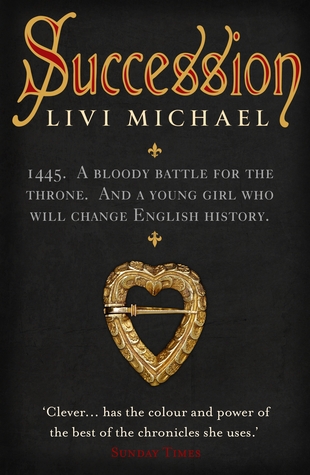
Succession by Livi Michael

Succession With my interest in the Wars of the Roses, I remember hearing about this book, the first in a trilogy, when it was published a couple of years ago, but for one reason or another I never got round to reading it. Two years later, the third and final novel has just been published, and Penguin have kindly sent me the whole trilogy for review. I’ve now read the first book, Succession, and am sure I’ll be reading the other two very soon.

I know not everyone is familiar with the background to the Wars of the Roses, so I should start by explaining that they were a series of wars fought in the second half of the 15th century between two rival branches of the royal House of Plantagenet. With King Henry VI of England (a descendant of Edward III through the Lancastrian line) suffering from an unspecified mental illness, there were many who considered him unfit to rule, leaving the way open for another claimant to the throne – Richard, Duke of York, another of Edward III’s descendants. From 1455-1487 a number of battles were fought between supporters of Lancaster and supporters of York; Succession covers only the early part of this period.

There are interesting, colourful characters on both sides of this conflict, but if I had to choose, I would say that I’m a Yorkist. This novel, however, is written mainly from the Lancastrian perspective, concentrating on two young women who share the same name – Margaret. The first is Margaret of Anjou, wife of Henry VI, and the second is Margaret Beaufort, mother of the future Henry VII. We do meet plenty of other characters (so many that you may need to make use of the character list and family tree at the beginning of the book to keep track of them all) but the stories of these two women are always the main focus of the novel.

We first meet Margaret Beaufort as a little girl who has become a ward of the Duke of Suffolk following the death of her own father, the 1st Duke of Somerset. A childhood marriage to Suffolk’s son, John de la Pole, is annulled when Henry VI chooses to marry the twelve-year-old Margaret to his half-brother, Edmund Tudor. Within a year, Edmund is dead of the plague, leaving his young widow pregnant with his child and at the mercy of his brother, Jasper (who is portrayed here in a surprisingly negative light).

Margaret of Anjou also has a difficult life, trying to hold the country together during the king’s long spells of illness so that she can keep the throne secure for their baby son, Edward. Neither of the Margarets are very likeable characters, but it would be difficult not to sympathise with the situations in which they find themselves. Some of Margaret of Anjou’s attempts to communicate with her unresponsive husband are very moving, while Margaret Beaufort’s story is sometimes quite disturbing – for example, the trauma suffered by a small thirteen-year-old giving birth is described in detail.

This is a period of history with which I’ve become very familiar over the last few years and, as this novel follows the historical sequence of events very closely, I always knew, more or less, what was going to happen next. There’s nothing very new in terms of plot, but the approach Livi Michael takes to telling the story is quite different from anything I’ve read before. She writes in several styles throughout the novel – sometimes a chapter is written in the first person, sometimes in the third – and from the perspectives of many different characters (a red or a white rose at the start of each chapter gives a useful indication of whether the character’s allegiance is to York or to Lancaster), but the most striking thing about Succession is the use of extracts from contemporary chronicles such as the Crowland Chronicle or John Benet’s Chronicle.

Each chapter starts or finishes with at least one paragraph taken from a chronicle of the time and it’s important to read all of these because they are used to advance the story and to relate events which our characters may not have personally witnessed. The Battle of Blore Heath, for example, is told entirely in the form of chronicles with no original prose at all. I liked the feeling of authenticity that this provided; however, it could also be distracting at times and, together with the very short length of the chapters (many are only one or two pages long), it made me feel that I was constantly being pulled out of the story. There is one much longer chapter in the middle of the book entitled Margaret Beaufort Travels to Wales and this was my favourite part of the novel, as we were finally given an opportunity to spend a decent amount of time getting to know one character with no interruptions.

Although the style and structure of Succession weren’t always a complete success with me, I did still enjoy the creative approach to a story I love and I will certainly be picking up the second book, Rebellion, soon.

The Poisoners by Marjorie Bowen

The Poisoners I have read several novels by Marjorie Bowen this year and this is one of my favourites so far. First published in 1936, The Poisoners originally appeared under one of her other pseudonyms, George Preedy, and now that I’ve read it I can see why she chose to use a different name for this one. Although this book, like the others I’ve read, is set in the past, it is more of a mystery/thriller which should appeal to readers of vintage crime as well as to fans of historical fiction.

The story takes place in 17th century Paris during the reign of the Sun King, Louis XIV, and revolves around a famous murder scandal known as L’affaire des poisons (Affair of the poisons). Our hero is Charles Desgrez, newly arrived in Paris with his wife, Solange, to take up a position as Lieutenant of Police and keen to make a name for himself. At the beginning of the novel, the couple are attending a party for Solange’s birthday, when one of the guests – the Widow Bosse, a supplier of perfumes – drunkenly boasts of becoming rich by helping wives to become widows. “I’ve only got three more poisonings to do and I shall be a very wealthy woman,” she says.

To satisfy his curiosity, Desgrez asks Solange to visit the Widow in disguise, posing as a wife unhappy with her husband – and he is shocked by what he learns. Reporting his findings to the Chief of Police, M. de la Reynie, the two begin to investigate and gradually discover that the network of poisoners operating in Paris is much larger and more sophisticated than they could ever have imagined. To complicate things further, some of the people involved are closely connected to the Sun King himself – so Desgrez and de la Reynie must find a way to bring the criminals to justice while avoiding the publicity the King would prefer to avoid.

The Affair of the Poisons is a dark and fascinating episode in Parisian history. I’ve read about it before, in The Oracle Glass by Judith Merkle Riley, and it was good to revisit the same subject from a different angle. As far as I can tell, Bowen’s novel sticks to the basic historical facts of The Affair, with the addition of a few fictional characters and plot developments. The result is an atmospheric and suspenseful crime novel featuring fortune tellers and spies, counterfeiters and apothecaries, an empty house which hides sinister secrets, mysterious letters marked with the sign of a pink carnation, and a society thought to be involved in black magic.

The plot is excellent – fast-paced and exciting – but there’s not a lot to say about the characters in The Poisoners. Many of them are based on real historical figures, such as the king’s mistress, Madame de Montespan, and the notorious poisoner, La Voisin. Although they are all interesting to read about, none of them are developed in any great depth. I enjoyed reading about the work of the police officers in the novel (I hadn’t realised the French police were so well organised in the 17th century, which is something Bowen talks about in her author’s note) and I did like Charles and Solange Desgrez, but they are not the sort of characters who stay in your thoughts after finishing the book. This is a novel you would read for the plot rather than the characters, and maybe this is one of the differences between the books which were originally published under the Marjorie Bowen and George Preedy names.

If you’ve read anything by Marjorie Bowen (or any of Margaret Gabrielle Vere Campbell’s other pseudonyms) I’d love to hear what you thought!

The Revelations of Carey Ravine by Debra Daley

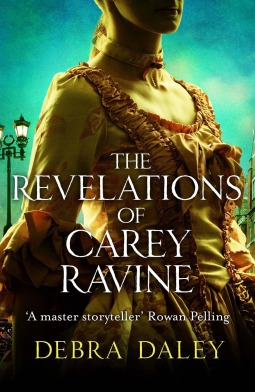
The Revelations of Carey Ravine There was always a good chance that I was going to love The Revelations of Carey Ravine. A book which has been compared with “Sarah Waters, Amitav Ghosh’s The Sea of Poppies, and Jamaica Inn” sounded perfect for me…and it was. Set in 1770s London, this is a dark tale of deception and betrayal in which nothing is as it seems. Our guide through all of this is Carey Ravine, an intelligent and spirited woman with an interesting past.

On the surface, Carey and her husband, Oliver Nash, appear to be the perfect couple: rich, good-looking, charming and leading a life of glamour and luxury. In reality, their lavish lifestyle is funded by Carey’s dwindling savings – and as their finances become stretched to the limits, cracks in their marriage begin to appear. When Carey finds a dossier in Nash’s desk describing the death by poisoning of a young man during a medical experiment in India, she confronts her husband and asks for an explanation. It’s obvious, though, that Nash doesn’t want to talk about it, so Carey is left to investigate on her own…

Towards the end of the novel, revelation follows upon revelation as the mystery surrounding the poisoning starts to unfold…but Carey also makes some important discoveries about herself and the sort of person she really wants to be. The novel is narrated by Carey herself, which means the reader can only know as much as Carey does – and it quickly becomes obvious that there are some big gaps in our heroine’s knowledge. The fate of her father, the horticulturalist Daniel Ravine, for example, is unknown to Carey. The last she heard of him was when he wrote to her from India ten years earlier to tell her of her mother’s death in Calcutta. Having had no further news, Carey has given up hope of ever seeing or hearing from him again. Eventually, though, the truth about Daniel Ravine begins to emerge, and as we learn more about Carey’s family and her past, some light is shed on her present circumstances.

Carey is a wonderful character – she’s strong and resourceful but she’s still convincing as a woman of her time and her actions never fall outside of the realms of plausibility. Through her eyes we see what it was like to be female in the 18th century, facing a range of challenges, some of which were unique to the time period and others which we can still identify with today. Carey’s relationship with Nash is particularly interesting; she’s in love with her husband and wants to please him, but not at the expense of losing her own identity. Although her freedom is restricted as a married woman, she still does what she can to support herself independently and finds work translating scientific texts.

The setting for this novel is one that I always enjoy – Georgian England – and Debra Daley does a wonderful job of bringing the time period to life with descriptions of flamboyant clothing of silk, velvet and lace, popular dances (the cotillion, for example), and entertainment (masquerade balls and card games such as faro). But it’s the lesser-known details of Georgian life and culture that I like reading about the most; I love the idea that pineapples were seen as such a status symbol in the 1770s that it was possible to hire one to use as a table decoration for your dinner party!

Too many good novels are let down by a poor ending which leaves the reader wondering what was the point of it all. Carey Ravine, though, feels like a complete novel with a beginning, a middle and a satisfying ending. I was also happy, on reaching the end of the book, with the level of character development throughout the story – Carey changes and grows as a person as the novel progresses and by the time we come to the final page she is a rather different woman than she was at the beginning.

This is the second novel by New Zealand author Debra Daley; her first, Turning the Stones, was published in 2014. I will certainly be going back to read that one, as well as looking forward to any future books from Daley.

Prince of Foxes by Samuel Shellabarger

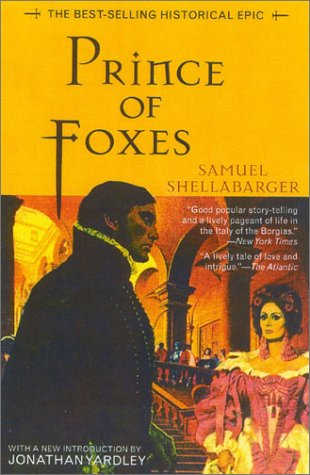
Prince of Foxes This was the book chosen for me in the Classics Club Spin a few months ago; I’m a day late posting this review (the deadline was yesterday) but I did actually finish the book in time. It has taken me a while to decide what to say about this wonderful novel and I probably still haven’t done it justice! I had at least three reasons for adding Prince of Foxes to my Classics Club list in the first place: it’s a classic historical fiction/adventure novel published in 1947 and set in Renaissance Italy, a period I love; it sounded very similar to the work of Rafael Sabatini, an author I love; and it came highly recommended by The Idle Woman, whose blog I love. It seemed inevitable, then, that I would love the book itself – and fortunately I did.

In 1500, when Prince of Foxes begins, Italy is divided into a collection of city-states which are constantly at war, leaving them vulnerable to foreign invasion. Our hero, Andrea Orsini, dreams of seeing the country united under one ruler and has entered the service of the ruthless and powerful Cesare Borgia, son of Pope Alexander VI. We first meet Andrea in Venice, preparing to undertake a mission for the Borgias. He has been given the task of travelling to Ferrara to try to negotiate a marriage between Alfonso d’Este, son of Duke Ercole, and Lucrezia Borgia, Cesare’s sister. When the d’Estes hear about this, however, they decide to have Andrea killed in Venice before he can reach Ferrara – but the murder attempt is foiled and the hired assassin, Mario Belli, ends up switching sides and joining Andrea on his journey.

If he is successful, the Borgias have promised to reward Andrea with the strategically placed hill town of Città del Monte, and the town’s ruling lady, the beautiful Camilla degli Baglione, as his wife. The problem is, Camilla’s husband, the elderly Lord Varano, is still alive and must be disposed of before Andrea will be able to claim his reward. As Andrea gets to know both Varano and Camilla, he finds that he’s not at all sure he’ll be able to betray them into the hands of Cesare when the time comes. Torn between his loyalty to the Borgias (and the personal ambition which goes with it) and his increasing love and respect for Camilla and her husband, Andrea is faced with making a decision which could affect not only his own future but the future of Italy.

As well as navigating his way through this delicate political situation, Andrea and Belli have a number of adventures involving battles, duels, clever disguises, last-minute escapes, sieges, miracles and all sorts of trickery and deception. I was right in thinking that this book would be similar to Sabatini; in particular, I kept being reminded of Bellarion (a previous Classics Spin read) which is also set in Renaissance Italy and includes many of the same elements. But while I remember feeling irritated by the perfection of the main character in Bellarion, I did like Andrea Orsini. He’s another hero who is good at everything, but with just enough flaws and ambiguities to make him interesting. Mario Belli was my favourite, though – and I can’t say too much about him without spoiling the story!

I also loved Camilla, an intelligent and courageous woman with a sense of humour, although other female characters such as Lucrezia and Angela Borgia felt less well developed. Moving away from the novel’s central characters, there’s also a fascinating supporting cast consisting of assorted dukes, lords and ambassadors, soldiers (including the Chevalier de Bayard) and saints (Lucia of Narni). The language used throughout the novel always feel appropriate to the time period and the dialogue is subtle and witty.

Not being an expert on the Renaissance (although I always enjoy reading about it and am gradually building up my knowledge) I found that I was learning a lot from Prince of Foxes as well as being entertained by it. It really is a great book and if anyone else has read it – or seen the 1949 film version with Tyrone Power and Orson Welles – I’d love to know what you thought.

My Commonplace Book: July 2016

A summary of this month’s reading, in words and pictures.

commonplace book
Definition:
noun
a notebook in which quotations, poems, remarks, etc, that catch the owner’s attention are entered

Collins English Dictionary

***

He turned his head to smile at her, apologetically; and his face was haggard in the firelight, so that suddenly she cared nothing for kings and wars, nor bishops nor the soul of man, nor for what Thomas did, only for what Thomas was; and she longed to fling her arms round him and hold him close because he was like a lute that was strung too tight.

The Rider of the White Horse by Rosemary Sutcliff (1959)

***

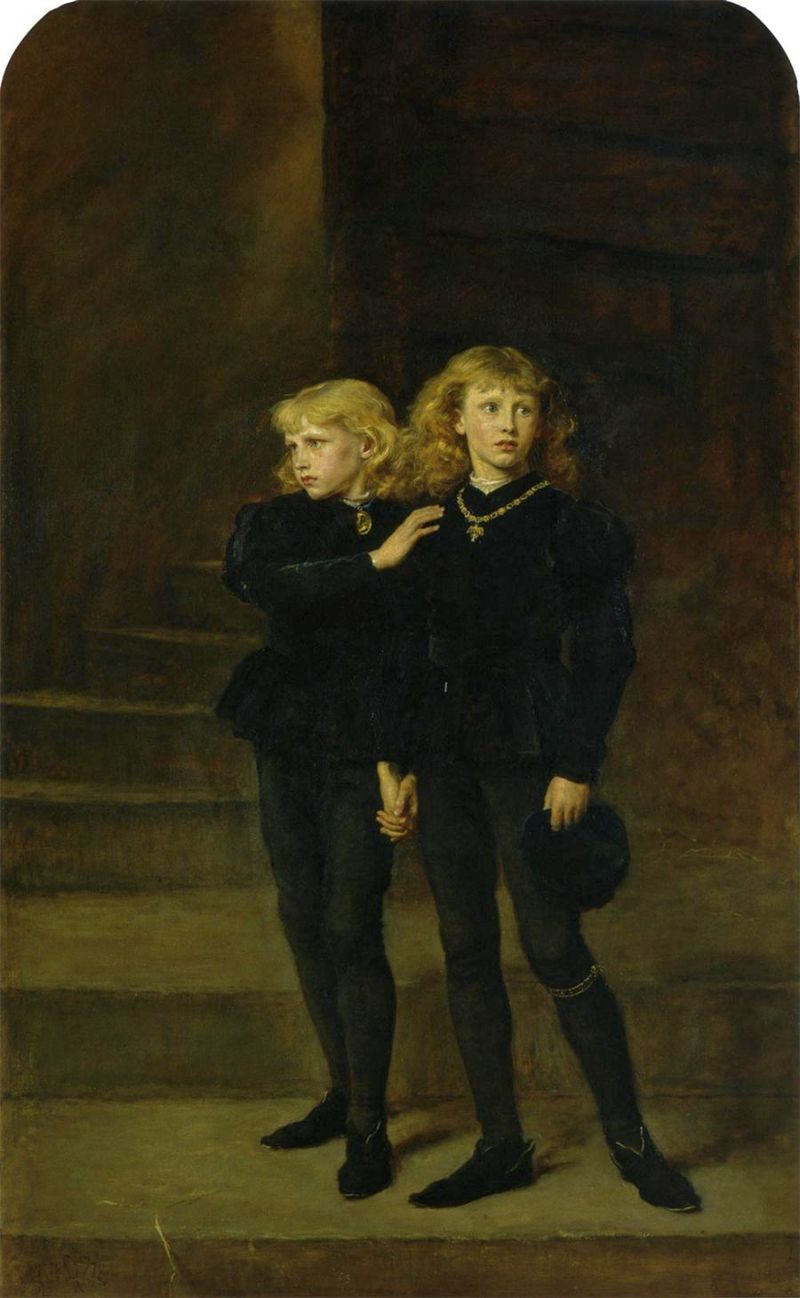
Princes in the Tower

No banners were raised above the company and they wore no livery, anonymity as well as haste their ally this April morning. Where Watling Street cut its blade-straight course towards the Great Ouse, the last of the sentries who had ridden on ahead to silence any word of their coming joined the company and, together, the horsemen thundered towards the small market town of Stony Stratford and the object of their race: the boy who had become king.

Sons of the Blood by Robyn Young (2016)

***

Nash is a follower of the playwrights and knows their best bons mots by heart, but I am fascinated by the actors themselves. I wonder about the life behind the stage and the precariousness of it. The thought of it gives me a shiver. Perhaps my interest stems from the apprehension that actors, whose calling depends on looks and voices and bodies that cannot last, must confront the same hard laws of life that women do. When the brightness of our beauty dies, we are plunged into the dark.

The Revelations of Carey Ravine by Debra Daley (2016)

***

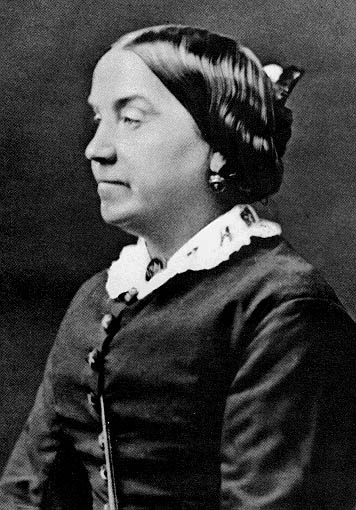
Lizzie Burns

And is it any different with love? Isn’t love the reverse side of the same medal? To love is to have, but rare does it happen that what we have is what we love. Love buys cheap and seeks to sell at a higher price; our greed is for gain that lies outside our reach. We desire those who don’t desire us in return.

Mrs Engels by Gavin McCrea (2015)

***

Before him lay the well-kept grounds, the clipped rose trees already beginning to put forth their glossy leaves, the panes of the glass-house gleaming like ice in the moonlight, the fountain where the water splashed in silver threads, hollow-eyed termini set between yew trees. The windows in the side of the pleasure house facing Desgrez were shuttered; he crept along, however, most warily; he did not know who was posted in the gardens nor what sentries might be placed about the house and grounds.

The Poisoners by Marjorie Bowen (1936)

***

Gondola

They glided away through the spangled water, and he filled his lungs with the haunting sea air. Other gondolas slipped past with lovers or merrymakers. A delicious languor filled the night, lapping of water, wandering of music. He felt a longing, sweeter than possession, for the indescribable, the unattainable. He would return here someday with her; he would occupy one of these palaces; they would live in terms of color – sapphire and silver – in terms of a casement open on the sea-scented night.

Prince of Foxes by Samuel Shellabarger (1947)

***

“Oh, don’t worry, we’re still appalling know-it-alls. We dig things up, but then we photograph and catalogue, record and document, and as often as not we put things back. It’s not the finds so much as the findings. Not the objects but the stories they tell.”

Sandlands by Rosy Thornton (2016)

***

Magna Carta

Under the shade of the pavilion, he noted a table in readiness, stools around it, and parchment and pens and wax all ready, with clerks and knights waiting. They had at least the grace to stand when he entered and, without speaking, took the stool at the table-head. Before him lay the long charter. He knew it by heart, each clause of it had burned into him with rage while impotently he had listened to these rogues’ demands.

The Devil and King John by Philip Lindsay (1943)

***

Favourite books this month: Prince of Foxes and The Revelations of Carey Ravine.

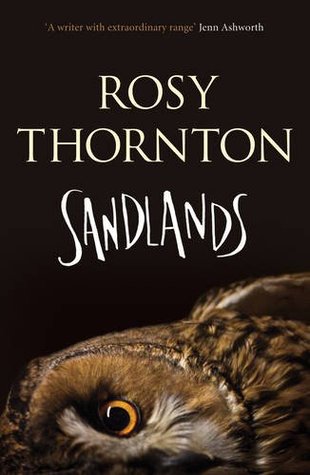
Sandlands by Rosy Thornton

This is a land of sand. The earth hereabouts is nothing but; it’s a wonder anything grows in it at all.

Sandlands Sandlands is a beautifully written collection of sixteen short stories, all of which share a common setting: a small English village on the coast of Suffolk. I’m not usually a reader of short stories (my blog title should be a clue) but I do enjoy them from time to time – and I was surprised by just how much I enjoyed reading this particular collection. The problem I sometimes have with short stories is that they tend to lack the plot development and depth of character I look for in full-length novels. I often find them unsatisfying and…well, too short.

Sandlands is not like that. The stories are the perfect length – not too long and not too short – and each one feels complete. Although they share some similar themes such as the beauty of nature and the relationships people have with the area in which they live, the stories are also quite varied. Some are written in the first person and some in the third, some are set entirely in the present and some take us into the past, some are sad and some are funny. I’m not going to comment on all sixteen of them here, but will pick out a few which I found particularly interesting.

One of my favourites was All the Flowers Gone, a poignant story which explores the bond between three generations of women: Poppy, a botanist who finds a rare flower growing at a disused air base; her mother, Rosa, who campaigned against nuclear weapons at the same base in the 1980s; and finally, her grandmother, Lilian, who worked there during the 1940s and fell in love with a bomber pilot. I loved the way the lives of these three women were linked not only to each other but also to one specific location and to the flowers which grew there.

Another story in which the past begins to merge with the present is The Witch Bottle, a tale of love and revenge which unfolds when a woman moves into an old house and discovers a connection with Patience Spall, a girl accused of witchcraft in the seventeenth century. Like many of the stories in the book, this one has a touch of the supernatural. While I wouldn’t describe Sandlands as a book of ghost stories in the traditional sense, some do have a ghostly atmosphere and a sense that more is going on than meets the eye.

I also enjoyed the final two stories in the collection. Curlew Call is written from the perspective of a young woman who decides to spend a year working as a companion to Agnes, an artist who is confined to a wheelchair. The narrator loves nature and is captivated by the Suffolk landscape with its salt marshes, mudflats and reed beds and the distinctive sound of the curlews calling. As she settles into her new job and home, she makes some surprising discoveries about her elderly employer. The following story, Mackerel, also looks at the relationship between two women, this time a grandmother and granddaughter: Hattie, in her twenties, who has a degree and has travelled across Europe, and eighty-nine-year-old Ganny (as she is known) who has spent her whole life living in a small fishing village and knows everything there is to know about mackerel.

These are just some of the wonderful stories to be found in Sandlands. Others that stand out include Whispers, the story of Dr Whybrow, an academic who buys a Martello tower on the coast, and The Watcher of Souls, where an owl guards a secret stash of love letters hidden in the woods. I wish I could tell you about the rest of the stories as well, as I found something to enjoy and admire in every one of them, but this review is already long enough and I need to leave something for other readers to discover for themselves!

I have previously read and enjoyed one of Rosy Thornton’s other books, The Tapestry of Love, so I was delighted to be offered a copy of Sandlands by the author for review. Many thanks, Rosy!