Gilded Splendour by Rosalind Laker

Gilded Splendour First published in 1982, this is the story of the famous 18th century cabinet-maker and furniture designer, Thomas Chippendale, author of The Gentleman and Cabinet Maker’s Director. Not knowing anything about Chippendale before beginning this book, I was interested in learning more and curious to see why Rosalind Laker had thought he would make a good subject for a novel.

It seems that the amount of information available on Thomas Chippendale is limited; although there are plenty of documents which shed some light on his professional career, we know very little of his personal life, which leaves a lot of scope for an author to use his or her imagination. And use her imagination is exactly what Rosalind Laker does, intertwining Chippendale’s story with that of Isabella Woodleigh, who provides a love interest for Thomas throughout the novel – and who is a completely fictional character.

At the beginning of the novel, Isabella is staying with friends of her father’s at Nostell Priory, a grand estate in Yorkshire, while she recuperates following an illness which has left her weak and frail. When she takes delivery of a wooden wheelchair made especially for her by a local carpenter’s apprentice, she is so grateful and impressed that she becomes determined to meet its creator. This is how Isabella is first brought into contact with Thomas Chippendale, a young man who is just starting out on a career in furniture design.

It’s not long before Isabella falls in love with Thomas and at first it seems that her feelings may be returned – until Isabella’s envious younger sister, Sarah, arrives for a visit and immediately begins to cause trouble. Left with no choice other than to marry the wealthy politician Nathaniel Trench, a man she knows she will never love, Isabella’s life starts to follow a very different course to the one she had expected and hoped for. Meanwhile, Thomas leaves Yorkshire for London, where he sets about establishing his own business. His path crosses with Isabella’s again and again, but is there still any chance that Isabella’s dreams will come true?

With a lot of focus on Chippendale’s love affairs, this book will probably be enjoyed by fans of older-style historical romances. Having said that, I didn’t find this a particularly romantic story, mainly because so many of the characters were so difficult to like. While I admired Thomas for what he achieved as a craftsman, I lost respect for him during an incident with Isabella’s sister, Sarah, early in the novel, and after this I wished Isabella would just forget about him and move on. The other men in Isabella’s life treat her badly too, as does Augusta, her own mother – and Sarah is a horrible, manipulative person, with no real explanation given for why she is so cruel and vicious towards everyone she meets.

Despite disliking most of the characters, including the hero, I still found this an interesting read with more to offer than just the romance. We are given a lot of information on architecture, furniture making and interior design; it was impressive to see the amount of effort and hard work which Chippendale put into perfecting his skills and learning new ones – including carving, veneering, marquetry and gilding. I particularly enjoyed reading about the dolls’ house Thomas creates at Nostell; so much care and attention to detail was required to carve miniature bedposts and create little frames for tiny paintings and mirrors.

Gilded Splendour provides some fascinating insights into Thomas Chippendale’s life and work. The only problem is that with so much of the novel devoted to his relationship with an imaginary character, it’s difficult to know which parts of the story are based on fact and which are purely fictional. As long as that doesn’t bother you, I think this book is definitely worth reading.

I received a copy of Gilded Splendour via NetGalley for review.
My Commonplace Book: June 2016

A summary of this month’s reading, in words and pictures.

commonplace book
Definition:
noun
a notebook in which quotations, poems, remarks, etc, that catch the owner’s attention are entered

Collins English Dictionary

~

Daisy

“Do you know what, that does interest me. Not the fact that he was popular before he was arrested. He’s a good-looking man, there’s nothing remarkable in that. What fascinates me is the number of women who, by all accounts, write to him in prison. Why would they do that, do you think?”

“All notorious killers have a fan club,” he says.

Daisy in Chains by Sharon Bolton (2016)

~

Oh, there was pomp and pageantry and all the splendour of trumpets and gold brocade and wine flowing from the conduits, but there was something more that I can only think of as passion – the passion of a queen for her people and of the people for their queen. Already Elizabeth had the gift of investing the most ordinary action with an almost symbolic nobility, and, conversely, the ability to draw a touch of humanity from the most solemn ceremony.

The Virgin Queen by Maureen Peters (1972)

~

At heart he could not abide sense in women. He liked to see them as silly, as light-headed, as vain, as open to ridicule as possible, because they were then in reality what he held them to be, and wished them to be — inferior, toys to play with, to amuse a vacant hour, and to be thrown away.

Shirley by Charlotte Brontë (1849)

~

Katherine of Aragon

Katherine thanked him, drew the curtains and huddled back into her furs. She had found Prince Henry a little disturbing. He was a handsome boy, with undeniable charm, and even in those brief moments he had dominated the courtesies. Arthur had been reserved and diffident, and she could not stop herself from wondering how different things would have been had she been betrothed to his brother. Would she have felt more excited? More in awe? She felt disloyal even thinking about it. How could she be entertaining such thoughts of a child of ten? Yet it was so easy to see the future man in the boy. And it was worrying to realise how effortlessly Arthur could be overshadowed by his younger brother. Pray God Prince Henry was not overambitious!

Katherine of Aragon: The True Queen by Alison Weir (2016)

~

He claims to be himself the author of the nickname. Signor Pronto, he says, was a character in a popular farce, — a most obliging person who always turned up in the nick of time to arrange matters for everybody. The catch word of the farce was: Pronto will manage it! Some great lady was lamenting the difficulties of arranging charades at her country house party; ‘But,’ she cried, ‘I expect Mr. Lufton tomorrow and he will manage it for me.’ At which Crockett, who was present, said: ‘Oh ay! Pronto will manage it.’ After that they all called Lufton Pronto behind his back.

Troy Chimneys by Margaret Kennedy (1953)

~

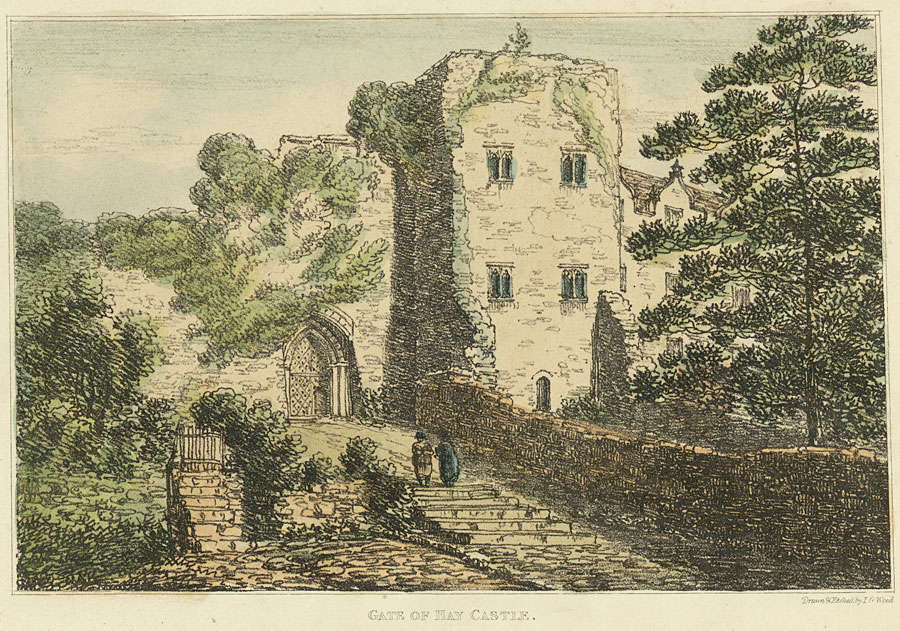
Gate_Of_Hay_Castle

Catrin woke and stared round in the dim light of a flickering fire. Her heart was pounding from the horror of the dream. The dream she had shared, did she but know it, with another woman; a dream she had dreamt recently, at home in Sleeper’s Castle. But she wasn’t at home. She pulled her cloak around her, shivering, confused as to where she was. Then she remembered.

Sleeper’s Castle by Barbara Erskine (2016)

~

She had not come to God with her wreath or with her sins and sorrows, not as long as the world still possessed a drop of sweetness to add to her goblet. But now she had come, after she had learned that the world is like an alehouse: The person who has no more to spend is thrown outside the door.

Kristin Lavransdatter by Sigrid Undset (1920)

~

Favourite books this month: Kristin Lavransdatter, Daisy in Chains and Troy Chimneys

Sleeper’s Castle by Barbara Erskine

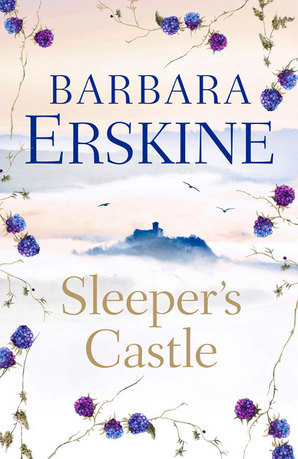
Sleeper's Castle After reading Lady of Hay I said I wouldn’t be looking for any more of Barbara Erskine’s novels, but I couldn’t resist this latest one with its unusual title, pretty cover and intriguing synopsis! And actually, Sleeper’s Castle was a pleasant surprise; I enjoyed it much more than any of the other books I’ve read by Erskine.

Despite its name, Sleeper’s Castle is not really a castle; it’s a house near Hay-on-Wye, close to the border between England and Wales. For several years it has been home to Sue and her cat, Pepper, but when Sue decides to go back to Australia she offers her friend, Miranda, the chance to live in Sleeper’s Castle rent-free for a year in return for looking after the house and the cat. Miranda – who prefers to be known as Andy – has been going through a difficult time following the death of her partner, Graham, and is delighted to have the opportunity to get away from London for a while. She looks forward to resuming her career as an illustrator in the peace of the Welsh countryside, safe in the knowledge that Rhona – the jealous, vicious wife Graham never divorced – will never be able to find her now.

As soon as she moves into Sleeper’s Castle, Andy knows she is going to love her new home. It’s an old house, with a history dating back hundreds of years, so at first Andy is not surprised when she begins to have vivid dreams involving a young woman called Catrin who lived at Sleeper’s Castle around the year 1400. Catrin is the daughter of another dreamer – Dafydd, a bard and seer – and as she travels around Wales with her father, entertaining at the castles of his patrons, she finds herself caught up in Owain Glyndŵr’s rebellion against the English.

Most of Barbara Erskine’s books are described as time slip novels and this one really lives up to that description, with the narrative slipping seamlessly from one time period to another so that the boundaries between past and present gradually start to blur. It’s not only Andy who is aware that something unusual is occurring; while she can see into the past, Catrin can also glimpse the future. Less convincingly, there’s also a sort of psychic connection between Andy and Rhona which draws the two women together against their will.

Catrin’s story is fascinating and I could understand why Andy was captivated by it. I have to admit, I know almost nothing about Owain Glyndŵr other than that he is considered a Welsh hero for his attempt to free Wales from the rule of Henry IV, so it was good to have the opportunity to add to my knowledge. As most of the characters in the historical sections of the novel are fictional, however, and Glyndŵr himself appears only occasionally, this book serves as a starting point to finding out more rather than exploring the period in any real depth.

The present day storyline was entertaining too – I loved Bryn the gardener, Meryn the healer and Pepper the cat – but it was spoiled slightly by the Rhona subplot. Rhona’s behaviour becomes so malicious and threatening that I really couldn’t believe Andy didn’t call the police and I couldn’t accept her reasons for not doing so. Very frustrating!

Much has been made of the fact that this book is being published to coincide with the 30th anniversary of Barbara Erskine’s first novel, Lady of Hay, and is set in the same part of the world. Sleeper’s Castle is not a sequel and it’s not necessary to have read Lady of Hay first; this is an enjoyable book in its own right and I’m glad I decided to give Barbara Erskine another chance to impress me.

Shirley by Charlotte Brontë

Do you anticipate sentiment, and poetry, and reverie? Do you expect passion, and stimulus, and melodrama? Calm your expectations; reduce them to a lowly standard. Something real, cool, and solid lies before you; something unromantic as Monday morning, when all who have work wake with the consciousness that they must rise and betake themselves thereto.

Shirley I’m not sure why it has taken me so long to decide to read Shirley. I have read all of the other novels by the Brontë sisters (Jane Eyre and Wuthering Heights as a teenager and Agnes Grey, Villette, The Tenant of Wildfell Hall and The Professor in more recent years) but for some reason haven’t felt motivated to read Shirley – until a few weeks ago when, looking at the remaining titles on my Classics Club list, I decided I couldn’t leave it to languish unread on my shelf any longer.

Shirley (published in 1849) is set in Briarfield, a small Yorkshire community in which a mill is the major employer. The year is 1811 and England’s economy is suffering from the effects of the Napoleonic Wars. Robert Moore, owner of the mill, is struggling financially and, as the novel opens, he is preparing to take delivery of some new machinery which will enable him to lay off some of his employees. Needless to say, the millworkers are enraged by this and set out to destroy the machines; uprisings like these would take place all over the country and become known as the Luddite Riots.

Against this political and social backdrop, the stories of two very different young women are played out. One is the local clergyman’s niece, Caroline Helstone, a quiet girl of eighteen. Caroline is in love with Robert Moore but he is reluctant to return her feelings due to her lack of money and position. The other is the title character, Shirley Keeldar, a beautiful young heiress. Shirley is a strong and spirited person with independent wealth – and although Caroline likes her very much, she becomes convinced that her new friend is going to marry Robert.

The title of the novel is Shirley, but this is as much Caroline’s story as Shirley’s (in fact, Shirley herself doesn’t appear until Chapter Eleven). I found them both interesting characters; there are many differences in personality, situation and outlook on life, but as the two become close friends we see a bond developing between them as they discover shared values and interests. They are described in the novel as ‘a graceful pencil sketch compared with a vivid painting’. After finishing the book I learned that Charlotte Brontë is thought to have based the character of Caroline on her sister Anne, and Shirley on Emily (she would lose both of her sisters to tuberculosis during the writing of the novel).

Another interesting fact about Shirley is that before the book was published, Shirley was usually a male name rather than a female one:

…she had no Christian name but Shirley: her parents, who had wished to have a son, finding that, after eight years of marriage, Providence had granted them only a daughter, bestowed on her the same masculine family cognomen they would have bestowed on a boy, if with a boy they had been blessed.

I can’t say that I loved this book – maybe because, as Brontë hinted in the opening lines (quoted at the beginning of this post) it lacked passion and I never felt that I had been truly drawn into the stories of Shirley and Caroline the way I had been drawn into Jane Eyre’s or Lucy Snowe’s. This was a slow read for me and at times quite a dry one, but I did find a lot to like and appreciate, from the relationships between the main characters to the historical background. Even though this hasn’t become a favourite, I’m pleased to have now read all of the Brontë sisters’ novels.

Two from Maureen Peters

Maureen Peters (1935-2008) was a Welsh historical novelist and yet another forgotten author whose work is being reissued for a modern audience by Endeavour Press. It seems that Peters was very prolific, writing over one hundred books under several different pseudonyms; most of them were fictional biographies of historical royalty, but she also wrote romances, Gothic novels, family sagas and mysteries. Having now had the opportunity to read two of her books I thought I would combine my thoughts on both of them into one post.

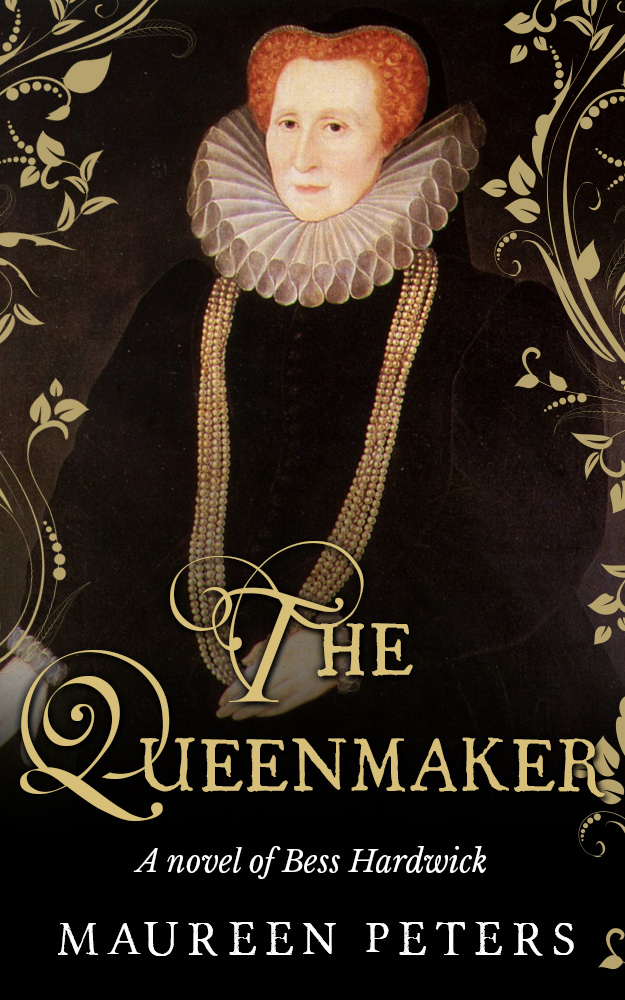
The Queenmaker The first book I’m going to talk about, The Queenmaker (1975), tells the story of Bess Hardwick, one of the richest and most notable women of the Elizabethan court, responsible for the building of great houses such as Chatsworth and Hardwick Hall. Born in Derbyshire, Bess is married at an early age to Robert Barlow, the heir of a neighbouring family, and finds herself a widow within a year. She will marry three more times over the course of her life and with each marriage her wealth increases and her position in society advances. She becomes a friend of Elizabeth I (the queen acts as godmother to her first son), and also has the opportunity to get to know Mary, Queen of Scots during her captivity in England.

With power and influence, though, comes the threat of danger. When Bess arranges a marriage for her daughter with Charles Stuart (son of the Countess of Lennox, Henry VIII’s niece), the family instantly come under suspicion because the child of this marriage, a little girl called Arbella, has Tudor blood and therefore a claim to the crown. As the years go by and Arbella grows into a woman, Bess becomes more and more convinced that her granddaughter will be named heir to the throne and that she – Bess Hardwick – will go down in history as a queenmaker.

Before reading this book I knew very little about Bess; I had come across her name several times in books set at Elizabeth’s court, but I couldn’t have told you any details of her personal life or her accomplishments. Because so much in this novel was new to me, I found it quite an enjoyable read. Obviously I knew that Bess wouldn’t achieve her ambition and Arbella wouldn’t become queen, but I was still interested to see how the story would unfold. However, I thought this book was too short to be completely satisfying. Trying to give an account of an entire life in under 200 pages means leaving big gaps in the story and jumping forward by several years at the start of every chapter. A longer novel would have allowed characters and events to be explored more thoroughly.

The Virgin Queen The Virgin Queen (1972) is another quick and fairly entertaining read which, as the title suggests, focuses on the life of Elizabeth I herself this time. Our narrator is Tomasin Drew, Elizabeth’s friend and companion, who first meets the future queen when Elizabeth is still a young girl living in the household of her stepmother, Katherine Parr. Tomasin remains with the queen for more than fifty years, offering support and friendship throughout the key moments of her life and reign.

Elizabeth is portrayed as a spirited, flirtatious and capricious woman, if not a very likeable one: a strong character, who jumps out of the pages of this novel, unlike Tomasin who stays in the background. Tomasin’s role is as an observer, reporting and commenting on events for the reader; her own personal story is left undeveloped, putting the spotlight firmly on Elizabeth. As with The Queenmaker, though, the approach Maureen Peters takes is disappointingly simplistic. This is another very short novel – too short to look at Elizabeth’s life in any real depth – and there’s nothing new here for those of us who have read about Elizabeth I many times before.

I think both The Virgin Queen and The Queenmaker might be good choices for younger readers or those who simply want a quick introduction to the Elizabethan period (while being aware that not everything in these books will be completely accurate – I spotted at least a few statements for which there is no historical proof, such as Anne Boleyn having six fingers on one hand). I haven’t ruled out reading more of Maureen Peters’ novels, but I’m not in any hurry to do so while there are so many other authors still to discover.

I received copies of both of the above novels via NetGalley for review.

Margaret Kennedy Day: Troy Chimneys

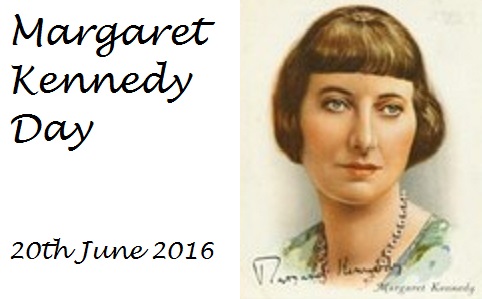
Margaret Kennedy Day

My first taste of Margaret Kennedy’s writing came in 2014 when I read The Constant Nymph as part of a reading week hosted by Jane of Beyond Eden Rock. I enjoyed it – enough to want to read more of her work – but I had a feeling that there might have been another book that would have been a better choice. And I was right. For Jane’s second Margaret Kennedy celebration I decided to read Troy Chimneys – and it was the perfect book for me!

Troy Chimneys Troy Chimneys is set in Regency England and tells the story of one man with two very different sides to his personality. To society he is ‘Pronto’, an ambitious young politician who is always charming, obliging and eager to please. To his family and close friends he is simply Miles Lufton, quiet, serious and inclined to disapprove of Pronto and his actions. Lufton thinks of Miles and Pronto almost as two separate people and his inability to reconcile his public persona with his private one will lead to disappointment and tragedy.

The story of Miles Lufton and Pronto unfolds when one of his descendants – a gentleman living in the Victorian era – decides to amuse himself by delving into his family history. After corresponding with some Irish cousins, he receives a set of letters, journals and memoirs and begins to piece together the details of his ancestor’s life. There may have been hints in the correspondence at the beginning of the book as to the course Miles Lufton’s life would take; I’m not sure because once I started reading his own account in his own words, the framing story started to fade away and I was there, in the England of the early 19th century, experiencing events through the eyes of Miles and Pronto.

Although Lufton’s memoirs do touch on Pronto’s career in politics, the focus is mainly on Miles’ personal life: his family background; the rural community in which he grows up and the relationships between the different classes of people who live there; his time at university; the friendships he forms with the eccentric Ludovic, Lord Chalfont, and with an American farmer called William Hawker; his romantic entanglement with a young French girl and his later love for Caroline Audley. There are funny moments, but sad ones too and because Kennedy makes us care so much for Miles, we share in his emotions and feel for him when things don’t turn out as he had hoped.

Troy Chimneys Vintage I was so impressed by the writing and by Margaret Kennedy’s grasp of the period (or periods, as there are really two) in which the story takes place. The Victorian letters felt authentic and Miles Lufton’s own narrative style felt so much like the voice of a Regency gentleman that I could easily forget I was reading a book written in the 1950s and by a woman. Kennedy never overwhelms the reader with period details, yet there is never any doubt as to the eras in which the novel is set.

I am nearly at the end of this post and still haven’t even mentioned the Troy Chimneys of the title! Troy Chimneys – the name comes from the French Trois Chemins, meaning Three Lanes – is a house in the Wiltshire countryside which Miles buys but doesn’t actually live in himself. He plans to retire there when he is older, after he has achieved all there is to achieve in politics and can say goodbye to his alter ego forever. It’s going to be a house for Miles, not for Pronto: a representation of the life he really wants to lead and the kind of person he really wants to be.

In case I haven’t made it clear enough, I loved this book! It’s nothing like The Constant Nymph and that makes me even more curious about the rest of Margaret Kennedy’s novels.

The Confession of Richard Plantagenet by Dora Greenwell McChesney

The Confession of Richard Plantagenet With the Wars of the Roses being one of my favourite periods of history, I like to read everything I can find on the subject. This novel by Dora Greenwell McChesney – an author completely new to me – sounded particularly intriguing because it was published in 1913, making it the oldest Wars of the Roses novel I have read, coming sixteen years before even Marjorie Bowen’s Dickon (1929).

The Confession of Richard Plantagenet begins with the Yorkist victory at the Battle of Tewkesbury in 1471 and ends with Richard III’s defeat at Bosworth Field in 1485. Between these two events we are given not so much a confession as a fairly straightforward account of Richard’s life, showing the circumstances which led to him taking the throne following the death of his brother, Edward IV, and then leading us through the key moments of his own brief reign.

As this is described on the front cover as ‘a sympathetic novel of Richard III’, I was interested to see how McChesney was going to tackle the many controversies surrounding Richard, such as the death of Henry VI and, of course, the disappearance of his nephews, the Princes in the Tower. Well, this novel does show Richard either directly or indirectly committing some of the crimes of which he has traditionally been accused, but always for good and noble reasons or because he has been left with no other choice.

I can appreciate that because she was writing what was surely one of the earliest pro-Ricardian novels, McChesney (like Marjorie Bowen with Dickon) was trying to counteract the more widely held view of Richard as an evil, hunchbacked murderer, but I think she went too far the other way, with the effect that Richard comes across as blameless and almost saintly. Still, it was interesting because the approach taken in this novel is slightly different from others I’ve read. This is why I’m happy to keep on reading about the same historical people and events again and again – because each different author offers a different set of opinions, ideas and interpretations.

If you have never read about this time period before, however, I probably wouldn’t recommend starting here. McChesney seems to assume the reader has at least some prior knowledge, so if you’re not already familiar with the background to the Wars of the Roses and the names and relationships involved, you might find the plot difficult to follow, especially in conjunction with the style in which the book is written.

Like a lot of older historical fiction novels, the language McChesney uses is archaic and flowery, particularly in the dialogue. As someone who reads all sorts of historical fiction, from the latest releases to books written hundreds of years ago, I always find it interesting to see how trends in the genre have changed. McChesney’s dialogue feels very outdated today, but personally I liked it once I got used to it and thought it added to the atmosphere of the novel.

Despite the flaws I have mentioned I enjoyed reading this version of Richard’s story and I’m sure it won’t be long before I find myself picking up yet another one!

I received a copy of this book for review via NetGalley.