Elizabeth Goudge Day: The White Witch

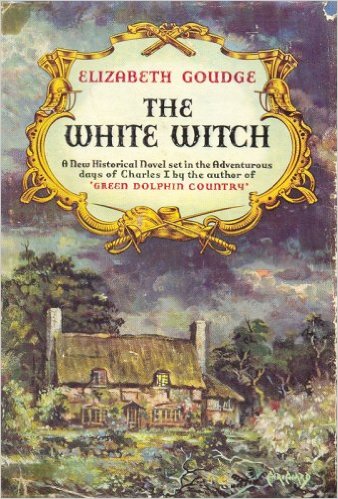
The White Witch A year ago I read The Child from the Sea as part of Lory of The Emerald City Book Review’s birthday celebrations for Elizabeth Goudge. This year, Lory is hosting another day devoted to the same author and this seemed like a good time to read my second book by Goudge. There were plenty to choose from – some historical and some contemporary, some for adults and some for children – but I decided on The White Witch. I loved The Child from the Sea, which was set in the seventeenth century and told the story of Lucy Walters, a mistress of Charles II, so as The White Witch is set in the same period the chances were good that I would love this book too – and I did.

The English Civil War forms the historical backdrop to the story, but the focus of the novel is on the inhabitants of a small Oxfordshire village and the ways in which their lives are touched by the greater changes taking place in the country as a whole. The ‘white witch’ of the title is Froniga, a healer and herbalist who has family ties with both the Puritan household of Robert Haslewood, the village squire, and with the band of Romany gypsies who camp nearby. Caught between both of these worlds while fully belonging to neither, Froniga is the character around whom all the others revolve.

Froniga is a fascinating character, but there were others whose stories interested me too, particularly Francis Leyland, the secretive stranger who offers to paint a portrait of Haslewood’s two young children, and the mysterious Yoben, who is in love with Froniga. There’s a ‘black witch’ too – and a parson who tries to save her soul – and a vengeful gypsy woman who causes trouble wherever she goes. Whether Parliamentarian or Royalist, Puritan or Catholic, nobleman or gypsy, in the hands of Elizabeth Goudge each of these characters becomes a well-rounded, believable human being – a person we can sympathise with even if we don’t necessarily agree with their views or their choices.

In this novel, the conflicts that take place in an individual’s heart or soul are as important as those which take place on the battlefield, though we do get to see some military action as several of our characters become involved in the major battles and events of the Civil War. But what I loved most about this book were the details of daily village life in the seventeenth century, the beautiful descriptions of the English countryside, and the undercurrents of magic, mystery and mythology which run throughout the story.

The White Witch, although never boring, has a slow pace and – as it was originally published in 1958 – it is written in a style which may not appeal to readers who prefer more modern historical novels and as with The Child from the Sea, there are strong religious and spiritual elements. I love Goudge’s writing style, though; it’s warm and gentle and comforting. I’m looking forward to working through the rest of her novels…and would like to thank Lory for introducing me to her work!
A Place Called Winter by Patrick Gale

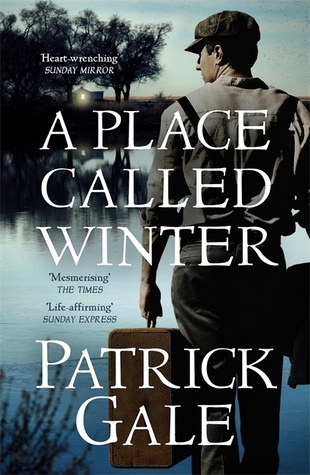
A Place Called Winter There really is a place called Winter; it’s in Saskatchewan, Canada, and at the time when Patrick Gale’s novel is set, it’s a small, newly-established settlement just off the Grand Trunk Pacific Railway. Winter is home to the fictional Harry Cane, a character based on the author’s own great-grandfather, but how did such a quiet, gentle and seemingly conventional Englishman end up in so harsh and remote a place? A Place Called Winter is Harry’s story, explaining exactly what the circumstances were which brought him to Canada, and what happened to him after he arrived there.

At the beginning of the novel, Harry is a shy, stammering young man living in Edwardian London. Doing what is expected of him, he gets married, and although he has no real love or passion for his wife, it’s not an unhappy marriage and they have a child together. Things start to go wrong for Harry when he falls in love with a man and is forced to leave the country to escape the resulting scandal. Given the opportunity to farm some land in Canada, Harry begins to build a new life for himself alone in a place called Winter.

Harry’s experiences in Canada are a mixture of good and bad. The challenging environment in which he finds himself requires skills he doesn’t possess and must learn quickly if he is to survive in the wilderness. With the help of some new friends, Harry starts to grow in strength and knowledge, but not everyone he meets is quite so pleasant and the behaviour of the villainous Troels Munck poses an obstacle which must be overcome before he has a chance of finding true happiness.

I found this a very moving and poignant novel, as well as a beautifully written one. I couldn’t help comparing it to Damon Galgut’s Arctic Summer which I had read just a few weeks earlier. The two books have some similar themes, most notably a man trying to come to terms with his sexuality within the confines of early 20th century society, but I thought this novel had a warmth which the other lacked; Gale really engaged my emotions and made me care about his characters in a way that Galgut didn’t.

A Place Called Winter is my first book read from this year’s Walter Scott Prize shortlist and I hope the others on the list will be as good as this one. I haven’t read any of Patrick Gale’s other novels and I understand that he doesn’t usually write historical fiction, but I was very impressed with his writing and would be interested in trying more of his work.

Top Ten Tuesday: Books to make you laugh (or at least smile)

Top Ten Tuesday

I wasn’t going to take part in this week’s Top Ten Tuesday (hosted by The Broke and the Bookish) because I didn’t think I read enough funny books to be able to make a list…but when I stopped to give it some thought, I actually didn’t have a problem coming up with ten titles.

I have concentrated here on books which were specifically written to be funny or which contain lots of amusing scenes, rather than just one or two funny moments (the list would have been far too long in that case). Let me know if you’ve read any of these or if you can think of any more.

Three Men in a Boat

1. Three Men in a Boat by Jerome K. Jerome – This tale of three friends (and dog) who take a disastrous boat trip along the River Thames had to be top of my list!

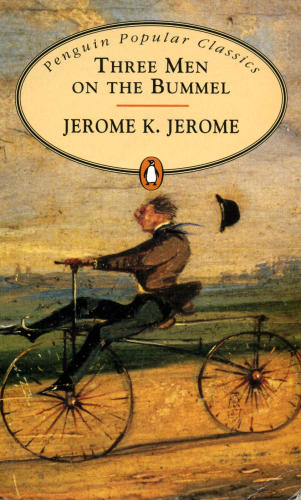
Three Men on the Bummel

2. Three Men on the Bummel by Jerome K. Jerome – Our old friends, J, Harris and George get together again for a tour of Germany in this sequel to Three Men in a Boat.

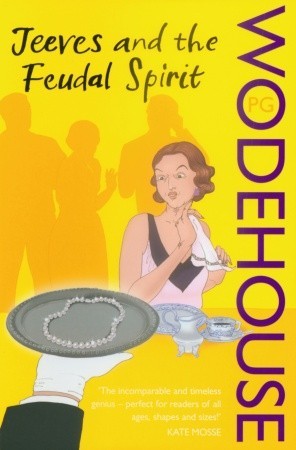
Jeeves and the Feudal Spirit

3. Jeeves and the Feudal Spirit by P.G. Wodehouse – I could have included other Wodehouse books here too, but this Jeeves and Wooster novel is the only one I have reviewed on my blog.

Cold Comfort Farm

4. Cold Comfort Farm by Stella Gibbons – I didn’t find this parody of the British rural novel quite as funny as other people have but it still deserves to be included here.

The Convenient Marriage

5. The Convenient Marriage by Georgette Heyer – Many of Heyer’s novels feature a bit of comedy and some witty dialogue, but this is one I remember being particularly funny.

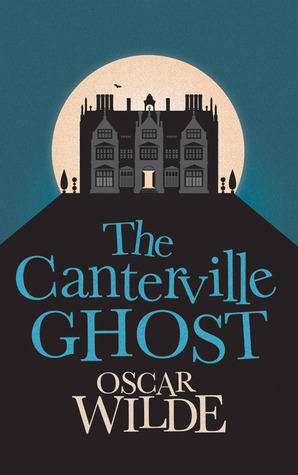
The Canterville Ghost

6. The Canterville Ghost by Oscar Wilde – This light and entertaining satire is possibly the least ghostly ghost story I’ve ever read!

The Adventures of Alianore Audley

7. The Adventures of Alianore Audley by Brian Wainwright – Some knowledge of the Wars of the Roses might be needed to fully appreciate this tale of a 15th century Yorkist spy.

Don Quixote - Edith Grossman

8. Don Quixote by Miguel de Cervantes – Who would have thought such an old book could be so funny? The humour doesn’t always work but when it does it’s hilarious.

The Uncommon Reader

9. The Uncommon Reader by Alan Bennett – A lovely, witty novel about the Queen’s love of reading.

The Idle Thoughts of an Idle Fellow

10. The Idle Thoughts of an Idle Fellow by Jerome K. Jerome – Yes, it’s another book by Jerome. This collection of essays is not as funny as the Three Men books, but will still make you smile.

~

Have you read any funny books recently? What would be on your list?

Mauprat by George Sand

Mauprat When I was looking for suggestions for books to read for the Women’s Classic Literature Event, Camille de Fleurville suggested the French author George Sand (a pseudonym of Amantine Lucile Aurore Dupin) and pointed me in the direction of her 1837 novel, Mauprat. Having never read George Sand before, I had no idea what her books would be like, but whatever I was expecting, it wasn’t this!

The novel begins with a description of Roche-Mauprat, an abandoned château in the French countryside, once home to Bernard Mauprat, an orphan raised by his wicked grandfather and violent, brutal uncles:

On the borders of La Marche and Berry, in the district known as Varenne, which is naught but a vast moor studded with forests of oak and chestnut, and in the most thickly wooded and wildest part of the country, may be found, crouching within a ravine, a little ruined château. The dilapidated turrets would not catch your eye until you were about a hundred yards from the principal portcullis. The venerable trees around and the scattered rocks above bury it in everlasting obscurity; and you would experience the greatest difficulty, even in broad daylight, in crossing the deserted path leading to it, without stumbling against the gnarled trunks and rubbish that bar every step. The name given to this dark ravine and gloomy castle is Roche-Mauprat.

Mauprat is set in the eighteenth century, in the years leading up to the French Revolution, and in Varenne an ancient feudal system is still in place with the peasants living in fear of the powerful Mauprat family, who rule over them with tyranny and corruption. One night Bernard’s uncles take a young girl captive in the woods and bring her back to Roche-Mauprat. Her name is Edmée and she is a cousin of Bernard’s belonging to another, more civilised branch of the family. Instantly attracted to his beautiful cousin, Bernard helps her to escape, but not before making her promise to marry him in return.

Unfortunately for Bernard, he didn’t specify exactly when Edmée will have to marry him. Once she is free of Roche-Mauprat, she insists that she cannot possibly become Bernard’s wife until he proves himself worthy. And so Bernard begins a seven-year struggle to gain an education and transform himself into the sort of respectable, well-mannered man Edmée is happy to love. How much of a man’s character is due to heredity and how much to the way he has been brought up? In Mauprat, we see that even a man who has had the roughest of upbringings has the opportunity to change through love, guidance and his own desire to improve.

The novel is narrated by a much older Bernard, who is entertaining some visitors with the story of his life, but apart from the first chapter, the book is structured as a straightforward first person narrative. We are with Bernard through every step of his journey, from his flawed younger self – rough, impulsive, passionate and uneducated – to the more refined, cultured man he becomes after being shaped by Edmée’s influence. Along the way Bernard encounters several other men – from the reclusive philosopher Patience and the mole-catcher Marcasse to the Abbé Aubert and the American soldier, Arthur – all of whom provide help and advice and teach him some important lessons.

We see Edmée only through Bernard’s eyes and this makes it difficult to understand her motives. I had a lot of questions about Edmée as I read. Why was she determined to keep Bernard waiting for so many years? Did she truly love him – and if so, at what point did she begin to love him? And if you love someone, shouldn’t you be prepared to accept them for what they are? Some of these questions are answered, to some extent, by the end of the book but Edmée still intrigued and frustrated me.

Mauprat is also interesting from an historical perspective. Bernard spends some time in America fighting in the Revolution (this is where he meets Arthur, the soldier and natural scientist who becomes his friend and helps to continue his education), while France is also on the brink of revolution and society is already beginning to change:

The poor have suffered enough; they will turn upon the rich, and their castles will fail and their lands be carved up. I shall not see it; but you will. There will be ten cottages in the place of this park, and ten families will live on its revenue. There will no longer be servants or masters, or villein or lord.

As I’ve mentioned, Mauprat wasn’t quite what I’d expected (the Gothic atmosphere and the amount of melodrama surprised me) and I don’t know whether it’s typical of George Sand’s novels, but I did enjoy it. Sand herself sounds like a fascinating woman too. I would like to read more of her books, so any recommendations are welcome.

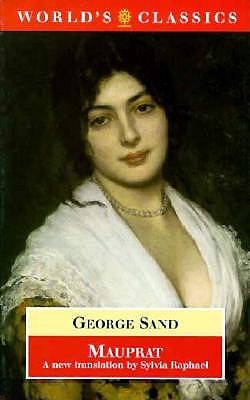
Finally, I should point out that I didn’t read the edition pictured above, but it was the only decent cover image I could find. I read the free version available through Project Gutenberg, translated by Stanley Young.

Shadow on the Highway by Deborah Swift

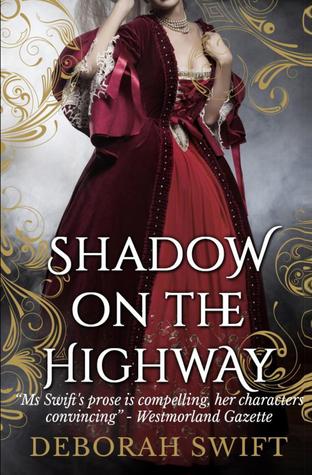
Shadow on the Highway Since reading Katherine Clements’ The Silvered Heart last year, I have been interested in reading more about Lady Katherine Fanshawe (or Ferrers), the seventeenth century highwaywoman known in legend as ‘the Wicked Lady’. On discovering that Deborah Swift had written a trilogy of novels about Lady Katherine, I had made a note to look out for the first one, Shadow on the Highway, so I was delighted to be offered a copy by Endeavour Press after signing up for their Virtual Historical Festival (taking place next week, 18-22 April).

Shadow on the Highway is aimed at young adults but can be enjoyed by readers of all ages; I certainly enjoyed it and thought it had a lot to offer an adult reader, as well as being a good choice for teenagers who are just starting to get into historical fiction. The story is set during the English Civil War and Deborah Swift does a good job of describing the history and politics of the period in a way that is easy to understand.

The novel is narrated by Abigail Chaplin, a young deaf girl who lost her hearing as a result of childhood measles. The Chaplin family has fallen on hard times and Abigail finds herself sent to work as a maid at Markyate Manor, home to Lady Katherine Fanshawe, a young woman not much older than Abigail herself. Katherine sees little of her husband, Thomas, and lives in fear of her hated stepfather, Sir Simon, who can be brutal, violent and controlling, so she quickly comes to value Abigail as a friend as well as a maid.

Desperate to escape from the manor for a while, Katherine persuades Abigail to help her dress as a servant and walk into the village with her so she can see how other people live. By chance she meets Ralph Chaplin, Abigail’s brother, while still in disguise and the two are instantly drawn to one another. This puts Abigail in a difficult position: should she tell Ralph that ‘Kate’ the servant is not what she appears to be? To make things worse, the Fanshawes are a Royalist household whereas the Chaplins are Parliamentarians. And then there’s the matter of the pistols Abigail has found inside Katherine’s writing desk and the worrying tales of a ‘Silent Highwayman’ holding up coaches on the London Road.

I found Shadow on the Highway a quick and entertaining read, although I was slightly disappointed that there wasn’t more actual action on the highway. Instead, the focus is on the family at Markyate Manor, the romance between Ralph and Katherine, and Abigail’s own personal story. It took me a while to warm to Katherine, but I liked Abigail from the beginning. Her deafness adds another intriguing angle to the story; as Deborah Swift explains in her Historical Note, the seventeenth century was a time of great advances in methods of communication for deaf people, including the beginnings of sign language.

As this is the second novel I’ve read featuring Lady Katherine, it was noticeable that Shadow on the Highway differs from The Silvered Heart in many ways. Although both books are based on the same legend, there are several different versions of that legend, leaving plenty of scope for an author to use her imagination. In particular, almost nothing is known of Katherine’s lover, except that the name Ralph or Rafe Chaplin is usually associated with the legends. In this novel, Deborah Swift creates an interesting story surrounding Ralph, making him a Digger – a member of a Protestant movement who believed in equality for all and who took their name from the fact that they attempted to settle and farm on common land:

“They’ll not stop us,” Ralph said. “Right is on our side. How far down do they own this land?” He grabbed up a handful of wet earth, showed it round in front of us. “To here? Or further down to where our spades reach? Does a mole recognise these boundaries? No, he can go where he wishes on God’s land. Are we less than a mole? We who are made in God’s likeness? No. We will persevere.”

The second book in the trilogy, Spirit of the Highway, is written from the perspective of Ralph rather than Abigail, which should be interesting. I’m looking forward to reading it – as well as the third book, when it becomes available.

God and the Wedding Dress by Marjorie Bowen

the-1938-club After the success of last year’s 1924 Club, Karen (of Kaggsy’s Bookish Ramblings) and Simon (of Stuck in a Book) are back with The 1938 Club, the idea being that bloggers read and review books published in 1938, building up a picture of the literary scene in that year. I found lots of possibilities – 1938 seems to have been a particularly great year for literature – but I knew I was only going to have time to read one of them. Luckily the book that I decided on turned out to be a good choice for me.

The intriguingly titled God and the Wedding Dress is set in the seventeenth century in the village of Eyam in England’s Peak District. William Mompesson, the new Rector of Eyam, has recently arrived in the village with his wife, Kate, their two young children and Kate’s sister, Bessie, but the family are finding it difficult to adjust to their new life. They have all been used to luxury and comfort, but Mompesson’s new position requires them to live within their means, avoiding unnecessary extravagance. With Bessie’s marriage to the wealthy John Corbyn quickly approaching, however, the women are determined to make it a day to remember and so they send to London for a beautiful – and very expensive – dress.

God and the Wedding Dress Unfortunately, both women are unaware that with plague sweeping across London, Mompesson has been advised not to have any contact with people or items coming from the capital. By the time the Rector hears about the wedding dress, it’s too late: it has already been delivered to the tailor, the box has been opened, and the tailor’s apprentice is about to die a rapid and unpleasant death. It seems that the plague has arrived in Eyam.

What follows is a story which is both depressing and inspiring; the story of a small community working together in the face of unimaginable horrors, making sacrifices for the good of others which will have deadly consequences for themselves. It’s also a true story, based on the real events of 1665/66 (it’s not the only novel to have tackled this subject – Geraldine Brooks’ Year of Wonders is also set in Eyam, although I haven’t read that one yet). Eyam itself really exists and is known today as ‘the Plague Village’, while many of the characters, including William Mompesson, were real people too.

Although we do change perspective from time to time, most of the story is told from Mompesson’s point of view, which I thought was the right decision. Mompesson, like his wife and sister-in-law, likes the finer things in life, but also has a desire to live the way his parishioners expect the Rector of Eyam to live. He is in conflict with himself, but also with the people around him. At first he views the villagers as little more than pagans, trusting to spells and charms to protect them from the plague. He finds it difficult to gain their respect and it is only when he joins forces with Thomas Stanley, the former Puritan minister of Eyam who was appointed during the time of Oliver Cromwell and who lost his position following the restoration of the monarchy, that Mompesson really begins to feel part of the community.

In her foreword, Marjorie Bowen states that there are many different types of historical novel and ‘this author has tried most of them’ which may sound conceited until you look at the very long and impressive list of books she wrote! I have read three of them in recent months (the other two being Dickon, a fictional biography of Richard III, and The Viper of Milan, a wonderful story set in Renaissance Italy) and I can say that the three I’ve read are all quite different in subject, style and tone. This is a quieter, more reflective novel, as much about a man’s inner struggles as it is about the history surrounding him.

I enjoyed God and the Wedding Dress, although it is obviously not the most cheerful of novels and not one to read if you need all of your characters to have a happy ending. It’s a fascinating story, though, and an important one because I think the sacrifice made by the people of Eyam deserves to be remembered.

~

Other 1938 books previously reviewed on this blog:

Princes in the Land by Joanna Cannan
Miss Pettigrew Lives for a Day by Winifred Watson

Arctic Summer by Damon Galgut

Arctic Summer As someone who has only read one novel by E.M. Forster – A Room with a View – I wasn’t sure whether reading Arctic Summer would be a good idea. It’s a fictional biography of Forster, concentrating on the period during which he was working on his novel A Passage to India, so I thought it might be more sensible to wait until I had read that book first. Arctic Summer is on the list of books I need to read for my Walter Scott Prize Project, though, so when I saw it in the library I couldn’t resist picking it up and taking it home.

I should start by saying that as well as not having read much of Forster’s work, I also – before reading this novel – knew almost nothing about the man himself. The first thing I discovered was that Galgut refers to his main character not as Forster or Edward but as Morgan, which was his middle name. Forster went by this name to distinguish himself from his father, another Edward (and apparently he was originally supposed to be called Henry anyway – there was some confusion over names at the baptism).

We first meet Forster in 1912 as he sets sail on his first trip to India at the age of thirty-three. He is planning to visit his friend Syed Ross Masood, whom he had tutored in Latin several years earlier while Masood was a student in England. Forster is becoming increasingly aware that what he feels for Masood is not just friendship but also love. However, he is not entirely comfortable with his feelings yet and is plagued by doubts and frustrations; this was a time when homosexuality was neither legal nor seen as socially acceptable and we are reminded that fewer than twenty years have passed since Oscar Wilde’s imprisonment for ‘gross indecency’.

Later, during World War I, Forster travels to Egypt to work for the Red Cross, and here he falls in love again, this time with Mohammed el-Adl. His love for Masood and Mohammed forms the main focus of Arctic Summer – and this, to me, was slightly disappointing. Obviously his relationships with these two men (and others) were very important to Forster and had an influence on his writing, but I would have preferred to read a more balanced novel that also explored other aspects of his life, rather than just page after page describing his sexual experiences and desires.

I did enjoy reading about Egypt and India (the visit to the Barabar Caves was particularly memorable) and I was also pleased to see brief appearances from other writers of the period such as D.H. Lawrence and Virginia and Leonard Woolf. The writing was of a high quality too and Galgut tells Forster’s story with sensitivity and understanding. Too much of the book bored me, though, and it failed to move me as much as I would have liked and expected. I had difficulty relating the story of Morgan’s love affairs to what little I know of Forster’s writing and I think I should definitely have waited to read this until I’d at least read A Passage to India and possibly Maurice as well.

This was one of the few disappointments I’ve had during my reading from the Walter Scott Prize shortlists, but don’t let me put you off. Looking at other reviews it seems that a lot of people have read it and loved it. As I’ve mentioned, my own lack of familiarity with Forster’s life and work could have been part of my problem. If nothing else, reading Arctic Summer has made me want to read more of E.M. Forster’s novels sooner rather than later.