The Cardinal by Alison Weir

In a market crowded with Tudor fiction, it’s difficult to find something new and different. This novel about Cardinal Wolsey – although maybe not the only one to be written about him – at least gives us the perspective of a prominent Tudor figure other than Henry VIII and his six wives. As with Hilary Mantel’s Thomas Cromwell novels, the focus is on politics, the forging and breaking of alliances with foreign powers, rivalries within the King’s inner circle and, above all, the rise and fall of a clever, ambitious man. We are also given some insight into Wolsey’s personal life as he is forced to choose between his career and the woman he loves.

The Cardinal covers Thomas Wolsey’s entire life, beginning with his childhood in Suffolk. Thomas – or Tom as he is known throughout the book – is the son of a yeoman farmer who also owns an inn and a butcher’s shop. However, Tom proves to be academically gifted from an early age, so instead of going into one of the family businesses he is sent to study at Oxford. At only eleven years old, he is much younger than the other students and is expected to have a bright future. Nobody could have predicted just how bright, as after making the decision to enter the church, Tom catches the eye of several influential patrons and rapidly gains wealth and power, becoming a trusted friend and adviser of first Henry VII, then Henry VIII.

Wolsey’s positions include Lord Chancellor, Bishop of York, cardinal and papal legate, and he begins to construct for himself a magnificent palace, Hampton Court. Needless to say, he quickly incurs the jealousy and resentment of other courtiers and Weir shows us how he systematically goes about bringing down his enemies and ensuring that he remains closer to the King than anyone else. Eventually he meets his match in Anne Boleyn, who has reasons of her own to dislike him. Anne is very much the villain in this book, which seems to be the case in most of Weir’s Tudor novels, probably due to the perspectives from which they’re written. Anne Boleyn, a King’s Obsession gives a more nuanced portrayal.

I loved the first half of the book, dealing with Wolsey’s early life and career, as there was a lot of material here that I had never read about in much detail before. I was also interested in the character of Joan Larke, the woman with whom Tom falls in love just as he’s beginning his rise to power. His position in the church makes it impossible for them to live together openly and he is forced to watch as she marries another man, unable to acknowledge the children he has had with her. I couldn’t feel too sorry for him, though, because he could have given up his career for her and chose not to. My sympathies were more with Joan (who would probably make a good subject for a novel in her own right, even if a lot would have to be invented as factual information on her seems quite limited).

The second half of the book is mainly devoted to Henry VIII’s Great Matter – his attempts to divorce Katherine of Aragon so that he can marry Anne Boleyn. Having already read about this several times in Weir’s other novels, from the perspectives of Katherine, Anne, Henry and Mary I, I didn’t really feel the need to read about it again so this part of the book dragged a little bit for me. Apart from that, I did enjoy The Cardinal and its portrayal of Thomas Wolsey. I’ll be interested to see which Tudor figure Alison Weir writes about next – or whether she’ll move away from that period and do something different.

Thanks to Headline Review for providing a copy of this book for review via NetGalley.
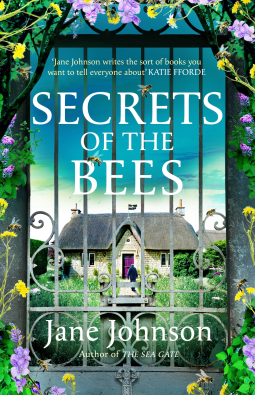
Secrets of the Bees by Jane Johnson

Ezra Curnow is almost eighty years old and has spent his whole life living in a little cottage on the Trengrose estate in Cornwall. It was home to his father and grandfather before him and Ezra can’t imagine living anywhere else. His cottage has no modern appliances or conveniences, not even a television, but Ezra doesn’t see the need; he spends most of his time outdoors with his cat and tame jackdaw, growing his own fruit and vegetables and tending to his bees in their hive.

Ezra’s peaceful life is shattered when Eliza Rosevear, mistress of Trengrose House, dies without leaving a will. The estate goes up for sale and is bought by Toby Hardman, a London businessman, who arrives with his wife Minty, an interior designer, and their teenage son, Dom. As soon as they move in, they begin converting part of the estate into a glamping site and looking for other ways to bring in tourists. Ezra is horrified, particularly when they remove the ancient Celtic cross that gives Trengrose its name. Worse still, it seems that the Hardmans also have their eye on Ezra’s cottage and with no official paperwork to prove that it’s his, he could be at risk of losing his home.

Secrets of the Bees is Jane Johnson’s latest novel and one of several, including The White Hare, that are set in her native Cornwall. Her love for the Cornish landscape, history, customs and people comes through strongly in her descriptive writing and in her creation of Ezra Curnow. Ezra represents tradition and a way of life that has almost disappeared; he has very little in terms of material possessions, but is happy and content. The Hardmans are the complete opposite – they represent change and progress, they have money, cars, technology, yet what they don’t have is happiness. Toby and Minty’s marriage is strained and lacking in trust, while Dom has been expelled from his expensive school for dealing drugs. Although Toby is the villain of the book and seems to be a lost cause, there’s still hope for Minty and Dom and we see them begin to improve and grow as people through their association with Ezra and the Cornish countryside. Dom even became one of my favourite characters, which I certainly hadn’t expected at first.

It’s very common, of course, for residents to object to new developments in their area, particularly ones that could damage the environment or cause noise and disruption, but Ezra takes his protests a step further. He comes up with some very inventive and amusing ways to throw the Hardmans’ plans into disarray, which adds some humour to a serious subject. Proving ownership of his cottage is much more difficult for him – there’s always been an understanding between the Rosevears and the Curnows but apparently nothing has been put in writing. It’s only when we are given some glimpses into the lives of Eliza Rosevear and her family – and into Ezra’s own past, including his National Service in Cyprus in the 1950s – that the truth about the Trengrose estate begins to emerge.

Although the book seemed slow at first and it took a while for things to really start moving, I gradually became completely immersed in the story. I could picture the setting so vividly and I loved everything Jane Johnson had to say about human beings and our relationship with the natural environment. I’ve enjoyed everything I’ve read by Johnson so far, whether set in Cornwall or in other parts of the world, historical or contemporary. I must find time to go back and read the remaining books of hers that I haven’t tried yet.

Thanks to Head of Zeus/Apollo for providing a copy of this book for review via NetGalley.
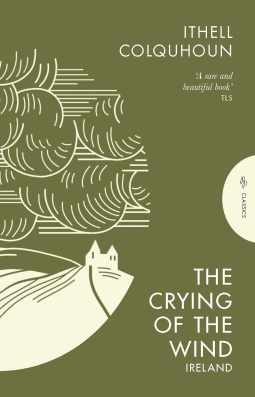
The Crying of the Wind: Ireland by Ithell Colquhoun

Ithell Colquhoun was a completely new name for me when I spotted this book on NetGalley recently, but I know now that she was a prominent British surrealist painter in the 1930-40s, as well as an occultist, poet and author of both fiction and non-fiction. The Crying of the Wind, originally published in 1955, describes her travels around Ireland and her impressions of the people she meets and places she visits. It’s the first of three travel books she wrote, with a book on Cornwall following in 1957 and then one on Egypt which has never been published.

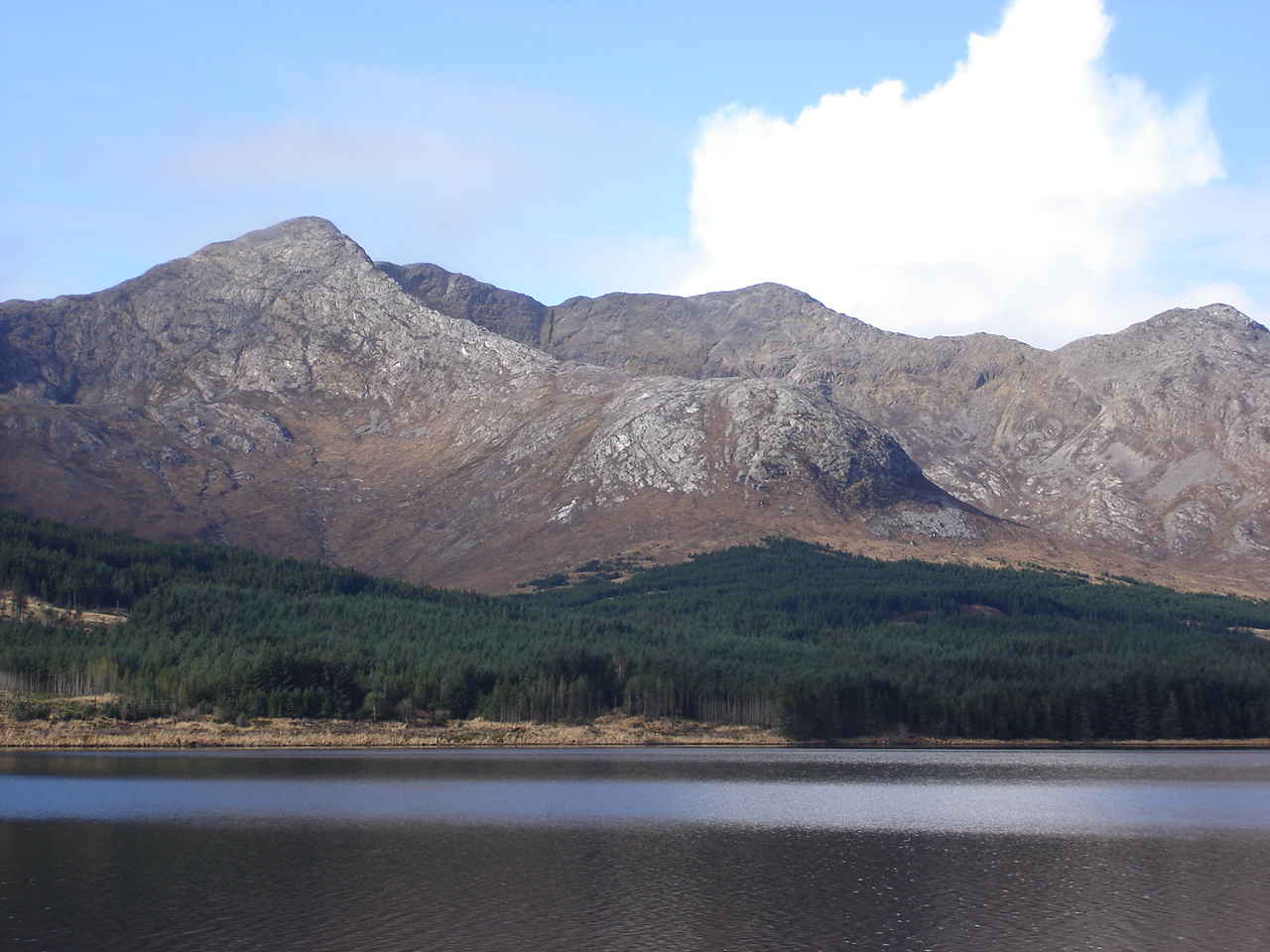
Colquhoun bases herself near the village of Lucan on the River Liffey, to the west of Dublin. In each chapter, she sets out on a walk or an excursion by car to visit different parts of Ireland, including Glendalough, Connemara and Cashel. The structure seems a bit haphazard, with no real order or pattern to the places she visits, and the book definitely has the feel of a personal journal rather than something you could use to plan out your own travels. It’s an interesting book, though, and I did enjoy reading it. The descriptive writing is beautiful at times, as you would expect from a book written by a painter; here she describes the approach to Connemara’s Twelve Bens mountain range:

Across miles of mulberrydark bogland we drove towards them, the tawny of king ferns lining the ditches that bordered the road. Air of a wonderful transparency arched above us, blue washed with white gold. I did not regret our slow pace, enforced by the pot-holes in the road, since I could watch the mountains from gradually shifting angles.

Although Colquhoun includes some anecdotes about her encounters with Irish people, the way they live and the conversations she has with them, the main focus of her writing is on the beauty of the natural environment and on places of historical interest such as old churches, holy wells and remains of ancient forts and towers. She often laments the rate of progress and its effect on the natural world; when walking in the countryside, she is very aware of the noise of traffic on busy roads nearby and the sights of new housing developments and factory chimneys altering the landscape forever.

With her interest in the occult, Colquhoun spends a lot of time discussing the myths, legends and folklore of each place she visits. She believes in ghosts, spirits and supernatural beings and accepts their existence in a very matter-of-fact way.

Their forms vary; a friend described one she had seen on some downs in Dorsetshire as being ‘the size of a haystack, opaque but fluid at the edges, moving very quickly’; another is sometimes seen like a tower racing over wide sands on the north coast of Cornwall. I have myself seen in Cornwall one like a massive pillar of unknown substance, with filaments stretched from the top seemingly to hold it to the ground like the guy-ropes of a tent.

The Crying of the Wind is an unusual travel book, then, and also a fascinating one. I’ll look forward to reading her Cornwall book, The Living Stones, which is also available in a new edition from Pushkin Press.

Thanks to Pushkin Press Classics for providing a copy of this book for review via NetGalley.

My Commonplace Book: May 2025

A selection of quotes and pictures to represent May’s reading:

commonplace book
noun
a book into which notable extracts from other works are copied for personal use.

~

‘One must accept the fact that we have only one companion in this world, a companion who accompanies us from the cradle to the grave – our own self. Get on good terms with that companion – learn to live with yourself.’

A Daughter’s a Daughter by Mary Westmacott (1952)

~

We regard our own memories as truths, when they are often just the stories we have told ourselves over time. They become the truth we live by, or with. They become our lives.

Written on the Dark by Guy Gavriel Kay (2025)

~

Twelve Bens mountain range, County Galway, Ireland

Language, legend, music, dress, ways of making tools and of building, all belong together; if one goes, it means that the life pattern is broken, and the rest will follow.

The Crying of the Wind: Ireland by Ithell Colquhoun (1955)

~

‘One of their company, a boy of fifteen, has been arrested for the girl’s murder. None of us believe he did it.’

Frances looks interested. ‘Why not?’

‘Because he loved her.’

‘Love does not preclude violence. Ask Master Shakespeare.’

Traitor’s Legacy by SJ Parris (2025)

~

“But still, a tragedy without a tune is like a sun that doesn’t give off heat; dead and nothing will grow from it. When men go to war, they do it to music. When they set sail for better shores and row into the vast blue, they do it to music. Even our hearts beat to some rhythm. And the director who neglects it neglects what makes us men.”

Glorious Exploits by Ferdia Lennon (2024)

~

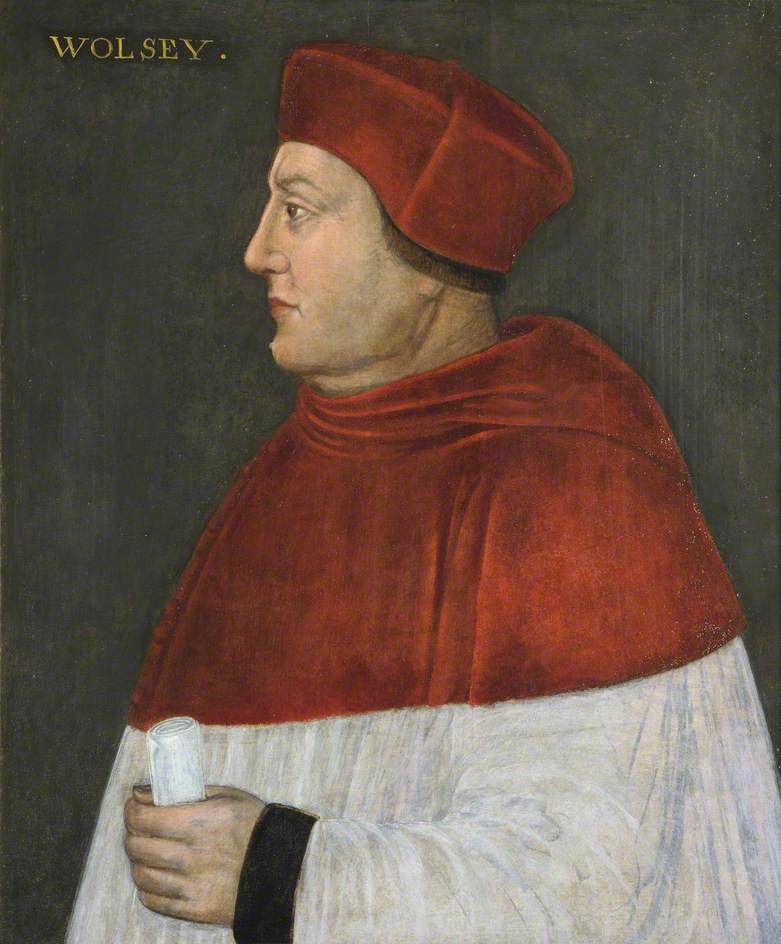
Cardinal Thomas Wolsey, Portrait at Trinity College, Cambridge, c. 1585–1596

Father knew the value of getting on in life. ‘Education is the way to advancement,’ he often said, and while he was not rich, he had somehow found the fees of 8d a quarter to send Tom to the grammar school in Ipswich.

The Cardinal by Alison Weir (2025)

~

Nothing was ever what you expected. That was the beauty and the terror of life.

White Corridor by Christopher Fowler (2007)

~

Yet she had a story, I knew it, and I knew that telling it would help. The girls were encouraged to talk openly about their past lives in order to understand and emphasise with one another. Giving them words made life easier to bear and allowed them to move on.

The Surgeon’s House by Jody Cooksley (2025)

~

Favourite books read in May:

A Daughter’s a Daughter and Written on the Dark

Authors read for the first time in May:

Ferdia Lennon, Ithell Colquhoun, Jody Cooksley

Places visited in my May reading:

England, the fictional kingdom of Ferrieres, Sicily, Ireland, France

~

Reading notes: May was a better reading month for me than last month and I enjoyed everything I read. I’m still behind with reviews, but will try to post the outstanding ones in June. 20 Books of Summer begins tomorrow and the first book I’ll be reading is Jennie by Paul Gallico for Mallika’s upcoming cat-themed Reading the Meow event. I’m looking forward to working through the rest of my list – and in particular, seeing which books will fill the empty spaces I’ve left for reading at whim!

What did you read in May? Do you have any plans for June?

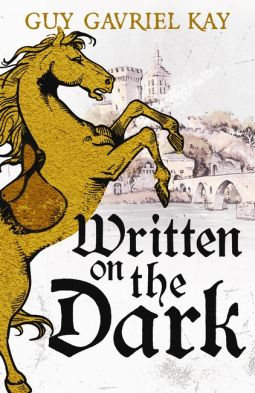
Written on the Dark by Guy Gavriel Kay

It seems to me that most moments in a life can be called interludes: following something, preceding something. Carrying us forward, with our needs and nature and desires, as we move through our time. It also seems to me that it is foolish to try to comprehend all that happens to us, let alone understand the world.

This is a beautiful historical fantasy novel loosely inspired by the life of the poet François Villon. It takes us to a world that will be familiar to Kay readers – a world with two moons, one blue and one white, where the three main religions are Asharite, Jaddite and Kindath, corresponding to Islam, Christianity and Judaism – but where his most recent novels have been set in thinly disguised versions of Venice, Dubrovnik and Constantinople, this one takes place in Ferrieres, based on medieval France.

On a freezing cold night in the city of Orane, the young poet Thierry Villar steps out of the tavern in which he’s been staying to find that he is surrounded by armed horsemen. He’s convinced that he’s going to be arrested – desperate for money, Thierry had become embroiled in a plot to rob a sanctuary – but to his surprise, he is escorted through the streets to where a man lies dead, brutally stabbed. This is the Duke de Montereau, one of the most powerful noblemen in Ferrieres and the younger brother of King Roch, who is struggling to rule due to mental illness. In return for not arresting Thierry, the provost of Orane asks him to help discover who murdered the Duke by listening to gossip in the city’s shops and taverns.

If you know your French history, you may have guessed that King Roch is based on King Charles VI, nicknamed ‘the Mad’ due to his episodes of mental instability and a belief that he was made of glass. Montereau, then, is a fictional version of the King’s brother, the Duke of Orléans, who was assassinated in 1407. Other people and incidents in the novel can also be connected to real characters and events from the Hundred Years’ War, which adds an extra layer of interest to the story if you’re familiar with this period of history. If not, it doesn’t matter at all since, as all the names have been changed, the book can also be read as a work of pure fiction.

Written on the Dark is a shorter novel than is usual for Kay and feels more tightly plotted than his other recent books, with a stronger focus on the main character and fewer diversions into the stories of minor characters. This probably explains why I thought this book was more enjoyable than the last two or three. Although I know nothing about the real François Villon so can’t say how his story may correspond with Thierry Villar’s, I found Thierry a likeable character; he has his flaws and sometimes makes mistakes, but this just makes him feel more relatable and human. An overarching theme of the book (and of Kay’s work in general) is the idea that even people who are considered ordinary or insignificant can play a key role in important events and influence not only their own fate but the fates of many others.

The fantasy aspect of the novel is limited mainly to the alternate version of France and to a mysterious character known as Gauvard Colle who can communicate with the ‘half-world’. There are also some surprising twists where things like the Battle of Agincourt and the story of Joan of Arc don’t go in quite the direction you would expect! I loved this one and am looking forward to reading his earlier book inspired by medieval France, A Song for Arbonne, which is one of a small number of Kay novels I haven’t read yet.

Thanks to Hodderscape for providing a copy of this book for review via NetGalley.
The Sirens by Emilia Hart

After enjoying Emilia Hart’s first novel, Weyward, in 2023, I’ve been looking forward to reading her new one, The Sirens. Weyward linked the stories of three women in different time periods through a family connection, a shared love of nature and a theme of witchcraft. The Sirens also has multiple timelines, but this time the characters are linked by water and the sea.

The novel begins in Australia in 2019 with student Lucy waking up from a sleepwalking episode with her hands around her ex-boyfriend’s neck. Ben is not entirely innocent – they broke up after he shared a nude photo of her with his friends – but she’s afraid he’ll report her for assault, so she packs her things and flees. Planning to take refuge with her sister Jess, an artist, Lucy heads for the town of Comber Bay, but on arrival she finds her sister’s house empty, as if it had been abandoned in a hurry. Lucy is concerned, but on learning that Jess did tell one of the neighbours that she would be going away for a while, she decides to wait in the house until she returns.

Comber Bay is a small town on the coast of New South Wales and has a sinister reputation; over a forty year period, eight men disappeared without trace, never to be seen again. Also, in 1982, a baby was found abandoned in a cave not far from Jess’s house. As she waits to hear from her sister, Lucy begins to uncover the truth behind these mysteries – but she becomes distracted by unsettling dreams of another pair of sisters who lived two centuries earlier.

Lucy’s present day story alternates with the story of those other two sisters, Mary and Eliza, who were found guilty of a crime in Ireland in 1800 and transported to Australia on a convict ship. Later in the book, Jess’s story also begins to unfold, mainly in the form of diary entries from the 1990s (the diary reads more like a novel, but I think we just have to suspend disbelief there). It takes a while for all of these threads to come together, but we eventually begin to see how cleverly they are connected. There are some surprising twists that I didn’t see coming, as well as some that I was able to guess before they were revealed. As ever, when a book has more than one timeline, I find that some are more compelling than others – and in this case, I particularly enjoyed Lucy’s story and the flashbacks to Jess’s teenage years. Mary and Eliza never fully came to life for me, so their adventures on board the Naiad didn’t interest me quite as much as I would have liked.

The title and cover of the book made me think there would be more siren/mermaid mythology incorporated into the story, but there’s only a little bit of that. There’s a lot of beautiful watery imagery, though, and water plays a big part in the novel in so many different ways. There’s Mary and Eliza’s sea voyage on the Naiad; the setting of Comber Bay, with its coastline, cliffs and caves; Jess’s paintings of ships; even the rare skin condition Lucy suffers from, aquagenic urticaria. It’s a book with lots of layers and things to think about. Having read two Emilia Hart books now, however, I do have a problem with her portrayal of men. Almost every male character in both books, with only a few exceptions, is either violent and abusive, a rapist or generally misogynistic or predatory. Obviously that’s true of some men, but I think it’s unrealistic that nearly every man who crosses paths with our female protagonists would be a terrible person. I think it should be possible to promote feminism and give women a voice without going too far in the other direction.

Apart from that, I did like the book and loved the eerie atmosphere Hart creates with Lucy alone in the abandoned Cliff House, uncovering the troubled history of Comber Bay’s past while being haunted by the cries of the women on the convict ship. It’s very similar to Weyward in some ways, but also different enough to be an interesting novel in its own right.

Thanks to The Borough Press for providing a copy of this book for review via NetGalley.
Top Ten Tuesday: Animal Companions

This week’s topic for Top Ten Tuesday (hosted by That Artsy Reader Girl) is “Animal Companions (These animals can be real or fantasy!)”

The ten books I’ve listed below are all books I’ve read and reviewed on my blog and feature a range of different animal and bird companions.

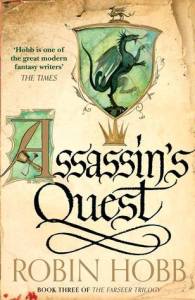
1. Nighteyes in the Farseer Trilogy by Robin Hobb – The wolf Nighteyes is much more than just a companion to FitzChivalry Farseer in Hobb’s epic fantasy series, but to say any more would be a spoiler!

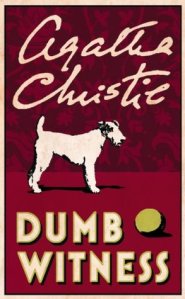
2. Bob in Dumb Witness by Agatha Christie – Poor Bob the dog gets the blame when his mistress falls down the stairs in the night. It’s up to Poirot to find another explanation!

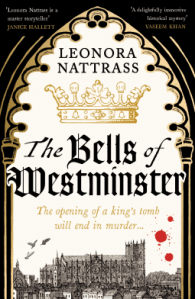
3. Cuthbert in The Bells of Westminster by Leonora Nattrass – Cuthbert, Susan Bell’s talking parrot who lives in the Deanery of Westminister Abbey, is the star of this historical mystery set in 1774.

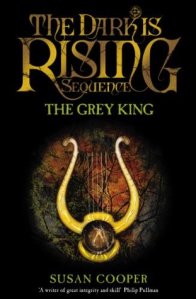
4. Cafall in The Grey King by Susan Cooper – In this fourth book in the Dark is Rising sequence inspired by Arthurian legend, Cafall, a sheepdog with silver eyes, is the friend and companion of Bran Davies.

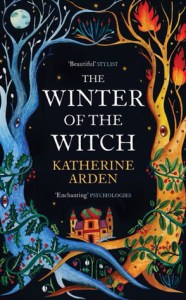
5. Solovey in The Winternight Trilogy by Katherine Arden – The magical horse Solovey is a companion to Vasya, the heroine of this excellent fantasy trilogy set in a version of medieval Russia.

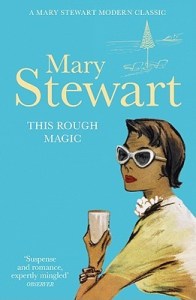
6. The dolphin in This Rough Magic by Mary Stewart – Not exactly a ‘companion’, but the dolphin in this book forms a bond with Lucy, our narrator, and becomes an important character in the story.

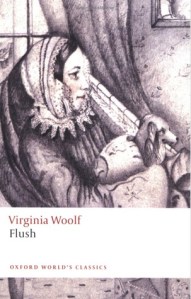
7. Flush in Flush by Virginia Woolf – I loved this short novel written from the perspective of Elizabeth Barrett Browning’s cocker spaniel.

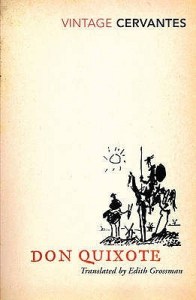
8. Rocinante in Don Quixote by Miguel de Cervantes – An eccentric gentleman of La Mancha, inspired by tales of romance and chivalry, renames himself Don Quixote and sets out in search of adventure mounted on his trusty steed, Rocinante!

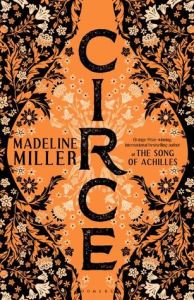
9. The lion in Circe by Madeline Miller – In this beautifully written Greek mythology retelling, the witch Circe is banished to the island of Aiaia where a female lion becomes her closest companion.

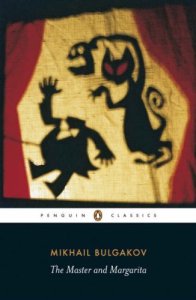
10. Behemoth in The Master and Margarita by Mikhail Bulgakov – My tenth and final animal companion is Behemoth, the demonic black cat who is part of the devil’s entourage in this weird and wonderful Russian classic.

~

Have you read any of these? Can you think of any other books with animal companions?