Oliver Twist by Charles Dickens

Oliver Twist I know it’s the middle of January, but I still have a few books that I read towards the end of 2015 to write about – and Oliver Twist is one of them. I’ve been trying to read at least one Dickens novel a year and having started 2015 with David Copperfield I decided to end it with another of his books. Of the two, I much preferred David Copperfield, but I did still enjoy Oliver Twist. As I’ve mentioned before, I find it difficult to think of anything new to say about books that are so well known and widely studied, so I’m just posting some general impressions of the novel here rather than attempting any sort of analysis.

I think most people, even without reading the book, probably have a basic idea of what it is about: an orphan boy who is raised in a workhouse in Victorian London – where he famously says, “Please, sir, I want some more” – and who later becomes involved with a gang of thieves and pickpockets. Maybe you have seen one of the many films, adaptations and musicals and so will know a little bit more, but the only way to discover the whole of Oliver’s story in the way Charles Dickens intended is to read the book!

This is the first time I have read Oliver Twist in its entirety and I was surprised by how much of it was completely unfamiliar to me. I had either forgotten or was unaware of whole chunks of the plot and of the roles played by characters such as Rose Maylie, Noah Claypole and Monks, so I was in the unusual position of reading a story that I both knew and didn’t know!

While this hasn’t become a favourite, I found Oliver Twist an enjoyable, entertaining read (one of the easiest to read and to follow of all the Dickens novels I’ve read so far) and as you would expect from Dickens, the pages are populated with colourful, larger than life characters, from Mr Bumble the beadle and the brutal Bill Sikes to the Artful Dodger and the villainous Fagin. The characters are mostly either ‘very good’ or ‘very bad’. Nancy, Bill Sikes’ lover, is the only one I found significantly more complex and she makes an interesting contrast with the novel’s other main female character, the pure, gentle Rose Maylie.

This is one of the earliest of Dickens’ major works, first published as a serial from 1837-1839, and it’s a relatively short novel by his standards (there are over 500 pages in the edition I read, but in comparison with books like Our Mutual Friend and Bleak House that’s not long at all). The amount of social commentary in the book is also particularly heavy; it was written just a few years after the Poor Law Amendment Act was passed by parliament in 1834, stating that relief for the poor would only be provided within the workhouse. The idea was that conditions inside the workhouse would be so harsh and unpleasant that only those people desperately in need of help would consider entering one. Telling Oliver’s story gave Dickens a chance to express his own views on the Poor Laws and related issues such as poverty and child labour.

Oliver Twist was the final novel by Dickens on my list for the Classics Club, but I will continue to work my way through his other books, as I have about half of them still to read. I think either Dombey and Son or Little Dorrit might be next.
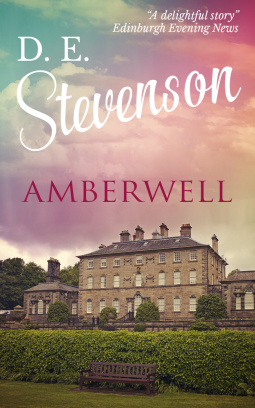
Amberwell by D. E. Stevenson

The property was situated in a fold of the hills and sloped gently down to the sea. It consisted of meadows and a little wood and some moorland; there was a well, built of glowing yellow stone, which was fed by a spring and was always full of ice-cold water. The water itself was as clear as crystal but the reflection of the stone gave it the appearance of amber…it was this well which gave the property its name, Amberwell.

Amberwell

A few years ago I read one of D. E. Stevenson’s most popular novels, Miss Buncle’s Book. I found it a lovely, charming read, but as I said in my review at the time, I thought it ‘lacked that special spark’. I hadn’t really thought about reading any more of her books until I noticed that some of them were being reissued by Endeavour Press. I liked the sound of Amberwell and decided to give Stevenson another chance to impress me.

Amberwell is the name of a house and estate in the south west of Scotland, home to Mr and Mrs Ayrton and their five children: Roger, Tom, Connie, Nell and Anne. The Ayrtons show little interest in getting to know the children; the two boys are sent away to school as soon as possible, their future careers mapped out for them by their father regardless of their own wishes. Education for the girls is not considered important – they remain in the nursery at Amberwell to be raised by Nannie and taught at home by Miss Clarke, who comes in daily.

As the years go by and World War II approaches, the Ayrton children begin to follow their own paths in life. Roger and Tom go off to war while Connie and Anne (under very different circumstances) both leave home, with only the middle sister, Nell, left behind to care for Amberwell. Amberwell itself remains at the centre of the story and even as the Ayrtons move away or move on, it continues to hold a special place in each of their hearts.

I loved Amberwell. I found it very different from Miss Buncle’s Book (a more serious, poignant story rather than a humorous one) but much more to my taste. I was particularly interested in the portrayal of the effects of war on a wealthy family living in a quiet, rural area who at first are shielded from what is going on elsewhere but eventually find that their own way of life is changing too. I could understand Roger’s anger during a conversation with his parents in which he discovers that they are more concerned about losing their servants than they are about Roger himself, who is risking his life for his country.

This is not just a book about war, of course. It’s also a book about Scottish society before and during the war and what it was like to be a young woman growing up in that time and place. And it’s a book about the relationships between brothers and sisters and between parents and children – and the damage which can be caused by a lack of understanding, attention and affection.

The beautiful Connie is the conventional one who does what is expected of her and as such she is the least interesting of the Ayrtons to read about as well as being the hardest to warm to, but I cared very much about the fates of the other four siblings. Anne’s life takes a dramatic turn following a visit to her Aunt Beatrice and we have to wait until the end of the novel to hear the full story of her adventures, while Tom and Roger are both easy to like and their love for Amberwell and their sisters shines through strongly. But this is really Nell’s story – Nell’s and Amberwell’s – and Nell is a wonderful person, offering help and support to those who need it and ensuring that her brothers and sisters have a home to come back to when the war is over.

After finishing this book I was pleased to find that there is a sequel, Summerhills, which I will be reading as soon as I have the opportunity. I would love to know what happens to the characters I’ve become so fond of, particularly Nell, my favourite. I also have a copy of another Stevenson novel, Vittoria Cottage, which I’m looking forward to now that I’ve enjoyed this one so much.

I received a copy of this book for review from Endeavour Press via NetGalley.

Wide Sargasso Sea by Jean Rhys

Wide Sargasso Sea After finishing a re-read of Jane Eyre recently, I decided that my next read would have to be Wide Sargasso Sea by Jean Rhys, a book inspired by Charlotte Brontë’s classic novel and which I’ve seen described both as a prequel and a reimagining. I don’t read this type of book very often as I prefer to keep my feelings for the originals intact, but this one, published in 1966, is now considered a classic in itself and I wanted to find out why.

As I started writing this review it occurred to me that it would be impossible to discuss Wide Sargasso Sea in any meaningful way without giving away some of the secrets revealed in Jane Eyre and spoiling the Brontë novel for anyone who hasn’t read it yet. I will assume that if you’re reading this post you’re already familiar with Jane Eyre, so consider this your spoiler warning!

Wide Sargasso Sea is the story of Mr Rochester’s first wife, Bertha, the ‘madwoman in the attic’. In Jane Eyre, we learn that Rochester was sent by his father to Jamaica where he met the Mason family and married Bertha, a beautiful Creole heiress. Rochester explains that he was unaware of the madness running in Bertha’s family and the fact that her mother was not dead, as he had first believed, but had actually been locked away in an asylum. When Bertha’s own behaviour begins to worry Rochester, he brings her home to England and Thornfield Hall, where he has her imprisoned in an attic room under the care of a servant, Grace Poole.

Jane Eyre only shows us one side of the story: Rochester’s. In Wide Sargasso Sea, Jean Rhys gives a voice to Bertha (or Antoinette Cosway, as she is known here). The first part of the novel, narrated by Antoinette herself, describes her childhood in 1830s Jamaica, just after the Emancipation Act has ended slavery across the British Empire. Antoinette’s own father made his fortune through slavery and since his death the family have remained on their crumbling plantation, Coulibri, where as white Creoles they are isolated and shunned by the freed black slaves and their rich white neighbours alike. As the years go by and Antoinette’s mother descends into mental illness, her stepfather, Mr Mason, announces that friends from England are coming to visit…

In the middle section of the book, we switch to Rochester’s point of view (although he is not actually named in the novel, it’s clear who he is supposed to be) and he relates in his own words the story of his marriage to Antoinette, whom he renames Bertha, and his views on the deteoriation of her mental health. The final, shortest section is set at Thornfield Hall and takes us through the familiar events of Jane Eyre.

I was quite disappointed with this book, if I’m going to be completely honest. Yes, it’s beautifully written but I found the dreamlike, disjointed narrative slightly difficult to follow and while I could sympathise with Antoinette’s situation, I never felt fully engaged with her on an emotional level. I realise that the writing style was probably intended to unsettle and disorientate the reader, but I just didn’t like it. Luckily, my lack of love for this novel has not affected my memories of Jane Eyre or its characters – not even Mr Rochester, despite the negative portrayal, mainly because the character in this novel just doesn’t feel at all like Brontë’s Rochester (not even his ‘voice’ sounds the same).

Wide Sargasso Sea is a short novel (I was surprised when I discovered just how short it was) but it’s also a complex one with lots of layers, symbolism and important themes – including slavery, colonialism, mental illness, race and gender – and I can see why it’s a book that has come to be widely studied in schools and universities. I can recommend the Penguin Modern Classics ‘Annotated Edition’ as an excellent choice for students or anyone who wants to study the story and its background in more depth. There’s an introduction, notes at the end, suggestions for further reading and background information on some of the topics alluded to in the story, such as the Jamaican folk magic known as Obeah.

I did love the concept of giving Bertha/Antoinette a chance to tell her story and I wouldn’t want to put anyone else off reading this book – even though I didn’t find it very satisfying, I know there are many, many other people who have enjoyed it, so if it does sound appealing to you then I would certainly recommend giving it a try.

Historical Musings #10: Possible reads for 2016

Historical Musings For my first Historical Musings post of the year I’ve decided to keep things very simple. The questions I’m asking this month are:

Will you be reading any historical fiction in 2016? If so, which books are you hoping to read? Are there any new historical fiction novels being published this year which you’re looking forward to, or will you be reading books already on your shelves? I’d love to hear your plans for the year ahead!

If you’re interested in books being released this year, the Historical Fiction 2016 list at Goodreads or the Historical Novel Society’s list of Forthcoming Historical Novels for 2016 might give you some ideas, but there are not many upcoming books that I feel excited about this year, if I’m honest. I’ve received a few of the books on those lists as review copies from NetGalley (The Queen’s Choice by Anne O’Brien, Jane Steele by Lyndsay Faye and For the Most Beautiful by Emily Hauser) and I’m sure I’ll end up picking up some new releases in the library too, but otherwise there are plenty of older books that I would like to read in 2016. I want to try more books by authors like Margaret Campbell Barnes, Cecelia Holland, E. Barrington, Valerie Anand, Marjorie Bowen and Martha Rofheart, all of whom have been recent discoveries for me.

This year, as one of my Reading Resolutions, I’m determined to make time to re-read some of my old favourites (which naturally include a lot of historical novels) but I do also have a lot of unread books on my shelves.

Here are some books which I would like to get to in 2016:

histmusings2

The Ashes of London by Andrew Taylor (reading now)
Some Luck by Jane Smiley
A Dark and Distant Shore by Reay Tannahill
The Walls of Byzantium by James Heneage
The Rose of Sebastopol by Katherine McMahon
Shadow of the Moon by MM Kaye
Red Sky at Night by Jane Aiken Hodge
The Kingmaking by Helen Hollick
Prince of Foxes by Samuel Shellabarger
The Love Knot by Elizabeth Chadwick
The Reckoning by Sharon Penman
Renegade by Robyn Young
Daughter of Siena by Marina Fiorato
Queen of Silks by Vanora Bennett
The Heaven Tree by Edith Pargeter

I also still have a lot of Walter Scott Prize nominees to get through. And of course, I haven’t forgotten about all the wonderful recommendations left in the comments on previous Historical Musings posts (including books about Ancient Rome, women’s classics, books set in Africa and books for younger readers).

As you can see, there are more than enough books to keep me busy in 2016!
What about you? What will you be reading?

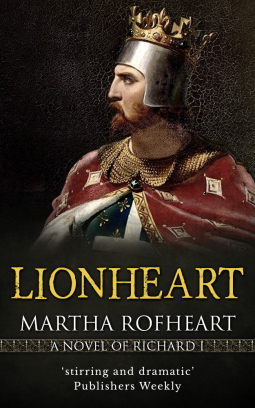
Lionheart by Martha Rofheart

Lionheart Martha Rofheart (1917-1990) was an American author of historical fiction who wrote several novels on subjects as diverse as Cleopatra (The Alexandrian), Henry V (Fortune Made His Sword) and the Greek poet, Sappho (Burning Sappho). Lionheart, her 1981 novel on England’s King Richard I, is the first of her books that I’ve read and although I had one or two problems with it, I did enjoy it and am looking forward to trying her others.

The story of Richard I, known as the Lionheart, is told from the perspectives of not only Richard himself, but five other people who each played a significant role in his life: his mistress, Blondelza; his mercenary captain, Mercadier; his mother, Eleanor of Aquitaine; his wife, Berengaria of Navarre; and his foster-brother and scribe, Alexander. All of these people really existed, apart from Blondelza, who is fictitious, and each of them is given their own section of the book in which to relate their own version of events and to share with us their personal opinion of Richard as a man and as a king.

With six different characters each telling their side of the story, I would have liked their narrative voices to have sounded more distinctive, but they did all seem to blend together, the exceptions being Richard (a child during most of the first section of the novel), and his mother, Eleanor. I have read about Eleanor and Richard recently, in Elizabeth Chadwick’s The Winter Crown, and it was good to read another author’s interpretation of the same characters. The portrayal of Richard here is balanced and well-developed, with each narrator throwing more light on a different aspect of his personality. He is shown to be a complex man, capable of being selfish and inconsiderate, but also courageous, kind-hearted and down to earth.

I’m not sure how I feel about the character of Blondelza, Richard’s mistress. As most of the other characters are real historical figures and the plot of the novel closely follows historical fact, it doesn’t seem quite right for an entirely fictional character to be given such a prominent role in the story. On the other hand, Richard did have an illegitimate son (Philip of Cognac) by an unidentified woman, so there’s plenty of scope there for an author to fill in the gaps, which is just what Martha Rofheart has done. And Blondelza, being a glee-maiden (a female poet or minstrel), is an interesting character to read about, fictional or not!

All of the major events of Richard’s life and reign are covered in the novel, from his childhood and his rebellion (with his brothers) against his father, Henry II, to his meeting with and marriage to Berengaria and, of course, his time on crusade. Obviously the crusades were of huge importance to Richard and it’s understandable that Rofheart goes into a lot of detail in describing them, but I did find that this section of the book (narrated by the monk Alexander) really started to drag, and it didn’t help that it was twice the length of any of the other sections.

Still, this was an enjoyable novel overall and I feel that I learned a lot about not only the life of Richard the Lionheart, but also medieval life in general. I was particularly intrigued by the descriptions of the Courts of Love in Poitiers and the tasks which must be carried out by a knight who wished to prove his love for his lady. Now that I’ve had my first introduction to Martha Rofheart’s writing I’m definitely planning to read her other books, all of which sound interesting.

Thanks to Endeavour Press for providing a review copy via NetGalley.

Jane Eyre by Charlotte Brontë (re-read)

Jane Eyre was the book chosen for me in the Classics Spin in December. When I discovered that this was the one I’d be reading, I was delighted – it’s a book I love and which I hadn’t read for a long time. I immediately pulled my copy off the shelf to start my re-read and from the familiar opening line – “There was no possibility of taking a walk that day” – I was drawn into the story once more. The gothic atmosphere of the novel made it a perfect read for dark December nights and I finished it just before Christmas.

Jane Eyre I think I was probably eleven or twelve years old when I had my first encounter with Jane but on that first read I didn’t get past the Lowood School section at the beginning and more than ten years passed before I decided to try again. My second attempt was much more successful; being older and better able to appreciate the story and the quality of the writing, I read the whole book and loved it. This most recent read was my third. I was curious to see whether I would feel differently about it now, after another long gap, but although I did notice things this time that I don’t think I picked up on last time, my overall opinion of the book is unchanged.

Jane Eyre, for those who don’t know the story, is an orphan raised in the home of an aunt and three cousins who make it obvious that they don’t like her and don’t want her there. At the age of ten, Jane is sent to a charity-run boarding school for girls, another harsh and unwelcoming environment. However, Jane is able to take two positive things away from her time at school – a brief but much-valued friendship with Helen Burns, and the education which later enables her to find a position as governess to Adele, the young ward of Mr Rochester of Thornfield Hall. Jane soon begins to fall in love with her employer but when she discovers that he is hiding a dark secret, it seems that her chance of happiness has been destroyed.

*Spoiler warning: I will find it difficult to discuss the book any further without spoilers, so if you haven’t read Jane Eyre yet, I would advise skipping to the end of this post.*

I loved the experience of reading Jane Eyre again. Although much of the story was familiar to me from my previous reads and many of the scenes had stayed in my mind – including Jane’s imprisonment in the red room at Gateshead Hall, the tragic death of Helen Burns, Rochester disguising himself as a gypsy woman and the revelation of Bertha’s existence – there were other parts that I had forgotten and that I enjoyed discovering again.

I also loved being reacquainted with the characters. I know there are a lot of people who have problems with Mr Rochester and I can understand why – apart from his treatment of Bertha, there’s the fact that he lies to Jane and that he’s prepared to enter into a bigamous marriage with her, but despite this I have always liked him as a character. Jane is not my favourite literary heroine (although I do admire her for her honesty, integrity, inner strength and sense of right and wrong) and Mr Rochester is not my favourite hero but they both feel so real and I can believe in their relationship and their love for one another – a love that I think they both desperately needed.

Of course, there’s much more to Jane Eyre than just the romance. There’s also some social commentary, with the descriptions of conditions at Lowood School and with the exploration of class, gender and religion. It’s an interesting read from a feminist perspective, portraying Jane’s search for independence and depicting the options open to a woman faced with making her own way in life in the early Victorian period. Having read about the lives of Charlotte and the rest of the Brontë family (something I hadn’t done when I first read this book) I can see how autobiographical some parts of the story are.

My least favourite section of the book is still the part where Jane leaves Thornfield Hall during the night and is taken in by St. John Rivers and his sisters. I remembered intensely disliking St. John on my last read, but I wasn’t sure whether that was because of the character himself or just because I was impatient for Jane and Rochester to be reunited. However, I didn’t like St. John any better this time round. I find him cold and controlling – Jane herself describes his nature as “austere and despotic” – and he doesn’t seem to care at all about Jane’s own opinions and wishes. Even though I had read the book before, I was still relieved when Jane rejects him!

*End of spoilers*

I thoroughly enjoyed my re-read of Jane Eyre, if I haven’t already made that clear! I’ve heard it said that people can either love Jane Eyre or Wuthering Heights, but not both – well, I do love both, but I have always preferred Wuthering Heights. I’m planning to re-read it soon too and it will be interesting to see if I still do like it more.

Since finishing Jane Eyre a couple of weeks ago, I have now read the prequel Wide Sargasso Sea by Jean Rhys for the first time and will be posting my thoughts on that one soon. Then I have a copy of Lyndsay Faye’s new Jane Eyre-inspired novel, Jane Steele, which I’m looking forward to reading – and I also still need to read my only remaining unread Brontë novel, Shirley. It seems I’m having a very Brontë themed start to the new year!

Ten Reading Resolutions for 2016

It’s been a while since I last took part in Top Ten Tuesday (hosted by The Broke and the Bookish) but this week’s topic is one I was going to post about anyway: my plans and resolutions for 2016.

Top Ten Tuesday

1. Make more time for re-reads. Only one of my 2015 books was a re-read (Jane Eyre, which I haven’t written about yet) and this makes me feel sad because I used to get so much enjoyment from reading my favourite books over and over again. I’m not going to set a target in terms of numbers, but I do want to re-read more than just one book this year!

2. Make progress with my Classics Club list. My target date for finishing my list is 10th March 2017 and I still have 32/100 books to read, so I really need to make a lot of progress this year. I will be going through the list to see if I still actually want to read all of the books on it and might decide to make some changes (one thing I like about the Classics Club is that you don’t need to stick rigidly to your original list and can add or remove books at any time).

3. Read books towards the Women’s Classic Literature Event. There’s some overlap here with my previous resolution, as this is an event hosted by the Classics Club. I already read three women’s classics towards the end of 2015, but there are a lot more that I’m hoping to read in 2016.

4. Continue to work through the series that I’m in the middle of reading. I’m very good at starting them but not so good at remembering to continue with them. Some of the many series I would like to make progress with in 2016 include the Aubrey/Maturin series by Patrick O’Brian, Amelia Peabody by Elizabeth Peters, Temeraire by Naomi Novik, Mary Russell/Sherlock Holmes by Laurie R King, The Accursed Kings by Maurice Druon, Shardlake by CJ Sansom and the Pallisers by Anthony Trollope.

5. Continue to work on my own projects i.e. Ten from the TBR and Reading the Walter Scott Prize. I have found that ‘challenges’ don’t really work for me (the Historical Fiction Reading Challenge is the only one I’ve signed up for this year, apart from the Women’s Classic Literature Event) and I like to allow myself plenty of time and flexibility, so I’m happier with my own personal projects, for which I haven’t set any deadlines.

6. Read the books that I really want to read! There are a lot of books that I’ve been wanting to read for years and am sure I’m going to love, but that I’ve been avoiding reading because I’m ‘saving them for later’ or ‘want to have something to look forward to’. I’m aware of how silly this is, so 2016 is going to be the year I finally read those long-anticipated books!

7. Be more ruthless about abandoning books I’m not enjoying. Sometimes I can tell almost immediately that a book is not for me, but sometimes I’m not sure and decide to keep going in the hope that it will get better – and then even when it doesn’t improve I still struggle on to the end.

8. Try to take more notes while reading. Even if I write about a book immediately after finishing it, I often struggle to remember exactly what I wanted to say about it. Better note-taking would definitely help, but once I become swept away by a good book I don’t like having to interrupt the flow of my reading. I’m not sure what to do about this but will give it some thought.

9. Continue trying to blog regularly, but don’t worry if I ‘get behind’ or if I don’t manage to post as often as I would like to. The focus of my blog in 2016 will still be books and reading and I will still be aiming to write about every book I read (as the original purpose of my blog was to keep a record of my reading). I will be continuing with my monthly Historical Musings posts this year as I enjoy writing them and I think we’ve had some good discussions in the comment sections. I’ve also settled on a new format for my end-of-month summary posts which I think will be more interesting for me to write and for you to read!

10. Try to make every book I read a potential favourite book of the year. I know this won’t realistically happen, but it’s what we would all like, isn’t it? Hopefully Resolutions 1-7 will help with this!

Do you have any resolutions for 2016?