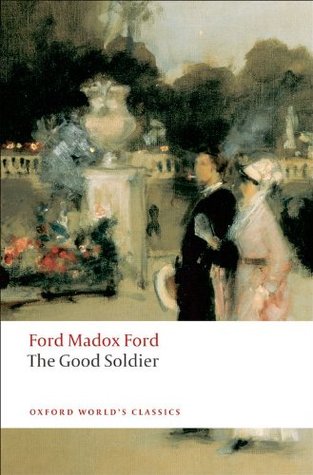
The Good Soldier by Ford Madox Ford

The Good Soldier I seem to have been under a bit of a misconception with this book; based on the title and the fact that it was published in 1915 I thought it would be a book about war. It isn’t, of course. I expect everyone else already knows that and I’ve just made myself sound stupid, but it’s really not a book I’ve ever considered reading or paid any attention to until recently. That’s my excuse! What is The Good Soldier actually about, then? Well, it’s a tale of marriage and adultery, of love and betrayal, and it reminded me of something F. Scott Fitzgerald might write (although Fitzgerald’s books would come several years later).

The Good Soldier is a deceptively simple story of two seemingly respectable couples who meet and get to know each other at a spa town in Germany in 1904. John Dowell, our narrator, is an American who has come to Bad Nauheim with his wife, Florence, whom he tells us has a weak heart. The other couple – Edward Ashburnham, another heart patient, and his wife Leonora – are British. Seen through John Dowell’s eyes, the story of these four people and the relationships between them slowly unfolds and we gradually discover that there is more to each of them than meets the eye.

I don’t think I really need to say much more about the plot – and to do so would run the risk of spoiling the book for future readers. This is a story built around lies, deceptions and secrets, things which are only revealed when John Dowell decides to reveal them. It’s an interesting structure, consisting of a series of memories and flashbacks told in non-chronological order, moving backwards and forwards in time. Interesting, but not very easy to follow, at least on a first read! This is the sort of book you would really need to read more than once to be able to fully appreciate it, but I don’t think I’ll be reading it again – at least not in the near future – because, although I did like the book, I didn’t like it enough for a re-read.

It’s a clever and intriguing novel, though, with a narrator who is certainly not a reliable one. We can never be sure how much of what Dowell says is true, as he often makes a statement or describes a sequence of events only to contradict himself later in the book. I was constantly having to change my mind about the characters and reassess what I thought I knew about them. The question is whether Dowell is deliberately trying to mislead us or whether he himself is deluded or confused. Even the opening line is curious: “This is the saddest story I have ever heard”. Why does he say it’s a story he’s ‘heard’ when he is one of the main participants in the story? This is a book that left me with many more questions than answers!

Have you read anything by Ford Madox Ford? I think I would like to try Parade’s End at some point.
Another Ten from the TBR

As some of you might remember, about six months ago I posted a list of ten books chosen at random from my Goodreads “to read” shelf and since then I have been slowly working through those ten books. I have now read and reviewed eight of them; the other two I decided I no longer wanted to read and could remove from the shelf. Of course, I’ve also been reading other books from my TBR as well as adding more books to it, so this little project of mine hasn’t really made any difference to the numbers – but I still think it was worthwhile as it motivated me to finally pick up some of the books I’ve been marking as “to read” on Goodreads over the years and then forgetting about.

The eight books from the list of ten which I have now read are as follows:

Alias Grace by Margaret Atwood
The Thief of Time by John Boyne
Royal Mistress by Anne Easter Smith
The Odd Women by George Gissing
April Lady by Georgette Heyer
Cousin Bette by Honoré de Balzac
The Master of Ballantrae by Robert Louis Stevenson
The Sea-Hawk by Rafael Sabatini

I enjoyed most of these, particularly Alias Grace, The Sea-Hawk and The Master of Ballantrae, but I was disappointed by The Thief of Time. I’m also pleased to have read something by George Gissing and Honoré de Balzac at last!

The two books I decided not to read were:

The Bones of Avalon by Phil Rickman
Wieland by Charles Brockden Brown

I did start The Bones of Avalon, but couldn’t get into it and eventually abandoned it, happy that I’d at least given it a chance. Wieland, though, just doesn’t sound appealing to me and I can’t remember why I had wanted to read it in the first place.

That’s ten books removed from the TBR, then, which means it’s time to choose ten more! Again, I’ve used a random number generator to pick ten numbers and I’m listing the corresponding books below:

A Shilling for Candles

12 – A Shilling for Candles by Josephine Tey

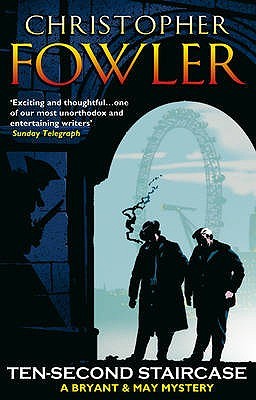
Ten Second Staircase

46 – Ten Second Staircase by Christopher Fowler

The Shadowy Horses

128 – The Shadowy Horses by Susanna Kearsley

Phineas Redux

337 – Phineas Redux by Anthony Trollope

The Reckoning

322 – The Reckoning by Sharon Penman

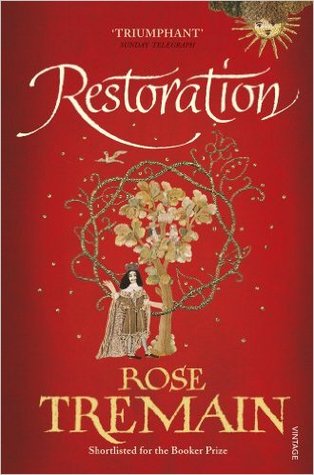
Restoration

111 – Restoration by Rose Tremain

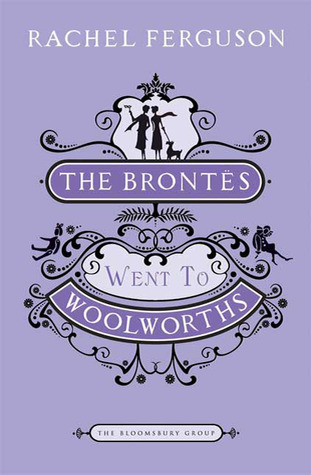
The Brontes went to Woolworths

463 – The Brontes went to Woolworths by Rachel Ferguson

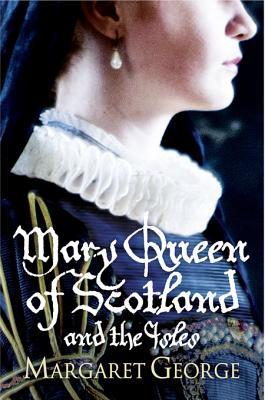
Mary Queen of Scotland and the Isles

245 – Mary Queen of Scotland and the Isles by Margaret George

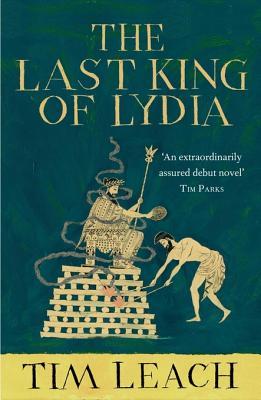
The Last King of Lydia

408 – The Last King of Lydia by Tim Leach

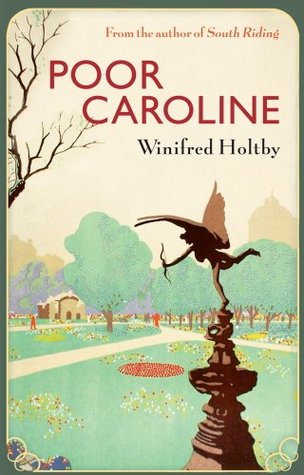
Poor Caroline

36 – Poor Caroline by Winifred Holtby

What do you think of this selection? Are there any you think I definitely need to read? Any you wouldn’t recommend?

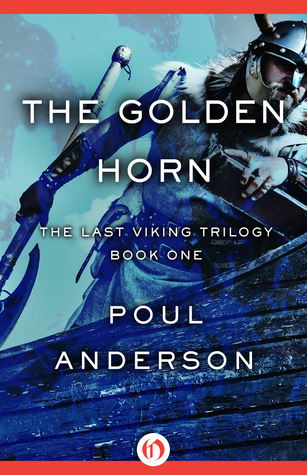
The Golden Horn by Poul Anderson

The Golden Horn Poul Anderson (1926-2001) was an American author of fantasy and science fiction, but he also wrote a trilogy of historical novels, known as The Last Viking, which tells the story of Harald Hardrada, who was King of Norway from 1046 to 1066. I have read about Harald before, but only as a minor character or in relation to the Norman Conquest of 1066 and the role he played in trying to claim the throne of England, so I was looking forward to reading The Golden Horn and learning more about his life.

Harald Sigurdharson (the name Hardrada or Hardrede, meaning “hard ruler”, will follow later) is the younger half-brother of Olaf II of Norway. Harald is only fifteen years old when he fights alongside Olaf at the Battle of Stiklastadh (Stiklestad) in an attempt to restore his brother to the Norwegian throne, which has been lost to King Canute of Denmark. Olaf is killed during the battle, his forces are defeated and Harald manages to escape. The Golden Horn, the first book in the trilogy, follows Harald throughout his time in exile as he waits for his chance to come home to Norway and reclaim the throne.

After recovering from being badly wounded at Stiklastadh, Harald flees to Russia with the help of Rognvald Brusason of Orkney. In Kiev, he meets the Grand Prince Yaroslav who makes him a captain in his army. Later, Harald continues south to Constantinople, capital of the Byzantine Empire, where he becomes commander of the Varangian Guard. The next few years are spent on various military campaigns in and around Constantinople and the Mediterranean. During this time Harald amasses great wealth, makes a name for himself as a warrior, and enters into marriage with Princess Ellisif (Elisaveta) of Kiev.

The Golden Horn was not quite what I was expecting: not being very familiar with Harald’s story, I hadn’t realised so much of the novel would be set in Constantinople rather than Scandinavia (although the title should have been a clue; the golden horn was the name of the horn-shaped harbour of Constantinople). I didn’t mind, though, as I loved this setting and enjoyed following the intrigue surrounding the Byzantine Empress Zoe Porphyrogenita, her husband Michael IV, and her sister Theodora. Harald is back in Norway by the end of the novel, so I imagine the next two books in the trilogy will be the ‘Viking’ stories I had expected.

What I liked less were the battle scenes and the focus on Harald’s military career with the Varangian Guard, which seemed to come at the expense of character development and the emotional connections which are so important to me in fiction. I never felt that I got to dig beneath the surface and really get to know Harald – or any of the other characters in the book – and that was disappointing. Still, it was good to have the chance to learn a little bit about Harald’s life, even if I sometimes felt overwhelmed by the sheer quantity of historical facts, which I felt could have been woven more smoothly into the fabric of the story.

The Golden Horn is followed by The Road of the Sea Horse and The Sign of the Raven. All three novels were originally published in 1980. I don’t think I’ll be reading the other two as this book just wasn’t really for me, but I would have no hesitation in recommending the trilogy to readers who are interested in this period and who look for different things in historical fiction than I do.

Thanks to Open Road Integrated Media for providing a review copy via NetGalley.

Historical Musings #9: Reading broadly or reading narrowly?

Historical Musings In my fourth Historical Musings post back in July, I asked about favourite time periods in historical fiction. This month’s post is on a similar theme: when you read historical fiction, do you stick to one or two periods or are you happy to try anything and everything?

I am genuinely interested in most historical periods (I’ve always been less drawn to Ancient history, although that may be starting to change) and I feel that I read about a wide range of them. Looking back at the historical fiction I’ve read so far this year, I have read novels set during both World Wars, the English Civil War, the French Revolution, the Napoleonic Wars and the fall of Constantinople. I have read books set in Renaissance Italy, medieval England, 16th century Scotland and 19th century China – and too many others to list here.

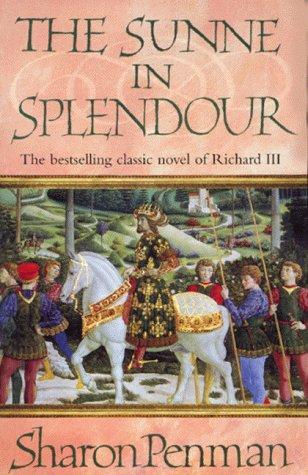
Sunne in Splendour I certainly don’t claim to be an expert on any of the historical periods or subjects that I like to read about, but there are some that I find myself reading more often than others – particularly the Tudors and the Wars of the Roses. To take the latter as an example, according to the list I have compiled here, I have read and reviewed 22 books on the Wars of the Roses since I started blogging in 2009 (19 fiction and 3 non-fiction). However, when I read other people’s reviews of the same books, I am often amazed and impressed by other readers’ depth of knowledge and their ability to spot minor historical errors that I hadn’t even noticed. This leads me to wonder whether some people (assuming they are not actually historians or students of the period) are simply better at retaining and remembering information than I am, or whether they have been focusing their reading on that one particular period to a greater extent than I have.

Sea of Poppies I can see the advantages of reading with a ‘narrow’ focus – gaining different perspectives on the same subjects, seeing how different authors portray the same characters, and adding to and expanding on existing knowledge. But while I do enjoy – and will continue to search out – books on the Wars of the Roses and my other favourite periods, I would get bored if I read about them all the time. I also love to discover new times and places about which I previously knew little or nothing. Some of my favourite new discoveries in 2015 have been the First Opium War (Amitav Ghosh’s Ibis Trilogy), the reigns of the 7th century kings of Northumbria (Edoardo Albert’s Northumbrian Thrones Trilogy), 18th century Portugal (The Devil on her Tongue by Linda Holeman) and the life of Cicero (Imperium and Lustrum by Robert Harris).

If some readers like to read ‘narrowly’, as I have described it here, I’m sure there are others who prefer to read very ‘broadly’ as far as historical fiction is concerned – and once they have read one or two novels with a particular setting, are happy with the knowledge they’ve gained and are ready to move on to something else. For me, though, neither reading narrowly nor broadly is enough: I like to do a mixture of both, which is probably why I always feel that there aren’t enough hours in the day!

What about you? Do you like to read as much as possible on one historical period or topic – or do you prefer to read about as many different ones as you can?

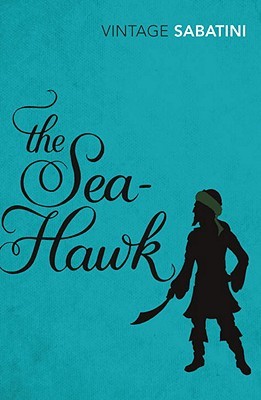
The Sea-Hawk by Rafael Sabatini

The Sea Hawk I love Rafael Sabatini! I can always count on him when I’m in the mood for a good old-fashioned adventure story (which is often) and The Sea-Hawk has it all: treachery, betrayal, revenge, duels, kidnapping and piracy on the high seas. It’s a similar story in some ways to his later pirate novel, Captain Blood, but I think I enjoyed this one slightly more.

Published in 1915, The Sea-Hawk is set in the sixteenth century during the reign of Elizabeth I. Our hero is Sir Oliver Tressilian, a gentleman and former sailor from Cornwall who has worked hard to restore his family’s reputation which had been tarnished by the behaviour of his late father. Sir Oliver is betrothed to the beautiful Rosamund Godolphin who returns his love despite the fact that her brother Peter hates the Tressilians due to a family feud. When Peter is killed in a duel the blame falls on Oliver – and while the reader knows that Oliver is innocent, Rosamund does not. Things quickly go from bad to worse for Oliver and he finds himself sold into slavery and sent to the Barbary Coast at the oars of a Spanish galley.

At home in England Rosamund continues to believe Oliver to be the murderer of her brother, while the real culprit stays quiet and benefits from Oliver’s absence by claiming his estates, as well as the woman he loves. Several months later, in Algiers, we meet a Muslim corsair known as Sakr-el-Bahr, or ‘hawk of the sea’. Sakr-el-Bahr’s pirating skills have won the admiration of Asad-ed-Din, the Basha of Algiers, who claims to love him as a son – but this has made him a target of the Basha’s Sicilian wife, the scheming Fenzileh, and her jealous son Marzak. I don’t think it’s too much of a spoiler to tell you that Sakr-el-Bahr is, of course, Sir Oliver, who is preparing to return to Cornwall to take his revenge…

Having read three of Sabatini’s other novels, I’ve come to know what to expect from him – and The Sea-Hawk definitely lived up to my expectations. I’m finding that his books all follow a similar pattern (at least, the ones I’ve read do) in which the hero suffers a betrayal or injustice of some kind, undergoes a transformation and plots his revenge/attempts to clear his name, while being completely misunderstood and misjudged by his love interest. Sir Oliver is a great character; he’s not always easy to like, but considering everything he is forced to endure, it would be difficult not to want things to work out for him in the end. Rosamund is a frustrating heroine, though, being so quick to think the worst of Oliver – but to be fair, she doesn’t share the reader’s knowledge that he is innocent.

The setting is great too. I particularly loved the chapters set in Algiers, in which Sabatini immerses us in the culture, religion and history of the Barbary coast, with some vivid descriptions of the labyrinths of narrow streets, souks and slave markets, and the courtyards, archways and orchards of the Basha’s palace. The focus on the Barbary corsairs rather than the pirates of the Caribbean gives the book a different feel and a different atmosphere from Captain Blood – and I was pleased to find that there was plenty of land-based action as well as ship-based (as I’m sure I’ve mentioned before, I’m not usually a big fan of books set at sea).

As I’ve now read the four novels which are probably Sabatini’s most popular – Scaramouche, Captain Blood, The Sea-Hawk and Bellarion – I would appreciate any recommendations as to which of his books to read next.

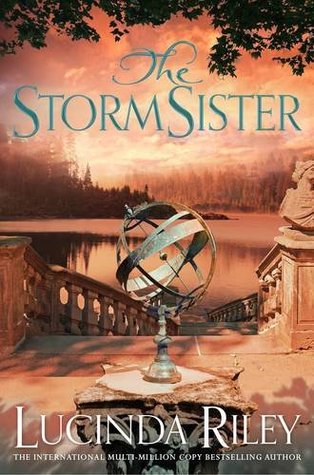
The Storm Sister by Lucinda Riley

The Storm Sister The Storm Sister is the second book in Lucinda Riley’s ambitious new series, The Seven Sisters. Based on the mythology surrounding the Pleiades (or ‘seven sisters’) star cluster, each novel in the series will tell the story of one of the adopted daughters of a reclusive millionaire known only as Pa Salt. Maia, Alycone (Ally), Asterope (Star), Celaeno (CeCe), Taygete (Tiggy) and Electra D’Aplièse have all been named after one of the stars in the constellation and have grown up together at Pa Salt’s estate, Atlantis, near Lake Geneva, Switzerland. The first book, which I read last year, is Maia’s story; The Storm Sister is Ally’s.

The beginning of this novel is very similar to the first: the sisters have been informed of Pa Salt’s death and have all hurried home to Atlantis, where they find that their adoptive father has left each of them a set of clues which will enable them to discover the truth about their own origins. At first, Ally’s clues mean nothing to her: a small brown frog and a pair of coordinates directing her to a museum in Norway. She is intrigued but has no time to investigate because, as a professional sailor, she is preparing to take part in one of the biggest yacht races of her career. When tragedy strikes, however, Ally decides to travel to Norway where she attempts to unravel the secrets of her past.

Following the trail left by Pa Salt, Ally learns of a talented young singer, Anna Landvik, who sang at the premiere of Peer Gynt more than a hundred years earlier. It seems that Anna’s story – and that of Jens Halvorsen, one of the musicians in the orchestra – could be linked to Ally’s own, but Ally is not quite sure what the connection could be. With the help of Thom Halvorsen, who tells her he is the great-great-grandson of Jens, Ally is able to fill in the gaps and in the process makes some surprising discoveries that will change the course of her own life.

I enjoyed The Storm Sister but I think I preferred the first book in the series (I suppose in a seven-book series it’s understandable that I’m going to like some more than others). The Storm Sister is a very long novel and I think I would have been happier if less time had been spent at the beginning of the book on Ally’s sailing and her romance with her fellow sailor, Theo. It seemed to take such a long time for the historical storyline to begin! I did become much more engrossed in Ally’s story in later sections of the book, though; I loved the way things came together towards the end and the links between several different generations of Halvorsens grew stronger.

The Anna and Jens storyline was fascinating and made me want to pause in my reading and listen to parts of Edvard Grieg’s Peer Gynt to help me imagine Anna singing Solveig’s Song and Jens playing the opening bars of Morning Mood on his flute. There is a musical theme running throughout the entire book and I was reminded of one of Lucinda Riley’s other novels, The Italian Girl, in that respect.

As part of a larger series, I had hoped that this book might shed more light on some of the central mysteries. Who was Pa Salt? What were the true circumstances surrounding his death and burial at sea? And what happened to the seventh sister, who should have been called Merope? However, we don’t learn much more about any of these things in this book; based on the two that I’ve read, it seems that each novel will stand alone and can be read in any order – presumably until we reach the seventh book when our questions should finally be answered!

Book three will focus on Star, or Asterope, and I’m already looking forward to it. Star is not one of the strongest characters among the sisters, but I like her and I think her story will be an interesting one.

Thanks to the publisher for providing a review copy of The Storm Sister.

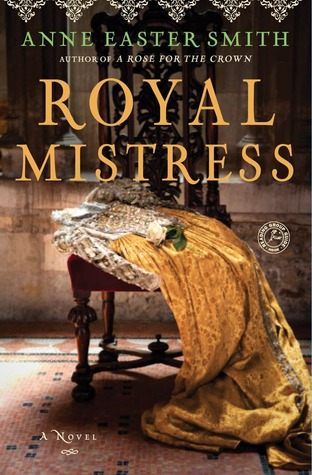
Royal Mistress by Anne Easter Smith

Royal Mistress After reading Marjorie Bowen’s Richard III novel, Dickon, a few weeks ago, my interest in the Wars of the Roses was rekindled and the next book I picked up was Royal Mistress, another novel set in the same period…but from a very different perspective. Anne Easter Smith’s heroine is Jane Shore, famous for being a mistress of Edward IV. Jane is not usually given a lot of attention, so I looked forward to seeing her character fleshed out and brought to life, and to learning more about her beyond her relationship with the king.

Born Elizabeth Lambert, Jane is the daughter of a prosperous London silk merchant (the name ‘Jane’ is thought to have been the invention of a 17th century playwright, but in this novel we are told that Elizabeth has taken the name Jane to distinguish her from an Aunt Elizabeth). Jane is married off at the age of twenty-two to William Shore, another mercer, or dealer in textiles. The marriage is not what she’d hoped it would be and Jane quickly discovers that while her husband is not above using her beauty to advertise his silks and satins, in the privacy of their own home he is cold, distant and has no interest in giving her the children she so desperately wants. To make things worse, Jane is still in love with Thomas Grey, with whom she’d had a brief romance before discovering that not only was he married, he was also the son of Elizabeth Woodville, queen of England.

As she begins to seek an annulment of her marriage, Jane catches the eye of Will Hastings, the king’s chamberlain, and through him she gets to know Edward IV. Royal Mistress follows Jane throughout the years of her relationship with the king, as she becomes an important part of Edward’s life and finds some of the warmth and affection that was missing in her marriage. After Edward’s death, however, Jane finds herself at the mercy of Richard III, who disapproves of her behaviour and wants to have her dismissed from court. Jane turns to Will Hastings for protection…but he is also out of favour with the new king and Jane’s safety cannot be guaranteed.

Royal Mistress is the first book I’ve read by Anne Easter Smith and I’ll be completely honest and say that, based purely on the title and front cover, I didn’t expect much from it. And after reading the first few chapters, I thought I was right. The story is slow to start, concentrating on a purely fictional romance between Jane and Tom Grey (it’s true that Jane was a mistress of Grey’s after Edward’s death, but there is no evidence of an earlier relationship between them) and while I did like Jane – she is portrayed as generous, warm-hearted and down-to-earth – her character didn’t seem to have a lot of depth or a lot of purpose other than being the mistress of various men.

As I got further into the novel, though, more characters are introduced, parts of the story are told from perspectives other than Jane’s, and I was swept away by the retelling of a period of history that I love. Reading the author’s note at the end of the book, I could see how much care had gone into her interpretations of the characters and their actions and motivations (even if I didn’t always agree with these interpretations). It’s interesting that Smith says she is a staunch supporter of Richard III and yet with this novel being written mainly from Jane’s point of view, it was necessary for her to portray Richard in a less than positive light. Where the disappearance of the princes in the tower is concerned, though, I was happy with the theory she puts forward as it’s one I find quite convincing.

I see Anne Easter Smith has written four more novels set during the same period, but while I did end up enjoying this one, I’m not sure yet whether I will want to read any of her others. I would like to read more about Jane Shore, though; I have a copy of Vanora Bennett’s Queen of Silks on my shelf which I hope to read soon, but if you can recommend any other books please let me know. I was interested to see that Jean Plaidy’s 1950 novel on Jane is called The Goldsmith’s Wife, as it was thought until recently that William Shore was a goldsmith rather than a mercer. Proof that history is still evolving!