Six Degrees of Separation: From Prophet Song to The Old Man’s Birthday

It’s the first Saturday of the month which means it’s time for another Six Degrees of Separation, hosted by Kate of Books are my Favourite and Best. The idea is that Kate chooses a book to use as a starting point and then we have to link it to six other books of our choice to form a chain. A book doesn’t have to be connected to all of the others on the list – only to the one next to it in the chain.

This month we’re starting with Prophet Song by Paul Lynch. It’s not a book I’ve read, but here’s what it’s about:

“On a dark, wet evening in Dublin, scientist and mother-of-four Eilish Stack answers her front door to find the GNSB on her step. Two officers from Ireland’s newly formed secret police are here to interrogate her husband, Larry, a trade unionist.

Ireland is falling apart. The country is in the grip of a government turning towards tyranny and when her husband disappears, Eilish finds herself caught within the nightmare logic of a society that is quickly unravelling. Soon, she must decide just how far she is willing to go to keep her family safe.

Exhilarating, terrifying and propulsive, Paul Lynch’s Booker Prize-winning novel is a devastating vision of a country falling apart and a moving portrait of the resilience of the human spirit when faced with the darkest of times.”

~

It can be difficult to know where to begin when you haven’t read the starter book. I’m going to focus on two words from the first sentence of the blurb – Dublin and scientist. The Coroner’s Daughter by Andrew Hughes (1) is also set in Dublin – in this case in the 19th century – and features a young woman, Abigail Lawless, who, as the title suggests, is the daughter of a coroner. The novel follows Abigail’s investigations into the deaths of a maid and her newborn baby, as well as her determination to pursue her passion for astronomy and forensic science at a time when they were not considered suitable interests for a woman.

Next, a simple link using the word ‘daughter’. Faro’s Daughter by Georgette Heyer (2) was published in 1941 and is one of her Georgian novels, set slightly earlier than her more famous Regencies. The hero, Max Ravenscar is enlisted by his aunt to prevent the marriage of her son, Adrian, to Deb Grantham, the hostess of a gaming house. Although Heyer is always entertaining, this book isn’t one of my favourites as I never really warmed to the characters.

The word ‘faro’ makes me think of ‘pharaoh’. In fact, it has been suggested that the name of the card game faro could be derived from the picture of a pharaoh on an early set of cards. When Women Ruled the World by Kara Cooney (3) is a biography of six female rulers of Ancient Egypt – Merneith, Neferusobek, Hatshepsut, Nefertiti, Tawosret and Cleopatra. I found it interesting because, apart from Cleopatra, I knew nothing at all about these female pharaohs, but I also felt that I didn’t learn as much about them as I would have liked because Cooney spent too much time drawing parallels with modern day world leaders, which seemed to be the real focus of the book.

A much more enjoyable non-fiction book about female rulers is The Dark Queens by Shelley Puhak (4). The book explores the lives of Brunhild and Fredegund, who belonged to the Merovingian dynasty in the 6th century and ruled over large areas of what are now known as France and Germany. Not knowing anything about either of these queens, I found this book completely fascinating and also very entertaining, although it might not suit readers who want something more academic.

I’m linking to another book with the word ‘dark’ in the title now: Full Dark House (5), the first book in Christopher Fowler’s series about two octogenarian detectives, Arthur Bryant and John May, who work for the Peculiar Crimes Unit, a branch of the London Metropolitan Police created to deal with unusual cases. This book includes flashbacks to Bryant and May’s first ever case involving some murders in a London theatre during the Blitz, while another mystery begins to play out in the modern day. I really enjoyed the first four books in this series and still need to continue with the others!

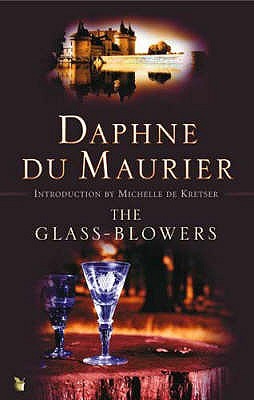
Another book with an elderly protagonist is The Old Man’s Birthday by Richmal Crompton (6). Matthew Royston is preparing to celebrate his ninety-fifth birthday with a family party to which he has invited all of his children, grandchildren and great-grandchildren. The novel is set during the course of that one day, as we meet each member of the family in the hours leading up to the party. I really enjoyed it and although I can’t find a way to link it back to the starting book this month, I think it’s a good place to end my chain!

~

And that’s my chain for March. My links included scientists in Dublin, the word ‘daughter’, faro/pharaoh, women rulers, the word ‘dark’ and elderly characters.

In April we’ll be starting with Salman Rushdie’s memoir, Knife.

My Commonplace Book: February 2025

A selection of quotes and pictures to represent February’s reading:

commonplace book
noun
a book into which notable extracts from other works are copied for personal use.

~

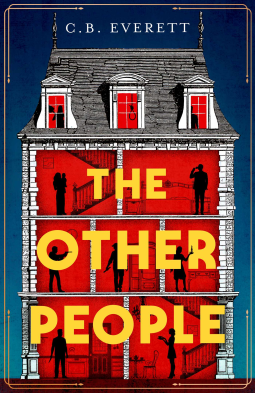
Maybe we just have to react the way we want to. Maybe what we feel and how we feel is the right way to feel about losing someone, irrespective of whether it’s sadness or whatever. It’s just us and how we respond to our own feelings. It’s how we are and we can’t help how we are.

The Other People by C.B. Everett (2025)

~

Ah, blogs. The concept now almost seemed quaint. Everyone had a different take on theirs. The blogs came in all sorts of styles: some simple diaries, some hobby sites, others outlets for political rants…

Strange Pictures by Uketsu tr. Jim Rion (2022)

~

Knights obey, and if they don’t, they’re not real knights, and they don’t have honour, and the only thing in the world that’s ever really yours is your honour.

The Hymn to Dionysus by Natasha Pulley (2025)

~

Bamburgh Castle

Hannah was taken aback by her stepmother’s vehemence. ‘All of history is interpretation to one degree or another,’ she said as mildly as she could, ‘and often there is truth at the heart of these myths.’

The Secrets of the Rose by Nicola Cornick (2025)

~

Truth is merely an abstract concept after all, she muses. Everyone has a different version of it.

The Eights by Joanna Miller (2025)

~

‘If there is one thing which stands out more than another in this world – and of course,’ said Derek, ‘one thing always does stand out more than another – it is that there are some things which you cannot explain to a policeman.’

Four Days’ Wonder by A.A. Milne (1933)

~

Nothing has done more damage to modern detective fiction than the invention of the internet. Forget Sherlock Holmes and his ratiocination or Hercule Poirot’s little grey cells. We have all the information in the world at our fingertips and there’s no longer any need for deduction.

Marble Hall Murders by Anthony Horowitz (2025)

~

Hand-carved carousel horse by Allan Herschell Company

Perhaps life is like that, Maisie thinks, perhaps life is like a carousel – it has ups and downs but it eventually comes full circle.

The Midnight Carousel by Fiza Saeed McLynn (2025)

~

‘Aunt Jane,’ said Raymond, looking at her curiously, ‘how do you do it? You have lived such a peaceful life and yet nothing seems to surprise you.’

‘I always find one thing very like another in this world,’ said Miss Marple.

The Thirteen Problems by Agatha Christie (1932)

~

There is no perfect ending. There are an infinite number of endings.

The Queen and the Countess by Anne O’Brien (2025)

~

From the doomed dying world man had ruined, I seemed to catch sight of this other one, new, infinitely alive, and of boundless potential.

Ice by Anna Kavan (1967)

~

Corfu

Corfu light was ineffable, full of shivery tricks that made you see what could not be there, made you unable to see what was there, with an enchantment that meant you heard things too.

The Greek House by Dinah Jefferies (2025)

~

‘The truth is like a water creature,’ he continued. ‘Too large for any single man to catch. He can take hold of one tentacle, or a silver tail, or a fin, but he’ll never catch the whole creature, not on his own.’

The Hounding by Xenobe Purvis (2025)

~

His answer was to create the bicycling detective. This was a two-fold publicity tactic: he had something other agencies did not – not just a lady detective, but a mobile one; and he was creating the impression of a technologically advanced agency using relatively new forms of transport rather than going out on foot. It was novel, but subject to hyperbole, as Slater referred to an ‘army’ of cycling lady detectives in his adverts, which is unlikely.

Britain’s Greatest Private Detective by Nell Darby (2025)

~

Favourite books read in February:

The Midnight Carousel, Marble Hall Murders, Strange Pictures and Four Days’ Wonder

Places visited in my February reading:

England, Japan, Greece, France, USA, Canary Islands

Authors read for the first time in February:

C.B. Everett, Uketsu, Fiza Saeed McLynn, Anna Kavan, Nell Darby, Xenobe Purvis

~

Reading notes: February seems to have been a very quick month, but it has also been a productive one for me in terms of reading. I managed to contribute three reviews to #ReadIndies month, joined in with the Read Christie challenge and read most of my NetGalley books for March and April. I haven’t posted many reviews, but do have most of them written and scheduled.

In March, I’m hoping to read at least one book each for Reading Ireland Month and Reading Wales Month. I would also like to make some progress with the Walter Scott Prize longlist which was announced a few weeks ago (some of the books on the list are by Welsh or Irish authors, which is perfect).

What did you read in February? Do you have any plans for March?

The Impossible Thing by Belinda Bauer

I loved this! I remember enjoying Belinda Bauer’s first two books, Blacklands and Darkside, around the time they were published in 2009 and 2011 respectively, but I seemed to lose track of her work after that. When this one caught my eye, I decided to give it a try and I’m very pleased that I did. The plot is completely different from any other crime novel I’ve read.

The Impossible Thing is a novel set in two different periods almost one hundred years apart and linked by the same crime – the theft and illegal trading of wild birds’ eggs. In 1926, gangs of ‘egg-climmers’ gather on the Yorkshire coast and lower each other from ropes over the cliffs to steal eggs from the seabirds nesting there. Traders and collectors are willing to hand over large sums of money for the most rare and beautiful eggs, so when little Celie Sheppard from Metland Farm makes the dangerous descent through a crack in a ledge of rock and obtains a perfect red guillemot egg, it creates a sensation.

In the present day, in rural Wales, Patrick Fort decides to visit his friend, Nick, and arrives just in time to discover that both Nick and his mother have been tied up and robbed. The only thing stolen is an old wooden box containing a red egg. Nick had found the egg in the attic and put it on eBay, only for it to be taken down almost immediately for breaching eBay’s policy on selling illegal items. It seems that, even in the short space of time it was advertised, someone saw it, tracked it down to Nick’s address and decided they must have it no matter what. Although Nick had no idea that owning birds’ eggs was illegal, he is afraid to admit to the police that he had one, so he and Patrick set out to find the thief themselves.

This is definitely the first book I’ve read about egg trafficking! It’s an unusual subject for a crime novel, but Bauer builds a story around it that I found completely fascinating and unexpectedly exciting. I assumed that everything in the book was fictional, so I was interested to learn that the red Metland Egg really existed – or to be more accurate, Metland Eggs, as one was collected every year for over twenty years from the same location on the Bempton Cliffs near Bridlington. Something I learned from the novel is that female guillemots lay only one egg a year and if it is stolen, they will return to the same spot the following year to lay an almost identical egg. It made me feel sad to think of the bird that laid the red eggs never actually getting to see one hatch and I’m so glad that the Protection of Birds Act 1954 made egg theft illegal in the UK – even though it hasn’t stopped it completely, it’s a big step in the right direction.

Patrick Fort, the main character in the present day sections of the novel, was apparently introduced in a previous Belinda Bauer novel, Rubbernecker, which I haven’t read. I can see why she decided to bring him back for a second book, because he’s a very engaging, intelligent and likeable character. Patrick has a form of autism which affects his social interactions, but he has a good friend in Nick, who understands why he sometimes behaves the way he does. I loved seeing them work together to hunt down the egg thieves and I must go back and read about their earlier adventures in Rubbernecker!

The historical sections are also very well done and the scenes where young Celie Sheppard is dangled over the cliff in search of the eggs are very dramatic; I can’t imagine how dangerous and terrifying that would be, yet Celie did it year after year from such an early age. At least she was rewarded financially for her efforts, at a time of poverty when her family desperately needed the money. It was interesting to see how big and well organised the egg trafficking industry was in those days, with collectors and traders prepared to go to great lengths – and great expense – to obtain the rarest and most unusual eggs.

I picked a great book for my return to Belinda Bauer after such a long time and am looking forward to reading the others that I’ve missed.

Thanks to Bantam for providing a copy of this book for review via NetGalley.

Top Ten Tuesday: Books set in the Ancient World

This week’s topic for Top Ten Tuesday (hosted by That Artsy Reader Girl) is “Books Set in Another Time”.

This is perfect for me as historical fiction is one of my favourite genres. There are many different ways I could approach this topic, but I’ve decided to list ten books I’ve read that are set in the Ancient World (most of my historical reading is set in much more recent periods). To make the list more fun, the final two books aren’t just set in the ancient past, they were also written then.

~

1. Death Comes as the End by Agatha Christie – Christie’s only historical novel is set in Ancient Egypt and deals with a series of murders in the household of the priest Imhotep. The book is written mainly from the perspective of Imhotep’s daughter, Renisenb, who has just recently returned to her father’s home after being widowed and finds that many tensions and rivalries have formed between the family members during her absence. It’s an unusual Christie novel, but one I really enjoyed!

2. I, Claudius by Robert Graves – This is the first part of Graves’ fictional autobiography of the Roman emperor, Claudius, who ruled from AD 41 to 54. This book deals with Claudius’ childhood and his experiences during the reigns of his three predecessors, Augustus, Tiberius and Caligula. I found it a bit intimidating at first due to not being very familiar with the lives of the emperors, but I did enjoy the book and am still planning to continue with the second one.

3. The King Must Die by Mary Renault – This is the first of Renault’s two novels about the life of Theseus, the Greek hero most famous for the slaying of the Minotaur. One of the things I loved about this book and its sequel, The Bull from the Sea, is the way Renault gave logical, rational explanations for the various aspects of the myth instead of magical ones, which made the two books feel more like historical fiction rather than mythology retellings.

4. Babylonia by Costanza Casati – This book is set in the 9th Century BC at the time of the Assyrian Empire and tells the story of the legendary Semiramis, who is thought to be based on the historical Assyrian queen, Sammuramat. I had never read a book set in this period before, so I found it fascinating. It’s also beautifully written and I would happily recommend it to anyone interested in reading about periods of Ancient history other than Greek, Roman or Egyptian!

5. The Mark of the Horse Lord by Rosemary Sutcliff – This book is set during the time of the Roman Empire, in what we now call Scotland and the north of England. The story follows the gladiator Phaedrus who becomes part of a plot to impersonate King Midir of the Dalriadain. Although it’s marketed as a book for younger readers, I found it had a lot to offer adults too.

6. House of Names by Colm Tóibín – Set in Ancient Greece, this is a retelling of the tragic story of the House of Atreus, described in Aeschylus’ trilogy, the Oresteia. Written from the perspectives of first Clytemnestra, then her children Orestes and Electra, I wasn’t very familiar with this story at the time when I read Tóibín’s novel, but having read several other retellings since then I think I might get more out of this one if I read it again.

7. The Cicero trilogy by Robert Harris – I’m cheating slightly here because this is three books, not just one: Imperium, Lustrum and Dictator, which together tell the story of the Roman statesman and lawyer Marcus Tullius Cicero, as seen through the eyes of his slave and secretary, Tiro. I loved all three of these novels and had never imagined reading about Roman politics could be so exciting!

8. Priestess of Ishana by Judith Starkston – I’m including this one because it’s the only book I’ve read set in the Bronze Age. It’s historical fantasy but set in a world based on the real Hittite Empire and the main character, Tesha, is inspired by the historical Puduhepa, a priestess of Ishtar. There are three other books in the series, but I’ve only read the first one.

9. The Odyssey by Homer – The first eight books on my list are historical fiction, but the final two are works that were both set and written in the ancient past. There are many different versions of Homer’s Odyssey, and I read a translation by T.E. Lawrence from 1932. It was very readable and captured the excitement of Odysseus’s adventures, but I would be interested to see how a more modern translation compares.

10. The Epic of Gilgamesh – This epic poem was written on a set of clay tablets from ancient Mesopotamia which were discovered in the 19th century and are believed to date from around 2000 BC. It tells the story of Gilgamesh, a powerful Sumerian king, and his relationship with his friend Enkidu. I read a translation by Andrew George and found it surprisingly easy to read and also very enjoyable.

~

There are several more books I could have included on this list, but I had to restrict myself to ten and wanted to represent as many different periods and locations as I could.

Have you read any of these? Which other books set in the Ancient world can you think of?

Island Song by Pepsi Demacque-Crockett

Pepsi Demacque-Crockett has had a successful career in music as a backing singer for Wham! and then as a member of the duo Pepsi and Shirlie. Although she was born in London, her parents came to England from St Lucia in the Caribbean, and this forms the inspiration for Island Song, her debut novel.

Island Song is set in the 1950s. Agnes Deterville and her sister, Ella, who live in the village of Canaries on the island of St Lucia, are two very different people. As the quiet, cautious older sister, Ella can’t imagine leaving her island home and knows that she’ll never want to live anywhere else. Agnes is bolder and more adventurous, ready to follow her dreams and seize new opportunities. Working as a housekeeper for an English family, the Chesters, Agnes is captivated by Mrs Chester’s descriptions of her home country and longs to see it for herself. Hearing that people from the Caribbean have been invited to help rebuild post-war Britain, she decides to use her savings to travel to London.

Agnes has two young children from a failed relationship, whom she leaves behind with Ella, and her intention is to return to St Lucia as soon as she’s made enough money to improve the lives of the whole family. However, everything changes when, soon after arriving in England, she falls in love with another new immigrant, Raphael Toussaint. Agnes and Raphael come from the same village and she knows him by his bad reputation, but meeting him again in London he seems to be a different person and assures her that he has changed. Agnes wants to believe him, but how can she know he’s telling the truth?

Island Song is a fascinating exploration of the experiences of immigrants and the way in which people often build up an image of something in their mind that isn’t matched by reality. Having listened to Mrs Chester’s idyllic tales of her life in Dorset, Agnes expects something similar when she arrives in London and is shocked to find that this isn’t the case. Rather than sipping tea in elegant drawing rooms, she’s working in a kitchen making tea for other people, while being bullied by her boss. Similarly, Raphael comes to London hoping to make a fortune, but instead spends several months unemployed before eventually finding a lowly job painting walls for a construction company. They – like the rest of the Caribbean community – face racism, discrimination and even violence, but also make new friends amongst both immigrants and white British people who give them the confidence that not everyone in their new country wants them to leave.

Agnes is a strong character and I did like her, but I found Raphael more interesting because he goes through more growth and development throughout the novel. He has a drinking problem and is easily influenced by his friends, but he also has a kind heart and does genuinely seem to want to change and be a good partner to Agnes. I really wanted them to find happiness, both in their relationship and in their working lives. Ella is another character who grows as a person as the book progresses. Although most of the focus is on the characters who have left the island, we do catch up with Ella now and then and see how she’s gradually able to move on from some bad experiences in her past and gain the confidence to take control of her own life.

Demacque-Crockett writes beautifully about St Lucia and her love for her own heritage shines through in the London sections of the novel as well. The English spoken by her St Lucian characters is peppered with Kwéyòl, a French-based Creole language, and we see the immigrants trying to adapt to British culture while at the same time trying to retain parts of their own culture, such as their favourite foods and music. I really enjoyed this book and I hope Demacque-Crockett will write another one!

Thanks to HarperCollins for providing a copy of this book for review via NetGalley.

Woman in Blue by Douglas Bruton – #ReadIndies

There’s clearly something about the paintings of Johannes Vermeer that inspires novelists; first, Tracy Chevalier’s Girl With a Pearl Earring and now Douglas Bruton’s excellent Woman in Blue, which is published today. This is the second of Bruton’s books I’ve read, the first being 2021’s Blue Postcards and apart from the shared word in the title (Bruton certainly seems to like the colour blue!) and the shared theme of art and artists, I found this one very different in style and structure.

The novel begins in the present day with our unnamed narrator, referred to only as ‘a man in Amsterdam’, visiting the Rijksmuseum to look at a painting. Just one painting, which he has become so obsessed with that he barely notices any of the others. The painting is Vermeer’s Woman in Blue Reading a Letter and the narrator returns to the museum day after day to study the colours and the composition, but most of all just to spend time in the woman in blue’s company and to imagine the human being who inspired the picture. He’s transfixed by this particular painting for its own sake, but also because the woman reminds him in subtle ways of both his wife and another woman he once loved.

In 17th century Delft, we meet the woman in blue herself – or rather, the young woman who sits for Vermeer as he paints her portrait. Her chapters alternate with the present day ones, slowly building up a history of the woman in blue, her life in Delft and her relationship with the artist. In reality, the true identity of the sitter has never been confirmed (Vermeer’s wife, Catharina Bolnes, has been suggested as a likely candidate, but it seems there’s no actual evidence to prove it), so Bruton has the freedom to create his own fictional story for the woman, whom he names Angelieke.

Although the book is set in two different time periods and narrated by two different characters, the lines dividing the two are blurred. Angelieke is a real woman in 1663, but in the modern day sections, she’s aware that she is a painting in a museum and that the male narrator comes to see her every day. She looks forward to his visits and feels a connection with him, just as he feels one with her. This is not the first novel to give a painting a mind of its own (I, Mona Lisa by Natasha Solomons does the same and I’m sure there must be others) but I really liked the way Bruton handles that element of the story, giving it a dreamlike feel and merging the two narratives so that they don’t feel too separate or disconnected.

With it being a real painting rather than a fictional one, it’s easy to google it so you can refer to the picture itself as you read. The narrator’s observations, made during his repeated viewings, helped me to see things in the painting that I probably wouldn’t have noticed for myself. With each chapter, he finds new details to study and focus on – the map on the wall, the letter in the woman’s hand, the blue bed jacket she’s wearing and the question of whether or not she could be pregnant. At times, Bruton returns to a theme he also touched on in Blue Postcards: the idea that a painting offers something different to each individual who views it and that the viewers themselves can almost ‘become’ part of the painting:

What I like about the painting – one of the many things I like – is how cleverly the artist has included me in it and made me complicit in the looking. It is an intimate and private moment and Vermeer intrudes on it without at all breaking it, and we – Vermeer and me – stand silent, breath held, just looking at this young woman turned in on herself.

For a short book – a novella at 144 pages – there’s so much packed into it that I’ve probably only scratched the surface in this review. I would recommend Woman in Blue to anyone who loves art, but even if you don’t, there’s still a lot here to enjoy.

Thanks to Fairlight Books for providing a copy of this book for review via NetGalley.

As this is an independent publisher, I am counting Woman in Blue towards this year’s #ReadIndies event hosted by Kaggsy’s Bookish Ramblings and Lizzy’s Literary Life. You can find out more about Fairlight Books by visiting their website here.

The Walter Scott Prize Longlist 2025

The longlist for the 2025 Walter Scott Prize for Historical Fiction has been announced today! Thanks to this prize, I have discovered lots of great books and authors and always look out for the longlists and shortlists; in fact, trying to read all of the shortlisted titles since the prize began in 2010 is a personal project of mine (you can see my progress here).

There are twelve books on this year’s longlist and here they are:

The Heart in Winter by Kevin Barry (Canongate)

The Catchers by Xan Brooks (Salt)

Mother Naked by Glen James Brown (Peninsula Press)

Clear by Carys Davies (Granta)

The Mare by Angharad Hampshire (Northodox Press)

The Book of Days by Francesca Kay (Swift Press)

The First Friend by Malcolm Knox (Allen & Unwin Aus)

Glorious Exploits by Ferdia Lennon (Fig Tree)

A Sign of Her Own by Sarah Marsh (Tinder Press)

The Land in Winter by Andrew Miller (Sceptre)

Munichs by David Peace (Faber)

The Safekeep by Yael van der Wouden (Viking)

~

I haven’t read a single one of these, which I think is a sign of how far away this prize has moved from the sort of books I’m naturally drawn to (which is fine – I’m always happy to step out of my comfort zone and try different things) and also a focus on books from small independent publishers that may not have had a lot of attention. There are at least some that I’m aware of and that I know have been getting good reviews – The Heart in Winter, Clear, Glorious Exploits, The Land in Winter and The Safekeep – but I haven’t even heard of some of the others. I’ll have to investigate!

The shortlist will be announced in April and the winner will be chosen in June at the Borders Book Festival in Melrose. Obviously I won’t have time to read all of these before the shortlist is revealed, so if you can recommend anything in particular please let me know.