Forgotten Histories Reading Challenge

I have been trying not to sign up for many reading challenges this year, but I really like the idea of this one – and it overlaps with the Historical Fiction Reading Challenge that I’m already taking part in.

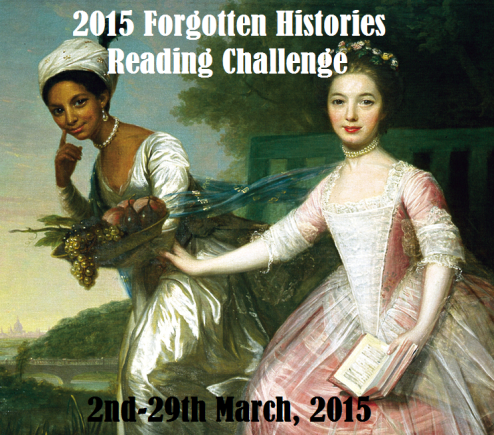
Forgotten Histories Challenge

The Forgotten Histories Reading Challenge is hosted by Jess at Curiouser and Curiouser in partnership with Amy at Passages to the Past (the host of the Historical Fiction Challenge) and any books read can count towards both challenges.

The rules:

The challenge will run from the 2nd-29th of March and each week will feature a different theme:

Week 1 – Read an alternate history book (e.g. Dominion by C. J. Sansom)

Week 2 – Read a book with a non-white protagonist (e.g. The Queen’s Secret by Victoria Lamb)

Week 3 – Read a book with an LGBT protagonist (e.g. Tipping the Velvet by Sarah Waters)

Week 4 – Read a book that is NOT set in Europe (including Britain) or North America (e.g. Butterfly Swords by Jeannie Lin)

As you can see, the aim of Forgotten Histories is to encourage people to read more diversely within the historical fiction genre, which I think is a great idea. I don’t know if I’ll be able to read books from all four of these categories in March, but I’ll read as many as I can. I’m already looking at my shelves to see if I have something to fit each category – any recommendations are welcome!

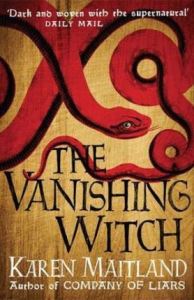
The Vanishing Witch by Karen Maitland

The Vanishing Witch Karen Maitland is an author I’ve been meaning to try for a while. With two of her novels on my tbr pile to choose from, I decided to start with this one, The Vanishing Witch, as it had been waiting the longest.

The story is set in Lincoln and covers the period between September 1380 and September 1381. As you may know, 1381 was the year of the Peasants’ Revolt when large sections of the English population rebelled in protest against excessive taxes. I actually read a non-fiction book about the Revolt just before Christmas – England, Arise by Juliet Barker – and this provided me with a lot of background knowledge. However, even if you know nothing about this period of history, you should still find The Vanishing Witch easy enough to follow. The Revolt does play an important part in the plot, but this is first and foremost the story of fictional Lincoln wool merchant, Robert of Bassingham, and his family.

When an attractive widow called Catlin asks Robert for advice regarding an investment, the merchant is only too pleased to help. Despite his reassurances to his wife, Edith, that his relationship with Catlin is purely business-related, he soon finds himself falling in love and it’s not long before the widow, her young daughter Leonia and adult son Edward have become part of Robert’s household. With Edith seriously ill, Robert’s two sons, Jan and Adam, become suspicious of Catlin’s motives – a suspicion shared by the family servants.

A few miles away, in the village of Greetwell, another man is also facing difficult times. His name is Gunter and he is a boatman, responsible for collecting and delivering cargoes of cloth. Work has been sparse lately and when the King’s commissioners arrive in the village, Gunter knows he will struggle to pay his taxes…

I found The Vanishing Witch a very entertaining and enjoyable novel and am quite happy with my first introduction to Karen Maitland’s work. There were plenty of things to like – the time period (not a very popular choice for historical fiction, which made it all the more interesting), the dark atmosphere, the touches of the supernatural, and the plot, which twists and turns as secrets are uncovered and revelations are made. I particularly loved the way Maitland altered my perceptions of the characters as the focus moved from one to another; she made me wary of some of them from the beginning, but I was never quite sure whether or not that wariness was justified!

By telling the stories of both Robert of Bassingham – a wealthy merchant – and Gunter, one of his workers, Maitland is able to explore what life was like in the 14th century for people at different levels of society. However, while the mystery revolving around Robert and Catlin was compelling, the storyline surrounding Gunter’s family and the Peasants’ Revolt felt less developed. This subplot had the potential to be as interesting as the other one and I was disappointed that it wasn’t explored in as much depth.

I’ve mentioned that the author has added some supernatural touches to the novel: each chapter begins with a superstition, a piece of folklore or a description of a spell. These don’t have a lot of direct significance to the story but they are fun to read and are part of the overall atmosphere of the book. There are also some sections of the novel narrated by a ghost, whose identity and role in the story we don’t learn until the end of the book. I didn’t guess who the ghost was and I was surprised when I discovered the truth!

So will I be reading more Karen Maitland? Yes, of course! I’ll start with her new one, The Raven’s Head, then go back to explore her earlier novels.
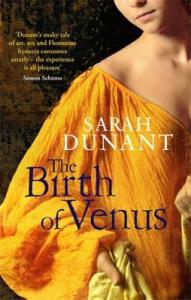
The Birth of Venus by Sarah Dunant

The Birth of Venus I love books set in Renaissance Italy but although Sarah Dunant has written three or four of them, this is the first one I’ve read. I had started to read her novel on the Borgias, Blood and Beauty, a year or two ago and struggled to get into it, so that put me off trying any of her other books for a while. Something keeps drawing me to Dunant’s books on the library shelf, though, so a few weeks ago I decided it was time to give her another try.

The Birth of Venus is not, as I’d originally expected, a novel based on the story behind the Botticelli painting of the same name. What the title does actually refer to could be debated, but it seems to me that it alludes to the ‘birth’ or awakening of the novel’s narrator as she falls in love for the first time. The name of the narrator is Alessandra Cecchi and she is the daughter of a prosperous Florentine cloth merchant.

At the beginning of the novel, Alessandra is not quite fifteen years old. Despite her quick brain and artistic talent, she has had to resign herself to the fact that, due to the conventions of 15th century society, she will have no option but to marry the man her parents have chosen for her. When her father returns from a business trip, bringing with him a young artist whom he has commissioned to paint the walls of the family chapel, Alessandra is fascinated. She is curious to see the painter’s work and to learn more about his methods, but she is even more intrigued by the painter himself. Who is this young man, this ‘orphan brought up in a monastery on the edge of the northern sea’?

As the story of Alessandra and the painter unfolds, so does the story of Florence. Beginning with the death of Lorenzo de’ Medici, the novel takes us through the subsequent disastrous reign of Piero de’ Medici, the rise to power of the Dominican friar Savonarola, and the growing threat of a French invasion. This is always a fascinating time and place to read about and I think Dunant does a particularly good job of bringing the setting to life, not just in describing the sights and sounds, but also in showing us how the mood of Florence changes as the city is gripped by Savonarola’s religious extremism.

For a thick book, this was quite a quick read, the sort where you become so swept along with the story you don’t realise how fast the pages are turning. My only problem was that I found Dunant’s decision to refer to the painter as ‘the painter’ throughout the entire book slightly annoying. I’m not quite sure why there really needed to be a mystery surrounding his identity. I felt that the lack of a name created a distance between the character and the reader – I expect this was probably intentional (maybe it wasn’t supposed to matter who he was; all that mattered was what he represented to Alessandra), but if so, it didn’t work for me.

While I can’t really say that I loved this book, I did enjoy it and am now happy to try Sarah Dunant’s other Renaissance Italy novels, In the Company of the Courtesan and Sacred Hearts (maybe I should even give Blood and Beauty another chance). When I finished The Birth of Venus I didn’t want to leave Medici Florence behind, so the next book I picked up was Romola by George Eliot, which is set in the same period and which I’m thoroughly enjoying.

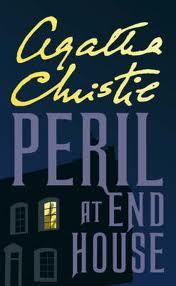
Peril at End House by Agatha Christie

Peril at End House I love Agatha Christie’s books but although there are still a lot that I haven’t read, I find that it works better for me to space them out and read other things in between. It’s been almost a year since the last Christie novel I read, so last week I decided it was time to read another one. This one, Peril at End House, is an early Poirot mystery, published in 1932.

At the beginning of the novel, Hercule Poirot and his friend, Captain Hastings, are taking a holiday in the seaside resort of St Loo. If they were hoping for a peaceful, relaxing break, though, they are about to be disappointed. Taking a walk outside their hotel, they meet a young woman called Nick who lives nearby at End House. As they stand chatting to Nick, she swats away what she thinks is a wasp – and then finds a hole in the brim of her hat and a bullet lying on the ground. Poirot is concerned, especially when she tells him of three other occasions when she has narrowly escaped death in the last few days, but Nick herself appears less worried – she can’t imagine why anybody would want her dead and insists that the incidents must just be accidents.

Poirot resolves to do everything he can to keep Nick safe from harm while he investigates, but it seems that his efforts are in vain as the murder attempts continue. Meanwhile, he uncovers a number of suspects among Nick’s friends and family ranging from her closest living relative, Charles Vyse, and her best friend, Frederica Rice, to her housekeeper Ellen and her Australian lodgers, Mr and Mrs Croft. And as more information comes to light, Poirot discovers that there may in fact be a very good reason for the attempts on Nick’s life.

As I approached the halfway point in this book, I was thinking that this was a very average Poirot novel – not a particularly notable entry in the series at all. I shouldn’t have been so quick to judge because there were some great twists and turns towards the end and the mystery ended up being a much more complex and clever one than I had thought at first.

When I wrote about the last Poirot novel I read – Cat Among the Pigeons – I remarked that that particular book was unusual because Poirot didn’t appear until near the end. This one is the opposite, as Poirot is there in the middle of the action right from the first page and we are plunged straight into the mystery, with little time spent on setting the scene or providing background. Like several of the other early Poirot novels, Captain Hastings narrates the story, which I like because although we don’t actually get inside Poirot’s head, he does at least explain some of his thought processes to Hastings as he goes along.

As so often happens when I read Agatha Christie, I did actually guess the correct solution (or part of it, anyway) very early in the book – and then dismissed the idea as the plot developed and red herrings were dropped into the story, leading me off the scent. The reader is given all the information needed to be able to identify the murderer and their motives, but it’s easy to overlook one or two of the most important clues. Even Poirot himself missed those clues too, which made me feel better about it!

This is not a favourite Poirot novel, but I did enjoy it. Have you read this one? Did you manage to solve the mystery or did you allow Christie to lead you in the wrong direction?

The Silent Boy by Andrew Taylor

The Silent Boy “Say nothing. Not a word to anyone. Whatever you see. Whatever you hear. Do you understand? Say nothing. Ever.” These words are spoken to ten-year-old Charles on the night of 10th August 1792. This is the night the Tuileries Palace is stormed and the French monarchy falls – one of the defining moments of the French Revolution. It seems that poor Charles has witnessed the brutal murder of his mother and has fled the scene in panic vowing to do as he has been told and never say a word to anyone ever again.

The boy’s silence causes a lot of frustration for a lot of people, including Edward Savill. Savill is the estranged husband of Charles’ mother, Augusta, and is legally, though not biologically, his father. Augusta’s uncle, the wealthy and powerful Mr Rampton, is interested in making Charles his heir and has ordered Savill to bring the boy to him. This proves to be more difficult than expected, however, as Charles has already been claimed by Augusta’s lover, the Count de Quillon, who has come to England to escape the Revolution. The Count insists that Charles is his son…and he has no intention of letting him go.

The Silent Boy follows Edward Savill on his mission to rescue Charles from the clutches of others who have reasons of their own for wanting the boy. Along the way we learn more about Augusta and what happened to her on that fateful night in Paris. There are also some sections of the novel told from the perspective of Charles himself, describing his traumatic experiences in France and his adventures after he is brought to England.

I found Charles’ story both fascinating and frustrating. He’s clearly an intelligent and resourceful boy, but one who has been so badly frightened by what he has seen and heard that he is no longer able to trust anyone at all. His refusal to speak gives him power over the adults who are desperate to hear what he has to say, but it also makes him vulnerable and it’s sad to watch a child cutting himself off so completely from everyone around him. But Charles is not the only one in danger – Edward Savill is also in a difficult position, being used as a pawn by his in-law and patron, Mr Rampton, whose motives are always in doubt.

The Silent Boy is a sequel to The Scent of Death, which was the first of Andrew Taylor’s historical mysteries/thrillers to feature Edward Savill. I enjoyed The Scent of Death but had somehow missed the fact that a sequel had been published last year, so it was a nice surprise for me to see this one in the library. It’s not necessary to have read the first book before this one – the two are very different stories and set during two different Revolutions (American and French) – but The Scent of Death does provide some useful background information on the characters, so I’d recommend reading them in order if you possibly can.

I enjoyed this book but not as much as the other Andrew Taylor novels I’ve read. After the dramatic opening chapter in Paris, I thought the story became very slow and didn’t really pick up again until halfway through. The end was worth waiting for, though, as the tension increases and some surprising revelations are made. I do like Edward Savill as a character and it was nice to meet his daughter, Lizzie, whom he had missed so much while he was away in America in the previous novel. I never quite managed to connect with Charles, but I can appreciate that we probably weren’t really supposed to – the whole point was that Charles had built up a protective wall of silence around himself and wouldn’t let anybody break through it.

Now I’m wondering if there will be a third Edward Savill novel. I do prefer Andrew Taylor’s standalones, such as The American Boy and The Anatomy of Ghosts, but I would be happy to read another book in this series if and when he writes one.

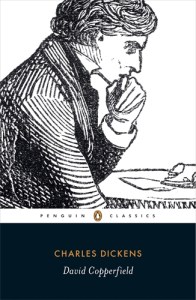
David Copperfield by Charles Dickens

David Copperfield Since I started blogging I have been trying to read at least one Dickens novel a year – I read A Christmas Carol in 2009, Bleak House in 2010, Our Mutual Friend and The Mystery of Edwin Drood in 2011, Great Expectations in 2012 and A Tale of Two Cities in 2013. Unfortunately I didn’t manage to read any Dickens at all in 2014 so decided to make him a priority this year. With plenty of his books still to choose from, I picked up David Copperfield on the first day of January. It took me most of the month to read it – it’s a long book – and it has taken me almost as long to decide what to say about it!

How do you begin to write about a book like this? The plot is not the sort that you can sum up adequately in a paragraph or two. In fact, there really isn’t a central plot at all, but rather, lots of subplots all circling around the narrator, David Copperfield – or Trotwood, Trot, Daisy or Doady as he is called at various points in the novel…usually anything but David!

At the time of David’s birth, his father has already been dead for six months. Growing up in the small Suffolk town of Blunderstone, his early years are relatively peaceful and uneventful, until his mother marries again and David is sent away to boarding school. As he progresses through school and on into adulthood, a host of fascinating and eccentric characters pass in and out of David’s life. These include:

  • Betsey Trotwood, David’s formidable but kind-hearted great-aunt, who never quite recovers from the disappointment of David being a boy instead of the little girl she’d set her heart on.
  • Mr Murdstone, David’s cruel and brutal stepfather.
  • David’s beloved childhood nurse, Peggotty, her brother Daniel and his nephew and niece, Ham and Little Em’ly.
  • James Steerforth, a handsome, charming and manipulative schoolfriend of David’s.
  • The villainous ‘humble clerk’, Uriah Heep.
  • Wilkins Micawber, with whom David lodges in London, always in debt but never giving up hope that ‘something will turn up’.
  • And Dora Spenlow and Agnes Wickfield, two very different young women who enter David’s life.

All of these characters, as well as many others, have an important role to play in David’s story, helping to shape the man he grows up to be.

Of all of Dickens’ novels David Copperfield was apparently the author’s own favourite. In his own words, “like many fond parents, I have in my heart of hearts a favourite child. And his name is David Copperfield.” It’s also supposedly the most autobiographical of his novels – and having read Claire Tomalin’s Charles Dickens: A Life, I can see where he drew on some of his own personal experiences in writing David’s story. Even the style of David Copperfield is autobiographical, with David himself narrating the events of his life, sometimes in retrospect from an unspecified point in the future.

Although, as I’ve explained, the story is made up of a set of complex and closely linked subplots, this is very much a novel that is driven by the characters. As with any book with such a large cast of characters, there were some that I loved (such as Betsey Trotwood and Peggotty), and some I disliked (such as Steerforth and the Murdstones) but all were so well-drawn they seemed to jump out of the pages. The one character I really couldn’t stand, though, was Dora Spenlow! Dickens gets a lot of criticism for his female characters, but Dora is the worst I’ve encountered in any of his books so far: a woman who happily calls herself a ‘silly little thing’ and asks to be thought of as a ‘child-wife’. Thank goodness for Agnes Wickfield – I suppose she could also be criticised for representing the Victorian ideal, but I found her a much more likeable and far less infuriating character than Dora!

David Copperfield, as I mentioned at the start of this post, is a very long book. My edition had more than 900 pages, which seemed quite daunting at first, and I fully expected it to take much longer than a month to read, especially as I like to have one or two other books on the go at the same time. Once I started reading, though, I found it surprisingly addictive and it was actually a much quicker read than I imagined it would be. Of the seven Dickens novels I’ve now read, A Tale of Two Cities is still my favourite, but I think this one ties with Our Mutual Friend for second place.

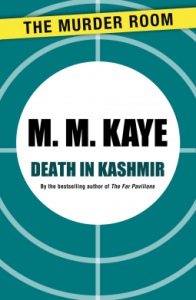
Death in Kashmir by M. M. Kaye

Death in Kashmir I have always thought of M. M. Kaye as an author of historical novels (such as the wonderful Far Pavilions) and although I was vaguely aware that she had also written a series of mystery novels, I had never really thought about reading them. Now that I’ve read the first one, Death in Kashmir, I will certainly be reading the others. What a great book this is!

Death in Kashmir was first published in 1953, but set a few years earlier in 1947, just as India is about to gain independence from Britain. Our heroine, Sarah Parrish, is attending what will probably be the final meeting of the Ski Club of India at Gulmarg, a resort in the mountains of Kashmir. Sarah is hoping for an enjoyable, relaxing holiday but the first sign of trouble ahead comes when another skier has a fatal accident on the slopes. Another death soon follows the first, but this time, the victim – a young woman called Janet Rushton – was able to share an important secret with Sarah before she died.

Sarah is now certain that neither death was accidental but all she wants is to leave Gulmarg and its secrets behind her and have nothing more to do with the whole business. When the skiing party breaks up she visits her aunt in Peshawar and tries to forget what she has learned. Soon, though, her promise to Janet pulls her back to Kashmir where she finds herself caught up in the mission her friend was working on before her death – and this time, Sarah’s own life could be in danger.

I loved this book from the very beginning. It’s so important that a first chapter pulls you straight into the story and this one did, right from the opening line – “Afterwards Sarah could never be quite sure whether it was the moonlight or that soft, furtive sound that had awakened her”. The rest of the story was equally engrossing: a perfect mixture of mystery, suspense, romance and espionage.

The descriptions of Kashmir are stunning. The first part of the book is set in winter on the snow-covered mountain trails of Gulmarg and later the action moves to the Dal Lake in the summer resort of Srinagar where Sarah takes over the lease on a houseboat that once belonged to Janet. Both of these locations are described beautifully, but Kaye also chooses just the right words and images to create a genuinely eerie and unsettling atmosphere. I found myself literally holding my breath as Sarah wondered who was standing outside the ski lodge in the dark, as she watched an unknown figure disappearing up a staircase and as she listened to footsteps on the boards of her houseboat in the night.

What makes Sarah’s situation even more dangerous is that she’s sure the enemy must be one of the group of skiers who were gathered at Gulmarg – the same group who are all now spending the summer in Srinagar. Who should she trust? The hostile Helen Warrender who makes no secret of her dislike for Sarah? The jovial, good-natured Hugo and his long-suffering wife, Fudge? Timid Meril Forbes and her domineering aunt? Or the handsome, polo-playing Captain Charles Mallory? When the villain was eventually revealed it didn’t come as a complete surprise – but I have to admit I had suspected almost everybody at some point, so one of my guesses was bound to be right!

The book is also interesting from the historical viewpoint, being set just before the end of the British Raj and the transfer of powers back to India. Through the stories of Sarah and the rest of the British community in Kashmir, I thought Kaye had perfectly captured the mood of a group of people who knew that their way of life was about to change forever.

I’m now looking forward to reading the other five Death In… mysteries. I just need to decide which one to read next!