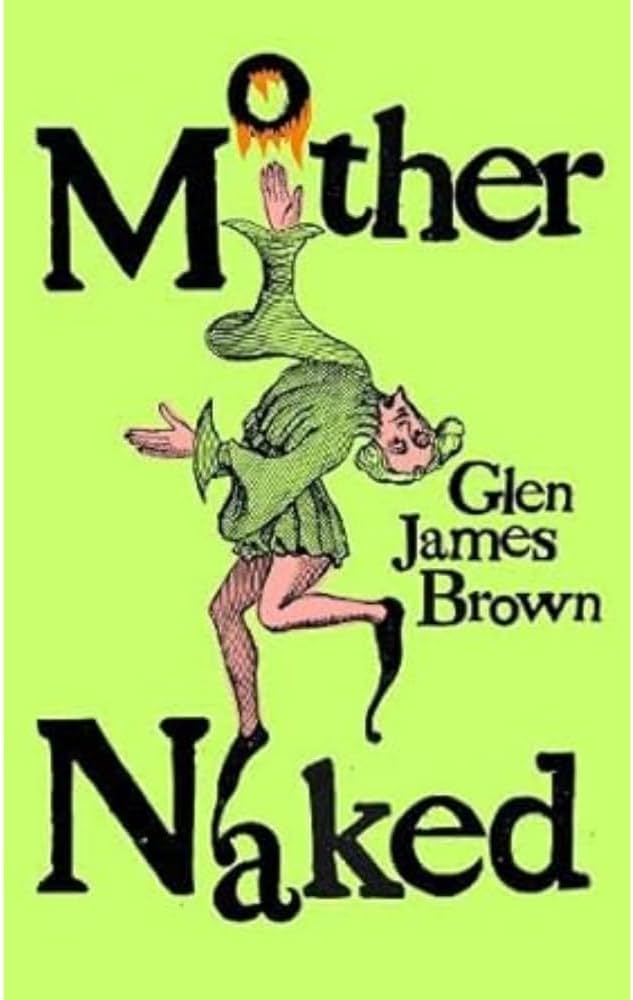
Mother Naked by Glen James Brown

Durham Cathedral’s records show that the smallest amount paid to an entertainer was the one groat (four pence) received by Modyr Nakett, who performed there in 1433-34. Modyr Nakett – Mother Naked in the Middle English used at the time – was a gleeman, or wandering minstrel, but nothing else is known about him or his performance. In this novel, longlisted for the Walter Scott Prize for Historical Fiction, Glen James Brown imagines Mother Naked’s story.

The whole novel is written in the form of a monologue delivered by Mother Naked in front of an audience of some of Durham’s most powerful men. He begins by promising them the tale of the Fell Wraith, a ghostly monster who laid waste to the village of Segerston (now called Sacriston), destroying the crops, burning down the manor house and killing the villagers. However, it becomes clear that what he really wants to tell is more than just a simple ghost story and that the legend of the Wraith is rooted in reality. He goes off on several tangents and at times it’s not clear to his audience (or to the reader) what significance any of these digressions have. It all comes together in the end, though, and we’re left in no doubt as to the purpose of Mother Naked’s tale!

Most of Mother’s story is set in Segerston in 1396 and deals with a feud between two local families, the Paynes and the Deepsloughs. Both families are villeins – serfs who are able to own land, but are also expected to work on their lord’s land for no payment, which greatly restricts the time they can spend tending their own crops. This is one of several reasons why anger and frustration with the feudal system has been spreading throughout the country, as shown by the Peasants’ Revolt just a few years earlier. The story Mother tells illustrates the unfairness of this system, the various hardships and challenges faced by the different classes of peasant and the privileges held by those higher up such as the reeve, the bailiff and the lord.

As he builds towards the story of the Fell Wraith, Mother talks about other myths and legends, such as the Woodwose (or ‘wild man of the woods’). He also discusses his own childhood and his relationship with a fellow gleeman, Pearl Eye, who starts him on his path to becoming an entertainer. I won’t tell you Mother’s real identity, though, as it would spoil the story!

Those of you who are regular readers of my blog will know that I dislike the way so many modern authors are choosing not to use quotation marks to indicate speech. I’ve said that I always find it irritating, but this book seems to be the exception to the rule. There are no quotation marks, but dialogue is put in italics which at least makes it easier to see that someone is speaking – and as the entire novel is presented as one long speech, it makes sense not to use internal speech marks as well. Brown also writes in a sort of pseudo-medieval language and I thought this would be distracting at first, but it actually works very well.

The combination of the language, the setting and the level of research makes the book feel very authentic and believable. I could easily imagine I was sitting in the hall at Durham Cathedral listening to Mother Naked’s story! This book is a good example of why I like to follow the Walter Scott Prize, as I don’t think I would have come across this one otherwise. The shortlist is due to be announced next week.
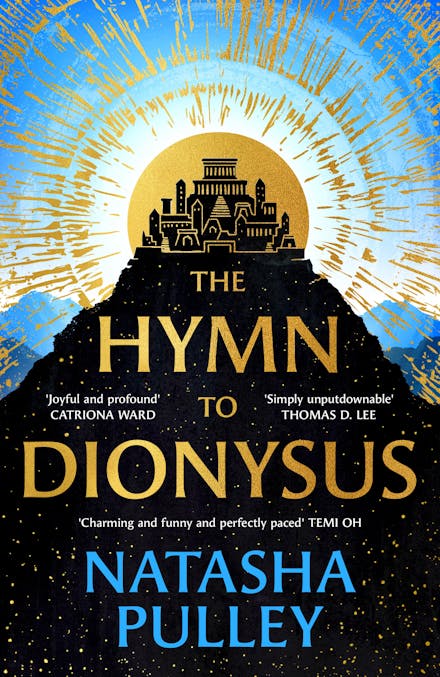
The Hymn to Dionysus by Natasha Pulley

I know what you’re thinking: not another Greek mythology book! There have been so many in recent years, it would be easy to dismiss this one as just more of the same. However, I found it completely different from any of the others I’ve read, and despite the marketing it’s nothing like the Greek retellings written by Madeline Miller or Jennifer Saint.

The Hymn to Dionysus is narrated by Phaidros, whom we first meet as a child being trained as a knight in a Greek legion (knight is the term Pulley uses, but it clearly just refers to a mounted soldier rather than our image of a medieval knight). Phaidros doesn’t know who his parents are, but that’s not considered important in the Theban army, where your duty and loyalty is to your commander – in this case, Helios, who provides all the love, guidance and leadership Phaidros needs. He never questions his commander’s orders until the day when, during a trip to Thebes, Phaidros rescues a blue-eyed baby from a fire at the palace and Helios insists on the baby being abandoned at a temple, never to be mentioned again.

Many years later, Phaidros is a commander himself, training new recruits in Thebes. When Pentheus, the crown prince, disappears, desperate to escape an arranged marriage, Phaidros is drawn into the search, something which leads him to an encounter with a blue-eyed witch, Dionysus. The arrival of Dionysus coincides with an outbreak of madness amongst the knights of Thebes and stories of a mysterious new god. Is there a connection between Dionysus and the baby boy rescued by Phaidros all those years ago?

I read Natasha Pulley’s The Bedlam Stacks, set in 19th century England and Peru, when it was published in 2017 and although it was getting glowing reviews from everyone else at the time, I didn’t like it very much, mainly because I found the language irritatingly modern and anachronistic and the magical realism elements were stronger than I expected. I haven’t tried any of her other novels since then, but I loved one of her short stories which appeared in The Winter Spirits, a ghost story anthology, so I thought it would be worth giving her another chance. I’m glad I did, because I found this book a lot more enjoyable. It’s still written in very modern language, but that doesn’t seem to bother me quite as much when a book is set in the ancient world, although I would find it difficult to explain why.

Although I’ve read other Greek mythology novels in which Dionysus and some of the other characters appear, I don’t really have a very extensive knowledge of the myths surrounding them (I haven’t read Euripides’ play, The Bacchae, in which some of this is covered) and I think this was probably actually a good thing, as it meant I could just enjoy the story without having too many preconceived expectations. As I’ve said, it’s not a typical retelling anyway; as far as I can tell, it draws on various aspects of different myths and blends them together to form an original story. There are elements of magic – ivy that suddenly begins to grow when Dionysus is around; masks that bestow new characteristics on the wearers – but the book never quite becomes full-blown fantasy. I loved Pulley’s descriptions of the giant mechanical statues she calls ‘marvels’ and although I doubt they would have existed in the way she describes, there are examples of automata dating back to Ancient Greece so it could have been possible.

The main focus of the book, though, is on Phaidros and his relationships – particularly the one with Dionysus, which develops slowly as Phaidros wonders whether Dionysus is the baby he rescued all those years ago or whether he isn’t, whether he’s the ‘mad god’ everyone is talking about or whether he is just the witch he claims to be. I liked Phaidros and enjoyed the way he narrated his story, so even though this is a long book I felt that the pages went by quite quickly. I would probably consider reading some of Natasha Pulley’s other books, if anyone has any recommendations.

Thanks to Gollancz for providing a copy of this book for review via NetGalley.

Six Degrees of Separation: From Knife to Island Song

It’s the first Saturday of the month which means it’s time for another Six Degrees of Separation, hosted by Kate of Books are my Favourite and Best. The idea is that Kate chooses a book to use as a starting point and then we have to link it to six other books of our choice to form a chain. A book doesn’t have to be connected to all of the others on the list – only to the one next to it in the chain.

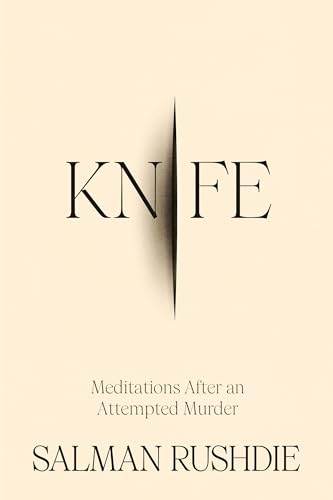
This month we’re starting with Knife by Salman Rushdie. Here’s what it’s about:

On the morning of 12 August 2022, Salman Rushdie was standing onstage at the Chautauqua Institution in upstate New York, preparing to give a lecture on the importance of keeping writers safe from harm, when a man in black – black clothes, black mask – rushed down the aisle towards him, wielding a knife. His first thought: So it’s you. Here you are.

What followed was a horrific act of violence that shook the literary world and beyond. Now, for the first time, Rushdie relives the traumatic events of that day and its aftermath, as well as his journey towards physical recovery and the healing that was made possible by the love and support of his wife, Eliza, his family, his army of doctors and physical therapists, and his community of readers worldwide.

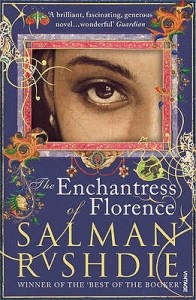
I haven’t read Knife, but I’m going to begin my chain by linking to the one book I have read by Salman Rushdie: The Enchantress of Florence (1). This unusual novel takes us to a 16th century India populated with giants and witches, where emperors have imaginary wives and artists hide inside paintings.

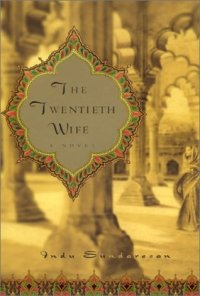
I read The Enchantress of Florence for a reading event called A More Diverse Universe hosted by a fellow blogger in 2013. The following year, for the same event, I read another book by an Indian author – The Twentieth Wife by Indu Sundaresan (2). It’s set in 17th century Mughal India and is the first in a trilogy of novels describing the history behind the construction of the Taj Mahal.

From twentieth to tenth now! The Tenth Gift by Jane Johnson (3) is a fictional account of the 1625 raid on Cornwall by Barbary pirates who took sixty men, women and children into captivity to be sold at the slave markets of Morocco. The novel is divided between the past and the modern day, focusing on the story of one of the young women abducted during the raid.

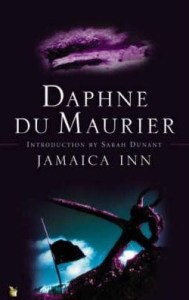
Another author known for her books set in her native Cornwall is Daphne du Maurier. I could have chosen several of her novels for my chain, but I’ve decided on Jamaica Inn (4). This 1936 classic features stormy weather, smugglers, locked rooms, shipwrecks, desolate moors, and a remote, lonely inn – everything you could ask for in a Gothic novel! It isn’t one of my absolute favourites by du Maurier, but I enjoyed it much more on a re-read several years ago.

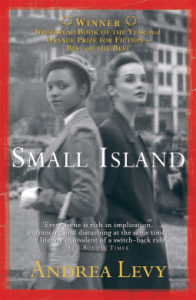
Using Jamaica as my next link, Small Island by Andrea Levy (5) is about a Jamaican couple who leave their island in the 1940s to come to another island, Britain. The book is narrated by the two Jamaican characters and the British couple whose house they lodge in, giving a range of voices and perspectives.

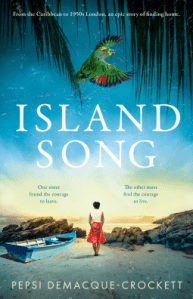
My final book is linked by a word in the title (island) and also a theme of immigration. Island Song by Pepsi Demacque-Crockett (6) follows the stories of two people from St Lucia who start new lives in London in the 1950s. The book is inspired by the author’s own family history and I enjoyed reading about the experiences of the characters, both good and bad.

~

And that’s my chain for April! The links have included Salman Rushdie books, blogging events, positional numbers, Cornwall, Jamaica and immigration. My chain has taken me from India to St Lucia via Italy, Morocco, England and Jamaica!

Next month we’ll be starting with Rapture by Emily Maguire.

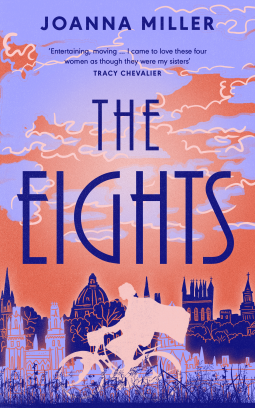
The Eights by Joanna Miller

Although women had been able to study at Oxford University since the 19th century, October 1920 marked the first time they were able to matriculate (or be formally admitted). In her new novel, The Eights, Joanna Miller imagines the stories of four fictional women who were part of this historic moment.

Beatrice Sparks, Theodora Greenwood, Marianne Grey and Ottoline Wallace-Kerr refer to themselves as the Eights because they occupy the four rooms on corridor eight of St Hugh’s, one of the Oxford colleges that is admitting female students. They also each have a name with eight letters, something which pleases Otto, who is a mathematician and loves the number eight. Otto’s family and friends, who are wealthy socialites, are surprised by her decision to study for a degree rather than concentrate on making a good marriage, but Otto is desperate to prove herself after feeling that she failed as a VAD nurse during the war.

Beatrice is the daughter of a suffragette and has grown up in the shadow of her formidable, overbearing mother. For her, university means independence, freedom and a chance to lead her own life at last. Theodora – known as Dora – is also grateful for the opportunity she has been given, but at the same time she feels a sense of guilt knowing that her brother, who was killed in the war, was supposed to be the one to go to Oxford. Dora also lost her fiancé in the war and she’s still struggling to come to terms with both tragedies. The final member of the Eights is Marianne, the quiet, clever daughter of a widowed vicar. Marianne seems to have led a sheltered life compared to some of the other girls at St Hugh’s, but she has a secret that she’s determined to keep hidden.

The Eights describes the experiences of these four young women during their first year at Oxford. There’s not really an overarching plot – more a series of episodes – but I didn’t have a problem with that as I was so absorbed in the lives of the four main characters. My favourite was probably Marianne, but I liked and admired all of them and enjoyed watching their friendships develop over the course of the year. The women all face a different set of challenges and struggle with self-doubt – about fitting in, coping with the work or living up to expectations – and it was good to see them grow in confidence and overcome some of the obstacles in their way. I liked the use of flashbacks to provide background information about each woman and the very different paths they followed that led them to Oxford.

Obviously I wasn’t at Oxford in 1920, so I have no idea how accurate the book is – all I can say is that the setting feels very authentic and it’s clear that Joanna Miller has done her research. She weaves historical detail throughout the novel, often beginning chapters with a real newspaper excerpt or a set of university rules and regulations (which illustrate the double standards in the way male and female students were treated). There’s a glossary at the end, as some readers may be unfamiliar with the academic terms used in the book, many of which are unique to Oxford. There are also some cameo appearances from real-life authors Vera Brittain and Winifred Holtby, who are attending Somerville College, one of Oxford’s other women’s colleges.

My only real criticism is that I found Marianne’s secret far too easy to guess and would have preferred to have been surprised by it, like the other students were. Otherwise, I really enjoyed this book and loved getting to know the Eights. It would be good to meet them again when they return for their second year at Oxford!

Thanks to Fig Tree for providing a copy of this book for review via NetGalley.

Ice by Anna Kavan

This is a strange book and I’m not sure I’ll be able to describe it adequately! It’s probably not something I would normally have chosen to read, but this new edition from Pushkin Press caught my eye and as I’ve enjoyed other books from their Classics range, I decided to try it.

Ice was first published in 1967, the last of Anna Kavan’s books to be published before her death a year later. It follows an unnamed narrator who has developed an obsession with a pale young woman with silver-white hair. The girl is also unnamed and described as delicate, glass-like and under the control of her sinister husband, who later becomes known as ‘the Warden’. Our narrator pursues her from place to place, hoping to rescue her from the Warden, occasionally catching up with her and then losing her again. There’s not much more to the plot than that – Christopher Priest in his foreword to this edition calls the novel ‘virtually plotless’ – but the book still has multiple layers that make it an interesting and worthwhile read.

First, there’s the setting. The narrator’s pursuit of the white-haired girl takes place against a backdrop of apocalyptic scenes as the planet rapidly becomes engulfed by ice. I’ve seen this referred to as an allegory of Anna Kavan’s own addiction to heroin, although I don’t know enough about her to comment on that. It could also be seen as a warning of climate change, more relevant than ever today, of course. Either way, there are some beautiful descriptive passages as Kavan writes about the coldness, the glittering snow and the giant walls of ice closing in on the girl, the narrator and the world.

Another notable thing about the novel is the way the reader (and the narrator himself) can never be quite sure of the boundaries between reality and a dreamlike or hallucinatory state. Sometimes the girl will appear seemingly from nowhere, just out of reach or about to be enclosed by the ice – only to disappear again just as suddenly, leaving us wondering whether she was ever really there at all. These shifts in reality occur repeatedly throughout the book, which is very unsettling! The Warden also never feels entirely real, but is always there as a threatening, oppressive presence; the narrator sees himself as trying to free the girl from the other man’s control, but his own infatuation with her gradually begins to feel just as disturbing.

In the foreword, Priest describes the book as ‘slipstream’, which Wikipedia defines as ‘speculative fiction that blends together science fiction, fantasy, and literary fiction, or otherwise does not remain within conventional boundaries of genre and narrative’. It’s certainly not a conventional novel and I have to be honest and say that I didn’t enjoy it as much as I’d hoped to – after the first few appearances and disappearances of the girl, I began to find it repetitive – but it’s also a unique and powerful one. The cold, icy imagery will stay with me for a long time.

Thanks to Pushkin Press Classics for providing a copy of this book for review via NetGalley.

My Commonplace Book: March 2025

A selection of quotes and pictures to represent March’s reading:

commonplace book
noun
a book into which notable extracts from other works are copied for personal use.

~

You never knew in advance if a decision was the right one. All you could do was try to imagine the future and use that to help you make up your mind in a difficult situation, and if you couldn’t imagine the future, well, you had to make up your mind anyway.

Clear by Carys Davies (2024)

~

Fiction, if it is worth anything at all, is about life but it is not life.

The Game is Murder by Hazell Ward (2025)

~

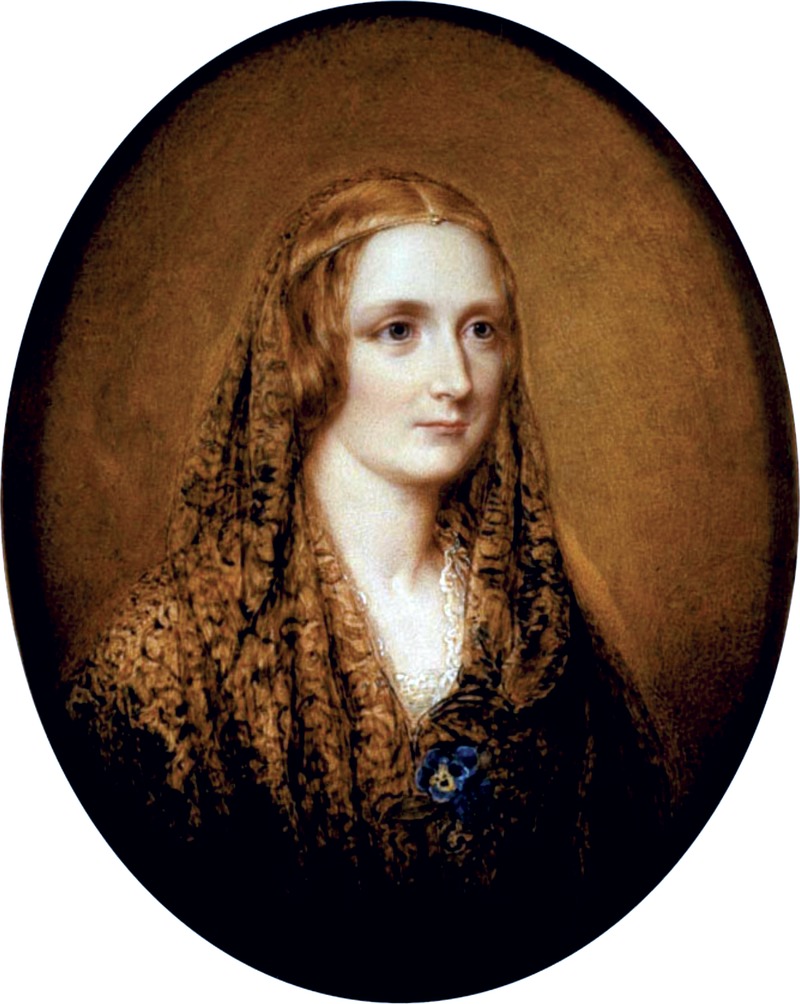
Miniature of Mary Shelley, Reginald Easton c. 1857

Grief marks a person as fire marks a house. You can paint over the soot and repair the boards, but the rooms will be haunted always by the scent of ashes.

Love, Sex & Frankenstein by Caroline Lea (2025)

~

The last winter days went by like weary brokedown soldiers at the end of a war.

The Heart in Winter by Kevin Barry (2024)

~

One does not have to leave the old world to find a new one. A new one can be built by changing the old one for the better, one act of love at a time, seeding new memories among the old, so that both can bloom together.

The Darkening Globe by Naomi Kelsey (2025)

~

Women who adore chocolate to the same degree enjoy a friendship that can’t be shaken.

The Versailles Formula by Nancy Bilyeau (2025)

~

A carved relief of Cleopatra and her son Caesarion at the Temple of Dendera, Egypt, 1st century BC

What survives our mortal death is our ideas, transcribed in art and words and stone, they are the piece of us that remains. But if that can disappear in a single night, consumed by flame? What then for immortality?

Cleopatra by Natasha Solomons (2025)

~

As in life, so in a game of hazard, skill will make something of the worst of throws.

Moonfleet by John Meade Falkner (1898)

~

The lesson, said he, be this – we tell tales of what lurks out in the dark so that we need not acknowledge the truth within.

What truth?

That, oftentymes, the fiend be our fault. Do you understand?

Mother Naked by Glen James Brown (2024)

~

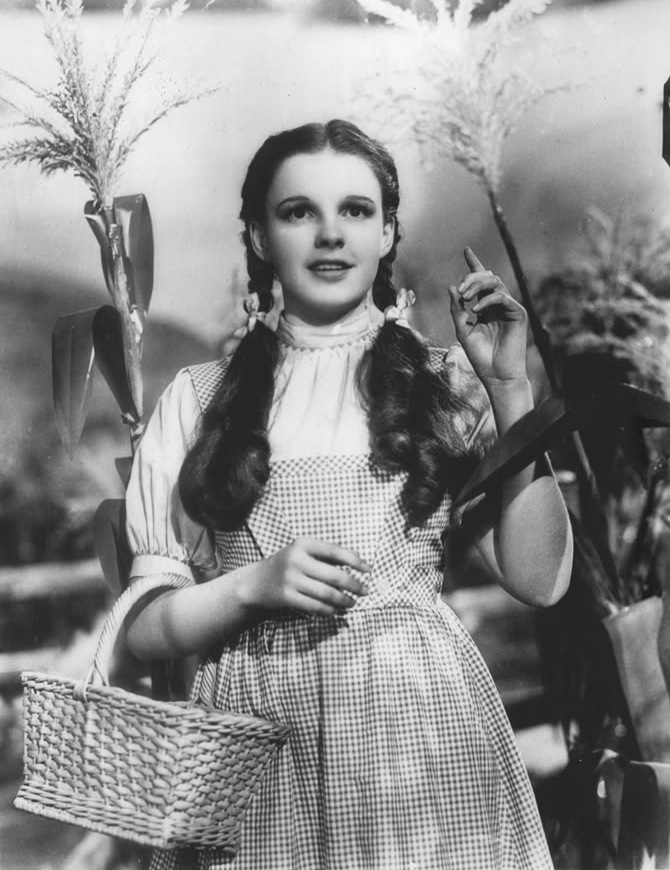
Judy Garland as Dorothy in The Wizard of Oz, 1939

Finally, Annie looked at Emily. ‘You’re right. We must all follow our hearts, even when it scares us, because the most frightening thing of all is to not do the thing we are meant to.’

Before Dorothy by Hazel Gaynor (2025)

~

Trials, like life, always go on to some sort of ultimate conclusion, however shockingly they unfold along the way.

A Case of Life and Limb by Sally Smith (2025)

~

As individuals, none of us matters much. Our joint effort matters, though, when we work together.

Secrets of the Bees by Jane Johnson (2025)

~

Favourite books read in March:

A Case of Life and Limb, Love, Sex & Frankenstein, Mother Naked and The Versailles Formula

Authors read for the first time in March:

Carys Davies, Hazell Ward, Kevin Barry, Naomi Kelsey, John Meade Falkner, Glen James Brown

Countries visited in my March reading:

Scotland, England, USA, Egypt, Switzerland, France

~

Reading notes: I was pleased to be able to take part in both the Reading Ireland and Reading Wales events this month (and read new-to-me authors for both – Kevin Barry and Carys Davies respectively). I also made some progress with my Classics Club list and the Walter Scott Prize longlist, as well as reading some of my upcoming releases from NetGalley. I’ve only posted reviews for a few of these books so far, but the rest will follow, I promise!

In April, I’m looking forward to 1952 Club, which will be hosted by Kaggsy’s Bookish Ramblings and Stuck in a Book. I’m already halfway through my first book for that and have some others I’m also hoping to get to. 21-27 April, if you want to join in.

What did you read in March? Do you have any plans for April?

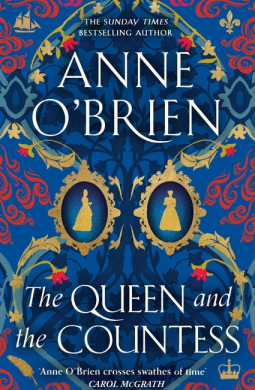
The Queen and the Countess by Anne O’Brien

I’ve been looking forward to reading Anne O’Brien’s new novel as it’s set in one of my favourite periods of history, the Wars of the Roses. O’Brien has written about this period before, from the perspectives of Anne Neville in Virgin Widow (which I haven’t read) and Cecily Neville in The Queen’s Rival, but this book is slightly different because it focuses on not just one woman but two: Margaret of Anjou, wife of Henry VI, and Anne Beauchamp, Countess of Warwick.

The two women take it in turns to narrate their story, alternating chapter by chapter throughout the book and beginning in 1458 with the Loveday Parade – a procession through London intended to promote peace between York and Lancaster, the two feuding branches of the royal House of Plantagenet. In the parade, Queen Margaret walks hand-in-hand with the powerful Duke of York, while Anne watches her husband, Richard, Earl of Warwick, walk with his rival nobleman, the Duke of Exeter. The peace is very short-lived, however, and the following year York and Lancaster are at war again.

As the mental health of the Lancastrian king, Henry VI, goes into decline and he gradually retreats from real life into a world of prayer, Margaret does her best to rule in his place, aiming to keep the throne safe for Prince Edward, their young son. When Margaret’s army is defeated in battle and Warwick helps to put the Yorkist heir, Edward IV, on the throne, it seems that her life is in ruins, but it’s not long before Warwick falls out of favour with the new king and comes to her ready to form a new alliance with Lancaster. Meanwhile, Anne stays loyal to her husband throughout all of this but, with no real influence over his decisions, she can only hope that he’s picked the right side this time…

I was intrigued by O’Brien’s decision to pair Margaret of Anjou’s story with the Countess of Warwick’s in this book. There are so many other interesting women from this period – Margaret Beaufort, the mother of Henry Tudor; Edward IV’s wife Elizabeth Woodville and her mother Jacquetta, to name a few – it seemed like a bit of an arbitrary choice to put these two together, but as I read on and saw the shape the novel was starting to take it did make sense. Margaret and Anne are at first on opposite sides of the conflict, then on the same side, but in the difficult position of never fully being able to trust each other, which is an interesting dynamic for O’Brien to explore. Although they are two very different women, there are some parallels between them which begin to emerge as the novel progresses.

This is an eventful and dramatic period of history, so there’s always something happening in the novel – a battle to be fought, a marriage to be negotiated, a plan for invasion to be put into place. Using two narrators rather than one gives O’Brien a wider scope instead of being limited to one character’s personal experiences. However, the two threads of the story come together now and then through a series of fictional letters sent between Margaret and Anne. I’ve no idea if they really corresponded or not (I don’t think there’s any evidence of it, and if they ever did, I doubt it would have been as often as depicted in the book) but it’s a nice touch and makes the lives of the two characters feel less separate and disconnected.

The narrative voices of the two women sound almost identical, so I had to pay attention to the section headings, otherwise it sometimes took me a few paragraphs to decide which of them was narrating. Margaret of Anjou never really seems to be portrayed in a very positive light and she’s not very likeable here either, but I could at least have some sympathy for her. She was in a very challenging situation, trying to hold onto the throne for Lancaster with a husband who didn’t understand what was going on and who was by now completely incapable of ruling. Anne is a much easier character to like, but then, she doesn’t have the difficult decisions to make that Margaret does. Things aren’t easy for Anne either, though, as her fate is determined by the actions of her husband, Warwick, and while she does involve herself in politics to a degree, she has very little say in the course her life will follow.

This is ultimately quite a sad story – anyone familiar with the Wars of the Roses will know what happens to Margaret, her husband and her son, and how Anne’s later life plays out (at one point she’s declared legally dead while still alive in order to settle an inheritance dispute) – but I enjoyed reading it. It was nice to see some links to O’Brien’s previous novel, A Court of Betrayal, whose heroine, Johane de Geneville, was an ancestor of Anne Beauchamp’s – something I wasn’t aware of until I started reading this book and Anne mentioned her great-great-grandmother! I’ll look forward to O’Brien’s next book, whatever it may be, but I should probably try to find time to go back and read the earlier ones that I’ve missed as well.

Thanks to Orion for providing a copy of this book for review via NetGalley.