Madam, Will You Talk? by Mary Stewart

Madam Will You Talk When I heard the sad news of Mary Stewart’s death recently I wanted to read one of her books as a tribute. There are still quite a few that I haven’t read and I decided on this one, her debut novel from 1955. It was a great choice because I loved it.

The novel is narrated by Charity Selborne, a young widow on holiday in the south of France with her best friend, Louise, an art teacher. Settling into their hotel, they get to know the other guests, including David, a thirteen-year-old boy from England, and his beautiful French stepmother. When Charity hears that David’s father, Richard Byron, has recently been acquitted of murder and could be in France at this moment searching for his son, she grows worried for the boy’s safety…but her efforts to protect David mean that she herself becomes Richard’s next target.

There’s a lot more to the story than that, but I really don’t want to say much more about it because this is one of Mary Stewart’s most exciting and suspenseful novels and I would like everyone to be as enthralled by the twists and turns of the plot as I was. All I will say is that this book contains one of my favourite sequences in all of the Stewart novels I’ve read – a thrilling car chase in which Charity is pursued across the French countryside (in a chapter appropriately titled Exit, pursued by a Bear – another thing I love about Mary Stewart is the way she works so many literary and mythological references into her writing).

This book is very dated now and definitely feels like one that was written in the 1950s, but I think that just adds to its charm. There are also lots of stunning descriptions of Avignon, Nîmes, Marseilles and all the other places Charity’s adventures take her to (I was pleased to see that her visit to Marseilles included a trip to the Chateau d’If, made famous by Alexandre Dumas in The Count of Monte Cristo). I particularly loved this description of Charity watching the sun rise above the remote village of Les Baux:

“How long I sat out there, in a coign of carved stone and rough rock, I do not know. Long enough, I suppose, for my vigil did at length bring in the dawn. I saw the first light, forerunning the sun, gather in a cup of the eastern cloud, gather and grow and brim, till at last it spilled like milk over the golden lip, to smear the dark face of heaven from end to end. From east to north, and back to south again, the clouds slackened, the stars, trembling on the verge of extinction, guttered in the dawn wind and the gates of day were ready to open at the trumpet…”

Since discovering Mary Stewart’s romantic suspense novels three years ago I have been hoping to find another one to match the brilliance of the first one I read, Nine Coaches Waiting. Now that I’ve read eight more of her books, I think Nine Coaches will always be my favourite, but Madam, Will You Talk? has come very close!

I think Anbolyn is hosting another Mary Stewart Reading Week in September, so whether you’re already a Stewart fan or whether you have yet to try any of her books, I hope you’ll consider joining in. I have Wildfire at Midnight, Thunder on the Right, My Brother Michael and Airs Above the Ground still to read, but maybe it’s time I tried her Merlin series which I’ve heard so much about. What do you think?
The Bloody Chamber by Angela Carter

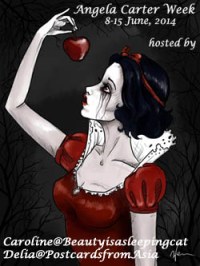
ACW-badge-23 This week Caroline of Beauty is a Sleeping Cat and Delia of Postcards from Asia are hosting an Angela Carter Week. I have to admit that I had dismissed Angela Carter years ago as an author just not for me, based on one or two failed attempts at reading her novels as a teenager. Seeing the announcement of the Angela Carter Week and knowing that she is a beloved favourite of so many people, I decided it was time to give her another chance – with some short stories this time.

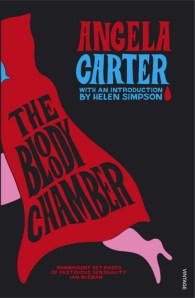
In The Bloody Chamber, Carter takes ideas and themes from fairy tales and legends – vampires and werewolves, Bluebeard and Puss in Boots, dark forests and gloomy castles – and works them into a collection of new short stories. There are ten in the book – The Bloody Chamber, The Courtship of Mr Lyon, The Tiger’s Bride, Puss-In-Boots, The Erl-King, The Snow Child, The Lady of The House of Love, The Werewolf, The Company of Wolves and Wolf-Alice. Some are quite long (The Bloody Chamber is more than forty pages long in this edition) while others are very short (less than two pages for The Snow Child) and all of them are steeped in feminism, violence and sexuality.

The Bloody Chamber I’m glad I chose this book to try again with, because I did enjoy it. However, I had quite an uneven reaction to the stories in this collection and found that I liked some of them much more than others – though I suppose that’s normal when reading short story collections. I was interested to read in the introduction by Helen Simpson that they should not actually be described as retellings because Carter herself said that her intention was to “extract the latent content from the traditional stories and to use it as the beginnings of new stories”.

By far the strongest, in my opinion, is the title story, The Bloody Chamber. The Gothic atmosphere and imagery in this story reminded me of Edgar Allan Poe. Inspired by the Bluebeard legends, it’s the tale of a young woman who travels to the castle of her new husband, a Marquis who has already been married and widowed three times before. When the Marquis goes away on business he leaves his wife with a bunch of keys and strict instructions not to unlock the door of one of the rooms. Not surprisingly, she is unable to resist the temptation and discovers something shocking within the forbidden chamber.

I also loved The Courtship of Mr Lyon, a romantic and beautifully written story based on Beauty and the Beast. I preferred this one to The Tiger’s Bride, which gives a completely different perspective on the same fairy tale. Puss-in-Boots, although not one of my favourites, stands out from the others in the book as it is written in a very different style. While most of the others, particularly The Bloody Chamber, are elegant and haunting with rich, elaborate descriptions, this one is a lively, amusing story narrated by the cat himself. The Snow Child is equally memorable, though for different reasons – for such a short story, it’s one of the most disturbing in the book.

The Erl-King and The Lady of the House of Love also deserve a mention, both for their atmospheric settings and the beauty of the language used. Interestingly, I think the stories I enjoyed least were the three final ones which incorporated elements from Little Red Riding Hood and werewolf folklore. I’m not sure why that should be, unless they just suffered from being last in the book.

I can see why Angela Carter’s books are so widely studied in schools and universities because her writing is packed with symbolism and imagery. I know I would have to read this whole collection again to even begin to fully appreciate everything she was trying to say in each of the ten stories.

Have you read this book? Which was your favourite story?

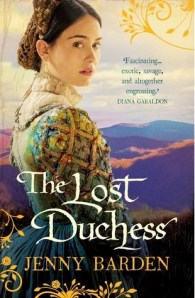
The Lost Duchess by Jenny Barden

The Lost Duchess With a title like The Lost Duchess and an opening chapter set at the court of Elizabeth I, describing an encounter between one of the Queen’s ladies and Lord Hertford, you may think this sounds like just another Elizabethan court romance – but you would be mistaken. With the arrival of Sir Francis Drake bringing stories of his adventures in the New World comes the first hint of what this book is actually about. And when Emme Fifield, the lady who had that confrontation with Hertford, decides to join Governor John White’s expedition to establish a new colony at Chesapeake, it becomes clear that The Lost Duchess is going to be something fresh and different.

Emme is desperate to leave England and sail to the New World so that she can avoid the disgrace she knows she will face when her involvement with Lord Hertford is made public. In order to convince the Queen to let her go, she promises to return with reports on the colonies for Elizabeth and her spymaster, Sir Francis Walsingham, but Emme’s real intention is to stay in Chesapeake and build a new life there…especially when she begins to fall in love with one of her fellow travellers, the mariner Kit Doonan. But while Emme is trying to keep the truth about her past hidden from Kit, we learn that Kit also has some secrets of his own.

Emme and Kit are great characters and I enjoyed getting to know both of them, but the aspect of this book that I found the most interesting was the fate of the lost colony of Roanoke – the English settlement established by Sir Walter Raleigh in the 1580s before being abandoned with no trace of the colonists. The explanation for the colony’s disappearance is still a mystery today, but Jenny Barden suggests one possible theory which I thought was very convincing. And if you’re wondering why all of this is significant to the story told in The Lost Duchess, although the ship on which Kit and Emme set out from England is originally heading for Chesapeake, Roanoke is where they end up.

The voyage itself provides lots of exciting action as Emme and the other colonists face dangerous seas and the loss of their supplies, while finding themselves at the mercy of their Portuguese navigator, Simon Ferdinando, who may or may not be trying to betray them. Life becomes no easier when they land at Roanoke – poisonous fruit being one hazard and conflicts with the native people another. Having befriended Chief Manteo of the Croatoans, the settlers are hopeful that they can negotiate with the Native Americans but it seems that things have happened in the past which will make it difficult for them to live peacefully alongside each other.

Roanoke and its mysteries is a fascinating, unusual setting and I’m sure you’ll agree that it makes a change from the majority of Tudor/Elizabethan novels which tend to focus on royalty and life at court. Jenny Barden’s previous novel, Mistress of the Sea, sounds wonderful too and is linked with this one through the character of Kit Doonan’s brother, Will. I’m looking forward to reading it.

The Lost Duchess_Tour Banner_FINAL

I read The Lost Duchess as part of a blog tour. For more reviews, interviews and giveaways please see the tour schedule at Historical Fiction Virtual Book Tours.

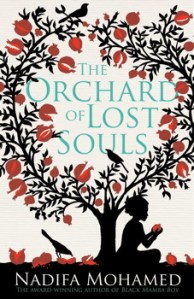
The Orchard of Lost Souls by Nadifa Mohamed

The Orchard of Lost Souls In 2013, Nadifa Mohamed was named one of Granta’s “Best Young British Novelists”. This is her second novel, set in Somalia in the 1980s as rebel forces clash with the military dictatorship and the country heads towards civil war. The events of this turbulent period are seen through the eyes of three female characters:

* Deqo, a nine-year-old orphan who grew up in a refugee camp and has now found herself homeless and alone in the city of Hargeisa.
* Kawsar, a widow mourning the death of her daughter, who becomes confined to her bed after a violent beating at the police station.
* Filsan, a soldier sent to Hargeisa from the capital city of Mogadishu and feeling homesick for the life she has left behind.

During a military parade at a stadium in Hargeisa, the paths of these three women briefly cross before they are separated again and go on to have very different experiences of this troubled time in Somalia’s history.

I don’t think I’ve ever read a book set in Somalia before and I knew nothing about the causes of the civil war or the situation in Hargeisa, so reading The Orchard of Lost Souls meant I had an opportunity to learn something new. Telling the story from three different perspectives allows the author to explore different aspects of the war; through Deqo and Kawsar we see what it was like for people living in and around Hargeisa, trying to survive from one day to the next, while Filsan’s story gives us some insights into the military regime. As you can probably guess, many of the things the women experience are traumatic and brutal, though I won’t go into any details here.

As well as being educational, this is also a compelling story (or stories, as there are really three of them in this one novel) and I was interested in all three characters, although I thought Filsan was much more difficult to like than either Deqo or Kawsar. However, I did have some problems with the structure of the novel, especially at the beginning. For the first fifty pages of the book, the viewpoint switches rapidly between each of the three women which I found very overwhelming and confusing. I was relieved to discover that this didn’t continue all the way through the book! The opening section was followed by three longer sections concentrating on one character at a time, so I was able to get to know each of them separately before they eventually meet again near the end of the novel.

I can see why Nadifa Mohamed has won awards for her writing because she clearly has a lot of talent and her descriptions of Somalia are beautiful. I’ll leave you with one of my favourite passages, where Filsan remembers the streets of Mogadishu:

In the centre of the city where the alleys narrow at points to the width of a man’s shoulder blades, you can walk as if in a dream, never certain of what might appear after the next bend: a bare-chested man with a silver swordfish slung over his thin black back, a shoal of children reciting Quran from their wooden slates, a girl milking a white, lyre-horned cow. The place has enchantment, mystery, it moves backward and forward in time with every turn of the feet; it is fitting that it lies beside an ocean over which its soul can breathe, rather than being hemmed in by mountains like a jinn in a bottle.

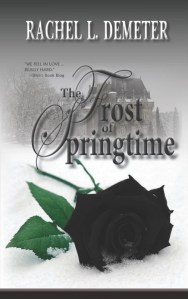
The Frost of Springtime by Rachel L. Demeter

The Frost of Springtime When I was offered the opportunity to take part in a blog tour for Rachel L. Demeter’s The Frost of Springtime, I wasn’t sure whether or not to accept. I read a lot of historical fiction novels and many of them have an element of romance, but I tend not to be drawn to books that are specifically classed as ‘historical romance’ as this one is. The setting sounded intriguing, though, so I decided to give it a try.

The Frost of Springtime is set during the Paris Commune of 1871, a brief period during which a revolutionary government ruled Paris. The novel begins with Vicomte Aleksender de Lefèvre rescuing a young girl, Sofia Rose, who has been sold into a Parisian brothel by her own mother. Sofia becomes Aleksender’s ward but she is later separated from her guardian while he goes away to fight in the Franco-Prussian War.

When Aleksender returns to Paris accompanied by his friend, Christophe Cleef, he finds that the city has been torn apart by revolution, protest and destruction. At home, too, things are changing. His father’s death has left him with new responsibilities and an altered relationship with his brother…and the little girl he saved from a life of misery and abuse has matured into a beautiful young woman of nineteen. Left scarred by his traumatic wartime experiences, Aleksender is in need of love and comfort and it seems that Sofia can provide them. But what about his wife, Elizabeth, the woman he married years earlier as part of an arranged marriage and has never loved the way he loves Sofia?

The Frost of Springtime is a dark and atmospheric story with some great descriptions of a Paris in political turmoil. Although there is certainly a strong romantic thread running through the centre of this novel, there is also quite a lot of history. In fact, there could be too much history for those who are looking purely for a love story, but for me personally the balance was about right. I had no previous knowledge of the Paris Commune and now that I’ve learned a bit about it from reading this book I would like to know more. I may have to do some further reading on the subject!

Aleksender and Sofia were both strong characters – characters I was interested in and cared about. Unless you just don’t like the idea of the age difference or a man falling in love with a girl who had been his ward, I’m sure you’ll feel the same and will be hoping for a happy ending for the two of them. However, I did also like Elizabeth and had a lot of sympathy for her as she really hadn’t done anything wrong and didn’t deserve to be treated badly. Aleksender’s behaviour sometimes disappointed me because it wasn’t always what you would expect from the hero of a romantic novel but this could be partly explained by the fact that he is suffering from what appears to be post-traumatic stress disorder caused by his experiences at war.

frostofspringtimebanner I’m glad I didn’t let my doubts about historical romance put me off reading this book as I did enjoy meeting Aleksender and Sofia and learning about such an interesting period of French history.

If you’d like to read more reviews, interviews and guest posts please see the tour schedule at Enchanted Book Promotions – and don’t forget to enter the tourwide giveaway for an Amazon gift card at this link: a Rafflecopter giveaway

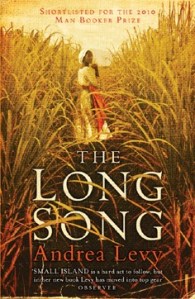
The Long Song by Andrea Levy

When Thomas Kinsman asks his mother, July, to write her memoirs, she agrees on the condition that she is allowed to tell her story the way she wants to tell it:

“Please pardon me, but your storyteller is a woman possessed of a forthright tongue and little ink. Waxing upon the nature of trees when all know they are green and lush upon this island, or birds which are plainly plentiful and raucous, or taking good words to whine upon the cruelly hot sun, is neither prudent nor my fancy. Let me confess this without delay so you might consider whether my tale is one in which you can find an interest.”

The Long Song The island with the lush green trees, raucous birds and hot sun is Jamaica, where July is born into slavery on the sugar plantation of Amity. As a young girl, July catches the eye of her master’s spoiled and selfish sister, Caroline Mortimer, and becomes her maid and companion. Kept apart from her mother, a field slave, and renamed ‘Marguerite’ because Caroline likes the name, life is not always easy for July but the Christmas Rebellion of 1831 brings hope that slavery in Jamaica will soon come to an end. And with the arrival of a new overseer, Robert Goodwin, life at Amity could be about to change forever…

I have read other books about slavery but never one that focused specifically on slavery in Jamaica, so The Long Song was something new for me. With July moving from the slave quarters to live with her mistress, we see how slavery and its abolition affected not just the slaves themselves but also the British slave owners and overseers. I liked the fact that July’s story does not just finish with the end of slavery in Jamaica but goes on to describe what happened after that. It’s easy to imagine that things improved instantly as soon as slavery was abolished but that was not necessarily true and July does a good job of showing us how she and the other newly emancipated slaves continued to face hardships and obstacles.

As you’ll be able to tell from the excerpt I quoted at the start of this post, July has a very strong and distinctive narrative style, which suits her lively, mischievous personality. She frequently breaks off in the middle of a chapter to argue with her son, Thomas, over what should or should not be included and at other times she addresses the reader directly. Sometimes she gives us one version of events, then admits that she is not being honest and begins again with a more truthful account. Most of her story is told in the third person, as if July was just somebody she had once known and not actually herself – maybe we’re supposed to assume this made it easier for the older July to discuss the painful things that had happened to her? She also adds a lot of humour to her story which makes it feel much lighter and less harrowing than it could have been.

At first I was intrigued by July’s unique narration; it felt different and unusual. After a few chapters, though, the novelty wore off and I started to find it irritating. I wished she would stop interrupting herself and get on with telling the story! I like this sort of writing in Victorian novels but in this case I thought it felt like a gimmick that, for me, just didn’t quite work. I did still enjoy the book but maybe I would have enjoyed it even more if it had been written in a more conventional style. I have a copy of one of Andrea Levy’s other books to read – Small Island, which is being reissued in a new 10th anniversary edition – and I’ve heard it’s very different, so I’m looking forward to reading that one.

Seaton Delaval Hall (and more new books)

Another nice, sunny weekend (sadly now just a distant memory as the rain appears to be back again today) meant another visit to a National Trust property, this time Seaton Delaval Hall, a country house near the Northumberland coast. Only a small part of the Hall is open to the public as the central section is currently being restored – you can see the scaffolding in my first picture – but the gardens are beautiful.

SD15

SD10

SD11

SD7

SD13

SD1

SD5

SD4

I was excited to discover that there’s also a second-hand book shop at Seaton Delaval Hall. Just a tiny one with only a few shelves, but I managed to find two books I wanted to read:

SD12

I haven’t read anything by Helen Hollick but have often thought that she sounded like an author I might enjoy and after recently reading my first Jane Aiken Hodge book, Watch the Wall, My Darling, I’ve been looking out for more of her work too.

How was your weekend?