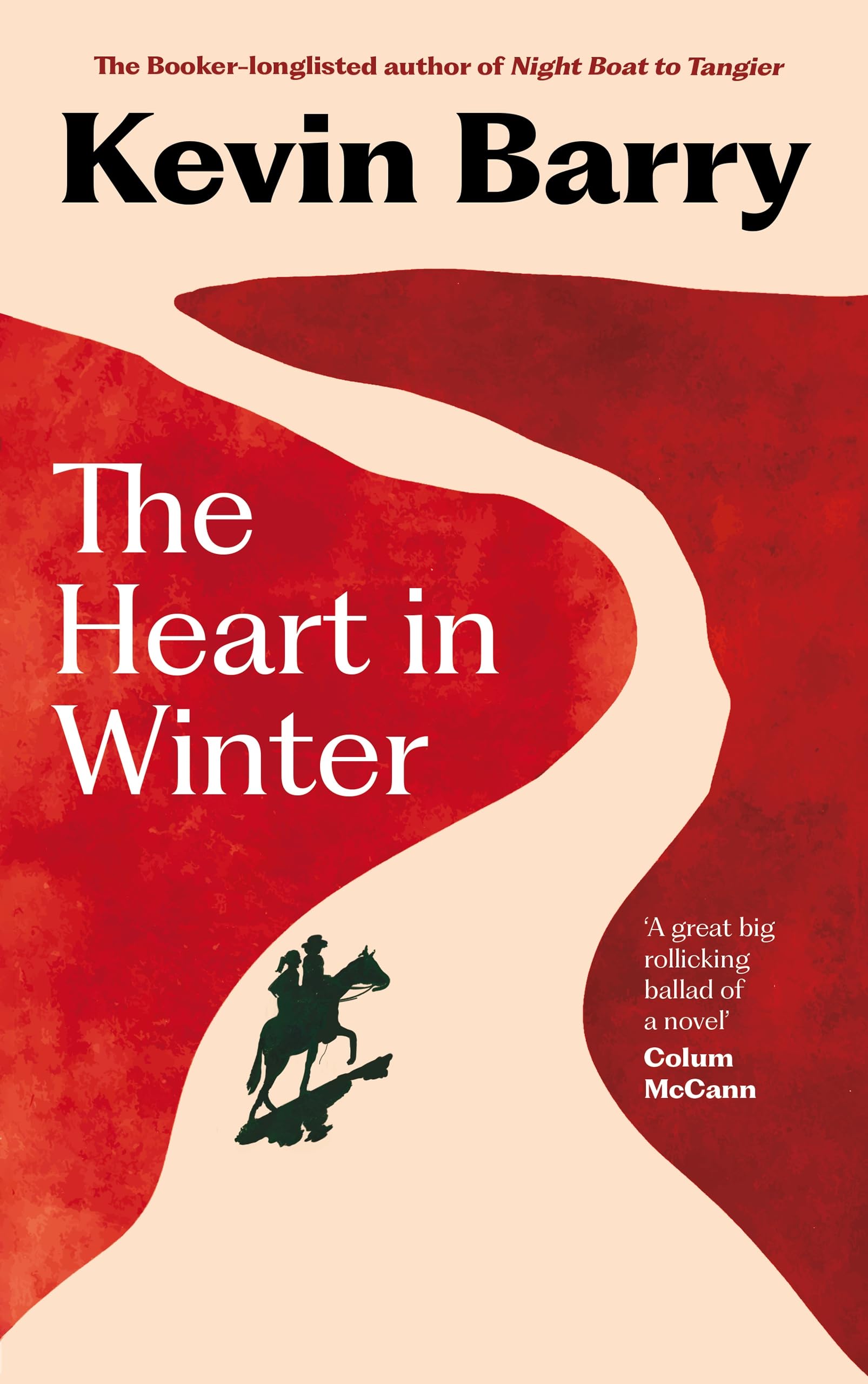
The Heart in Winter by Kevin Barry – #ReadingIrelandMonth25

When I first heard about The Heart in Winter last year, despite seeing some very positive reviews I decided I wasn’t interested in reading it as it didn’t sound like my sort of book. After it was longlisted for the Walter Scott Prize earlier this year, I wondered if I’d been too quick to dismiss it and as Kevin Barry is an Irish author, I decided to try reading it for Reading Ireland Month (hosted this month by Cathy of 746 Books).

When I started reading, it seemed that my fears about it were justified. It’s a western, set in 1890s Montana, with lots of drinking, lots of swearing and lots of sex. Worse, there are no quotation marks to indicate speech, something I always dislike and find distracting. Still, I was prepared to give it a chance and persevere…

Tom Rourke is an Irishman living in Butte, Montana, where he works as a photographer’s assistant and a writer of love letters for illiterate men hoping to find wives. He’s also a drunk and an opium addict, drifting through life with no real aim or direction. Everything changes for Tom when Polly Gillespie arrives in town. Polly is newly married to an older man, Anthony Harrington, the fanatically religious captain of a copper mine. She’s already having doubts about her marriage, so when she and Tom fall in love, they decide to run away together. Stealing a horse, they head out across Montana and Idaho, hoping to make it all the way to California, but Harrington won’t let his bride escape that easily and soon a posse of gunmen are in pursuit.

Once Tom and Polly left Butte and set out on their journey, I started to feel much more engaged with the story. Although their romance was very sudden (literally love at first sight, with no time to show how their relationship developed), I still found it convincing and could easily believe that these two flawed, lonely people would form an instant connection. The narrative is split between Tom and Polly on the run and Harrington’s men who are hunting them down and although it seems that the odds are against the young lovers, I still hoped things would work out for them and they would find the happiness they deserved.

I wish I could say I loved this book the way everyone else has, but that wouldn’t be true. However, I did find a lot of things to admire in it, particularly the way Barry’s use of language brought the setting so vividly to life. There are also some very colourful supporting characters, both in Butte and among the people Tom and Polly meet on their travels. As I mentioned earlier, though, I really hate the current trend for not using punctuation correctly. If the idea is to make the prose feel more immersive, it does the exact opposite for me. Apart from that, I think I’m just not a fan of westerns in general. I did enjoy Patrick deWitt’s The Sisters Brothers, but the other westerns I’ve tried since then haven’t really worked for me, not even Days Without End by Sebastian Barry, whose work I usually love.
I won’t be at all surprised if this book is shortlisted for the Walter Scott Prize next month or even if it turns out to be the eventual winner. I just wasn’t the right reader for it, but I’m still glad I tried it and got to know Tom and Polly.
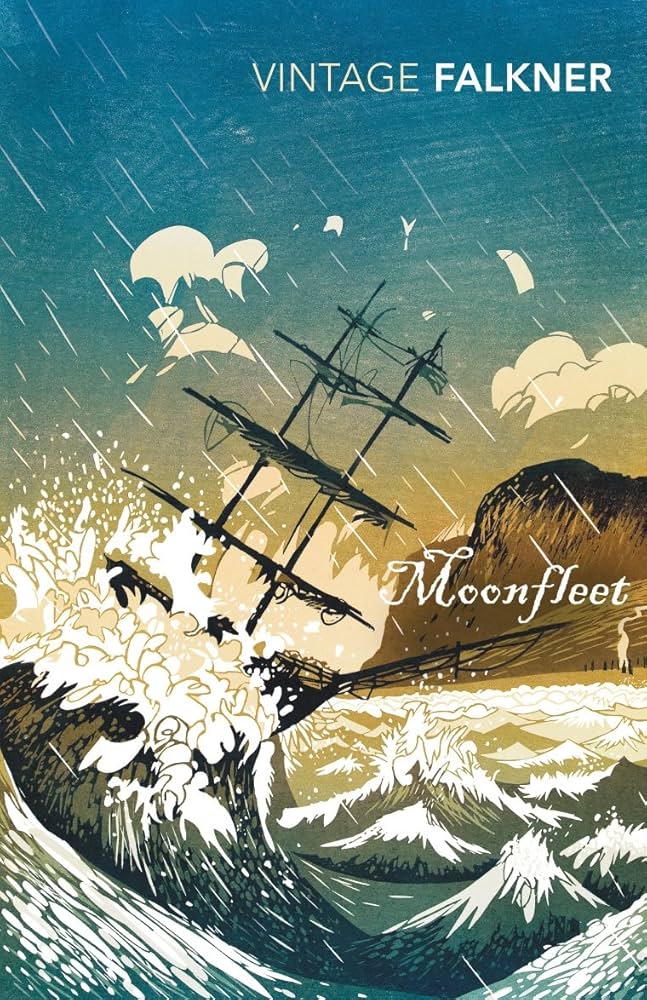
Moonfleet by John Meade Falkner

I added Moonfleet to my Classics Club list after seeing some very positive reviews from other bloggers and thinking it sounded like something I might enjoy. It’s an adventure story and was apparently very popular when it was published in 1898, although it seems to have been overshadowed by similar books like Treasure Island and Kidnapped. Modern authors are still influenced by it, though, such as Alex Preston, who named it as the inspiration for his 2022 novel, Winchelsea.

Moonfleet is set in the 18th century and is narrated by John Trenchard, a fifteen-year-old orphan who lives with his aunt in the village of Moonfleet on the south coast of England. The village takes its name not from the moon but from a prominent local family, the Mohunes. Generations of Mohunes are buried in the family vault under the church, including the notorious Colonel John ‘Blackbeard’ Mohune who once stole a diamond from King Charles I and hid it in a secret location. According to legend, his ghost now walks the churchyard trying to find the hidden jewel.

One night, John Trenchard finds himself accidentally locked in the Mohune vault where he discovers a locket containing a scrap of paper with what appear to be clues to the location of the missing diamond. He also makes another discovery: a group of local smugglers are using the vault as a hiding place for their contraband. He is rescued by two of the smugglers – the innkeeper Elzevir Block and Master Ratsey, the church sexton – and now that he knows their secret, he becomes involved in their smuggling operations. When an encounter with the excisemen ends in violence, John and Elzevir are forced to flee and as they’re unable to return to Moonfleet, they decide to go off in search of Blackbeard’s diamond.

Although this is usually described as a children’s book, like most classics it can also be enjoyed by adults. As it was published in the 19th century, the writing style is naturally very dated now, but I think there should still be enough to keep both older and younger readers interested – as well as the smugglers, hidden treasure and haunted churchyards, there are sea voyages, shipwrecks, coded messages, curses and even a touch of romance (John is in love with Grace, daughter of the novel’s villain, the magistrate Maskew). Later in the book, there’s also a surprising amount of emotional depth as a relationship forms between John, who has grown up without a father, and Elzevir, who has lost a son.

Moonfleet itself is a fictional village, but is based on East Fleet near Chesil Beach in Dorset. The geography of the area plays a big part in the book, with descriptions of the high cliffs, secluded bays and hidden coves that make the coastline ideal for smuggling. It’s just as important to the story as the characters and the plot. I enjoyed the book, although I don’t think it would have been a favourite classic even if I’d read it as a child. Still, I found it entertaining and perfect escapism, which is something I think most of us need now and then! It seems Falkner only wrote two other novels, The Lost Stradivarius and The Nebuly Coat; if you’ve read them, I’d love to know what you thought.

This is book 46/50 from my second Classics Club list.

Murder at Gulls Nest by Jess Kidd

I’ve read three books by Jess Kidd and so far they’ve all been completely different. This new one, though, is described by the publisher as ‘the first in a sparkling new 1950s seaside mystery series’, so presumably she’s going to stick with one style and genre for her next few books. The series stars Nora Breen, a former nun who has left the convent that has been her home for the last thirty years. She’s an interesting and unusual character and I enjoyed meeting her in this first novel, Murder at Gulls Nest.

Gulls Nest is a guest house in the seaside town of Gore-on-Sea on the southeast coast of England. It’s also the last known address of Frieda, who was once a novice at Nora’s convent before leaving the order and promising to keep in touch. Frieda had been a good friend of Nora’s and when her letters stop arriving, Nora becomes so worried that she also decides to leave and travel to Gore-on-Sea to find out what has happened. Once at Gulls Nest, Nora learns that Frieda disappeared one night without explanation, yet no one else seems to be concerned about it, including the police. Convinced that something bad must have happened to her friend, Nora takes the room that was once Frieda’s and begins to investigate.

As Nora gets to know the other lodgers, she discovers that some of them are not what they seem and appear to be hiding secrets. Then a murder takes place, which may or may not be linked to Frieda’s disappearance. Nora is sure that if she can solve one crime it could provide clues to the other, but Inspector Rideout makes it clear that the police don’t want or need the assistance of a middle-aged ex-nun. Of course, Nora isn’t going to give up that easily!

Murder at Gulls Nest is as entertaining as I’ve come to expect from Jess Kidd’s books, with her usual array of colourful, quirky characters. Some of the most memorable are Professor Poppy, an elderly puppeteer who runs a Punch and Judy show; Dinah, the young daughter of the Gulls Nest landlady, who never speaks but sees everything that’s going on; and the exasperated Inspector Rideout, who wants Nora kept away from his investigation at all costs. I loved Nora’s relationship with Rideout and look forward to seeing how it continues to develop in the next book. As for Nora herself, although I couldn’t quite believe that she had until recently been a nun, I did like her as a character and enjoyed seeing her interacting with the other residents of Gore-on-Sea. I particularly loved the chapter where she’s invited to afternoon tea with the vicar and his ‘family’ – and I won’t spoil the fun by telling you what happens there!

At times this felt like a parody of a mystery novel rather than one to be taken too seriously, but at other times it became surprisingly dark, which kept things interesting all the way through. There’s also a good sense of time and place, bringing the 1950s British seaside setting to life. I hope we don’t have to wait too long for the second book.

Thanks to Faber & Faber for providing a copy of this book for review via NetGalley.

Clear by Carys Davies – #ReadingWales25

Clear is a book I hadn’t really considered reading until it appeared on the Walter Scott Prize longlist in February and I was pleased that I was still able to get a copy through NetGalley. Carys Davies is also a Welsh author, which is perfect for Reading Wales Month ’25, hosted this year by Karen at BookerTalk.

Clear is a beautifully written novella set in 1843 and telling the story of a friendship that forms between two men who should be enemies. John Ferguson is one of many evangelical ministers who have broken away from their church to form the Free Church of Scotland. Having given up his job and his home to establish this new church, John is struggling financially and, out of desperation, accepts an offer of work from a landowner who wants him to travel to a remote Scottish island and evict the last remaining tenant from the land. Forced evictions like these, known as Clearances, have been happening all over the Scottish Highlands as landlords remove the people living on their estates so that they can use the land for other purposes such as sheep farming. It’s a traumatic and often cruel process and not something John is looking forward to being part of.

The man John will have to evict is Ivar, who has lived alone on his island in the far north of Scotland since the deaths of his remaining family members. It’s an isolated life, but Ivar is content and has his horse, Pegi, for company. One day, he finds a man unconscious on the beach under the cliffs and takes him to his home to nurse him back to health. This is John Ferguson, who has met with an accident soon after arriving on the island. Ivar finds a picture of John’s wife, Mary, in his belongings and becomes infatuated with her, the first woman he’s seen for a long time – but as the injured man begins to recover, Ivar switches his affections to John himself. He has no idea why John is there, however, and because the two men speak different languages, he’s unable to ask.

Language forms an important part of the novel. Ivar speaks only Norn, a now extinct language once spoken in Shetland and Orkney, and John speaks English with a small amount of Scots. Over the course of the book, we see how two men unable to communicate in words are still able to bond and connect until eventually they do begin to learn each other’s language. In her author’s note Davies explains how the novel was inspired by Jakob Jakobsen’s Etymological Dictionary of the Norn Language in Shetland and she scatters Norn words throughout the book with a glossary at the back. Norn appears to have been a fascinating language; John is surprised to discover how descriptive it is and how many different words there are for mist, fog, wind and other types of weather.

Some parts of the novel are written from the perspective of Mary, John’s wife, who becomes concerned about the work her husband has been sent to do – she’s heard that the evictions can be unpleasant and violent – and decides to follow him to the island. I enjoyed reading Mary’s story and thought her sections of the book perfectly complemented Ivar and John’s. Mary’s thread of the novel comes together with the others near the end, and although I’m not going to tell you how the book ends I can say that it wasn’t what I expected but I was quite happy with it!

Carys Davies’ writing is beautiful and also very readable and I found this a quick, absorbing read. For such a short book, there’s a lot packed inside it. It reminded me a lot of Claire Keegan’s novella Small Things Like These, so if you enjoyed one book I would recommend trying the other.

Thanks to Granta Publications for providing a copy of this book for review via NetGalley.

Top Ten Tuesday: Books on My Spring TBR

This week’s topic for Top Ten Tuesday (hosted by That Artsy Reader Girl) is “Books on My Spring 2025 To-Read List”.

I have a lot more than ten books I’m hoping to read this spring, but here’s a selection of them:

~

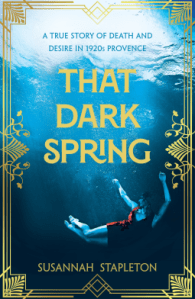
1. That Dark Spring by Susannah Stapleton – I haven’t read Susannah Stapleton’s previous non-fiction book, but her new one, about a true crime in 1920s Provence, sounds fascinating.

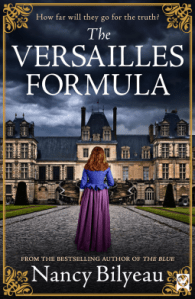
2. The Versailles Formula by Nancy Bilyeau – I was very excited to see the next book in the Genevieve Planché series on NetGalley last week.

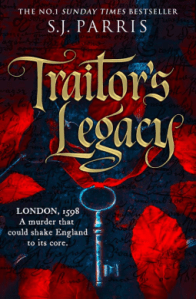
3. Traitor’s Legacy by SJ Parris – The first in a new series of historical thrillers set in Elizabethan England.

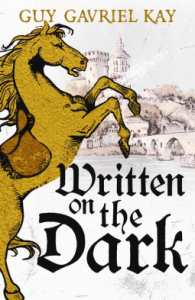
4. Written on the Dark by Guy Gavriel Kay – A new book by GGK is always something I look forward to. This one is set in a world based on medieval France.

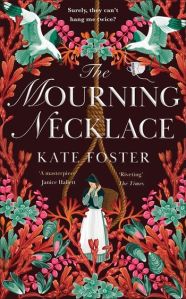
5. The Mourning Necklace by Kate Foster – I enjoyed Kate Foster’s last novel, The King’s Witches, so I’m hoping this one will be just as good.

6. The Elopement by Gill Hornby – A sequel to Hornby’s Godmersham Park, about Jane Austen’s niece, Fanny Knight.

7. Linden Rise by Richmal Crompton – When I was looking for books published in 1952 to read for the upcoming 1952 Club, I remembered I had this one on my Kindle. Not sure what else I’ll read yet.

8. White Corridor by Christopher Fowler – My recent Six Degrees of Separation post reminded me about the Bryant and May series. I enjoyed the first four books and this is the fifth.

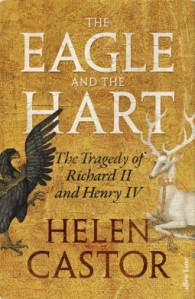
9. The Eagle and the Hart by Helen Castor – Another non-fiction book, this time about the relationship between Richard II and Henry IV. I’ve already started it, but it’s so long I think it will take me the rest of the spring to finish it.

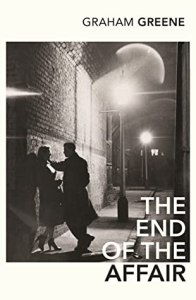
10. The End of the Affair by Graham Greene – One of the final few books on my Classics Club list. It will also be the first book I’ve read by Graham Greene.

~

What are you planning to read this spring?

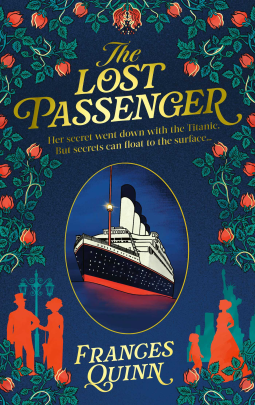
The Lost Passenger by Frances Quinn

Frances Quinn’s That Bonesetter Woman was one of my books of the year in 2022 and I didn’t really expect her new one, The Lost Passenger, to live up to it. Well, I’m pleased to say that I thought it was even better!

The novel begins in England in 1910. Nineteen-year-old Elinor Hayward is the daughter of a wealthy Manchester mill owner known as ‘the cotton king’, but when she marries Frederick Coombes, the son and heir of Lord and Lady Storton, she finds herself being looked down upon by her aristocratic in-laws. It seems that nothing she says or does is good enough for them and although Frederick himself is not unkind, it quickly becomes obvious that he doesn’t love her and it’s not going to be the happy marriage she had dreamed about. Worse still, when their first child, Teddy, is born, he is immediately taken away to be raised by a nanny and it is made clear to Elinor that she’s to have very little involvement in his upbringing.

After two unhappy years, Elinor is thrilled when her father buys tickets for the Titanic and invites her to join him on the ship’s maiden voyage, along with Frederick and Teddy. It’s a chance to see more of the world, but also to finally spend some precious time with her little boy. Of course, the voyage ends in tragedy but Elinor and Teddy are lucky enough to be rescued after the ship goes down. When asked for her name so a list of survivors can be compiled, it occurs to Elinor that this is the only opportunity she’s ever going to have to escape from her old life. Before she has time to really think about the consequences, she finds herself giving another woman’s name and taking on a fake identity. But will she be able to avoid being caught – and will the new life she builds for herself in New York be worth the deception?

Frances Quinn has a real gift for creating characters the reader can get behind and root for. I liked Elinor from the beginning and she had my full sympathy in having to deal with the vicious snobbery of Lady Storton and the disappointment of a loveless marriage. Her life with Frederick and his family is so stifling and unhappy that even though the decision she makes after the sinking of the Titanic is questionable, it’s also very understandable. Although this first section of the novel is quite slow, I think it was necessary for Quinn to spend plenty of time showing us how trapped Elinor felt and how desperate she had become.

Many books have been written about the Titanic, but this one is different. The Titanic is not the main focus of the story but is a starting point to explore how Elinor makes the most of the second chance she has been given. However, I still felt that Quinn handles the disaster sensitively and with respect for the victims. She writes about the failings of the evacuation process, the conditions experienced by those who make it into a lifeboat and the realisation that there’s no hope for the hundreds left on board, but she doesn’t go into too much detail on any of these things. Instead of concentrating on the disaster itself, she focuses more on the survivors and how they try to cope with the trauma they’ve suffered and move forward with their lives.

The second half of the book is devoted to Elinor’s arrival in New York and how she goes about trying to build a happier future for herself and Teddy. I’m deliberately not saying much more because I want you to enjoy discovering the rest of Elinor’s story for yourself (everything else I’ve talked about so far is already touched on in the publisher’s blurb for the book). It’s both fascinating and inspirational to see how Elinor is able to create a whole new life out of the ruins of her old one, but at the same time there’s always the risk that someone who knew her before could see her and give her away her secret.

I loved this book and as I haven’t read her first one, The Smallest Man, yet, I still have something to look forward to!

Thanks to Simon and Schuster UK for providing a copy of this book for review via NetGalley.

Top Ten Tuesday: Books featuring doubles, doppelgängers and impersonations

This week’s topic for Top Ten Tuesday (hosted by That Artsy Reader Girl) is “Books that Include/Feature [insert your favourite theme or plot device here]”. There were lots of different options here! After some thought, I decided to list ten books with characters who have doubles and are either mistaken for them or decide to impersonate them.

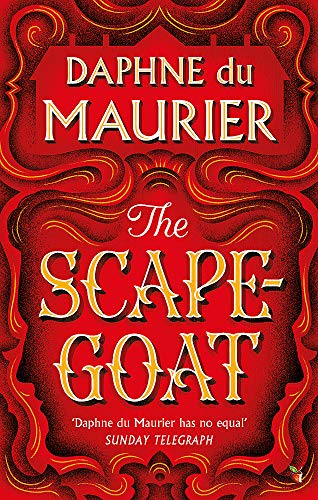
1. The Scapegoat by Daphne du Maurier – I’ve read all of du Maurier’s novels and I think this is one of her best. John, an Englishman visiting France, meets his exact double, Jean de Gué, a French count. As they are both dissatisfied with their current lives, John ends up impersonating Jean, taking his place at the family château with interesting results!

2. A Tale of Two Cities by Charles Dickens – This is probably my favourite Dickens novel, featuring one of my favourite characters, Sydney Carton, who bears a strong resemblance to Charles Darnay, a Frenchman on trial for treason in 1780s London.

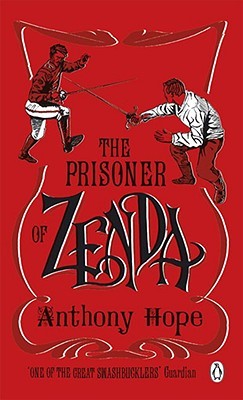
3. The Prisoner of Zenda by Anthony Hope – One of the most famous impersonation novels of all time is this 1894 classic by Anthony Hope in which an English gentleman, Rudolf Rassendyll, impersonates the King of Ruritania to save him from a treasonous plot.

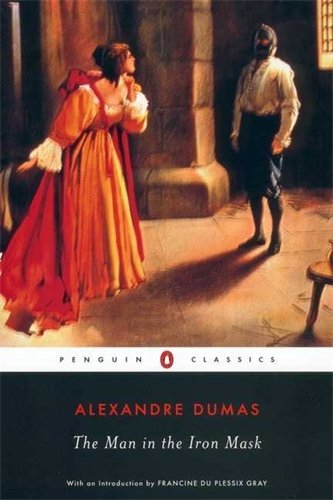
4. The Man in the Iron Mask by Alexandre Dumas – This is the final book in Dumas’ d’Artagnan series which began with The Three Musketeers. The first half of the novel revolves around one of the musketeers, Aramis, and a plot involving a man imprisoned in the Bastille who resembles the King of France and is forced to hide his face behind an iron mask.

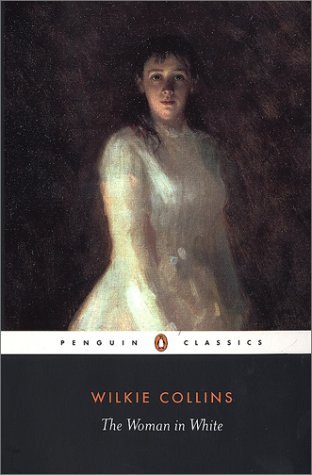
5. The Woman in White by Wilkie Collins – This is another favourite of mine! It begins with drawing master Walter Hartright’s meeting on a lonely London road with a mysterious woman dressed all in white who has escaped from an asylum. The next day Walter takes up a teaching position at Limmeridge House in Cumberland where he finds that one of his students, Laura Fairlie, bears a striking resemblance to the woman in white…

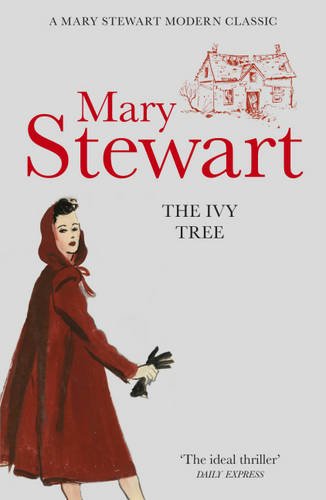
6. The Ivy Tree by Mary Stewart – I love Mary Stewart’s books, including this one, in which Mary Grey is approached by a man who has mistaken her for his cousin, Annabel, and persuades her to impersonate Annabel as part of a scheme to inherit his great-uncle’s fortune.

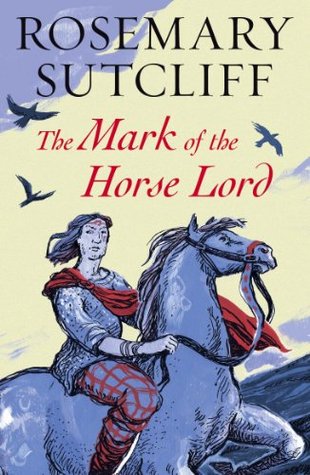
7. The Mark of the Horse Lord by Rosemary Sutcliff – This book appeared on my recent Top Ten Tuesday list of books set in the ancient world, but it fits perfectly with this week’s topic as well. In Roman Britain, Phaedrus, a slave, is asked to impersonate King Midir of the Dalriadain, whom he closely resembles and who has been overthrown by a usurper queen.

8. The Great Impersonation by E. Phillips Oppenheim – The title says it all! This entertaining impersonation novel from 1920 begins with Everard Dominey meeting his doppelganger in an African desert and coming up with a plan to steal his identity.

9. Dance of Death by Helen McCloy – Published in 1938, this is one of a series of detective novels featuring the psychiatrist Dr Basil Willing. The body of a young woman is found buried in snow in a New York street and is quickly identified by the police – but the mystery deepens when they interview her cousin, who looks very like the dead girl and claims she had been asked to impersonate her.

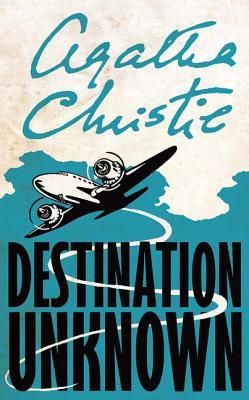
10. Destination Unknown by Agatha Christie – This is a standalone thriller rather than a detective novel. Our heroine, Hilary Craven, encounters a British secret agent in a Casablanca hotel who persuades her to impersonate a dying woman whom she resembles. He hopes she will be able to locate the woman’s husband, one of a group of scientists who have disappeared. Maybe not one of Christie’s best, but I still enjoyed it.

~

Have you read any of these? Can you think of any other books where a character has a double and/or impersonates them?