The Wild Girl by Kate Forsyth

The Wild Girl Hansel and Gretel, Rumpelstiltskin, Sleeping Beauty…I’ve known all of these stories since my childhood, but I’ve never really thought about where they came from. Yes, they all appeared in my big book of Grimms’ Fairy Tales but how exactly did the Brothers Grimm come up with all these wonderful stories? What was their inspiration? Kate Forsyth’s new novel, The Wild Girl, shows us how Jakob and Wilhelm Grimm spent years collecting and writing down old tales told to them by their friends and neighbours. One of these friends was Dortchen Wild, a young woman who grows up next door to the Grimm family in the small German kingdom of Hessen-Cassel. The Wild Girl is Dortchen’s story.

Dortchen is one of six daughters of an apothecary and his wife, described on the back cover as “the pretty one (Gretchen), the musical one (Hanne), the clever one (Rose), the helpful one (Lisette), the young one (Mia) and the wild one (Dortchen)”. As there are six sisters to get to know – and a brother, Rudolf – giving each of them one or two strong characteristics made it easy to remember which was which, even if it meant that not all of them felt as well-rounded as Dortchen. The Grimms are also a large family but in a worse position than the Wilds financially, as Frau Grimm is a widow and with the Napoleonic Wars raging throughout Europe, her sons are struggling to find work. Dortchen has been in love with Wilhelm Grimm from the age of twelve, but knows that her father will never allow them to marry – partly because of Wilhelm’s poverty but also because he just doesn’t seem to want Dortchen to have any happiness in her life.

As I read The Wild Girl I was desperately hoping for Dortchen and Wilhelm to get the happy ending they deserved, but I don’t want to give the impression that this is just a romance novel, because it’s not. Another thing that I loved was the historical setting – I’ve never read about the Napoleonic Wars from a German perspective before and Kate Forsyth has helped me to understand what it was like for the people of Hessen-Cassel as they were invaded first by the French then by the Russians. The violence of the war and the horrors experienced by the soldiers are described in vivid detail – sometimes a bit too vivid for me! There are also lots of lovely descriptions of cobbled streets lit by lanterns, medieval market squares and dark forests, as well as of Dortchen’s work in her father’s apothecary shop, gathering plants and herbs and preparing medicines.

This is quite a dark book and what makes it particularly disturbing is the depiction of Dortchen’s suffering at the hands of her abusive father, Herr Wild. As the novel progresses and he becomes more and more violent and cruel, it’s sad to see how Dortchen, who begins the book as “the wild one”, has her spirit crushed and her confidence destroyed. The darkness of the novel means that we can look forward to the fairy tales as a way to escape, even if only briefly, from the harsh realities of the world being described. The fairy tales are cleverly woven into the novel at relevant points so that they feel like an important part of Dortchen’s story rather than being randomly included just for the sake of it. I found that some of the tales told by Dortchen and other characters could easily be identified as the stories we all know and love; others were new to me but had several elements that felt familiar. While the brothers’ original aim was to try to preserve the old stories that had been passed down by word of mouth from generation to generation, they were eventually forced to edit their tales to make them more suitable for children and easier to market to the public.

Finally, I think the publishers, Allison & Busby, deserve a word of praise for the way this book has been presented. The hardback edition was a pleasure to read with that pretty blue cover!

The Wild Girl tour banner This post is part of the Historical Fiction Virtual Book Tour. I’m the last stop on the tour, but if you’d like to read more about The Wild Girl you can find a list of previous reviews and interviews here.

Elizabeth I: A Novel by Margaret George

Elizabeth I I don’t think I really need to write a plot summary of this book, do I? Elizabeth I: A Novel is exactly as the title suggests – a novel about Elizabeth I. Not just about Elizabeth, of course. Although the story is narrated by the queen herself, all the important historical figures of the period are here – from sailors and explorers (Sir Francis Drake, Sir Walter Raleigh), to politicians and advisers (Francis Walsingham, Robert Cecil), and poets and playwrights (Edmund Spenser and William Shakespeare). And if this all seems very male-dominated, there’s also another very important female character, Lettice Knollys, who shares the narration with Elizabeth.

Lettice Knollys was Elizabeth’s cousin, but at the time when this novel begins the two haven’t spoken for many years following Lettice’s marriage to Robert Dudley, Earl of Leicester, a man with whom Elizabeth was once thought to have been romantically involved. Lettice has been banished from court and her hopes of being allowed to return rest on her son, Robert Devereux, the Earl of Essex – but when he becomes the centre of a rebellion against the queen, it seems Lettice’s hopes could be destroyed. Elizabeth’s relationship with Essex and how she deals with his rebellion form a big part of the story.

When I saw the size of this novel (nearly 700 pages) I expected it to cover the whole of Elizabeth’s life. It doesn’t. It starts towards the end of her reign, just before the arrival of the Spanish Armada in 1588, and takes us through only the last few years of her life (Elizabeth died in 1603). You can probably imagine, then, how in-depth and detailed the book is to take so many pages to cover such a short period of Elizabeth’s reign. The only problem with this is that things quickly start to become repetitive. The changing of the seasons every year is described in minute detail every time – a cold winter, a hot summer, a bad harvest…over and over again. I couldn’t help thinking that some editing would have improved things and made the book a more gripping read. As it was, it felt far too long and I started to get bored towards the end (and I don’t usually have a problem with long books).

Apart from this, Elizabeth I wasn’t a bad book and I could tell that a huge amount of research must have gone into it. Although I read lots of historical fiction, I haven’t actually read many books about Elizabeth so there was enough new material here to leave me with the feeling that I had really learned a lot. I should also point out that this is definitely not a romance or a bodice ripper – the focus is on Elizabeth herself, as a strong, intelligent, competent woman facing challenges both within her own kingdom and from overseas, including poverty, famine and the constant threat of attack from Spain. One aspect of Elizabeth’s life that I thought Margaret George portrayed very convincingly was the way she felt as she tried to come to terms with growing older and watching her most trusted friends and advisers dying one by one of old age.

I thought the choice of Lettice as the second viewpoint character was a good one. Not only do her chapters of the book give us a chance to see what’s going on away from Elizabeth’s court, but Lettice also offers a very different outlook on life. The two women have such different priorities and motivations – while Elizabeth considers herself ‘married to England’ and is always thinking of what is best for the country, the most important thing to Lettice is her family, particularly her son, the Earl of Essex. While there is not a lot of distinction between the narrative voices of the two women and without the chapter headings it might even have been difficult to tell who was narrating at times, I found Lettice an easier character to understand than Elizabeth – though I’m not sure if I can really say that I ‘liked’ either of them.

The other characters in the book felt less developed, maybe because we only saw them through the eyes of Elizabeth and Lettice, and despite having such an interesting collection of historical characters to work with, George never really succeeded in bringing them to life for me. The book isn’t badly written – quite the opposite, in fact – I just found it a bit dry and lacking any special magic. This is the first Margaret George book I’ve read, though, and the few problems I’ve mentioned here haven’t stopped me wanting to try her others!

Captain Blood by Rafael Sabatini

Captain Blood

“Thief and pirate is what you heard Miss Bishop call me today – a thing of scorn, an outcast. And who made me that? Who made me thief and pirate?”

One of my favourite books of last year was Scaramouche by Rafael Sabatini, a classic historical adventure novel set during the French Revolution. I loved it so much I immediately added two more of Sabatini’s books to my Classics Club list – Captain Blood and The Sea-Hawk – though not without some reservations as these are both books about pirates and with my general dislike of books set on ships I thought the seafaring elements might be too much for me. I was wrong. Captain Blood is another wonderful book and I enjoyed it almost as much as Scaramouche!

Peter Blood, an Irish physician and former soldier, is arrested during the Monmouth Rebellion of 1685 when he is discovered tending the wounds of an enemy of King James II. Wrongly found guilty of treason, he is lucky enough to avoid hanging but instead he is sent into slavery on a sugar plantation in Barbados. Here Blood meets two people who will have a huge influence on his future: Colonel Bishop, the cruel, brutal plantation owner and his beautiful niece, Arabella, with whom Blood falls in love. When the island is attacked by Spanish raiders, he seizes his chance to escape by commandeering one of their ships and after transforming himself into the notorious Captain Blood, our hero becomes a pirate both feared and respected throughout the Caribbean.

Sailing up and down the shores of Barbados, Jamaica and Tortuga, Captain Blood becomes involved in a series of exciting adventures and daring escapades, while being pursued by both Colonel Bishop and a Spanish rival, Don Esteban, who has sworn revenge – but what sets Blood apart from the other pirates he meets is his sense of honour and his dream of one day clearing his name and settling down to a peaceful life with Arabella. To the reader, it’s obvious that Peter Blood has become a pirate because he feels he has no choice – his only other option is to remain in slavery – but Arabella doesn’t understand this and when she tells him she can never love a “thief and pirate”, he must find a way to redeem himself in her eyes.

It amazes me that Rafael Sabatini’s books are not more widely read. As well as his great writing style, clever plots and vividly described characters, his novels also have well-researched and believable historical settings. While I was reading this book, I never questioned that I was in the Caribbean of the 17th century, just as when I read Scaramouche I was fully immersed in revolutionary France. And my fears that I might struggle with the pirate theme proved to be completely unfounded!

Sabatini keeps the sailing terminology to a level that even I could cope with and I found that even without understanding every nautical reference it didn’t affect my understanding of the story (which is what I also discovered when I read Master and Commander by Patrick O’Brian earlier this year). Although there were a lot of sea battles, they weren’t too difficult to follow and in fact, not only could I follow them but I actually enjoyed them too, which is something I never thought I would say! I suspect that the descriptions of these battles were not completely realistic and in real life Blood would never have been able to overcome such great odds every time, but with my total lack of naval knowledge I’m happy to pretend that he could.

But Captain Blood is more than just a swashbuckling adventure story and even if it had only been half as exciting, I would still have loved it solely for the great characterisation of Peter Blood, a true romantic hero (in the old-fashioned sense of the term). Like Andre-Louis Moreau from Scaramouche, Edmond Dantes from The Count of Monte Cristo or Francis Crawford from the Lymond Chronicles, Blood is one of those characters who can sometimes seem to be almost superhuman. He has an intelligence and wit superior to everyone else’s, he’s charismatic and quick thinking, multilingual, as talented a swordsman as he is a surgeon, and when it comes to buccaneering, he’s a brilliant leader and tactician. However difficult the situation he and his men might find themselves in, he never fails to come up with an imaginative and ingenious way to get out of it. But despite his perfection or perhaps because of it, things don’t always go smoothly for Captain Blood and like the other characters I’ve mentioned, he experiences a series of injustices and misfortunes that makes him a character we can sympathise with and believe in.

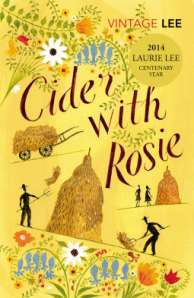
Captain Blood was published in 1922 and is available online as a free ebook, though the edition I read was the Vintage Classics paperback pictured here. I recommend giving it a try even if pirate stories don’t sound appealing to you, as it’s worth reading this one just to meet Peter Blood!

The Lions of Al-Rassan by Guy Gavriel Kay

The Lions of Al-Rassan Guy Gavriel Kay is only a recent discovery for me, but after reading Tigana in June I knew I wanted to read more of his work. Leander of The Idle Woman mentioned that she had been wanting to re-read The Lions of Al-Rassan, one of her favourite books, so we decided it would be interesting to read it at the same time and exchange our thoughts on it.

I should start by saying that although Kay is known as a fantasy author, this book has few, if any, elements that I would describe as ‘fantasy’ and is much closer to historical fiction. The story is set in a fictitious world very similar to medieval Spain. In the north, we have the sun-worshipping Jaddites – brave warriors and horsemen. The Jaddite lands have become divided and weakened over the years due to rivalries between their three kings but they still hope to one day ride south and reconquer the rest of the peninsula. In the south is Al-Rassan, the land of the Asharites, who worship the stars and who value poetry, music and beauty. After the death of their last Khalif, Al-Rassan has also become divided and is not as strong as it once was. Caught between the two are the wandering Kindath people, who pray to the two moons that shine in the sky, one blue and one white. Even with my very limited (almost non-existent) knowledge of Spanish history I could immediately see that the Jaddites represented Christians, the Asharites Muslims and the Kindath Jews.

As tension builds between the Jaddites and the Asharites and war begins to look inevitable, there are big consequences for the novel’s three central characters. One of these is Rodrigo Belmonte, Captain to a Jaddite king and one of the Jaddites’ greatest soldiers. When Rodrigo is exiled by his king he and his company find themselves in the Asharite city of Ragosa. Here he meets another great man, Ammar ibn Khairan, an Asharite who is also in exile, and the two form an instant connection. Our third protagonist is a woman, Jehane bet Ishak, a Kindath physician who joins Rodrigo’s company and becomes close to both men. With the peninsula heading rapidly towards conflict, will the bonds between Rodrigo, Ammar and Jehane be able to survive?

Now that I’ve read two of Guy Gavriel Kay’s novels, it’s hard to say which I liked best because both were such great books. I think I found Tigana more fun to read (simply because I read fantasy so rarely these days and it was something a bit different for me to read a book with magic and wizards) but I found the writing in The Lions of Al-Rassan more powerful and the characters more fully developed. Ammar, Rodrigo and Jehane are all characters that I could love and admire, and considering their very different backgrounds and cultures, it’s quite an achievement that Kay could make it possible to identify with and care about all three of them.

Although this novel is set in a fictional land, the parallels with a real period of history made me feel that I was gaining a better understanding of medieval Spain. But as well as the history, there’s also a lot of drama and excitement throughout the novel: among other things, there are battles, assassination attempts (both successful and unsuccessful), and a masked Carnival. What I really loved about this book, though, was the portrayal of the three main characters and the relationships between them. It’s not as simple as Jehane being in love with both men (or them being in love with her) and having to choose between them; although there is a romantic aspect, the relationships are much deeper and more complex than that and encompass not just love but also friendship, loyalty and trust.

There’s a growing sense of sadness too as you start to approach the end of the book and wonder whether all three of Ammar, Jehane and Rodrigo will survive the coming conflict and how they will cope if they find themselves on opposite sides. The final chapter was one of the most tense and emotional I’ve read for some time, though I thought it would have been even more effective without the epilogue that followed (I was pleased to see that Leander felt the same as I was wondering whether I was the only person who would rather not have had the loose ends tied up).

I’m excited about the prospect of working my way through the rest of Kay’s books, but I’m sure I’ll want to re-read this one at some point too – preferably after I’ve had a chance to read up on Spanish history! If you would like to see what Leander thought of The Lions of Al-Rassan, you can read her post here.

The Sea Change by Joanna Rossiter

The Sea Change The Sea Change is a novel about many things: love and grief, friendship and betrayal, the devastation caused by war and natural disasters, but perhaps most importantly, the relationships between mothers and daughters.

Violet Fielding lives with her parents and her sister, Freda, in a small Wiltshire village called Imber. In the middle of the Second World War the residents of Imber are forced to evacuate, leaving the village to be requisitioned by army troops and used for military training exercises. As Violet tries to settle into a new life in a new home, she is unable to forget Imber, her childhood friends and Pete, the boy she fell in love with.

Many years later in 1971, Violet’s daughter, Alice, is travelling to India with her boyfriend, James. Alice was not on good terms with Violet when they parted; her mother disapproves of James and isn’t very happy about Alice going so far away. When they reach India, Alice and James get married, but the day after their wedding the coast of India is hit by a tsunami and Alice is separated from her new husband, who had gone out to get breakfast. As she begins to search for him – an almost impossible task, given the scale of the disaster and the number of people who are missing – Alice reflects on her life with James and thinks about what went wrong in her relationship with her mother.

The Sea Change is one of those dual time period novels I’ve complained about so much in the past, but I thought the structure worked quite well in this case. Although the two stories are set in different times and places, I could see parallels between them – in both there is a sense of loss and grief for things and people that are gone forever. I never managed to become as interested in Alice’s story as I was in Violet’s, but I did love the way the two storylines began to merge together towards the end.

I’ve read a lot of books about the war but none that have dealt with this particular aspect: the idea of an entire village that has been abandoned and the effects of this on the people who once lived there. It was so sad to read about a whole community being broken up and forced into a different way of life. The fact that Imber is a real place, still uninhabited today, makes the story even more moving. Alice’s story was also something new for me; I’ve seen images on the news, of course, showing the destruction a tidal wave can cause, but it’s not something I’ve ever read about in fiction.

There are some books that grab me from the first page and don’t let go until the end; other books are gentler and draw me in more slowly. This was one of the second type but that doesn’t mean I liked it any less. The Sea Change is a beautifully written book, filled with emotion and poignancy and a real understanding of complex relationships. There are some beautiful descriptions too, of both England and India. I would never have guessed this was Joanna Rossiter’s first novel as it feels like the work of a much more experienced author! I’m looking forward to seeing what she writes next.

Thanks to Penguin for providing a review copy of this book.

Classics Club August Meme: Forewords and Notes

The Classics Club

I haven’t taken part in the Classics Club Meme for a while, but August’s topic is one I feel quite strongly about! This month’s question is:

Do you read forewords/notes that precede many classics? Does it help you or hurt you in your enjoyment/understanding of the work?

I do sometimes read the forewords and notes but I’ve learned from experience to read them at the end rather than the beginning! I’ve never understood why so many publishers think it’s acceptable to give away the entire plot of a novel in the introduction just because it’s a classic. It’s true that many classics have become such a big part of popular culture that most of already know what happens, but that’s not always the case and I hate to think of anyone unsuspectingly reading the introduction first and having the story completely spoiled for them. When I read the Penguin English Library edition of Far from the Madding Crowd recently, I was pleased to find that the ‘introduction’ had been placed at the end of the book as an afterword instead of at the front. I think it would be nice if all publishers could either do the same or at least print a spoiler warning at the beginning the way Wordsworth Classics do.

Personally I like to go into a book knowing as little as possible about the plot and whether it’s a classic or a contemporary novel makes no difference. I might go back to read the introduction after I’ve finished the book, though not always as sometimes I either forget or decide that I’m happy with my understanding of the book and am ready to move straight on to another one. I read classics simply because I enjoy them so I’m not necessarily interested in analysing every little detail. I like to read the information on the author and their life, if any is given, or information that places the story into historical context, but apart from that I don’t usually find the introduction particularly helpful and prefer to interpret a book the way I want to interpret it.

What are your opinions on forewords? Do you like to read them or not?

The Sacred River by Wendy Wallace

The Sacred River This is Wendy Wallace’s second historical fiction novel. I remember hearing about her first, The Painted Bridge, last year but never got round to reading it so I was pleased to have a chance to read this one, The Sacred River. This book is set in the nineteenth century and is the story of three women and how their lives are changed during a visit to Egypt.

Harriet Heron is twenty three years old but still feels that she is treated like a child. She has suffered from severe asthma for many years and feels stifled by her over-protective parents. Having always been fascinated by the Ancient Egyptians, Harriet is delighted when the doctor manages to convince her mother and father that a trip to Egypt for a change of air will improve her health. Finally she has a chance to escape from her sheltered life in London and see the world.

Harriet soon sets off on her voyage to Egypt in the company of her mother, Louisa, and her Aunt Yael but before they reach their destination, Alexandria, a meeting with an artist on board the ship causes tension between Harriet and her mother. It seems that the secrets of Louisa’s past could be about to be revealed, destroying Harriet’s happiness in the process. But this is not just the story of Harriet and Louisa; another character with an interesting story is Yael, Harriet’s aunt. On their arrival in Alexandria, Yael is shocked by the lack of health care available to the city’s children and plans to start a clinic to educate their mothers, but she soon discovers that the people she had been relying on to help her are reluctant to get involved.

Harriet is a wonderful character and I loved the way she grew and blossomed as a person over the course of the novel, as her health improved and she began to find the freedom she had always longed for. But I also liked Yael and admired her for her energy, determination and desire to make a difference. Like Harriet, she discovers a happiness and fulfilment in Alexandria that was lacking from her life at home in England. Louisa is the only one not enjoying life in Egypt and the reason for this is only revealed very slowly. We know it’s due to something that happened in her past and that it involves Eyre Soane, the artist the women meet on the ship, but the details remain a mystery until later in the book.

Egypt is always a fascinating and atmospheric setting, yet I don’t seem to have read many books that are set there. Harriet’s (and presumably the author’s) enthusiasm for the wonders of the ancient world, for archaeology and hieroglyphics shines through and it was good to have the opportunity to learn a little bit about the subjects Harriet is so passionate about. I must remember to look out for Wendy Wallace’s first novel, The Painted Bridge, having enjoyed this second one so much!

Thanks to Simon & Schuster for providing a review copy.