Historical Musings #88: Books to look out for in 2025

In what has become a December tradition here on the blog, it’s time to look ahead to the historical fiction being published in the year to come. I’m listing below a selection of 2025 releases that have caught my attention for one reason or another – some are review copies I’ve received, some are new books by authors I’ve previously enjoyed and others just sound interesting. 2025 looks like being a great year for historical fiction – this list is longer than ever – and I hope there’s something here that appeals to you.

Dates provided are for the UK and were correct at the time of posting.

JANUARY

The Ghosts of Rome by Joseph O’Connor (30th January 2025) – The sequel to O’Connor’s My Father’s House, continuing the story of the Escape Line, a group of activists who smuggle refugees out of Nazi-occupied Rome.

The Queen of Fives by Alex Hay (30th January 2025) I’ve read this one already and will post my review when the book is published. It’s about a Victorian con woman who has five days to win a fortune.

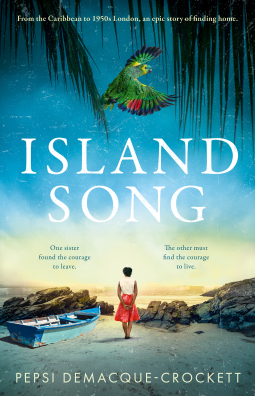
Island Song by Pepsi Demacque-Crockett (30th January 2025) – This debut novel takes Agnes Deterville from the Caribbean island of St. Lucia to a new life in 1950s London.

The Resurrectionist by A. Rae Dunlap (30th January 2025) – Follows the story of a young medical student who joins a group of body snatchers, providing corpses to anatomy schools in 19th century Edinburgh.

FEBRUARY

The Night of the Scourge by Lars Mytting (4th February 2025) – This will be the final book in the Sister Bells trilogy set in a Norwegian village and based around the legend of two very special church bells.

The Secrets of the Rose by Nicola Cornick (7th February 2025) – Like most of Cornick’s novels, this is a dual time period one, with the historical storyline being set at Bamburgh Hall in 1715.

The Sirens by Emilia Hart (13th February 2025) – Divided between the 19th century and the present day, this is the story of two sets of sisters separated by two hundred years.

The Woman in the Wallpaper by Lora Jones (20th February 2025) – The story of two sisters who work at a French wallpaper factory during the Revolution.

The Lost Passenger by Frances Quinn (27th February 2025) I loved Frances Quinn’s last book, That Bonesetter Woman, so I’m looking forward to this one about a woman who disappears after the sinking of the Titanic.

Carrion Crow by Heather Parry (27th February 2025) – A Gothic novel about a woman locked in the attic of her family home. I’ve read this one in advance and it’s very unsettling!

The Portrait Artist by Dani Heywood-Lonsdale (27th February 2025) – Historical mystery with an art theme, set in the Victorian period.

The Queen and the Countess by Anne O’Brien (27th February 2025) – Set during the Wars of the Roses, one of my favourite time periods, this novel will tell the stories of Margaret of Anjou and Anne, Countess of Warwick.

MARCH

Murder at Gulls Nest by Jess Kidd (11th March 2025) – I’ve enjoyed everything I’ve read by Jess Kidd so far, but this sounds like something different from her – the first in a series of 1950s seaside mysteries.

The Paris Express by Emma Donoghue (20th March 2025) – Donoghue’s new novel is inspired by the Granville to Paris rail disaster of 1895.

APRIL

The Versailles Formula by Nancy Bilyeau (1st April 2025) – I’m not sure about the date for this one as I can’t find details anywhere except Goodreads, but this will be the next book in Bilyeau’s wonderful Genevieve Planché series.

The Eights by Joanna Miller (3rd April 2025) – A novel about the first group of female students to attend Oxford University.

The Greek House by Dinah Jefferies (24th April 2025) – A woman returns to Corfu in 1934, the site of her brother’s tragic disappearance years earlier.

The Midnight Carousel by Fiza Saeed McLynn (24th April 2025) – I’m intrigued by the sound of this novel about a French carousel-maker and a woman who discovers one of his carousels twenty years later.

MAY

Cleopatra by Natasha Solomons (8th May 2025) – I’ve enjoyed some of Solomons’ other books, so will be interested to see what she does with the story of Cleopatra.

The Cardinal by Alison Weir (22nd May 2025) – Following her recent Tudor Rose trilogy, Weir stays in the Tudor period for her new novel which covers the rise and fall of Cardinal Wolsey.

The House of Seymour by Joanna Hickson (22nd May 2025) – I’ve enjoyed most of Joanna Hickson’s other books. Her new one is about the Seymour family of Wolf Hall.

The Elopement by Gill Hornby (22nd May 2025) – In this sequel to Hornby’s Godmersham Park, Jane Austen’s niece, Fanny Knight, is now married to Sir Edward Knatchbull and busy raising his five children.

The Mourning Necklace by Kate Foster (29th May 2025) – Inspired by the real-life story of a woman who survived her own hanging in 1724.

JUNE

A Schooling in Murder by Andrew Taylor (5th June 2025) – After writing six books in the Marwood and Lovett series, Taylor is moving on to something different with this new historical mystery set in 1945.

The Rush by Beth Lewis (12th June 2025) – A new historical crime novel set in Canada during the Gold Rush.

Before Dorothy by Hazel Gaynor (19th June 2025) – Set in 1930s Kansas, this is the story of Emily Gale, Dorothy’s Aunt Em from The Wizard of Oz.

Love, Sex and Frankenstein by Caroline Lea (26th June 2025) – I’ve read several novels about the summer of 1816 at Lake Geneva when Mary Shelley began to write Frankenstein. It will be interesting to see how Lea approaches the subject.

JULY

Sinners by Elizabeth Fremantle (3rd July 2025) – Set in Rome in 1599, this novel is based on the true story of the Italian noblewoman, Beatrice Cenci.

The Art of a Lie by Laura Shepherd-Robinson (10th July 2025) – I’ve loved all of Shepherd-Robinson’s previous books and this new one, a thriller set in Georgian London, sounds equally wonderful!

The House at Devil’s Neck by Tom Mead (15th July 2025) – This will be the fourth book in Mead’s mystery series set in the 1930s and featuring the partnership of Scotland Yard detective Inspector Flint and the retired magician, Joseph Spector.

Love and Other Poisons by Lesley McDowell (17th July 2025) – Based on a true crime in which a woman, Madeleine Smith, is accused of murdering her lover in Victorian Glasgow.

A Case of Life and Limb by Sally Smith (17th July 2025) – The second in Smith’s new series about Gabriel Ward, a lawyer who works in London’s Inner Temple in the early 20th century. I loved the first book, so am particularly looking forward to this one!

How to Lose a Lord in Ten Days by Sophie Irwin (31st July 2025) – Irwin has written two very entertaining Regency romances and I’m sure this one will be just as much fun.

The Death of Shame by Ambrose Parry (31st July 2025) – I love this series set in the medical world of 19th century Edinburgh, so I’m happy to see there’s a new book coming next year.

AUGUST

Boudicca’s Daughter by Elodie Harper (28th August 2025) – Following her success with the Wolf Den trilogy, Harper’s next book is going to tell the story of Solina, Boudicca’s daughter.

SEPTEMBER

Circle of Days by Ken Follett (23rd September 2025) – Follett’s new novel will follow the stories of several people involved in the building of Stonehenge.

OCTOBER

House of Splinters by Laura Purcell (9th October 2025) – A new haunted house novel returning to the setting of Purcell’s earlier book, The Silent Companions.

Boleyn Traitor by Philippa Gregory (9th October 2025) – Gregory returns to the Tudor period for her new book about Jane Parker, wife of Anne Boleyn’s brother George.

The Witching Hour by various authors (16th October 2025) – I enjoyed The Winter Spirits so am looking forward to this new, similar collection of short stories by some of my favourite current authors of historical fiction.

~

Are you interested in reading any of these? Are there any other historical novels coming in 2025 that I’ve missed?

Gabriel’s Moon by William Boyd

William Boyd’s The Romantic was one of my books of the year in 2022, so I was excited about reading his new one, Gabriel’s Moon – although it did sound very different. Unlike The Romantic, which follows the entire life story of its hero, this book is a spy novel set over a much shorter period of time.

It’s 1960 and travel writer Gabriel Dax is visiting what is now the Democratic Republic of the Congo, where he has the opportunity to interview the new Prime Minister, Patrice Lumumba. During the conversation, which Gabriel captures on tape, Lumumba explains that he has enemies who want him dead and he provides the names of the three people he thinks are plotting to kill him. On his return home to London, Gabriel is convinced somebody has been inside his house in his absence and has been searching for something. It seems that somebody wants Gabriel’s tapes of the Lumumba interview – and their attempts to obtain them become more desperate once news emerges that Lumumba has been executed by a firing squad.

His accidental involvement in the Lumumba conspiracy brings Gabriel into contact with the mysterious Faith Green, an MI6 intelligence officer who sends him on a series of missions, the purpose of which Gabriel doesn’t fully understand. In a secondary storyline – which explains the title of the novel – Gabriel decides to consult a psychoanalyst, Dr Katerina Haas, in an attempt to get to the bottom of the mental health issues that have plagued him all his life, ever since his mother was killed in a house fire when he was six years old. The official cause of the fire was given as Gabriel’s night light, a candle inside a moon-shaped globe, but Gabriel’s memories of what actually happened that night are very different.

I enjoyed this book overall, but I found it a bit slow at times and, as a thriller, not particularly thrilling. There’s a lot of travel to various locations in Europe and Africa (all beautifully evoked), with a lot of sitting around in bars drinking and talking, but I never really felt that Gabriel was in much danger. Having said that, I was never bored and became fully drawn into the world of espionage, spies and double agents that Boyd creates, all set against a backdrop of the Cold War. I found it slightly unbelievable that the spies Gabriel meets all speak to him so openly, readily sharing secret information with him – but then, Gabriel doesn’t always know how to interpret that information and it’s his very innocence and gullibility that makes him so useful to Faith Green and MI6. As the story progresses, he eventually decides it’s time to stop being the self-described ‘useful idiot’ and try to take control of his own destiny.

Faith Green remains a bit of a shadowy, enigmatic character throughout the book and because I felt I never really got to know her, I became irritated by Gabriel’s obsessive infatuation with her, particularly as he already has a girlfriend, Lorraine – whom he looks down on because of her working-class background, while at the same time admitting that he’s only with her because he finds working-class women sexually attractive. Although I didn’t dislike Gabriel in general, some of his attitudes leave a lot to be desired!

One of the most interesting aspects of the novel for me was seeing Gabriel work through his hazy memories and his feelings of guilt about the tragic fire that took his mother’s life. Through his psychoanalysis sessions with Dr Haas, Gabriel is inspired to carry out his own investigations into the night of the fire and begins to uncover the truth. I thought this storyline worked well alongside the espionage one and gave us some more insights into Gabriel’s character.

Although Gabriel’s Moon works perfectly as a standalone, there were some loose threads left at the end that made me think this could be the first in a series – and I was pleased to find that William Boyd is indeed working on a second book. I’ll be looking out for it, but I also have lots of Boyd’s earlier novels still to read. I would be happy to hear your recommendations!

Thanks to Viking for providing a copy of this book for review via NetGalley.

Book 53 for the Historical Fiction Reading Challenge 2024

The Royal Rebel by Elizabeth Chadwick

This is the first of a planned pair of novels telling the story of Joan of Kent, cousin of King Edward III. Chadwick refers to her throughout the book as Jeanette because that was the name given to her by the King’s son, Edward (known as the Black Prince), who had it engraved on a silver cup. I’ll do the same in this review to avoid confusion.

The Royal Rebel opens in 1338 with Jeanette preparing to leave her family behind and travel overseas with the royal court for the first time. Jeanette is only twelve years old, so in the absence of her mother she is chaperoned by Katerine, Countess of Salisbury. During the journey to Antwerp, Jeanette is drawn to one of the King’s household knights, Thomas Holland, and once they reach their destination they find opportunities to spend time together away from the watchful eye of the Countess. They continue their relationship for more than a year until Jeanette becomes pregnant and they decide to marry in secret, knowing that they would be unlikely to get the consent of her family or the King.

Soon after the wedding, Jeanette loses the child and then Thomas leaves to go to war. In his absence, Jeanette is forced into marriage with William Montagu, her younger brother’s friend whom she has always disliked. William is the son and heir of the Earl of Salisbury and both Jeanette’s mother and the Countess of Salisbury see it as a wonderful match. Although Jeanette confesses that she is already married and can provide evidence, the two women refuse to acknowledge it and the Montagu marriage goes ahead anyway. The rest of the novel follows Thomas and Jeanette in their long battle to prove the legitimacy of their marriage so that they can live together as husband and wife at last.

I love Elizabeth Chadwick’s books but wasn’t sure I was going to like this one at first. Most of the first half of the novel is devoted to the romance between Jeanette and Thomas and not much else – and with this being the first of two books on Jeanette’s life, Chadwick takes her time in developing this part of the story. Eventually, though, things do get much more compelling as our hero and heroine become embroiled in their mission to have their marriage ruled valid by the Pope. Jeanette’s mother, Margaret Wake, and the Countess of Salisbury are very much the villains here as they destroy evidence, play politics behind the scenes and even imprison Jeanette to ensure nothing interferes with their plans (in reality, it seems unclear whether they were aware of Jeanette’s marriage to Thomas Holland before pushing her into a bigamous marriage with William Montagu).

William is depicted as weak and immature, unwilling to defy his mother and make decisions of his own, but I – and I think Jeanette as well – began to feel sorry for him as the novel progressed, because he was under the control of the Countess just as much as she was and was wasting years of his life trapped in a false marriage to someone who would never love him. Jeanette, on the other hand, is the ‘rebel’ of the title and although, like William, she’s constrained by society and her noble status, she knows what she wants out of life and is determined to find a way to get it, however long it takes. Her brother, John, sums up the situation perfectly:

‘Women, when they gather together in their sewing groups to gossip, arrange marriages for their relatives like stitching secret patterns on their embroideries. I envy you because you have chosen to sew your own colours and to walk away from it all, even at a great cost to yourself and others.’

Jeanette’s age, being barely in her teens at the time of her marriage to the older Thomas, will obviously be problematic to a modern audience so Chadwick chooses not to focus on it too much. Although she does tell us at the beginning how old Jeanette is, she doesn’t make a big thing of it and it’s easy to forget about the age difference as you read. This first novel only covers the early part of Jeanette’s life, ending in 1350, so anyone who knows this period of history will know that there’s a lot more to come in the second novel. There’s no news on its publication yet, but I’ll be looking out for it.

Thanks to Little, Brown Book Group UK for providing a copy of this book for review via NetGalley.

Book 52 for the Historical Fiction Reading Challenge 2024

Six Degrees of Separation: From Sandwich to The Wild Girl

It’s the first Saturday of the month which means it’s time for another Six Degrees of Separation, hosted by Kate of Books are my Favourite and Best. The idea is that Kate chooses a book to use as a starting point and then we have to link it to six other books of our choice to form a chain. A book doesn’t have to be connected to all of the others on the list – only to the one next to it in the chain.

This month we’re starting with Sandwich by Catherine Newman, as usual a book I haven’t read. I don’t have any plans to read it, but here’s what it’s about:

For the past two decades, Rocky has looked forward to her family’s yearly escape. Their rustic beach-town rental has been the site of sweet memories, its quirky furniture and mismatched pots and pans greeted like old friends.

Now, sandwiched between her children who are adult enough to be fun but still young enough to need her, and her parents who are alive and healthy, Rocky wants to preserve this golden moment forever. This one precious week when everything is in balance; everything is in flux.

But every family has its secrets and hers is no exception.

With her body in open revolt and surprises invading her peaceful haven, the perfectly balanced seesaw of Rocky’s life is tipping towards change…

I wasn’t sure how to get started with this month’s chain. I seem to have used food-related links a few times lately, so wanted something different. Sandwich is being marketed as ‘The NYT bestseller from the author of Richard & Judy Book Club pick, We All Want Impossible Things’ so I looked to see which other books had been part of the Richard & Judy Book Club over the last year or two and noticed The Mysterious Case of the Alperton Angels by Janice Hallett (1). I love Hallett’s books, although I know they’re not for everyone. This one is about a cult led by a man who calls himself the Angel Gabriel and is written in the form of emails, letters, WhatsApp messages, and even excerpts from books and film scripts.

A simpler link next, using a shared word in the title. Less than Angels (2) was the first Barbara Pym novel I read and I enjoyed it, although I’ve since read others by her that I liked better. The book was published in 1955 and tells the story of a group of anthropology students at a London research centre. I read it for a Barbara Pym Reading Week hosted by two fellow bloggers in 2013.

Another author I tried for the first time thanks to an event hosted by a blogger was Margaret Kennedy – I read her The Constant Nymph (3) for a Reading Week a year later in 2014. Again, it wasn’t a favourite but I liked it enough to read more of her work. The ‘nymph’ of the title is Tessa, the daughter of Albert Sanger, a musician who lives in a chalet in the Tyrol with his large family known as ‘Sanger’s circus’.

Part of The Unicorn Hunt by Dorothy Dunnett (4) is also set in the Tyrol. This is the fifth book in Dunnett’s House of Niccolo series and follows the rise in fortunes of Nicholas de Fleury, whom we first meet as a dyer’s apprentice in 15th century Bruges. The series takes us all over Europe and Africa and I thoroughly enjoyed all eight books.

Big Sky by Kate Atkinson (5) is also number five in a series, in this case the Jackson Brodie series. In this book, private investigator Jackson is on the trail of a client’s cheating husband when he encounters a desperate man standing on the edge of a cliff. Like the others in the series, this one is more about the characters than the mystery or the crimes being committed, but I think that’s why I enjoy them so much. I still have the latest book in the series waiting to be read.

My final link is to another book by an author whose name is Kate. The Wild Girl by Kate Forsyth (6) is the story of Dortchen Wild, a young woman who grows up next door to the Grimm family in the small German kingdom of Hessen-Cassel. The Grimms have two sons, Jakob and Wilhem, who of course become known as the Brothers Grimm. The novel explores how they collected their famous fairy tales and the role Dortchen may have played in this.

~

And that’s my chain for December! My links have included: the Richard and Judy Book Club, the word ‘angels’, reading weeks, the Tyrol, the fifth book in a series and authors called Kate.

In January, we’ll be starting with the 2024 Booker Prize winner, Orbital by Samantha Harvey.

The Red Lacquer Case by Patricia Wentworth – #DeanStreetDecember24

This month, Liz at Adventures in Reading, Running and Working from Home is hosting another Dean Street Press December. I have several books published by DSP that I would like to read but I decided to start with this one, a standalone Patricia Wentworth novel from 1924. I really enjoyed it, so it was a good choice!

The Red Lacquer Case is a spy thriller and like many books of its type it’s probably best not to take it too seriously. Accept it for what it is, though, and it’s great fun. Our heroine is Sally Meredith who, as the novel opens, is listening to her uncle, the scientist Fritzi Lasalle, telling her about a formula he has developed for a potentially dangerous new gas. Lasalle has become paranoid about the formula falling into enemy hands, so he has locked it inside a red lacquer case which has a secret opening mechanism. After showing Sally how it works, he explains that an attempt to open it in any other way will release acid into the case, destroying the contents.

During the night, Lasalle walks out of the house and disappears, leaving behind a note for Sally telling her that the red lacquer case is hidden on a bookshelf. When she goes to look for it, however, she discovers that it’s been stolen. It seems that Lasalle’s worst fears have come to pass and enemy agents now have the case – but they don’t know how to open it and for that they’ll need Sally’s help.

The rest of the novel follows Sally as she tries to evade the enemy, who are determined to capture her and force her to open the case. Unfortunately, although she’s a brave, plucky heroine (thankfully the complete opposite of the infuriating Loveday Leigh in Fool Errant, the only other Wentworth novel I’ve read), she’s too trusting and unobservant and walks straight into every trap set for her. It makes the plot more exciting, I suppose, but it’s also quite frustrating. It’s one of those books where you keep wishing you could jump into the story for a moment and shout “No! Don’t do it!”

Sally has some help from Bill Armitage, a former love interest who now works for the War Office and coincidentally also happens to be on the trail of Uncle Fritzi’s secret formula. He’s not as much help as he could have been, however, because he and Sally spend most of the book embroiled in a series of misunderstandings, being caught out by fake telegrams and other deceptions used by the enemy agents. Luckily for Sally, she find some unlikely allies at the enemy hideout, including a temperamental Polish violinist who conveniently falls in love with her and an elderly aunt who’s completely unaware that she’s sharing her house with spies.

I think you can probably see why I’ve said this isn’t a book to be taken seriously! It’s great escapism, though, and very entertaining. Just be aware that it’s not really the ‘Golden Age mystery’ the cover indicates, as there’s very little mystery involved (although there is a twist at the end, which I didn’t see coming but should probably have guessed). I’m looking forward to reading more of the Patricia Wentworth books available from Dean Street Press!

Poor Girls by Clare Whitfield

It’s 1922 and Eleanor Mackridge, like many women, is finding it difficult to adjust to ‘normal life’ now that the war has ended. Compared to working in a munitions factory and feeling that she was doing something important for her country, her new job waitressing at a Brighton hotel is dull and boring. Marriage could offer an escape route, but that doesn’t sound very appealing either, so when Eleanor crosses paths with a member of the all-female crime gang, the Forty Elephants, the temptation to join them is too strong to resist.

Now known as Nell, she moves to London where she is assigned to a cell – a group of four gang members who live and work together – and begins her education in the art of theft. Soon she knows how to steal expensive furs and jewels from London’s grandest department stores, how to conceal her loot in hidden pockets and, most importantly, how to avoid being arrested. Although her conscience troubles her at first, she soon learns to love her new life and her new friends. But what will Nell’s family say when they discover what she is doing? And what will happen if her luck runs out and she gets caught?

Poor Girls is an enjoyable, fast paced novel rooted in historical fact. I wasn’t aware until I finished the book and read the author’s note that the Forty Elephants really existed (the name comes from the Elephant and Castle area of London, where they were based). Although the gang leader, Alice Diamond – known as Queen Alice – was a real person, Nell Mackridge seems to be a fictional character. However, through the stories of Nell and her friends, Whitfield explores some of the factors that may have driven young women like them to turn to a life of crime.

It was fascinating to see how the gang operated and to watch Nell learning all the tricks of the trade – all the cons, deceptions and disguises she needed to be able to avoid detection. Interestingly, women had an advantage when it came to shoplifting as store security were reluctant to stop and search female customers. Also, all those layers of clothing they wore were useful for hiding stolen goods! The success of their operations depended on working together as a team, so trust was necessary between the members of each cell and Nell formed strong bonds with Effie, Lily and Charlie, her partners in crime.

I did have one or two minor criticisms of the book: I felt that the characters of Nell’s three friends could have been more clearly defined – Charlie and Lily, in particular, seemed interchangeable – and there were times when the language felt more 2020s than 1920s. Otherwise, this was a very entertaining novel with a plot not quite like any other I’ve read. I also liked the fact that, although crime is obviously not something we should admire or find glamorous and Whitfield does make the consequences clear, at the same time she isn’t trying to push a moral message onto the reader. The ending of the book isn’t quite what you would expect either, but it’s probably more realistic that way.

It seems that Alice Diamond and the Forty Elephants have been the subject of several recent novels and there’s a non-fiction book available as well. I’m not sure how I’ve missed them all, but will investigate them now. I would also like to read Clare Whitfield’s earlier novel, People of Abandoned Character.

Thanks to the publisher for making a copy of this book available for review via The Pigeonhole.

Book 51 for the Historical Fiction Reading Challenge 2024

Murder in Tinseltown by Max Nightingale

I used to love Choose Your Own Adventure books as a child – who else remembers them? – so when I saw this new adult version of the same concept, I couldn’t wait to read it. Murder in Tinseltown is set in Los Angeles in the 1950s and the reader takes on the role of a detective investigating the murder of an actress. At various points in the story you’ll have the opportunity to choose your own actions and decide what happens next, either by turning to different numbered pages or, in the Kindle edition I read, simply clicking on a link.

You start your adventure at LAPD headquarters on the weekend of the Golden Star Awards when some of Hollywood’s biggest stars have descended on the city. It’s a busy day in the squad room, but when a disturbing call comes through from the Royal Premiere Hotel – “Trouble…hurt…not my fault…help…it’s them…I’m sorry…” – you head straight to the hotel to investigate. You arrive just in time to learn that one of the waiters has discovered Blanche Aikerman, probably the world’s most famous actress, stabbed to death in her room. After witnessing the dead body for yourself, you accompany the hotel manager to the suite of Peter von Hiltz, Blanche’s director, to give him the news. However, he doesn’t answer the door. What will you do next?

This is where the interactive part of the novel begins. Will you ask the manager to let you into von Hiltz’s room? Will you return to the crime scene to look for more clues? Or would you prefer to interview the waiter who found the body? Each option takes you to a different location in the book and the story continues from there until you reach another turning point and are presented with a new set of choices. It could and should have been a lot of fun working through the book and trying to solve the mystery – unfortunately, there were some problems with the structure which made the whole experience less satisfying than I’d hoped.

Maybe there was one route I could have followed through the novel where the story would have flowed perfectly, but surely somebody should have checked that all of the other possible routes also made sense. Early on, I saw a character die right in front of my eyes at an airport – then I returned to the hotel, where that same character was still walking around alive and well as if nothing had happened. Similarly, I found the murder weapon and then someone else found it again later in the book. Looking at other reviews, it seems that most of us noticed those same two things so I’m not sure how they weren’t picked up on by the author or an editor. Also, there are several outcomes where you die, but instead of the book ending as you would expect, you just come straight back to life and are directed to the ‘correct’ option so the story can continue.

From a nostalgia perspective, it was nice to have the opportunity to read a book like this, but I’m disappointed that it didn’t work as well as it could have done.

Thanks to HarperNorth for providing a copy of this book for review via NetGalley.