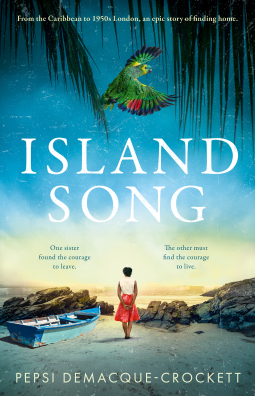
Island Song by Pepsi Demacque-Crockett

Pepsi Demacque-Crockett has had a successful career in music as a backing singer for Wham! and then as a member of the duo Pepsi and Shirlie. Although she was born in London, her parents came to England from St Lucia in the Caribbean, and this forms the inspiration for Island Song, her debut novel.

Island Song is set in the 1950s. Agnes Deterville and her sister, Ella, who live in the village of Canaries on the island of St Lucia, are two very different people. As the quiet, cautious older sister, Ella can’t imagine leaving her island home and knows that she’ll never want to live anywhere else. Agnes is bolder and more adventurous, ready to follow her dreams and seize new opportunities. Working as a housekeeper for an English family, the Chesters, Agnes is captivated by Mrs Chester’s descriptions of her home country and longs to see it for herself. Hearing that people from the Caribbean have been invited to help rebuild post-war Britain, she decides to use her savings to travel to London.

Agnes has two young children from a failed relationship, whom she leaves behind with Ella, and her intention is to return to St Lucia as soon as she’s made enough money to improve the lives of the whole family. However, everything changes when, soon after arriving in England, she falls in love with another new immigrant, Raphael Toussaint. Agnes and Raphael come from the same village and she knows him by his bad reputation, but meeting him again in London he seems to be a different person and assures her that he has changed. Agnes wants to believe him, but how can she know he’s telling the truth?

Island Song is a fascinating exploration of the experiences of immigrants and the way in which people often build up an image of something in their mind that isn’t matched by reality. Having listened to Mrs Chester’s idyllic tales of her life in Dorset, Agnes expects something similar when she arrives in London and is shocked to find that this isn’t the case. Rather than sipping tea in elegant drawing rooms, she’s working in a kitchen making tea for other people, while being bullied by her boss. Similarly, Raphael comes to London hoping to make a fortune, but instead spends several months unemployed before eventually finding a lowly job painting walls for a construction company. They – like the rest of the Caribbean community – face racism, discrimination and even violence, but also make new friends amongst both immigrants and white British people who give them the confidence that not everyone in their new country wants them to leave.

Agnes is a strong character and I did like her, but I found Raphael more interesting because he goes through more growth and development throughout the novel. He has a drinking problem and is easily influenced by his friends, but he also has a kind heart and does genuinely seem to want to change and be a good partner to Agnes. I really wanted them to find happiness, both in their relationship and in their working lives. Ella is another character who grows as a person as the book progresses. Although most of the focus is on the characters who have left the island, we do catch up with Ella now and then and see how she’s gradually able to move on from some bad experiences in her past and gain the confidence to take control of her own life.

Demacque-Crockett writes beautifully about St Lucia and her love for her own heritage shines through in the London sections of the novel as well. The English spoken by her St Lucian characters is peppered with Kwéyòl, a French-based Creole language, and we see the immigrants trying to adapt to British culture while at the same time trying to retain parts of their own culture, such as their favourite foods and music. I really enjoyed this book and I hope Demacque-Crockett will write another one!

Thanks to HarperCollins for providing a copy of this book for review via NetGalley.
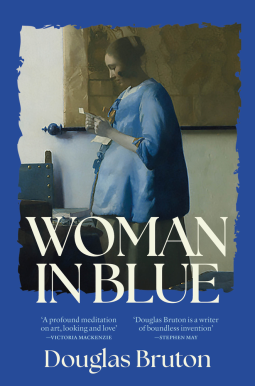
Woman in Blue by Douglas Bruton – #ReadIndies

There’s clearly something about the paintings of Johannes Vermeer that inspires novelists; first, Tracy Chevalier’s Girl With a Pearl Earring and now Douglas Bruton’s excellent Woman in Blue, which is published today. This is the second of Bruton’s books I’ve read, the first being 2021’s Blue Postcards and apart from the shared word in the title (Bruton certainly seems to like the colour blue!) and the shared theme of art and artists, I found this one very different in style and structure.

The novel begins in the present day with our unnamed narrator, referred to only as ‘a man in Amsterdam’, visiting the Rijksmuseum to look at a painting. Just one painting, which he has become so obsessed with that he barely notices any of the others. The painting is Vermeer’s Woman in Blue Reading a Letter and the narrator returns to the museum day after day to study the colours and the composition, but most of all just to spend time in the woman in blue’s company and to imagine the human being who inspired the picture. He’s transfixed by this particular painting for its own sake, but also because the woman reminds him in subtle ways of both his wife and another woman he once loved.

In 17th century Delft, we meet the woman in blue herself – or rather, the young woman who sits for Vermeer as he paints her portrait. Her chapters alternate with the present day ones, slowly building up a history of the woman in blue, her life in Delft and her relationship with the artist. In reality, the true identity of the sitter has never been confirmed (Vermeer’s wife, Catharina Bolnes, has been suggested as a likely candidate, but it seems there’s no actual evidence to prove it), so Bruton has the freedom to create his own fictional story for the woman, whom he names Angelieke.

Although the book is set in two different time periods and narrated by two different characters, the lines dividing the two are blurred. Angelieke is a real woman in 1663, but in the modern day sections, she’s aware that she is a painting in a museum and that the male narrator comes to see her every day. She looks forward to his visits and feels a connection with him, just as he feels one with her. This is not the first novel to give a painting a mind of its own (I, Mona Lisa by Natasha Solomons does the same and I’m sure there must be others) but I really liked the way Bruton handles that element of the story, giving it a dreamlike feel and merging the two narratives so that they don’t feel too separate or disconnected.

With it being a real painting rather than a fictional one, it’s easy to google it so you can refer to the picture itself as you read. The narrator’s observations, made during his repeated viewings, helped me to see things in the painting that I probably wouldn’t have noticed for myself. With each chapter, he finds new details to study and focus on – the map on the wall, the letter in the woman’s hand, the blue bed jacket she’s wearing and the question of whether or not she could be pregnant. At times, Bruton returns to a theme he also touched on in Blue Postcards: the idea that a painting offers something different to each individual who views it and that the viewers themselves can almost ‘become’ part of the painting:

What I like about the painting – one of the many things I like – is how cleverly the artist has included me in it and made me complicit in the looking. It is an intimate and private moment and Vermeer intrudes on it without at all breaking it, and we – Vermeer and me – stand silent, breath held, just looking at this young woman turned in on herself.

For a short book – a novella at 144 pages – there’s so much packed into it that I’ve probably only scratched the surface in this review. I would recommend Woman in Blue to anyone who loves art, but even if you don’t, there’s still a lot here to enjoy.

Thanks to Fairlight Books for providing a copy of this book for review via NetGalley.

As this is an independent publisher, I am counting Woman in Blue towards this year’s #ReadIndies event hosted by Kaggsy’s Bookish Ramblings and Lizzy’s Literary Life. You can find out more about Fairlight Books by visiting their website here.

The Walter Scott Prize Longlist 2025

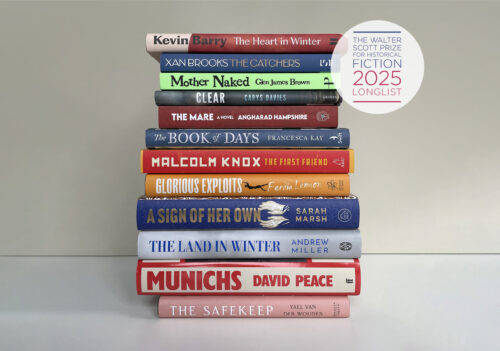
The longlist for the 2025 Walter Scott Prize for Historical Fiction has been announced today! Thanks to this prize, I have discovered lots of great books and authors and always look out for the longlists and shortlists; in fact, trying to read all of the shortlisted titles since the prize began in 2010 is a personal project of mine (you can see my progress here).

There are twelve books on this year’s longlist and here they are:

The Heart in Winter by Kevin Barry (Canongate)

The Catchers by Xan Brooks (Salt)

Mother Naked by Glen James Brown (Peninsula Press)

Clear by Carys Davies (Granta)

The Mare by Angharad Hampshire (Northodox Press)

The Book of Days by Francesca Kay (Swift Press)

The First Friend by Malcolm Knox (Allen & Unwin Aus)

Glorious Exploits by Ferdia Lennon (Fig Tree)

A Sign of Her Own by Sarah Marsh (Tinder Press)

The Land in Winter by Andrew Miller (Sceptre)

Munichs by David Peace (Faber)

The Safekeep by Yael van der Wouden (Viking)

~

I haven’t read a single one of these, which I think is a sign of how far away this prize has moved from the sort of books I’m naturally drawn to (which is fine – I’m always happy to step out of my comfort zone and try different things) and also a focus on books from small independent publishers that may not have had a lot of attention. There are at least some that I’m aware of and that I know have been getting good reviews – The Heart in Winter, Clear, Glorious Exploits, The Land in Winter and The Safekeep – but I haven’t even heard of some of the others. I’ll have to investigate!

The shortlist will be announced in April and the winner will be chosen in June at the Borders Book Festival in Melrose. Obviously I won’t have time to read all of these before the shortlist is revealed, so if you can recommend anything in particular please let me know.

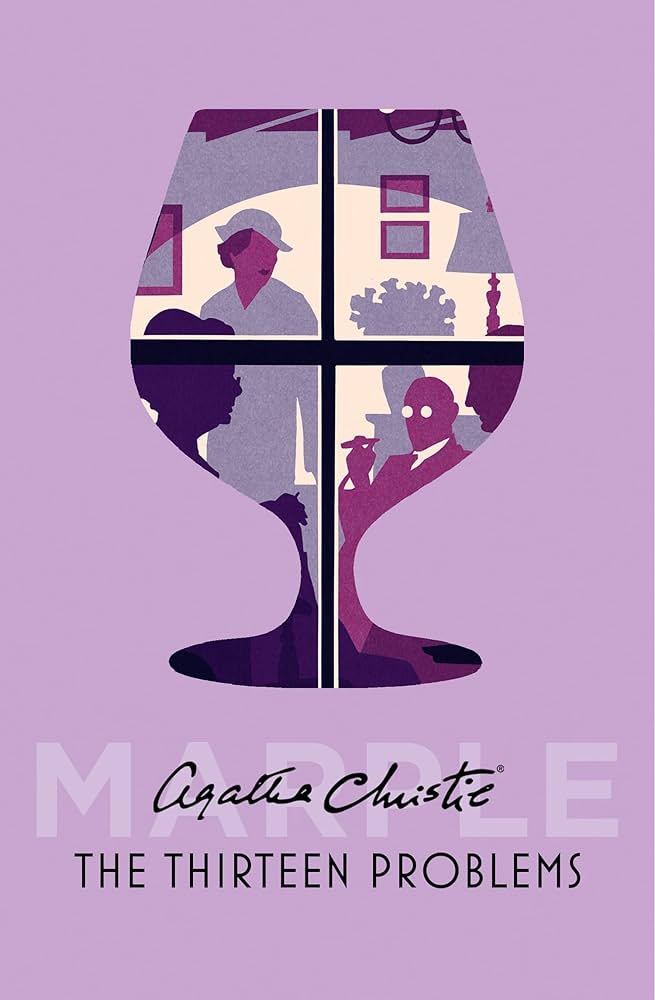
The Thirteen Problems by Agatha Christie

This month for the Read Christie challenge we’re reading books with authors as characters. The recommended book, The Thirteen Problems, is one I hadn’t read before so I thought this would be a good opportunity to pick it up. First published in 1932, it’s a collection of short stories featuring Miss Marple and her nephew, Raymond West, who is a writer. It has also been published in the US as The Tuesday Club Murders, so you may know it by that title.

There are thirteen stories in the book. In the first, a group of six friends gather at Miss Marple’s home in St Mary Mead and during the evening the conversation turns to mysteries. It seems that each of them has experienced or been involved in some kind of mystery and it’s suggested that over the next few weeks they should take turns telling their story and seeing if the rest of the group can solve it. Five of the friends have professions which they claim are ideally suited for detective work – an artist, a writer, a clergyman, a lawyer and a retired policeman – so they all agree to the plan and the Tuesday Night Club is born! The sixth member of the group, Miss Marple, is just there to make up the numbers; how could an old lady who has barely left her quiet little village possibly know anything about solving mysteries?

After all six have told their stories, several members of the group – with the addition of a doctor and a young actress – meet again at the home of Colonel and Mrs Bantry, where another set of stories are narrated. You won’t be surprised to hear that it’s Miss Marple who provides the correct solution for all thirteen of them, after everyone else has tried and failed!

I tend not to be a big fan of short stories, but I do usually enjoy Agatha Christie’s. This collection isn’t a favourite and I think I know why: it’s because the stories all involve mysteries that have already happened or have already been solved, so we don’t get to see Miss Marple or the other characters actively investigating them at the time. It’s a similar concept to Baroness Orczy’s Old Man in the Corner stories where her detective solves crimes while sitting in the corner of a London tearoom. Still, the stories are all interesting and I even managed to solve one or two of them myself!

Some of the stories have a supernatural feel – although the solutions have more logical explanations. My favourite was Colonel Bantry’s story, The Blue Geranium, in which a woman is visited by a fortune-teller who warns her to beware of a blue primrose, a blue hollyhock and finally, a blue geranium, which means death. When the flowers on her bedroom wallpaper begin to turn blue one by one, the woman begins to fear for her life. Another one I enjoyed was The Blood-Stained Pavement, narrated by the artist Joyce, who was visiting Cornwall to paint some picturesque village scenes. She’s sitting outside working on a painting when she notices drops of blood on the ground that weren’t there just a few minutes earlier. These bloodstains turn out to be important when a woman is reported missing two days later.

Although the stories in this book all stand alone, they are not completely separate as there’s also an overarching narrative, with the group of friends discussing the story that’s just been told and deciding whose turn it is to speak next. By the end of the book, Miss Marple has impressed everyone with her detective skills and has shown them that sometimes all that’s needed to solve a crime is a knowledge of human nature. Just as she does in the full-length novels, she draws on parallels with life in St Mary Mead and people she knows who remind her of the suspects or victims in the stories.

I did enjoy The Thirteen Problems, then, and found the stories just the right length. It’s always a pleasure to spend some time with Miss Marple!

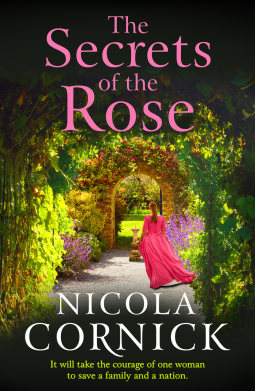
The Secrets of the Rose by Nicola Cornick – #ReadIndies

I like Nicola Cornick’s books because you always know what to expect from them, but at the same time each one is different and has something new to offer. With The Secrets of the Rose, her latest novel published this month, I got exactly what I knew I would get: a dual timeline narrative, strong female protagonists, a search for an historic relic that has found its way into the present, cameo appearances by characters from other Cornick novels, and hints of the supernatural. However, I also had the opportunity to learn about a woman I’ve never read about before – Dorothy Forster of Bamburgh Hall.

In the present day, we meet Hannah Armstrong, an author working on a new book about Grace Darling, the lighthouse keeper’s daughter who became a 19th century celebrity after helping her father to rescue the survivors of a shipwreck. In order to research the biography, Hannah has returned to Bamburgh, the village on the Northumberland coast where she grew up and which she can use as a base for visiting the Darlings’ lighthouse in the nearby Farne Islands. Unfortunately, Hannah is finding that she has very little interest in Grace and her life – the woman she really wants to write about is another local heroine, Dorothy Forster.

Dorothy’s story unfolds in 1715, the year of the Jacobite Rising when supporters of the exiled James Edward Stuart attempted to restore him to the throne. Dorothy, who is living at Bamburgh Hall with her ailing father, is alarmed when she learns that her two brothers, Thomas and Nicholas, have been persuaded by one of the Jacobite leaders, the Earl of Derwentwater to join the rebellion. As the nephews of Lord Crewe of Bamburgh Castle, not only will their involvement put their own lives at risk, it could also leave the whole family in danger. Then Dorothy discovers that the Forsters are the keepers of the Rose, a legendary talisman that both sides in the conflict believe could be the key to victory. Can Dorothy hide the Rose from their enemies and keep her brothers safe?

These two storylines start to come together when Hannah goes to stay at Bamburgh Hall, her stepmother Diana’s home, while researching her Grace Darling book. Here she finds a portrait of Dorothy Forster which appears to be full of Jacobite symbolism. As Hannah digs into Dorothy’s past, she learns about the Rose and its powers and begins to suspect that it may have survived into the 21st century. However, she’s not the only one who has come to that conclusion – it seems that someone else is also on the trail of the Rose and is prepared to go to any lengths to get their hands on it.

As is often the case with dual narrative books, I found that one storyline interested me more than the other and this time it was the Dorothy Forster one. There were a lot of things I liked about Hannah’s story as well – her relationship with her stepmother, a mystery surrounding her brother who seems to have fallen out with everyone in the village, a romance that begins to form with an old friend – but Dorothy’s was more exciting. Legend states that Dorothy rode to London on horseback to rescue her brother Thomas from Newgate Prison after the failed rebellion and Cornick does incorporate this episode into the novel, but also shows that there’s a lot more to Dorothy’s story than that. The Jacobite aspect of the novel plays out mainly in the background, far away from Bamburgh (although I did enjoy the brief appearances of the Earl of Derwentwater whom I first met in Anya Seton’s Devil Water) so the focus is more on Dorothy’s personal life and her relationships with family and friends.

I thought the novel was interesting enough without the magic talisman element and I’m not sure if it really added much to the plot. Still, Nicola Cornick’s books do usually have some supernatural touches and they’re not as strong here as in some of her others. I did love the setting – although I wouldn’t say I know Bamburgh well, I’ve been there a few times and enjoyed seeing it through the eyes of Hannah and Dorothy in two different centuries. And I was intrigued to find when I read the author’s note that Dorothy’s uncle, Guy Forster, and his wife also appear in Cornick’s previous book, The Other Gwyn Girl, which I haven’t read yet. The relationship between them is fictional, although they share the Forster name, but I do want to read that book anyway.

I really enjoyed The Secrets of the Rose, then, and would probably rank it in my top three Nicola Cornick novels so far, along with The Last Daughter and The Phantom Tree.

Thanks to Boldwood Books for providing a copy of this book for review via NetGalley.

As Boldwood is an independent publisher, I am counting this book towards this year’s #ReadIndies event hosted by Kaggsy’s Bookish Ramblings and Lizzy’s Literary Life.

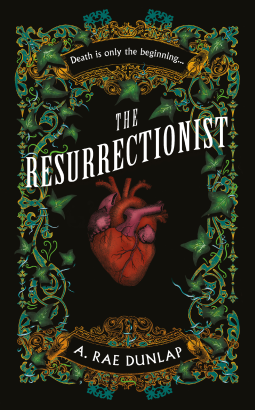
The Resurrectionist by A. Rae Dunlap

It’s 1828 and James Willoughby has just arrived in Edinburgh to begin his medical studies at the university. Having found himself completely unsuited to the career in the church that his parents had planned for him, James has decided that medicine is his true vocation. After speaking to some of his fellow students, he discovers that due to the large class sizes the university can only offer very limited opportunities for practical experience. In order to gain the surgical knowledge he desires, it will also be necessary to attend one of the city’s private anatomy schools where he’ll be able to dissect and study the human body for himself.

Although James comes from a wealthy family, they have fallen on hard times since his father’s death. There’s enough money to pay for his lodgings at the Hope and Anchor Inn, but not much else. If he wants to go to anatomy school, he’ll have to find a way to pay the fees himself. Signing up for Dr Malstrom’s prestigious school, James confides in the doctor’s apprentice, Aneurin MacKinnon, explaining his financial difficulties. Aneurin – or Nye, as he prefers to be called – tells him he may have a solution to the problem. And with that, James finds himself drawn into the secretive, macabre world of body snatching – taking corpses from graves under cover of darkness and selling them to anatomists for study and research purposes.

I loved this book! As a debut novel it’s very impressive and I’ll certainly be looking out for more by A. Rae Dunlap. From the very first page she captures the formal feel of the 19th century novel and manages to avoid using the sort of inappropriately modern language that could have so easily pulled me out of the historical setting. As with Ambrose Parry’s Raven and Fisher series, there are lots of insights into the medical world of 19th century Edinburgh, with the focus here being on the study of anatomy and surgery and how progress was hampered by the lack of human cadavers for students to work with. Edinburgh itself provides an atmospheric setting for the novel, especially as most of the action, for obvious reasons, takes place at night. There are lots of suitably Gothic descriptions of lonely cemeteries, dark alleys and disreputable inns, all forming the backdrop to the trade of body snatching.

The Resurrectionist is narrated by James Willoughby, whom I really liked and believed in as a character. He begins the novel as an innocent, well-meaning young man who has led a somewhat sheltered life and who gradually grows as a person as he has his eyes opened to things and experiences he had never imagined. Over the course of the novel, we see a friendship form between James and the more worldly Nye, which eventually develops into something more. I thought the story was already interesting enough without adding a romance, but it does seem to arise naturally from the characters’ interactions rather than being forced in for the sake of it. It also provides an extra sense of danger, as both men are under no illusions as to the importance of keeping their relationship secret and what could happen to them if they are found out.

Although James and Nye and their friends are fictional, several other characters in the book really existed, most notably the infamous Burke and Hare, probably the best known body snatchers – or ‘resurrectionists’ – in history. As competition amongst the city’s anatomists increases and tasked with providing a steady supply of corpses for their employer Dr Knox, Burke and Hare decide that in addition to grave robbing, there could be another way to meet the demand for bodies. I knew very little about Burke and Hare before reading this book, so I enjoyed seeing how things played out for them and how Dunlap seamlessly worked them into James and Nye’s fictional story while also staying true to the historical facts.

The end of the novel wraps things up enough to make this a satisfactory standalone, but also sets up a potential sequel. This one felt very much like a coming of age novel for James, so I would be interested to see what the future has in store for him. If Dunlap has decided to move on and write something different, though, I will be equally interested to read whatever it is!

Thanks to HarperNorth for providing a copy of this book for review via NetGalley.
Strange Pictures by Uketsu – #ReadIndies

Translated by Jim Rion

Strange Pictures is a strange novel, but it’s also a completely fascinating one. I’ve been reading a lot of the classic Japanese crime published by Pushkin Vertigo recently, but this is a modern crime novel, first published in Japan in 2022 and made available in an English translation last month. I had never heard of the author, but apparently he’s a ‘YouTube sensation’ known only by the single-word pseudonym Uketsu. He always appears in his videos wearing a mask and his true identity has not been revealed to the public.

In this book, Uketsu takes as his premise the idea that studying drawings made by victims or perpetrators of crime can give us important insights into the psychological state of those people, which could provide clues to help solve the mystery. Strange Pictures consists of three interconnected short stories based around this concept. The links between the stories are not clear at first, but gradually an overall narrative starts to form, raising questions that are answered in a final, fourth section of the book.

Each of the three stories involves some ‘strange pictures’. First, a series of drawings made by a pregnant woman before her death, which her husband posts on his blog. Then, a disturbing picture of a house drawn by a child at school. And finally a sketch of the mountains drawn by a murder victim in the final moments of his life. These pictures are reproduced in the book, along with various other illustrations, and Uketsu interprets them for us step by step as the characters begin to uncover the clues they contain. He discusses the symbolism in some of the pictures and in other cases the physical drawing itself – the paper it was drawn on; the way images can be digitally resized, rotated and layered; the use of gridlines to help with proportion and perspective; coloured crayons that smudge and blur. All of these things and many more are significant to the plot.

The first two stories in the book help to introduce the characters and provide context, but the third one is a great little murder mystery in its own right. I loved the interactive feel, with not just the main drawings but also other sketches, maps and diagrams helping to clarify what’s happening and lead us to the solution. There are also some very creepy moments, particularly a scene with a woman and child convinced they are being followed home to their apartment, and another where a man awakes in his tent in the mountains to discover that he’s no longer alone.

Although I found this book very enjoyable, it’s not one that you would choose to read for the beauty of the prose as the writing style is very plain and simplistic. However, it’s easy to read and while it’s obviously better if you can experience the book in its original language, I think Jim Rion has done a good job with the translation. A second Uketsu book, Strange Houses, revolving around a series of floorplans, is due to be published in English later this year. I’m already looking forward to it!

As Pushkin Press are an independent publisher, I am counting this book towards this year’s #ReadIndies event hosted by Kaggsy’s Bookish Ramblings and Lizzy’s Literary Life.