The Seance by John Harwood

When Constance Langton’s little sister Alma dies, she takes her grieving mother to a séance. She has her doubts as to whether it’s really possible to summon spirits, but she hopes it might offer her mother some comfort. Unfortunately though, Constance’s decision has tragic consequences that she couldn’t have foreseen. Alone in the world, Constance is contacted by solicitor John Montague and learns of an inheritance connecting her with Wraxford Hall, a crumbling manor house surrounded by gloomy woods. The dark secrets of the Hall’s sinister past are revealed to the reader through the narratives of Constance, Montague and another young woman, Eleanor Unwin, whose fate also becomes linked with the house. It’s not surprising that Constance is advised to “sell the Hall unseen; burn it to the ground and plough the earth with salt if you will; but never live there…”

The Séance is a wonderfully atmospheric gothic mystery set in Victorian England. The book was published in 2008 but has everything you’d expect to find in a Victorian ghost story or sensation novel: a derelict mansion said to be haunted, bad weather (complete with thick fog, heavy rain, howling winds and dramatic thunderstorms), wills and inheritances, dangerous scientific experiments, mesmerism, spiritualism, mysterious disappearances, ghostly apparitions and family secrets. There’s even a haunted suit of armour! The story is told in the form of the various characters’ narratives, letters and journal entries – a style reminiscent of The Woman in White by Wilkie Collins, for example. I would be very surprised if Collins is not one of John Harwood’s influences, but there are shades of other Victorian gothic/sensation fiction writers too. Harwood’s writing is not as flowery and descriptive as a typical Victorian author but at the same time he perfectly captures the mood and tone of a piece of 19th century writing.

The plot does start to become very complicated – much more complicated than it needed to be, in my opinion – but it does keep the reader guessing and wondering what the next plot twist will be. The villain was very easy to identify though! The changing viewpoints were handled well, and the author chose the right points to end one character’s narrative and move onto the next – although there was such a long gap between Constance’s two narratives that by the time I came to the second one I’d almost forgotten about her. This made Constance feel slightly disconnected from the other two narrators and she didn’t seem such a vital part of the novel as Montague and Eleanor. I also thought the voices of the different narrators could have been more distinctive (this is an area where Wilkie Collins really excels but where so many other authors seem to have difficulties). But although the characters could have been stronger, the real heart of the novel is the house, Wraxford Hall, which is almost a character in itself.

About thirty yards from the house I stumbled over the remnant of a low stone wall, where I settled myself with my tablet and pencils. The air was still and cold; somewhere in the distance a fox barked, but no answering cry arose from the blackness opposite. Minute by minute, the clearing brightened; the Hall seemed to be inching its way upward out of darkness. As the moon rose higher, the proportions of the house appeared to alter until it loomed above me like a precipice. I reached down for my tablet and, as I straightened, saw a light spring up in the window immediately above the main entrance

The Séance is the second book I’ve read by John Harwood; the first was The Ghost Writer, which I read almost exactly a year ago. Of the two, I enjoyed The Ghost Writer more (I loved the ghost stories in that one) but both are very creepy, very gothic and perfect books to read at this time of year.

Scales of Gold by Dorothy Dunnett

This is the fourth book in the House of Niccolò series and my favourite so far. As always, I have done my best to avoid any major spoilers in this post but would still advise newcomers to the series to start at the beginning with Niccolò Rising and work through the other novels in order.

This book begins as Nicholas vander Poele returns to Venice from Cyprus following the events of Race of Scorpions. Facing financial problems and threatened by powerful new business rivals, he soons departs for Africa in search of a new source of gold. With him on the journey are his kinsman Diniz Vasquez, Bel of Cuthilgurdy (Diniz’s mother’s companion), the priest Godscalc who hopes to bring Christianity to the African tribes and reach the fabled lands of Prester John in distant Ethiopia, and Gelis van Borselen whom we first met as a thirteen-year-old girl in Niccolò Rising and who now blames Nicholas for her sister Katelina’s fate.

With the help and guidance of his friend Loppe, a former slave, Nicholas and the others sail down the African coast, a voyage fraught with danger as they find themselves racing against another rival ship. More trouble awaits them when they arrive in Africa – it’s important for those who know the location of the source of gold to keep it a secret and strangers from Europe are treated with suspicion and distrust. And that’s really all I want to say about the plot. Like all of the other novels in this series, Scales of Gold is very complex and intricately plotted, so I won’t go into any more detail but will leave you to enjoy Niccolò’s adventures for yourself.

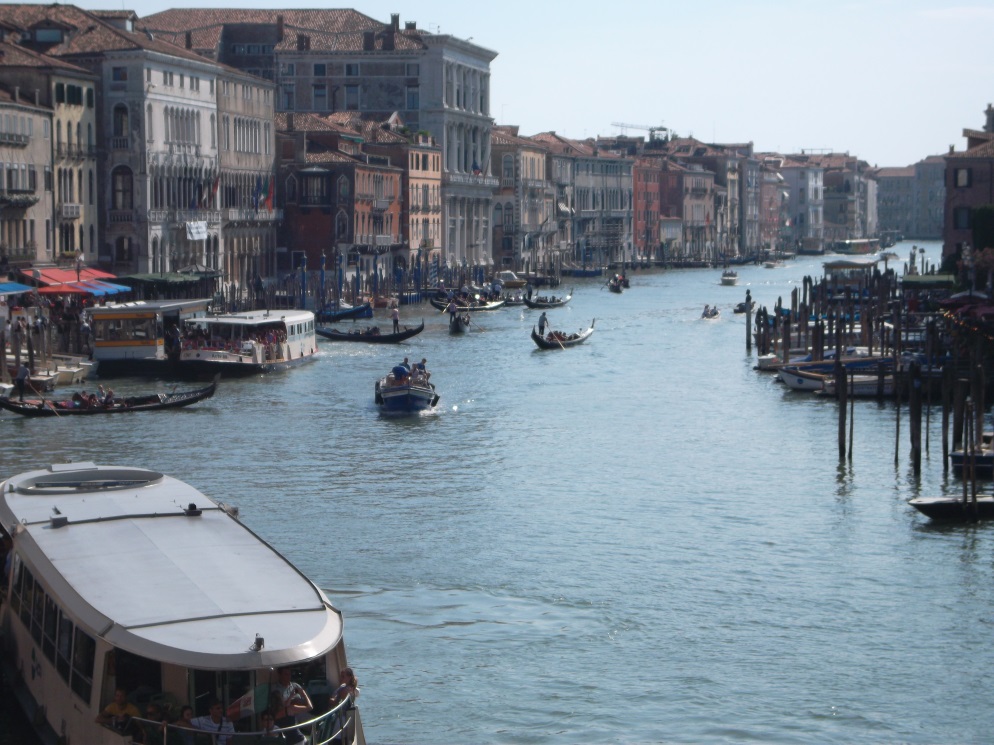
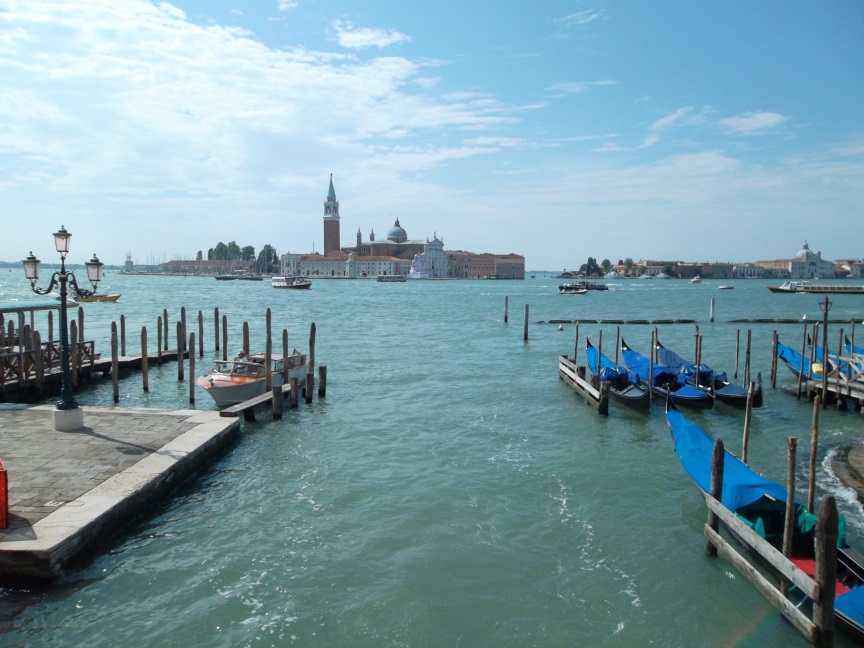
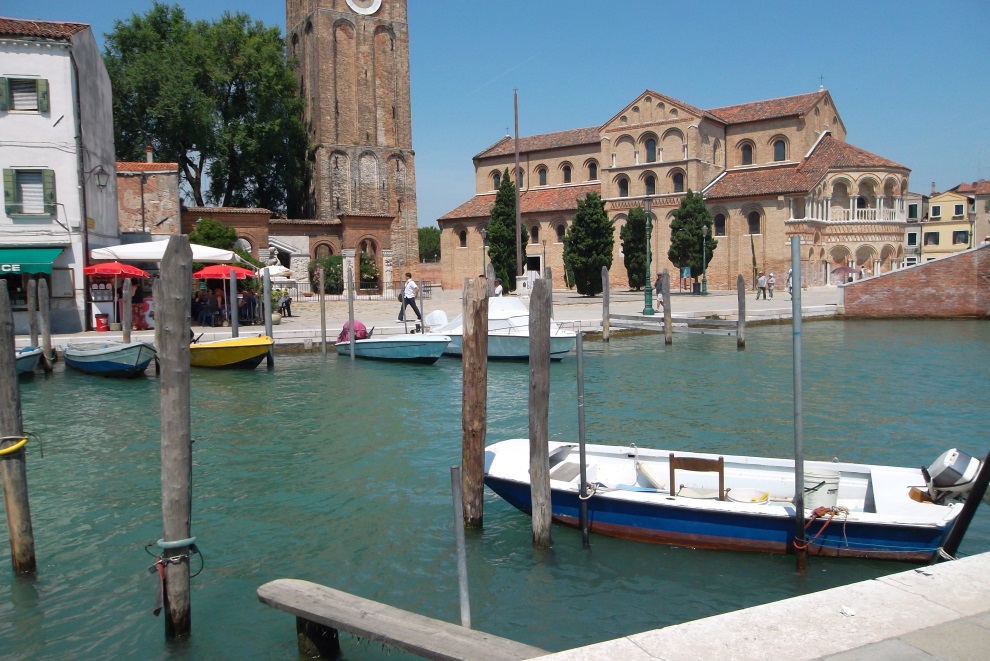
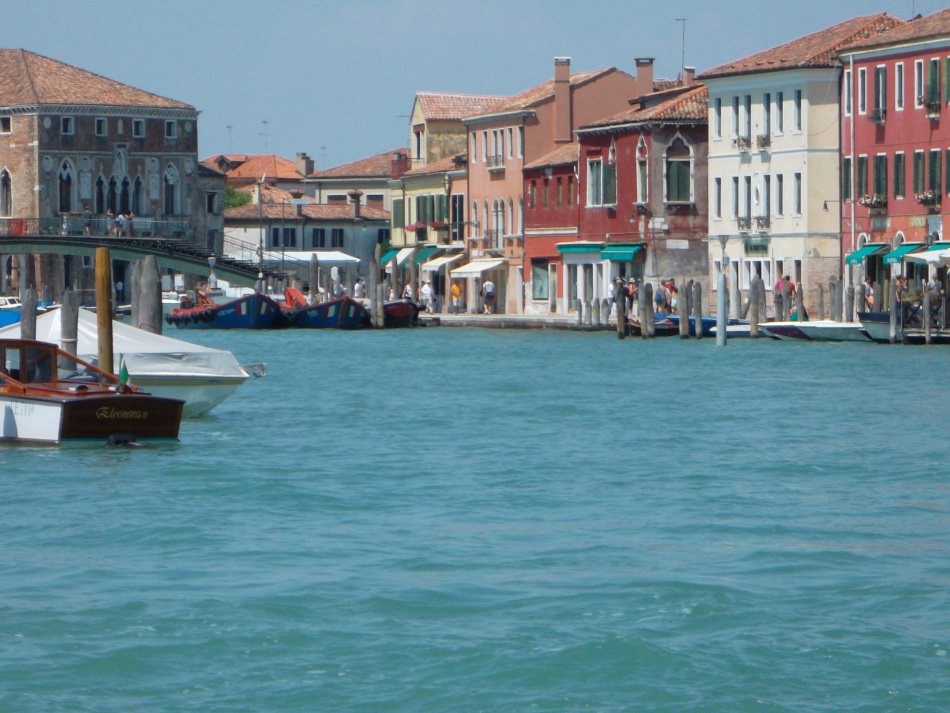
One of the things I love about the House of Niccolò (and Dunnett’s other series, The Lymond Chronicles) is the range of unusual and exotic locations the books take us to. The period the Niccolò books cover (the second half of the 15th century) is a period I’m very familiar with in terms of English history, having read quite a lot of books, both fiction and non-fiction, about the Wars of the Roses and the reigns of Henry VI and Edward IV. However, I have to admit that I know almost nothing about what was going on in the rest of the world during the same period and it’s been a delight to be able to fill in some of the gaps in my knowledge – some of the places we’ve visited so far in this series include Bruges, Trebizond and Cyprus, all of which have been wonderful to read about. Although parts of Scales of Gold are set in Europe (the first few chapters take us from Venice and the glassworks of Murano to Portugal, Spain and Madeira) a long section of the story takes place in Africa. Historical fiction novels set in Africa are not very common and I loved learning about all the places Nicholas and his companions passed through on their journey, especially when they arrived in Timbuktu, yet another location I knew absolutely nothing about! I had no idea Timbuktu was once such an important centre of trade, culture and learning.

It’s also good to know that as far as the historical detail is concerned, I can trust that it will all be as accurate as Dorothy Dunnett could make it. In each book Nicholas meets a host of real historical figures and becomes embroiled in a series of real historical events, although his actions are never allowed to directly change the course of history. Scales of Gold, like all good historical fiction novels should, leaves me wanting to do some extra research of my own into some of the fascinating topics covered in the book.

Finally, any discussion of this book can’t be complete without mentioning the shocking cliffhanger ending! I was kicking myself because earlier in the story I had suspected something of that sort might happen but then I decided I had misjudged the character concerned and changed my mind – and so I was completely stunned by the revelations at the end, just as Dunnett had intended us to be. Outwitted yet again! Looking through some other reviews of this book, it seems people either love the ending or feel cheated by it. Personally I fall into the first group: I love it when an author surprises me, making me believe first one thing and then another, especially if the clues were there from the beginning. Anyway, I’m glad I already have a copy of The Unicorn Hunt at hand so I don’t have to wait too long to find out what happens next and how Nicholas will deal with what he has learned!

Classics Challenge October Prompt: Chapter Musings

This year I have been taking part in a Classics Challenge hosted by Katherine of November’s Autumn. Every month Katherine posts a prompt to help us discuss the classic novel we are currently reading. The prompt for October is:

Chapter Musings

Jot down some notes about the chapter you’ve just read or one that struck you the most. It can be as simple as a few words you learned, some quotes, a summary, or your thoughts and impressions.

The classic I’m reading at the moment is A Farewell to Arms by Ernest Hemingway, the story of an American ambulance driver on the Italian front during World War I. This is the first Hemingway book I’ve read and I wasn’t sure what to expect, as he seems to be one of those authors people either love or hate. I’m only seven (very short) chapters into the book so it’s really too early to tell, but so far I’m finding it a lot more readable than I had thought it would be.

Chapter 1, which is the chapter I’ve chosen to focus on for the purposes of this post, is less than two pages long yet it has a lot of significance as it sets the scene and the tone of the novel. We learn almost nothing about our narrator in these two pages, not even his name, and although it’s obvious that he is involved with the army in some way, he seems very detached from what is going on around him.

“Troops went by the house and down the road and the dust they raised powdered the leaves of the trees. The trunks of the trees too were dusty and the leaves fell early that year and we saw the troops marching along the road and the dust rising and leaves, stirred by the breeze, falling and the soldiers marching and afterward the road bare and white except for the leaves.”

I’ve included the quote above because I think it’s a good example of Hemingway’s writing style. He uses simple, direct language and seems to like stringing together very long sentences using the word ‘and’! He also manages to paint vivid pictures of his settings while avoiding flowery descriptions. I’m not sure yet whether I like his writing or not, but I’ll see how I feel after reading a whole book written in this style.

Chapter 1 ends with the following two sentences:

“At the start of the winter came the permanent rain and with the rain came the cholera. But it was checked and in the end only seven thousand died of it in the army.”

The English Monster by Lloyd Shepherd

Well, this was one of the most unusual books I’ve read for a long time! It got off to a great start and after reading the first few chapters (in which we witness six pirates being hanged at London’s Execution Dock, go on a midnight journey through the dark streets of 19th century Wapping, and meet a sea captain at an inn in Plymouth) I was beginning to feel very excited about this book. It seemed destined to become one of my favourites of the year, although by the time I finished it, I did feel a little bit less enthusiastic about it.

The novel consists of two alternating stories set in different time periods, but while they may appear to be entirely separate at first, there is in fact a link between the two of them. The way in which they are linked is not immediately obvious so I’ll leave you to discover the connection for yourself.

The first story, set in the Regency period, is based on a true crime which involved the killing of members of two different families in the Wapping area of London in December 1811. These deaths became known as the Ratcliffe Highway Murders. There was no official police force in England at that time and the way the case was handled was amateurish and incompetent. The English Monster introduces us to John Harriott, the magistrate of the Thames River Police Office, and Waterman-Constable Charles Horton as they attempt to investigate the murders.

The second thread of the novel, beginning in October 1564, is a good old fashioned swashbuckling adventure story following Billy Ablass, a young man who decides to go to sea to make his fortune and finds himself aboard a ship owned by Queen Elizabeth I, ready to embark on England’s first official slaving voyage. Or at least, I thought I was reading a good old fashioned adventure story – until I came to a very surprising and dramatic twist that made it obvious this was definitely not going to be a conventional historical fiction novel or a conventional murder mystery either. And of course I’m not going to tell you what the twist is – you’ll have to read the book yourself to find out.

When a novel has multiple timelines, I usually find I’m drawn to one period more than the other but with this book I think I can honestly say I enjoyed them both equally. The Ratcliffe Highway story was fascinating, especially the insights we are given into how useless and inadequate the investigation was. I found Charles Horton a very interesting character: a ‘detective’ working in an era when modern methods of detection were almost non-existent. I believe Horton and the magistrate John Harriott are going to reappear in Lloyd Shepherd’s next book and I’m looking forward to meeting them again.

The Billy Ablass sections of the novel were very compelling too, although some of the scenes that dealt with the cruelty and brutality of the slave trade were uncomfortable to read, as you might expect. Unfortunately though, slavery is part of our history and we can’t ignore the fact that it happened. A lot of real historical figures make an appearance throughout these chapters, such as Francis Drake (who is usually thought of as an Elizabethan hero but was also involved in the slave trade), the Welsh pirate Henry Morgan, the notoriously violent buccaneer L’Ollonais, and John Hawkyns, captain of England’s first slave ship. At the end of the book there’s an interesting note from the author in which, among other things, he explains how much of his portrayal of these characters is based on fact and how much is purely fiction.

As a first novel, I thought The English Monster was very impressive. I’m not sure I wouldn’t have preferred the straightforward historical fiction novel the book had initially seemed to be and that’s why some of my enthusiasm faded slightly as I got further into the story, but there’s no doubt Lloyd Shepherd has come up with something very different and very imaginative here. I’m already looking forward to the sequel, The Poisoned Island.

Thanks to Simon & Schuster for sending me a review copy of this book

To Defy a King by Elizabeth Chadwick

Why are some reviews so much easier to write than others? This one has been sitting half-finished in my drafts folder since the end of July, waiting for inspiration which has never really arrived. This is no reflection on the quality of the book, which I enjoyed as much as all the other Elizabeth Chadwick books I’ve read, but for some reason I’ve had trouble thinking of what I want to say about it.

Anyway, To Defy a King is the story of Mahelt Marshal, the daughter of William Marshal, Earl of Pembroke and hero of two of Chadwick’s previous novels, The Greatest Knight and The Scarlet Lion. At the age of fourteen Mahelt is married to Hugh Bigod, the son of the Earl of Norfolk, and goes to live with her new family at Framlingham Castle. The Bigods have connections with King John through Hugh’s half-brother, William Longespée, who is also a half-brother of the King. As King John’s relationship with his noblemen slowly worsens and the country descends into war and political turmoil, the Bigod and Marshal families find themselves on opposite sides of the conflict. Mahelt must try to decide where her allegiances lie – with the family she was born into or with the Bigods and the husband she loves?

A few weeks before reading this book, I had read Here Be Dragons by Sharon Penman which covers much of the same period and this was useful as it meant I already had an understanding of some of the history. But where Here Be Dragons gives us a more balanced view of King John, seen through the eyes of his daughter Joanna as well as from the perspective of his many enemies, with this book we are given a very negative portrayal of the King. Anyone who tries to defy him, as Mahelt Marshal does, could be putting themselves and their family in serious danger.

Mahelt is a strong and independent person, who sometimes refuses to behave in the way a woman might be expected to behave during this period, yet she doesn’t feel too ‘modern’ or out of place in her medieval setting. Longespée is another great character and one of my favourites. He is in a difficult position, torn between his loyalty to the King and his relationship with his Bigod family. His rivalry with his half-brother Hugh leads him to do some cruel and insensitive things, but by the end of the book we see that he is not completely beyond redemption and I was happy with the way his character developed.

Although this book is set after The Greatest Knight (which I read last year and can recommend) I don’t think it’s necessary to have read that one first. I haven’t read the sequel to The Greatest Knight, The Scarlet Lion, yet but didn’t feel I had missed anything that was essential to my understanding of this book. There are also two other books I haven’t read, The Time of Singing, which tells the story of Roger Bigod, Hugh’s father, and A Place Beyond Courage, the story of William Marshal’s father, John. While reading the previous novels would help you become more familiar with the backgrounds of some of the characters, To Defy a King is easy enough to follow as a stand-alone novel and is one of my favourite Elizabeth Chadwick books so far.

The Princess of Cleves by Madame de Lafayette

First published in French in 1678, The Princess of Cleves (or La Princesse de Clèves to give it its French title) is considered to be one of the first psychological novels. The story is set in the previous century (between 1558 and 1559), which also makes it an early example of the historical fiction novel.

Newly arrived at the court of Henri II, the beautiful Mademoiselle de Chartres catches the eye of the Prince of Cleves and they are soon married. The new Princess of Cleves does not love her husband, but she likes and respects him and for a while it seems that might be enough…until she meets and falls in love with the Duc de Nemours. The rest of the book explores the Princess’s conflicting emotions, as she becomes torn between her passionate love for the Duc and her desire to stick to her morals and do what she believes is right. Eventually the Princess faces an important decision, but the choice she makes is maybe not what you would expect and it’s left to the reader to make up their own mind whether they agree with her actions or not.

This book was of particular interest to me because earlier this year I read Queens’ Play by Dorothy Dunnett, which is set at the French court in the middle of the 16th century. The Princess of Cleves is set at the same court during the same period and so it was filled with names I recognised. The title character and her mother are fictional but the others are real historical figures: Henri II and his wife Catherine de’ Medici, Diane de Poitiers (the Duchess de Valentinois), the Constable de Montmorency, the Mareschal de St. Andre, the Prince of Conde, the Vidame of Chartres, the Duke de Guise and his brothers, as well as the Dauphin and his wife, Mary Queen of Scots. I think the fact that I was already familiar with these characters made the opening pages of this book slightly less overwhelming than they might otherwise have been! And luckily, only a few of the people mentioned play an important part in the story, so it’s not necessary to keep track of all of them.

If you can get past the first section, which is little more than a long list of names and descriptions of the relationships between the various courtiers, the story does start to pick up. It all appears to be very accurate historically, although not much attention is given to the important historical events of the period – this is a character driven story with the focus on the actions of the Princess, her husband and the Duc de Nemours. The court of France at that time was known for being frivolous, decadent and rife with romantic intrigue and gossip, and the author manages to capture these aspects of court life. However, having read about the background to the novel, it seems Madame de Lafayette was also commenting on the behaviour and structure of the court of her own time, Louis XIV, which I know less about so am not sure how similar or different the two courts were.

The Princess of Cleves is not a book I would recommend if you’re looking for an entertaining read with an exciting plot, but if you enjoy French literature and history or if you’re interested in the development of the early novel then I think it’s definitely worth reading. It’s a short novel and doesn’t take too long to read, though it does require some concentration, especially at the beginning. I found the writing very dry, though maybe that’s my own fault for reading the free version from Project Gutenberg rather than searching for a better translation. As I’m not able to read it in its original French, which would obviously be the best option, I’d appreciate any opinions as to which translation I should try if I decide to re-read the book at some point in the future.

The Quarry by Johan Theorin

This is the third in Johan Theorin’s Öland Quartet, a series of four crime novels set on the Swedish island of Öland. Each book in the series is set during a different season, with the changes in weather and landscape affecting the mood and atmosphere of the story. I loved the first two books, Echoes from the Dead and The Darkest Room, so I was looking forward to my third visit to Öland. I couldn’t wait to meet my favourite character, Gerlof Davidsson, again and to find out what life on the island was like during the spring months.

In The Quarry, Gerlof is now eighty-three years old and, deciding he doesn’t want to spend the remainder of his life in the residential care home he’s been living in, he moves out and returns to his old cottage in the village of Stenvik. Once back in his own home, he finds some of his late wife’s old diaries written while he was away at sea many years earlier. What he discovers in the diaries could be connected to the story of Vendela Larsson, who has recently moved into a luxury house nearby with her husband, Max. Vendela grew up on the island listening to her father’s tales of myths and legends, and returning to Öland as an adult she finds herself wondering whether the elves and trolls she believed in as a child might really exist.

Meanwhile, Gerlof and Vendela also have another new neighbour: Per Mörner, a divorced father, who has inherited his uncle’s cottage beside an abandoned quarry. Per is looking forward to spending the Easter holidays there with his two children, but he has to change his plans when his daughter becomes seriously ill and his father, Jerry, is almost killed in an arson attempt. Per has barely spoken to Jerry for years but feels obliged to help him, and when he begins to investigate he becomes drawn into his father’s sordid past.

“If you like Stieg Larsson, try a much better Swedish writer” it says on the back cover of this book. I can’t comment on that as I’ve never read Stieg Larsson and am not an expert on Swedish crime fiction, but I would certainly be happy to recommend Theorin’s Öland novels. They are all standalone stories and with the exception of Gerlof, they have different characters so can be read in any order, though I would suggest leaving The Quarry until you’ve read the previous two as I found this one the weakest book of the three.

I still love Gerlof and enjoyed being reacquainted with him. I can only hope that I’m as independent, alert and intelligent as he is when I’m in my eighties! I also liked Per, who was doing his best to deal with his various problems including his daughter Nilla’s illness and his difficult relationship with Jerry. And as usual, the descriptions of the island of Öland are beautifully written. This book is set in the spring, as the last of the winter snows are melting away, so the story is not quite as dark as the first two but there’s still a feeling of loneliness and isolation. The translator, Marlaine Delargy, deserves a word of praise for not losing any of the atmosphere or sense of place.

So why didn’t I enjoy this book as much as the others in the series? The reason, I think, was that Vendela’s story, filled with folklore and magical stories of battles between elves and trolls, didn’t really work very well with the other main storyline. Although I was interested in the fates of both Vendela and Per, I thought their stories could have been the subjects of separate books rather than being combined in the same novel and because of this, I found The Quarry less satisfying than Echoes from the Dead and The Darkest Room (the best of the three, in my opinion). I was disappointed after loving the first two so much, but that won’t stop me reading more Johan Theorin books in the future.