Jamaica Inn by Daphne du Maurier (re-read)

After her mother’s death, Mary Yellan goes to live with her Aunt Patience and Uncle Joss at their inn on Bodmin Moor in Cornwall. But during the coach journey to her new home, Mary hears some disturbing things about Jamaica Inn and its landlord. Soon Mary makes her own shocking discoveries about Joss Merlyn’s activities and finds herself drawn into his villainous schemes while trying to protect her frightened, nervous Aunt Patience. And when Mary is befriended by two very different men – one of them her uncle’s horse thief brother, Jem Merlyn, and the other Francis Davey, the albino vicar of Altarnun – she must decide which, if either, she can trust.

This was actually a re-read for me, although it’s been so long since I first read it that all the details of the plot had completely faded from my mind. What I did remember was being disappointed. When I read it for the first time it was immediately after finishing Rebecca (which I loved – and which is still one of my favourite books ever) and Jamaica Inn just wasn’t as good. This was more than ten years ago though, so I recently decided to give it a second chance. And I did enjoy the book much more this time than I did the first time, maybe because now that I’ve read so many of du Maurier’s other novels it meant I could consider Jamaica Inn in the context of a wider body of work rather than solely in comparison with Rebecca.

Like many of du Maurier’s other books, this one is dark, gothic and atmospheric. Published in 1936 but set in the early 1800s, it has a lot of the traditional elements you would expect to find in a gothic novel (stormy weather, smugglers, locked rooms, shipwrecks, desolate moors, a remote, lonely inn). There are also some memorable characters – Mary herself is an intelligent and courageous heroine, and I know I said that I couldn’t remember much from my previous read, but I certainly hadn’t forgotten the character of her violent, brutal Uncle Joss!

So, Jamaica Inn is not one of my favourite du Maurier novels but not my least favourite either. It does not have the depth and complexity of Rebecca or some of her later novels, but then this one was written near the beginning of her career and is a good early example of her work. The plot is not particularly complicated and I found it quite predictable but du Maurier’s skill at creating tension and suspense meant that I still enjoyed reading it.

From one to six…

Before I started blogging I only ever used to read one book at a time. Now I’ve somehow found myself in the middle of six!

Here are the books I’m currently reading:

A Small Circus by Hans Fallada

Alone in Berlin was one of the best books I read last year, so I was excited about reading another of Hans Fallada’s novels. So far though, this one is not as good and I’m finding the plot quite confusing. I’m trying to decide whether or not I want to continue with it but will give it at least a few more chapters.

The Game of Kings by Dorothy Dunnett

This is the first of the Lymond Chronicles and the first Dorothy Dunnett book I’ve read. Dunnett fans will be pleased to know that I’m absolutely loving this book and have already ordered the next one in the series!

Mariana by Susanna Kearsley

After reading The Rose Garden a few months ago I wanted to read another Susanna Kearsley book and was delighted to receive this one through Netgalley. I’m still near the beginning but I can already tell it’s going to be as good, or maybe even better, than The Rose Garden.

Great Expectations by Charles Dickens

With February marking the 200th anniversary of Dickens’ birth, I wanted to read one of his novels this month. I’m enjoying Great Expectations so far and finding it surprisingly easy to read compared to some of the other Dickens novels I’ve read. I’m reading a few chapters a day on my Kindle which I’ve found is a good way to get through some of these long classics.

Charles Dickens: A Life by Claire Tomalin

I started this Dickens biography in January. Not being a big non fiction fan, it’s taking me a long time to read this one as I’m only picking it up when I’m in the right mood for it.

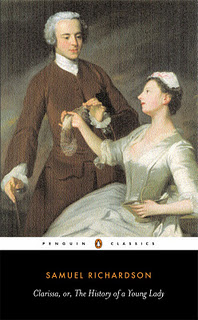
Clarissa by Samuel Richardson

As I mentioned in a previous post I’m reading Clarissa as part of a year-long group read so I’m not expecting to finish it before December. This is another one I decided to read as an ebook as the paperback is just too big!

***

The six books that I’m reading at the moment are all different enough that I’m not having any trouble keeping them separate in my mind, but I do feel as if it’s been a long time since I actually finished a book!

How many books do you usually have on the go at the same time? Do you always finish one book before you start another or do you like to have a variety to choose from?

The Last Summer by Judith Kinghorn

In the summer of 1914, Clarissa Granville is almost seventeen years old and lives at Deyning Park, her family’s country estate. For Clarissa, her brothers and their friends, it’s a summer of parties, tennis games, walking by the lake, playing croquet, and having a good time. It’s also the summer when Clarissa meets Tom Cuthbert, the housekeeper’s son who is home from university. The two soon fall in love but their romance is in trouble from the start, as they both know that Clarissa’s parents will never allow her to marry the son of a servant. Then suddenly everything changes: Britain is at war and Clarissa’s whole world is altered forever.

So many different aspects of World War I are covered over the course of the novel, though with the story being told from Clarissa’s perspective the focus is on the effects of the war on British society and on the people left at home while their loved ones are away fighting. After the war is over we see how the world has become a very different place. We meet men who are trying to cope with the injuries and disabilities they’ve been left with, and the women who are trying to understand and to help them, as well as coming to terms with the loss of all the husbands, brothers, sons and fathers who never came home.

One of the biggest changes to Clarissa’s life is that the class structure that was in place before the war has been broken down. Many rich families like the Granvilles are left struggling financially, unable to afford to keep big houses like Deyning and all the servants they used to have. People who had previously felt secure in their comfortable, privileged lifestyles find themselves desperately trying to find a place in a new and unfamiliar world. But through it all, Clarissa will always remember that final perfect summer of 1914.

Although the story is narrated by Clarissa, we are also given occasional fragments of letters written by unnamed characters. These letters give us a different perspective on things, including some glimpses of life in France during the war, but who is writing them? It’s all revealed eventually and by the time you reach the end of the novel I can almost guarantee you’ll want to go back and read the letters again – they’ll make more sense the second time round.

The Last Summer is a beautifully written novel and one that I really enjoyed. I liked the characters, the time period is one of my favourites to read about, and Clarissa is a lovely, engaging narrator. Clarissa and Tom’s relationship is an interesting one to follow because nothing ever goes smoothly for them and so many obstacles are thrown in the way of their love. Not only are they separated by the war, they also face a lot of other problems including their differences in class and background, Clarissa’s disapproving mother, and their relationships with other people. I desperately wanted them to find happiness together but it was difficult to see how that could ever happen, and I will leave you to discover for yourself whether the book has a happy ending or not.

The Last Summer is my second book for the War Through the Generations reading challenge.

Blog Tour: Russian Winter by Daphne Kalotay

When former ballerina, Nina Revskaya, decides to auction her jewels to raise money for the Boston Ballet Foundation, she finds herself reflecting on her past and remembering things that she would prefer to forget. Her memories take us back to Soviet Russia in the 1940s and 1950s, showing us how she rose to fame with the Bolshoi Ballet and how she met her future husband, the poet Viktor Elsin. However, Nina is reluctant to share these memories with anyone else – not even with Drew Brooks, who works for Beller Auction House and is trying to research the ballerina’s life for the auction catalogue.

We also meet Grigori Solodin, a university professor with a special interest in Viktor Elsin’s poetry. When Grigori donates an amber necklace to the auction that seems to match Nina’s amber bracelet and earrings, Drew is intrigued. Could the three items all belong to the same set? Is there a connection between Nina and Grigori?

I enjoyed this book, although the beginning was quite slow and it took me a while to really get into the story and warm to the characters. It was definitely worth sticking with the novel though, because the second half was much more compelling than the first and once I’d been drawn into Nina’s story I found it difficult to put the book down.

I find Russian history fascinating so it’s not surprising that my favourite parts of the book were the sections set in the past. Daphne Kalotay does a wonderful job of conveying what life was like in Soviet Russia in an era when you never knew who you could and couldn’t trust, when saying the wrong things to the wrong people could put your life at risk. For Nina and her friends, most of them dancers, writers or musicians, it was a dangerous time, with artists not always able to express themselves as freely as they wished. I also loved following the progress of Nina’s career as a dancer. I don’t know very much about ballet, but the descriptions were so vivid I had no problem picturing the ballets being performed onstage, as well as the emotions the dancers experienced before, during and after the performance.

Although Drew’s and Grigori’s stories didn’t interest me as much as Nina’s, the three separate threads were cleverly woven together with links between all three main characters. One of the things that intrigued me about the present day scenes was the question of how Grigori came to possess a necklace matching the other pieces in Nina’s collection, and why she was so determined not to talk to him about it. There was a point where I thought I knew where the story was heading and how it would end – but it turned out to be much less predictable than I’d thought. Some of the plot twists towards the end of the book surprised me as much as they surprised the characters themselves!

So apart from the slow start, I did enjoy Russian Winter. It’s complex, elegantly written and gives insights into three interesting but very different subjects: communism, ballet and jewellery auctions! I thought it was an impressive debut novel and I’ll be looking out for Daphne Kalotay’s next book.

If you’d like to find out more about Daphne and Russian Winter, you can visit her website and her Facebook page. A reading group guide is also available.

I read this book as part of a blog tour organised by TLC Book Tours. Don’t miss the other stops on the tour to see what other readers thought of Russian Winter.

Wednesday, February 8th: Reading With Tea
Thursday, February 9th: Fleur Fisher in her world
Tuesday, February 14th: DizzyC’s Little Book Blog
Wednesday, February 15th: Pining for the West
Thursday, February 16th: Chuck’s Miscellany
Monday, February 20th: one more page
Tuesday, February 21th: I hug my books
Wednesday, February 22th: The Sweet Bookshelf
Thursday, February 23rd: A Book Sanctuary

I Capture the Castle by Dodie Smith

This is a book I feel I should have read long before now, but for one reason or another I just never got round to it. So when Iris suggested a readalong in January I decided it was time I finally read it! And yes, I loved it, and really wished I hadn’t waited so long.

I Capture the Castle has one of those famous opening lines you may have heard of even without having read the book: “I write this sitting in the kitchen sink”. ‘This’ being the diary of seventeen-year-old Cassandra Mortmain, written first in a ‘sixpenny book’ then a ‘shilling book’ and finally a ‘two-guinea book’.

Cassandra lives in a crumbling castle in the English countryside with her eccentric novelist father, her glamorous stepmother Topaz who works as an artist’s model, her beautiful older sister Rose and younger brother Thomas – and Stephen, the son of one of the Mortmains’ old servants, who has become almost part of the family. Cassandra’s father wrote one very successful book, Jacob Wrestling, many years earlier but has been suffering from writer’s block ever since and the family are struggling financially. But when they meet the two rich American brothers, Simon and Neil Cotton, who have inherited the estate of which the castle is part, everything begins to change for the Mortmains.

This novel was published in the 1940s but the feelings and emotions Cassandra describes in her journal are timeless. Cassandra is having the usual problems and concerns that any teenager might have: coming to terms with growing up, falling in love, a changing relationship with her sister and other family members, and wondering what the future might hold. There are many novels with teenage narrators that deal with the same issues, but there are two things that really set this one apart: one is the unusual setting – the castle and its eccentric inhabitants – and the other is the voice of Cassandra herself.

Cassandra is such an engaging narrator, it would be difficult not to like her. Although she is very observant and perceptive, she also has an endearing innocence and vulnerability that leads one character to describe her (unfairly) as ‘consciously naïve’. Of all the things I liked about this book, it was Cassandra’s voice and personality that I loved the most. Through the pages of her journal she really does succeed in ‘capturing’ the castle and everyone who lives there. Some of the stories she shares with us are very funny, for example there’s a hilarious scene involving Rose and a big black fur coat, but along with the humour there are also some moments of sadness and poignancy. I was quite happy with the way the book ended too – not all of the loose ends are tied up, but I liked the fact that Dodie Smith chose a slightly unexpected way to finish the story.

A Midsummer Night’s Dream by William Shakespeare

This year I’m taking part in a reading project hosted by Risa with the aim of reading twelve of Shakespeare’s plays, one every month during 2012. I have not actually studied Shakespeare since I was at school and although I’ve read a few of his plays since then I’m not sure I completely understood them so this seemed like a good reading challenge for me to participate in.

A Midsummer Night’s Dream was January’s play. This is not the first time I’ve read this play; the last time was two years ago in 2010 when I read it as part of my own personal Shakespeare challenge (which was a complete failure, by the way, as I never actually got around to reading any more of his plays that year!) but I liked the idea of reading it at the same time as other people, so I was happy to read it again. This post is an updated version of my original post from 2010, with some new opinions and observations as I picked up on different things this time round than I did on my previous read.

A Midsummer Night’s Dream is thought to have been written around 1594-1596 and is classed as a comedy. There are three separate storylines woven into the plot. The first involves the upcoming wedding of Theseus, the Duke of Athens, and Hippolyta, Queen of the Amazons. A group of craftsmen (known as ‘mechanicals’) are rehearsing the story of Pyramus and Thisbe, a play they are planning to perform at the wedding.

In the second thread we meet Oberon and Titania, King and Queen of the fairies. Titania has a new little servant boy and Oberon is jealous. He and the fairy, Puck, come up with a plot to distract Titania while Oberon takes the boy away from her.

The third storyline follows Hermia (who is in love with Lysander), Helena (who is in love with Demetrius), and Demetrius and Lysander (who are both in love with Hermia). Confusing? Yes – and it gets even more complicated when the four of them get mixed up in Puck and Oberon’s scheming!

In Act I Scene 1, Lysander tells us “the course of true love never did run smooth” (one of those quotes you might have heard without even having read the play; Puck’s line, “Lord, what fools these mortals be!” is another) – and one of the central themes of the play is love and its difficulties. Here is one of my favourite quotes on the subject of love, spoken by Helena:

Love looks not with the eyes, but with the mind;
And therefore is winged Cupid painted blind:
Nor hath Love’s mind of any judgement taste;
Wings and no eyes figure unheedy haste:
And therefore is Love said to be a child,
Because in choice he is so oft beguiled.

The play begins and ends in Athens but the majority of the play is set in the nearby woods, a place free from Athenian law where anything can happen. There are a lot of allusions to the moon, fantasy and dreams which help to create a magical, dream-like atmosphere for the play and hint that the action that follows may be taking place in a fantasy world, rather than in reality. The references to the moon also suggest that the important events of the play are going to happen at night by the light of the moon (I love the way Hippolyta describes the moon as ‘like to a silver bow, new bent in heaven’).

With some of Shakespeare’s plays I find it difficult to get a real sense of the time and place, but with this one I have no problem picturing the characters running through the moonlit woods on a warm midsummer’s night while the fairies dance around them weaving their magic. The dreamlike mood is enhanced by the way much of the action takes place while various characters are sleeping. Here Oberon describes the bank where Titania sleeps. Isn’t the language beautiful?

I know a bank where the wild thyme blows,
Where oxlips and the nodding violet grows,
Quite over-canopied with luscious woodbine,
With sweet musk-roses and with eglantine.
There sleeps Titania sometime of the night,
Lulled in these flowers with dances and delight;

As in several of Shakespeare’s plays there’s also a theme of doubling and symmetry with Theseus and Hippolyta mirroring Oberon and Titania, and the two men Lysander and Demetrius being balanced by the two women Hermia and Helena. The conflict is caused by the fact that although Hermia and Lysander are in love, Demetrius also loves Hermia, leaving Helena on her own. The balance needs to be restored by Demetrius falling in love with Helena before the story can come to its conclusion. But as this is a comedy rather than a tragedy like Romeo and Juliet, it’s all very lighthearted and after all the misunderstandings have been cleared up, Shakespeare ends with the play-within-a-play (Bottom and his friends’ performance of Pyramus and Thisbe) and finally, these words from Puck…

If we shadows have offended,
Think but this, and all is mended,
That you have but slumbered here
While these visions did appear.
And this weak and idle theme,
No more yielding but a dream,
Gentles, do not reprehend:
if you pardon, we will mend:
And, as I am an honest Puck,
If we have unearned luck
Now to ‘scape the serpent’s tongue,
We will make amends ere long;
Else the Puck a liar call;
So, good night unto you all.
Give me your hands, if we be friends,
And Robin shall restore amends.

I enjoyed my re-read of A Midsummer Night’s Dream and will be reading Macbeth later this month.

January Reading Summary

February already and time for my first monthly reading summary of the year!


I discovered two new mystery series in January, both of which I would like to continue with (new to me, that is – they’ve both been around for a long time and I’ve come to them very late!) The first is Laurie R. King’s Mary Russell series; the second is Elizabeth Peters’ Amelia Peabody series. The Beekeeper’s Apprentice and Crocodile on the Sandbank were two of my favourite books of the month.


I made some progress with all of the challenges I’m participating in. For the Classics Challenge and the Victorian Challenge, I read Charlotte Brontë’s The Professor. For the Historical Fiction Challenge, I read Treason by Meredith Whitford and for War through the Generations, I read War Horse by Michael Morpurgo. And our first play for Reading Shakespeare – A Play a Month was A Midsummer Night’s Dream. I still need to post my thoughts on that one.

There were a few other books I read in January that I also haven’t had time to write about yet. I read Mansfield Park by Jane Austen for the third time and enjoyed it much more this time round than I did on my previous reads. It’s been a long time since I read Pride and Prejudice and Emma, so I’m hoping to re-read both of those soon too (I’m particularly looking forward to trying Emma again, as it’s the only Austen novel I haven’t liked and I’m curious to see if I’ll still feel the same way about it). I also read I Capture the Castle by Dodie Smith, one of those books I somehow missed out on when I was younger but I’m glad to have finally read it!

I was given the chance to read Russian Winter by Daphne Kalotay as part of a UK blog tour – you’ll be able to see what I thought of it on Monday. The last book I read in January was The Last Summer by Judith Kinghorn, a beautifully written story set around the time of the First World War. And I also made a start on Samuel Richardson’s Clarissa for a year-long group read.

How was your January?