My Commonplace Book: December 2024

A selection of quotes and pictures to represent December’s reading:

commonplace book
noun
a book into which notable extracts from other works are copied for personal use.

~

“That,” said Lazare, “is a pity. Have you ever reflected, Miss Sally, how much wasted energy would be saved if people would do at the beginning what, in the end, they will certainly have to do.”

The Red Lacquer Case by Patricia Wentworth (1924)

~

Life was a puzzle box. It was made up of innumerable little drawers – some locked, some not, with glinting clasps and metal teeth. Someone was playing a game with her.

The Queen of Fives by Alex Hay (2025)

~

Interior of the Morgan Library, New York

But at his core, Sean was captivated by Helen as no one else had ever been, and he coaxed from her all that was special. The most important thing to her was that he accepted her, just as she was.

The Ghost of Madison Avenue by Nancy Bilyeau (2019)

~

It reminded her that you can throw away the rules of life and let your creative instinct take over; that you can put strange, unfitting parts together and create something atypical but beautiful, something truly unique.

Carrion Crow by Heather Parry (2025)

~

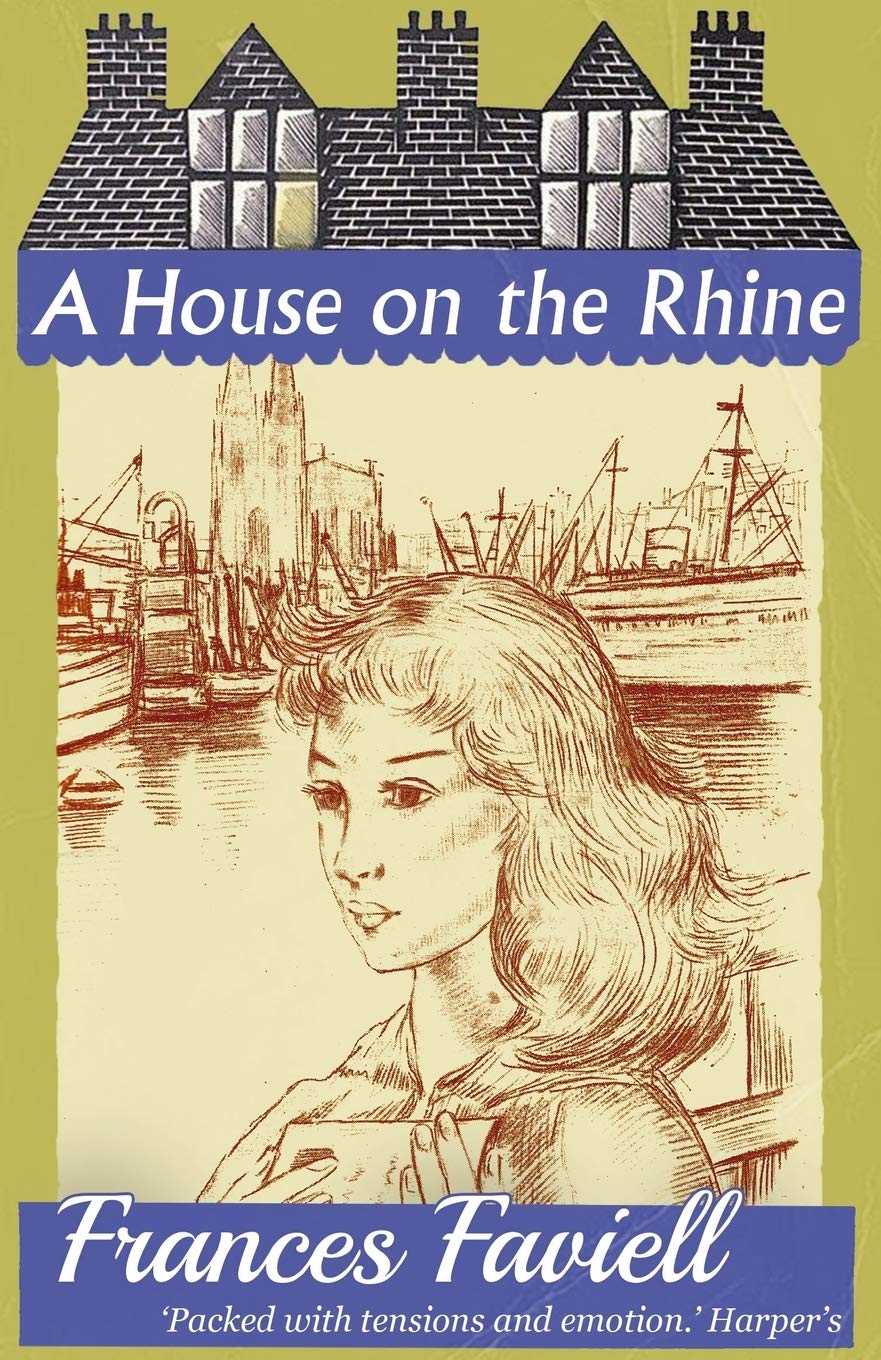
“We’ve got to take our chance. But if we don’t, it may never come again. Not like this. If we love one another, nothing else matters. Nothing. Get that straight. Love is something which you can’t order on a plate. It just serves itself – or doesn’t – whether you’re German or American. We must just take it – it may never be offered us again.”

A House on the Rhine by Frances Faviell (1955)

~

Guillemot eggs

Each bird laid an egg that was unlike any other that had ever been laid by any other guillemot in history. In the high-density fields of the North Yorkshire cliffs, where birds might roost at the rate of fifty pairs to a square yard, it was required that a bird knew exactly which egg was theirs, so that it didn’t end up warming one six inches to the left, or an inch to the right.

The Impossible Thing by Belinda Bauer (2025)

~

My peers made arguments aplenty in their lilting Latin platitudes: that dreams lack reason, which is the truth of all matters. That dreams defy logic, which is the root of all things. That in dreaming, we surrender our enlightened mindfulness to baser, animalistic instincts and, in doing so, negate the essence of our humanity. I listened to the arguments unconvinced, for it often seemed to me that I was more human for dreaming.

The Resurrectionist by A. Rae Dunlap (2025)

~

“But you know, my dear,” said Poirot gently, “people are never like what you remember them. You make them as the years go by, more and more the way you wish them to be, and as you think you remember them. If you want to remember them as agreeable and gay and handsome, you make them far more so than they actually were.”

Third Girl by Agatha Christie (1966)

~

Canaries, St Lucia

Her enthusiasm always surprised Agnes. ‘How you so, Margaret? You always happy and you have so much energy I wish I had.’

‘My mother always told me life don’t wait for no one. You have to make it yourself.’

Island Song by Pepsi Demacque-Crockett (2025)

~

Also, I got just gently interested in history. I said to the history teacher, Miss Nelson, ‘The reason I like this subject is because everything in it is safely in the past, so I don’t have to get worked up and worried about it,’ and she replied that she thought this was ‘a very odd and ignorant attitude to have and really not true at all.’

Absolutely and Forever by Rose Tremain (2023)

~

‘Sofi!’ There is an unusual edge to her tone and she darts a look at my drawing. ‘Do not speak so when you only see half the story. Why do you always fixate on circumstances that do not concern you, when you could be improving your own?’

The Woman in the Wallpaper by Lora Jones (2025)

~

Favourite books read in December:

The Impossible Thing, The Resurrectionist and Island Song

Authors read for the first time in December:

Heather Parry, A. Rae Dunlap, Lora Jones, Pepsi Demacque-Crockett

Countries visited in my December reading:

England, Scotland, Germany, Wales, USA, France, St Lucia

~

Reading notes: I took part in Dean Street December this month, reading two very different books published by Dean Street Press – The Red Lacquer Case and A House on the Rhine. As you can see, I’ve also been reading some of the books on my NetGalley shelf with publication dates in January and February, which I’ll be reviewing nearer the time.

In January, I’m hoping to read something for Japanese Literature Month but otherwise I’m just looking forward to starting a fresh new year of reading!

What did you read in December? Do you have any plans for your January reading?

Happy New Year!

My favourite books of 2024

With only two days of 2024 remaining, I think it’s safe to post my books of the year list now. I’ve enjoyed putting this post together, going back over the last twelve months and picking out some favourites. I did something slightly different this year – I looked at the books I gave five stars to on Goodreads and chose six published in 2024 and six older ones. Let me know if you enjoyed any of these too.

~

BOOKS PUBLISHED IN 2024

A Case of Mice and Murder by Sally Smith (2024)

From my review: “After finishing Sally Smith’s A Case of Mice and Murder I was delighted to find that it’s the start of a new historical mystery series, which is great news as this first book is excellent. I hope we don’t have to wait too long for a second…When writing a novel set in the past, creating a sense of time and place is incredibly important and Sally Smith does that extremely well here.”

The King’s Messenger by Susanna Kearsley (2024)

From my review: “Susanna Kearsley’s author’s note is almost as interesting as the book itself…she describes the history of the Royal Messengers which led to the creation of her fictional hero Andrew Logan and explains which of the other people in the book were historical figures who really existed…Whether real or fictional, all of the characters in the novel come to life; I loved both Andrew and Sir David and although it took me longer to warm to Phoebe, she did win me over in the end!”

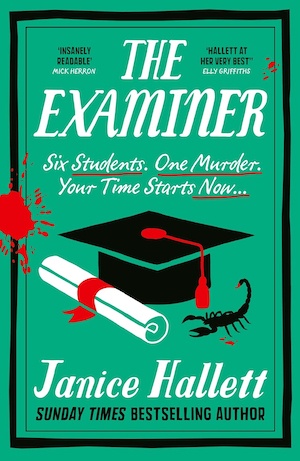
The Examiner by Janice Hallett (2024)

From my review: “the epistolary format she uses…is something you either love and connect with immediately or you don’t. If you didn’t enjoy her other books this one probably won’t change your mind. Personally, I find them unusual and imaginative – and very gripping, as the short length of the emails and chats makes it difficult to stop reading!”

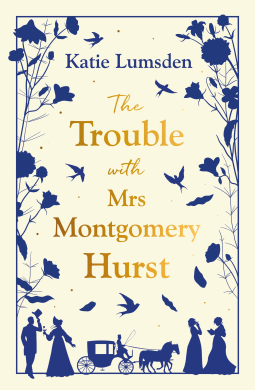
The Trouble with Mrs Montgomery Hurst by Katie Lumsden (2024)

From my review: “It has the feel of a Regency novel and there’s an obvious Jane Austen influence in both the writing style and the plot. The worldbuilding is strengthened by the inclusion of a map at the beginning and a list of characters giving their age, address and occupation. It was all so immersive that I really didn’t want to have to leave Wickenshire behind when I reached the end of the book!”

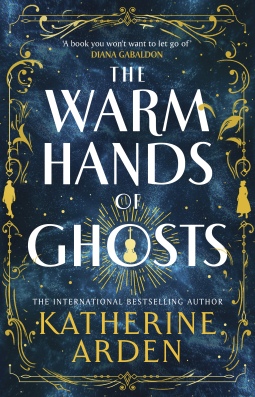
The Warm Hands of Ghosts by Katherine Arden (2024)

From my review: “I loved Katherine Arden’s Winternight Trilogy, set in medieval Russia…Taking us to the battlefields of the First World War, this is very different in terms of setting, atmosphere and scope, but I’m pleased to say that it’s another great book.”

The Burial Plot by Elizabeth Macneal (2024)

From my review: “I was expecting good things from this one and I wasn’t disappointed at all…Although I correctly predicted some of the twists and turns of the plot, there were others I didn’t see coming at all. The relationship between Bonnie and Crawford is the driving force behind the novel and is what kept me turning the pages, anxious to see what plan Crawford would come up with next and whether Bonnie would ever escape his grip.”

OLDER BOOKS

The Reckoning by Sharon Penman (1991)

From my review: “A wonderful, thorough account of the final years of an independent Wales…A book of this size – around 600 pages – takes a long time to read when the story is so detailed and needs a lot of concentration, but I thought it was worth every minute…the story held my interest from beginning to end – and the ending, when it came, was heartbreaking, but that was to be expected!”

Silence by Shūsaku Endō (1966)

From my review: “Silence is both beautifully written and beautifully translated. From beginning to end, I was completely immersed in another time and place; there’s no jarringly modern language to pull the reader out of the story and everything feels authentic and real.”

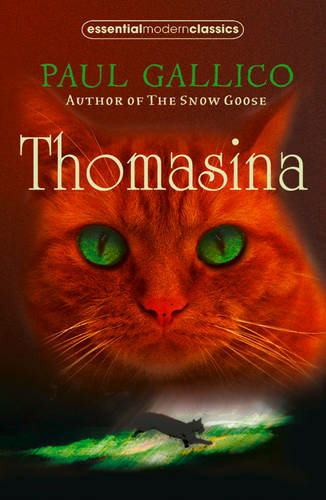
Thomasina by Paul Gallico (1957)

From my review: “Although I was already familiar with the plot, I found that this novel had far more depth than the Disney version…I’m sure younger readers will enjoy the chapters written from Thomasina’s own perspective, where she gives amusing descriptions of life in the MacDhui household, but I never really felt that I was reading a ‘children’s book’ and I think there’s enough here for readers of all ages to enjoy.”

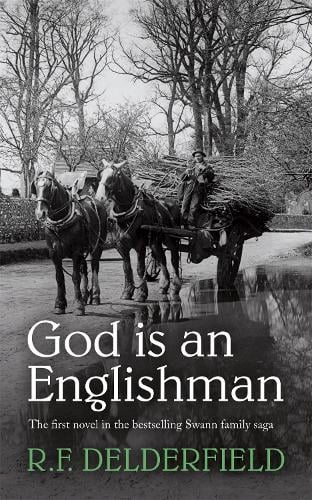
God is an Englishman by RF Delderfield (1970)

From my review: “Once I became absorbed in the story, the pages went by a lot more quickly than I’d expected and I was sorry to reach the end. I think some readers will probably enjoy this book more for the Swann family storylines and others for the insights into the building of a business empire. I found both interesting and felt that Delderfield got the balance between the two just about right. I will be continuing with the second book, Theirs Was the Kingdom!”

The Undetective by Bruce Graeme (1962)

From my review: “I found this an entertaining read from beginning to end…Graeme appears to have been very prolific, particularly during the 1930s and 40s, but this is a later novel from 1962. It’s a real gem and I highly recommend it to classic crime fans!”

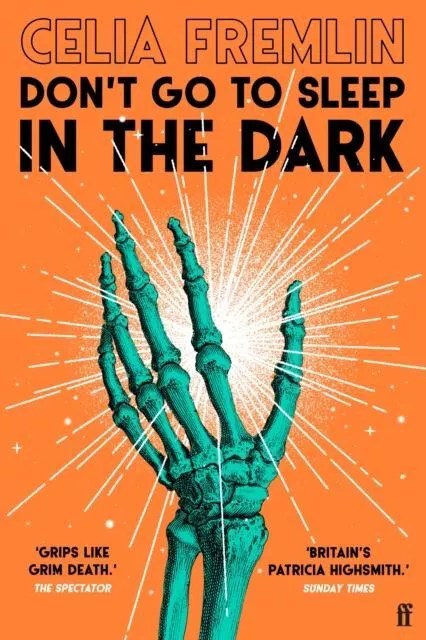
Don’t Go to Sleep in the Dark by Celia Fremlin (1970)

From my review: “Although the thirteen stories are all different and memorable in their own way, they could all be described as psychological suspense, taking us deep inside the characters’ minds. At the same time, they have perfectly crafted plots, often with a surprise twist in the final paragraph that changes the way we think about everything that came before.”

~

What are the best books you’ve read in 2024?

Historical Fiction Reading Challenge: Looking back at 2024 and forward to 2025!

I don’t often take part in year-long reading challenges as I prefer to just join in with shorter reading events these days. However, there’s still one that I like to participate in every year – and that is the Historical Fiction Reading Challenge, hosted by Marg at The Intrepid Reader & Baker. Although it’s not really very challenging for me as I read a lot of historical fiction anyway, I do enjoy linking my reviews to the monthly challenge posts, seeing what other participants are reading and discovering new historical fiction novels and bloggers. Marg has also been posting monthly statistics so we can see which books and authors are proving particularly popular.

Before I post the details of the 2025 challenge, I want to look back at what I achieved in 2024.

I had signed up at the ‘Prehistoric’ level, which meant reading 50+ historical fiction novels during the year. I managed to read 57 (six more than last year’s 51) and here they are, with links to my reviews where available:

1. Silence by Shūsaku Endō
2. The Beholders by Hester Musson
3. The Spendthrift and the Swallow by Ambrose Parry
4. Cuddy by Benjamin Myers
5. The Bone Hunters by Joanne Burn
6. The Fox Wife by Yangsze Choo
7. Clairmont by Lesley McDowell
8. The Warm Hands of Ghosts by Katherine Arden
9. The Life of Rebecca Jones by Angharad Price
10. The Tower by Flora Carr
11. The Trumpet-Major by Thomas Hardy
12. The Book of Secrets by Anna Mazzola
13. The Reckoning by Sharon Penman
14. The Ballad of Lord Edward and Citizen Small by Neil Jordan
15. The Fraud by Zadie Smith
16. The Household by Stacey Halls
17. A Plague of Serpents by KJ Maitland
18. Hungry Ghosts by Kevin Jared Hosein
19. Spitting Gold by Carmella Lowkis
20. The Ballad of Jacquotte Delahaye by Briony Cameron
21. The House of Doors by Tan Twan Eng
22. The Burial Plot by Elizabeth Macneal
23. The Nightingale’s Castle by Sonia Velton
24. The Meiji Guillotine Murders by Futaro Yamada
25. The Puzzle Wood by Rosie Andrews
26. Babylonia by Costanza Casati
27. A Woman of Opinion by Sean Lusk
28. The King’s Mother by Annie Garthwaite
29. The Trouble with Mrs Montgomery Hurst by Katie Lumsden
30. A Case of Mice and Murder by Sally Smith
31. The Elusive Pimpernel by Baroness Orczy
32. House of Shades by Lianne Dillsworth
33. The King’s Witches by Kate Foster
34. The Briar Club by Kate Quinn
35. In the Upper Country by Kai Thomas
36. A Court of Betrayal by Anne O’Brien
37. The Hazelbourne Ladies Motorcycle and Flying Club by Helen Simonson
38. The Golden Tresses of the Dead by Alan Bradley
39. Cabaret Macabre by Tom Mead
40. A Little Trickerie by Rosanna Pike
41. The King’s Messenger by Susanna Kearsley
42. Precipice by Robert Harris
43. Mary I: Queen of Sorrows by Alison Weir
44. Midnight in Vienna by Jane Thynne
45. God is an Englishman by RF Delderfield
46. The Glassmaker by Tracy Chevalier
47. The Bells of Westminster by Leonora Nattrass
48. The Lost Queen by Carol McGrath
49. Black Hearts in Battersea by Joan Aiken
50. City of Silk by Glennis Virgo
51. Poor Girls by Clare Whitfield
52. The Royal Rebel by Elizabeth Chadwick
53. Gabriel’s Moon by William Boyd
54. The Ghost of Madison Avenue by Nancy Bilyeau
55. What Time the Sexton’s Spade Doth Rust by Alan Bradley
56. The Voyage Home by Pat Barker
57. Absolutely and Forever by Rose Tremain

Now, here are the rules for the 2025 challenge, taken from Marg’s blog:

Any sub-genre of historical fiction is accepted (Historical Romance, Historical Mystery, Historical Fantasy, Young Adult, History/Non-Fiction, etc.)

During the following 12 months you can choose one of the different reading levels:

20th Century Reader – 2 books
Victorian Reader – 5 books
Renaissance Reader – 10 books
Medieval – 15 books
Ancient History – 25 books
Prehistoric – 50+ books

You can sign up for the challenge here. I will be aiming for Prehistoric again in 2025.

Let me know if you’re planning to take part too!

Third Girl by Agatha Christie

This is the final book I’ve read for this year’s Read Christie challenge. I had intended to read it in November, but didn’t have time. I’m glad I’ve still managed to fit it in before the end of the year because, although I don’t think it’s one of Christie’s absolute best, I did enjoy reading it.

Norma Restarick is the ‘third girl’ of the title. The term refers to the practice of two girls who are living together in rented housing advertising for a third girl to take the spare room and share the rent with them. Norma crosses paths with Hercule Poirot when she approaches him for help because she thinks she may have committed murder – but after meeting Poirot in person, she flees, saying she’s made a mistake and he is too old to be of assistance.

Concerned – and insulted – Poirot tries to find out the reason for Norma’s visit to him and learns that the girl is acquainted with his friend, the mystery writer Ariadne Oliver. This makes it possible for Poirot, with Mrs Oliver’s help, to track down Norma’s family at their home in the country and the two girls she lives with in London. But Poirot is still confused. Norma says she thinks she has tried to poison her stepmother because a bottle of weed killer has been found in her room, yet she has no memory of actually doing it. It’s also not the only time Norma has experienced gaps in her memory. Convinced he doesn’t have all the facts and that the murder Norma originally referred to was not the attempted one she’s now confessing to, Poirot begins to investigate.

A common theme in Christie’s later books seems to be that society is changing and the world is moving on and she doesn’t like or understand it. Published in 1966, this book is firmly set in the 1960s and the older characters take every opportunity to complain about the fashions (particularly men with long hair), the music, the culture and what they see as rampant drug use amongst young people. I found this interesting as it gives the book a very different feel from the earlier Poirot novels. I think Poirot, like Christie herself, probably felt much more at home in the 1930s!

Third Girl is also unusual because for most of the book we don’t know if a murder has actually been committed and if so, who the victim is. This makes it less of a conventional detective novel and more of a psychological study of Norma Restarick. As we learn more about Norma’s past, there’s a real sense of her vulnerability and how she could be being manipulated by other people. Even when the true nature of the crime that needed to be investigated became clearer, I still didn’t correctly guess who the culprit was – and to be honest, I thought it was quite an unconvincing solution, which relied on several of the characters being very unobservant.

What I did love about this book is that Ariadne Oliver plays such a big part in it from beginning to end. She is often said to represent Christie herself and gives her a chance to comment on the writing of detective novels! It’s always nice to see her pop up in a Poirot mystery and I wish she was in more of them. In Third Girl, Mrs Oliver adds some humour to the book, as well as inadvertently providing Poirot with some of the key clues. Poirot is also present from the beginning of the book, rather than appearing halfway through as he often does.

I’m pleased to have completed eight of the twelve monthly reads for the 2024 Read Christie challenge. I’m looking forward to joining in again in 2025!

Merry Christmas!

Just a quick post to wish a Merry Christmas to those who celebrate it – and for those who don’t, I hope you have a lovely day anyway!

Thank you to everyone who has read, liked or commented on my reviews throughout the year. It’s very much appreciated! Have a great Christmas and I’ll be back soon with one or two more posts before the end of the month.

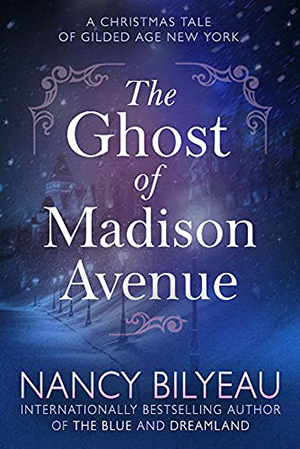
The Ghost of Madison Avenue by Nancy Bilyeau

Christmas is always a good time to read ghost stories, I think! This one is even set in December – and is also a novella, which makes it a good choice if you’re looking for something quick to read over the Christmas holidays.

The story takes place in New York in December 1912. Helen O’Neill is part of an Irish-American family from the Bronx and since being widowed several years earlier she has been living with her two older brothers. Helen is determined not to be a financial burden on her family and has been working at the Metropolitan Museum of Art where she has proved to have a talent for restoration. She’s so good at it, in fact, that she catches the attention of the librarian Belle da Costa Greene, who entices her away from the museum with the offer of a job in the private library of the financier J.P. Morgan.

Starting work at the Morgan Library on Madison Avenue, Helen is captivated by the beautiful building with its thick bronze doors, marble rotunda and exquisite murals. But in the street outside, she sees something even more memorable – a young woman in old-fashioned dress, inappropriate for the cold winter weather, who suddenly disappears without trace. As the days go by, Helen has several more encounters with this strange girl whom only she seems able to see. Eventually, she begins to ask herself whether the girl could be a ghost and if so, is she trying to tell Helen something?

Even without the supernatural element, The Ghost of Madison Avenue is a fascinating piece of historical fiction. Morgan, of course, was a real person and his library on Madison Avenue can still be visited, but so was Belle da Costa Greene, a woman I’d never heard of but who seems to have led an interesting life. As I read, I kept thinking that she really deserved a novel of her own, then I discovered that at least two have already been written! They are The Personal Librarian by Marie Benedict and Victoria Christopher Murray and Belle Greene by Alexandra Lapierre.

As a ghost story, I thought the book was less successful. Not all ghost stories are scary (and not all need to be), but I didn’t find this one even a little bit eerie. It’s more of a story about Helen’s grief – she has never really come to terms with her husband’s death – and laying to rest the ghosts of her past so that she can finally move on with her life. I also found the book too short to be completely satisfying. A longer novel would have allowed Bilyeau to expand on some of the other topics she touched on, such as the aes sidhe of Irish mythology, and Helen’s relationship with her sister Bernadette, who has become a nun.

Still, I enjoyed this book and it didn’t take long to read! I’ve now read everything currently published by Nancy Bilyeau and will look forward to her next book in the Genevieve Planché series, hopefully coming next year.

Book 54 for the Historical Fiction Reading Challenge 2024

A House on the Rhine by Frances Faviell – #DeanStreetDecember24

My previous experience with Frances Faviell has been limited to her Second World War memoir, A Chelsea Concerto, so I was curious to see what her novels were like. There are several currently available from Dean Street Press and as Liz is hosting her Dean Street December event this month, I decided it was a good time to give one of them a try.

A House on the Rhine, first published in 1955, tells the story of a family trying to adjust to life in postwar Germany. After their home was destroyed during the war, the family – Joseph and Moe and their twelve children – spent four and a half years living in an air raid shelter and have now been rehoused by the authorities in a village outside Cologne. Moe once received a medal from the Nazis for having more than ten children (large Aryan families being seen as the Nazi ideal), but now it seems that almost every member of that large family is embroiled in trouble of some sort and it’s anything but a happy, harmonious household.

Seventeen-year-old Katie is raising her young son alone after his father, a Belgian soldier, left her and went back to his own country. She sees the little boy as a burden preventing her from getting a job like her siblings and is envious of her older sister, Anna, whose own illegitimate child died. She can’t rely on her mother to help her with childcare because Moe is too distracted these days – she’s having an affair with their lodger, the much younger Rudi, and the whole family knows about it, including Joseph. And so, determined to have some fun and the chance to make some money, Katie has started sneaking out at night with several of her brothers to join a gang of other young people who engage in theft and violence under the cover of darkness.

Katie’s foster sister, Krista, has no memory of her own parents or her early life, having been found unconscious by Joseph during an air raid on Cologne. She has grown up with Joseph and Moe’s children, but is still seen as different and not quite like the others. Krista is in love with Paul, an American soldier, but is afraid to take their relationship any further because she knows her foster father doesn’t approve. Paul is confused. Is it his nationality that’s the problem – or is it because Joseph’s own feelings for Krista are not purely paternal?

I wasn’t prepared for this book being so dark! As well as the affairs, the unwanted pregnancies and the gang violence, some of the siblings also become implicated in a murder, while another, little Carola, is suffering from polio in hospital. It’s very bleak and the only characters I really liked, apart from the very young children, were Krista and Paul. Katie, her brother Hank, and the gang leader Leo were particularly horrible! The narrative moves around from one character to another so we have a chance to get to know all of the major players and I found Joseph, the patriarch of the family, the most complex and interesting. It’s clear that the war – and the time he spent in a prisoner of war camp in France – has affected him deeply, as has the loss of pride he has suffered in not being able to house his own family and the discovery that his children are now earning more than he is himself.

This is certainly not the usual gentle, comforting read I’ve come to associate with the Dean Street Press Furrowed Middlebrow imprint. I found it quite disturbing at times, though also very gripping. It’s a novel with a lot of depth and multiple layers and I know I’ve barely scratched the surface of it here. I can find very few other reviews of it, so if you’ve read it I would love to hear what you thought!

This edition of the book also contains a short story, The Russian for Sardines, originally published in the London Evening Standard in 1956 and also set in Germany after the war – a much more optimistic and uplifting story than A House on the Rhine! I’ll look forward to reading Frances Faviell’s other two novels published by DSP, Thalia and The Fledgeling, as well as her other memoir, The Dancing Bear.