Merry Christmas!

Just a quick post to wish a Merry Christmas to those who celebrate it – and for those who don’t, I hope you have a lovely day anyway!

Thank you to everyone who has read, liked or commented on my reviews throughout the year. It’s very much appreciated! Have a great Christmas and I’ll be back soon with one or two more posts before the end of the month.

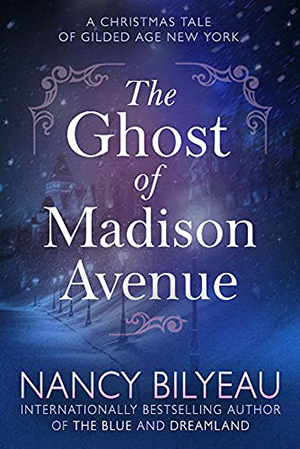
The Ghost of Madison Avenue by Nancy Bilyeau

Christmas is always a good time to read ghost stories, I think! This one is even set in December – and is also a novella, which makes it a good choice if you’re looking for something quick to read over the Christmas holidays.

The story takes place in New York in December 1912. Helen O’Neill is part of an Irish-American family from the Bronx and since being widowed several years earlier she has been living with her two older brothers. Helen is determined not to be a financial burden on her family and has been working at the Metropolitan Museum of Art where she has proved to have a talent for restoration. She’s so good at it, in fact, that she catches the attention of the librarian Belle da Costa Greene, who entices her away from the museum with the offer of a job in the private library of the financier J.P. Morgan.

Starting work at the Morgan Library on Madison Avenue, Helen is captivated by the beautiful building with its thick bronze doors, marble rotunda and exquisite murals. But in the street outside, she sees something even more memorable – a young woman in old-fashioned dress, inappropriate for the cold winter weather, who suddenly disappears without trace. As the days go by, Helen has several more encounters with this strange girl whom only she seems able to see. Eventually, she begins to ask herself whether the girl could be a ghost and if so, is she trying to tell Helen something?

Even without the supernatural element, The Ghost of Madison Avenue is a fascinating piece of historical fiction. Morgan, of course, was a real person and his library on Madison Avenue can still be visited, but so was Belle da Costa Greene, a woman I’d never heard of but who seems to have led an interesting life. As I read, I kept thinking that she really deserved a novel of her own, then I discovered that at least two have already been written! They are The Personal Librarian by Marie Benedict and Victoria Christopher Murray and Belle Greene by Alexandra Lapierre.

As a ghost story, I thought the book was less successful. Not all ghost stories are scary (and not all need to be), but I didn’t find this one even a little bit eerie. It’s more of a story about Helen’s grief – she has never really come to terms with her husband’s death – and laying to rest the ghosts of her past so that she can finally move on with her life. I also found the book too short to be completely satisfying. A longer novel would have allowed Bilyeau to expand on some of the other topics she touched on, such as the aes sidhe of Irish mythology, and Helen’s relationship with her sister Bernadette, who has become a nun.

Still, I enjoyed this book and it didn’t take long to read! I’ve now read everything currently published by Nancy Bilyeau and will look forward to her next book in the Genevieve Planché series, hopefully coming next year.

Book 54 for the Historical Fiction Reading Challenge 2024

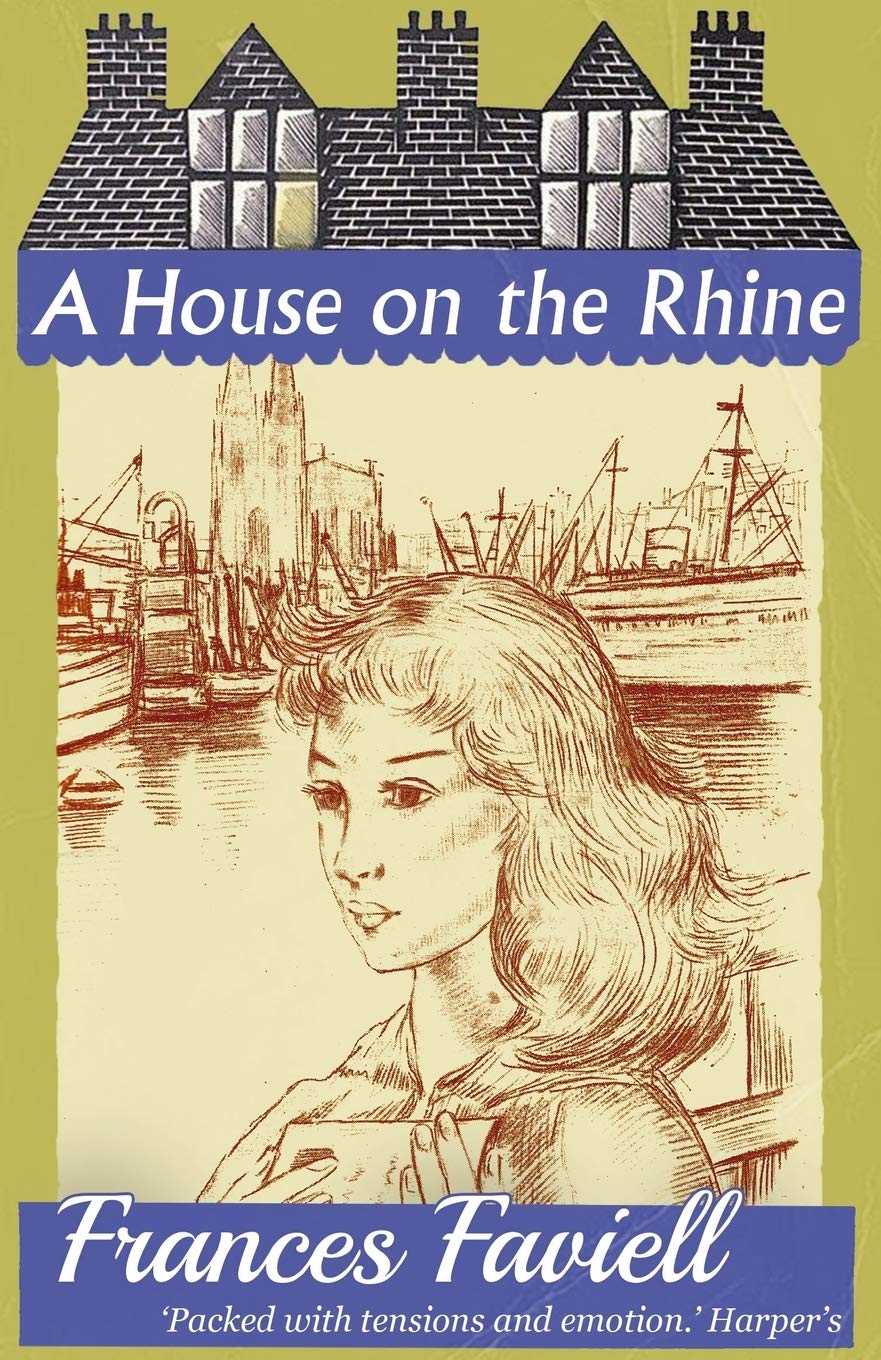
A House on the Rhine by Frances Faviell – #DeanStreetDecember24

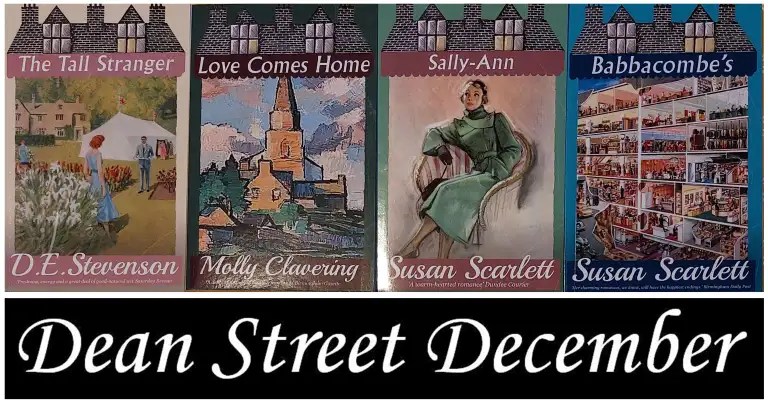
My previous experience with Frances Faviell has been limited to her Second World War memoir, A Chelsea Concerto, so I was curious to see what her novels were like. There are several currently available from Dean Street Press and as Liz is hosting her Dean Street December event this month, I decided it was a good time to give one of them a try.

A House on the Rhine, first published in 1955, tells the story of a family trying to adjust to life in postwar Germany. After their home was destroyed during the war, the family – Joseph and Moe and their twelve children – spent four and a half years living in an air raid shelter and have now been rehoused by the authorities in a village outside Cologne. Moe once received a medal from the Nazis for having more than ten children (large Aryan families being seen as the Nazi ideal), but now it seems that almost every member of that large family is embroiled in trouble of some sort and it’s anything but a happy, harmonious household.

Seventeen-year-old Katie is raising her young son alone after his father, a Belgian soldier, left her and went back to his own country. She sees the little boy as a burden preventing her from getting a job like her siblings and is envious of her older sister, Anna, whose own illegitimate child died. She can’t rely on her mother to help her with childcare because Moe is too distracted these days – she’s having an affair with their lodger, the much younger Rudi, and the whole family knows about it, including Joseph. And so, determined to have some fun and the chance to make some money, Katie has started sneaking out at night with several of her brothers to join a gang of other young people who engage in theft and violence under the cover of darkness.

Katie’s foster sister, Krista, has no memory of her own parents or her early life, having been found unconscious by Joseph during an air raid on Cologne. She has grown up with Joseph and Moe’s children, but is still seen as different and not quite like the others. Krista is in love with Paul, an American soldier, but is afraid to take their relationship any further because she knows her foster father doesn’t approve. Paul is confused. Is it his nationality that’s the problem – or is it because Joseph’s own feelings for Krista are not purely paternal?

I wasn’t prepared for this book being so dark! As well as the affairs, the unwanted pregnancies and the gang violence, some of the siblings also become implicated in a murder, while another, little Carola, is suffering from polio in hospital. It’s very bleak and the only characters I really liked, apart from the very young children, were Krista and Paul. Katie, her brother Hank, and the gang leader Leo were particularly horrible! The narrative moves around from one character to another so we have a chance to get to know all of the major players and I found Joseph, the patriarch of the family, the most complex and interesting. It’s clear that the war – and the time he spent in a prisoner of war camp in France – has affected him deeply, as has the loss of pride he has suffered in not being able to house his own family and the discovery that his children are now earning more than he is himself.

This is certainly not the usual gentle, comforting read I’ve come to associate with the Dean Street Press Furrowed Middlebrow imprint. I found it quite disturbing at times, though also very gripping. It’s a novel with a lot of depth and multiple layers and I know I’ve barely scratched the surface of it here. I can find very few other reviews of it, so if you’ve read it I would love to hear what you thought!

This edition of the book also contains a short story, The Russian for Sardines, originally published in the London Evening Standard in 1956 and also set in Germany after the war – a much more optimistic and uplifting story than A House on the Rhine! I’ll look forward to reading Frances Faviell’s other two novels published by DSP, Thalia and The Fledgeling, as well as her other memoir, The Dancing Bear.

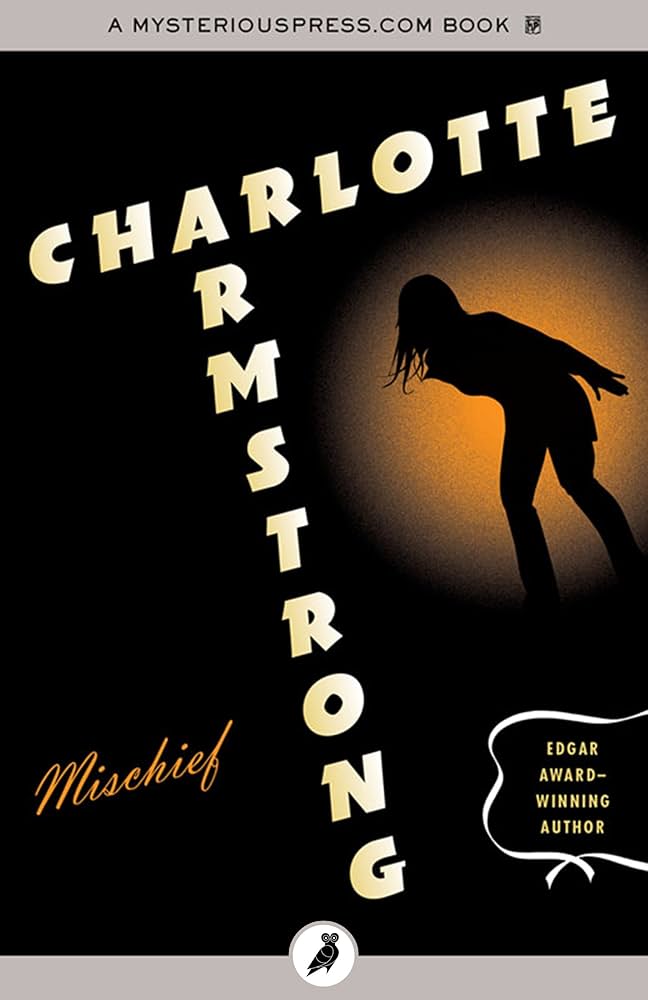
Mischief by Charlotte Armstrong

I read this last month and it would have been perfect for Novellas in November, but I’ve been behind with my reviews. At 170 pages, this was a quick read but also quite an intense one. It was first published in 1950 and adapted for film two years later under the title Don’t Bother To Knock, starring Marilyn Monroe in the role of Nell. I haven’t seen it so don’t know how the plot and characters differ between page and screen.

Mischief begins with Peter and Ruth Jones in their New York hotel room preparing to leave for a convention where Peter will be giving an important speech. Unfortunately, they’ve been let down by their babysitter for the evening and urgently need a replacement. The hotel elevator operator, Eddie, comes to the rescue, volunteering the services of his niece, Nell, and assuring them that nine-year-old Bunny will be safe in her care. When Nell is brought up to their room, Ruth finds that there’s something about the young woman that makes her feel uneasy, but she can’t put her finger on what it is. Anyway, she tells herself that it’s only for one evening and Bunny will be going to bed soon, so what could possibly go wrong?

Meanwhile, Jed Towers is enjoying a night out with his girlfriend, Lyn – until a difference of opinion over giving money to a homeless person blows up into a huge argument and Jed goes back to his hotel room alone. Looking into a window on the other side of a courtyard he sees Nell, who catches his eye and invites him up for a drink. Still angry with Lyn, Jed accepts the invitation in the hope that he can still have some fun despite what has happened. However, he gets much more than he bargained for as his evening quickly goes from bad to worse.

I don’t want to say too much about what takes place inside Room 807 that night, but you won’t be surprised to hear that Ruth’s misgivings about the babysitter are proved correct. Nell is a terrifyingly psychopathic character, cold and heartless, seemingly lacking normal human emotions and empathy. Once in the room with her, Jed becomes increasingly uncomfortable, particularly when he becomes aware of Bunny’s presence in the adjoining bedroom. He wants to get himself out of the situation he has found himself in, but senses that Nell shouldn’t be left alone with the child. It seems to him that the problem with Nell is that she lives entirely in the present, not thinking about the consequences of her actions:

“What if the restraint of the future didn’t exist? What if you never said to yourself, ‘I’d better not. I’ll be in trouble if I do’? You’d be wild, all right. Capricious, unpredictable…absolutely wild.”

The tension builds throughout the book as one thing spirals into another and various hotel guests and staff members gradually become concerned about what is going on. I was genuinely worried for Bunny, especially as everyone seemed content to stand around talking about what might be happening in Room 807 and frustratingly slow to actually come and investigate!

As an example of mid 20th century American noir, I think this compares well to books I’ve read by Dorothy B. Hughes and Patricia Highsmith. I would like to read more of Charlotte Armstrong’s books and it seems she was quite prolific, so there are plenty to choose from.

Historical Musings #88: Books to look out for in 2025

In what has become a December tradition here on the blog, it’s time to look ahead to the historical fiction being published in the year to come. I’m listing below a selection of 2025 releases that have caught my attention for one reason or another – some are review copies I’ve received, some are new books by authors I’ve previously enjoyed and others just sound interesting. 2025 looks like being a great year for historical fiction – this list is longer than ever – and I hope there’s something here that appeals to you.

Dates provided are for the UK and were correct at the time of posting.

JANUARY

The Ghosts of Rome by Joseph O’Connor (30th January 2025) – The sequel to O’Connor’s My Father’s House, continuing the story of the Escape Line, a group of activists who smuggle refugees out of Nazi-occupied Rome.

The Queen of Fives by Alex Hay (30th January 2025) I’ve read this one already and will post my review when the book is published. It’s about a Victorian con woman who has five days to win a fortune.

Island Song by Pepsi Demacque-Crockett (30th January 2025) – This debut novel takes Agnes Deterville from the Caribbean island of St. Lucia to a new life in 1950s London.

The Resurrectionist by A. Rae Dunlap (30th January 2025) – Follows the story of a young medical student who joins a group of body snatchers, providing corpses to anatomy schools in 19th century Edinburgh.

FEBRUARY

The Night of the Scourge by Lars Mytting (4th February 2025) – This will be the final book in the Sister Bells trilogy set in a Norwegian village and based around the legend of two very special church bells.

The Secrets of the Rose by Nicola Cornick (7th February 2025) – Like most of Cornick’s novels, this is a dual time period one, with the historical storyline being set at Bamburgh Hall in 1715.

The Sirens by Emilia Hart (13th February 2025) – Divided between the 19th century and the present day, this is the story of two sets of sisters separated by two hundred years.
The Woman in the Wallpaper by Lora Jones (20th February 2025) – The story of two sisters who work at a French wallpaper factory during the Revolution.

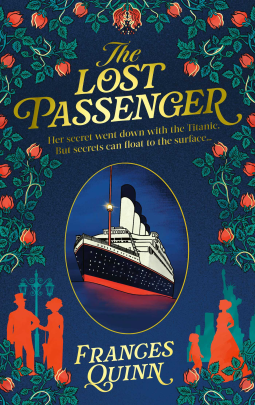
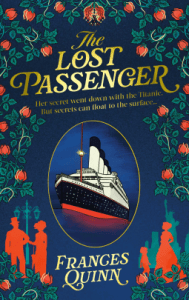
The Lost Passenger by Frances Quinn (27th February 2025) I loved Frances Quinn’s last book, That Bonesetter Woman, so I’m looking forward to this one about a woman who disappears after the sinking of the Titanic.

Carrion Crow by Heather Parry (27th February 2025) – A Gothic novel about a woman locked in the attic of her family home. I’ve read this one in advance and it’s very unsettling!

The Portrait Artist by Dani Heywood-Lonsdale (27th February 2025) – Historical mystery with an art theme, set in the Victorian period.

The Queen and the Countess by Anne O’Brien (27th February 2025) – Set during the Wars of the Roses, one of my favourite time periods, this novel will tell the stories of Margaret of Anjou and Anne, Countess of Warwick.
MARCH

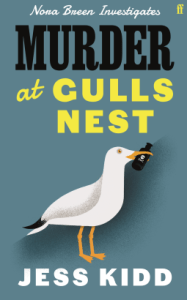
Murder at Gulls Nest by Jess Kidd (11th March 2025) – I’ve enjoyed everything I’ve read by Jess Kidd so far, but this sounds like something different from her – the first in a series of 1950s seaside mysteries.

The Paris Express by Emma Donoghue (20th March 2025) – Donoghue’s new novel is inspired by the Granville to Paris rail disaster of 1895.

APRIL

The Versailles Formula by Nancy Bilyeau (1st April 2025) – I’m not sure about the date for this one as I can’t find details anywhere except Goodreads, but this will be the next book in Bilyeau’s wonderful Genevieve Planché series.

The Eights by Joanna Miller (3rd April 2025) – A novel about the first group of female students to attend Oxford University.

The Greek House by Dinah Jefferies (24th April 2025) – A woman returns to Corfu in 1934, the site of her brother’s tragic disappearance years earlier.

The Midnight Carousel by Fiza Saeed McLynn (24th April 2025) – I’m intrigued by the sound of this novel about a French carousel-maker and a woman who discovers one of his carousels twenty years later.

MAY

Cleopatra by Natasha Solomons (8th May 2025) – I’ve enjoyed some of Solomons’ other books, so will be interested to see what she does with the story of Cleopatra.
The Cardinal by Alison Weir (22nd May 2025) – Following her recent Tudor Rose trilogy, Weir stays in the Tudor period for her new novel which covers the rise and fall of Cardinal Wolsey.

The House of Seymour by Joanna Hickson (22nd May 2025) – I’ve enjoyed most of Joanna Hickson’s other books. Her new one is about the Seymour family of Wolf Hall.

The Elopement by Gill Hornby (22nd May 2025) – In this sequel to Hornby’s Godmersham Park, Jane Austen’s niece, Fanny Knight, is now married to Sir Edward Knatchbull and busy raising his five children.

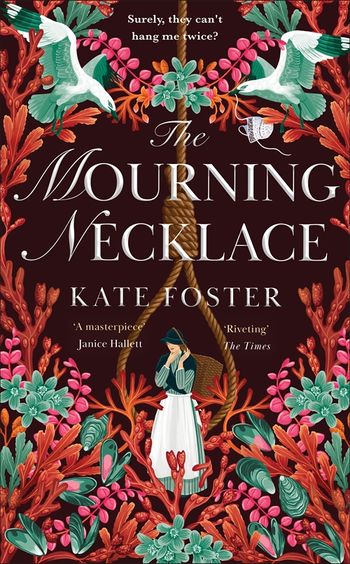
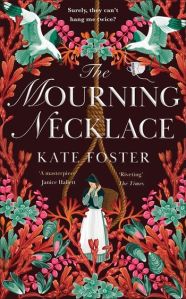
The Mourning Necklace by Kate Foster (29th May 2025) – Inspired by the real-life story of a woman who survived her own hanging in 1724.

JUNE
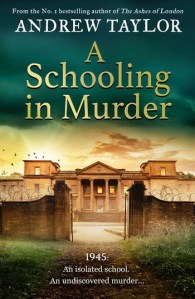
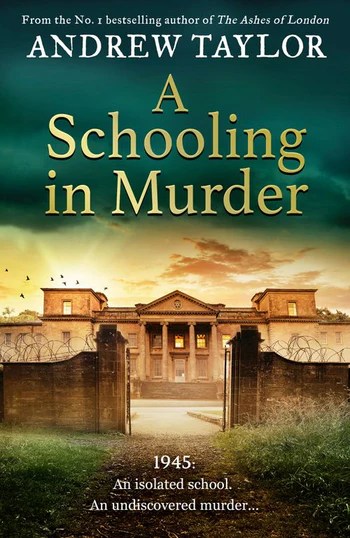
A Schooling in Murder by Andrew Taylor (5th June 2025) – After writing six books in the Marwood and Lovett series, Taylor is moving on to something different with this new historical mystery set in 1945.

The Rush by Beth Lewis (12th June 2025) – A new historical crime novel set in Canada during the Gold Rush.

Before Dorothy by Hazel Gaynor (19th June 2025) – Set in 1930s Kansas, this is the story of Emily Gale, Dorothy’s Aunt Em from The Wizard of Oz.

Love, Sex and Frankenstein by Caroline Lea (26th June 2025) – I’ve read several novels about the summer of 1816 at Lake Geneva when Mary Shelley began to write Frankenstein. It will be interesting to see how Lea approaches the subject.

JULY

Sinners by Elizabeth Fremantle (3rd July 2025) – Set in Rome in 1599, this novel is based on the true story of the Italian noblewoman, Beatrice Cenci.

The Art of a Lie by Laura Shepherd-Robinson (10th July 2025) – I’ve loved all of Shepherd-Robinson’s previous books and this new one, a thriller set in Georgian London, sounds equally wonderful!
The House at Devil’s Neck by Tom Mead (15th July 2025) – This will be the fourth book in Mead’s mystery series set in the 1930s and featuring the partnership of Scotland Yard detective Inspector Flint and the retired magician, Joseph Spector.

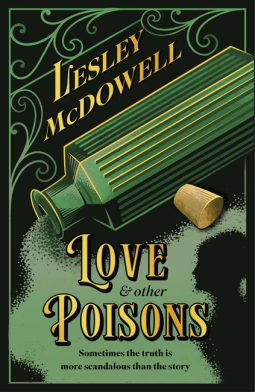
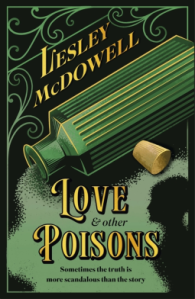
Love and Other Poisons by Lesley McDowell (17th July 2025) – Based on a true crime in which a woman, Madeleine Smith, is accused of murdering her lover in Victorian Glasgow.

A Case of Life and Limb by Sally Smith (17th July 2025) – The second in Smith’s new series about Gabriel Ward, a lawyer who works in London’s Inner Temple in the early 20th century. I loved the first book, so am particularly looking forward to this one!

How to Lose a Lord in Ten Days by Sophie Irwin (31st July 2025) – Irwin has written two very entertaining Regency romances and I’m sure this one will be just as much fun.

The Death of Shame by Ambrose Parry (31st July 2025) – I love this series set in the medical world of 19th century Edinburgh, so I’m happy to see there’s a new book coming next year.

AUGUST

Boudicca’s Daughter by Elodie Harper (28th August 2025) – Following her success with the Wolf Den trilogy, Harper’s next book is going to tell the story of Solina, Boudicca’s daughter.

SEPTEMBER

Circle of Days by Ken Follett (23rd September 2025) – Follett’s new novel will follow the stories of several people involved in the building of Stonehenge.

OCTOBER

House of Splinters by Laura Purcell (9th October 2025) – A new haunted house novel returning to the setting of Purcell’s earlier book, The Silent Companions.

Boleyn Traitor by Philippa Gregory (9th October 2025) – Gregory returns to the Tudor period for her new book about Jane Parker, wife of Anne Boleyn’s brother George.

The Witching Hour by various authors (16th October 2025) – I enjoyed The Winter Spirits so am looking forward to this new, similar collection of short stories by some of my favourite current authors of historical fiction.

~

Are you interested in reading any of these? Are there any other historical novels coming in 2025 that I’ve missed?

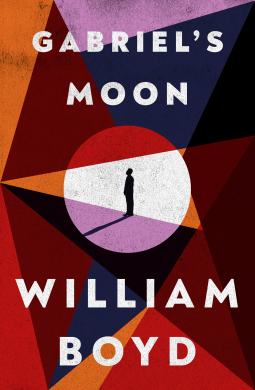
Gabriel’s Moon by William Boyd

William Boyd’s The Romantic was one of my books of the year in 2022, so I was excited about reading his new one, Gabriel’s Moon – although it did sound very different. Unlike The Romantic, which follows the entire life story of its hero, this book is a spy novel set over a much shorter period of time.

It’s 1960 and travel writer Gabriel Dax is visiting what is now the Democratic Republic of the Congo, where he has the opportunity to interview the new Prime Minister, Patrice Lumumba. During the conversation, which Gabriel captures on tape, Lumumba explains that he has enemies who want him dead and he provides the names of the three people he thinks are plotting to kill him. On his return home to London, Gabriel is convinced somebody has been inside his house in his absence and has been searching for something. It seems that somebody wants Gabriel’s tapes of the Lumumba interview – and their attempts to obtain them become more desperate once news emerges that Lumumba has been executed by a firing squad.

His accidental involvement in the Lumumba conspiracy brings Gabriel into contact with the mysterious Faith Green, an MI6 intelligence officer who sends him on a series of missions, the purpose of which Gabriel doesn’t fully understand. In a secondary storyline – which explains the title of the novel – Gabriel decides to consult a psychoanalyst, Dr Katerina Haas, in an attempt to get to the bottom of the mental health issues that have plagued him all his life, ever since his mother was killed in a house fire when he was six years old. The official cause of the fire was given as Gabriel’s night light, a candle inside a moon-shaped globe, but Gabriel’s memories of what actually happened that night are very different.

I enjoyed this book overall, but I found it a bit slow at times and, as a thriller, not particularly thrilling. There’s a lot of travel to various locations in Europe and Africa (all beautifully evoked), with a lot of sitting around in bars drinking and talking, but I never really felt that Gabriel was in much danger. Having said that, I was never bored and became fully drawn into the world of espionage, spies and double agents that Boyd creates, all set against a backdrop of the Cold War. I found it slightly unbelievable that the spies Gabriel meets all speak to him so openly, readily sharing secret information with him – but then, Gabriel doesn’t always know how to interpret that information and it’s his very innocence and gullibility that makes him so useful to Faith Green and MI6. As the story progresses, he eventually decides it’s time to stop being the self-described ‘useful idiot’ and try to take control of his own destiny.

Faith Green remains a bit of a shadowy, enigmatic character throughout the book and because I felt I never really got to know her, I became irritated by Gabriel’s obsessive infatuation with her, particularly as he already has a girlfriend, Lorraine – whom he looks down on because of her working-class background, while at the same time admitting that he’s only with her because he finds working-class women sexually attractive. Although I didn’t dislike Gabriel in general, some of his attitudes leave a lot to be desired!

One of the most interesting aspects of the novel for me was seeing Gabriel work through his hazy memories and his feelings of guilt about the tragic fire that took his mother’s life. Through his psychoanalysis sessions with Dr Haas, Gabriel is inspired to carry out his own investigations into the night of the fire and begins to uncover the truth. I thought this storyline worked well alongside the espionage one and gave us some more insights into Gabriel’s character.

Although Gabriel’s Moon works perfectly as a standalone, there were some loose threads left at the end that made me think this could be the first in a series – and I was pleased to find that William Boyd is indeed working on a second book. I’ll be looking out for it, but I also have lots of Boyd’s earlier novels still to read. I would be happy to hear your recommendations!

Thanks to Viking for providing a copy of this book for review via NetGalley.

Book 53 for the Historical Fiction Reading Challenge 2024

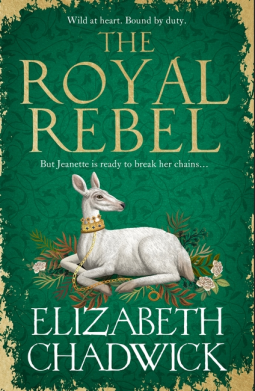
The Royal Rebel by Elizabeth Chadwick

This is the first of a planned pair of novels telling the story of Joan of Kent, cousin of King Edward III. Chadwick refers to her throughout the book as Jeanette because that was the name given to her by the King’s son, Edward (known as the Black Prince), who had it engraved on a silver cup. I’ll do the same in this review to avoid confusion.

The Royal Rebel opens in 1338 with Jeanette preparing to leave her family behind and travel overseas with the royal court for the first time. Jeanette is only twelve years old, so in the absence of her mother she is chaperoned by Katerine, Countess of Salisbury. During the journey to Antwerp, Jeanette is drawn to one of the King’s household knights, Thomas Holland, and once they reach their destination they find opportunities to spend time together away from the watchful eye of the Countess. They continue their relationship for more than a year until Jeanette becomes pregnant and they decide to marry in secret, knowing that they would be unlikely to get the consent of her family or the King.

Soon after the wedding, Jeanette loses the child and then Thomas leaves to go to war. In his absence, Jeanette is forced into marriage with William Montagu, her younger brother’s friend whom she has always disliked. William is the son and heir of the Earl of Salisbury and both Jeanette’s mother and the Countess of Salisbury see it as a wonderful match. Although Jeanette confesses that she is already married and can provide evidence, the two women refuse to acknowledge it and the Montagu marriage goes ahead anyway. The rest of the novel follows Thomas and Jeanette in their long battle to prove the legitimacy of their marriage so that they can live together as husband and wife at last.

I love Elizabeth Chadwick’s books but wasn’t sure I was going to like this one at first. Most of the first half of the novel is devoted to the romance between Jeanette and Thomas and not much else – and with this being the first of two books on Jeanette’s life, Chadwick takes her time in developing this part of the story. Eventually, though, things do get much more compelling as our hero and heroine become embroiled in their mission to have their marriage ruled valid by the Pope. Jeanette’s mother, Margaret Wake, and the Countess of Salisbury are very much the villains here as they destroy evidence, play politics behind the scenes and even imprison Jeanette to ensure nothing interferes with their plans (in reality, it seems unclear whether they were aware of Jeanette’s marriage to Thomas Holland before pushing her into a bigamous marriage with William Montagu).

William is depicted as weak and immature, unwilling to defy his mother and make decisions of his own, but I – and I think Jeanette as well – began to feel sorry for him as the novel progressed, because he was under the control of the Countess just as much as she was and was wasting years of his life trapped in a false marriage to someone who would never love him. Jeanette, on the other hand, is the ‘rebel’ of the title and although, like William, she’s constrained by society and her noble status, she knows what she wants out of life and is determined to find a way to get it, however long it takes. Her brother, John, sums up the situation perfectly:

‘Women, when they gather together in their sewing groups to gossip, arrange marriages for their relatives like stitching secret patterns on their embroideries. I envy you because you have chosen to sew your own colours and to walk away from it all, even at a great cost to yourself and others.’

Jeanette’s age, being barely in her teens at the time of her marriage to the older Thomas, will obviously be problematic to a modern audience so Chadwick chooses not to focus on it too much. Although she does tell us at the beginning how old Jeanette is, she doesn’t make a big thing of it and it’s easy to forget about the age difference as you read. This first novel only covers the early part of Jeanette’s life, ending in 1350, so anyone who knows this period of history will know that there’s a lot more to come in the second novel. There’s no news on its publication yet, but I’ll be looking out for it.

Thanks to Little, Brown Book Group UK for providing a copy of this book for review via NetGalley.

Book 52 for the Historical Fiction Reading Challenge 2024