My Commonplace Book: June 2024

A selection of quotes and pictures to represent June’s reading:

commonplace book
noun
a book into which notable extracts from other works are copied for personal use.

~

Houses have their own personalities. Or, at the very least, a house and its inhabitants cannot escape each other’s mutual influence over their many years in each other’s company.

The Noh Mask Murder by Akimitsu Takagi (1949)

~

“Is that a good thing or a bad thing?”

“Neither,” he said. “It’s just different. The trick is to learn to work with the change, rather than around it. If you spend all your time trying to ignore it or avoid it, you’ll never get anything done.”

The Ballad of Jacquotte Delahaye by Briony Cameron (2024)

~

Lady Mary Wortley Montague in Turkish dress

‘And some rules of taste are poor, indeed the very obsession with taste is absurd, as if there can be only one flavour or fashion, and all must follow it like sheep in a field being chased by a dog. Variety and unconvention are at the heart of all new art and science, and I fear that we live in an age where people are too inclined to follow fashion.’

A Woman of Opinion by Sean Lusk (2024)

~

I loved the odour of lavender. Smells, almost more than noises, seem to bring on the happiness or unhappiness memories. You might not remember what it was about a smell that made you angry at the time, or afraid, but as soon as you come across it again you are angry or fearful.

Thomasina by Paul Gallico (1957)

~

‘But I hate surprises.’ She nestled closer to him. ‘I always like to know what’s happening.’

‘Then I pity you, for you have never appreciated the joy of anticipation, or had a good surprise.’

The Burial Plot by Elizabeth Macneal (2024)

~

‘Though we can’t travel the world, we can still be curious as to how the earth is shaped. I learnt cartography from a master who had never left the small island of his birth, barely ten miles across. “Everything you need,” he used to say to me, “is here beneath your feet, but it will take two lifetimes to understand it.”

The Cautious Traveller’s Guide to the Wastelands by Sarah Brooks (2024)

~

Semiramis, in an 18th century Italian illustration

‘Is it true?’ he asks.

Her mouth twists into a sad smile. ‘Truth and lies are closer than you think. Often, what one man believes to be true, another deems outrageously false.’

Babylonia by Costanza Casati (2024)

~

“A knowledge of human nature – what a dangerous thing it can be.”

“A useful thing,” corrected Mr Satterthwaite.

“Perhaps. It depends upon the point of view.”

Three Act Tragedy by Agatha Christie (1934)

~

‘Your logic may well be right, but governments are not like that. In this world of men, a government cannot embody justice.’

The Meiji Guillotine Murders by Futaro Yamada (1979)

~

Anna of Denmark, portrait by John de Critz

‘Life is a journey, just like this,’ Bishop Larsen said, settling onto his seat. He pointed ahead. ‘We all reach a fork in the road, exactly like that one, do you see? One path goes through the wheat fields and all the way to Copenhagen. The other path leads up to the cliff edge, which is a treacherous place to be. Think about which path you would like to be on, your Royal Highness.’

The King’s Witches by Kate Foster (2024)

~

Favourite books read this month:

The Noh Mask Murder, Babylonia, A Woman of Opinion and Thomasina

Authors read for the first time this month:

Akimitsu Takagi, Briony Cameron, Paul Gallico, Sarah Brooks, Futaro Yamada, Kate Foster

Places visited in this month’s reading:

Japan, Hispaniola, Jamaica, Scotland, England, Russia, China, Turkey, Denmark, Assyrian Empire

~

Reading Notes: June has been devoted to reading books from my 20 Books of Summer list and I’m pleased to report that I’ve now read ten of them and reviewed seven! This gives me a lot of confidence that I actually have a chance of completing the challenge this year, but that will depend on whether I get distracted by other books in July and August. I’m also happy to see that I’ve read about so many different countries this month – and that two of the books I read were translations.

In July, Stu is hosting Spanish/Portuguese Lit Month and Words and Peace is hosting Paris in July. As we’re halfway through the year, it also means it’s time for Six in Six again!

How was your June? What are you planning to read in July?

The Puzzle Wood by Rosie Andrews

Rosie Andrews’ debut novel, The Leviathan, left me with mixed, but generally positive, feelings – I loved the setting and atmosphere, but was less interested in the fantasy/horror elements that began to dominate in the second half. I was curious to see whether her new novel, The Puzzle Wood, would be more to my taste.

The novel begins in 1852 with the recently widowed Catherine Symonds applying for the position of governess at Locksley Abbey in Herefordshire. Catherine doesn’t really need the work – her husband was a wealthy man – but she has another reason for her application: her sister, Emily, was the previous governess at Locksley Abbey and has been found dead in the woods nearby, believed to have taken her own life. Catherine is not satisfied with this explanation and in order to investigate her sister’s death, she needs to find a way to insert herself into the household without anyone guessing her connection with Emily.

Once at Locksley Abbey, Catherine meets her new employer, Sir Rowland, and her young charge, his daughter Georgie. The more she learns about the family and their history, the more she becomes convinced that there’s more to her sister’s death than has so far been revealed. Meanwhile, there’s another newcomer – Arthur Sidstone, a doctor who has recently returned to the area after working abroad. Arthur’s grandfather, who is interested in the history of the forests surrounding Locksley, has grown concerned by reports that Sir Rowland is planning to sell off the land for development. Arthur has come to ask him to reconsider, but ends up becoming much more closely involved in the affairs of Locksley Abbey than he had bargained for.

Set in the Black Mountains of Herefordshire close to the England-Wales border, on a remote estate surrounded by ancient woods steeped in folklore, with a plot incorporating family secrets and mysterious deaths, The Puzzle Wood promised to be a great, atmospheric Gothic novel. However, it didn’t have as much atmosphere as I expected and the Puzzle Wood itself played a surprisingly small part in the story. Instead, a lot of time is spent on another storyline revolving around the productivity of the mine on Sir Rowland’s land and the working conditions of the miners employed there, as well as Arthur Sidstone’s backstory and his involvement with the Chartist movement. I found these two threads quite interesting but they didn’t really blend together very well with Catherine’s story. The spooky/supernatural elements grow stronger towards the end, although certainly not as strong as in The Leviathan and I think readers who pick up this book hoping for something similar could be disappointed.

I seem to have read a few other novels recently with similar plots involving young women working as governesses or servants in lonely Victorian mansions – Elizabeth Macneal’s The Burial Plot and Katie Lumsden’s The Secrets of Hartwood Hall are two that come to mind and both were more enjoyable than this one. Maybe if I hadn’t read so many of this kind of book I would have found The Puzzle Wood more captivating as I do like Rosie Andrews’ writing. I’m not sure if I’ll try more of her books, but depending on the setting and subject I could be tempted.

Thanks to Raven Books for providing a copy of this book for review via NetGalley.

Book 25/50 for the Historical Fiction Reading Challenge 2024

The Meiji Guillotine Murders by Futaro Yamada

Translated by Bryan Karetnyk

It’s 1869 and Japan has entered the Meiji era. The Tokugawa shogunate has fallen and the Emperor Meiji has been restored to the throne. After centuries of isolation, Japan is finally opening up to foreign trade and undergoing social, industrial and military reform. In Tokyo, a group of corrupt rasotsu (policemen) have found ways to exploit this period of change and upheaval for their own gain. With the arrival of two Chief Inspectors from the Imperial Prosecuting Office, Kawaji and Kazuki, it seems that the rasotsu will be forced to mend their ways – although the two men have other things to occupy their time as well as dealing with corruption.

With a number of bizarre murders taking place around Tokyo, Kazuki and Kawaji (based on a real person who is considered the founder of Japan’s modern police system) engage in a friendly competition to see who can solve the crimes first. A separate chapter is devoted to each case, which at first seem to be unrelated, making the book feel almost like a collection of short stories. There are five cases for the two detectives to solve, with the help of Esmeralda, a young Frenchwoman from a family of executioners whom Kazuki has brought to Japan along with that most deadly of French weapons: the guillotine. Despite the title, the guillotine is not necessarily used to carry out all of the murders in the book, but it represents the changes that Japan is experiencing as the country becomes exposed to modern, western influence. It also provides a reason for Esmeralda’s presence in Tokyo, which is important as she has a significant role to play in the solving of the mysteries.

The Meiji Guillotine Murders was first published in 1979 and is one of several Japanese crime novels that have recently been made available in English by Pushkin Press. However, although I’ve loved some of the others, I didn’t enjoy this one quite as much. Bryan Karetnyk’s translation is clear and readable (I’m already familiar with his work through some of his other translated novels), but I had problems with other aspects of the book. I struggled with the number of characters, particularly as so few of them have clearly defined personalities and with more and more of them being introduced with each new case the detectives investigate. My lack of engagement with the characters made it difficult for me to concentrate on following the plot, which is important as all of the separate cases are quite complex and you do need to be paying attention! I persevered and was rewarded with the final section of the book where, after some surprising twists and turns, everything is tied together perfectly.

I did like the historical setting of the book and felt I was learning a lot about Japan during the Meiji era. At times it seemed more like historical fiction than a murder mystery, which was fine with me, but I think someone picking the book up expecting a more traditional crime novel may be surprised by the amount of historical detail. It’s an interesting, unusual book, and although I’m not sure whether I would read any more by Yamada, I do hope more of them are translated into English for those readers who loved this one. I’m enjoying discovering Japanese crime authors through Pushkin and so far my favourites have been Seishi Yokomizo and Akimitsu Takagi.

Thanks to Pushkin Vertigo for providing a copy of this book for review via NetGalley.

This is book 7/20 of my 20 Books of Summer 2024.

Book 24/50 for the Historical Fiction Reading Challenge 2024

The Cautious Traveller’s Guide to the Wastelands by Sarah Brooks

It’s 1899 and passengers are boarding the Trans-Siberian Express, a twenty-carriage luxury train which will take them from Beijing to Moscow in time to attend the Great Exhibition. The four thousand mile journey will travel through the Wastelands, an abandoned wilderness where the landscape and wildlife seem to be undergoing strange changes and mutations. Since the changes were first recorded several decades earlier, Walls have been built to separate the Wastelands from the rest of Russia and China and passengers are not allowed to leave the train in the area between the Walls. On the previous journey, something went wrong: the glass in the windows cracked, exposing the train to the dangers of the Wastelands. The Trans-Siberian Company blamed the glassmaker and have assured passengers that the train is now safe, but doubts still remain.

The story of the 1899 Trans-Siberian crossing is told from the perspectives of several of the passengers. First, there’s Marya Petrovna, who has boarded the train under a false name and disguised as a mourning widow. At first we don’t know who Marya is or why she is hiding her identity, but we do know that she believes an injustice has been done and has come on this journey in search of answers. Then there’s Dr Henry Grey, an English naturalist whose latest theories have been disproved and who hopes to restore his reputation by studying the Wastelands. Finally, Zhang Weiwei is a sixteen-year-old girl known as ‘the child of the train’ because she was born in the Third Class sleeping car and has spent her whole life travelling backwards and forwards on the train. There are many other people onboard the train, but these are the central three around whom the novel revolves.

The Cautious Traveller’s Guide to the Wastelands is an unusual, imaginative novel and there were many things I enjoyed about it. I’ve read several other books set on trains, but usually, even in Murder on the Orient Express, the train simply provides a way of bringing a group of people together in close confines or of getting them from one destination to another. In this book, the train itself is an important part of the story and could even almost be viewed as another character. Sarah Brooks’ worldbuilding is very impressive; the novel has been compared to Susanna Clarke’s Piranesi and Erin Morgenstern’s The Night Circus and it did make me think of the latter in particular. So much attention to detail goes into describing the various carriages and compartments, the history of the train and its earlier crossings, and the fictional travel guide which gives the novel its name. The Wastelands themselves are less clearly described and although it’s suggested that life there has become tainted in some way, we don’t really know how or why, and much of the mystery still remains at the end of the book, which I’m sure was deliberate – but quite frustrating!

However, I felt that the setting and atmosphere came at the expense of the plot. The pace was very slow, with more than half of the novel devoted to setting the scene and introducing the characters, and it seemed to end just as things were starting to happen. I also would have preferred an explanation for what was happening in the Wastelands and was left wondering what we were intended to take away from the book. Was there a message in there about climate change and the environment – or migration, with walls being built to keep people out (or in)? I think we’re definitely supposed to question whether it’s best to travel cautiously or curiously, embracing change or turning away from it.

The Cautious Traveller’s Guide… is a fascinating alternate history novel, then, with lots to think about and debate. I didn’t find it completely satisfying, but I’m sure the right reader will love it.

Thanks to Orion Publishing Group for providing a copy of this book for review via NetGalley.

This is book 6/20 of my 20 Books of Summer 2024.

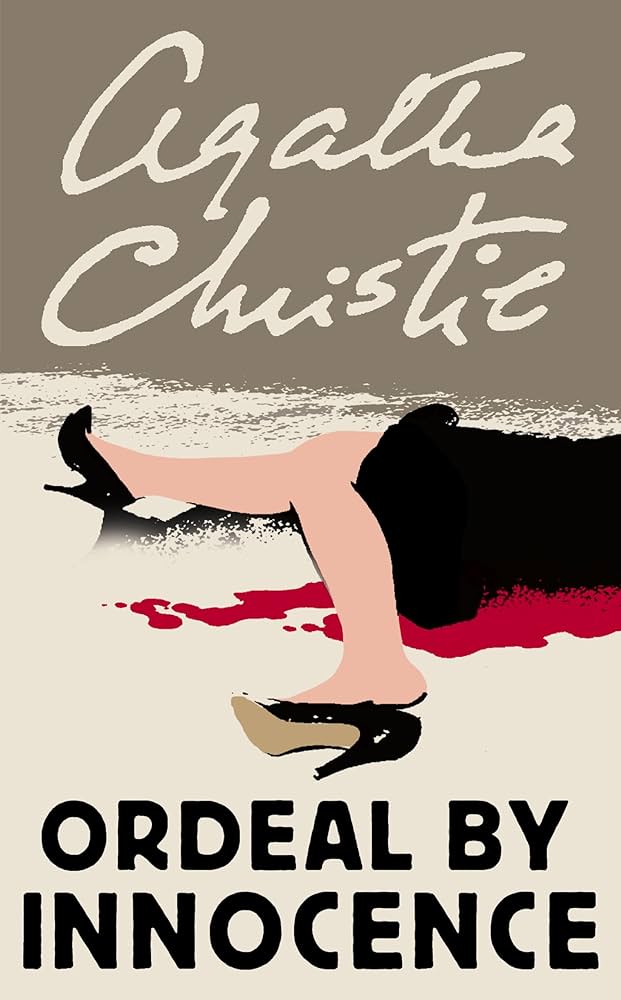
Three Act Tragedy by Agatha Christie

This month for the Read Christie challenge we are reading Christie novels published in the 1930s and I have chosen Three Act Tragedy from 1934. The book was also published in the US as Murder in Three Acts and that’s not the only difference – apparently the motive for one of the murders was also changed for the US edition. I’m not sure if there are any other Christie novels with significant differences between editions or if this is the only one.

Three Act Tragedy is a Poirot mystery but also features one of Christie’s other recurring characters, Mr Satterthwaite, who appears in The Mysterious Mr Quin and Murder in the Mews. At the beginning of the novel, Satterthwaite and Poirot are both attending a dinner party hosted by the stage actor Sir Charles Cartwright at his home in Cornwall. When one of the other guests, the Reverend Babbington, suddenly drops dead after taking a sip of his cocktail, several people suspect murder – yet there are no traces of poison in his glass. Soon afterwards, another death occurs under similar circumstances at a party attended by many of the same guests, but this time the victim is confirmed to have died from nicotine poisoning. Are the two deaths connected and if so, did the same person carry out both murders?

This is another entertaining Christie novel; maybe not one of her strongest plots, but the motive for the first murder is very unusual and I didn’t guess either that one or the motive for the second murder. I did start to suspect who was responsible, but not until much later in the book, so I can’t claim to have solved the mystery. We don’t see very much of Poirot himself as this is one of the books (like Lord Edgware Dies, which I read last month) where he sits at home and waits for other characters to provide him with information, rather than going out to interview suspects and search for clues himself. Instead, the deaths are investigated by Mr Satterthwaite and Sir Charles, with help from Miss Lytton Gore, affectionately known to her friends as Egg.

I would have liked Poirot to have played a bigger part in the story as although I like the elderly Mr Satterthwaite, he’s not very skilled at detecting, and I never really felt fully engaged with either Sir Charles or Egg. There’s an interesting cast of supporting characters, such as Muriel Wills, who writes plays under a male pseudonym, but I felt that some of these weren’t really used to their full potential. This wasn’t a favourite Christie, then, but I did still enjoy it – and it was good to see Poirot sharing a little bit of his personal history in a conversation with Satterthwaite, as he usually reveals very little about himself.

Next month for the Read Christie challenge (and for August and September as well) we are moving on to the 1940s and 1950s. There are plenty of books I still have to read from those decades, but one I definitely have lined up is N or M?, the third in the Tommy and Tuppence series. I’m hoping to make that one a July read.

This is book 5/20 of my 20 Books of Summer 2024.

The Nightingale’s Castle by Sonia Velton

Countess Erzsébet Báthory (often anglicised to Elizabeth Bathory) has found her way into vampire folklore as one of the possible inspirations behind Bram Stoker’s Dracula. Known as the Blood Countess for her habit of bathing in the blood of her victims to retain her youthful appearance, she and her servants were accused of murdering hundreds of Hungarian peasant girls, making her one of the most notorious serial killers in history. In her new novel The Nightingale’s Castle, Sonia Velton reimagines Erzsébet’s story and looks at the woman behind the legends.

The novel opens in Hungary in 1610 and introduces us to fifteen-year-old Boróka, who has been raised by an adoptive father in the foothills of the Carpathian Mountains. When members of the Countess’s household arrive at Boróka’s cottage looking for girls to come and work at Čachtice Castle, she is initially reluctant to go, but her father persuades her that it would be dangerous not to accept. And so Boróka soon finds herself in a carriage heading up the hill towards the castle and a new way of life.

Within the walls of Čachtice Castle, there are other girls like Boróka working as seamstresses, cooks and kitchen maids under the watchful eyes of the Countess’s personal staff, whom Boróka finds to be excessively cruel and vindictive. She struggles to settle in, but when she and Erzsébet Báthory eventually cross paths Boróka becomes a favourite of the Countess’s, which gives her some degree of protection. Then come the accusations of murder and torture and Boróka must try to make sense of what has really been going on in the castle and whether or not the allegations could be true.

I had heard of Erzsébet Báthory before starting this novel, but knew very little about her, so it was good to have the opportunity to learn more. Of course, this is fiction and obviously Sonia Velton will have had to use her imagination to flesh out the plot and characters, but I could see from her very detailed author’s note at the end of the book that she has carried out a lot of research and tried to put some theories together that fit the historical facts. This version of Báthory’s character is more sympathetic than the way she is usually portrayed and the servants who are arrested along with her, particularly Dorottya Szentes and Ilona Jó, are the real villains here. I would probably need to read some non-fiction on the subject before I could say whether I agreed with this or not.

Despite Erzsébet Báthory’s association with vampire legends, there are no vampires in Velton’s novel and for the most part this is a straightforward work of historical fiction. However, there’s a subplot involving a magical rosewood box which I thought seemed out of place; I felt that the book either needed more fantasy elements or none at all. Apart from that, I found The Nightingale’s Castle an interesting read and I’m sure other people will appreciate that little touch of magical realism more than I did.

This is Sonia Velton’s third novel. I haven’t read The Image of Her, which seems to be a contemporary thriller set in Dubai, but I enjoyed her first book, Blackberry and Wild Rose, about a community of Huguenot silk weavers in 18th century London. She does pick interesting subjects and settings for her novels, so I’ll look forward to seeing what she writes next.

Thanks to Abacus for providing a copy of this book for review via NetGalley.

Book 23/50 for the Historical Fiction Reading Challenge 2024

Historical Musings #86: More books to look out for in 2024

Welcome to this month’s post on all things historical fiction!

First of all, congratulations to Kevin Jared Hosein, the winner of this year’s Walter Scott Prize for Historical Fiction, announced at the Borders Book Festival last week. His winning novel, Hungry Ghosts, is the story of a Hindu community in 1940s Trinidad and is one of three books I had managed to read from this year’s shortlist. It’s not a book that I particularly liked as I found it too bleak and miserable, but the writing is beautiful and the setting is fascinating, so I can see why it impressed the judges. I’ll find time to read the other three books on the shortlist eventually!

Moving on, last December I posted a list of upcoming historical fiction being published in 2024. Now that we’re halfway through the year, more titles have been announced so I thought I would post an updated list below for July to December. This is a selection of books that have caught my attention for one reason or another – some are review copies I’ve received, some are new books by authors I’ve previously enjoyed and others just sounded interesting. I hope there’s something here that appeals to you. A lot of the July and August ones are already on my 20 Books of Summer list, so you should be hearing more about them here soon!

Dates provided are for the UK and were correct at the time of posting.

~

JULY

Babylonia by Costanza Casati (4th July 2024)

A Woman of Opinion by Sean Lusk (4th July 2024)

The King’s Mother by Annie Garthwaite (11th July 2024)

The Trouble with Mrs Montgomery Hurst by Katie Lumsden (18th July 2024)

A Case of Mice and Murder by Sally Smith (18th July 2024)

The Lost Queen by Carol McGrath (18th July 2024)

The Briar Club by Kate Quinn (18th July 2024)

The Hazelbourne Ladies Motorcycle and Flying Club by Helen Simonson (18th July 2024)

Maria: A Novel of Maria von Trapp by Michelle Moran (30th July 2024)

AUGUST

Cabaret Macabre by Tom Mead (1st August 2024)

The King’s Messenger by Susanna Kearsley (1st August 2024)

Lady Macbeth by Ava Reid (13th August 2024)

The Voyage Home by Pat Barker (22nd August 2024)

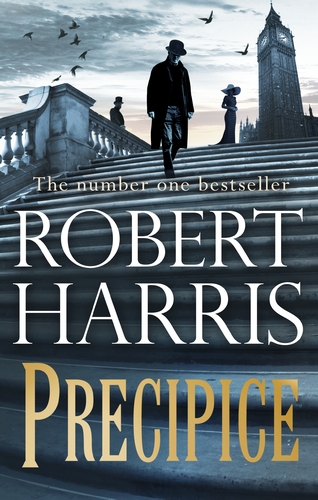
Precipice by Robert Harris (29th August 2024)

SEPTEMBER

What Time the Sexton’s Spade Doth Rust by Alan Bradley (3rd September 2024)

Gabriel’s Moon by William Boyd (5th September 2024)

The Royal Rebel by Elizabeth Chadwick (5th September 2024)

The Glassmaker by Tracy Chevalier (12th September 2024)

The Hidden Girl by Lucinda Riley and Harry Whittaker (12th September 2024)

OCTOBER

The Bells of Westminster by Leonora Nattrass (17th October 2024)

~

Are you interested in reading any of these? Which other historical novels should I be looking out for before the year of the year? And what do you think of Hungry Ghosts winning the Walter Scott Prize?